
Key Takeaways
1. Race is a Social Fabrication, Not a Biological Fact
Caucasians are not born, these combatants now seem to understand; they are somehow made.
Challenging biological certainty. The book fundamentally argues that race is not an inherent biological reality but a social construct, a "public fiction" created to group and separate people. This challenges the common perception that racial differences are indisputable and visible on one another's faces, suggesting instead that they are products of the social imagination. The fluidity of racial labels, such as the disappearance of "Celts" or "Hebrews" from modern racial discourse, highlights this fabricated nature.
Arbitrary classifications. The arbitrariness of racial classification is evident in historical examples, such as the question of why a white woman can have black children but a black woman cannot have white children in the United States. This demonstrates that the rules for assigning racial labels are not based on consistent biological principles but on societal conventions. The very act of affixing racial labels reveals a degree of instability and inconsistency in how "difference" is understood.
Power and perception. Race is deeply intertwined with power dynamics, serving as a theory of who belongs, who deserves what, and who is capable of what. The "awesome power of race as an ideology resides precisely in its ability to pass as a feature of the natural landscape." This means that racial categories, once established, are perceived as natural facts, obscuring their origins in political and cultural struggles.
2. Early American Whiteness: "Free White Persons" and Republican Ideals
That whiteness would be so entwined with ideas of citizenship as to be invisible during the congressional debate was overdetermined.
Citizenship's racial foundation. The Naturalization Act of 1790, limiting citizenship to "free white persons," established whiteness as an unquestioned prerequisite for belonging in the new republic. This racial dimension was so ingrained that it went largely undebated, reflecting a consensus that only certain peoples were "fit for self-government." This early definition of citizenship was not merely a legal formality but a profound statement about who constituted "the people."
Whiteness as antithesis to "savagery." The concept of "white" citizenship was forged in contrast to the "savage" inhabitants of the New World—Native Americans and enslaved Africans. Colonial charters frequently defined the polity's mission in terms of civilizing or conquering "barbarous nations," making "common defense" against these groups a core aspect of civic duty. This dynamic meant that to be a citizen was, by implication, to be white and to participate in the subjugation of non-white peoples.
Republicanism's racial logic. Republican ideology, emphasizing discipline, virtue, and self-sacrifice, was inherently racialized. These traits were ascribed to Europeans, particularly Anglo-Saxons, while "unbridled passion" and "dependency" were attributed to "savages." This framework meant that exclusions based on race and gender were not contradictions of democratic principles but integral to them, defining who possessed the "stake in society" necessary for democratic participation.
3. The Fracturing of Whiteness: European Immigrants as "Other" Races (1840-1924)
The period of mass European immigration, from the 1840s to the restrictive legislation of 1924, witnessed a fracturing of whiteness into a hierarchy of plural and scientifically determined white races.
Challenging monolithic whiteness. The massive influx of European immigrants from the 1840s onward, particularly the Irish, Germans, and later Southern and Eastern Europeans, strained the earlier monolithic definition of "white." These newcomers, while legally "white," were often perceived as racially distinct and inferior to the "old stock" Anglo-Saxons. This led to a re-evaluation of whiteness itself, revealing its internal divisions and hierarchies.
New racial typologies. The mid-19th to early 20th century saw the emergence of new racial categories within Europe, such as:
- Celts (Irish)
- Slavs (Poles, Russians)
- Hebrews (Jews)
- Iberics
- Mediterraneans
- Teutons (Germans, Scandinavians)
These distinctions, often based on perceived physical traits, cultural habits, and moral character, were used to question the immigrants' "fitness for self-government" and their assimilability into American society.
Contested belonging. Immigrants like the Irish, despite being legally white, faced caricatures depicting them as simian or savage, akin to "wild Indians." Italians were sometimes labeled "dagoes" and associated with criminality, even being lynched in some Southern contexts. Jews were often seen as a distinct "Semitic" or "Hebrew" race, marked by specific physiognomy and perceived unassimilability. These internal "white" racial distinctions created a complex social landscape where belonging was constantly negotiated.
4. Scientific Racialism and Nativism Defined "Inferior" White Races
The most ardent democrats are the first to claim superiority for the Anglo-Saxons of North America over all the nations of the same continent.
Nativism's racial core. American nativism, particularly from the 1840s to the 1920s, was fundamentally a response to the perceived "over-inclusivity" of the 1790 naturalization law. It sought to redefine whiteness, moving beyond simple color to incorporate notions of racial pedigree and "fitness for self-government." This shift was not merely "toward racism" but a refinement of existing racial ideologies.
Eugenics and immigration policy. The eugenics movement, gaining prominence in the early 20th century, provided a "scientific" framework for nativist concerns. Eugenicists like Madison Grant and Harry Laughlin argued for "racial hygiene," advocating for immigration policies that favored "desirable" Nordic races and curtailed "useless" Alpines and Mediterraneans. The 1924 Johnson-Reed Act, with its quotas based on the 1890 census, was a direct triumph of this racially engineered approach.
Racial hierarchy within whiteness. This period saw a vigorous debate over which "white persons" truly possessed the "white man's gifts" necessary for republican citizenship.
- Germans were often seen as less distinct, aligning with the "Teutonic" branch of Anglo-Saxons.
- Irish were frequently depicted as "savage" Celts, prone to violence and unfit for democracy.
- Jews were characterized as a distinct "Hebrew" race, often associated with negative stereotypes.
These classifications, though later dismissed as "pseudo-science," profoundly shaped social perceptions and political discourse, demonstrating how scientific authority was mobilized to justify existing prejudices.
5. Empire and Law Forged a Unified "Caucasian" Identity
The manufacture and maintenance of “Caucasian” whiteness depended in part, as Humphrey Desmond had it in 1898, upon national encounters with “barbarian dominions” even more problematic than the immigrants themselves.
External threats, internal unity. American expansionism, from the Mexican War to the Spanish-American War and the conquest of the Philippines, played a crucial role in forging a unified "Caucasian" identity. Confronting "savages" abroad—Mexicans, Native Americans, Filipinos, Africans—created a powerful "white-over-nonwhite" dynamic that overshadowed internal European racial divisions. This external contrast served to homogenize the diverse European immigrant groups into a single, superior "white" collective.
Imperialism's racial paradox. While expansionist rhetoric often championed "Anglo-Saxon" supremacy, it inadvertently benefited non-Anglo-Saxon immigrants. Figures like Senator Albert Beveridge lauded the "Anglo-Saxon impulse" in conquering new territories, but the actual soldiers and settlers included many Irish and German immigrants. This participation in the "white man's burden" allowed these groups to claim a share in the broader "white" identity, even if they were still considered "inferior" Celts or Teutons in other contexts.
Legal consolidation of "Caucasian." Naturalization law, particularly through court cases from the 1870s to the 1920s, consistently upheld the "free white persons" clause of 1790. Judges, while grappling with the scientific and popular inconsistencies of "whiteness," often resorted to defining "white" as "Caucasian" to exclude non-Europeans (e.g., Chinese, Japanese, Hindus). This legal process, by drawing a stark line between "Caucasians" and "Mongolians" or "Africans," inadvertently solidified the whiteness of European immigrants, even those previously deemed problematic.
6. The Alchemy of Race: How European Ethnics Became "Caucasian" (1924-1965)
Becoming Caucasian, then, has been crucial to the politico-cultural saga of European migration and settlement, and the process by which this came about touches the histories of every other racially coded group on the American scene.
Post-quota consolidation. Following the restrictive 1924 immigration act, which drastically reduced the influx of "undesirable" Southern and Eastern Europeans, the perceived threat of "inferior" white races diminished. This created space for the gradual reconsolidation of whiteness, as the focus shifted from internal European distinctions to a broader "Caucasian" identity. The American-born generations of these immigrant groups increasingly shed their specific "racial" labels.
"Caucasian" as scientific certainty. The term "Caucasian" gained widespread acceptance in popular and scientific discourse, becoming a "natural" division of humanity alongside "Mongoloid" and "Negroid." This provided a scientific stamp of authenticity to the unified white identity, replacing the earlier, more fragmented system of "white races." This shift meant that to be "Caucasian" was to be conclusively, certifiably, and scientifically white, a status that conferred significant social and political capital.
Cultural representations of whitening. Popular culture reflected and reinforced this transformation.
- Al Jolson's Jazz Singer (1927) depicted blackface as a means for a Jewish character to become "Caucasian," masking his Jewishness and accentuating his whiteness.
- Films and TV shows like Dragnet normalized "Caucasian male" as a standard descriptor, replacing older, more specific "white" racial types.
This cultural alchemy helped embed the notion of a unified whiteness in the national consciousness, making older distinctions seem archaic.
7. Civil Rights Era Solidified the Black-White Binary, Erasing "White" Racial Distinctions
By the time the Kerner Commission reported in 1968 that the United States consisted of “two societies—one white, one black, separate and unequal,” this understanding of the nation’s racial make-up had long become part of popular consciousness.
The "Negro Question" takes center stage. The massive migrations of African Americans from the rural South to the urban North and West, coupled with escalating Civil Rights agitation from the 1930s to the 1960s, nationalized the issue of race as primarily a black-white dichotomy. This focus on Jim Crow and segregation as the defining racial problem in America effectively eclipsed the "minor divisions" among white Europeans.
Progressive politics and unified whiteness. Even progressive movements, such as the Communist Party's fight against "white chauvinism" or Louis Adamic's Common Council for American Unity, inadvertently contributed to the consolidation of white identity. By framing racial justice primarily in terms of black-white relations, these movements often treated European immigrants as a monolithic "white" bloc, thereby erasing their former distinct racial identities.
- The Communist Party's "Black Belt Thesis" focused on Negro national rights, implicitly unifying white workers.
- Louis Adamic's "nation of nations" concept, while celebrating European diversity, often contrasted it with the "Negro problem," reinforcing a color line.
Whiteness as a monolith of privilege. The political and social struggles of the Civil Rights era solidified whiteness as a singular category of privilege. For European immigrants, this meant that their "probationary whiteness" became fully recognized, largely in contrast to the ongoing struggle of African Americans. This process, while unintended by civil rights advocates, conferred a newly consolidated status as "Caucasians" upon non-Anglo-Saxon immigrants, granting them significant advantages in the American political and social landscape.
8. The Enduring Palimpsest of Race: Old Categories Linger
Race is a palimpsest, a tablet whose most recent inscriptions only imperfectly cover those that had come before, and whose inscriptions can never be regarded as final.
Layered racial meanings. Race is not a static concept but a dynamic "palimpsest," where new racial classifications are layered over older ones, never fully erasing them. This means that multiple, sometimes contradictory, racial understandings can coexist simultaneously, reflecting the complex history of encounters, conquests, and migrations that shaped American society. The year 1877, for instance, saw simultaneous racial discourses around Reconstruction, Indian Wars, anti-Chinese agitation, and European immigrant labor.
Contradictory racial identities. An individual or group might hold different racial statuses depending on the context. For example:
- An Irish immigrant could be a despised "Celt" in Boston but a "Caucasian" defending U.S. shores against "Mongolians" in San Francisco.
- Jews, while legally "white," were often perceived as a distinct "Hebrew" or "Semitic" race, especially in contexts of social exclusion.
These inconsistencies highlight that racial identity is not fixed but is constantly negotiated and reinterpreted based on specific social, political, and economic circumstances.
Perception shaped by history. The way people "see" race is conditioned by historical traditions and power relations. Physical differences that register as "racial" are often tied to specific social meanings. Charles Dudley Warner's travel writings, for example, reveal an American racial gaze that categorized "Orientals" and "Africans" as "savage" while simultaneously making subtle distinctions among "white" Europeans like Irish, Jews, and Greeks, reflecting the complex racial sensibilities of his era.
9. "Looking Jewish, Seeing Jews": The Perceptual Nature of Racial Identity
The Jew can be unknown in his Jewishness. He is not wholly what he is. One hopes, one waits. His actions, his behavior are the final determinant.
Jewishness as a mutable racial category. The racial identity of Jews in America has undergone significant shifts, from being seen as a distinct "deceitful race" in the 17th century, to "infidels" in the early republic, to a "Semitic" or "Hebrew" race in the 19th century, and finally to "Caucasian" in the 20th century. This trajectory illustrates how Jewishness, like other European "whitenesses," was subject to the changing tides of American racial classification.
The circuit of perception and social value. "Looking Jewish" is not an objective biological fact but a social value that becomes perception.
- Social and political meanings attached to Jewishness generate a "physiognomical surveillance" that renders certain physical traits (nose shape, hair color) discernible as "Jewish."
- These visible markers are then interpreted as signs of an essential, inner moral or intellectual character.
- This character, in turn, is used to explain the social value (or devaluation) attached to Jewishness, creating an inescapable feedback loop.
Challenging and reinforcing racial Jewishness. Authors like Arthur Miller (Focus) and Laura Z. Hobson (Gentleman's Agreement) explored the fluidity of Jewish racial identity. Their novels used plot devices like mistaken identity to show how "looking Jewish" could lead to anti-Semitic victimization, even for non-Jews. However, even in challenging the notion of a fixed "Jewish race," these works often inadvertently reinforced the idea of a distinct "Jewish look," demonstrating the deep entrenchment of racial perception.
10. The Denial of White Privilege in the "Ethnic Revival"
The fact of the matter is that Jews, however much we have accumulated the trappings of American success, are not white.
Post-Civil Rights identity crisis. The "ethnic revival" of the 1970s, particularly among second-, third-, and fourth-generation European immigrants, reflected a complex tension in their racial identity. While legally and socially recognized as "white" or "Caucasian," many felt alienated from the "WASP mainstream" and perceived themselves as distinct, even oppressed, "ethnics." This led to a "denial of whiteness" as a way to articulate grievances and distance themselves from the historical legacies of white privilege.
Reclaiming "otherness." Figures like Michael Novak argued that "unmeltable ethnics" (Poles, Italians, Greeks, Slavs) were "white without actually feeling white." They felt discriminated against and misunderstood by "Nordic elites," and their protests were often couched in language borrowed from the black civil rights movement. This attempt to reclaim a non-white identity, however, often overlooked the significant advantages conferred by their "Caucasian" status in the American racial hierarchy.
Historical amnesia and present-day implications. The "denial of whiteness" often involved a selective historical memory, downplaying the role of European immigrants in upholding white supremacy and benefiting from the exclusion of non-white groups. This perspective, while highlighting genuine experiences of prejudice against non-Nordic Europeans, risked:
- Severing their history from the broader structural history of whiteness in America.
- Equating their experiences with those of historically marginalized non-white groups.
- Undermining the recognition of ongoing white privilege.
This complex dynamic underscores the enduring power of race as a social construct and the challenges of navigating its fluid meanings in contemporary American society.
Review Summary
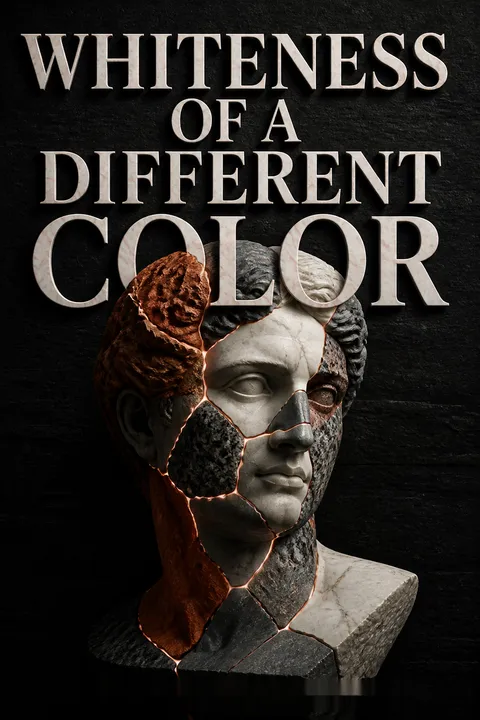
Whiteness of a Different Color examines how racial categories, particularly "whiteness," have been politically and socially constructed throughout American history. Jacobson traces how European immigrant groups—Irish, Italians, Jews, Greeks, and others—were initially classified as distinct, inferior races before being assimilated into a unified "Caucasian" identity. The book spans 1790-1960, analyzing immigration laws, citizenship cases, popular culture, and visual evidence to demonstrate race's fluidity. Reviewers praise the extensive research and accessible writing, though some find it dense, repetitive, or poorly organized. Most agree it effectively challenges assumptions about race as biological rather than political.
People Also Read





Download PDF
Download EPUB
.epub digital book format is ideal for reading ebooks on phones, tablets, and e-readers.








































