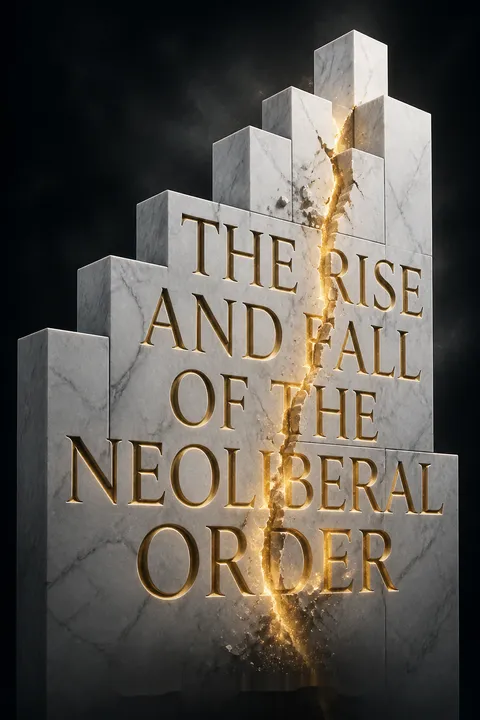

Key Takeaways
1. The New Deal Order: A State-Managed Capitalism
The New Deal order was founded on the conviction that capitalism left to its own devices spelled economic disaster.
A new economic paradigm. Emerging from the Great Depression and Herbert Hoover's perceived failures, Franklin D. Roosevelt's New Deal established a powerful political order. It championed a strong central state to manage capitalism in the public interest, rejecting laissez-faire economics. This involved:
- Keynesianism: Government spending and deficits to stimulate demand.
- Class Compromise: Strengthening labor unions and collective bargaining.
- Welfare State: Social Security, unemployment insurance, and progressive taxation.
Moral and social dimensions. The New Deal promoted a moral perspective prioritizing the public good over private rights, with government as the instrument for achieving collective welfare and enhancing individual opportunities through consumption. It also fostered a belief in secular expertise and kept religion at a distance from politics, aiming for broad appeal across diverse constituencies. This era saw significant wealth redistribution, leading to a "great compression" of economic inequality.
Enduring political dominance. The New Deal Order's success in reforming American capitalism, restoring prosperity, and securing opportunities for the economically disadvantaged led to its political dominance. Its core principles became so ingrained that even the Republican Party, under Dwight D. Eisenhower, largely acquiesced to its framework, demonstrating the order's hegemonic power.
2. The Cold War's Paradox: Communism Secured the New Deal Order
To ensure success in the fight against communism, those in the mainstream of the Republican Party actually acquiesced to the core principles of the New Deal, thereby facilitating the New Deal’s transition from political movement to political order.
An existential threat. The rise of communism, particularly the Soviet Union's economic successes in the 1930s and its post-World War II prestige, posed an existential threat to the American way of life. This global rivalry compelled the United States to demonstrate that its capitalist system could deliver better care for its citizens than communism.
Republican capitulation. Despite deep ideological opposition from figures like Robert Taft, the imperative of fighting communism forced mainstream Republicans, led by Dwight D. Eisenhower, to accept and even expand core New Deal programs. Eisenhower understood that dismantling the welfare state or high progressive taxation would undermine America's image as a land of opportunity and stability, thus playing into Soviet propaganda. This strategic acceptance included:
- Maintaining Keynesian fiscal policies.
- Supporting strong labor unions.
- Expanding Social Security benefits.
- Preserving high progressive tax rates.
A managed capitalist system. The Cold War transformed the New Deal from a partisan movement into a bipartisan political order. National security demanded a managed capitalist system that could generate affluence for all, thereby blunting communism's appeal both at home and abroad. This period saw the US government actively shaping the economy to ensure stability and widespread prosperity, a stark contrast to the laissez-faire ideals of earlier eras.
3. The New Deal Order's Unraveling: Race, War, and Economic Crisis
Every political order contains within it tensions, contradictions, and vulnerabilities that at a certain point become too difficult to maintain.
Internal contradictions. The New Deal Order, despite its successes, harbored deep tensions that began to fracture it in the 1960s and 1970s. The Cold War, while initially securing the order, also pushed the US to address racial inequality, leading to:
- Civil Rights Movement: Landmark legislation (1964 Civil Rights Act, 1965 Voting Rights Act) alienated white Southern Democrats, a key New Deal constituency.
- Vietnam War: Escalation, conscription, and perceived deception fueled massive anti-war protests, giving rise to the New Left and destroying Lyndon Johnson's presidency.
Economic decline. Exogenous economic shocks further destabilized the order. The 1970s saw the end of America's unchallenged global economic preeminence, with rising competition from Europe and Japan. The OPEC oil shocks of 1973 and 1978-79 triggered "stagflation"—simultaneous high inflation and unemployment—which baffled traditional Keynesian policymakers. This led to:
- Deindustrialization: Millions of manufacturing jobs were lost, particularly in the Northeast and Midwest, causing urban decay and fiscal crises.
- "Misery Index": A new metric reflecting the combined pain of inflation and unemployment, signaling deep economic malaise.
A transitional presidency. Jimmy Carter's presidency (1977-1981) reflected this unraveling. While well-intentioned, his administration struggled to find solutions, oscillating between traditional Keynesian approaches and nascent deregulatory policies influenced by figures like Ralph Nader. Carter's indecisiveness and the persistent economic woes left the nation searching for a new direction, paving the way for a radical shift in political economy.
4. Neoliberalism's Diverse Origins: From Market Rules to Personal Freedom
Neoliberalism’s protean character, this chapter suggests, enhanced its appeal, allowing its proponents to move in directions both new and old, right and left.
A "second new liberalism." Neoliberalism emerged not as a monolithic creed, but as a complex set of ideas seeking to redefine liberalism beyond the New Deal's state-centric model. It offered novel approaches to economic and social problems while also reviving the emancipatory spirit of classical liberalism. This protean nature allowed it to appeal to diverse groups.
Three core strategies:
- Market Encasement: Advocated strong government intervention to establish and maintain rules for property, exchange, and money supply, ensuring markets functioned "freely" (Hayek's "constitution of liberty"). This was a paradox: government power to enable individual freedom.
- Market Expansion: Extended market principles beyond traditional economic spheres into all human activities, viewing individuals as "entrepreneurs of themselves" (human capital theory, Gary Becker). This applied economic analysis to family, morality, and education.
- Personal Freedom: Sought to recuperate the utopian promise of individual liberty, spontaneity, and innovation, appealing to both the New Right (Goldwater, Reagan) and elements of the New Left (Paul Goodman, Stewart Brand, early tech hackers) who chafed against the "organized society."
Terminological and ideological fluidity. Many early neoliberals, like Milton Friedman, rejected the "conservative" label, preferring "liberal" or "radical" to describe their desire for fundamental change. This ideological flexibility, coupled with figures like Ayn Rand bridging right-wing libertarianism with themes of individual rebellion, allowed neoliberal ideas to permeate various political and cultural districts, laying the groundwork for a broad-based movement.
5. Reagan's Ascent: Forging a Neoliberal Counter-Establishment
Money, votes, policies, jurisprudence, media influence, and a strong moral stance: These were all part of the architecture of an ascending neoliberal order.
A coordinated counter-offensive. The economic turmoil of the 1970s provided fertile ground for neoliberal ideas, which had been incubating in a "silent phase" for decades. Wealthy donors, inspired by calls to arms like the Powell Memo, funded a "counter-establishment" of think tanks (Heritage, Cato), corporate PACs, and new media outlets. This network aimed to dismantle the New Deal Order and restore free markets.
Reagan's electoral genius. Ronald Reagan, a charismatic former actor and governor, became the movement's standard-bearer. He skillfully combined anti-government, free-market rhetoric with appeals to white racial and religious resentment, attracting:
- White Southerners: Alienated by civil rights and secularism (e.g., school prayer bans).
- White Urban Ethnics: "Reagan Democrats" frustrated by urban decay and perceived favoritism towards minorities.
- Moral Majority: Evangelical Christians, led by Jerry Falwell, who linked free enterprise to biblical principles.
Implementing the neoliberal vision. Upon winning the presidency in 1980, Reagan launched a broad assault on the New Deal Order:
- Deregulation: Fired striking air traffic controllers, weakening unions; eased regulations on industries like savings and loans.
- Tax Cuts: Drastically reduced top marginal income tax rates (from 70% to 28%), starving the government of revenue.
- Judicial Reshaping: Appointed "originalist" judges (Meese, Bork, Scalia) to dismantle the legal foundations of the regulatory state.
- Media Liberation: Repealed the Fairness Doctrine, paving the way for partisan media like Rush Limbaugh and Fox News.
- Military Buildup: Confronted the "evil empire" of the Soviet Union with massive defense spending.
- Carceral State: Expanded mass incarceration, particularly for poor blacks, justified by "underclass" discourse, to maintain social order.
- Neo-Victorian Morality: Promoted self-reliance, strong families, and discipline to counter perceived market excesses and cultural permissiveness.
Democratic shift. By the mid-1980s, the Democratic Party began to acquiesce, with "Atari Democrats" forming the Democratic Leadership Council (DLC) to advocate for market-friendly policies, fiscal discipline, and welfare reform, signaling the neoliberal order's growing hegemony.
6. Clinton's Acquiescence: Neoliberalism's Democratic Triumph
After 1991, the pressure on capitalist elites and their supporters to compromise with the working class vanished.
The end of history. The peaceful dissolution of the Soviet Union in 1991 marked a pivotal moment, removing capitalism's primary global antagonist. This victory, largely attributed to Reagan's policies, ushered in an era where the need for class compromise, a cornerstone of the New Deal Order, largely disappeared. The world, it seemed, was now open to unfettered capitalism.
Clinton's neoliberal turn. Bill Clinton, initially attempting a national health care reform, pivoted sharply after the 1994 Republican congressional takeover. Embracing "triangulation," he adopted key Republican economic ideas, becoming a "Democratic Eisenhower" for the neoliberal order. His administration:
- Global Trade: Signed NAFTA (1993) and endorsed the WTO (1994), promoting a vision of a borderless global marketplace.
- Financial Deregulation: Deregulated the telecommunications (1996) and electricity industries, and repealed the Glass-Steagall Act (1999), dismantling New Deal-era financial safeguards.
- Fiscal Discipline: Under Robert Rubin, prioritized deficit reduction and budget balancing, pleasing Wall Street and fueling a stock market boom.
The IT revolution and cosmopolitanism. The 1990s saw the explosion of the information technology (IT) revolution, with Silicon Valley becoming a hub of innovation. Clinton and Al Gore enthusiastically embraced this, viewing it as a force for freedom and economic growth, further justifying deregulation. Clinton also championed a "cosmopolitan" vision of America, celebrating diversity and multiculturalism as strengths in a globalized world, a moral code compatible with neoliberalism's free flow of people and ideas.
Economic consensus amid culture wars. Despite intense "culture wars" between Clinton's cosmopolitanism and Republican neo-Victorianism, a broad consensus on neoliberal economic principles emerged. This bipartisan embrace, coupled with the decline of labor unions and rising economic inequality, solidified neoliberalism's triumph as the dominant political order.
7. Hubris and Collapse: The Neoliberal Order's Reckoning
Bush’s carelessness in handling the debt implications of his homeownership initiative shared a great deal with Bremer’s carelessness in superintending the reconstruction of Iraq.
A stolen election and a devastating attack. The 2000 election, decided by a partisan Supreme Court, heightened political tensions. The 9/11 terrorist attacks in 2001 then plunged the nation into fear and a desire for revenge, leading to the Iraq War. President George W. Bush, driven by a belief in American exceptionalism and the universal appeal of democracy and free markets, invaded Iraq to depose Saddam Hussein, despite a lack of evidence for WMDs or a link to 9/11.
Neoliberal hubris in Iraq. Bush's administration, imbued with neoliberal disdain for government intervention, failed to plan for Iraq's post-war reconstruction, believing the market would naturally rebuild the nation. Paul Bremer's "shock therapy" policies—de-Baathification and rapid privatization—disbanded the Iraqi army and state-owned enterprises, leading to:
- Widespread looting and breakdown of order.
- Mass unemployment and a burgeoning insurgency.
- Crony capitalism, with lucrative contracts going to US firms that often failed to deliver.
- Sectarian strife between Sunni and Shia populations.
This disastrous occupation eroded confidence in neoliberal principles and American power.
Domestic policy failures. At home, Bush continued neoliberal policies:
- Tax Cuts: Further reduced taxes for corporations and the wealthy, increasing national debt.
- "Ownership Society": Expanded homeownership, particularly for minorities, through subprime mortgages and lax regulation. This fueled a massive housing bubble, with institutions like Fannie Mae and Freddie Mac backing risky loans.
- Financial Deregulation: Alan Greenspan's Federal Reserve kept interest rates low, ignoring warning signs of the bubble, believing markets would self-correct.
The Great Recession. The housing bubble burst in 2006, leading to the catastrophic financial crash of 2008. The collapse of major institutions like Lehman Brothers and AIG, and the subsequent government bailouts (TARP), exposed the fragility of deregulated markets and the immense wealth destruction, disproportionately affecting minorities. This crisis severely damaged the neoliberal order's credibility.
8. Post-Crash Insurgencies: The People's Revolt Against Neoliberalism
The economic hardship and distress caused by the crash would linger for years.
Widespread discontent. The Great Recession's lingering effects—job losses, stagnant wages, and widening inequality—fueled deep-seated anger across diverse segments of American society. This distress laid the groundwork for a series of powerful political insurgencies that challenged the neoliberal order.
White working-class despair. Charles Murray's Coming Apart (2012) documented the social decay among working-class whites, highlighting:
- Declining marriage rates and family stability.
- Rising rates of self-harm, alcoholism, and drug poisoning.
- A sense of abandonment by elites and a loss of traditional values.
This despair provided fertile ground for populist appeals.
Black suffering and protest. African American communities bore a disproportionate burden of the recession, with massive wealth loss from foreclosures and public sector job cuts. Michelle Alexander's The New Jim Crow (2010) exposed the racial injustice of mass incarceration, sparking outrage. A new wave of police killings of black men (Trayvon Martin, Eric Garner, Michael Brown, Freddie Gray) ignited the Black Lives Matter (BLM) movement, which fiercely criticized systemic racism and police brutality, and challenged the perceived inaction of both Clinton and Obama.
The rise of the precariat. The "gig economy," while promising flexibility, created a "precariat" of workers facing precarious employment, lack of benefits, and economic insecurity. This diverse, often young, group also grew disillusioned with the neoliberal promise of universal opportunity.
Political explosions:
- Tea Party (2009): Fueled by anger at bailouts, government spending, and a perceived alliance between elites and the "undeserving poor." It embraced ethnonationalist themes, attacking Obama's legitimacy ("birtherism") and cosmopolitanism.
- Occupy Wall Street (2011): A spontaneous, anarchist-inspired movement protesting economic inequality with the slogan "We are the 99 percent." It brought issues of wealth concentration and financial power into mainstream discourse.
- Bernie Sanders (2016): A self-proclaimed socialist, Sanders's presidential campaign gained immense traction by directly attacking Wall Street, corporate power, and free trade, resonating with young voters and those frustrated by economic injustice.
- Donald Trump (2016): A real estate mogul and reality TV star, Trump tapped into white working-class resentment with an ethnonationalist, anti-globalist, and anti-elite populist message. He attacked free trade, immigration, and the "globalists" he claimed were selling out America.
These parallel insurgencies from both the right and left signaled a profound dissatisfaction with the status quo, marking the beginning of the neoliberal order's unraveling.
9. Trump's Ethnonationalist Challenge: Dismantling Neoliberal Pillars
Trump’s assault on free trade and immigration aimed at its destruction.
A disruptive presidency. Donald Trump's presidency (2017-2021) was characterized by impulsiveness, a disregard for governance norms, and a deep suspicion of established institutions. While he maintained some neoliberal elements like deregulation, judicial appointments, and tax cuts (influenced by figures like Mike Pence and Gary Cohn), his core agenda aimed to dismantle key pillars of the neoliberal order.
Assault on globalization: Trump aggressively challenged the neoliberal commitment to free trade and open borders:
- Trade Wars: Imposed tariffs on Chinese imports, renegotiated NAFTA, and withdrew from the Trans-Pacific Partnership (TPP), advocating for bilateral deals and "America First" protectionism.
- Immigration Restrictions: Vowed to build a wall on the southern border, implemented a "Muslim ban," and enforced a "zero tolerance" policy that separated migrant children from their parents, reflecting an ethnonationalist vision of America.
Ethnonationalism and authoritarianism. Trump's rhetoric and policies privileged Americans of European descent, attacked cosmopolitanism, and aligned him with global strongmen (Orbán, Putin, Xi) who favored national sovereignty over international cooperation. He expressed disdain for liberal democratic institutions like independent judiciaries and free media, and his administration's actions contributed to a global trend of:
- Deglobalization: Corporations began rethinking global supply chains, favoring domestic or regional production.
- Information Control: Authoritarian regimes (China, Russia) sought to control internet information flows, a trend Trump himself began to echo by criticizing US social media companies.
Undermining neoliberal hegemony. Trump's constant attacks on free trade, immigration, and globalist elites, combined with his populist appeal to the "little (white) guy," shattered the bipartisan consensus that had sustained the neoliberal order for decades. His presidency demonstrated that protectionism and ethnonationalism, once fringe ideas, could become central to American political discourse.
10. The Pandemic's Verdict: Government's Indispensable Role
In political economic terms, the pandemic worked to intensify a development that the decline in the neoliberal order had already set in motion: namely, a conviction that government was the only institution with the wherewithal to address severe economic and social hardship.
A new era of government intervention. The Covid-19 pandemic, coinciding with the 2020 presidential campaign, dramatically underscored the necessity of robust government action in times of crisis. This intensified the existing critique of neoliberalism's anti-government stance, as both Republicans and Democrats agreed to:
- Massive Relief: A $2.4 trillion relief package in March 2020, far exceeding the 2008-2009 stimulus, provided aid to individuals, families, and businesses.
- Federal Reserve Action: Jerome Powell, the Trump-appointed Fed chair, aggressively intervened in markets, breaking from previous neoliberal reluctance to support extensive government aid.
Trump's failures. Despite the bipartisan consensus on initial relief, Trump's administration proved largely incompetent in managing the pandemic. He downplayed the virus, resisted public health measures, and politicized federal agencies like the CDC. His reluctance to fully utilize government powers, such as the Defense Production Act, and his promotion of unproven cures, led to:
- A high death toll (half a million Americans).
- Damage to his political standing, particularly among suburban voters.
- Further erosion of trust in government competence under neoliberal leadership.
Biden's bold agenda. Joe Biden's 2020 victory, fueled by African American voters and a desire for stability, marked a decisive shift. Recognizing America was at an "inflection point," Biden proposed an ambitious agenda reminiscent of the New Deal:
- Vaccination Campaign: A rapid, federally coordinated effort.
- Economic Rescue: A nearly $2 trillion American Rescue Plan.
- Infrastructure Investment: Trillions for physical and social infrastructure (child tax credits, elder care, green technology).
- Social Justice: Voting rights legislation, comprehensive immigration reform, and efforts to combat structural racism.
These proposals signaled a departure from Obama-era fiscal caution and a renewed belief in government's capacity to address societal challenges.
11. The Broken Order: An Uncertain Future
But the neoliberal order itself is broken.
The end of an era. The cumulative shocks of the Great Recession, the rise of populist insurgencies, Trump's disruptive presidency, and the Covid-19 pandemic have shattered the neoliberal order. Its core propositions—that free markets ensure prosperity for all, that government intervention stifles growth, and that globalization is universally beneficial—no longer command widespread support or authority across the political spectrum.
Lingering challenges and new possibilities. While elements of neoliberalism persist (e.g., deregulation, financialization, self-entrepreneurship), the overarching order is defunct. The future remains uncertain, with potential paths including:
- Authoritarian Right: A deepening of Trump-style ethnonationalist populism, potentially leading to illiberal governance.
- Progressive Revival: Biden's ambitious agenda, influenced by a revitalized left, aims to build a new social democratic order focused on climate, racial justice, and economic equality. This faces challenges from a divided Congress and entrenched opposition.
A new political landscape. The political landscape is now characterized by disorder and dysfunction, with a renewed debate over the proper role of government in economic and social life. The Federal Reserve's aggressive interventions during the pandemic, supporting broad aid packages, hint at a potential "democratization" of public finance, challenging the traditional role of central banks in buttressing financial elites. The American labor movement is showing signs of revival, and wages for low-income earners are beginning to rise.
The enduring legacy of change. Just as the New Deal Order left behind enduring institutions like Social Security, vestiges of the neoliberal order will remain. However, the ideological consensus that once defined American politics has fractured. The critical question now is what new political order will emerge from these ruins, and whether it can address the profound challenges of climate, inequality, and democratic erosion.
People Also Read









Download PDF
Download EPUB
.epub digital book format is ideal for reading ebooks on phones, tablets, and e-readers.








































