
Key Takeaways
1. Slavery forged a hidden politics of resistance and self-governance.
Rather than follow even the best of the scholarly literature in regarding slaves, who had no standing in the official arenas of civil and political society, as nonpolitical, prepolitical, or protopolitical—involved, at most, in acts of resistance and accommodation (a perspective not very different from that of their owners)—I have tried to identify constituent elements of slave politics and suggest how they alter our comprehension of what happened after slavery, not to mention our sense of the dynamics and dimensions of southern politics as a whole.
Slaves were political actors. Despite being legally considered chattel, enslaved African Americans actively engaged in political struggle, shaping their world and laying foundations for future freedom. Their "politics" involved collective efforts to contest domination and build internal communities.
Kinship and labor. Slaves painstakingly constructed kinship networks and developed internal economies, which served as crucial means of support and resistance against the atomizing forces of slavery. These informal structures allowed them to:
- Negotiate work terms and pace.
- Cultivate provision grounds for personal sustenance.
- Engage in petty trade, sometimes accumulating property.
- Provide mutual aid and protection.
Community and communication. Religious congregations, often meeting secretly in "brush arbors," became vital centers for discussing events, interpreting the world, and developing leaders. Slaves also established sophisticated "grapevine" communication networks, circulating news and rumors about local and national politics, including the growing sectional conflict.
2. Slaves transformed the Civil War into a revolution for emancipation.
I told him it would be a black man's war before they got through.
Interpreting Lincoln's intentions. African Americans, through their communication networks, understood the election of Abraham Lincoln and the outbreak of the Civil War as a direct challenge to slavery, often attributing revolutionary intentions to the Republican party despite official assurances. This belief fueled their actions.
Mass flight to freedom. At the first opportunity, hundreds of thousands of slaves rebelled against their masters by fleeing to Union lines, transforming the war's character. These "contrabands" forced Union commanders to confront the issue of slavery, leading to policies like the Confiscation Acts and eventually the Emancipation Proclamation.
Black military service. Over 180,000 black men, most former slaves, enlisted in the Union army, playing a decisive role in crushing the Confederacy and securing emancipation. Their service was a powerful political act, challenging racial discrimination within the military and asserting their claims to full citizenship.
3. Freedpeople rapidly mobilized to build new political communities.
The Union League figures very significantly in this history both because of its crucial role in organizing freedmen to participate in the electoral arena and because it exemplified the connections among the electoral and other, more inclusive, arenas of political activity.
Reconstituting families and communities. After emancipation, freedpeople prioritized reuniting families, legalizing marriages, and establishing stable households. These kinship networks became the bedrock for new labor arrangements and community-building efforts, often spanning multiple plantations.
Union League's pivotal role. With the passage of the Reconstruction Acts, the Union League rapidly mobilized black men across the South, especially in the plantation belt. It served as a vital political school, educating new voters on their rights, party platforms, and electoral procedures, while also acting as a:
- Forum for discussing local grievances.
- Mechanism for negotiating labor contracts.
- Vehicle for community defense and self-determination.
Women's political agency. Though formally excluded from voting, black women were central to political mobilization and discipline. They attended rallies, influenced partisan loyalties, and often led collective actions, using social pressure and even physical confrontation to ensure community solidarity and punish "traitors" who aligned with white conservatives.
4. Black officeholders wielded unprecedented local power during Reconstruction.
The Speaker is black, the Clerk is black, the door-keepers are black, the little pages are black, the chairman of the Ways and Means is black, and the chaplain is coal black. . . . [I]t must be remembered, also, that these men, with not more than a half dozen exceptions have been themselves slaves, and that their ancestors were slaves for generations.
Unprecedented representation. During Reconstruction, black men held political office at every level across the former Confederacy, with the largest numbers serving in local county and municipal positions. This was a revolutionary inversion of the old order, particularly in black-majority districts.
Impact on daily life. Black officeholders, including magistrates, county commissioners, and sheriffs, became arbiters of social relations, directly affecting freedpeople's lives. They:
- Established county regulations and controlled appropriations.
- Heard civil and criminal cases, selected jurors, and meted out punishments.
- Created school districts and allocated funds for black education.
- Curtailed the arbitrary power of white landowners and enforced civil equality.
Institutional anchors. Black religious congregations and political clubs served as unrivaled centers for mobilizing community sentiment and action. They assimilated politics into their worship, providing forums for discussion, debate, and forging political solidarity, making them indispensable to the success of black officeholders.
5. White paramilitary violence aimed to dismantle black political gains.
The cruelties of property and privilege are always more ferocious than the revenges of poverty and oppression. For the one aims at perpetuating resented injustice, the other is merely a momentary passion soon appeased.
Klan's counter-revolution. The Ku Klux Klan and allied vigilante groups emerged as a paramilitary response to black political mobilization, aiming to restore white supremacy through terror. These groups, often composed of Confederate veterans, built on existing traditions of slave patrols and militias.
Targets of terror. Klansmen systematically attacked individuals and institutions central to black political life, including:
- Local black leaders and organizers.
- Republican party supporters and voters.
- Black churches and schoolhouses.
- Black men and women who asserted economic independence.
Black self-defense. African Americans often met Klan violence with organized resistance, forming armed self-defense groups within Union Leagues and political clubs. While these efforts sometimes deterred attacks and protected communities, the federal government's inconsistent support and eventual withdrawal of troops left black communities vulnerable.
6. Emigration movements offered a path to black self-determination.
They explained that "the colored people of the South had been debarred from . . . the right to vote hold office and the privilege of education without molestation," and that they "have been oppressed, murdered, and disfranchised on account of our race and color."
Post-Reconstruction disillusionment. As Reconstruction faltered and white Democrats regained power, black communities faced escalating economic exploitation, political disenfranchisement, and racial violence. This led to a resurgence of emigrationist sentiment, particularly in the cotton South.
Collective action for new homes. Thousands of African Americans, organized through churches, benevolent societies, and "colonization councils" like Henry Adams's, sought to migrate to Liberia, Kansas, or other parts of the United States. These movements were collective undertakings by families and kin groups, driven by a desire for:
- Landownership and economic independence.
- Self-governance and autonomy from white control.
- Protection from oppression and violence.
Political impact. Though often met with white resistance and facing immense logistical challenges, these "exoduses" served as powerful forms of protest. They highlighted the dire conditions in the South, influenced federal policy debates, and sometimes forced white landowners to make concessions to retain black labor.
7. Biracial political coalitions faced inherent contradictions and limits.
We ask but an equal chance before the law, no more, no less. . . . We do not seek your society, we only ask you as Christians, as servants of the Master to help us safely anchor our little boat in some quiet haven.
New political alliances. In the late 19th century, white insurgent movements (like Virginia's Readjusters and the Populists) challenged Democratic rule and sought black votes, creating opportunities for biracial coalitions. These alliances offered African Americans a chance to regain some political influence and protection.
Readjuster success in Virginia. The Readjuster movement in Virginia, led by William Mahone, achieved significant success by uniting black Republicans with white yeoman farmers. This coalition gained control of the state government, repealed the poll tax, increased funding for black schools, and appointed African Americans to various offices.
Fragile and limited. Despite some successes, biracial coalitions were inherently fragile. White insurgents often prioritized white unity over black rights, and their commitment to racial equality was limited. Black leaders frequently faced the dilemma of choosing between imperfect white allies and maintaining a marginalized Republican identity, often leading to internal divisions and eventual political defeat.
8. Jim Crow solidified white supremacy, yet black resistance endured.
He just weren't counted to be no more than a dog.
Constitutional disfranchisement. By the turn of the 20th century, white Democrats systematically removed African Americans from the political sphere through constitutional amendments and discriminatory laws (e.g., poll taxes, literacy tests, "understanding clauses"). This "Mississippi Plan" spread across the South, effectively ending black suffrage.
Enduring community building. Despite disfranchisement and the imposition of official segregation, black communities continued to build and strengthen their own institutions. Land acquisition, though difficult, provided a measure of economic stability, and churches, schools, and fraternal organizations flourished as centers of black life and resistance.
Roots of the Great Migration. The escalating repression and limited opportunities in the Jim Crow South fueled a growing internal migration from rural areas to southern towns and cities, and eventually, the Great Migration northward. This movement, often organized through existing black networks, carried political sensibilities and organizing traditions that would shape future civil rights struggles.
Review Summary
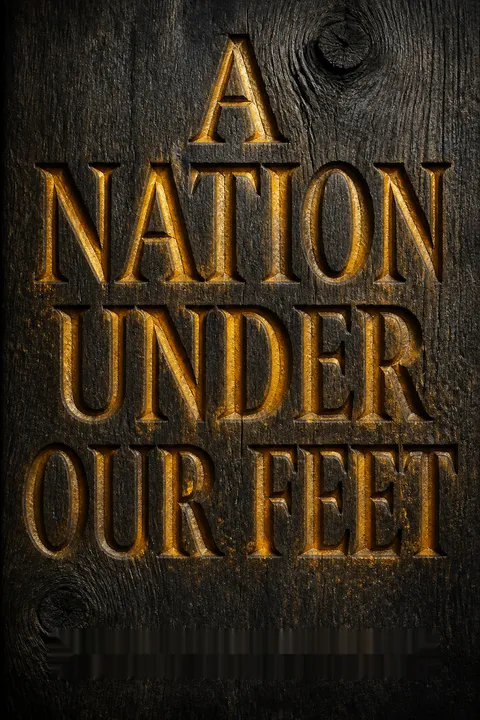
A Nation Under Our Feet by Steven Hahn examines African American political struggles from slavery through the Great Migration. Reviewers praise Hahn's argument that Black political activism began during slavery, not merely as reaction to white oppression. The book covers pre-Civil War organizing, Reconstruction achievements and violence, and post-Reconstruction resistance through emigration movements and political alliances. While lauded for extensive research and winning the Pulitzer Prize, some found it dense and repetitive. Readers appreciate Hahn's focus on rural Black agency and political networks that laid groundwork for Civil Rights movements.
People Also Read



About the Author
Download PDF
Download EPUB
.epub digital book format is ideal for reading ebooks on phones, tablets, and e-readers.








































