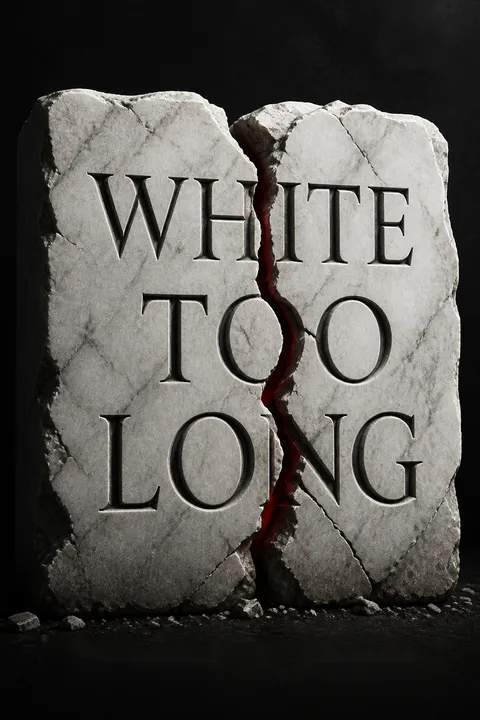

Key Takeaways
1. White Christianity's Foundational Complicity in White Supremacy
The Christian denomination in which I grew up was founded on the proposition that chattel slavery could flourish alongside the gospel of Jesus Christ.
A disturbing origin. Many prominent white Christian denominations in America, particularly in the South, were not merely complacent but actively instrumental in constructing and sustaining a system of racial caste. The Southern Baptist Convention (SBC), for instance, was formed in 1845 after Baptists in the South explicitly demanded that slaveholders be eligible for missionary work, leading to a definitive split with their northern counterparts. This foundational act cemented the compatibility of slaveholding with Christian faith in their institutional DNA.
Beyond the South. While the SBC's origins are a stark example, the entanglement of white Christianity with white supremacy was not confined to the Confederacy. Northern white Christians, despite clashing over slavery, often shared a tacit commitment to black inferiority, which facilitated reconciliation between northern and southern whites post-Civil War. Even Roman Catholicism, with its long history of colonialism, participated in segregation, as seen in Maryland's slaveholding Catholics and New York parishes segregating African Americans into "Central Jurisdictions" or specific parishes, regardless of residence.
A pervasive influence. This deep-seated complicity meant that for nearly all of American history, the "Jesus conjured by most white congregations was not merely indifferent to the status quo of racial inequality; he demanded its defense and preservation as part of the natural, divinely ordained order of things." This theological underpinning allowed white supremacy to become deeply and broadly integrated into white Christian identity, often operating below the level of conscious awareness.
2. The "White Christian Shuffle": Denying Responsibility While Claiming Innocence
White Christian churches have not just been complacent; they have not only been complicit; rather, as the dominant cultural power in America, they have been responsible for constructing and sustaining a project to protect white supremacy and resist black equality.
Protecting purity. White Christianity has historically maintained an "unassailable sense of religious purity that protects white racial innocence," deflecting blame for racial injustice onto culture rather than acknowledging its own theological and institutional complicity. This "white Christian shuffle" involves lamenting past sins in detail, expecting absolution, but giving scant attention to justice, repair, or accountability.
A double standard. This defensive posture is evident in survey data:
- 75% of Americans believe violent Christians are not authentically Christian.
- Only 50% believe violent Muslims are not authentically Muslim.
- White Christians are 20-40 percentage points more likely to protect their own religion's reputation from violence, despite white supremacists accounting for a far greater proportion of domestic terrorism.
This double standard allows white Christians to dismiss centuries of dedication to white supremacy as external to their faith, rather than integral to its historical development.
The Mohler example. Al Mohler, president of Southern Baptist Theological Seminary, exemplifies this "shuffle." While commissioning a report documenting the seminary's slaveholding and white supremacist founders, he simultaneously lauded them as "titans of the faith" and refused to consider reparations or renaming buildings. His assertion that "no one ever confronted the founders... with the brutal reality of what they were doing" is demonstrably false, as figures like Basil Manly Sr. were prominent theological defenders of slavery against abolitionist challenges.
3. Theological Pillars Constructed to Uphold White Supremacy
The unsettling truth is that, for nearly all of American history, the Jesus conjured by most white congregations was not merely indifferent to the status quo of racial inequality; he demanded its defense and preservation as part of the natural, divinely ordained order of things.
A distorted worldview. White Christian theology was diligently constructed to protect and justify white supremacy, evolving from overt to subtle expressions. Basil Manly Sr., a key Southern Baptist leader, systematically defended slavery as a divinely ordained hierarchical system, even using "entomological studies" of slave-making ants to argue for benevolent paternalism and contented slaves. This idyllic vision starkly contrasted with the lived experience of enslaved people like Frederick Douglass, who found that Christianity often made slaveholders more cruel, providing "religious sanction and support for his slaveholding cruelty."
The Lost Cause and its legacy. After the Civil War, white Southerners developed the "religion of the Lost Cause," a cultural civil religion that transposed military defeat onto Christian narratives of crucifixion and resurrection. This allowed them to reconcile defeat with their belief in being God's chosen people, shifting the battle from politics to culture. This movement also fostered a theological shift from postmillennialism (working to build a Christian society) to premillennialism (world declines, Christ returns to redeem), which undercut calls for social justice by deeming human intervention futile.
Individualism over justice. White evangelical theology, characterized by "freewill individualism, relationalism, and antistructuralism," radically constricted moral vision to personal and interpersonal realms, screening out institutional or structural injustices. This framework, centered on a "personal relationship with Jesus" (often implicitly white), made it difficult for white Christians to see social sins like slavery or segregation. The Bible was selectively interpreted to maintain the status quo, with white evangelicals shifting from advocating privatized religion to political action only when white supremacy itself was threatened.
4. Monuments and Symbols as Enduring Declarations of White Supremacy
These monuments purposefully celebrate a fictional, sanitized Confederacy; ignoring the death, ignoring the enslavement, and the terror that it actually stood for.
Staking claims in public space. The United Daughters of the Confederacy (UDC) spearheaded a massive movement to erect Confederate monuments, not immediately after the Civil War, but primarily between 1895 and the 1920s, and again from 1955-1970. These spikes correlated with the implementation of Jim Crow laws and resistance to the Civil Rights Movement, serving as "political weapons" to assert white supremacy and remind African Americans of their subordinate place. Richmond's Monument Avenue, with its blend of Confederate statues and prominent white churches, became a "Mecca of the Lost Cause."
Indoctrination through symbols. The UDC's efforts extended to:
- Education: Policing public school textbooks, producing white supremacist primers like "The Ku Klux Klan or Invisible Empire," and placing portraits of Confederate leaders in schools.
- Rituals: Involving children in monument dedications, dressing them in Confederate colors, and having them sing "Dixie" alongside "America" to normalize Confederate values as patriotic and Christian.
- Catechisms: Developing "The UDC Catechism for Children" to instill Lost Cause orthodoxy, including claims of slaves being treated "with great kindness and care."
Sacred spaces, sacred symbols. Confederate leaders like Robert E. Lee, Stonewall Jackson, and Jefferson Davis were elevated to Christian sainthood through stained glass installations in churches and public buildings. St. Paul's Episcopal Church in Richmond depicted Lee as Moses and Davis as Saint Paul, while the National Cathedral in Washington, D.C., housed "Lee-Jackson windows" featuring Confederate flags and Christian iconography, until their removal in 2017. The Confederate battle flag itself, initially a military banner, was resurrected in the 20th century by the KKK, the Dixiecrat Party, and pop culture, becoming a potent symbol of white power and opposition to black equality.
5. The Enduring "White Supremacy Gene" in White Christian Identity
Not only in the South but nationwide, higher levels of racism are associated with higher probabilities of identifying as a white Christian; and, conversely, adding Christianity to the average white person’s identity moves him or her toward more, not less, affinity for white supremacy.
A measurable legacy. Rigorous statistical analysis reveals that the legacy of slavery profoundly shapes contemporary white attitudes. Whites in counties with higher historical slave ownership in 1860 are significantly more politically conservative, oppose affirmative action, and exhibit higher racial resentment today. This enduring impact extends to white Christian identity, suggesting that white supremacy has become deeply integrated into its "DNA."
The Racism Index. A composite "Racism Index" (combining 15 questions on Confederate symbols, racial inequality, police treatment, and perceptions of discrimination) shows that white Christians, despite often reporting "warm feelings" toward African Americans, consistently score higher on racist and racially resentful attitudes than religiously unaffiliated whites or black Protestants.
- Confederate Symbols: 86% of white evangelicals, 70% of white mainline Protestants, and 70% of white Catholics see the Confederate flag as "southern pride," compared to 41% of unaffiliated whites and 16% of black Protestants.
- Police Killings: 64% of white Christians view killings of black men by police as "isolated incidents," versus 38% of unaffiliated whites and 15% of black Protestants.
- Structural Injustice: 67% of white evangelicals, 62% of white mainline Protestants, and 57% of white Catholics disagree that "generations of slavery and discrimination have created conditions that make it difficult for blacks to work their way out of the lower class."
Christianity as a predictor of racism. Multivariate regression models confirm that holding more racist attitudes independently predicts a higher likelihood of identifying as a white Christian across all subgroups (evangelical, mainline, Catholic). Conversely, identifying as a white Christian is independently associated with a nearly 10% increase in racist attitudes. Strikingly, higher church attendance among white evangelicals is positively correlated with identifying as white evangelical Protestant for those with the highest racist views, indicating that Christian formation is not mitigating, but rather coexisting with, white supremacist attitudes.
6. Awakening to Truth: Local Efforts at Remembrance and Reckoning
An event has happened, upon which it is difficult to speak and impossible to remain silent.
Confronting the past. While the problem of white supremacy is immense, there are growing efforts at the local level to tell a more truthful story about America's racist past. The Mississippi Civil Rights Museum in Jackson, for example, courageously portrays the state's shameful history of slavery, Jim Crow, and white resistance, including the role of white churches in organized segregation. Its exhibits, like the columns listing lynching victims and the replica of a Parchman Penitentiary cell, offer an unflinching look at racial terror.
Memorializing injustice. The National Memorial for Peace and Justice in Montgomery, Alabama, is a powerful testament to this awakening. Documenting over 4,400 lynchings between 1877 and 1950, its design evokes the violence of lynching with suspended steel columns, each representing a county where a lynching occurred. These duplicate monuments await installation in their respective counties, serving as a public acknowledgment of the past and a commitment to a different future.
Bridging divides. In Macon, Georgia, two First Baptist Churches—one historically white, one historically black, originally split due to slavery—began a journey of reconciliation in 2014. Pastors Scott Dickison and James Goolsby fostered trust through shared social events, leading to difficult conversations about racial fears (e.g., black parents' concerns about a youth trip to Florida after the Trayvon Martin killing). This partnership, solidified by a formal covenant, has enabled them to confront their shared history, including the white church's financial complicity in slave sales, and to mourn together at the National Memorial.
7. The Path to Repair: Beyond Reconciliation to Restitution
I will flatly say that the bulk of this country’s white population impresses me, and has so impressed me for a very long time, as being beyond any conceivable hope of moral rehabilitation.
Beyond denial. The notion that time alone will solve racial problems is a "blind hope" that misunderstands white supremacy's tenacious ability to endure across generations. White Christians must move past denial and the "paralyzing notion that the weight of this history is so enormous that meaningful action is impossible." The "desperate seizures of white consciences, squirming to escape the convicting evidence and protect their own innocence" are a sign of the reckoning that is upon us.
Justice, not just reconciliation. For white Christians, the path forward requires moving beyond a superficial "reconciliation" that often serves as a strategy to "move through all of the hard stuff just to get to the happy stuff." Instead, the focus must shift to "justice work," which entails confronting "much stickier questions of what has been lost, what is owed." This means embracing repentance, which involves the difficult question of restitution and repair, as exemplified by Virginia Theological Seminary's $1.7 million endowment fund for descendants of enslaved people.
The "white problem." James Baldwin powerfully articulated this as "the white problem," arguing that white Americans have been "married to the lie of white supremacy too long," leading to a "devastating" effect on their personalities and grasp of reality. He challenged white Christians to awaken to the truth of their intertwined histories, stating, "That bitterness is our only hope. That is the only way we get past it." The "mark of Cain" narrative, when inverted, reveals white Americans as the perpetrators of violence, with the soil itself crying out for justice. This reckoning is not merely for the sake of others, but for white Christians' own "salvation," to recover from the "disorienting madness of white supremacy" and reclaim their humanity.
Review Summary
People Also Read



Download PDF
Download EPUB
.epub digital book format is ideal for reading ebooks on phones, tablets, and e-readers.








































