


Plot Summary
Prologue
Rafe Colton,4 dying of cancer in a Virginia prison hospital, receives a visit from retired Sergeant Grant McKenna.2 Colton4 still professes innocence in the 1994 Mountain Music Festival murders, thirty-one years after his conviction for killing four women whose bodies were never found.
Grant2 mentions a writer named Sloane Grayson1 headed to Dawson to investigate the case. Colton4 perks up at the mention of a woman thinking about him, asking about her appearance, her skill. Grant2 admits she is sharp and attractive.
Handcuffed to his hospital bed, Colton4 savors the distraction. His upcoming parole hearing looks promising; without those bodies, his release seems likely. Grant2 leaves, and Colton4 settles back into his sheets, the game still entertaining him after three decades.
Colton embodies the seductive power of unresolved mystery. His charm, undiminished by cancer, reveals how predators weaponize likeability as a survival strategy. The exchange establishes the story's central tension: bodies are leverage, silence is power. Colton's observation that he learned to appreciate little things in prison mirrors Sloane's own hyper-observant nature, foreshadowing their eventual confrontation as two people who perceive the world differently than others do. Grant functions as the hinge between Colton's past and Sloane's future, carrying information from one world to the other.
Permission to Panic Denied
Newly hired Sheriff CJ Taggart3 examines the festival grounds on the morning of May 20, 1994, and his military instincts scream trouble. Rafe Colton4 has promised 20 security guards, but only three arrive from an obscure firm.
The venue has one choked entrance, no perimeter fencing, and a fire road still blocked by fallen trees. Mayor Mike Briggs overrules Taggart's3 demand to cancel, prioritizing promised revenue over safety. Laurie Carr, a 19-year-old blonde with a beat-up blue guitar case, hitchhikes toward the festival from the Dawson bus station, picked up by roadie Joe Keller.14
Taggart3 meets Patty Reed6 at the Depot food tent, her smile briefly softening his dread. By sunset, the crowd has swelled far beyond Colton's4 500 estimate, and Taggart3 feels disaster coiling.
Taggart represents institutional knowledge overruled by civilian optimism, a theme that recurs throughout the novel. His Vietnam-honed threat assessment clashes with Briggs's desperate boosterism for a dying town. The festival becomes a microcosm of how charismatic predators like Colton exploit the gap between what authorities fear and what they can prove. Burton uses multiple perspectives (Taggart's overview, Laurie's naive hope, Patty's workaday pragmatism) to show how a single event contains hundreds of stories, most of which will end in silence.
Chaos Swallows Four Women
Rain pounds the mountain as the crowd surpasses 2,000. The burgers run out, the latrines overflow, and drunken fights erupt faster than Taggart3 and his deputy9 can break them up.
Laurie Carr gets her moment onstage, singing a duet with the Terrible Tuesdays before vanishing into the woods, last seen with a dark-haired dancer named Tristan.8 Patty Reed6 leaves the burger tent around midnight for a bathroom break and never returns; her ID badge is found in the mud.
A battered young woman named Amy Wheeler13 is discovered in a tent wearing Patty's6 Depot T-shirt, her boyfriend claiming a stranger attacked her in the woods. By sunrise, the field is a wasteland of trash and abandoned tents. Taggart3 does not yet know four families will soon be calling.
The festival sequences illustrate how easily individuals dissolve within crowds. Burton depicts the concert as not one event but hundreds of simultaneous stories that will never be told. Patty's ID badge in the mud is devastating precisely because it is small: an object designed to identify her becomes a marker of disappearance. Amy's borrowed T-shirt connects her assault to Patty's fate, suggesting violence was more widespread than the official narrative ever acknowledged. Taggart's helplessness despite his competence foreshadows the novel's central frustration: seeing the pattern does not mean you can stop it.
The Trinket Shoebox
Within two weeks, Taggart3 has four missing person reports: Patty Reed,6 Laurie Carr, Debra Jackson, and Tristan Fletcher.8 He interviews abusive ex-boyfriends, evasive witnesses, and Colton's4 previous assault victim Cassidy Rogers, who describes being choked during sex.
Following his instincts, Taggart3 surveils Colton,4 obtains a search warrant, and discovers a shoebox in Colton's4 barn containing Laurie's guitar strap, Patty's6 driver's license, Debra's necklace, and Tristan's8 ring. Colton4 is arrested, tried, and convicted of four murders despite no bodies being recovered.
He maintains his innocence, suggesting Taggart3 planted the evidence. The town accepts the conviction as justice, but Taggart3 never stops wondering where the women are buried. The case file remains open in his mind until his death.
The shoebox of trinkets serves as the novel's central MacGuffin: objects that prove connection but not location, guilt but not resolution. Colton's conviction without bodies creates a legal closure that is emotionally hollow, a wound that festers for three decades. Taggart's tenacity contrasts with the mayor's political calculus, but the novel refuses to treat his investigation as heroic. The planted-evidence allegations, never resolved, hang over the case like smoke, suggesting the justice system can produce results that are legally sufficient yet morally incomplete.
The Daughter Returns
August 2025. True crime writer Sloane Grayson1 rents the isolated cabin once owned by Sheriff Taggart,3 who died by gunshot five years earlier. She is Patty Reed's6 daughter, though she has no memory of her mother.6
Raised by her alcoholic grandmother, Sloane1 grew up emotionally detached, unable to feel grief or love the way others do. She channels her restlessness into breaking and entering, high-speed driving, or sex. At the rental office, she meets Bailey Briggs Jones,5 the mayor's daughter, now a polished real estate agent.
Sheriff Paxton,9 once Taggart's3 deputy, refuses to share case files. Sloane1 settles into Taggart's3 recliner, surrounded by his western VHS tapes and the weight of his unfinished investigation. Her arrival stirs old fears in a town that has worked hard to forget.
Sloane's introduction establishes her as an unreliable narrator of her own emotional life. She describes herself in clinical terms: unable to feel, driven by compulsion rather than connection. Yet her choice to investigate her mother's death belies this self-diagnosis. The cabin becomes a physical manifestation of inherited obsession; she steps into Taggart's space, his chair, his unfinished business, positioning herself as his posthumous partner. Burton uses the rented property to literalize the psychological burden Sloane has carried since infancy: she is always occupying someone else's unresolved story.
Secrets Thirty-One Years Buried
Sloane1 interviews Buddy10 at the Depot Diner, who recognizes her as Patty's6 daughter and shows her a faded photo. She visits Monica Carr,11 Laurie's elderly aunt, who still grieves with vodka-laced lemonade. Marsha Sullivan,12 Debra's younger sister, reveals she slept with Kevin Pascal7 at the festival in a toolshed and has followed him for years because he habitually pauses his truck beside an old barn on Miller Road.
Sloane1 breaks into Kevin's7 apartment, feeds his dog, and notes the framed photo of him with Debra. She interviews Amy Wheeler,13 now a garden shop owner, who remembers a scream in the woods and a ring scratching her left cheek. Joe Keller,14 still playing small gigs, gives Sloane1 his photo of himself with Laurie.
Sloane's interview technique reveals her understanding that truth lives in the margins of official records. Marsha's secret encounter with Kevin, Amy's remembered ring scratch, Kevin's lingering photo: none of these solved the case alone, but together they form a counternarrative to the official story. Burton shows how witnesses carry shame and secrets for decades, and how those secrets calcify into compulsive behaviors. Kevin's drives past the barn become a ritual of return, a revisiting of the scene that suggests unfinished business even he may not consciously understand.
The Dead Girl Dancing
Sloane1 studies Brian Fletcher's15 delayed missing person report and visits his home, where the walls are a shrine of family photographs. She notices an image of Tristan's8 sister Lannie with a woman named Susan Westbrook who bears a striking resemblance to the missing dancer.
With Grant McKenna's2 help, she tracks Susan to a dance studio in Northern Virginia, watches her teach a class of little ballerinas with rigid perfectionism, and attaches a tracker to her van. The next morning, Sloane1 confronts Susan8 at her front door, refusing to leave. When Sloane1 calls her Tristan Fletcher,8 Susan's8 face goes pale. She has been hiding in plain sight for 31 years, her disappearance a fiction her father15 helped maintain.
The discovery of Tristan alive explodes the foundational assumption of the case: that all four women died. Brian Fletcher's photo wall represents the psychological burden of hiding a living daughter while publicly mourning a dead one. His shrine to the family he lost and the family he protected in secret embodies the double life that secrets force upon people. Tristan's transformation into Susan, a strict ballet teacher who expects perfection from tiny dancers, shows how trauma reshapes identity into something controlled and contained, a life lived in rigid choreography.
A Trailer in Darkness
Inside her immaculate home, Susan8 admits Colton4 invited her backstage, drugged her water, and she woke in a trailer with him raping and choking her. When she regained consciousness, she was alone in the dark with three dead bodies. She escaped through a back door, ran into a field, and called her father15 from a pay phone.
Brian Fletcher,15 fearing the killer would come after her, agreed to report her missing while hiding her for decades. Crucially, Tristan8 insists there was a second person in the trailer, someone breathing and watching. She never saw the face. Sloane1 senses Tristan8 is not telling the whole truth about her willing involvement with Colton,4 but the accomplice confirmation is the revelation that reshapes the entire case.
Tristan's confession is a masterclass in unreliable testimony. She frames herself as a victim, but Sloane detects omissions: her willing involvement with Colton, her awareness of his darker appetites, her complicity in her own mythology. The breathing second person is the story's most chilling detail: someone who watched, who derived pleasure from proximity to violence. Tristan's 31 years of hiding were not just self-protection but also a refusal to expose someone else. Her silence protected the accomplice as much as herself, a devil's bargain maintained across three decades.
Smiling at the Monster
Sloane1 and Grant2 drive to Red Onion State Prison. Colton,4 gray-haired but still magnetic, grins when he sees her. They spar verbally. He notes she has her mother's6 looks but not her eyes: Patty's6 eyes held feeling; Sloane's1 are empty. Colton4 reveals he was present when Patty6 named her baby Sloane,1 after a childhood friend who died violently.
He describes Larry Summers, Sloane's1 imprisoned father, as cold-hearted. Sloane1 tells Colton4 that Tristan Fletcher8 is alive, will testify, and his parole is now impossible. His grin vanishes. He warns that if he had an accomplice, that person has everything to lose. Sloane1 leaves satisfied; she has rattled the kingpin and signaled to the real killer that the walls are closing in.
The prison interview crystallizes the novel's interest in people who do not feel the way others do. Colton and Sloane recognize each other: two people who perform emotions rather than experience them. His revelation about naming her creates a perverse intimacy; the man who may have killed her mother helped choose her name. Colton's warning about his accomplice is both threat and gift: he knows revealing the second killer would compromise his own mythology, so he lets Sloane do the work. Their conversation is a chess match between two predators, one caged, one free.
Fire and Blood
Brian Fletcher15 is found dead from a gunshot wound to the head in his home office. The photographs of Susan8 have been removed from the walls. The death is initially ruled suicide, but the timing, immediately after Sloane1 discovered Tristan's8 identity, is suspicious.
That night, someone throws Molotov cocktails through the windows of Taggart's3 cabin. Sloane1 escapes through a bedroom window, twisting her ankle as the structure burns behind her. Grant2 arrives with Cody, the golden retriever Sloane1 took from Fletcher's15 house.
The rain washes away evidence, but the message is unmistakable: the accomplice is still alive, still local, and now actively eliminating anyone who threatens exposure. Sloane1 has been right all along about a second killer.
The escalation from discovery to violence demonstrates how secrets become more dangerous when threatened. The removal of Susan's photos from Fletcher's wall suggests the killer was inside his house, a chilling detail that places an intruder in the most intimate space. Sloane's escape through the window, gun in hand, transforms her from investigator into target, collapsing the distance between observer and participant. Burton uses the cabin fire as both literal destruction and symbolic cleansing: Taggart's refuge, where he sat alone with his failure, becomes a pyre for the old investigation.
The Bait Text
Sloane1 texts multiple contacts: 'I know where the bodies are buried.' She drives to the old barn on Miller Road, the one Kevin Pascal7 always pauses beside, the one near an abandoned gold mine that local waitress Callie mentioned. She hides her Jeep and walks through the tall grass with Cody.
Soon a car arrives: Bailey Briggs Jones5 steps out, surveying the property. Sheriff Paxton9 pulls up moments later, also responding to the text. Bailey5 claims she is there to assess the land for potential purchase. Sloane1 watches from the tree line as the tension builds between them, her gun ready. The trap is set; the bait has been taken.
Sloane's text is a performative act of investigation: she does not know where the bodies are, but she knows the killer does not know she is bluffing. The barn on Miller Road, first introduced through Kevin's compulsive behavior, becomes the stage for the final confrontation. Burton uses the abandoned mine as a metaphor for buried truth: what appears played out and empty still holds what the town has spent decades trying to forget. The multiple arrivals suggest how many people in Dawson are connected to this place, even if they do not consciously know why.
Gunfire at the Mine
Bailey5 pulls a revolver from her purse and shoots Paxton9 in the chest without hesitation. He falls. She calls out for Sloane1 to show herself. Sloane1 emerges, and they face each other across the grass. Bailey5 admits she was drawn to Colton4 from the start, willingly helping him lure women to the trailer where he killed them.
She watched him rape and strangle the victims and found it exciting. She drove the bodies to this barn and dumped them in the mine shaft. When her father found a love letter from Colton4 five years later, she staged his suicide.
When Taggart3 got too close, she killed him too. And when Brian Fletcher15 met with Sloane,1 Bailey5 shot him. Cody breaks free from his leash, creating a split-second distraction. Both women fire. Bailey5 is hit in the shoulder; Sloane1 takes a graze to the arm. Paxton's9 vest saved him.
Bailey's unmasking reveals the banality of evil. She is not the charismatic monster Colton is; she is the audience, the willing spectator who found violence arousing. Her murders of her father, Taggart, and Fletcher were not passionate but pragmatic: maintenance of a secret. The detail that she and Colton never communicated after his arrest underscores the cold transactionalism of their partnership. Their silence was not loyalty but mutually assured destruction, a prisoner's dilemma maintained across decades. Sloane's practiced draw, her muscle memory from countless shooting-range repetitions, shows how her 'broken' emotional wiring serves a purpose. She was ready because she is always ready.
Bones Rise to Light
State police crews rig harnesses over the mine shaft and lower cameras into the flooded darkness. Through murky water, the first skull appears, empty eye socket staring upward. Over four hours, crews recover three sets of skeletal remains: Patty Reed,6 Laurie Carr, and Debra Jackson. Bailey5 confesses fully to the murders and to killing her father, Taggart,3 and Fletcher.15
Sloane1 watches the bones brought to light and feels no grief, only the quiet satisfaction of a puzzle solved and a promise kept to her mother.6 Grant2 asks her to stay in Dawson with him and Cody. For the first time, Sloane1 considers belonging somewhere. She is not fixed, not healed, but she is present, and that may be enough.
The recovery of the bones fulfills the novel's central promise while complicating the idea of closure. Sloane feels no catharsis, only the completion of a task. Her emotional flatness is not a flaw to be corrected but a feature of her being that enabled her to succeed where others failed. Grant's invitation to stay represents a new experiment: can someone who experiences the world at a distance learn to live in proximity to another person? The bones rise, but Sloane remains unburied, still learning what it means to be alive. The novel ends not with triumph but with a quiet, tentative step toward connection.
Analysis
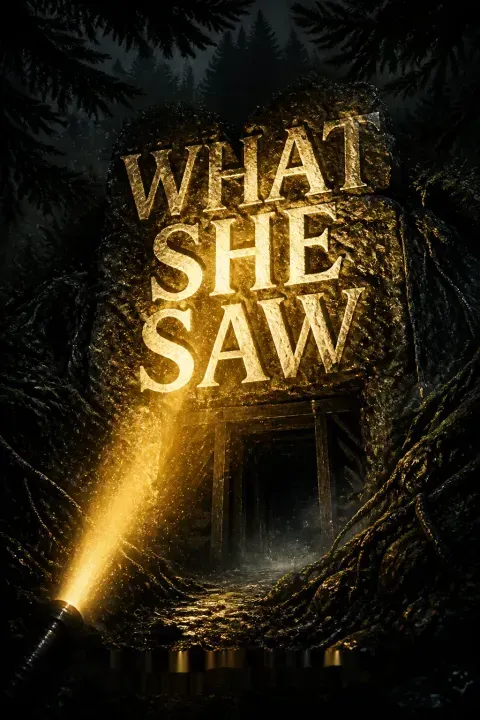
'What She Saw' examines the psychological architecture of justice deferred, asking whether closure is possible when the dead remain unburied. Through Sloane Grayson,1 Mary Burton explores emotional detachment not as pathology but as adaptive strategy: a woman who cannot feel grief is uniquely equipped to excavate it. Her glass-jar existence protects her from the horror she investigates while enabling the hyper-observance that solves cases. The novel refuses to pathologize her difference, presenting it instead as an inheritance she has learned to weaponize.
The novel's central insight is that communities conspire in their own forgetting. Dawson rebuilt itself by burying the festival in memory as thoroughly as Bailey5 buried bodies in the mine shaft. Every character who knew something chose silence for different reasons: self-protection, political calculation, shame, or the exhaustion of caring about girls no one else valued. Patty,6 Laurie, and Debra were working-class women whose disappearances had to become a pattern before anyone acted. The novel indicts not just the killers but the ecosystem of indifference that made their crimes possible.
Burton's portrayal of Colton4 and Bailey5 as a dyad, charismatic predator and willing spectator, updates the serial killer archetype for contemporary understanding. Colton's4 charm is not incidental to his violence but instrumental to it; he needed someone like Bailey5 who would watch. Their 31-year silence was not loyalty but a prisoner's dilemma maintained across decades. Bailey's5 murders of her father, Taggart,3 and Fletcher15 reveal her violence was never subordinate to Colton's4 but parallel: she was the one who ensured the secret stayed buried.
Sloane's1 relationship with Grant2 offers a tentative answer to the novel's deeper question: can someone who experiences the world at a distance learn to live in proximity to another person? His acceptance of her without demand for change (he does not ask her to feel more, only to stay) suggests that connection does not require emotional performance. The final image of bones rising from the mine shaft is not triumphant but quietly right: after three decades, the lost women are found, and Sloane1 has done what her mother6 could not. She has brought herself home.
Review Summary
What She Saw receives mixed reviews averaging 4.17 stars. Fans praise the compelling dual-timeline narrative, engaging protagonist Sloane Grayson, and unpredictable twists in this cold case mystery about four women who vanished at a 1994 music festival. Many found it gripping and impossible to put down, with excellent audiobook narration. However, critics cite slow pacing, too many characters, flat personalities, weak character development, an unnecessary romance subplot, and an anticlimactic ending where the solution feels randomly dropped. The protagonist's sociopathic tendencies divided readers between fascinating and unlikeable.
People Also Read


Characters
Sloane Grayson
True crime writer, victim's daughterDaughter of murder victim Patty Reed6 and imprisoned killer Larry Summers. Raised by her alcoholic grandmother after her mother6 vanished, Sloane processes the world through a clinically detached lens. She describes herself as living inside a glass jar where emotions are visible but unreachable. Her lack of conventional feeling drives her toward risky behaviors (breaking and entering, high-speed driving, casual sex) that provide adrenaline-based release. Despite her self-diagnosis as a sociopath, her dogged pursuit of her mother's6 case and her protective instinct for victims suggest a deeper connection she cannot consciously access. She is methodical, manipulative when necessary, and hyper-observant, traits forged by a childhood spent watching rather than feeling. Her superpower is seeing what others ignore.
Grant McKenna
Retired detective, landownerRetired DC homicide detective who inherited his grandmother's farm, the site of the 1994 Mountain Music Festival. Now working pro bono as a private investigator, Grant deliberately sought out Sloane1 at a crime conference because of her reputation for solving cold cases. He is methodical, patient, and morally grounded without being sanctimonious. A father to a grown son and recently divorced, Grant represents stability and emotional availability, yet he never tries to change Sloane's1 fundamental nature. His willingness to bend rules (placing a tracker on her car, accepting her illegal investigative methods) reveals a pragmatism that matches her own. He wants Colton's4 parole blocked and the bodies found, but he also wants Sloane1 to stay.
CJ Taggart
Original investigating sheriffFormer marine turned Dawson sheriff who inherited the Mountain Music Festival case six weeks into his new job. A Vietnam veteran with 27 years of military police experience, Taggart trusted his instincts when civilian leadership ignored his warnings. Though he arrested Rafe Colton4 and secured a conviction, the missing bodies tormented him for the rest of his life. In his later years, he secretly copied his case files and left them to Sloane Grayson1, having watched her grow up from a distance. His death by gunshot was initially ruled suicide, though the medical examiner noted suspicious irregularities. His isolated cabin, where he spent his final years, became Sloane's1 investigation headquarters.
Rafe Colton
Charming convicted killerThe festival promoter convicted of murdering four women despite no bodies being recovered. Colton maintains his innocence while savoring the attention his notoriety brings. His charisma remains undimmed by 31 years in prison and terminal cancer. He is a master of psychological manipulation who recognizes in Sloane1 a kindred spirit: someone who experiences the world without the burden of conventional emotions. He helped name her as an infant, a fact he deploys to create unsettling intimacy during their prison interview. Colton knows he did not act alone but guards the identity of his accomplice because their mutual silence protects them both. He represents the seductive power of unresolved mystery.
Bailey Briggs Jones
Real estate agent, mayor's daughterDaughter of the late Mayor Mike Briggs, now a successful real estate agent in Dawson. Bailey was a rebellious, drinking teenager at the time of the festival who was escorted to the first aid tent by Taggart3. In the present, she presents a polished professional facade with designer jeans and an easy smile, but her eyes hold a watchful distance. She urges Sloane1 to let the past stay buried, claiming the festival was terrible for everyone. Her father's suicide five years after the festival and her subsequent reinvention as a businesswoman suggest a woman who survived catastrophe by meticulous self-control. Beneath her charm lies a decades-old secret connected to the night four women vanished.
Patty Reed
Sloane's mother, first victimA hardworking 19-year-old waitress and single parent. Patty fled an abusive boyfriend named Larry Summers and was raising Sloane1 alone while working at the Depot Diner. She dreamed of accounting classes and a better life away from Dawson. On the night of the festival, she worked the burger tent for a share of the profits, hoping to earn enough money to leave town. She vanished around midnight, remembered by those who knew her as always smiling, always hustling. Her driver's license was later found among Colton's4 trophies. She never got to leave.
Kevin Pascal
Festival security guardSecurity guard at the festival and ex-boyfriend of victim Debra Jackson. Kevin failed the police entrance exams twice and carries quiet resentment beneath his professional demeanor. He drove Debra to the festival that night and maintained in interviews that they parted amicably. He left Dawson for two decades after the trial but eventually returned to work security at a computer company. In his apartment, he still keeps a framed photo of himself with Debra at the festival. His unexplained habit of pausing his truck beside an old barn on Miller Road becomes a crucial clue.
Tristan Fletcher
Presumed dead, actually survivedThe dancer among the Festival Four, long presumed dead. Tristan was an ambitious, sexually forward 18-year-old who secretly dated Colton4 before the festival. She performed onstage and was last seen near the woods with Laurie Carr. Her father15 reported her missing ten days late, claiming his younger sister lied about her whereabouts. In truth, she escaped Colton's4 trailer after being assaulted, saw the bodies of three other women, and called her father15 for help. She has spent 31 years hiding in plain sight as Susan Westbrook, a strict ballet teacher in Northern Virginia.
Sheriff Paxton
Taggart's former deputy, now sheriffFormer deputy under Taggart3, now the sheriff of Dawson. Paxton was young and easily distracted at the time of the festival, more interested in the bands and the women than in law enforcement details. As sheriff, he has buried the Mountain Music Festival case as deeply as the victims, refusing Sloane1 access to files and warning her not to stir up the past. His comfortable routine reflects a man who has made peace with unanswered questions. He still lives in Taggart's3 shadow, a comparison he resents.
Buddy
Depot Diner ownerOwner of the Depot Diner who employed Patty6 and had an affair with her. He wanted to marry her, but she planned to leave Dawson with her child. He worked the burger tent at the festival and was the last person to see Patty6 before she vanished.
Monica Carr
Laurie Carr's grieving auntLaurie Carr's aunt who helped raise her after her mother abandoned her. She still grieves her niece's disappearance, drinking vodka-laced lemonade in her threadbare home decorated with dozens of photographs of Laurie holding her guitar.
Marsha Sullivan
Debra Jackson's younger sisterDebra Jackson's younger half-sister. At the festival, she was drunk and Kevin Pascal7 took her to a toolshed where they had sex. She has stalked Kevin7 for years, convinced he knows more than he admitted about Debra's disappearance.
Amy Wheeler
Assault survivor from festivalThe young woman found beaten in a tent wearing Patty's6 Depot T-shirt. Now a garden shop owner and recovering addict, she remembers a scream in the woods and a ring scratching her left cheek. Her attacker was never identified.
Joe Keller
Aging musicianThe roadie and guitarist who gave Laurie Carr a ride to the festival and performed a duet with her onstage. He still plays small gigs, carrying a worn photo of himself with Laurie. He warned her to be careful that day.
Brian Fletcher
Tristan's protective fatherTristan Fletcher's8 father who hid her survival for 31 years. His home was a shrine of family photographs, including images of Tristan8 as a dancer. His guilt and the burden of his secret eventually consumed him.
Plot Devices
The Trinket Box
Key evidence that convicted ColtonA dusty brown shoebox hidden in a trunk in Rafe Colton's4 barn, containing four items taken from the victims: Laurie Carr's blue guitar strap, Patty Reed's6 driver's license, Debra Jackson's heart necklace, and Tristan Fletcher's8 onyx ring. Discovered by Taggart3 during his search, these mementos became the critical evidence that convicted Colton4 despite no bodies being recovered. The objects proved connection between Colton4 and the missing women but could not reveal where the remains were hidden. The box represents both the power and the limitation of forensic evidence: enough to imprison a man, not enough to bring peace to families.
Taggart's Case Files
Investigation roadmap left to SloaneThe original investigation files that Sheriff Taggart3 secretly copied and hid in his cabin, swapping the copies for the real files in the official records before his death. He left them to Sloane Grayson1, having followed her life from a distance and recognizing her unique combination of intelligence and emotional detachment. The files contain his unofficial notes, theories he never shared with his department, and the names of witnesses the official investigation overlooked. They are the roadmap Sloane1 follows throughout her investigation, containing clues Taggart3 himself never fully connected.
The Mine Shaft
Hidden burial site for the victimsAn abandoned gold mine on the old Foster family farm, located near a collapsing barn on Miller Road. The shaft, flooded with murky water and over a century old, became the final resting place of Patty Reed6, Laurie Carr, and Debra Jackson. Accessible yet hidden, its depth ensured the remains stayed concealed for 31 years. Bailey Briggs5 drove the bodies there in a trailer during the festival exodus and dumped them into the darkness. The mine shaft represents the town's relationship with its past: what appears played out and empty still holds what everyone wants to forget.
The Blue Guitar Case
First evidence, establishes victim identityLaurie Carr's distinctive guitar case, covered in travel stickers from cities she had never visited, bought used at a pawn shop. She carried it while hitchhiking to the festival and played her guitar onstage during her one song. The case was found in the woods after the festival, and the guitar strap inside was later discovered among Colton's4 trophies. The case became the first physical evidence linking the festival to a crime scene, and the strap was a key item at trial. For Laurie's aunt Monica11, the case symbolized both her niece's dreams of stardom and the brutal end of those dreams.
The GPS Tracker
Surveillance tool used by Grant and SloaneA small tracking device Grant McKenna2 placed on Sloane's1 Jeep to monitor her movements around Dawson. She discovered it under her rear bumper and later repurposed it, attaching it to Susan Westbrook's8 van to track the woman to her home. The tracker represents the blurred ethical lines both Sloane1 and Grant2 navigate in pursuit of truth. Grant's2 surveillance of Sloane1 mirrors Sloane's1 own invasive methods (breaking into homes, following suspects), creating a symmetry between the two investigators. The device enables Sloane's1 discovery of Tristan's8 identity while raising questions about trust between her and Grant2.
Download PDF
Download EPUB
.epub digital book format is ideal for reading ebooks on phones, tablets, and e-readers.








































