
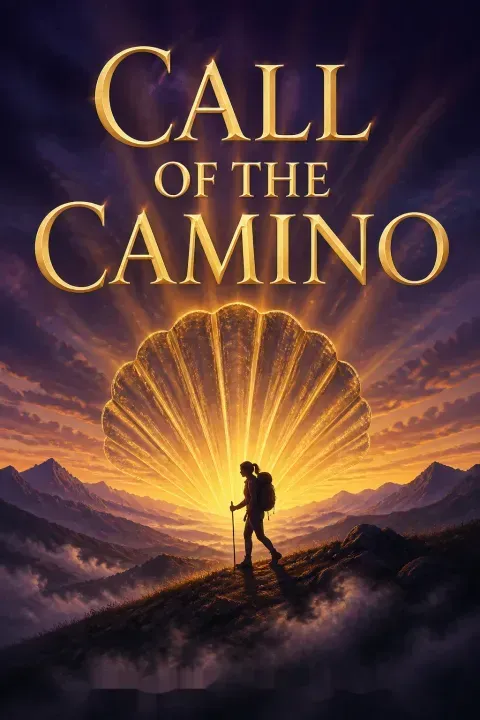


Plot Summary
Xavier's Warning
In May 1997, seventeen-year-old Isabelle Vidal2 is herding cows near her French boarding school when her younger brother Xavier12 appears from the shadows. The Sansas twins, sons of a rival family in their remote Andorran village, have been killed in a suspicious car crash.
Because Isabelle2 holds the tie-breaking vote over whether their mountain becomes a ski resort or a mining site, Senor Sansas14 is coming to kill her as payment for his sons. Isabelle2 sends Xavier12 back home and, with no money or food, runs into the woods. She remembers the Camino de Santiago, the ancient pilgrimage route across Spain, where pilgrims are sheltered and protected. If she can reach the trail and blend in, she might survive.
The opening establishes the feud's brutal logic: a child's life is currency in a war between patriarchs. Isabelle's instantaneous decision to flee, without money or plan, reveals an instinct to protect others over herself that will define her journey. The Camino de Santiago, introduced as a haven for pilgrims, becomes the physical and spiritual thread connecting the two timelines. It is a path where identity can be shed and survival depends on faith in strangers, a concept as foreign to her Andorran world of blood debts and vengeance as the blue sky is wide.
Stealing the Story
Reina Watkins,1 a copyeditor at Journey magazine in New York, has been waiting years for a chance to write. When lead writer Matt Calhoun4 emails that he was mugged and lost his passport, needing to postpone the flagship Camino issue, Reina1 seizes the opening. She replies-all, volunteering to go in his place, citing her own passport and her father's dream that they would someday walk the Camino together.
Her boss Brenda, desperate to meet the deadline, sends her to Spain. Reina1 retrieves her late father's old backpack from her aunt's attic, discovering his 1997 Camino journal and undeveloped film. She boards the plane knowing Matt4 will soon catch up and only one of them will get the feature.
Reina's impulsive email is the 'sliding door' moment that reroutes her life. Her willingness to challenge the workplace bully exposes her hunger for meaning beyond copyediting. The backpack and journal tether her to her father's ghost, making the journey not just a career play but an unconscious pilgrimage toward the parents she lost. The rivalry with Matt is set up as a classic oil-and-water conflict, but the subtext, visible only in hindsight, is that they are far more alike than either admits.
The Gift of Blue Boots
Now calling herself Joan, Isabelle2 joins a motley group of pilgrims: Jen,9 Joe,10 Erika, and the American brothers Peter3 and David.5 Her left sneaker is falling apart, the sole flapping and a raw wound forming on her toe. At Cirauqui, the group plays Frisbee; Isabelle2 trips and falls.
The next morning, Peter3 appears, having walked forty kilometers back to Pamplona to buy her a pair of blue-and-gray hiking boots. She nearly weeps at the gesture. Walking alone with him later, she learns he wants to be a photojournalist; she lies that she is a French student. But the boots are a promise neither yet understands, a first step toward a bond that will reshape both their lives.
The boots embody the Camino's core ethos: practical charity that opens emotional doors. Peter's forty-kilometer detour is quietly heroic, performed without expectation of reward. For Isabelle, who has been surviving by her wits and hunger, receiving a gift chosen specifically for her body's need begins to crack her defensive solitude. The mismatched pair, one sturdy shoe and one crumbling, mirrors her dual identity: the capable pilgrim and the terrified fugitive.
The Wrong Copper-Haired Angel
On the trail, Reina1 reads her father Peter's 1997 journal, expecting to find his romance with her mother Isabelle.2 Instead, she discovers rapturous entries about a copper-haired French girl named Joan whom he met in Puente la Reina, the very town Reina1 was named after. The journal describes him backtracking over a mountain to buy Joan hiking boots.
Reina1 feels betrayed: her name, which she thought was a token of her parents' love, was actually a memento of her father's3 infatuation with another woman. She refuses to enter the church where they met. Days later, scanning the digitized photos, she realizes with a shock that Joan is her mother,2 using an alias. The truth both comforts and confuses her.
Reina's discovery is a lesson in narrative epistemology: we inherit stories from our parents that are often incomplete or wrong. Her disillusionment with her name's origin mirrors the broader identity crisis of someone who lost both parents young. The realization that Joan is Isabelle not only heals the perceived wound but also deepens the mystery of what her mother was running from, converting the journal from a betrayal into a treasure map.
Fractured Arm, Unbroken Bond
In Logroño, Isabelle2 stays behind to clean the albergue in lieu of payment. The hosteler attacks her in the bathroom. Peter,3 David,5 and Joe,10 returning to help, hear the struggle; Peter3 charges in and fights the man off, but his arm smashes against a sink and fractures. The police are summoned.
Isabelle2 panics, knowing her false identity will be exposed, and flees to a cathedral. David5 finds her and brings her to Peter,3 whose arm is now in a bright-blue cast. Overwhelmed, Isabelle2 confesses everything: her real name, the Andorran feud, the death threat. Peter3 does not flinch. He vows to stay with her, and they share their first kiss that night beneath a vineyard moon.
The attack forces Isabelle out of performance and into truth. Her confession is an act of trust that costs her the protective shell of anonymity but gains her an ally who sees her fully. Peter's broken arm becomes a physical testament to the cost of love, while her revealed identity transforms their romance from a Camino fling into a partnership against the world. The vineyard moon becomes their silent witness.
The Uncle on the Trail
Exhausted and aching on a relentless climb, Reina1 and her friends stumble upon a miracle: a shaded stand piled with fresh fruit, bread, and drinks, marked as donativo. The caretaker, a lean man in a Yankees cap, offers sunscreen to Gordon8 and speaks with calm wisdom. When he turns, Reina1 freezes: it is her Uncle David,5 who disappeared after the plane crash that killed her father.3
For fourteen years, he has run this Sanctuary of the Gods as penance. Over the following days, David5 walks with them, telling Reina1 the full story of her mother Isabelle:2 her flight, her deal with Senor Sansas,14 her pneumonia, and the secret of Reina's1 Andorran heritage. Reina's1 fury at his abandonment slowly yields to understanding.
David's reappearance literalizes the Camino as a place where past and present collapse. He embodies the paradox of pilgrimage: a man who has spent fourteen years performing daily acts of kindness as penance for abandoning those who needed him. Reina's encounter forces her to reconcile the uncle who left with the saint-like figure he has become, challenging her binary notions of guilt and redemption and opening the door to forgiveness.
Caught in León
In León, Isabelle2 and Peter3 spend a joyful day exploring the cathedral and dancing in the square. That evening, returning to the convent albergue, Isabelle2 finds her father Ruben,15 her brother Xavier,12 and a stern Mother Superior waiting. The church network has tracked her. Her father15 orders her home, his eyes betraying a fear she has never seen.
Xavier12 watches her like a guard. As they walk to the truck, Isabelle2 weighs her options. At the last second, she bolts, racing through cobblestone alleys, her lungs burning. She escapes the city and collapses in a barley field, soaked and feverish. She has fled again, but now her father's15 men and Senor Sansas's14 hunters know exactly where she was last seen.
This scene dramatizes the clash between familial obligation and self-preservation. Her father's appearance reveals him not as a monster but as a man out of his depth, trapped in a machine he helped start. Isabelle's flight is both a literal sprint and a rejection of the patriarchal system that treats her as a bargaining chip. She chooses the unknown of the Camino over the certainty of death, even though it costs her the safety of family.
The Bargain with the Enemy
Sick, starving, and following train tracks west to avoid the Camino, Isabelle2 realizes she cannot outrun her pursuers forever. From a pay phone near O Barco, she calls Senor Sansas14 directly. She proposes a bargain: she will never return to Dur and never cast her decisive vote, thereby freezing the mountain dispute forever, if he vows not to harm her brother Xavier,12 her sister Ana,11 or her mother.
She deliberately omits her father15 from the deal, understanding that Senor Sansas14 needs a life as payment. After a long silence, Senor Sansas14 accepts. Isabelle2 hangs up, the weight of forfeiting her home, identity, and future with Peter3 settling over her like a shroud.
This is Isabelle's darkest strategic act. She trades her entire future world for the lives of those she loves, displaying a ruthlessness masked as submission. The omission of her father reflects a cold calculus: he is the architect of the feud and, in her eyes, already culpable. The deal transforms her from a victim into a silent agent who shapes the fate of a village from exile, her power born of powerlessness.
Engagement at Muldoon's?
John surprises Reina1 by flying to Spain for her birthday and, in a León bar surrounded by Camino friends, goes down on one knee to propose with a small diamond. Caught in the romance of the moment, Reina1 accepts. But later, as John texts about holding the wedding at Muldoon's pub and insisting on two hundred guests, Reina's1 doubt grows.
Days later, standing on a bridge in Sarria, watching a couple reading peacefully by the river, she calls him. She tells him she cannot marry him, that she is not sure she is even returning to New York. John accuses her of being changed by the Camino. She does not argue. When the call ends, she feels a profound, terrifying relief.
The proposal scene is a masterclass in ambient pressure: the camaradery, the exotic locale, and John's genuine sweetness obscure Reina's deeper incompatibility with him. Her belated 'no' is an assertion of self that the Camino has cultivated. By rejecting the predetermined script, she chooses authenticity over security, a decision that aligns her with her mother's earlier risk-taking and completes her transition from copyeditor to author of her own life.
A Letter of Goodbye
In a small Portuguese inn, Isabelle2 recovers from pneumonia, working as a server. She cares for a scruffy one-eyed cat she names Joe. Finally strong enough to confront her past, she writes a letter to Peter,3 enclosing fifty thousand pesetas to repay his kindness. She explains she cannot ask him to abandon his life in America to live in hiding with her, always looking over their shoulders.
She tells him he was her greatest love. She mails the letter and then, hollow, accepts the proposal of Alberto, a kind local stonemason who has been courting her. She forces herself to believe that a safe, small life is enough, even as her heart remains with the man she released.
This is the tragedy of maturity: Isabelle makes the rational, selfless choice that breaks her own heart. The letter is her attempt to free Peter from a doomed entanglement, but it also cuts her off from the only person who truly knew her. Her acceptance of Alberto's proposal is a survival strategy, not a love match: she is learning to silence her own desires in the name of safety, a decision that cannot hold.
Bee Sting in the Hermitage
Determined to find a secret hermitage her father3 wrote about, Reina1 ventures alone into the woods near O Cebreiro. She startles a bee's nest and is stung. Without her EpiPen, her throat begins to swell shut. She collapses on wet leaves, her vision narrowing. Matt,4 noticing her absence and having read the journal for clues, finds her.
He drags her into the ancient stone ruin, wraps his jacket around them both, and spends the night keeping her awake with terrible jokes, flicking her swollen cheek, and humming Scooby-Doo. By dawn, the danger passes. In the intimate dark, Matt4 reveals he cares for his disabled sister Fiona, and Reina1 glimpses the man behind the smarmy mask.
The bee sting is the literal near-death that births Reina's new understanding of Matt. He becomes not just a rival but a person with hidden depths and sacrifices. The hermitage transforms into a confessional where both drop their armors. The episode recasts their entire adversarial history as a cover for unacknowledged attraction, seeded long before the Camino and now undeniable. The Scooby-Doo humor leavens the mortal terror.
The Portuguese Inn Reunion
Nearly a year after the Camino, Isabelle2 is working in the kitchen of the Portuguese inn when a familiar voice says her name. Peter3 stands in the doorway, older and more solid, having traced her through the faintest evidence from her letter. He tells her he never stopped searching, that she is his heart, and he will not leave without her.
Isabelle,2 who had resigned herself to a safe marriage with Alberto, feels her carefully built walls crumble. She steps into his arms. They embrace as the innkeeper Carolina watches with a knowing smile. Isabelle2 finally allows herself to believe that the love she thought she had to sacrifice is, in fact, the one thing that can save her.
Peter's arrival is the reward for his relentless hope and her earlier trust. Her capitulation acknowledges that true partnership cannot be based on unilateral sacrifice. The scene closes Isabelle's arc from a girl running from her past to a woman choosing her future, not out of fear but out of love. It is the Camino's final gift to her, a miracle earned through suffering and endurance.
The Final Copyedit
In Santiago, on her final night, Reina1 reads Matt's4 article and is stunned by its quality. Instead of competing, she spends hours editing it, adding her photos and structural suggestions. She emails the improved piece to Brenda, declaring Matt4 always deserved the feature, and tenders her resignation.
She plans to explore her mother's2 homeland of Andorra and develop the Wisdom of the Way pilgrim app that her parents and Uncle David5 once dreamed of creating. At the bottom of the email to Matt,4 she adds a postscript: after O Cebreiro, none of it was about the story. She sends it, her finger trembling on the mouse, knowing she has just rewritten her entire future.
This act of professional generosity is the culmination of Reina's moral awakening. By elevating Matt's work over her own ambition, she embodies the Camino's communal ethic. The postscript, ambiguous yet charged, extends an emotional invitation while leaving the next move to him. It is a risk equal to any physical challenge on the trail, and it shows how fully she has internalized the journey's lessons about vulnerability and trust.
Dur, Where It Began
Reina1 arrives in Dur, the Andorran village her mother2 fled. Her aunt Ana,11 a sharp-tongued mayor, and her uncle Xavier,12 a gentle giant who runs the auto shop, welcome her. She meets her grandmother Mi Jefa, and over nights spent sitting behind the inn, they communicate without common language. Reina1 hikes Smuggler's Pass with Ana,11 learning the landscape that shaped her mother.2
She begins planning the Wisdom of the Way app. One evening, entering the crowded family tavern, she freezes. Matt4 sits at the bar, clean-shaven and holding a copy of Journey magazine. He tells her her postscript changed everything. Then, to the delight of the villagers, he pulls her into a kiss that echoes across the mountains.
The conclusion brings both timelines home. Reina reclaims her mother's lost world and transforms it into a foundation for her future. Matt's appearance proves he read her postscript and chose to follow. Their kiss is not just a romantic resolution but a merging of two journeys: Reina's search for roots and Matt's search for purpose. The Camino, having given both a new life, now sets them on a shared path, and the guidebook app becomes their joint venture.
Analysis
Call of the Camino is a dual-timeline novel that uses the ancient pilgrimage route as a stage for exploring how the past is never truly past. It lives in objects, in names, in the silences between generations. By braiding Isabelle's2 story of survival with Reina's1 quest for self-discovery, the book argues that identity is not a fixed inheritance but a story we must unravel and reweave. Both women walk the same path decades apart, yet their Caminos are profoundly different: Isabelle's2 is a flight from death, Reina's1 a walk toward life. The trail itself becomes a character, offering shelter, wounds, and revelations in equal measure. The central motif of the scallop shell, symbol of the pilgrimage, suggests that all paths, however winding, lead to a single sacred center, whether that is Santiago, love, or the truth of one's origins. The novel also interrogates the ethics of loyalty and sacrifice. Isabelle's2 painful bargain with Senor Sansas14 raises uncomfortable questions about the price of family, while Reina's1 break with John and her career models a modern form of integrity: the courage to say no to a tolerable life in order to pursue a meaningful one. The interlocking romances, both tested by physical hardship and moral complexity, suggest that love is not a reward for safety but a risk that requires complete exposure. Matt4 and Peter3 are both men who prove their worth not through words but through acts of physical and emotional rescue, yet the women they love must first rescue themselves. Ultimately, the story insists that the Camino provides not just food and shelter but the raw material for a new self, forged in blisters, grief, and the unexpected kindness of strangers. The pilgrim's refrain 'Buen Camino' becomes both a greeting and a blessing: may your path be good, even when it breaks you open.
Review Summary
Call of the Camino follows two women walking Spain's Camino de Santiago a generation apart—Isabelle in the 1990s and Reina in present day. Readers praised the vivid descriptions of the pilgrimage, authentic portrayal of camaraderie among pilgrims, and compelling dual timeline structure. Most loved the character development and emotional depth, with many inspired to walk the Camino themselves. Some found the alternating timelines occasionally disjointed or certain plot elements unnecessary. Overall, reviewers appreciated Redfearn's firsthand knowledge of the trail and her ability to capture its transformative, spiritual nature.
People Also Read


Characters
Reina Watkins
Camino seeker turned entrepreneurAt twenty-six, Reina has spent much of her life living cautiously, working as a copyeditor and dating a reliable but unadventurous man. Her father3 died in a plane crash when she was eight; her mother2 died when she was two. Raised by her aunt Robbie, she carries a quiet grief and an unfulfilled hunger for connection to her roots. On the Camino, she discovers that she is stronger than she believed, that her parents' love story was far more complex than she knew, and that she is capable of taking huge risks for both career and love. Her growth from insecure assistant to confident pilgrim and app developer forms the emotional spine of the 2024 timeline.
Isabelle Vidal
Fugitive pilgrim and survivorSeventeen-year-old Isabelle is pragmatic, fiercely loyal, and burdened by a deadly family feud in Andorra. She speaks six languages and can outwalk anyone, but her world is collapsing around her. Forced to flee her home to save her siblings, she adopts a false name and walks the Camino with nothing but faith. Her resilience is extraordinary, yet she is also deeply romantic, falling for the gentle American Peter3 despite knowing their love may be impossible. Isabelle's arc traces the cost of sacrifice and the difficult path toward allowing oneself to be loved. She is both a survivor and a creator, dreaming of a cafe and a life where she can feed others.
Peter Watkins
Photojournalist and steadfast loverPeter is a twenty-five-year-old American with a calm, observant nature and a deep desire to become a photojournalist. He is not flashy like his brother David5; instead, he demonstrates love through acts of quiet heroism: buying boots for a stranger, breaking his arm defending her, and later searching across Europe to find her. His journal, filled with lyrical observations and the early seeds of the Wisdom of the Way guidebook, becomes a posthumous guide for his daughter Reina1. Peter's steadiness and unwavering belief that Isabelle2 is worth any sacrifice make him the moral anchor of the 1997 timeline.
Matt Calhoun
Charming rival and hidden heroMatt Calhoun, the magazine's golden boy, appears at first to be a shallow charmer who stole a colleague's work. But the Camino reveals his depths: he financially supports his disabled sister Fiona, he ghostwrote stories to protect an aging journalist, and he is capable of genuine heroism, saving Reina1 from anaphylaxis. His constant teasing of Reina1 masks a long-standing infatuation. Matt is ambitious but not ruthless; he craves recognition yet is willing to share credit. His journey from rival to partner is as much about him learning to trust as it is about Reina1 learning to see clearly.
David Watkins
Penitent guardian of the CaminoDavid is Peter's3 younger brother, a man of restless energy who once struggled to find his place. After Peter's3 death, he drowned in guilt and alcohol, eventually finding redemption as the caretaker of a donativo sanctuary on the Camino. For fourteen years, he has served pilgrims with a simple mantra: 'Have a good life.' His reconnection with Reina1 forces him to confront his abandonment of her and his sister. David embodies the Camino's promise that even the most broken can rebuild through daily acts of kindness.
Ted
Wise Canadian father figureA refined Canadian doctor and computer scientist, Ted is the older brother walking the Camino to support Ned7's health journey. He is generous with his wealth, paying for friends' meals and rooms, and intellectual, sprinkling quotes from poets and philosophers. Ted becomes a father figure to Reina1, encouraging her ambitions and betting on her success. His quiet dignity and ability to find depth in simple moments make him a beloved Camino companion.
Ned
Determined brother reclaiming his healthTed6's younger brother, Ned is a former hockey player who has let himself go, weighing over three hundred pounds. He is warm, self-deprecating, and determined to reclaim his body on the Camino. Despite his struggles, he never quits, proving his warrior spirit. He bonds with Reina1 over their shared physical challenges and becomes her biggest cheerleader. His transformation from a man resigned to early death to a rejuvenated pilgrim is one of the novel's most hopeful arcs.
Gordon
Grumpy Scot seeking a good deathA blunt Scottish pilgrim in his late fifties who claims he is walking the Camino to die a good death, Gordon provides comic relief with his morbid humor. Beneath the grumpiness lies a man wounded by a failed marriage, slowly rediscovering joy in the camaraderie of the trail. His friendship with Ted6, Ned7, and Reina1 chips away at his isolation.
Jen
Teacher walking away from heartbreakA forty-two-year-old American teacher walking the Camino after her husband left her, Jen is maternal and resilient. In 1997, she becomes a big sister to Isabelle2, offering comfort and practical wisdom. Her brief romance with David5 is healing for both. Jen represents the women who undertake the pilgrimage to mend broken hearts and reclaim their strength.
Joe
Cupid of the CaminoA lanky, kind-hearted pilgrim from Wisconsin, Joe is a walking encyclopedia of Camino lore. He collects heart-shaped stones and gives them away as blessings, earning the nickname 'Cupid of the Camino.' His enthusiasm for the journey and his gentle spirit make him integral to the 1997 group, and his extensive notes contribute to the Wisdom of the Way project.
Ana
Dur's sharp-tongued mayorIsabelle's2 younger sister, who as an adult becomes Dur's first female mayor. She is sharp-tongued, fiercely independent, and a savvy businesswoman who has guided the village from feudal conflict into prosperity. Her resemblance to Isabelle2 stuns Reina1, and her tough exterior hides a deep loyalty to family. She embodies how the next generation transformed the past's violence into community.
Xavier
Gentle mechanic and loyal brotherIsabelle's2 younger brother, a quiet, mechanically gifted man who runs the village auto shop. As a boy, he risked everything to warn Isabelle2 of the threat. As an adult, he is gentle and welcoming to Reina1, communicating through cards and walks because he never learned English. His steady presence grounds the family.
Gemma
Isabelle's fiercely loyal best friendIsabelle's2 wealthy best friend from boarding school, Gemma is fiercely loyal and pragmatic. When Isabelle2 is in trouble, Gemma uses her family's resources to arrange medical care and safe passage to Portugal. Her unwavering friendship demonstrates that family is not only blood.
Senor Sansas
Grieving patriarch seeking revengeThe patriarch of the rival Andorran family, a grieving father whose twin sons were killed. He is intelligent and ruthless but not without a code. His pursuit of vengeance against Isabelle's2 family drives the 1997 crisis, yet he is capable of honoring a deal. He represents the tragic cycle of retribution that consumes villages.
Ruben Vidal
Ambitious father who sparked a feudIsabelle's2 father, a domineering cattleman who dreamed of turning his village into a ski resort. His ambition and arrogance set the deadly feud in motion. Though he loves his children, his need for power blinds him to the danger he creates, and he becomes a cautionary figure about the cost of pride.
Plot Devices
Camino passport
Pilgrim credential and symbolThe scallop-shell-stamped credential carried by all pilgrims, proving their status and allowing access to albergues. It serves as a literal ticket to the Camino community and a record of the journey. Both Isabelle2 and Reina1 depend on it for shelter and legitimacy, and the stamps become treasured mementos of each stage.
Peter's journal
Father's diary as roadmapThe moleskin diary that Peter3 kept in 1997, chronicling his thoughts, the early plans for Wisdom of the Way, and his deepening love for Isabelle2. Reina1 uses it as a roadmap for her own Camino, reading each entry in lockstep with her location. The journal gradually unlocks hidden chapters of her parents' story, shifting from a source of confusion to a guide.
The mountain vote
Feud's engine and Isabelle's leverageThe unresolved referendum over whether Dur mountain becomes a ski resort or a mining operation, determined by the final votes of Isabelle2 and the Sansas twins. It is the engine of the 1997 conflict, forcing Isabelle2 into exile. Later, her ability to cast or withhold her vote becomes the leverage she uses to negotiate her family's safety with Senor Sansas14.
Wisdom of the Way
Guidebook bridging generationsThe guidebook concept that Peter3, Isabelle2, Joe10, and others began developing during their 1997 Camino, designed to capture both practical advice and the intangible magic of the trail. In 2024, Uncle David5 gives Reina1 the accumulated notes, photos, and research from decades. She plans an interactive app that will realize the dream across generations, turning the project into her life's work.
Dad's backpack
Tangible link across timeThe olive-green canvas pack that Peter3 bought from a neighbor and used on his 1997 Camino. Reina1 carries it in 2024, finding his journal, photos, and Camino passport inside. Its worn condition and musty scent make her father's journey physically present. The backpack symbolizes the tangible link between father and daughter and between the two pilgrimages, a relic passed down like a family heirloom.
Download PDF
Download EPUB
.epub digital book format is ideal for reading ebooks on phones, tablets, and e-readers.








































