
Plot Summary
Shadows and Shackles
Faraine, the unwanted princess, awakens in darkness, shackled in a cell beneath the Shadow King's palace. Her gods-gift—an empathic ability—makes the oppressive silence and cold more unbearable. Memories of her dead sister Ilsevel, for whom she was forced to impersonate as bride, haunt her. She is a pawn, sacrificed by her father for a political alliance with the trolde king, Vor. Faraine's sense of self-worth is battered, but a flicker of hope remains in the crystal pendant she clings to—a mysterious stone that soothes her pain. When a hooded figure comes to drag her from her cell, Faraine's fear and defiance ignite, setting the stage for a story of survival, identity, and the search for belonging in a world that wants her dead.
Poisoned Hearts, Broken Trust
King Vor, tormented by betrayal, struggles with the revelation that his bride is not the woman he courted. Poisoned by raog, a mind-altering substance, his judgment is clouded, and he nearly executes Faraine. The court is a nest of suspicion, with ministers and family members all potential traitors. Faraine's gods-gift lets her sense the storm of emotions around her, but she is powerless to change her fate. The poison in Vor's blood is both literal and metaphorical, representing the deep wounds of trust and the dangerous consequences of secrets. Their relationship, once full of promise, is now a battlefield of pain, longing, and unresolved desire.
The Assassin's Blade
In the shadowed corridors, Faraine is attacked by Lord Rath, a courtier driven mad by poison. Her empathic gift, amplified by the urzul crystal, allows her to subdue him without violence, channeling calm through the stone and into his soul. This act, both desperate and compassionate, marks a turning point: Faraine is not merely a victim, but a force capable of shaping fate. The attempt on her life exposes the rot within the palace and the lengths to which Vor's enemies will go. Faraine's survival is not just luck—it is the first sign of her emerging agency and the mysterious power of the crystals.
Crystals and Catacombs
Faraine, drawn by the resonance of her pendant, discovers the palace's crystal gardens—an underground wonder of living stones and strange creatures. The urzul crystals pulse with energy, responding to her touch and amplifying her gods-gift. She senses a connection between the stones, her own magic, and the ancient forces beneath the city. The catacombs and sacred sites hint at a deeper threat: the stirrings of something vast and dangerous in the dark. Faraine's journey through these hidden places is both literal and symbolic—a descent into the unknown, where the answers to her identity and the fate of the realm are entwined.
The King's Fury
Vor, tormented by the poison's lingering effects and his own conflicted feelings, lashes out at those around him. His relationship with Faraine is a tempest of longing and rage, tenderness and violence. The court's political machinations, the threat of the cultist Targ, and the looming disaster beneath the city all weigh on him. Vor's inability to trust, his fear of vulnerability, and his desperate need for control drive him to the brink. Yet, in moments of clarity, he recognizes Faraine's strength and the possibility of redemption through her. The king's fury is both his greatest weapon and his deepest wound.
The Unraveling Veil
The palace is a web of secrets: cultists worshipping the Deeper Dark, blood sacrifices in hidden chapels, and the forbidden magic of the urzul stones. Faraine stumbles upon a ritual of va-jor, witnessing the transformation of worshippers into living stone and the murder of a sacrificial victim. The cult, led by Targ and supported by Vor's stepmother Roh, seeks to awaken ancient powers beneath the city. Faraine's gods-gift lets her sense the horror and despair at the heart of these rites. The veil between worlds—life and death, light and shadow—is thinning, and Faraine is caught at its center.
Blood and Betrayal
The alliance between Gavaria and Mythanar teeters on the edge. Faraine's father refuses to send the promised mages, and Vor's ministers urge him to execute her. The city is shaken by tremors—signs of the dragon Arraog stirring beneath the earth. Faraine, isolated and grieving, forges a fragile bond with Hael, her bodyguard, and Yok, Hael's brother. The cost of survival is high: trust is a rare commodity, and every act of kindness is shadowed by suspicion. Blood ties and betrayals define the court, and Faraine must decide where her loyalty—and her heart—truly lie.
The Garden's Secret Song
Drawn by the pull of the urzulhar circle, Faraine discovers the true depth of her gods-gift. The crystals amplify her empathy, allowing her to channel not just calm, but healing and purification. In a moment of crisis, she uses the stones to cleanse Vor of poison, nearly dying in the process. The garden becomes a place of revelation and transformation—a sacred space where the boundaries between self and other, pain and peace, are blurred. Faraine's connection to the crystals is both a blessing and a curse, marking her as the key to the city's salvation or destruction.
The Price of Mercy
Faraine and Vor, drawn together by shared suffering, finally surrender to their feelings. Their union is passionate, tender, and fraught with the knowledge that it may be their last. Yet, even in love, the price of mercy is high. The consummation of their marriage would bind Vor to a war he cannot afford, and Faraine's willingness to risk everything for her people and for him is both her greatest strength and her deepest vulnerability. The balance between duty and desire, sacrifice and selfhood, is razor-thin. In the end, love demands a price neither is sure they can pay.
The Dragon's Dream
The stirrings grow stronger, and the truth is revealed: a dragon, Arraog, slumbers beneath Mythanar, its dreams causing earthquakes and madness. The cultists seek to awaken it, believing destruction is inevitable and holy. The city's foundations crack, and the poison spreads—driving men and beasts alike to violence and despair. Faraine's visions, amplified by the crystals, show her the scale of the threat. The dragon's dream is a metaphor for the buried traumas and unresolved conflicts of the realm. Only by confronting the darkness within and without can hope survive.
The Queen's Choice
Faced with the collapse of the alliance and the threat of annihilation, Faraine chooses to act. She refuses to be a pawn, asserting her will and demanding a place in the world she has come to love. Her decision to risk everything—to use her gods-gift, to face the cult, to stand by Vor even when he tries to send her away—marks her transformation from victim to queen. The choice is not without cost: she must confront her own fears, the pain of rejection, and the possibility of death. But in choosing, she claims her power and her destiny.
The Storm Breaks
The city is attacked by a swarm of cave devils, driven mad by poison and the dragon's influence. The palace is breached, the streets run with blood, and hope seems lost. Faraine, overwhelmed by the agony of thousands, is nearly destroyed by her own gift. Vor, fighting to save his people, is brought to the brink of despair. The storm is both literal and symbolic—a reckoning for all the secrets, betrayals, and unhealed wounds of the past. In the chaos, the true nature of heroism and love is revealed.
The Sacrifice of Self
In a final, desperate act, Faraine enters the urzulhar circle and uses her gods-gift to channel the pain, fear, and madness of the woggha and the city into herself. The crystals amplify her power, allowing her to calm the devils and save Mythanar, but the cost is her own life. She dies, her soul torn from her body, leaving Vor and the city in mourning. Her sacrifice is the culmination of her journey—from unwanted pawn to savior queen. The price of empathy, of choosing to bear the pain of others, is the loss of self.
The Song of Stones
Faraine's soul hovers between worlds, drawn by the song of the crystals and the promise of peace in the afterlife. She is visited by a mysterious witch—Vor's mother—who offers her a choice: to move on, or to return and fight for Mythanar. The song of stones is both a lullaby and a summons, a reminder that the boundaries between life and death, self and other, are porous. Faraine's decision to return is an act of love and defiance, a refusal to let darkness have the final word.
Death and Resurrection
Grief-stricken, Vor seeks out the witch in the Surface World, begging her to restore Faraine to life. The witch warns of the price—magic always demands balance—and instructs Vor to perform a ritual of resurrection in the sacred pool above the urzulhar circle. The journey is perilous, both physically and spiritually. Vor's willingness to sacrifice everything—his life, his soul, his kingdom—for Faraine is the ultimate act of love. The resurrection is not a simple reversal, but a transformation, demanding pain, courage, and the acceptance of mystery.
The Witch's Bargain
The witch, revealed as Vor's long-lost mother, demands a kiss as payment—a symbolic act of forgiveness and reconciliation. The true price of the magic, however, remains hidden. The balance must be paid, but not yet. The witch's presence is a reminder that the past is never truly gone, and that the wounds of family, love, and loss shape the present. The bargain is both a blessing and a curse, a promise that the story is not yet over.
The True Marriage
In the sacred pool, under the moon, Vor and Faraine are reunited. The ritual is both a physical and spiritual marriage—a yunkathu—binding their souls as one. The pain of resurrection is immense, but together they endure. Their love, tested by death and darkness, emerges stronger. The true marriage is not just a union of bodies, but of hearts, wills, and destinies. It is a promise to face whatever comes—dragon, darkness, or doom—together.
The Balance Demands
Faraine and Vor, shivering in the cold but warmed by love, savor their hard-won union. Yet, the witch watches, knowing the balance must be paid. The dragon stirs beneath the city, its awakening inevitable. The price of magic, of love, of hope, is always deferred but never denied. The story ends with a sense of both closure and anticipation—the end of one journey, the beginning of another. The balance demands, and the world holds its breath.
Analysis
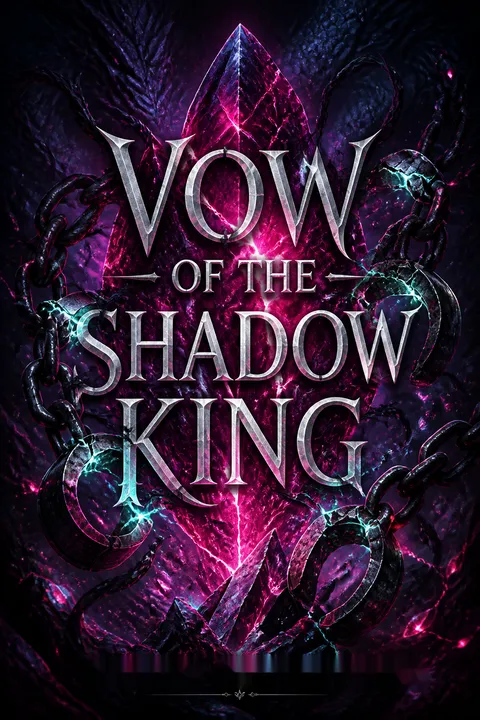
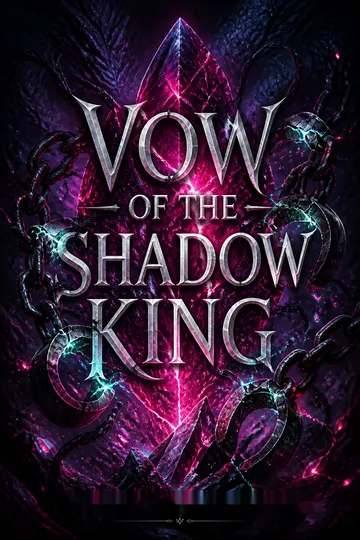
"Vow of the Shadow King" is a lush, emotionally charged fantasy that explores the cost of love, the burden of empathy, and the inevitability of sacrifice. At its heart, the novel is about two broken people—Faraine and Vor—who find in each other the possibility of healing, but only by confronting the darkness within and around them. The story interrogates the nature of power: political, magical, and emotional. It asks what it means to be a savior, a ruler, a lover, and a self. The recurring motif of balance—between life and death, light and shadow, self and other—underscores the narrative's insistence that every act of hope or magic demands a price. The novel's worldbuilding, with its living crystals, cults, and sleeping dragon, is both original and deeply symbolic, reflecting the psychological and existential struggles of its characters. In a modern context, the book resonates as a meditation on trauma, agency, and the courage to choose love and hope in the face of despair. Its ultimate lesson is that true power lies not in domination or escape, but in the willingness to bear pain for others, to risk everything for connection, and to accept that the end of one story is always the beginning of another.
Review Summary
People Also Read


Characters
Faraine
Faraine is the eldest daughter of the Gavarian king, but always the overlooked, unwanted child. Her gods-gift—an overwhelming empathy—makes her both vulnerable and uniquely powerful. Forced to impersonate her dead sister as bride to the Shadow King, she is thrust into a world of darkness, suspicion, and magic. Faraine's journey is one of self-discovery: from pawn to queen, from victim to agent of her own fate. Her compassion is her greatest strength and her greatest curse, driving her to acts of self-sacrifice that ultimately save Mythanar. Her relationship with Vor is fraught with pain, longing, and the struggle for trust, but in the end, she chooses love, even at the cost of her own life.
Vor
Vor is the Shadow King of Mythanar, a trolde ruler burdened by the weight of his people's survival and the scars of betrayal. Poisoned—literally and emotionally—he struggles to trust, to love, and to forgive. His relationship with Faraine is a tempest: he is drawn to her strength and vulnerability, yet fears the consequences of surrendering to love. Vor's journey is one of reckoning with his own darkness, learning to accept help, and ultimately risking everything for the woman he loves. His willingness to pay any price for Faraine's life is both his redemption and the story's emotional core.
Hael
Captain Hael is Vor's most trusted guard, marked by her stone-hardened skin and unyielding sense of duty. She is torn between her loyalty to Vor, her responsibility to Faraine, and her love for her brother Yok. Hael's stoicism masks deep emotion and a fierce protectiveness. Her failures—real or perceived—haunt her, but she never wavers in her commitment to those she serves. Hael's relationship with Faraine evolves from suspicion to respect, and her presence is a constant anchor in the chaos of the palace.
Yok
Yok is Hael's younger brother, a young guardsman desperate to prove himself. His loyalty and bravery are unquestioned, but his inexperience leads to mistakes and, ultimately, to a heroic sacrifice. Yok's willingness to risk everything for his king and his city is a testament to the story's theme of selfless love. His loss is a wound that shapes both Hael and Vor, a reminder of the cost of leadership and the price of hope.
Roh
Roh, Vor's stepmother, is a high priestess of the Deeper Dark and a driving force behind the cult that seeks to awaken the dragon. Her motivations are complex: part religious zeal, part personal ambition, part maternal protectiveness for her own son, Sul. Roh's coldness and fanaticism make her a formidable antagonist, but her actions are rooted in a twisted sense of duty and destiny. She embodies the dangers of unchecked faith and the destructive power of secrets.
Targ
Targ is the cult leader devoted to awakening Arraog, the dragon beneath Mythanar. His presence is a void—emotionless, implacable, terrifying. Targ's influence spreads like poison, driving men and beasts to madness and violence. He is both a symbol and an agent of the story's central threat: the darkness that lies beneath, waiting to consume all. His confrontation with Vor is a battle of wills, light against shadow, hope against despair.
Sul
Sul is Vor's half-brother, a figure of wit, charm, and ambiguous loyalty. His role as spymaster and confidant is complicated by suspicion—he may have been involved in the poisoning, or he may be a victim of circumstance. Sul's relationship with Vor is fraught with rivalry, affection, and the scars of family history. His disappearance and presumed death are a catalyst for Vor's descent into darkness and his eventual redemption.
The Witch (Maylin)
The witch, revealed as Vor's long-lost mother, is a figure of mystery, power, and regret. Living in exile on the Surface World, she possesses the knowledge and magic needed to restore Faraine to life. Her demand for a kiss as payment is both a symbolic act of forgiveness and a reminder of the unresolved wounds of the past. The witch's presence is a bridge between worlds, a guardian of balance, and a harbinger of the price yet to be paid.
Lord Rath
Lord Rath is a minor minister whose mind is destroyed by raog poison, driving him to attempt Faraine's assassination. His fate is a warning of the dangers lurking in the palace and the ease with which good men can be twisted by darkness. Rath's actions set off a chain of suspicion, violence, and the unraveling of trust at court.
The Dragon (Arraog)
Arraog, the dragon beneath Mythanar, is the story's ultimate threat—a force of nature, destruction, and inevitability. Its dreams cause earthquakes, madness, and the spread of poison. The cultists worship it as a god, but its awakening means the end of the world. The dragon is both a literal and symbolic presence: the buried trauma, the unhealed wound, the darkness that must be faced if hope is to survive.
Plot Devices
Poison as Catalyst
The use of raog poison is central to the story's structure. It is both a literal threat—driving men and beasts to madness—and a metaphor for the emotional and political toxins that infect the court. Poison is used to manipulate, to destroy, and to reveal the true nature of characters. Its effects are unpredictable, forcing both Faraine and Vor to confront their own darkness and the darkness in others.
The Urzul Crystals
The urzul crystals are more than magical artifacts—they are living conduits of power, memory, and destiny. They amplify Faraine's gods-gift, serve as a bridge between life and death, and are the key to both the city's salvation and its doom. The crystals' resonance is a recurring motif, foreshadowing the connection between Faraine, the dragon, and the fate of Mythanar.
Empathy as Power and Curse
Faraine's empathic ability is both her greatest strength and her deepest vulnerability. It allows her to heal, to calm, to connect—but also exposes her to overwhelming pain and the risk of losing herself. The gift is a plot device for both character development and worldbuilding, driving key moments of action, revelation, and sacrifice.
Ritual and Sacrifice
The story is structured around rituals—weddings, sacrifices, resurrections—that demand a price. The cult's blood rites, the yunkathu marriage swim, and the resurrection in the sacred pool all reinforce the theme that magic, love, and hope are never free. Every act of power requires balance, and the consequences of breaking that balance drive the plot forward.
Duality and Mirrors
The narrative structure mirrors Faraine and Vor's journeys: both are haunted by loss, both are poisoned (literally and figuratively), both must choose between duty and desire. Their relationship is a dance of reflection and inversion, each healing and wounding the other in turn. The story's use of duality—light and dark, life and death, self and other—creates a rich tapestry of foreshadowing and thematic resonance.
The Sleeping Dragon
The dragon Arraog is a constant, looming presence, its stirrings causing earthquakes, madness, and the spread of poison. The cult's efforts to awaken it, the cracks in the city's foundations, and the recurring dreams and visions all serve as foreshadowing for the coming apocalypse. The dragon is both a literal threat and a symbol of the buried traumas and unresolved conflicts that must be faced.
Bride of the Shadow King Series
About the Author
Download PDF
Download EPUB
.epub digital book format is ideal for reading ebooks on phones, tablets, and e-readers.








































