
Plot Summary
The Unsouled's Shameful Test
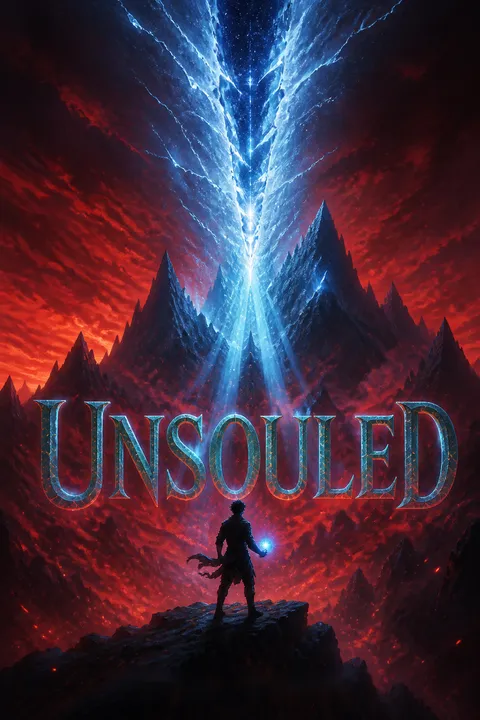
In Sacred Valley, children are tested for their spiritual affinity, each hoping for a badge that will define their future. Young Lindon, desperate to follow his mother's path as a Soulsmith, is instead declared Unsouled—empty, without affinity, a shame to his clan. His mother's attempts to help him fail, and repeated tests only reinforce his status as an outcast. The word "Unsouled" becomes a brand, isolating him from his peers and family, and planting a seed of determination in his heart. Even as he is denied a place among the sacred artists, Lindon's resolve to find a path of his own begins to take root, fueled by the pain of rejection and the longing to belong.
A Fruitless Hope
Years later, Lindon seeks a rare spirit-fruit from an ancestral orus tree, hoping it might compensate for his spiritual deficiency. His efforts are interrupted by clanmates hunting a forbidden snowfox, leading to a disastrous encounter: the tree is destroyed, releasing a dangerous Remnant. Lindon's quick thinking and scripting skills allow him to trap the Remnant and claim the spirit-fruit, but not without injury. The fruit, a symbol of hope, is hard-won—his broken arm a reminder of the cost. This episode cements Lindon's resourcefulness and willingness to risk everything for even the slimmest hope of advancement.
Family Divided, Spirit Denied
Back home, Lindon's family debates who should benefit from the spirit-fruit. His sister Kelsa, on the verge of a breakthrough, is favored, but Lindon argues for his share, desperate to catch up. The family's decision to split the fruit is a small victory for Lindon, but the underlying message is clear: his needs are always secondary. Even as he tastes the fruit's power, he remains an outsider, his advancement uncertain. The family's pragmatic approach to strength and honor underscores the harsh realities of clan life, where resources go to those most likely to bring glory.
Lessons from the Fox
Tasked with feeding the clan's ancient sacred beast, Elder Whisper, Lindon seeks guidance. The fox, master of dreams and deception, challenges Lindon's understanding of the sacred arts, revealing that true paths have no end and that sometimes, one must forge their own. Whisper's enigmatic encouragement ignites Lindon's determination to create his own path, even as the clan's elders urge him to accept obscurity. The fox's words are a lifeline, offering hope that hard work and ingenuity can overcome fate, and that the world is wider than the narrow roles assigned by tradition.
The Pathless Resolve
Facing a humiliating duel with a younger cousin, Lindon scours the clan archives for any shortcut to power. He finds only dead ends—rare pills, legendary springs, and mythical treasures beyond his reach. Yet, a forgotten technique manual, Heart of Twin Stars, sparks an idea: perhaps he can split his core, or develop a disruptive technique, the Empty Palm. With his sister's help, he trains relentlessly, enduring pain and failure. The process is grueling, but Lindon's refusal to accept his limitations marks a turning point—he will not be defined by what he lacks, but by what he dares to attempt.
Honor, Cowardice, and Challenge
At the clan's public punishment, Lindon is challenged to a duel by a younger cousin, a ploy to distract from another's shame. He leverages the situation, proposing a duel with a much stronger Iron, Wei Mon Keth, under terms that favor him. Using the Empty Palm, Lindon disrupts Keth's spirit and wins by technicality, shocking the clan. The victory is hollow—he is still scorned, and the clan's politics remain brutal—but Lindon has proven that cunning and resolve can win where strength cannot. The episode cements his outsider status, but also his potential.
The Festival's First Steps
As the Seven-Year Festival begins, Lindon uses the Empty Palm to sweep the Foundation stage, defeating younger, more talented children. His victories are met with derision and suspicion, but he relishes the taste of success. Meanwhile, the Li clan enacts a secret ritual, summoning a Gold-level ancestor, Li Markuth, whose arrival will shatter the valley's fragile peace. Lindon's moment of triumph is overshadowed by the gathering storm, as the valley's insular world is about to be upended by powers far beyond its comprehension.
The Li Clan's Summoning
The Li clan's elders, using rare Remnants and a fragment of ancient script, open a spatial rift and summon their Grand Patriarch, Li Markuth, a Gold sacred artist with inhuman power. His arrival is both awe-inspiring and terrifying—he is a being of legend, with wings and a badge of solid gold. The Li clan's deference reveals the valley's true vulnerability: all their rivalries and traditions are meaningless before such overwhelming strength. Markuth's intentions are clear—he will claim the valley, and none can oppose him.
The Gold Descends
In the midst of the festival, Li Markuth descends, demanding submission. He executes the Wei Patriarch in front of the entire valley, his power absolute. The clans are paralyzed by fear; even the Jades are helpless. Lindon, caught in the chaos, contemplates a heroic sacrifice, but his attack is futile. Markuth's casual violence exposes the valley's insignificance and the fragility of its people. Lindon's own death is swift and meaningless, a stark contrast to the stories of noble sacrifice he grew up with. The world is far larger and crueler than he ever imagined.
Death and Divine Intervention
As Lindon's soul lingers in the moment of his death, time freezes. Suriel, a celestial Judge, descends, reversing the devastation wrought by Markuth. She restores the dead, erases the Gold's actions, and offers Lindon a glimpse of his fate—a life of quiet mediocrity, ending in destruction as the valley is doomed by forces beyond its control. Suriel's intervention is both a mercy and a challenge: she offers Lindon a chance to change his destiny, to leave the valley and seek true power. Her presence is a revelation, shattering the boundaries of Lindon's world and planting the seed of ambition.
Fate's Gaze, Heaven's Messenger
Suriel takes Lindon on a tour of the world beyond Sacred Valley, revealing the true scale of the sacred arts. He witnesses the power of Golds, the vastness of the Ninecloud Court, and the dangers of the Desolate Wilds. Suriel explains that Sacred Valley is a cradle, a place of beginnings, and that true strength lies beyond its borders. She gives Lindon a token, a glass bead with a blue flame, and a mission: to survive, grow, and one day ascend. The encounter leaves Lindon forever changed, his horizons expanded, and his resolve hardened.
Bargains and Boundaries
Back in reality, Lindon leverages his festival victory to gain entry to the Heaven's Glory School, the only path out of the valley. He faces new challenges—jealous rivals, brutal trials, and the school's indifference to his weakness. He survives the Trial of Glorious Ascension through cunning rather than strength, earning a trip to the Lesser Treasure Hall. There, he chooses artifacts that will help him survive: a boundary formation, a parasite ring, and a spirit-seal. His choices reflect his pragmatism and foresight, as he prepares for the dangers ahead.
The Trial of Ascension
The Heaven's Glory School's initiation trial is designed to weed out the weak, but Lindon uses deception and resourcefulness to succeed. He endures bullying and violence from stronger disciples, but refuses to be broken. His encounter with the Sword Sage's disciple, Yerin, offers a glimmer of hope: she, too, is an outsider, hunted and desperate. Their fates become entwined as Lindon realizes that only by allying with her can he escape the valley and fulfill Suriel's challenge.
Treasures and Thieves
Yerin and Lindon join forces to steal the tools needed to harvest her master's Remnant and escape. Their raid on the Treasure Hall is chaotic and dangerous, but they succeed in acquiring spirit-seals, a Thousand-Mile Cloud, and other treasures. Pursued by the school's elders, they flee to the Ancestor's Tomb, where Yerin must face her master's Remnant in a deadly battle. Lindon's role is support—setting boundaries, distracting enemies, and risking his life to give Yerin a chance.
The Sword Disciple's Oath
Yerin and Lindon swear a soul-oath to aid each other: she will help him escape the valley, and he will help her harvest her master's Remnant. Their alliance is uneasy, built on necessity and mutual distrust, but it is also a lifeline for both. As they prepare for the final confrontation, Lindon's ingenuity and Yerin's skill are tested to the limit. The oath binds them together, forcing them to rely on each other in a world that has given them nothing.
The Remnant's Awakening
At the Tomb, Yerin faces her master's Remnant, a being of liquid steel and impossible power. The fight is a blur of speed and violence, with Lindon barely able to keep up. He uses every tool at his disposal—spirit-seals, boundaries, and the Thousand-Mile Cloud—to support Yerin. Elder Whitehall, seeking the Sage's treasures, intervenes, forcing Lindon to make a desperate choice. In the chaos, Yerin succeeds in harvesting the Remnant, ascending to Gold, while Lindon survives by the narrowest margin.
The Twin Stars' Choice
In a final confrontation with Whitehall, Lindon uses the Heart of Twin Stars technique to split his core, surviving an attack that should have crippled him. The pain is excruciating, but the result is transformative: he now possesses two cores, each capable of independent growth. This innovation marks the birth of the Path of Twin Stars, a path uniquely his own. With Yerin's help, they escape the valley, pursued by enemies and haunted by the knowledge that greater dangers await.
Escape from Sacred Valley
With the valley behind them, Lindon and Yerin set out into the unknown. The world beyond is vast, wild, and filled with threats unimaginable to those who never left home. Lindon's resolve is tested, but he is no longer the Unsouled child defined by what he lacks. He is a sacred artist on his own path, armed with ingenuity, hard-won strength, and the promise of a future shaped by his own hands. The cradle is left behind; the true journey has only begun.
Analysis
Unsouled is a story about the power of defiance, innovation, and self-determination in the face of overwhelming odds and rigid tradition. At its core, the novel interrogates the meaning of worth: is it something bestowed by birth, by society, or by one's own actions? Lindon's journey from outcast to innovator is a testament to the idea that true strength lies not in conformity, but in the courage to forge one's own path. The narrative critiques systems that value only the strong, exposing the cruelty and shortsightedness of such hierarchies, while also celebrating the resilience of those who refuse to be defined by them. The intervention of Suriel, and the cosmic scale of fate, reframes Lindon's struggle as both unique and universal—his story is both a personal quest and a microcosm of the human drive to transcend limitations. The lessons are clear: hard work, ingenuity, and the willingness to challenge the status quo are the keys to growth, and even the most unlikely hero can change the world if given the chance.
Review Summary
Unsouled receives mixed reviews, with many praising its unique magic system, underdog story, and anime-like elements. Readers appreciate the protagonist's determination and cleverness. Some find the world-building intriguing, while others struggle with info-dumping and pacing issues. Many reviewers note that the series improves significantly in later books. Critics mention underdeveloped characters and predictable plot elements. Overall, the book is seen as a promising start to the Cradle series, with potential for growth and improvement in subsequent installments.
People Also Read
Characters
Wei Shi Lindon
Lindon is the heart of the story—a boy born without spiritual affinity, branded Unsouled, and condemned to a life of shame and obscurity. His relationship with his family is fraught: loved but pitied, always second to his more talented sister. Psychologically, Lindon is defined by a deep hunger for acceptance and meaning, but also by a stubborn refusal to accept his fate. His journey is one of relentless self-improvement, fueled by pain, humiliation, and the rare kindness of outsiders like Elder Whisper. Lindon's greatest strength is his ingenuity: he finds loopholes, invents new techniques, and ultimately forges his own path by splitting his core. His development is a study in resilience—he transforms from a passive victim to an active agent of his own destiny, willing to risk everything for a chance at greatness.
Yerin
Yerin is the disciple of the Sword Sage, a master from beyond Sacred Valley. Scarred, hunted, and driven by grief, she is both a formidable warrior and a lost child. Her relationship with Lindon is complex: she is at first suspicious, then grudgingly respectful, and finally bound to him by a soul-oath. Psychologically, Yerin is shaped by trauma and a fierce loyalty to her master's memory. She is pragmatic, ruthless when necessary, but not without compassion. Her journey is one of survival and transformation—she ascends to Gold by harvesting her master's Remnant, but the cost is heavy. Yerin's presence challenges Lindon to grow, and together they form a partnership of necessity and, eventually, trust.
Elder Whisper
Elder Whisper is a five-tailed snowfox, the original master of the Path of the White Fox. He is both a symbol of the valley's traditions and a subversive force, encouraging Lindon to question the limits imposed by society. Whisper's wisdom is enigmatic, blending humility with ambition, and his relationship with Lindon is that of a mentor who sees potential where others see only failure. Psychologically, Whisper is detached, ancient, and attuned to the deeper currents of fate. He represents the possibility of change and the importance of forging one's own path.
Wei Shi Kelsa
Kelsa is everything Lindon is not: gifted, respected, and destined for greatness. Yet, she is also fair-minded and compassionate, often advocating for her brother when others would dismiss him. Her relationship with Lindon is a mix of sibling rivalry, protectiveness, and frustration. Psychologically, Kelsa is pragmatic, focused on the clan's honor, but not immune to the pain of her brother's exclusion. Her development is marked by her own struggles for advancement and her growing respect for Lindon's determination.
Wei Shi Jaran
Jaran is a former warrior, now crippled and embittered by his injuries. His relationship with Lindon is complicated: he is harsh, demanding, and often dismissive, but also secretly proud of his son's courage. Psychologically, Jaran is haunted by his own failures and the limitations imposed by age and injury. He pushes Lindon to be cunning and strategic, valuing survival over honor. His development is subtle, marked by moments of unexpected support and vulnerability.
Wei Shi Seisha
Seisha is a respected Soulsmith, practical and fiercely protective of her children. Her relationship with Lindon is one of tough love—she provides tools and knowledge, but rarely comfort. Psychologically, Seisha is driven by a desire to shield her family from shame, even as she struggles with her own limitations. She is a source of knowledge and occasional rebellion against tradition, encouraging Lindon to seek loopholes and alternatives.
Elder Whitehall
Whitehall is a Heaven's Glory elder trapped in a child's body by a failed elixir. His relationship with Lindon and Yerin is adversarial—he seeks the Sword Sage's treasures and will stop at nothing to achieve his goals. Psychologically, Whitehall is driven by envy, pride, and a desperate need to prove himself. His development is a cautionary tale of ambition unchecked by empathy, and his downfall is both tragic and deserved.
Li Markuth
Markuth is the summoned Gold ancestor of the Li clan, a being of overwhelming power and casual cruelty. His relationship to the valley is that of a conqueror to his subjects—he demands submission and enforces it with lethal force. Psychologically, Markuth is detached, viewing mortals as insignificant. His arrival shatters the valley's illusions of safety and exposes the true scale of the world's dangers.
Suriel
Suriel is a being beyond comprehension, tasked with maintaining order in the universe. Her relationship with Lindon is that of a benefactor and observer—she intervenes to undo Markuth's devastation, offers Lindon a glimpse of his fate, and sets him on a path of growth. Psychologically, Suriel is compassionate but bound by duty, her actions guided by a larger vision of balance and possibility. She represents the intrusion of the divine into the mundane, and the idea that destiny can be both a gift and a burden.
Kazan Ma Deret
Deret is a typical product of the valley's brutal meritocracy—strong, proud, and quick to violence. His relationship with Lindon is antagonistic, serving as both a bully and a benchmark for Lindon's progress. Psychologically, Deret is driven by status and the need to assert dominance. His defeat at Lindon's hands is both a personal humiliation and a symbol of the old order's vulnerability to new ideas.
Plot Devices
The Unsouled Badge
The badge Lindon receives at his spirit test is more than a mark of shame—it is a constant reminder of his outsider status, fueling his determination to prove himself. The badge's emptiness becomes a metaphor for possibility: because Lindon is not bound by tradition, he is free to innovate and adapt, ultimately forging a path no one else could.
The Empty Palm Technique
The Empty Palm is a technique that allows Lindon to disrupt an opponent's spirit, leveling the playing field against stronger foes. It is both a literal and symbolic tool—Lindon's ability to find and exploit loopholes, to use what others overlook, is his greatest strength. The technique's effectiveness is tied to his purity, a consequence of his exclusion from traditional Paths.
Heart of Twin Stars
The Heart of Twin Stars is a forgotten technique that allows Lindon to split his core, creating two independent sources of madra. This innovation is born of desperation, but it becomes the foundation of his unique path. The device serves as a metaphor for Lindon's refusal to accept binary choices—he will not be defined by what he lacks, but by what he creates.
Soul-Oath
The soul-oath between Lindon and Yerin is both a plot device and a psychological anchor. It forces them to rely on each other, overcoming mutual suspicion and forging a partnership that is both fragile and powerful. The oath raises the stakes, making betrayal or failure a matter of spiritual as well as physical consequence.
Divine Intervention and Temporal Reversion
Suriel's intervention—freezing time, reversing death, and offering Lindon a glimpse of his fate—serves as both a deus ex machina and a thematic device. It expands the narrative beyond the valley, introducing cosmic stakes and the idea that destiny can be changed. The device also foreshadows the larger conflicts to come, as Lindon's story is revealed to be part of a much grander tapestry.
Narrative Structure and Foreshadowing
The novel's structure mirrors Lindon's journey: from the insular, tradition-bound world of Sacred Valley to the vast, dangerous, and opportunity-filled world beyond. Early foreshadowing—Elder Whisper's warnings, the arrival of the Gold, Suriel's visions—prepares the reader for the escalation of stakes and the transformation of the protagonist. The use of reports, divine perspectives, and interludes broadens the scope, hinting at the cosmic significance of Lindon's choices.
Cradle Series

About the Author

Download PDF
Download EPUB
.epub digital book format is ideal for reading ebooks on phones, tablets, and e-readers.








































