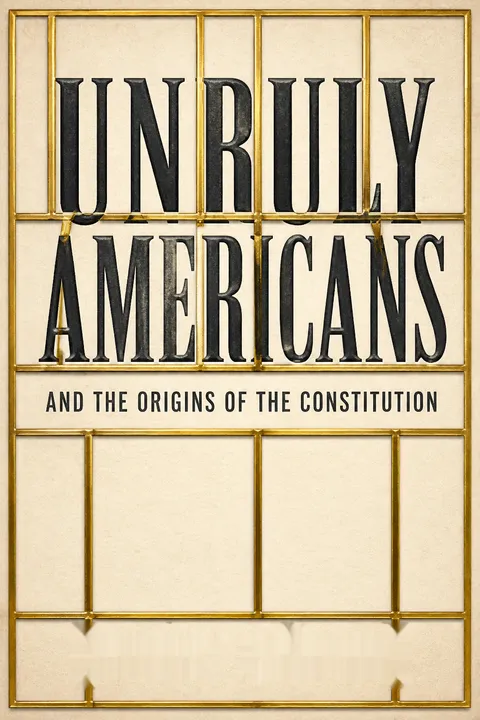

Key Takeaways
1. Beyond Federal Weakness: The Constitution's "Unruly Americans" Origin
If the most compelling motive for the Constitution was not to safeguard civil liberties, what was it?
Challenging narratives. The traditional view often credits the Constitution's creation to the weaknesses of the Articles of Confederation or a desire to protect civil liberties. However, a deeper look reveals a more pressing, and often overlooked, motivation among the Framers. They were deeply concerned by internal issues within the states, particularly the actions of state legislatures.
Internal "evils." James Madison, "the father of the Constitution," explicitly stated that the "mutability" and "injustice" of "the laws of the States" contributed more to the unease that produced the Convention than the inadequacy of the Confederation. This suggests a focus not just on national character, but on the internal administration of the states. Many prominent figures, including George Washington and Alexander Hamilton, echoed this sentiment, expressing concern over the "corruption & mutability of the Legislative Councils of the States."
Reining in democracy. The Framers believed the American Revolution had gone "too far," leading to an "excess of democracy" at the state level. Their hope was that the federal convention would find a way to "put the democratic genie back in the bottle." This perspective highlights a fundamental tension between popular will and perceived governmental stability, setting the stage for a transformative re-imagining of American governance.
2. State Legislatures: "Excess of Democracy" and Debtor Indulgence
What these men were saying was that the American Revolution had gone too far.
Popular notions. Many Framers believed state assemblies paid "too great an attention to popular notions," leading to policies that were detrimental in the long run. They saw states, even aristocratic ones, as having "run into the extremes of democracy" since independence. This "excess of democracy" was viewed as a dangerous trend, threatening the stability and proper functioning of republican government.
Specific grievances. The primary "evils" Madison identified were the states' "countless 'Interferences' with 'the security of private rights, and the steady dispensation of Justice.'" This wasn't vague rhetoric; it referred to specific legislation. Most glaringly, state representatives showed "excessive indulgence to debtors and taxpayers," refusing to force farmers to pay what they owed.
Relief measures. These indulgences included:
- Allowing debtors to pay with property (even "pine barrens and 'old Horses'") instead of hard money (gold and silver).
- Temporarily shutting down the legal system, denying creditors recourse.
- Printing excessive paper money, leading to runaway inflation where debts could be discharged with currency worth a fraction of its nominal value.
These actions, while popular with many citizens, were seen by the Framers as a direct assault on property and justice.
3. The Creditor's Lament: Injustice, Instability, and Economic Stagnation
By begetting a “prevailing and increasing distrust of public engagements,” this terrible “injustice” had doomed the state and federal governments themselves.
Personal stakes. For many, the case against state relief legislation was intensely personal. Creditors, like Abigail Adams, felt "cheated by our Friends"—the taxpayers and legislators who enacted relief. Bondholders, who had invested in government securities, saw their investments plummet in value due to state policies.
Economic paralysis. Beyond personal loss, critics argued that relief measures were disastrous for the economy as a whole. They believed that:
- "Want of confidence in the public councils damps every useful undertaking."
- No one would lend money if laws did not enforce payment.
- Foreign merchants were increasingly reluctant to extend credit to Americans.
This "dire postwar shortage of investment capital" was seen as crippling economic growth and preventing ambitious men like Madison from pursuing ventures like land speculation.
Virtue and credit. The Framers linked economic health to governmental "virtue." They believed that restoring virtue to government, by cracking down on debtors and taxpayers, would reopen the credit valve and end the recession. This would attract capital, fuel rapid economic growth, and ultimately benefit all Americans, even the poorest tenant, through a trickle-down effect.
4. Agrarian Uprisings: Forcing the Hand of Government Reform
The House on fire must be extinguished, without a scrupulous regard to ordinary rights.
Widespread resistance. The 1780s saw a wave of resistance from debtors and taxpayers. This included:
- Individual acts, like Hezekiah Maham forcing a deputy to eat a writ.
- Collective actions, such as groups of debtors assaulting county courts or preventing property auctions.
- Arson, with courthouses and records being burned to obstruct tax collection.
These acts were not isolated but "pervaded the whole" country, leading to fears of widespread civil discord.
Shays's Rebellion. The most famous uprising, Shays's Rebellion in Massachusetts, was a direct response to "oppressive, grinding taxes" and the scarcity of hard money. Though often portrayed as a western farmers' revolt, it began earlier and aimed to force the legislature to ease up on taxpayers. The government's violent suppression of the rebellion, followed by a massive turnover in the legislature, demonstrated the potent link between popular unrest and policy change.
Fear and concession. These insurrections and threats were remarkably successful. Tax collectors, sheriffs, judges, and even state legislators often neglected their duties or granted relief to avoid violence. This widespread fear among the gentry class, particularly George Washington, was a critical factor in his decision to attend the Constitutional Convention. He saw these "commotions" as "snow-balls" gathering strength, threatening the very "superstructure we have been seven years raising."
5. Western Lands and Indian Wars: A Federal Solution to a Costly Problem
Had it not been for the hostile appearances in the Indians, 7,000,000 acres of the land belonging to the United States would now have been surveyed, and ready for sale.
Land as debt relief. A key hope for resolving the federal government's debt crisis without burdening taxpayers was the sale of western lands. The territory ceded by Britain in 1783 was vast, and Congress planned to sell it to liquidate the domestic debt, accepting war bonds as payment. This promised a "painless" method of satisfying bondholders.
Indian resistance. However, this plan was thwarted by Native American resistance. Joseph Brant and other native leaders successfully built a pan-Indian confederacy, demanding that the U.S. renounce claims to land between the Ohio and Mississippi Rivers. They used diplomatic ploys, like fabricating Brant's trip to London for British support, to create an illusion of strength and unity. This prevented U.S. surveyors from completing their work, stalling land sales.
Georgia's dilemma. The most dramatic example of Indian influence on ratification came from Georgia. Facing an imminent "general Indian war" with the powerful Creek nation, backed by Spain, Georgia felt "neither numbers, or resources sufficient to oppose their ravages." Their vulnerability, directly attributed to the "weakness of the whole Union," led them to unanimously ratify the Constitution, hoping for federal military protection. This fear of Indian attack was a significant, though often overlooked, motivator for ratification, especially in southern and western states.
6. Curbing Popular Power: Designing an Insulated Federal Government
Let the reins of government then be braced in time & held with a steady hand.
Reining in the states. Convinced that state governments were "sources of pollution" due to their responsiveness to popular demands, the Framers sought to "circumscribe more effectually the state governments." They aimed to create a national government "more powerful and independent of the people." This involved a multipronged assault on state-level debtor and taxpayer protection schemes.
Insulating federal officials. The Constitution designed a federal government significantly less responsive to popular will than any state. Key features included:
- No term limits: Unlike many state constitutions, federal officeholders faced no restrictions on re-election, allowing for greater entrenchment.
- Indirect elections: Senators were appointed by state legislatures (until 1913), and the President was chosen by electors, not direct popular vote. This aimed to filter popular passions.
- Powerful executive: The President, with no executive council, had significant appointment powers and a veto over legislation, providing a check against "popular intemperance."
Compromise and subtlety. While many delegates, like Alexander Hamilton, favored even more aristocratic structures (e.g., life terms for President and Senators), they were realists. They knew "what the people would approve" was crucial for ratification. Thus, they often rejected overtly undemocratic proposals or adopted more subtle mechanisms, such as tying the federal franchise to state rules, to limit popular influence without jeopardizing public support.
7. Article I, Section 10: The "Soul of the Constitution" for Creditors
Nothing, in the whole Federal Constitution, is more necessary than this very section.
Targeting state relief. The Framers wrote specific creditor-protection language directly into the Constitution, indicating its paramount importance. Article I, Section 10, explicitly states: "No State shall… emit Bills of Credit; make any Thing but gold and silver Coin a Tender in Payment of Debts [nor] pass any… Law impairing the Obligation of Contracts." This clause was widely touted as "the best in the Constitution" and even "the soul of the Constitution."
Absolute prohibition. The delegates were so "smitten with the paper money dread" that they insisted on an absolute prohibition on state-issued currency, even without congressional approval. This was a more severe restriction than even the British Parliament had imposed on the colonies. It aimed to protect not only private creditors but also holders of government bonds from depreciation.
Judicial enforcement. To ensure these prohibitions had teeth, the Constitution declared federal law supreme and implicitly granted federal courts the power of judicial review over state legislation. Federal judges, appointed for life and insulated from popular pressure, would overturn state laws that violated the Constitution, including those that screened debtors or interfered with contracts. This provided a powerful, centralized mechanism to enforce property rights.
8. "Divide et Impera": The Strategy of the Extended Republic
Divide et impera, the reprobated axiom of tyranny, is under certain qualifications, the only policy, by which a republic can be administered on just principles.
Diluting popular influence. One of the most effective, yet least visible, restraints on popular power was the sheer scale of the new national government. By transferring key responsibilities from smaller states to a vast national entity, the Framers aimed to dilute the influence of any single faction or "unreflecting multitude." James Madison famously argued that a large republic would "divide the community into so great a number of interests & parties, that… they may not be apt to unite in the pursuit" of any particular goal.
Large districts. The decision to make federal legislative districts significantly larger than state assembly districts was crucial. Each congressman would represent about ten times as many voters as a typical state assemblyman. This was intended to:
- Favor the election of "enlightened and impartial people" over "demagogues."
- Make it harder for any single interest group to achieve a majority.
- Insulate representatives from immediate popular pressure.
Unequal coordination. While the extended republic would make it harder for ordinary citizens to "communicate & act in concert," some delegates, like Gouverneur Morris, recognized that "the schemes of the Rich will be favored by the extent of the Country." Wealthy individuals, merchants, and bondholders, with their established networks and resources, would still be able to "act in concert" and influence the government more effectively than dispersed farmers and artisans. This inherent imbalance was a calculated feature, not a flaw, in the Framers' design.
9. Ratification's Appeal: Tax Relief, Stability, and Military Protection
The new Govt. and that alone, will be able to take the requisite measures for getting into our hands the Western posts which will not cease to instigate the Savages, as long as they remain in British hands.
Economic promises. Federalists knew they had to persuade ordinary Americans that the Constitution would address their most pressing grievances. They promised that a national tariff would provide a "painless" source of federal revenue, allowing states to "dramatically reduce the direct taxes that had inflamed farmers' protests." This was particularly appealing to "non-importing states" like Delaware and New Jersey, which had struggled with direct taxes.
Ending unrest. The prospect of a stronger federal army, capable of suppressing internal rebellions, was a powerful selling point. Federalists, like James Wilson, warned that without the Constitution, the nation walked "on ashes, concealing fire beneath our feet." The failure of the Articles of Confederation to raise an army to suppress Shays's Rebellion served as a stark reminder of the need for federal power to "ensure domestic tranquility."
Western security. The Constitution also promised military protection against Native American threats and the British presence in western forts. This was crucial for land-hungry settlers and speculators, and for states like Georgia, which faced imminent Indian wars. The ability of the new government to command resources for defense and secure western lands for sale was a significant draw, especially for those in frontier regions.
10. The Bill of Rights: A Strategic Concession to Anti-Federalist Demands
Had there been no opposition to the Constitution, its supporters would not have felt the need to make concessions, and there would be no Bill of Rights.
An afterthought. The Philadelphia Convention consciously decided not to include a Bill of Rights in the original Constitution. The Framers argued that since the federal government was delegated only specific powers, an enumeration of rights was unnecessary and potentially dangerous, implying powers not explicitly granted. This omission was a major strategic blunder.
Anti-Federalist demand. Thousands of Americans were "aghast" that the Constitution codified government powers but not citizens' rights. Leading Anti-Federalists, including George Mason and Elbridge Gerry, vehemently opposed ratification without a Bill of Rights. This widespread opposition became a critical obstacle to the Constitution's adoption.
A necessary compromise. Faced with strong resistance in key states like Massachusetts, Virginia, and New York, Federalists made a crucial "strategic concession": they pledged to support the later inclusion of a Bill of Rights. This promise was instrumental in securing enough votes for ratification. Thus, America's most cherished rights—freedom of speech, religion, trial by jury—are owed not to the original Framers' intent, but to the demands of those who opposed the Constitution.
11. A New Economic Order: From State Chaos to Federal Control
The establishment of funds to maintain public credit has had an amazing effect upon the face of business and the country.
Fiscal transformation. The Constitution, coupled with Alexander Hamilton's financial program, fundamentally reshaped the American economy. The national government gained the power to levy tariffs, which became its primary revenue source, significantly reducing the need for "punishing direct taxes" at the state level. This fulfilled a key Federalist promise, leading to "an equality and lessening of internal taxes" for many.
Creditor's triumph. The Funding Act of 1790 committed the federal government to redeeming both federal and state war bonds at face value, with punctual interest payments in gold and silver. This dramatically increased the value of securities, enriching speculators like Abigail Adams and restoring confidence among investors. The constitutional ban on state-level debtor relief, enforced by federal courts, further solidified property rights and attracted capital.
Centralized control. The new system, particularly the Federal Reserve (established much later but embodying the Framers' intent), removed control over the money supply "as far as possible from the hands of ordinary Americans." While this brought economic stability and growth, it came at a political cost, making the federal government "considerably less responsive to the public will than its state-level counterparts." This shift from state-level "chaos" to federal "order" was a deliberate design to foster capitalism, even if it meant diminishing popular power.
People Also Read





Download PDF
Download EPUB
.epub digital book format is ideal for reading ebooks on phones, tablets, and e-readers.








































