
Key Takeaways
1. Floyd Collins: A Driven Caver's Tragic Quest
The same spirit that led others to scale mountain heights caused him to go into the depths.
A life underground. Floyd Collins, born in 1887 in Kentucky's Mammoth Cave region, was a self-taught caver driven by a consuming passion for exploration and the dream of striking it rich. Despite his uneducated, backwoods upbringing, he possessed a daredevil spirit and an uncanny ability to navigate the subterranean world, often alone. His early discovery of Crystal Cave on his family's land, though not a huge commercial success, fueled his ambition to find a "big cave" that would connect to the famous Mammoth Cave system.
The cave wars. This ambition was set against the backdrop of fierce "cave wars" in central Kentucky, where landowners ruthlessly competed to commercialize their caverns and siphon off tourists from Mammoth Cave. Floyd, having witnessed the success of others like George Morrison, believed a new, strategically located entrance could make his fortune. He saw caving not just as recreation but as a calling, a "religion" that spoke to his soul and offered the thrill of discovering the unknown.
A fateful exploration. In January 1925, Floyd began exploring a sandhole on Bee Doyle's farm, convinced it would lead to a major discovery. Despite warnings from his stepmother, Miss Jane, who had a premonition of him being trapped, and his brother Homer, who called the hole "a bad un," Floyd pressed on. His determination to find a new cavern, coupled with his reckless nature, led him deep into the unstable passage, setting the stage for the tragedy that would soon captivate a nation.
2. Sand Cave: A Treacherous, Unforgiving Trap
To the average person, a cave is foreboding, making him feel uneasy and apprehensive.
A deceptive opening. Sand Cave, a misnomer, was not a typical cavern but a narrow, twisting crack burrowing through limestone rubble, not solid bedrock. Floyd, at 37, had been digging in this treacherous passage for weeks, using dynamite to clear obstacles. On January 30, 1925, after exploring a promising deep pit, he inadvertently dislodged a 100-pound rock while inching back through a tight crevice, pinning his left foot in a V-shaped indentation.
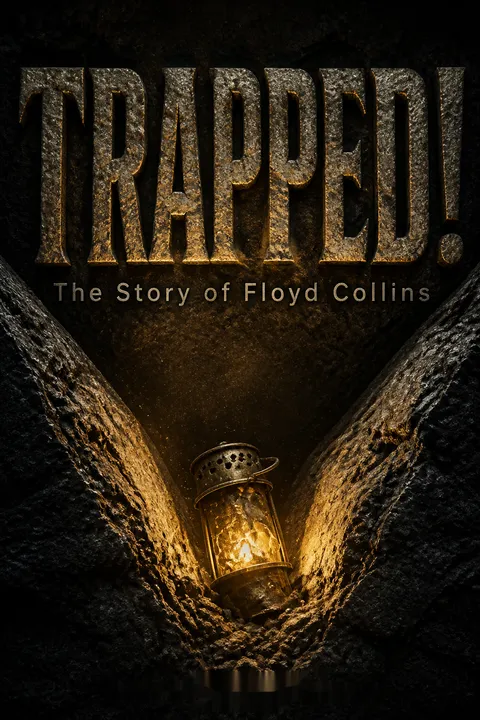
A coffin-like prison. The falling rock, followed by more debris, trapped both his feet and immobilized his left arm. He was lying on his left side at a 45-degree angle, his head near a cubbyhole, unable to move or turn over. Panic gave way to a chilling realization: every struggle only loosened more earth, tightening his "coffinlike straitjacket." He was 115 feet from the entrance and 55 feet underground, plunged into darkness after his lantern toppled.
Agony and isolation. The conditions were horrific: icy water dripped onto his face, his left leg throbbed, and his bladder felt like bursting. He screamed until his voice gave out, then shivered in his wet clothes, drifting in and out of sleep. His only comfort was the belief that Bee Doyle would raise the alarm. Sand Cave was a death trap, a place of claustrophobia and mind-numbing fear, where the darkness, tight spaces, and threat of collapse were amplified by the sheer impossibility of his position.
3. Early Rescue Efforts: Heroism Amidst Disarray
What had begun as a simple rescue effort was turning into a nightmare.
First responders. On Saturday morning, January 31, Bee Doyle and Ed Estes, worried by Floyd's absence, found his coat at the cave entrance. Estes's slender 17-year-old son, Jewell, bravely crawled in, hearing Floyd's faint cries for help and tools. Floyd, remarkably calm, asked for his brothers, Homer and Marshall. Marshall quickly arrived and organized a small, diverse rescue party, but the cave's narrowness and danger quickly overwhelmed most volunteers.
Homer's desperate struggle. Homer, Floyd's younger brother and an experienced caver, arrived Saturday afternoon. Stripping to his underwear, he squeezed through the treacherous passages, reaching Floyd. He found his brother's lamp broken, his hands torn from futile clawing. Homer fed Floyd, who was starving, and began the agonizing work of digging with a syrup can, but progress was agonizingly slow, with more gravel constantly sliding in. Floyd's condition deteriorated, his body temperature dropping, his mind slipping into stupor.
Futility and false hope. Despite Homer's tireless efforts, and Marshall's desperate offer of $500 for anyone to free Floyd, the early rescue attempts were disorganized and chaotic. Many would-be rescuers, overcome by fear and the cave's oppressive conditions, turned back. A false report of Floyd's death by Clyde Hester was quickly disproven by L.B. Hooper, a young electrician's helper, who found Floyd still alive but fading. By Sunday night, all direct rescue efforts had stalled, leaving Floyd in a cold, wet, and increasingly desperate state.
4. The Media Circus: Sensationalism and Public Fascination
The public’s first reaction to the predicament of Floyd Collins is a restless squirm.
A slow news day. In late January 1925, with national news in a lull, the Louisville newspapers, locked in fierce competition, initially gave the Floyd Collins story brief, often inaccurate, coverage. Early reports even falsely claimed he was rescued. However, the arrival of young reporter William "Skeets" Miller from the Courier-Journal on Monday, February 2, marked a turning point. Challenged by Homer Collins to "go down and find out for yourself," Miller, despite his fear, entered the cave.
Miller's harrowing descent. Miller's terrifying 75-minute trip to Floyd's side, where he found the caver weak and in pain, transformed him. His subsequent eyewitness accounts, published with banner headlines, captivated the nation. The Associated Press picked up his stories, and soon, major newspapers across the country, from New York to Chicago, made Floyd Collins the paramount national news, eclipsing even the Nome diphtheria epidemic.
A national phenomenon. The story's dramatic elements—physical torture, danger, heroism, and an uncertain outcome—resonated deeply. Millions vicariously experienced the "buried alive" fantasy, a primordial fear. The media, in an "orgy of self-adulation," amplified the drama, using every gimmick from artists' drawings to personal interviews. Miller became a national hero, his conversations with Floyd providing a direct, poignant link between the trapped man and an empathetic American public, making Floyd Collins a household name.
5. Clash of Wills: Natives, Outsiders, and Accusations
Such partisanship served to increase the animosity at the cave’s mouth, causing sides to be drawn even more sharply and lessening the chances for a unified approach.
Growing friction. As the rescue dragged on, the scene at Sand Cave became a hotbed of tension and conflict. Lieutenant Robert Burdon, a Louisville fireman, clashed with local rescuer Johnnie Gerald over methods, with Burdon advocating pulling Floyd out and Gerald insisting on careful digging. Gerald, distrustful of "outlanders," tried to restrict access to the cave, believing outside interference and excessive traffic were destabilizing the fragile passages.
Accusations and rumors. The first major cave-in on Wednesday morning, February 4, which cut off direct access to Floyd, intensified the animosity. Rumors of incompetence, greed, and even foul play began to circulate, fueled by competing newspapers. Lieutenant Burdon, in particular, publicly accused "two or three men" of making the rescue impossible due to "despicable greed for fame," implicitly targeting Gerald and the Collins family.
A military inquiry. The escalating accusations, coupled with the carnival atmosphere and widespread doubts about Floyd's very presence in the cave, prompted Kentucky Governor William J. Fields to order a military court of inquiry. General Henry H. Denhardt was placed in charge, bringing much-needed order to the chaotic site but further alienating the natives. The inquiry, while dispelling some rumors, highlighted the deep-seated cultural, social, and economic differences that had plagued the rescue from the start.
6. The Shaft: A Desperate Engineering Gamble
Practical men have had their way. It takes men with brains to get him out. We’ll sink a shaft.
Abandoning the passage. After the second cave-in on Wednesday, February 4, which completely blocked the original passage to Floyd, the decision was made to abandon further efforts through the cave and instead sink a vertical shaft from the surface. General Denhardt, supported by engineers like Superintendent Henry Carmichael and Professor William Funkhouser, declared this the only viable option, dismissing Homer Collins's protests about the difficulty and the time it would take.
A monumental undertaking. The shaft, six feet square, began digging on Thursday, February 5, with Carmichael predicting a 30-hour completion time. It was a massive undertaking, requiring:
- Over 75 workers, including Kyroc men, L&N railroad crews, and individual volunteers.
- Hoisting derricks, railroad ties for shoring, picks, shovels, and a complete Delco lighting system for round-the-clock work.
- A diamond drill to probe for rock formations.
However, safety concerns for Floyd prevented the use of dynamite or pneumatic drills, forcing manual labor.
Slow progress and fading hope. Despite the organized effort, progress was agonizingly slow, hampered by muck, boulders, and constant cave-ins that required continuous shoring. Carmichael's initial timeline proved wildly optimistic. By Friday night, the shaft was only 17 feet deep, and officials privately admitted that Floyd's chances were slim. Yet, public optimism, fueled by Lane's radio tests suggesting Floyd was still alive, and the sheer scale of the engineering effort, kept hope flickering.
7. The Inevitable End: Death and Lingering Doubts
Collins has been found, apparently dead.
A breakthrough, too late. On Monday, February 16, after days of relentless digging, Albert Marshall and his crew finally broke through into Sand Cave. However, the lateral tunnel intersected the passage above Floyd's head, not behind his trapped feet. Ed Brenner, a smaller miner, crawled in and found Floyd six feet below, wedged tightly, his light bulb out, a stream of water on his cheek, and his eyes partially open. Brenner's grim assessment: "Dead."
Official confirmation. At 2:42 P.M., Professor Funkhouser made the terse announcement to the waiting press: "Collins has been found, apparently dead." The news, though anticipated by many, brought tears to Nellie and Miss Jane, while Homer and Lee, long resigned, accepted it stoically. Dr. Hazlett, after a preliminary examination, estimated Floyd had been dead for at least 24 hours, likely since "hoodoo day," Friday the thirteenth.
Body left behind. The decision was made not to retrieve Floyd's body due to the extreme danger. The shaft and lateral tunnel were deemed too unstable, and further excavation risked more lives. A coroner's jury, after viewing the body, officially ruled Floyd's death accidental, caused by exposure from being trapped. The shaft was then filled with debris and the cave entrance sealed, leaving Floyd's body in its natural tomb, a testament to nature's unforgiving power.
8. A Body's Journey: Reburials and Bizarre Exploitation
America’s greatest rescue story had indeed ended, but the legend of Floyd Collins had just begun.
Post-tragedy exploitation. Despite the official closure, the Collins saga was far from over. Homer, disagreeing with leaving Floyd's body in the cave, embarked on a vaudeville tour to raise funds for its retrieval. Lee Collins, too, tried to capitalize, selling photos and advertising "Floyd Collins Crystal Cave," leading to family feuds and lawsuits over Floyd's estate. The tragedy, though initially hurting tourism, soon became a macabre attraction.
The body's odyssey. In April 1925, Homer successfully contracted miners to retrieve Floyd's body. After a delicate embalming process, Floyd received a proper burial near Crystal Cave, marked by a stalagmite. However, in 1927, Dr. Harry B. Thomas, who bought Crystal Cave, disinterred Floyd and placed his glass-covered casket on display in the cave's main concourse, turning him into a grotesque tourist attraction. This led to further lawsuits from Floyd's brothers.
The snatching and final rest. In a bizarre twist, Floyd's body was stolen from Crystal Cave in March 1929, only to be found later, missing its left leg, near the Green River. The thieves were never caught, but the incident further fueled the legend. After decades of being a cave exhibit, and following a lawsuit by Floyd's half-sister, his body was finally removed from Crystal Cave in 1989 and given a fifth, permanent burial in the Mammoth Cave Baptist Church cemetery, near his former caving companion, Edmund Turner.
9. The Enduring Legend: Myth, Memory, and Modern Discovery
As the years progress and the story becomes embellished and embroidered, Floyd Collins may grow into a legend, a fable.
A legend is born. The Collins tragedy, occurring in the "Roaring Twenties," quickly transcended a news story to become a national legend. Its sensationalism, combined with the era's hunger for heroes and its appeal to primordial fears of darkness and isolation, ensured its enduring place in American folklore. Songs, poems, movies like Ace in the Hole, and TV dramas like Robert Montgomery Presents repeatedly retold the story, often adding new myths and errors.
Modern interpretations. Even decades later, the story continued to fascinate. Robert Penn Warren's 1959 novel The Cave drew heavily on the Collins affair, portraying human avarice and deceit. Skeets Miller, the Pulitzer-winning reporter, later reflected on his role, admitting his "ignorance" but never regretting his efforts. The 1964 American Legion Magazine article, filled with inaccuracies, even led to a lawsuit by Floyd's sister, Nellie, further cementing the story's place in public consciousness.
Legacy of exploration. Ironically, Floyd's belief that all the region's caves were connected was eventually proven true. Modern cavers, including the Cave Research Foundation, systematically explored and mapped the Central Kentucky Karst, culminating in the 1972 connection of Crystal Cave to Mammoth Cave, creating the world's longest cave system. Today, Sand Cave is sealed, a historical marker stands nearby, and Floyd's final resting place is marked, but the legend of the "Prisoner of Sand Cave" continues to be told, a testament to a man who, in death, achieved the fame he sought in life.
People Also Read









Download PDF
Download EPUB
.epub digital book format is ideal for reading ebooks on phones, tablets, and e-readers.








































