
Key Takeaways
1. John Jacob Astor: The Ruthless Architect of American Wealth
Both the trade Astor was trained for and the one he embraced after his arrival in New York relied on the ability to render living flesh and skin into money.
Humble beginnings. Born Johann Jakob Astor in Walldorf, Germany, in 1763, John Jacob Astor arrived in New York in 1784 with little more than a sack of flutes and a butcher's son's understanding of turning animal products into profit. He quickly learned the lucrative fur trade, starting by beating dust out of pelts for two dollars a week. His keen business sense and willingness to get his hands dirty—unlike many contemporaries—allowed him to personally negotiate deals with Indigenous peoples, often learning their languages.
Fur empire. Astor rapidly dominated the North American fur trade, leveraging international connections and shrewd strategies. He secured unique agreements with the British East India Company to trade furs directly with China, bringing back silks, spices, and tea for immense profits in a burgeoning New York. His insight extended to exploiting stopovers in Hawaii to monopolize sandalwood trade, further cementing his wealth.
Real estate foresight. Recognizing the fur trade's finite nature, Astor shrewdly reinvested his profits into Manhattan real estate. His strategy involved buying "worthless" land cheaply, leasing it long-term for tenants to build on, and then re-renting the improved properties for significantly more. By his death in 1848, he was America's richest man, having amassed an estimated $25 million (equivalent to $650 million today), largely from owning vast swathes of New York City.
2. Astoria: A Vision of Empire Built on Exploitation
American Fur Company whiskey sold for anywhere from twenty-five to fifty dollars a gallon in the first decade of the nineteenth century—the exact same price as a handle of Jim Beam in 2023, two hundred years later.
Westward ambition. At the dawn of the 19th century, Astor envisioned a vast trading empire stretching to the Pacific, centered on a new city he would call Astoria at the mouth of the Columbia River. This "shadow country" would trade directly with Asia, bypassing traditional routes and middlemen. In 1808, he founded the American Fur Company, personally investing $400,000 to establish trading posts and supply chains across the wilderness.
Disastrous expeditions. Astor launched two expeditions to establish Fort Astoria: one overland, one by sea on the ship Tonquin. The Tonquin voyage was plagued by Captain Thorn's tyrannical discipline and culminated in a massacre by Indigenous people in Clayoquot Sound, with only one interpreter surviving. The overland party endured two years of starvation and hardship, eventually reaching the fort in tatters.
Unethical practices. Despite these setbacks and the War of 1812 dissolving his Pacific Fur Company, Astor pivoted to monopolizing the fur trade along the Mississippi and Missouri rivers. His American Fur Company ruthlessly undermined government trading posts, often by supplying liquor at hugely inflated prices to addicted Indigenous people. This exploitation, coupled with trapping agents keeping workers in debt, generated immense profits for Astor, but at a devastating human cost.
3. The Astor Place Riot: Class Conflict at the Family's Doorstep
“Society,” concluded H. M. Ranney, “but an unjust distribution of the avails of industry, enables a few men to become rich, and consigns a great mass to hopeless poverty, with all its deprivations and degradations."
A city of contrasts. By the mid-19th century, New York City was a place of stark inequality, with Astor-owned tenements teeming with poor immigrants existing blocks from the family's elegant Lafayette Place mansions. William Backhouse Astor Sr., John Jacob's son, became the "Landlord of New York," profiting immensely from these overcrowded, unsanitary conditions, viewing them merely as sources of income.
Theater as a battleground. In 1849, a rivalry between British tragedian William Charles Macready (favored by the elite) and American actor Edwin Forrest (championed by the working class) escalated into a violent class conflict. The Astor Opera House, named for its location on Astor Place, became a symbol of aristocratic exclusivity with its high prices and strict dress code, alienating the working-class theatergoers who considered Shakespeare their right.
Bloody confrontation. On May 10, 1849, a mob of 10,000-15,000 working-class New Yorkers, fueled by anti-British sentiment and class resentment, converged on the Astor Opera House. After initial disruptions inside, the crowd outside clashed with police and militia, leading to a brutal confrontation. The military fired into the crowd, killing 22 people and injuring dozens more, staining the Astor name with the "Massacre Opera House" and symbolizing the deep social divisions of the era.
4. Caroline Astor: The Uncrowned Queen of Gilded Age Society
“I am not vain enough to think New York will not be able to get along very well without me,” Mrs. Astor continued to Rebecca, reflecting on what she had accomplished.
Pedigree and power. Caroline Webster Schermerhorn Astor, known simply as "Mrs. Astor," married William Backhouse Astor II, combining her old New York pedigree with his vast Astor fortune. Despite her husband's philandering and disinterest in society, Caroline, with the guidance of social arbiter Ward McAllister, meticulously crafted and dominated New York's Gilded Age elite. She established strict social codes, dictating who was "in" and who was "out."
The Four Hundred. McAllister famously declared that only "about 400 people" constituted fashionable New York society, a number supposedly limited by the capacity of Mrs. Astor's ballroom. This exclusive group, a blend of old Knickerbocker families and new money, was defined by three generations removed from the original wealth-maker and a minimum of a million dollars. Mrs. Astor's Patriarch Balls and Family Circle Dancing Classes served as gatekeepers to this elite world.
Maintaining appearances. Mrs. Astor meticulously controlled her public image, never granting interviews or allowing photographs. She viewed the cultivation of society as a nationalist enterprise, aiming to demonstrate American refinement to rival Europe. Despite her rigid standards, she eventually conceded to the rising power of new money, notably Alva Vanderbilt, whose extravagant masquerade ball forced Mrs. Astor to acknowledge the Vanderbilts' social ascent.
5. The Waldorf-Astoria: A Monument to Family Rivalry and Public Spectacle
“It was,” historian Justin Kaplan writes of the Waldorf, “an expatriate’s declaration of personal magnificence, blue-blood pride, and superiority in imagination, style, and intellect to the members of his class and the nation at large.”
Nephew's defiance. William Waldorf "Will" Astor, Caroline's nephew, harbored deep resentment towards his aunt and New York society. In a defiant act, he demolished his inherited brownstone next to Caroline's Fifth Avenue mansion and built the Waldorf Hotel in its place. The construction caused immense disruption and overshadowed his aunt's home, a clear statement of family feud and Will's disdain for American social strictures.
A new social era. The Waldorf, opened in 1893, was an unprecedented success, an 11-story "skyscraper" that revolutionized public life. Under manager George C. Boldt, it became an acceptable venue for society women to gather, hosting the first society charity ball. This marked a shift from private ballrooms to glamorous public settings, democratizing status and proving that money was the ultimate arbiter in American society.
The hyphenated hotel. Caroline Astor and her son Jack eventually conceded, building the Astoria hotel on their adjoining property, connecting it to the Waldorf via "Peacock Alley." The combined Waldorf-Astoria became the largest and most luxurious hotel in the world, a glittering artery of American fashion and social life. Its maître d', Oscar Tschirky, invented iconic dishes and the velvet rope system, further cementing its role as a cultural institution.
6. William Waldorf Astor: The Expatriate's Quest for Nobility
“America is not a fit place for a gentleman to live,” he sulked. “America is good enough for any man who has to make a livelihood, though why traveled people of independent means should remain there more than a week is not reality to be comprehended.”
Political disillusionment. Will Astor, despite his wealth and education, faced public ridicule and political defeat in New York, particularly after losing a congressional race in a Tammany Hall-controlled district. His attempts at a political career were met with accusations of being out of touch and beholden to party machines, leading to deep bitterness against the American press and a pervasive sense of "un-Americanness."
Abandoning America. In 1890, Will decided to abandon the United States entirely, moving to England and renouncing his American citizenship in 1899. This act was met with public outrage in New York, where he was denounced as a traitor and his effigy burned. He continued to siphon millions in rents from his New York properties across the Atlantic, investing his American spoils into British institutions in a bid for legitimacy abroad.
A purchased peerage. Will's ultimate ambition was to achieve a British peerage, a title he believed would grant him the respect and status he craved. He poured millions into British universities, hospitals, and Conservative Party politics. After years of strategic donations and a relentless pursuit of aristocratic bona fides, he was finally named a baron in 1916 and a viscount in 1917, adopting a coat of arms that ironically featured an Indigenous American and a fur trapper.
7. The Titanic and the Astor Name: A Symbol of Decadence and Tragedy
When the tragedy struck, “Jack Astor” was the name on everyone’s lips.
A scandalous marriage. Colonel John Jacob "Jack" Astor IV, Will's cousin, was the wealthiest and most prominent passenger aboard the RMS Titanic. He was traveling with his 18-year-old second wife, Madeleine Force, who was two years younger than his son Vincent and pregnant. Their marriage, following a scandalous divorce, had made them objects of intense public scrutiny and gossip.
Heroic death, fictionalized legacy. When the Titanic sank on April 15, 1912, Jack Astor's death became a global headline. Eyewitness accounts portrayed him as a noble figure, assisting his pregnant wife into a lifeboat before calmly facing his fate. However, his story quickly became fodder for film and propaganda, transforming him from a real person into a symbol:
- In 1912 German film In Nacht und Eis, he was a champagne-sipping billionaire.
- In the 1943 Nazi propaganda film Titanic, he was a villainous American capitalist.
- In James Cameron's 1997 Titanic, he was a minor character, a symbol of Gilded Age decadence.
The "other" John Jacob. Adding a layer of poignant irony, less than two years before the Titanic disaster, another John Jacob Astor died on Blackwell's Island, New York's almshouse. This Astor, a German immigrant cigar maker, was a distant cousin of the wealthy colonel. His life, marked by poverty and anonymity, stood in stark contrast to the fame and fortune of his namesake, highlighting the vast inequalities that the Astor family's wealth both symbolized and perpetuated.
8. Vincent Astor: Philanthropy, Eccentricity, and the End of a Line
“It’s hard to be so rich,” the friend said. “His friends were wealthy, but not on the same level. Most people wanted something from him. Even if they had money themselves, they welcomed a free six-month trip on his yacht. . . . Vincent saw this and it made him suspicious of everyone, particularly his family."
Reluctant heir. Vincent Astor, Jack Astor's son, inherited the bulk of the Astor fortune after his father's death on the Titanic. Awkward, socially stunted, and deeply affected by his parents' unhappy marriage and his father's unpredictable love, Vincent became the youngest Astor figurehead. His childhood was lonely, marked by a lack of playmates and a sense of being unwanted by his mother.
A different path. Unlike his predecessors, Vincent displayed a rare sense of guilt over the family's slum properties. He began selling off vast real estate holdings, including his share of the Waldorf-Astoria, and invested in philanthropic projects like playgrounds in Harlem and a convalescent home for children. He even sold his remaining slum properties to the Municipal Housing Authority for a low mortgage, becoming the first Astor to actively divest from the family's exploitative real estate legacy.
Private world, public life. Vincent found solace in mechanical tinkering and his magnificent yacht, the Nourmahal, which served as his "floating castle" and escape from public scrutiny. He cultivated a close relationship with Franklin Delano Roosevelt, even starting Newsweek magazine, though their political views diverged. His personal life, however, remained tumultuous, marked by two unhappy marriages and a sterility that ensured the end of the American Astor male line.
9. Brooke Astor: Reinventing a Legacy Amidst Betrayal
“I’m just an ordinary person,” she said, “who’s had an extraordinary life.”
A difficult ascent. Brooke Marshall, Vincent Astor's third wife, married him in 1953, primarily for his money, as she later admitted. Her life before Vincent was marked by a traumatic first marriage to an abusive drunk and a happy but financially insecure second marriage. She endured Vincent's paranoia, jealousy, and philandering for five and a half years, but her perseverance was rewarded: she inherited nearly his entire $130 million estate and the Vincent Astor Foundation.
Philanthropic doyenne. Brooke transformed the Astor name, becoming New York's beloved philanthropic doyenne. She meticulously doled out hundreds of millions to charities and cultural institutions, always impeccably dressed and engaging with the press. Her public persona was one of grace and generosity, effectively rehabilitating the Astor legacy from its ruthless origins.
Elder abuse and family betrayal. As Brooke aged and developed Alzheimer's, her only son, Anthony "Tony" Marshall, began to systematically drain her estate. He manipulated her into changing her will, selling off cherished artworks, and giving him millions in gifts and commissions, often against her expressed wishes. This culminated in a highly publicized elder abuse trial, where Tony was convicted of grand larceny and fraud, exposing the dark underbelly of family greed and the tragic end of the Astor fortune's direct influence.
10. The Enduring Echo of "Astor": A Name Beyond the Family
The old New York of Brooke Astor and Gloria Vanderbilt lunching in polite mutual indifference at Mortimer’s while social strivers look on from slightly less preferred tables has faded away, but the long shadow of the Astor-dominated Gilded Age hasn’t disappeared entirely.
A name detached. As the Astor family's direct influence and wealth dissipated, their name became an indelible part of American culture, often detached from its original, complex history. From the movie star Mary Astor, who adopted the name for its "sheen of elegance," to the dog "Asta" in The Thin Man films, "Astor" became shorthand for sophistication, glamour, and a certain level of style.
Ubiquitous presence. The name "Astor" is woven into the fabric of New York City and beyond, appearing in unexpected places:
- Geographic locations: Astoria, Queens; Astor Place subway station; Astor Row in Harlem.
- Institutions: Astor Hall at the New York Public Library; Astor Chinese Garden Court at the Metropolitan Museum of Art.
- Pop culture: The Muppet Show characters Statler and Waldorf (with Waldorf's wife Astoria); various hotels and football clubs worldwide.
A lasting legacy. The Astor story, from John Jacob's ruthless empire-building to Brooke's philanthropic reinvention and Tony's betrayal, reflects the enduring American myth of self-made wealth and its inherent contradictions. While the family's direct control over their fortune has ended, their name continues to echo through the city they helped build, a constant reminder of both avarice and aspiration, exploitation and opportunity.
Review Summary
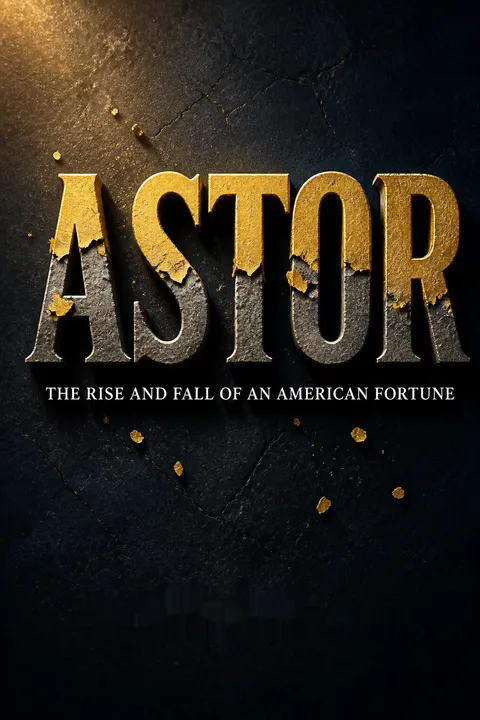
Astor: The Rise and Fall of an American Fortune receives mixed reviews averaging 3.77 stars. Readers appreciate Anderson Cooper's storytelling about the Astor family's wealth, from John Jacob Astor's fur trade and real estate ventures to subsequent generations. Many find the book entertaining and well-researched, praising Cooper's narration in the audiobook. However, critics note the narrative feels disjointed, with tangential chapters about topics like Titanic movies and gay bars that seem disconnected from the main story. Some feel it lacks depth for those already familiar with Gilded Age history, while others criticize its scattered focus and question whether Cooper's fame enabled publication.
People Also Read





Download PDF
Download EPUB
.epub digital book format is ideal for reading ebooks on phones, tablets, and e-readers.








































