


Plot Summary
Prologue
Decades before the main story, the Prince of Envy2 receives a taunting message from the Unseelie King, Lennox,9 delivered via an emerald feather. The note signals that a new game is beginning, one Envy2 has been dreading and anticipating for over half a century.
His court is quietly failing; his demons are succumbing to a memory fog that grows worse each year, a secret he hides behind a mask of bored indolence. Envy2 vowed never to endanger his circle by becoming intrigued with a mortal again after a past mistake, but the game, and the Fae king,9 give him no choice.
He burns the letter, vowing to one day reduce Lennox9 himself to ash. Years later, a demon lord named Nils Rhanes, affected by the memory blight, mocks Envy2's throne and is consumed by magical flames at midnight, screaming the cryptic phrase 'Same lie Lilac.' Envy2 watches, knowing the game has officially begun.
The prologue establishes Envy's psychological landscape: a master of deception hiding catastrophic vulnerability. His court's deterioration mirrors an internal decay—the consequence of a past sin he refuses to name. The emerald feather, simultaneously a taunt and a memento, symbolizes how his enemies weaponize his own history against him. Envy's cultivation of the 'devil-may-care prince' persona is classic trauma masking; he performs indifference because acknowledging his desperation would invite attack from rivals, including his own brothers. The fatal flaw is pride—he would rather let his court crumble in secret than admit he needs help. Rhanes's death scene introduces the game's stakes (death for failure) and its linguistic play (anagrams), foreshadowing the cerebral nature of the coming conflict. Lennox operates as a shadow puppet-master, a chaos agent who sets pieces in motion decades apart.
Vexley's Blackmail Tightens
Camilla Antonius,1 a talented painter and gallery owner in Waverly Green, faces the return of Lord Philip Vexley,3 a disgraced rake who has been blackmailing her for two years. The debt stems from the Great Mistake: after her father's death, she forged a famous painting to save her home and gallery, and Vexley3 discovered the fraud.
Instead of exposing her, he forced her to create more forgeries to fund his extravagant lifestyle. Now he refuses the memory stone that could erase his knowledge of her crime, demands yet another painting, and shocks her by proposing marriage — a union that would trap her as his criminal partner forever.
Desperate to escape his control, Camilla1 resolves to find and destroy the original forgery at his upcoming party. Vexley3's threat to ruin her reputation underscores the perilous position of women in their society, where scandal destroys a woman but merely entertains when attached to a man.
This section establishes the thematic tension between authenticity and performance that pervades the novel. Camilla is a woman who creates beauty for survival—her art is her soul, but also her cage. Vexley embodies a system where male transgression is social currency while female transgression is social death. His proposal is not romance but ownership; marriage would transform her from coerced accomplice to legal property. Camilla's plan to destroy the forgery represents her first active resistance, shifting her from reactive victim to strategic agent. The memory stone she purchased introduces the supernatural as a potential solution to human corruption—magic as justice in a world where law protects the powerful.
The Sinful Stranger Arrives
Shortly after Vexley3's departure, a darkly magnetic stranger enters Wisteria Way. He introduces himself as Lord Ashford Synton,2 a newly arrived nobleman seeking to commission a painting. The request itself is alarming: he wants Camilla1 to paint the Hexed Throne, a legendary cursed object she has been warned against her whole life.
She refuses flatly, despite his considerable charm and obvious wealth. Synton2's reaction is subtle but telling — he is unaccustomed to denial. When Camilla1 dismisses him from the gallery as a storm rolls in, he lingers outside, joined by his brother, who mocks his failed approach.
Their exchange reveals that Synton2 is not human but a Prince of Hell2 in disguise, and that Camilla1's cooperation is essential to unlock his next clue in a deadly Fae game. His brother suggests seduction as a more effective strategy, a plan Envy2 reluctantly considers.
Camilla's refusal establishes her as a protagonist with genuine agency. She draws a hard ethical line at hexed objects, honoring her father's warnings even when destitute. Envy's inability to comprehend rejection reveals the isolation of immortal power; he has so thoroughly surrounded himself with servile courtiers that a principled 'no' bewilders him. The scene functions as a meet-cute subverted—attraction is immediate but weaponized. Envy's lie (he can now lie through dark magic) and his brother's goading introduce the central tension of their relationship: is their connection real or is Camilla merely another piece on Envy's game board? The hexed throne request foreshadows Camilla's hidden talent, the magic she suppresses daily.
Vexley's Gaudy Dinner Party
At Vexley3's dinner party, Envy2 watches Camilla1 closely while she plots her heist. Lady Katherine Edwards,4 Camilla1's best friend, interrogates Envy2 about his intentions, and he learns of Pierre Antonius's eccentricities — his obsession with riddle-craft and fantastical art.
After dinner, when Vexley3 suggests naughty games, Camilla1 slips away upstairs. She searches room after room, finally locating the forgery hanging above Vexley3's bed. As she climbs onto the mattress to retrieve it, Envy2 materializes behind her. He has followed her, curious about her secret goal.
She lies, claiming she is merely fetching the painting for cleaning, but Envy2 knows better. He teases her about avoiding a tryst with Vexley,3 his flirtation laced with genuine curiosity about what she truly wants with the painting. Her body responds to his proximity even as her mind resists.
The parallel pursuits—Camilla after the forgery, Envy after Camilla—create delicious dramatic irony. Both are masked: she as a respectable artist, he as a mortal lord. Katherine functions as a truth-teller, seeing through Envy's performance and warning him implicitly. The upstairs/downstairs geography maps onto social performance: below, dinner theater; above, real stakes. Envy's decision to confront rather than expose Camilla marks a critical choice; he could blackmail her as Vexley does, but instead treats her as an equal combatant in a game of wits. Their physical chemistry—his thumb at her lips, her body's involuntary response—introduces the central romantic tension: mutual attraction between two people who cannot afford vulnerability.
Rooftop Escape and Bargain
Vexley,3 drunk and suspicious, pounds on the bedroom door. Envy2 produces a skeleton key to delay him, then guides a terrified Camilla1 out the window onto the sloping metal roof. She is nearly paralyzed with fear — the iron roof saps her strength in ways Envy2 doesn't yet understand.
He scoops her into his arms and leaps to the garden below, landing effortlessly. Outside, Lady Katherine4 attacks Envy2 with her shoe, mistaking him for a predator, before Camilla1 vouches for him. In the carriage, Envy2 extracts a deal: two truthful answers about the forgery in exchange for his silence. Camilla1 admits Vexley3 is blackmailing her.
Later, he uses this knowledge to pressure her again, attempting seduction in a secret tunnel beneath her father's studio. When she refuses his crude proposition — painting the throne in exchange for sexual favors — he escorts her home, but not before they spot columnists lurking, threatening her reputation.
The rooftop escape literalizes Camilla's psychological state: trapped between social death (scandal inside) and physical danger (the iron roof that burns her). Envy's rescue is both heroic and transactional, reflecting his demonic nature—he helps, but always with an agenda. Katherine's shoe-wielding defense is comic but underscores the genuine mortal danger Camilla navigates daily as a woman without male protection. The tunnel scene is the book's darkest negotiation: Envy offers physical pleasure as payment for dangerous art, reducing intimacy to commerce. Camilla's refusal preserves her moral integrity but leaves her vulnerable to his next advance. The columnists represent the surveillance state of Regency society, where reputation is policed as ruthlessly as any supernatural force.
The Masquerade Proposal
At Envy2's lavish masquerade ball, Camilla1 wears the moon-goddess gown he sent her. Their waltz is interrupted first by a masked woman claiming her dance, then by Camilla1 witnessing Envy2 nearly kiss another. Consumed by jealousy, she flees into the hedge maze, where Envy2 confronts her, warning her never to show him her envy.
Their heated exchange ends with him stalking away. Moments later, Lord Garrey attacks Camilla,1 demanding her silver locket at knifepoint. When he strangles her, she grabs his fallen dagger and stabs him through the neck, killing him. Envy2 arrives, cleans the scene with magic, and heals her wounds.
When drunken lords stumble upon them and threaten scandal, Envy2 announces their engagement — a pretend betrothal to save her reputation — and slides a massive emerald-and-diamond ring onto her finger. He has maneuvered her into accepting his protection, and with it, his bargain.
The masquerade externalizes the novel's obsession with masks and hidden identities. Camilla's moon-goddess costume foreshadows her true Fae nature, while Envy's green suit signals his sin. Her jealous flight demonstrates that their game has moved beyond strategy into genuine feeling; she would not run from a mere flirtation. Garrey's attack introduces the locket as the story's central MacGuffin and confirms that Camilla is a target in a larger supernatural game. Her killing him marks her transformation from passive artist to active survivor. Envy's proposal—another strategic move wrapping genuine care in convenience—is his most honest lie yet: the protection is real, the engagement false, but the ring fits her finger as if meant to be there.
Painting the Hexed Throne
Now living at Hemlock Hall under the guise of betrothal, Camilla1 begins painting the Hexed Throne. She enters a trancelike creative state where two days pass in what feels like hours. When Envy2 finds her, he is furious and insists on supervising her work.
As she nears completion, the painting comes alive: shadows pour from the canvas, flames lick at the real fireplace, and a towering creature with ember eyes materializes. The hexed demon speaks in riddles, mocking Envy2 as 'Prince of Envy2' while a crown shimmers onto his head, exposing his true identity to Camilla.1
The creature delivers the next clue — an anagram 'Hush! Those goose, lose no text,' which deciphers to 'House Sloth next. She goes too.' Envy2 stabs the shadow creature, which vanishes, but not before it steals Camilla1's artistic talent, informing her silently that she must play the game until its end to recover it.
The painting scene literalizes artistic creation as dangerous summoning. Camilla's talent—the ability to bring imagined worlds into reality—is revealed as genuinely supernatural, not merely skilled. Her trance state, where time dilates, mirrors Fae time and hints at her true heritage. Envy's exposure as a demon prince fractures their relationship's foundation: he has been lying about his identity from the first moment. The hexed demon's theft of Camilla's talent repositions her from reluctant helper to desperate player. She now has her own stake in the game, independent of Envy. The anagram clue structure—linguistic puzzles embedded in nonsense phrases—becomes the game's signature mechanic, rewarding cleverness over brute force.
Through the Sin Corridor
Envy2 brings Camilla1 to the gates of the Underworld and forces her through the Sin Corridor, a frozen wilderness that tests newcomers for their affinity to each deadly sin. They travel on foot through snow and ice, with Camilla1 remarkably resistant to the seductive pull of the realm's magic.
When a storm forces them to shelter in a tiny cabin, their simmering tension ignites. Camilla,1 feeling Envy2's earlier attempt to provoke her jealousy, turns the tables: she pretends to be under Lust's influence, straddling him, her hands on her own body, her voice a purr of seduction.
She asks him two probing questions — did he like tasting her, does he think about it — and he confesses the truth before she abruptly stops, leaving him aching. The next morning, they arrive at House Sloth, a vast library-castle where Sloth7's brother greets them by stabbing a dagger through Envy2's chest.
The Sin Corridor functions as a liminal space where social masks dissolve. Camilla's resistance to demonic influence raises the first concrete questions about her nature; no mere mortal should withstand the pull of seven deadly sins. Her seduction-reversal in the cabin is a masterstroke of psychological warfare: she uses Envy's own weapon (jealousy and desire) against him, proving herself his equal in strategic thinking. The cramped quarters force physical intimacy that Envy's one-night rule would normally prevent, creating unresolved tension that builds throughout the novel. His confession—that he constantly thinks about her taste—is the first genuine emotional truth he offers. Sloth's violent welcome establishes the brotherly dynamics as simultaneously affectionate and murderous.
The Fear Collector's Warning
At House Sloth, Camilla1 discovers a strange pulsing orb among the shelves that only she can see — it has been glamoured from the demons. She picks it up before anyone can stop her, and it adheres to her skin. Envy2 and Sloth7 realize it is an Orb of Golath, an artifact of the Fear Collector.
They draw a containment circle, and Envy2 shatters the orb. The nearly incorporeal creature that emerges fixes its yellow goat-eyes on Camilla,1 calling her a 'gift.' It speaks in riddles about a crimson prince rising and tells Envy2 to find it below the flaming tombs, where the ground withers.
After the creature departs, it deposits them near Bloodwood Forest, where Camilla1 suddenly blurts out the name 'Prometheus.' Envy2 warns her never to speak that true name again — it summons the vampire prince, who is always listening.
The orb's selective visibility confirms Camilla's supernatural nature: she is attuned to magic that evades even demon senses. The Fear Collector's fixation on her as a 'gift' and his riddles about 'the dearly twin' begin layering the novel's final-act reveals. His statement that 'deception is the most wicked game of all' functions as thesis statement for the entire narrative. The abrupt teleportation to Bloodwood Forest demonstrates that forces beyond Envy's control are manipulating events. Camilla speaking the vampire prince's true name—whether by accident or by the Fear Collector's planted suggestion—sets the next disaster in motion. Envy's growing protectiveness masks his dawning suspicion that Camilla is central to the game in ways he hasn't yet grasped.
Jealousy in Bloodwood Forest
In Bloodwood Forest, Envy2 pushes his sin into Camilla1's mind, forcing her to relive his memory of the Goddess Vittoria10 attempting to seduce him. Enraged, Camilla1 shoves back with a memory of her own: a past lover taking her mouth roughly, her on her knees. Both are driven wild by jealousy. They clash — her dagger at his throat, then her mouth on his, then his body pinning hers to the ground.
Envy2 has Camilla1 half-undressed, her legs around him, when she vanishes mid-moment. A card appears where she lay: the Immortal Heart, symbol of the vampire court. The vampire prince, summoned by her earlier utterance of his true name, has kidnapped her. Envy2's rage crystallizes into killing calm; he now has to storm Malice Isle.
This scene represents the apex of their toxic intimacy—each weaponizing their past to wound the other, their jealousy a form of dark honesty. The memory exchange functions as a perverse intimacy; by showing each other their deepest humiliations and desires, they come closer to truth than any conversation could achieve. Camilla's dagger-at-his-throat moment, followed by her choice to kiss rather than cut, demonstrates her capacity for both violence and vulnerability. Envy's loss of her immediately after near-consummation underscores the game's cruelty: connection is punished, desire is dangerous. The vampire prince's intervention is elegantly plotted—the 'Prometheus' slip now paying catastrophic dividends.
Prisoner of the Vampire Court
Camilla1 tumbles into Malice Isle, a realm of black sand beaches and crimson moons. A vampire named Blade8 brings her before Prince Zarus, whose icy touch renders her body under his complete control. At a decadent dinner where vampires feed on and pleasure willing humans simultaneously, Blade8 protects her from Zarus's advances, claiming her as his own.
Camilla1 discovers a shocking guest: Lord Vexley,3 now a visiting player granted asylum by the Unseelie King.9 Vexley3 admits he needed Camilla1's portal key for his first game clue and gave it to a dark-market contact.
The key her father died obsessed with is now in the game master's possession. When Zarus finally corners Camilla,1 pressing his fangs to her throat, Envy2's thrown dagger interrupts the feeding. The demon prince2 has come for her, and he intends to kill a vampire prince to take her back.
The vampire court satirizes decadent aristocracy taken to supernatural extremes. Blood and sex mingle openly, exposing the appetites that Regency society disguises. Blade's protection of Camilla—tactical, not altruistic—introduces the novel's nuanced approach to villainy; he is a predator who chooses not to prey on her. Vexley's presence reinforces the game's interconnectedness: all players are drawn to the same prize, and their paths inevitably cross. His admission about the portal key retroactively explains why he targeted Camilla in Waverly Green; the key was always Lennox's goal, and Vexley was merely an instrument. Zarus's mind-controlling touch and Camilla's involuntary response (her body yields, her mind screams) dramatize the horror of consent violation within attraction.
Gladiator Prince Versus Demon
Envy2 arrives in the vampire arena to fight for Camilla1's freedom. Zarus pits him against Canidae (a wolf-headed giant) and four other monstrous Kiadara descended from old gods, alongside the vampire prince himself, all coated in hellebane poison to slow Envy2's healing.
Envy,2 still regenerating his heart after Vittoria10 tore it out, fights with brutal efficiency — ripping out hearts, shattering bones — until only Zarus remains. Following the Fear Collector's riddle, Envy2 summons Blade,8 a crimson-eyed royal, who beheads the deposed prince and claims the Immortal Throne.
Alexei,6 Envy2's second-in-command, kneels first, swearing fealty. Camilla1 watches from above, her relief at Envy2's survival mixed with horror at the carnage. Envy2 has crowned a new vampire prince to win this round of the game.
The arena battle externalizes the political maneuvering that has occurred offstage. Envy's physical dominance—fighting the equivalent of eight hundred men—establishes the power scale of demon princes in this universe. His weakness (the missing heart) creates dramatic stakes without diminishing his competence. The hellebane poison operates as a ticking clock, forcing efficient violence over elegant combat. Blade's ascension is the novel's cleanest example of 'winning by rewriting the rules': Envy cannot defeat an entire vampire court, so he changes who leads it. Alexei's public kneeling legitimizes the coup through institutional recognition—a vampire royal acknowledging the new order makes it real.
Vexley's Second Death
After the battle, Vexley3 corners Camilla,1 demanding she return to Waverly Green as his wife. When she refuses, he attacks, pinning her to the wall and threatening to impregnate her by force.
Camilla,1 backed into a corner, unleashes dormant power: electricity crackles from her skin into Vexley,3 fusing their bodies together as he convulses, urinates himself, and collapses dead. Envy2 enters moments later and sees the aftermath — the dead man, Camilla1 standing over him with silver eyes still glowing. He says nothing about the body, asking no questions.
Instead, he extends his hand. Camilla1 takes it, and they leave the vampire court together, stepping over the man she killed without looking back. They travel to Envy2's private cottage, where she tends his wounds, and their passion reignites. This time, their kiss holds tenderness as well as fire.
Camilla's killing of Vexley is the novel's most cathartic moment—years of blackmail and coercion ended by her own hand. The manner of death (electrocution) confirms her non-human heritage and introduces her Fae magic as a physical, defensive tool rather than merely creative talent. Envy's reaction is crucial: he doesn't flinch, doesn't interrogate, doesn't judge. For a demon accustomed to violence, her capacity for it makes her more his equal, not less. Their post-murder handclasp symbolizes a new contract—not the transactional bargain of earlier chapters, but a genuine alliance of two people who have now both killed to protect each other. The tenderness in their subsequent kiss marks the shift from game-playing to something approaching love.
The Throne of Union
In Envy2's throne room, their flirtation culminates in a night of unrestrained passion. He kneels before her first, worshipping her body with his mouth, drawing orgasms from her until she begs for more.
She takes him on the floor, then demands he sit on his throne so she can ride him there — facing away, then facing him, claiming his seat of power as her own. She calls his true name, Leviaethan,2 each time she climaxes, a trust he has never extended to any lover. He makes her watch in the mirror as he thrusts into her, commanding that her eyes stay open.
They continue in his bedchamber until morning, but after their night ends, Envy2 retreats behind his old rule — one night only. The emotional whiplash wounds Camilla1 deeply, confirming her fear that the tenderness was another illusion.
The throne scene is the novel's sexual and symbolic centerpiece. Camilla's choice to ride him on his throne reverses power dynamics: the demon prince who rules through envy is himself ruled by desire for her. Her calling his true name—a secret that could bind or destroy him—represents the ultimate vulnerability from a being who has spent centuries guarding himself. His surrender of that name, even temporarily, is more intimate than any physical act. The mirror sequence literalizes his earlier threat that he would make her watch; seeing herself being pleasured forces Camilla to own her desires rather than hide them. His subsequent retreat into the one-night rule demonstrates that Envy has confused self-protection with self-destruction; he hurts her not because he doesn't care, but because he cannot bear how much he does.
Wolf's Bargain for Camilla
After Envy2's rejection, Camilla1 seeks out Wolf,5 the legendary hunter and her former lover, who has been watching her since Waverly Green. In the snowy woods outside Envy2's estate, Wolf5 dances with her across the snow, reminding her of their past night together — the only time she didn't have to restrain her true self.
He offers her a bargain: return with him to the Wild Court as his mate, and she can see Waverly Green again. Camilla1 refuses, but in the exchange, Wolf5 forces her to acknowledge her buried truth aloud: she is Fae. She admits it in a whisper, claiming she belongs to no court.
He tells her the 'dearly twin' is the Twin Pillars of Faerie, an ancient site. When she returns to the cottage, Envy2 immediately scents Wolf5 on her and confronts her. In a battle of confessions, she admits her age — far older than twenty-eight — and he admits he couldn't perform with Vittoria,10 the goddess, because his body only responds to Camilla1 now.
Wolf functions as truth's emissary—dangerous but not malevolent, tempting but not coercive. His offer of mating is political (an alliance) rather than romantic, typical of Fae pragmatism. The dancing-in-snow sequence prefigures the later Shallows waltz; both moments offer Camilla the freedom of her true form. Her whispered admission of 'I may be Fae' is the novel's hinge point—once spoken, the secret cannot be unrevealed. Envy's confession of sexual exclusivity ('my cock refused to cooperate with Vittoria') is both comically blunt and deeply romantic; a demon who has bedded countless lovers for centuries now physically cannot want anyone else. Their mutual confessions in the cottage mark the transition from adversaries to allies.
The Crescent Shallows Truth
To reach the Twin Pillars, Envy2 and Camilla1 must wade through the Crescent Shallows, enchanted water that compels truth and destroys any clothing or jewelry. They strip naked and enter together.
The water's compulsion forces Envy2 to admit he still craves Camilla,1 that he likes her, enjoys her company, and wanted to touch her in the water. She admits the same. When she asks if his court is in peril and whether that drives his game, he confesses everything. Rather than drowning in painful honesty, Camilla1 pulls him into a waltz, dancing naked in the lagoon until the tension dissolves.
They emerge on the other shore transformed — not physically, but in their understanding of each other. Envy2 has revealed his deepest shame: his court is dying because of a mistake he made centuries ago.
The Shallows sequence is the novel's baptism scene—a cleansing that strips away the last deceptions. The water's compulsion functions as a narrative lie-detector, forcing both characters to voice what they've been suppressing. Envy's admission that his court is in peril recontextualizes his entire behavior throughout the novel. His ruthlessness, his game obsession, his emotional unavailability—these are not personality flaws but survival strategies for a king watching his people die. Camilla's response (dancing instead of interrogating) demonstrates emotional intelligence; she understands that he needs joy more than interrogation. Their nude waltz in magical water is the novel's most purely romantic image: two damaged people, finally honest, choosing connection over combat.
Abyssus's Dark Test
After exiting the Shallows, they face Abyssus, a sun-gold creature guarding the path to the Twin Pillars. The creature separates them, throwing Camilla1 into an endless void where time loses meaning. She experiences true solitude — no light, no sound, no self — while Abyssus taunts her, asking what she fears most.
She is shown visions: Vexley,3 somehow surviving, beheading Envy2 in the tunnel. When the test ends, she emerges to find Envy2 gone. Abyssus reveals that days have passed and that Lennox, the Unseelie King,9 left a message: solve the final clue before sunset or lose her talent forever.
Meanwhile, Envy2 has been magically chained at the Twin Pillars, tortured by Vexley,3 who has become a vampire. Camilla1 reaches him just in time, beheading Vexley,3 then solving a riddle to break the chains.
Abyssus's test externalizes Camilla's psychological journey. The void is loneliness made physical—the exact fear that has governed her life since her mother abandoned her, since her father died, since she chose solitude in Waverly Green. Her survival proves resilience but also reveals her Achilles' heel: she cannot bear the thought of Envy dying. The Vexley resurrection twist—he was turned, not killed—is a dark joke on immortality: villains don't stay dead. Camilla's beheading him (again) completes her arc from passive victim to active executioner. The chain-breaking riddle ('death') is thematically perfect: the answer to what ends all things is also what frees the demon prince—death as liberation rather than termination.
The Unseelie Princess Revealed
Camilla1 activates the Twin Pillars with her blood — the symbols align with her birthday, the winter solstice. They step through into the Wild Court, where the Unseelie King Lennox9 awaits. The truth emerges rapidly: Camilla1 is not Seelie.
She is an Unseelie princess, Lennox9's fourth child, stolen as a baby by her mother, Prim Róis, who glamoured her as a mortal to hide her in Waverly Green. Pierre was never her biological father — he was given false memories. Her true brother, Ayden, an Unseelie prince known for his Moonlight Carnival, taunts her about 'pretending to be mortal.'
Lennox9 restores her full Fae form, destroying the tattoo that suppressed her magic, but then traps her in an iron cage above a fire. He has what he wanted: her locket, which, combined with Pierre's portal key, opens a permanent doorway from the dark market into the Wild Court.
The revelation recasts the entire novel. Camilla's resistance to demonic influence, her talent that creates reality, her instinctive trust of darkness—all were Fae heritage expressing itself despite suppression. Lennox's cruelty to his daughter (the iron cage, the fire) proves that blood relation guarantees nothing in Faerie; power and obedience are the only currencies. The locket and key reveal is masterfully plotted: the objects that have driven Camilla's quest—her mother's gift, her father's obsession—were never sentimental. They were components of a weapon Lennox has been assembling for decades. Camilla is simultaneously victim (imprisoned by her father) and architect (her painting bound the key and locket, creating the portal). Her complicity is coerced but real.
Envy Destroys His Enemy
Envy,2 seeing Camilla1 caged and tortured, abandons all restraint. He summons his wings — draining the ward protecting his court, sacrificing his demons' stability — and attacks. Lennox9 responds with moonbeam magic, a strobing assault of light and dark that disorients everyone.
While they battle, Camilla1 escapes her cage, paints an iron sword into existence using her restored Fae magic, and hamstrings her father from behind. Envy2 then drives his House dagger through Lennox9's throat.
The Unseelie King's last words to Camilla1 are an acknowledgment: she is his child through and through. Envy2 leaves immediately after, taking the Chalice of Memoria — his prize from the game — and returning to his circle without a word to Camilla.1 Wolf5 finds her alone, standing over her father's body.
Envy's choice to sacrifice his court's stability for Camilla is the novel's most significant character beat. For decades, protecting his demons has been his sole purpose; he abandons that purpose the moment she is truly endangered. The wings—hidden throughout the novel, their absence mocked by the gossip columnist—become the physical manifestation of his love. Lennox's final acknowledgment of Camilla is the novel's darkest grace note: even in death, the villain claims his daughter, seeing himself in her violence. Envy's silent departure reopens the wound of abandonment; his inability to offer comfort or closure after shared trauma is the flaw that must be overcome in the final act. He has won the game, saved his court, and defeated his enemy—but lost the woman he loves.
The Demon Prince Returns
Envy2 restores his court using the Chalice of Memoria, healing each demon's memories one by one. Alexei6 goads him about Camilla,1 asking if he truly wants Wolf5 to claim her. When Envy2's spies report that Camilla1's elder brother Onyx has plotted to assassinate her, he flies back to Faerie, slaughters Onyx's guards, and traps the murderous prince in the same iron cage Lennox9 used for Camilla.1
He finds her in her chambers, bloody-winged and feral, and tells her they are leaving. He no longer cares about his one-night rule. She asks about it, and he answers that the rules no longer apply because she belongs to him. He brings her, her friend Kitty4 (revealed as another Unseelie in disguise), and her Fae lioness Bunny13 back to House Envy.
Envy's return is his redemption arc compressed into a single action. He does not apologize, does not explain; he simply acts. The caging of Onyx is poetic justice and a declaration of war—Envy has made himself the enemy of the remaining Unseelie royals to protect Camilla. His statement that she 'belongs to him' could be possessive villainy in another context, but here it means he is claiming responsibility for her safety. The restoration of his court off-page while he frets over Camilla demonstrates his shifted priorities. His court is saved, but his thoughts are on her. The novel's epilogue confirms the happy ending: they marry, they paint together, they create a portal between Waverly Green and House Envy, honoring both her human past and her Fae future.
Epilogue
Months after the game ends, Camilla1 and Envy2 are betrothed. She divides her time between Waverly Green, where she maintains her gallery, and House Envy, where she has her own studio. Envy,2 having broken his one-night rule forever, surprises her with a permanent portal connecting her father's secret studio to the Underworld.
They make love amid spilled paint, creating chaotic art on canvas and each other, and hang their masterpiece above their bed — replacing Envy2's legendary nude portrait. At a celebratory party with his brothers, Pride receives a crucial piece of information about his missing wife, Lucia, hinting at future stories to come. Envy2 and Camilla1 dance in the throne room, their game of seduction now a lifetime partnership.
The epilogue delivers on the novel's romantic contract while setting up sequels. The replacement of Envy's nude portrait with their shared paint-splattered canvas symbolizes the shift from performance (the legendary lover) to authenticity (the messy, real partnership). The portal between worlds resolves Camilla's central conflict: she no longer has to choose between her human identity and her Fae heritage. The Pride subplot seeds the next book efficiently, demonstrating that while Envy's story is complete, the Seven Circles' political machinations continue. The final image—dancing in the throne room—echoes their nude waltz in the Crescent Shallows but replaces compelled honesty with chosen joy. The game is over. Love is the prize.
Analysis
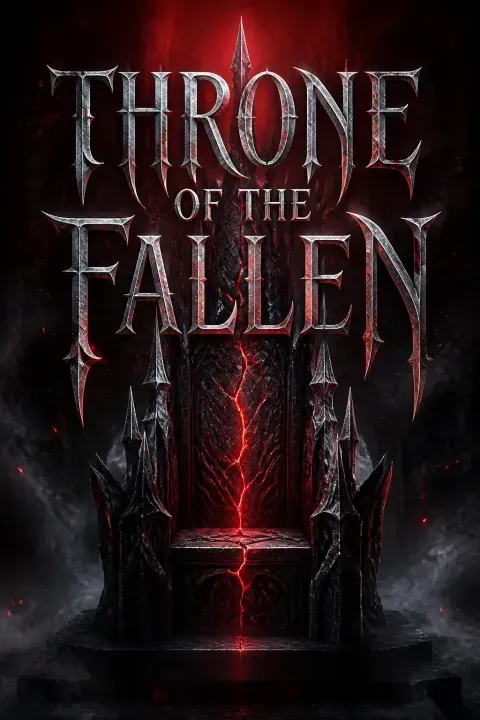
Throne of the Fallen is a romance novel that understands romance as a form of warfare by other means. Envy2 and Camilla1 do not fall in love; they battle their way there, each encounter a skirmish where the winner claims emotional territory. The book's central insight is that for people who have built their identities around control and self-protection, vulnerability must be tricked out of them. Neither protagonist is capable of simply admitting affection; they require the Crescent Shallows 'magical compulsion, the Sin Corridor's testing, and the game's escalating stakes to finally speak the truths they've buried. The novel's fantasy elements serve its psychological realism: demons who feed on envy, Fae who feed on passion, vampires who feed on blood — all externalize the hungers that human society forces us to disguise. The book's politics are quietly radical. Camilla1's refusal of marriage to Vexley,3 her insistence on owning her gallery, and her sexual agency (she pursues pleasure without shame) position her as a feminist protagonist within a genre that often defaults to more passive heroines. Her killing of Vexley3 — electrocuting him when he attempts to rape her — is the novel's clearest moral statement: violence in self-defense is not merely justified but necessary. Envy2's character arc challenges the romance genre's redemption-through-love trope by insisting that redemption must precede love. He does not become good because Camilla1 loves him; he becomes capable of love because he finally confronts the shame (giving up the chalice, failing his court) that has frozen him for centuries. His one-night rule was never about hedonism but penance — he refused connection because he believed he deserved punishment. The game structure itself critiques toxic systems. Lennox9's competition, where players sign blood oaths and face death for failure, mirrors the arbitrary cruelty of aristocratic society in Waverly Green, where reputation is a game with lethal stakes for women. Both realms reward deception and punish authenticity. The resolution — Envy2 and Camilla1 creating a portal between worlds, splitting their time — offers a vision of integration rather than sacrifice. She keeps her gallery, her cat,13 her human identity; he keeps his court, his brothers, his sin. They do not choose one world over the other but build a bridge between them.
Review Summary
Throne of the Fallen received mixed reviews. Many readers praised the steamy romance, engaging plot, and well-developed characters, particularly enjoying the chemistry between Envy and Camilla. Some found the book addictive and loved the world-building. However, others criticized the excessive focus on sexual content, feeling it overshadowed character development and plot. Some readers felt the book was too long and lost interest. Overall, opinions were divided, with fans of romantasy generally enjoying it more than those seeking pure fantasy.
People Also Read

Characters
Camilla Antonius
Unseelie Princess and ArtistCamilla is an Unseelie Fae who has spent most of her life glamoured as a human in Waverly Green, where she runs her late father's gallery. Her extraordinary talent for painting borders on magic—she can summon reality from canvas, bringing imagined worlds into being. Abandoned by her mother at seventeen and orphaned by her father's death, she has built her identity around independence and art. Beneath her proper Regency exterior lurks a passionate, game-loving woman who secretly craves a lover who matches her intensity. Her defining trait is her refusal to be owned—by Vexley3's blackmail, by Envy2's bargains, by her biological father9's court. She is both ruthless (killing Garrey and Vexley3 in self-defense) and deeply tender, capable of dancing naked with a demon2 in magical waters. Her arc moves from hiding her true nature to embracing it, from fearing solitude to choosing partnership.
Prince Envy (Leviaethan)
Demon Prince of the Sin EnvyThe Prince of Envy rules one of the Seven Circles of Hell, drawing power from provoking jealousy in others. For centuries, he has maintained a strict rule: one night with any lover, never more—a policy born from the trauma of losing a mortal woman to the Unseelie King9's cruelty and from his guilt over giving her the Chalice of Memoria, which doomed his court to a memory-wasting plague. Beneath his mask of bored indolence and wicked charm, he is a desperate ruler watching his demons slowly lose their minds. He is strategic to the point of ruthlessness, lying and manipulating to win the game that will restore his court. His emotional journey is learning that vulnerability is not weakness; Camilla1 forces him to confront the fear that has governed his romantic life for centuries. His breaking of the one-night rule represents choosing love over self-protection.
Lord Philip Vexley
Blackmailing Rake and VampireVexley is a charismatic predator who hides sadism behind a roguish grin. Disinherited by his viscount father for scandalous behavior, he discovered Camilla1's forgery and has exploited her talent ever since, funding his lavish lifestyle through her illegal work. His charm is a weapon; his violence emerges when he doesn't get what he wants. He is a player in Lennox9's game, seeking the portal key for his first clue, trading it to progress. His pursuit of Camilla1—blackmail, then marriage proposals, then attempted rape—escalates throughout the novel. His transformation into a vampire after Camilla1's electrical attack gives him a second life and makes him an even worse threat. His repeated deaths (first by electrocution, then beheading) become a dark running gag.
Lady Katherine Edwards (Kitty)
Camilla's Best Friend, Secretly FaeKitty is Camilla1's loyal friend and fellow Unseelie, glamoured as a human noblewoman in Waverly Green. Originally sent by Lennox9 to watch Camilla1 after her first refusal to return to Faerie, she genuinely bonded with her instead. She is practical, fiercely protective, and sexually frank—encouraging Camilla1 to find a 'loyal companion' for pleasure if not marriage. Her own marriage to Lord Edwards is a cover; she genuinely cares for him, complicating her Fae loyalties. Her true nature is revealed when Camilla1's glamour breaks, and she chooses to return to the Wild Court to visit her family.
Wolf
Unseelie Hunter and Former LoverWolf is an exiled Unseelie nobleman with white hair and pale yellow eyes, known in mortal legend as a seducer of women. He was Camilla1's first lover, the one being she didn't have to restrain herself with during their night together two years before. Sent by Lennox9 to bring Camilla1 back to the Wild Court, he instead became her ally, watching over her from the shadows. His offer of mating is pragmatic—he genuinely likes Camilla1 and sees political advantage in their union—but he also demonstrates real care by goading Envy2 into claiming her properly. He commits treason against Onyx to help Camilla1 paint the iron sword, prioritizing her survival over court loyalty.
Alexei
Vampire Second-in-CommandAlexei is a blond vampire of royal blood, distinguished by his frosty blue eyes, who serves as Envy2's second-in-command. He chose House Envy over Malice Isle, studying demon governance to one day apply it to his own court. He is cold, lethal, and unfailingly loyal—the one creature Envy2 trusts with the truth about his crumbling court. His past liaison with Vittoria, the Goddess of Death10, gives him unique insight into her manipulations. He helps Envy2 clear the bodies of fallen demons, challenges Envy2 to pursue Camilla1, and kneels first to legitimize Blade8's new reign.
Prince Sloth (Lo)
Demon Prince and Librarian-KingSloth rules a vast library-castle containing hundreds of thousands of books, specimens, and artifacts. Despite his sin's reputation for laziness, he is wickedly intelligent and infinitely patient—his 'sloth' is a strategic camouflage for relentless observation. He stabs Envy2 upon arrival as punishment for entering uninvited, demonstrating that even the bookish prince is lethal. He initially resists helping with the game, wanting to know what Envy2 is truly after, but eventually provides research support. His analysis of Camilla1—that she might be the next clue—proves prescient.
Blade
Crimson-Eyed Vampire RoyalBlade is a royal vampire whose unusual crimson eyes mark him as heir to a different lineage. He protects Camilla1 in the vampire court—not from altruism but from political calculation, wanting to avoid war with Envy2. He is direct, unsentimental, and honor-bound in his own fashion. His ascension to the Immortal Throne after decapitating Zarus makes him the first crimson-eyed vampire prince in known history. He gifts Camilla1 a dagger and healing salve, small acts that build the alliance between his court and House Envy.
Lennox, the Unseelie King
Game Master and VillainLennox is the embodiment of Chaos, a Titan-level being who rules the dark Fae. He designs elaborate games spanning centuries, using players as pawns to achieve his own ends—in this case, retrieving his stolen locket and portal key to reopen a permanent passage between Faerie and the mortal world. He is coldly cruel to his daughter1, caging and torturing her when she defies him, yet acknowledges her as his true child when she helps kill him. His power manifests as moonbeam and shadow magic, a strobing assault of light and dark that disorients enemies. His death at Envy2's hands ends the game but leaves the Wild Court in chaos.
Vittoria, Goddess of Death
Death Goddess and AntagonistVittoria is the twin sister of Emilia, Queen of the Wicked12, and rules House Vengeance. She is sadistic, theatrical, and obsessed with collecting hearts—literal and metaphorical. She tears out Envy2's heart in Bloodwood Forest as payment for killing a competing player, weakening him significantly during the vampire battle. Her attempt to seduce Envy2 in his throne room fails when his body refuses to respond to anyone but Camilla1. Her ultimate romantic fate remains unresolved, with characters betting on whether she'll end up with a werewolf, vampire, or Fae.
Prince Wrath
Demon King and Envy's BrotherWrath is the General of War, king of the Seven Circles, and Envy2's older brother. His golden eyes and barely leashed fury make him terrifying even to other demons. He refuses to grant Envy2 easy access to the Twin Pillars, suspecting something is wrong with Envy2's court but unable to confirm it. His wings, once silver-flame weapons, are now ebony—a price paid for his wife12's freedom.
Emilia
Queen of the WickedEmilia is Wrath11's wife, a goddess of fury, and Vittoria10's twin. She grants Envy2 the queen's favor to access the Twin Pillars, overriding her husband's objections. She bonds quickly with Camilla1, seeing a kindred spirit in the princess1 who gives Envy2 'a bit of hell.' Her gift of cannoli to Envy2 is a small, humanizing gesture that touches the demon prince.
Bunny
Camilla's Fae Lioness CompanionBunny appears as a large gray-and-white cat in Waverly Green but is actually a Fae lioness under glamour. She travels in Lord Edwards's coach, adores warm cream, and judges Envy2 harshly at first. She eventually warms to him and even befriends Wrath11 at the betrothal celebration.
Plot Devices
The Game
High-stakes supernatural competitionThe Unseelie King9's game is a multi-player puzzle challenge where each participant signs a blood oath and follows personalized clues toward a prize—the Chalice of Memoria, which can grant immortality, infinite wealth, or any other desire. Players have three chances per clue; failure means death. The game structures the entire plot, driving Envy2's quest and forcing Camilla1's involvement when her talent is stolen by the Hexed Throne. Lennox9 uses the game to manipulate multiple players simultaneously, advancing his own agenda of reopening the portal between Faerie and the mortal world. The anagram clues ('Same lie Lilac' = Camilla Elise) reward linguistic cleverness over brute force.
The Chalice of Memoria
Memory-purging magical artifactAn ancient object of immense power required by Envy2's court to purge their overflowing memories and prevent the memory blight that drives demons to madness, violence, and suicide. Envy2 gave it to a mortal lover centuries ago; she brought it to the Wild Court, where Lennox9 claimed it after her death. Without it, Envy2's demons slowly lose their minds, confusing friend for foe. The chalice's runes activate when the correct spell is applied, and it can grant whatever the drinker desires. Envy2 ultimately reclaims it after killing Lennox9 and uses it to restore his court, healing each demon one by one.
The Silver Locket and Portal Key
Combined hexed object opening realm portalCamilla1's locket (given by her mother, stolen from Lennox9) and Pierre's portal key (obtained from the dark market) are individually powerful but become devastating when bound together by Camilla1's painting magic. The hexed 'Silverthorne Key' that results opens a permanent doorway from Silverthorne Lane in Waverly Green directly into the Wild Court. Lennox9's true goal throughout the game is retrieving these objects to bypass the ward that prevents Fae from freely accessing mortal realms. Camilla1's unwitting painting of the two objects together is coerced by Lennox9 threatening to destroy the Chalice of Memoria, blackmailing her as Vexley3 once did.
Envy's Wings and Aether Scrolls
Hidden spell repository and power sourceEnvy2's wings were bound—unable to be summoned—because his power was drained maintaining the ward around his failing court and keeping his demons' memories intact. The Aether Scrolls, containing the spells needed to activate the Chalice of Memoria, were magically fused with his wings as invisible tattoos centuries ago, a security measure against theft. When Envy2 finally summons his wings to save Camilla1 from Lennox9's cage, he sacrifices the last of his power holding his court together—a choice that demonstrates his love for her outweighs his duty to his demons. The scrolls' spells activate upon the wings' release, giving him access to the chalice's activation magic.
The Crescent Shallows
Truth-compelling magical lagoonA bath-warm lagoon below House Wrath whose waters destroy any manufactured object (clothing, jewelry) and compel anyone who enters to speak only truth. Envy2 and Camilla1 must cross it naked to reach the Twin Pillars, and the forced honesty strips away their remaining deceptions. Envy2 admits he craves Camilla1, likes her company, and wanted to touch her; she admits the same. The Shallows also reveal that Camilla1's questions can be worded with Fae cunning, forcing truth while controlling its scope. Their nude waltz in the magical water is the novel's most intimate non-sexual moment.
FAQ
Synopsis & Basic Details
What is Throne of the Fallen about?
- A Demon Prince's Game: Envy is forced into a dangerous game by a Fae overlord, where he must navigate treacherous challenges to save his court from ruin.
- A Mortal Artist's Bargain: Camilla Antonius, a talented artist, gets entangled in the demon world when she's blackmailed into creating forgeries, leading her to a dangerous bargain with Envy.
- A Battle of Wills: The story follows the complex relationship between Envy and Camilla as they navigate a world of magic, deceit, and desire, each with their own hidden agendas and secrets.
Why should I read Throne of the Fallen?
- Intriguing Characters: The story features complex characters with hidden depths, including a cunning demon prince, a talented artist with a mysterious past, and a host of other supernatural beings.
- High-Stakes Plot: The narrative is filled with suspense, danger, and unexpected twists, keeping readers engaged as the characters navigate a treacherous game with deadly consequences.
- Exploration of Themes: The book delves into themes of power, identity, and redemption, offering a thought-provoking exploration of the human condition and the allure of the supernatural.
What is the background of Throne of the Fallen?
- Regency-Inspired Setting: The story is set in a city called Waverly Green, which is similar to Regency London but with a mystical twist, where magic is not openly discussed but is present in the shadows.
- Demon Courts and Fae Realms: The narrative introduces a shadowy nether realm ruled by seven demon princes, each presiding over a court of sin, and hints at the existence of the Fae, adding a layer of supernatural intrigue.
- Magical Artifacts and Dark Markets: The story incorporates magical objects and a dark market where stolen art and artifacts are imbued with mystical powers, creating a world where the line between reality and fantasy is blurred.
What are the most memorable quotes in Throne of the Fallen?
- "It means the game has finally begun.": This quote, spoken by Envy, marks a pivotal moment in the story, signaling the start of the high-stakes challenge he must face.
- "You are Miss Camilla Elise Antonius, I presume.": This line, spoken by Envy, highlights the beginning of their complex relationship, as he seeks her out for a dangerous commission.
- "You'll just walk right in, was it? Simple as that.": This quote, spoken by Pride, highlights the arrogance of Envy and the challenges he faces in his quest to win the game.
What writing style, narrative choices, and literary techniques does Kerri Maniscalco use?
- Dual Narrative: The story is told from the perspectives of both Envy and Camilla, allowing readers to understand their motivations and inner conflicts.
- Foreshadowing and Symbolism: Maniscalco uses subtle foreshadowing and recurring symbols, such as the emerald feather and the color green, to hint at future events and deeper meanings.
- Sensual and Atmospheric Prose: The author employs vivid descriptions and sensual language to create a rich and immersive reading experience, drawing readers into the world of the Seven Circles and Waverly Green.
Hidden Details & Subtle Connections
What are some minor details that add significant meaning?
- The Emerald Feather: The emerald feather in the prologue is not just a random object; it's a magical item with a spell tattooed on it, signaling the start of the game and connecting to Envy's past.
- The Color Hunter Green: The recurring use of hunter green, especially in the clothing of Envy's court, foreshadows the connection between Camilla and Envy, as she wears a hunter-green gown at Vexley's party.
- The Clock Tower Bells: The tolling of the clock tower bells at midnight in the prologue foreshadows the witching hour and the start of the game, adding a sense of urgency and impending doom.
What are some subtle foreshadowing and callbacks?
- "Same lie Lilac": The phrase "Same lie Lilac" is a bizarre phrase that appears in the prologue and is later revealed to be an anagram for "Camilla Elise," foreshadowing her importance to the game.
- The Hexed Throne: The description of The Hexed Throne in the first clue, with one side pristine and the other engulfed in flames, foreshadows the painting Camilla is tasked to create and the duality of Envy's nature.
- The One-Eyed Monster: Lord Rhanes's mocking of the "one-eyed monster" in Envy's bedchamber foreshadows the dangerous and sensual nature of the demon prince.
What are some unexpected character connections?
- Pierre Antonius and the Dark Market: Camilla's father's obsession with the dark market and his dealings with Fae dealers foreshadows Camilla's own connection to the supernatural world and her mother's past.
- Lord Edwards and the Rooster: Lord Edwards's obsession with his rooster, Peter, is a subtle nod to the game's riddles and the way seemingly mundane details can hold hidden significance.
- Lady Katherine and the Underworld: Lady Katherine's knowledge of the Underworld and her ability to sense danger hints at a hidden connection to the supernatural, making her more than just a friend to Camilla.
Who are the most significant supporting characters?
- Alexei: As Envy's second-in-command, Alexei is a loyal and powerful vampire who plays a crucial role in Envy's plans and provides a glimpse into the vampire world.
- Lady Katherine Edwards: Camilla's best friend, Kitty, is a confidante and a source of support, but also a character with her own secrets and connections to the supernatural.
- Wolf: The mysterious hunter from Camilla's past, Wolf is a Fae with a complex history and a connection to the Unseelie Court, adding another layer of intrigue to the story.
Psychological, Emotional, & Relational Analysis
What are some unspoken motivations of the characters?
- Envy's Fear of Vulnerability: Despite his arrogance, Envy's actions are driven by a deep-seated fear of vulnerability and a need to protect his court, which stems from a past betrayal.
- Camilla's Desire for Independence: Camilla's resistance to Envy's control and her desire to solve the game on her own are driven by a need for independence and a fear of being manipulated.
- Lennox's Obsession with Control: The Unseelie King's actions are motivated by a desire for control and a need to assert his power over both the Fae and mortal realms, stemming from a deep-seated insecurity.
What psychological complexities do the characters exhibit?
- Envy's Internal Conflict: Envy struggles with his desire for power and his growing feelings for Camilla, creating an internal conflict that makes him both a compelling and unpredictable character.
- Camilla's Dual Nature: Camilla grapples with her dual identity as both a mortal artist and an Unseelie princess, torn between her desire for a normal life and her connection to the supernatural.
- Lennox's Sadistic Tendencies: The Unseelie King's enjoyment of chaos and manipulation reveals a sadistic nature, highlighting the dark side of power and the dangers of unchecked ambition.
What are the major emotional turning points?
- Camilla's Rejection of Envy: Camilla's refusal to paint The Hexed Throne and her subsequent dismissal of Envy's advances mark a turning point in their relationship, highlighting her independence and challenging his control.
- Envy's Vulnerability: Envy's confession about his past and his fear of losing his court reveal a vulnerability that is at odds with his arrogant persona, adding depth to his character.
- Camilla's Discovery of Her Heritage: Camilla's realization that she is an Unseelie princess and her mother's betrayal mark a major emotional turning point, forcing her to confront her true identity and her place in the world.
How do relationship dynamics evolve?
- Envy and Camilla's Shifting Power Dynamics: The relationship between Envy and Camilla evolves from a power struggle to a complex bond of desire and mutual respect, as they navigate their feelings for each other.
- Envy and Pride's Rivalry: The relationship between Envy and Pride is marked by a mix of rivalry and brotherhood, as they compete for power and recognition while also sharing a deep bond.
- Camilla and Kitty's Enduring Friendship: The friendship between Camilla and Kitty is a constant source of support and understanding, as they navigate the challenges of their lives and the complexities of their world.
Interpretation & Debate
Which parts of the story remain ambiguous or open-ended?
- The Nature of Camilla's Talent: The exact nature of Camilla's artistic talent and its connection to the supernatural world remains ambiguous, leaving room for interpretation and future exploration.
- The True Motives of Lennox: The Unseelie King's true motives for initiating the game and his ultimate goals remain unclear, leaving readers to speculate about his long-term plans.
- The Fate of the Other Players: The fates of the other players in the game, aside from Vexley, are left open-ended, leaving room for future stories and potential conflicts.
What are some debatable, controversial scenes or moments in Throne of the Fallen?
- Envy's Treatment of Camilla: Envy's initial attempts to control and manipulate Camilla, as well as his later attempts at seduction, raise questions about consent and power dynamics.
- Camilla's Use of Violence: Camilla's use of violence, particularly her killing of Vexley, raises questions about her morality and the extent to which she is willing to go to protect herself.
- The Morality of the Demon Princes: The actions of the demon princes, particularly their use of power and their disregard for mortal lives, raise questions about their morality and the nature of good and evil.
Throne of the Fallen Ending Explained: How It Ends & What It Means
- Envy's Choice: Envy chooses to prioritize his court and his responsibilities over his personal desires, leaving Camilla behind to face her own destiny.
- Camilla's Acceptance of Her Heritage: Camilla embraces her Unseelie heritage, accepting her place in the Fae world while also retaining her independence and her connection to the mortal realm.
- The Game Continues: The ending leaves the door open for future conflicts and challenges, as the game master's plans remain shrouded in mystery and the balance of power in the Underworld remains uncertain.
Prince of Sin Series
About the Author
Other books by Kerri Maniscalco
Download PDF
Download EPUB
.epub digital book format is ideal for reading ebooks on phones, tablets, and e-readers.








































