
Plot Summary
Orders and Obedience Broken
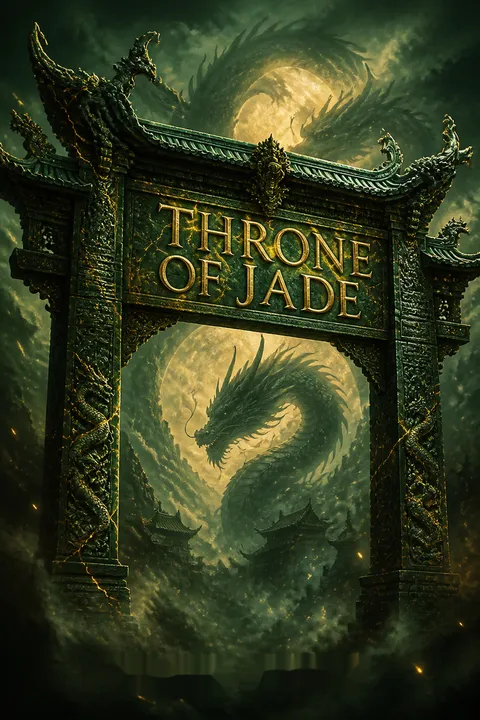
Captain William Laurence, once a naval officer, is now Temeraire's companion and captain in the British Aerial Corps. The story opens with Laurence summoned before the Admiralty and a Chinese embassy, led by Prince Yongxing, who demands the return of Temeraire—a rare Celestial dragon, originally intended for Napoleon. Laurence is ordered to deceive Temeraire and send him to China, but he refuses, unable to betray the dragon's trust. The tension between duty to country and loyalty to loved ones is palpable, as Laurence's sense of honor collides with the cold calculations of politics. The threat of war with China looms, and the emotional cost of separation is made clear, setting the stage for a struggle that will test every bond.
Temeraire's Defiance Unleashed
Isolated from Laurence, Temeraire languishes in the covert, beset by Chinese envoys and British officials who try to persuade him to return to China. The dragon's loneliness and confusion deepen, but his loyalty to Laurence is unwavering. When Laurence is threatened with arrest for insubordination, Temeraire's patience snaps. He unleashes his devastating "divine wind" roar, scattering soldiers and diplomats alike, and reunites with Laurence in a moment of fierce, almost desperate relief. Their reunion is both a balm and a spark: Temeraire refuses to be parted from Laurence, and together they defy every authority, setting in motion a chain of events that will carry them far from England's shores.
Battle Over the Channel
Laurence and Temeraire are swept into a sudden battle over the English Channel, as a French convoy attempts to break through under dragon escort. The British Aerial Corps scrambles, and Temeraire, reunited with his crew, soars into the fray. The chaos of battle—roaring dragons, boarding actions, and the deadly threat of a French fire-breather—tests every member of the crew. Laurence's leadership and Temeraire's power turn the tide, but not without cost: men are lost, wounds are suffered, and the reality of war is made brutally clear. The aftermath leaves Laurence facing arrest for his earlier defiance, and the future of both man and dragon hangs in the balance.
Arrest, Mutiny, and Escape
After the battle, Laurence is placed under arrest, and the threat of separation from Temeraire becomes imminent. The crew, fiercely loyal to their captain and dragon, openly defy orders, risking mutiny and their own careers. Tensions between the military, the Chinese embassy, and the Aerial Corps reach a breaking point. In a desperate gambit, the British government agrees to send Temeraire to China, but only if Laurence accompanies him. The emotional cost is high: friends are left behind, futures are uncertain, and the journey ahead is fraught with peril. Yet, for Laurence and Temeraire, the only path is together, no matter the consequences.
Exile and Uncertain Futures
Laurence, Temeraire, and a select crew board the Allegiance, a massive dragon transport, bound for China. The ship is crowded with the Chinese embassy, British officers, and a host of cultural misunderstandings. The journey is long and arduous, marked by storms, illness, and simmering resentments between sailors and aviators. Temeraire's curiosity about his origins and the world grows, while Laurence grapples with the loss of home and the uncertainty of what awaits in China. The ship becomes a microcosm of clashing cultures and ambitions, and the journey itself a crucible that will transform everyone aboard.
Setting Sail for China
As the Allegiance sails, the British and Chinese delegations circle each other warily. Temeraire's fame draws crowds at every port, and the ship's crew must navigate not only the perils of the sea but also the delicate politics of their passengers. Laurence and Temeraire's bond is both a source of strength and a point of contention, as the Chinese seek to reclaim the dragon and the British struggle to maintain control. The journey is punctuated by storms, a deadly fire, and a harrowing encounter with a sea-serpent, each event testing the limits of endurance and trust. The long months at sea forge new friendships and rivalries, and the shadow of China grows ever closer.
Storms, Tensions, and Intrigue
The Allegiance is battered by storms and internal strife. Cultural misunderstandings flare into open conflict, and a mysterious attempt on Laurence's life raises the stakes. Temeraire falls ill, and only the intervention of the Chinese cooks and doctors saves him, deepening his fascination with his heritage. The ship's crew is divided by suspicion and fear, and the threat of mutiny is never far away. As they near China, the sense of foreboding intensifies: the journey has changed them all, and the challenges ahead promise to be even greater.
Arrival in the Celestial Empire
The Allegiance arrives in China to a tumultuous welcome. Laurence and Temeraire are awed by the splendor and order of the Celestial Empire, where dragons are revered, educated, and integrated into society as equals. Temeraire is both dazzled and unsettled by the possibilities of a life so different from the one he has known. Laurence, meanwhile, is caught between admiration and alienation, as he realizes how far England lags behind in its treatment of dragons. The British party is both honored and isolated, their every move watched, and the political stakes are higher than ever.
Temeraire's Awakening
As Temeraire explores Chinese society, he is awakened to new ideas of freedom, dignity, and self-determination. He learns to read and write, is courted by his own kind, and is introduced to the possibility of a life without war or servitude. Laurence, increasingly sidelined, fears losing Temeraire to the allure of China. The dragon's growing sense of injustice at the treatment of his kind in England leads to difficult conversations and soul-searching. The bond between man and dragon is tested as never before, as each must confront what they truly want—and what they owe to each other.
Courtly Schemes and Shadows
The British party becomes entangled in the labyrinthine politics of the Chinese court. Prince Yongxing's ambitions, the rivalry between factions, and the presence of a French envoy all threaten to upend the fragile peace. Attempts are made on Laurence's life, and the threat of Temeraire's forced separation looms ever larger. Allies and enemies are difficult to distinguish, and every gesture is fraught with meaning. The tension builds toward a breaking point, as the fate of Temeraire—and the balance of power between nations—hangs in the balance.
The Duel of Dragons
A deadly confrontation is engineered between Temeraire and Lien, the white Celestial dragon companion to Prince Yongxing. The duel is both personal and political, a clash of ideals and ambitions as much as of claws and fire. The battle is fierce and destructive, laying bare the costs of pride and vengeance. In the aftermath, blood is spilled, lives are lost, and the fragile web of alliances is torn. The consequences of violence ripple outward, forcing every character to reckon with the choices that brought them to this point.
Betrayal and Bloodshed
The truth of Yongxing's schemes is exposed, and the cost is high: betrayal, assassination attempts, and open violence. Temeraire's loyalty to Laurence is vindicated, but not without loss. The British party is forced to defend themselves against overwhelming odds, and the lines between friend and foe blur. Justice is meted out in unexpected ways, and the survivors are left to pick up the pieces. The events leave an indelible mark on all involved, and the question of Temeraire's future remains unresolved.
Adoption and New Allegiances
To secure Temeraire's place and avert disaster, Laurence submits to adoption by the Chinese Emperor, becoming a member of the Imperial family in name. The gesture is both political and deeply personal, a recognition of the unbreakable bond between man and dragon. The British mission is saved, and new alliances are formed, but at the cost of Laurence's old identity and the certainty of his place in the world. The experience leaves both Laurence and Temeraire changed, their loyalties expanded and their sense of self forever altered.
Lessons of Freedom
Temeraire, now fully awakened to the possibilities of freedom and equality, must choose between the comforts of China and the injustices of England. Laurence, too, is forced to confront the limitations of his own society and the responsibilities of leadership. Together, they resolve to return home—not to accept the status quo, but to fight for change. The lessons of China will not be forgotten, and the journey has made revolutionaries of them both. The decision is bittersweet, but it is theirs, freely made.
Homeward Bound, Changed Forever
Laurence, Temeraire, and their companions prepare to return to England, forever changed by their experiences. The journey home is both a physical and spiritual passage, marked by new understanding and a determination to remake the world they left behind. The bonds of loyalty, love, and duty have been tested and reforged. As they set sail, the future is uncertain, but hope endures: the fight for justice and freedom has only just begun.
Analysis
Throne of Jade is a masterful exploration of loyalty, identity, and the transformative power of cross-cultural encounter. At its core, the novel asks what it means to be honorable—not just in the eyes of society, but in the deeper sense of fidelity to one's own conscience and to those one loves. Through the journey of Laurence and Temeraire, Naomi Novik interrogates the limitations of tradition, the costs of obedience, and the possibilities of change. The contrast between British and Chinese societies, especially in their treatment of dragons, serves as both a critique of Western arrogance and a celebration of alternative ways of living. The novel's emotional arc is one of awakening: Temeraire's discovery of his own worth and the injustice of his kind's treatment, and Laurence's willingness to risk everything for the sake of what is right. The story's lessons are both timely and timeless: that true loyalty is not blind, that freedom is worth fighting for, and that the bonds we choose can be stronger than those we inherit. In the end, Throne of Jade is not just an adventure, but a call to imagine a better world—and to have the courage to make it real.
Review Summary
Throne of Jade receives mixed reviews, with praise for the Temeraire-Laurence relationship and world-building, but criticism for slow pacing. Many find the sea voyage tedious, though the Chinese setting intrigues readers. The book explores themes of cultural differences and dragon rights. Some appreciate the character development and historical aspects, while others feel the plot lacks excitement. Despite its flaws, fans of the series generally enjoy the continuation of Temeraire's story and look forward to future installments.
People Also Read







Characters
William Laurence
Laurence is a man of principle, shaped by the rigid codes of the British Navy and the unexpected demands of dragon companionship. His relationship with Temeraire transforms him, forcing him to question authority, tradition, and even his own sense of self. Laurence's loyalty is absolute, but it is not blind: he is willing to defy orders, risk his career, and even his life for what he believes is right. His journey is one of self-discovery, as he learns to balance duty to country with duty to conscience, and to embrace change even when it comes at great personal cost.
Temeraire
Temeraire is a Celestial dragon of rare power and intellect, hatched in England but destined for China. His bond with Laurence is deep and complex, rooted in mutual respect and affection. Temeraire's innate sense of justice and his insatiable curiosity drive much of the narrative: he questions the world around him, challenges authority, and refuses to accept the limitations placed upon him. His experiences in China awaken him to new possibilities, and his loyalty to Laurence is tested by the allure of freedom and dignity. Temeraire's growth is both emotional and philosophical, as he becomes not just a weapon of war, but a revolutionary voice for change.
Prince Yongxing
Yongxing is the Emperor's brother and the leader of the Chinese embassy. He is proud, cunning, and utterly convinced of his own superiority. His mission to reclaim Temeraire is both political and personal, and he is willing to use any means—deceit, manipulation, even violence—to achieve his ends. Yongxing's disdain for Westerners is matched only by his ruthlessness, and his rivalry with Laurence and Temeraire is the engine of much of the novel's conflict. Ultimately, his ambitions lead to his downfall, but not before he leaves a trail of chaos in his wake.
Lien
Lien is a rare white Celestial dragon, companion to Prince Yongxing. Marked by her unusual color and the superstitions it inspires, she is both an outsider and a force to be reckoned with. Lien's loyalty to Yongxing is absolute, and his death at the hands of his enemies transforms her grief into a burning desire for revenge. Her duel with Temeraire is both a personal and symbolic clash, and her survival ensures that the consequences of the story's events will echo far into the future.
Jane Roland
Captain Roland is a veteran of the Aerial Corps and one of Laurence's closest friends. Her pragmatic wisdom, dry humor, and unwavering support provide a counterpoint to Laurence's more rigid sense of honor. Roland's presence is a reminder of the unique culture of the Corps, where women serve as equals and bonds of loyalty are forged in battle. Her relationship with Laurence is complex, marked by mutual respect and a shared understanding of sacrifice.
John Granby
Granby is Laurence's first lieutenant and a product of the Aerial Corps from childhood. His easy camaraderie, quick wit, and fierce loyalty make him both a trusted subordinate and a friend. Granby's willingness to risk his career for Laurence and Temeraire speaks to the deep bonds that unite the crew. He is both a foil and a complement to Laurence, embodying the Corps' values of loyalty, adaptability, and courage.
Arthur Hammond
Hammond is the British envoy to China, tasked with navigating the treacherous waters of international diplomacy. Young, earnest, and sometimes out of his depth, Hammond is both an ally and a source of frustration for Laurence. His efforts to balance the demands of the British government, the Chinese court, and the needs of Laurence and Temeraire are often fraught with difficulty. Hammond's journey is one of learning: he must adapt, compromise, and ultimately recognize the limits of his own power.
Sun Kai
Sun Kai is a member of the Chinese embassy, often overshadowed by Yongxing but quietly influential. His true loyalties are difficult to discern, and he moves through the story as both observer and participant. Sun Kai's actions are motivated by a complex mix of personal ambition, loyalty to the Emperor, and a genuine interest in the fate of Temeraire. His interventions at key moments reveal a capacity for both compassion and calculation.
Qian
Qian is the matriarch of the Celestial line, revered and powerful. Her presence in the story is both comforting and intimidating, as she embodies the weight of tradition and the expectations of the Imperial court. Qian's relationship with Temeraire is marked by pride, affection, and a desire to see him fulfill his potential. She is both a guide and a judge, and her approval is crucial to Temeraire's acceptance in China.
Lien's Companion (Yongxing)
Yongxing's relationship with Lien is one of mutual dependence and shared ambition. His death is the catalyst for Lien's transformation from loyal companion to avenger, and his legacy haunts the story's conclusion. Through him, the novel explores the dangers of pride, the costs of ambition, and the enduring power of grief.
Plot Devices
Duty Versus Loyalty
The central tension of the novel is the conflict between duty to country and loyalty to loved ones. Laurence is repeatedly forced to choose between obedience to authority and fidelity to Temeraire, and each choice carries profound consequences. This device drives the plot, shapes character development, and raises questions about the nature of honor, sacrifice, and the true meaning of service.
Culture Clash and Transformation
The journey to China is not just a physical voyage but a collision of cultures. The British and Chinese ways of life, especially regarding dragons, are contrasted at every turn. Temeraire's awakening to new possibilities, and Laurence's growing discomfort with his own society's limitations, are products of this encounter. The device allows for both critique and celebration of difference, and it is the engine of the story's most profound transformations.
Political Intrigue and Betrayal
The novel is rife with intrigue: assassination attempts, secret plots, and shifting allegiances. The presence of the French envoy, the ambitions of Prince Yongxing, and the ambiguous actions of Sun Kai create a web of uncertainty and danger. Betrayal is both personal and political, and the constant threat of treachery keeps the stakes high and the tension taut.
The Bond Between Man and Dragon
At the heart of the story is the bond between Laurence and Temeraire. This relationship is both emotional and practical, a partnership that transcends species and culture. The bond is tested by separation, temptation, and the lure of a better life, but it endures, reshaping both characters and the world around them. The device serves as a metaphor for love, loyalty, and the possibility of change.
The Journey as Transformation
The long journey from England to China, and back again, is both literal and symbolic. Each stage of the voyage brings new challenges, revelations, and opportunities for growth. The journey is a crucible, burning away old certainties and forging new identities. By the end, neither Laurence nor Temeraire is the same as when they began, and the world they return to is forever altered by what they have learned.
Temeraire Series



About the Author






Download PDF
Download EPUB
.epub digital book format is ideal for reading ebooks on phones, tablets, and e-readers.








































