


Plot Summary
The Boy with New Shoes
In a Rawalpindi bazaar, a boy1 three or four years old sits alone, clutching brand-new plastic shoes to his chest as if they might be taken. Tea-stall owner Karim Khan9 notices the shoes, which mark the child as different from the barefoot street sparrows.
All day the boy watches the crowds, refusing food, insisting his mother will return. At night, chilled and hungry, he allows Karim Khan9 to feed him and falls asleep under a blanket. At dawn he resumes his vigil.
This continues for two more days, until Karim Khan,9 a stern but kind Pathan, tells the boy he must work for his meals. He names him Afrasiab1 after a mythical king and puts him to carrying plates. Afra1 never learns his true origin, never forgets the shoes he held that first afternoon.
The shoe symbol establishes Afrasiab's lifelong tension: an attachment to objects as proof of belonging, and a refusal to accept the loss of what he loves. Karim Khan's pragmatic kindness introduces the feudal patronage system that will shape Afra's world, where care is conditional on labor. The boy's stubborn vigil reveals a will that will later drive his acts of violence and loyalty.
Feasting on Him
Teenage Afra1 has become the hub of a carrom-playing circle of college boys at the tea stall. One afternoon, drunk on pilfered beer, the bully Kamran Khokhar insults Afra's1 friend Zain15 and then calls Afra1 a bastard of a railway whore. Without change of expression, Afra1 reaches for a penknife.
Instead of stabbing Kamran, he drives the blade deep into his own thigh. The room empties; only Zain15 stays to bandage him. The self-wounding shocks Kamran into retreat and cements Afra's1 legend among the boys. It also binds Zain15 to him permanently, opening the door to Zain's15 household, where Afra1 will encounter the girl who becomes his impossible love.
Afra's gesture is a masterclass in cool-headed dominance: he absorbs the intended violence, transforming humiliation into strength. It establishes his capacity for extreme self-control mixed with self-destruction, a pattern that will recur in his revenge. The choice to wound himself rather than the rich bully reveals his acute understanding of his own vulnerability in a class-bound society; he cannot strike a politician's son without consequences, but he can turn his body into a canvas of defiance.
Mai Viro's Curse
Visiting Zain's15 house early one morning, Afra1 finds Yasmin's empty glass on a table. Alone, he presses his lips to where hers had been. The ancient servant Mai Viro12 catches him, convinced he is casting black magic on the girl. She rails at him, slaps his head, and drives him out with a broom, shrieking about thieves and gutter filth.
Unmanned, Afra1 walks the streets barefoot, then throws away the pointed shoes he bought to look like a college boy. He leaves Rawalpindi days later, telling no one why. The expulsion severs him from the Awan family15 and from Yasmin, a wound he carries for over a decade.
Mai Viro embodies the rigid class boundaries that even well-meaning patrons like Malik Kamal cannot erase. Her violence is protective of Yasmin's honor, but also enforces the permanent untouchability of a street boy. Afra's throwing away the shoes he so carefully chose symbolically rejects his attempted class passing. The scene captures the tragedy of his love: it is not Kamran or Zain who blocks him, but the very architecture of the household, built on invisible barriers that no amount of education or refinement can dismantle.
The Cuckoo's Reckoning
In 1979, after years as Colonel Atar's chauffeur, Afra1 returns to Rawalpindi. He sees Zain,15 now shabby and broken, and follows him. When Afra1 touches his shoulder, Zain15 pulls a revolver. Disarmed, Zain15 collapses and reveals that Kamran Khokhar, now a provincial assembly member, had his men kidnap Yasmin and take her to Murree.
Afterward, she attempted suicide. Afra1 locks Zain15 in a hotel room for his own safety, then waits outside Kamran's dera before dawn. When Kamran's car noses out, Afra1 fires twice: once through the jaw, then center forehead. He walks away, rides a bus back to Islamabad, and reads the brief news item the next day. The story dies quickly.
Afra's revenge is a convergence of all his life's injustices: the orphanhood, the class slights, the thwarted love. It is executed with the same deliberate calm as the self-stabbing, but now the violence is outward. The two bullets are his final, definitive claim on Yasmin, whom he can never possess but can avenge. The murder is also an act of class transgression: a servant kills a rising politician, yet the system absorbs it as just another gangster killing, revealing the moral vacuum at the heart of power.
Stolen Wire, Broken Man
Rustom Abdalah,6 just twenty-two and fresh from Columbia, returns to Dunyapur estate in South Punjab. Almost immediately, the neighboring Chandio clan cuts his telephone wire and beats his childhood caretaker Bahadur Khan. When Rustom6 visits the DSP in Cawnapur, he finds the policeman openly friendly with a Chandio relative, indifferent to his complaint.
The humiliation stings worse because the DSP pisses loudly in his office toilet during the meeting. Rustom,6 educated abroad and idealistic, had planned to run the farm humanely. Instead, he faces a system where the police are cousins to the thieves, and his grandfather's name no longer commands automatic deference.
Rustom's encounter with the DSP crystallizes the gulf between his American liberal education and the brutal pragmatism of Pakistan's rural power structures. The Chandios are testing him, probing for weakness, and the state is an ally of whoever holds local muscle. Rustom's impulse to improve his tenants' lives collides with the reality that authority here rests not on law but on the credible threat of force, a lesson his grandfather understood but he has yet to learn.
The Sheikhs of Khirka
Defeated by legal channels, Rustom6 invokes an old debt and summons Sheikh Sarkar, an aging gangster whose clan has served the Abdalah family for generations. Sheikh Sarkar sends his grandnephew Sheikh Sharif,7 a polished young thug with a blue blazer and a Kalashnikov. Sharif's7 men seize control of the farm's dera, bathe in the old swimming pool, demand lavish meals, and openly smoke hash.
When the Chandio man Sadique does not appear to apologize, Sharif7 orders a tractor to plow under his fodder field. In the ensuing confrontation, the goondas beat Sadique severely, reportedly running the tractor over his legs. Rustom,6 who stayed away, feels both relief and shame.
The Sheikhs represent the violent underside of the feudal order, the muscle that turns land ownership into actual power. Rustom's resort to them marks his corruption: he cannot maintain the moral high ground while hiring thugs. Sheikh Sharif's modern dress and business language mask an ancient brutality, and his men's behavior shows how hired force, once unleashed, follows its own logic of intimidation, disrespecting even the master who summoned them.
Dining with Panthers
During a weekend party at Dunyapur, Rustom's6 guests include Hisham Atar,4 his wife Shahnaz,3 and the Karachi socialite Bumpy. Late at night, Bumpy impulsively summons Sheikh Sharif7 for entertainment. The gangster arrives, accepts whiskey, and begins recounting a recent 'encounter killing' he performed for the DSP, describing it as casually as eating chicken.
Shahnaz,3 furious, declares the scene disgusting and storms out. Sheikh Sharif,7 understanding her contempt, is deeply offended. He later appears at Rustom's6 Lahore house with the DSP in a police jeep, sirens wailing, a theatrical show of force that leaves Rustom6 feeling cornered and powerless.
The party scene dramatizes the irreconcilable chasm between the Lahori elite's cosmopolitan self-image and the brute reality of the violence that underpins their property. Shahnaz's outburst, while morally genuine, also displays the arrogance of her class: she feels entitled to judge the man she herself indirectly employs. Sheikh Sharif's subsequent intimidation tour reminds Rustom that the goonda's loyalty is conditional on respect, and a feudal lord who cannot command that respect becomes prey.
The Glacier Confession
In 1976, Hisham Atar,4 his brother Nessim,8 and Nessim's8 girlfriend Shahnaz3 trek into the Kaghan valley for a fishing trip. One night, while Nessim8 sleeps, Hisham4 and Shahnaz3 sit together by the fire. They have been circling each other for weeks. She kisses him. Nessim8 emerges from the tent, sees them, and withdraws without a word.
Next morning, he is sitting on a glacier edge, staring at the river emerging from the ice. Hisham4 finds him there. Nessim8 speaks of the water flowing past their family farm, and announces he will leave Pakistan for good. He has already been pushed out of polo, out of his father's attention, and now out of love. He will cede everything.
The glacier scene is a moment of profound resignation. Nessim's decision to abandon the competition rather than fight for his place reframes the Cain-and-Abel dynamic: he is the exile who chooses separation over resentful proximity. The glacier, with the river carving through it, becomes a metaphor for the passage of time and the inevitability of loss. Hisham's subsequent marriage to Shahnaz consolidates his position as the 'golden boy,' but the scene foretells a lifelong guilt that will surface decades later in the lithograph of Esau.
Jacob's Message
Decades later, Hisham4 tells this story to his younger cousin Rustom6 in his Lahore study. He has just received a lithograph from Nessim,8 now a successful New York lawyer, depicting Jacob stealing Esau's birthright. The accompanying note jokes that in their family, the elder brother took everything with one swipe. Hisham,4 usually jovial, grows somber.
He recalls how his father pitted the boys against each other, how he deliberately sabotaged Nessim's8 polo practice, how the love triangle resolved with Hisham4 winning both the girl and the land. The gift, he knows, is not just a joke but an indictment, a reminder that his fortune rests on a theft he can never fully confess.
The lithograph functions as a delayed accusation, Nessim's elegant revenge by art. Hisham's storytelling to Rustom is his own attempt at confession, but even here he frames himself as the hero of his own narrative. The birthday story exposes the feudal family as a miniature of the nation itself: inheritance is not earned but seized, and the losers are expected to accept their displacement with grace. Nessim's silence for thirty years, then this single image, is a masterful refusal to let the wound heal.
The Night by the Pool
At sixteen, servant boy Saqib2 is taken on his first trip with the Atar family to a mountain party at Kalapani. Unable to sleep, he creeps through the terraced gardens and stumbles upon a secluded pool. There he sees Hisham Atar,4 his master, kneeling between the legs of their foreign hostess Sonya,13 her face as she moans.
Saqib,2 a virgin from a village, is transfixed and horrified. He retreats unseen, but the image scars his understanding of his masters: they are not gods of refinement and morality, but creatures of appetite who betray Shahnaz3 just as casually as they dispense charity. The night marks his initiation into the secret world of power, where pleasure and corruption are inseparable.
This scene is the serpent's entrance into Saqib's Eden. His idealized view of the Atars as benevolent patrons is shattered, replaced by an understanding of their hypocrisy and hidden desires. It functions as a moral permission slip: if the masters break the rules with impunity, why should he not? The sexual nature of what he witnesses also interweaves ambition with erotic voyeurism, creating a complex knot of aspiration, envy, and projected shame that will drive his later thefts.
Cucumbers by the Indus
Shahnaz,3 recognizing Saqib's2 intelligence, proposes he manage a new venture: tunnel farming vegetables on fifty acres near the Indus. Under the distant supervision of Afrasiab,1 Saqib2 throws himself into the work, sleeping in a mud hut, cycling to distant tea stalls for meals. He visits the successful farmer Chaudrey Warraich10 in Sargodha, learning the technical and commercial secrets of hybrid seeds and plastic sheeting.
His first harvest nets nearly two lakh rupees per acre, quadrupling the estate's best returns. Hisham4 and Shahnaz3 are delighted. Saqib2 gains confidence and a reputation. The farm manager Rana Sattar,11 a corrupt old hand, tries to obstruct him but is bought off with ghost employees on the payroll.
Saqib's transformation from houseboy to productive manager demonstrates his fierce adaptability. The tunnel farm is a liminal space, neither village nor city, where he can write his own rules. His success, however, also reveals the incompetence and entrenched theft of the old feudal management, setting up a structural conflict. The chapter shows that merit can rise within the system, but only if it pays tribute to the existing parasites, a lesson Saqib internalizes for his own later schemes.
The Million-Rupee Handshake
After two profitable seasons, Warraich10 invites Saqib2 to his private bungalow in Sargodha. Over a meal of quail, he tells the story of his own rise from a deaf fruit-cart boy to a man who changes Land Cruisers every two years. The secret, he says, is that just once you need to make a large sum all at once.
He proposes a fraud for the coming season: Saqib2 will order cheap Chinese materials for a hundred acres but bill the Atars for expensive Dutch imports. Warraich10 will route the surplus cash back to Saqib,2 along with fake invoices from a Faisalabad wholesaler. Saqib2 accepts. He hides the first installment of a million rupees in the roof beams of his hut, telling no one, not even his wife Gazala.5
Warraich is the mirror in which Saqib sees his future: a self-made man who bypassed the slow accumulation of legitimate business for a criminal launch. The proposal is seductive because it mirrors the Atars' own history of land acquisition through political muscle. Saqib's choice to keep the secret from Gazala isolates him, making the theft not just a crime against his masters but a solitary burden that will ultimately crush him.
Afra's Last Look
The fraud unravels when the cheap materials produce a disastrous harvest. Saqib2 prepares doctored books, but Afrasiab1 comes to inspect. Saqib2 performs his story of bad luck convincingly, and Afra,1 though troubled, is inclined to believe his protégé. But as Saqib2 waves goodbye at the bus station, he pulls out his iPhone to call Gazala.5
Afra,1 glancing back, sees the device worth a hundred and fifty thousand rupees, a sum impossible on a servant's salary. His face turns to fury and betrayal. In Lahore, he reports to Hisham4 and Shahnaz.3 Hisham,4 enraged, summons Saqib2 to the ancestral baithak, kicks his elderly father, and hands him over to the police.
The iPhone is a perfect symbol of Saqib's class transgression: a luxury item that reveals stolen wealth instantly, in a society where appearance is carefully managed. Afra's reaction is not just about money; it is the shock of realizing his surrogate son has manipulated him. That Saqib almost wills Afra to see the phone, as if seeking a kind of absolution through exposure, reveals his deep ambivalence about the betrayal. The scene completes his fall: the father-figure becomes the accuser, and the feudal father is physically humiliated before the son.
The Room by the River
Saqib2 is taken to a remote police outpost on the Indus. Inspector Aftab Shakil Janjua,14 a man of theatrical cruelty, alternately treats Saqib2 as a honored guest and a piece of meat. After a night in handcuffs, Saqib2 is strapped to a chair and shocked with a hand-cranked generator. The pain is indescribable: his sphincter loosens, a tooth snaps, consciousness flickers.
He gives up the hiding place of the money. The inspector delights in the sum, 1.5 million rupees, and announces he will keep it all for himself, warning Saqib2 to forget it ever existed. Washed with a hose and left in a filthy blanket, Saqib2 is broken, the fortune that was to be his launchpad gone, his body a map of the state's power.
The torture scene is the book's darkest moment, stripping away all pretense of justice. The Inspector's sadism is the purest expression of power: he takes not just the money but Saqib's dignity and physical integrity. The generator, a device for powering telephones, ironically delivers a shock that severs Saqib from everything. His tooth, swallowed, becomes a metaphor for the pieces of himself he has lost. The police are simply another layer of thieves, more efficient and more ruthless than any munshi.
The Child at Her Feet
Gazala,5 with her infant son Jehan Shah in her arms, walks four kilometers through the night to the Atars' Kèrala house. She finds Shahnaz3 reading alone by the pool. Gazala5 does not beg for Saqib's2 innocence; she acknowledges his fault but invokes the bond between women. She reminds Shahnaz3 that the Atars arranged their marriage, attended their mehndi, and made her love possible.
The child exists because of them. She lays the sleeping baby at Shahnaz's3 feet, saying that if they destroy Saqib,2 they destroy three lives. Shahnaz,3 moved by the plea and her own recent emotional solitude, touches the child's forehead and agrees to arrange Saqib's2 release.
Gazala's intervention is the book's moral turning point. Where male power operates through violence and money, female agency works through affective bonds and the recognition of shared vulnerability. Shahnaz, who has no children of her own, is reached through the baby, and also through the memory of her own role in creating the marriage. The scene subverts the feudal script: the mistress does not pardon her servant, but a woman grants mercy to another woman whose life she has, in a sense, authored. It is the only moment where the hierarchical system shows a human face.
The Belly's Confession
Afrasiab1 drives out to the police post to retrieve Saqib.2 He is shocked at the condition of the young man: oversized borrowed clothes, broken tooth, haunted eyes. As they drive back in silence, Afra1 begins to weep. He speaks of his own lifetime of service, his loneliness, his belly the only child he has ever produced.
Saqib,2 he says, was his son, and now that bond is severed. Saqib,2 too exhausted to respond, asks only to be taken home to Gazala.5 When they reach his house, Afra1 touches his shoulder lightly and leaves without another word. Saqib2 enters the courtyard, where Gazala5 waits. He has lost everything he stole, but is alive.
The final scene between Afra and Saqib is an elegy for a paternal love that was always mediated by the master-servant structure. Afra's grief is for his own complicity and for the impossibility of his position: he was both the boy's mentor and the instrument of his punishment. Saqib's silence is the silence of a man who has understood the game and lost, but who has also survived the worst. The novel ends not with redemption or despair, but with a quiet return to the domestic, where ambition began and where it may, in some diminished form, begin again.
Analysis
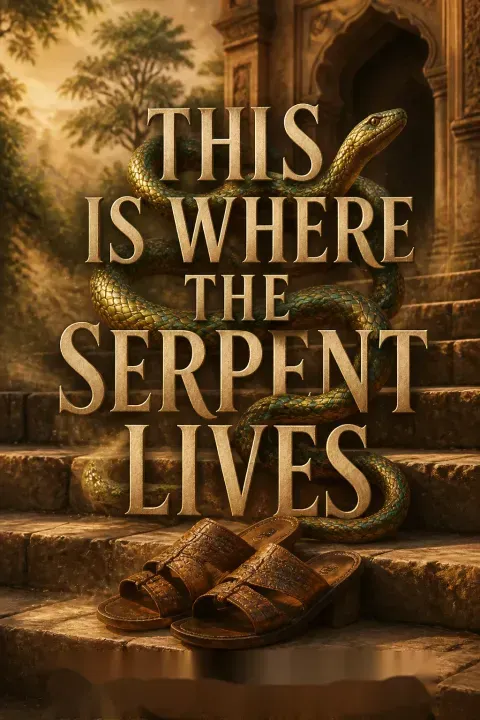
This Is Where the Serpent Lives maps the intimate violence of Pakistan's feudal system across four decades and multiple lives, showing how power reproduces itself through a chain of betrayals, each generation learning to serve and then to steal. The serpent of the title is not any single character but the principle of predation that moves through every relationship, whether between brothers (Hisham4 and Nessim8 ), between landlords and tenants (Rustom6 and the Chandios), or between masters and servants (the Atars and Saqib2 ). The novel's structure, a quartet of interlocking stories, mirrors the nested hierarchy it describes: the orphan Afrasiab's1 revenge, the landlord Rustom's6 complicity in goonda violence, the Atar love triangle that disinherits a brother, and finally Saqib's2 ambitious fraud, which recapitulates all the previous sins but from below.
Mueenuddin's great insight is that upward mobility in this world is inseparable from moral corruption. Saqib2 is not simply a thief; he is a product of the same logic that allowed Hisham4 to steal his brother's future and Sheikh Sharif7 to kill with impunity. Every character who tries to break out of their assigned role must adopt the tools of their oppressors. Afrasiab's1 only act of pure agency is a murder; Saqib's2 entrepreneurial brilliance works only when he cheats. The women in the novel offer a fragile alternative: Gazala's5 midnight plea to Shahnaz3 is the one moment where the system yields to something like grace, an acknowledgment that even feudal bonds, however crooked, create genuine obligations.
The book's title also gestures toward the lush, threatened landscape of the Indus basin, where orchards are planted and plowed under, where the river shifts its course and exposes new land for the powerful to seize. This geography of erosion and accretion is a metaphor for the social order: nothing is ever permanent, but the patterns of exploitation remain. The serpent lives where the water meets the soil, in the interstices, out of sight but always present, waiting to strike.
Review Summary
Reviews of This Is Where the Serpent Lives are largely positive, praising its vivid portrait of Pakistan's feudal class system, elegant prose, and memorable characters. Many compare it to Chekhov, Turgenev, and The White Tiger. Readers appreciate the interconnected novellas spanning decades, following orphans and servants navigating wealth and poverty. Common criticisms include emotional distance in the writing, uneven pacing, and a slow middle section. Despite mixed feelings about its structure, most agree it offers rare, insightful commentary on Pakistani society, corruption, and class hierarchy.
People Also Read








Characters
Afrasiab
Orphan turned chauffeur and mentorFound as a lost child clutching new shoes in a Rawalpindi bazaar, Afra is raised by a tea-stall owner9 and grows into a physically immense, emotionally controlled man. He teaches himself to read, masters the tandoor, and later becomes a trusted chauffeur for the Atar family4. His love for Yasmin, a friend's sister, is never consummated but defines his life, erupting finally in a calculated revenge killing. As an older man, he serves as surrogate father to the young servant Saqib2, whose eventual betrayal breaks him. Afra embodies loyalty and dignified service, but also the loneliness of a life lived entirely within the structures of feudal patronage, without family or property of his own.
Saqib
Gardener's son who rises and fallsThe only son of the head gardener at Ranmal Mohra, Saqib is plucked from village obscurity by Shahnaz Atar3 and brought to Lahore as a houseboy. Exceptionally intelligent, quiet, and charming, he learns the refinements of his masters' world and becomes indispensable to them. When given charge of a tunnel farm, he reveals a fierce aptitude for business and a hunger to possess what the Atars4 have. His ambition leads him into a million-rupee fraud, a betrayal that costs him his freedom, his fortune, and the trust of his mentor Afrasiab1. Saqib is driven by a desire to transcend his class, but his tragedy lies in his inability to do so without becoming what he despises.
Shahnaz Atar
Hisham's wife, a collector with a cold eyeThe daughter of a diplomat, educated abroad, Shahnaz returns to Pakistan as a young woman and becomes the center of a love triangle between Hisham4 and Nessim Atar8. She marries Hisham4, and over decades becomes the real power behind their estate: sharp, unsentimental, and infinitely tasteful. She collects art, designs gardens, and runs the household with an imperious grace. Childless, she pours maternal energy into the servants she elevates, particularly Saqib2, whose betrayal wounds her more than she admits. Her decision to spare Saqib2 at the plea of his wife5 reveals a residual compassion beneath the carapace of privilege, a recognition that the bonds she creates, however unequal, carry obligations.
Hisham Atar
Golden boy landlord and politicianThe elder Atar son, Hisham is the charismatic inheritor of land, business, and political influence. At Dartmouth, he steals his brother's8 girlfriend and, by extension, the birthright. Back in Pakistan, he is a jovial, pleasure-loving figure: whiskey, polo, cigars, and mistresses. Despite his surface warmth, he wields casual cruelty, as when he kicks Saqib's2 father to the ground. His relationship with Saqib2 is a mix of genuine affection and feudal entitlement, and the embezzlement hurts him as a personal affront. Hisham's charm masks a fundamental weakness: he does not understand the system he dominates, and his authority depends on others, particularly Shahnaz3, to enforce it.
Gazala
Saqib's wife, proud and fierceGranddaughter of the legendary munshi Sheikh Abbas, Gazala grows up in the shadow of a fallen dynasty, her father a drunk and the family gold a myth. Educated against the grain, she becomes a teacher and marries Saqib2 despite strong opposition from both families. She is smarter and tougher than her husband realized, understanding the mechanics of corruption from her caste background. When Saqib2 is arrested, she walks through the night with their infant son to throw herself at Shahnaz's3 feet, not to deny his guilt but to claim the mercy owed by the woman who made their marriage possible. Gazala embodies a new female agency born of desperation and ancestral cunning.
Rustom Abdalah
Idealistic young landlord adriftOrphaned son of a hedonistic father and a sensitive mother, Rustom returns from Columbia University to manage the family estate of Dunyapur. He is earnest, Western-educated, and entirely unprepared for the violent pragmatism of rural Punjab. His efforts to farm humanely are immediately tested by the Chandio clan and a corrupt police force. Forced to hire goondas from the Sheikh clan7, he watches his moral compass dissolve. His arc shows the impossibility of principled landownership in a system built on force. Through him, the novel links the older feudal world of his grandfather to the new Pakistan, where political connections have replaced honor as the currency of power.
Sheikh Sharif
Modern goonda with old loyaltiesGrandnephew of the legendary Sheikh Sarkar, Sharif represents the professionalization of hereditary muscle. He wears a blue blazer, speaks of 'bijness,' and commands a crew of Kalashnikov-toting thugs. Summoned to Dunyapur to discipline the Chandios, he treats the farm as his fiefdom, demanding luxury and indulging in casual cruelty, including the likely murder of a man. His pride is easily wounded, as when Shahnaz3 recoils from his confession of a police encounter killing. Sharif embodies the volatile, unpredictable nature of hired violence: a tool that can turn against the hand that wields it.
Nessim Atar
The exiled younger brotherHisham's4 younger brother, smaller and more sensitive, Nessim is the family's intellectual and moral counterweight. At Dartmouth, he falls deeply in love with Shahnaz3, only to watch Hisham4 seduce her. Rather than fight a losing battle for his inheritance and his love, he chooses permanent exile in America, becoming a successful corporate lawyer. His departure is a form of self-respect, but also a silent accusation. Decades later, he sends Hisham4 a lithograph of Esau selling his birthright, a gesture that condenses a lifetime of grievance into a single image.
Karim Khan
Tea-stall owner who rescues AfraA Pathan from Mardan who runs a modest tea and curry stall in the Rawalpindi bazaar, Karim Khan finds the abandoned boy1 and names him Afrasiab1. He feeds, shelters, and trains him without sentimentality but with unwavering fairness, treating him as a cherished apprentice rather than a son. His death, mourned by Afra1, represents the passing of a more honest, less complicated form of patronage.
Chaudrey Warraich
Tunnel farming magnate and tempterA self-made agricultural tycoon from Sargodha, Warraich started as a deaf fruit-cart boy and now drives a new Land Cruiser. He supplies Saqib2 with seeds and plastic for the tunnel farm, and later proposes the fraud that will make Saqib's2 fortune. He represents the pure logic of capital: the first big money must be stolen, and only afterward can a man become respectable. His relationship with Saqib2 is part mentorship, part predation, and he extracts a handsome profit from the scheme while leaving Saqib2 to face the consequences.
Rana Abdul Sattar
Corrupt old farm managerThe aging manager of the Atar estate4 at Ranmal Mohra, Rana Sahib has for thirty years skimmed profits, bullied villagers, and maintained his position through inertia and strategic opacity. He views Saqib's2 tunnel farm as a threat and attempts to extract kickbacks, but his declining health and moral bankruptcy make him an easy opponent. His eventual marginalization demonstrates the shift from old feudal corruption to new entrepreneurial greed.
Mai Viro
Old servant who expels AfraAn ancient, ill-tempered maid in the Awan household15, Mai Viro has raised Yasmin from infancy and guards the family's honor with ferocious vigilance. When she catches Afra1 pressing his lips to Yasmin's glass, she drives him from the house with slaps and curses, enforcing the unbreachable class line. She is both villain and guardian, her cruelty an expression of a lifetime's absorption of the same system that oppresses her.
Sonya Harouni
Foreign hostess at Kalapani partyAn American woman married to a Pakistani industrialist, Sonya hosts the mountain party where the sixteen-year-old Saqib2 spies on her sexual encounter with Hisham4. She is blonde, confident, and entirely at ease in the upper echelons of Pakistani society, yet the scene Saqib2 witnesses reduces her to an object of both desire and corruption, a foreign body that carries the secret knowledge of pleasure unavailable to the villagers.
Inspector Aftab Shakil Janjua
Sadistic police torturerA Lahore-based police inspector sent to the Indus badlands to hunt dacoits, Janjua treats Saqib's2 interrogation as a dark performance. He shifts in an instant from comradely warmth to theatrical rage, using a hand-cranked generator to extract the location of the hidden money. He steals the recovered 1.5 million rupees for himself, embodying the state as the ultimate predator.
Zain Awan
Afra's closest childhood friendThe delicate, bookish son of a prestigious Rawalpindi grocer, Zain befriends Afra1 over carrom and politics. He introduces Afra1 to his family, opening a world of middle-class respectability. Years later, after his sister Yasmin is raped by Kamran Khokhar, Zain is reduced to a trembling wreck with a revolver he is too weak to use. His collapse forces Afra1 to become the instrument of justice.
Plot Devices
The Tunnel Farm
Instrument of rise and catastrophic fraudThe vegetable tunnel farm on the Indus bottomland is the engine of Saqib's2 transformation from houseboy to munshi. Using Dutch hybrid seeds, imported plastic sheeting, and network trellising, Saqib2 achieves extraordinary profits that win him the Atars'4 trust and a measure of independence. But the farm also becomes the site of his undoing: in the third season, he swaps the expensive materials for cheap Chinese substitutes, falsifies invoices with Warraich10, and attempts to steal 1.5 million rupees. The physical decay of the shoddy tunnels mirrors his moral decay, and the ruined harvest exposes his deceit. The farm thus functions as both ladder and trap, embodying the promise and peril of upward mobility within a corrupt system.
The iPhone
Marker of class transgression and exposureSaqib's2 white smartphone, purchased with embezzled money, becomes the single visual clue that undoes his elaborate deception. He buys it as a gift for his wife Gazala5, but also as an object of desire for himself, having seen the Atars4 use the same device. When Afrasiab1 glimpses the phone, worth one hundred and fifty thousand rupees, while Saqib2 is waving goodbye at a bus station, the discrepancy between its cost and Saqib's2 modest salary triggers the older man's realization that he has been lied to. The phone is a perfect symbol of aspirational consumption: it is small enough to hide, but its visible sign of wealth is conspicuous enough to betray the thief.
The Generator
Tool of state terror and extractionA hand-cranked electrical generator, originally used to power field telephones, is repurposed by Inspector Janjua14 as a torture device. He straps Saqib2 to a chair with leather bonds, attaches leads to his ankles, and cranks the handle to send electric shocks through his body. The pain is so extreme that Saqib2 loses control of his bowels, swallows a broken tooth, and relinquishes the hiding place of the stolen money. The generator represents the ultimate power asymmetry: the state can extract not just truth but physical integrity from the body of a man without connections, and the inspector takes the recovered fortune for himself, leaving nothing but trauma.
The Lithograph of Esau and Jacob
Symbol of stolen birthright and fraternal guiltA valuable antique lithograph depicting the biblical scene of Jacob stealing Esau's birthright, sent by Nessim Atar8 to his elder brother Hisham4 as a gift decades after their rupture. The image shows an old blind father bestowing a blessing on the wrong son, and Nessim's8 accompanying note jokes that in their family the story played out in reverse: the elder brother took everything. The lithograph becomes a silent, elegant accusation, condensing the novel's central themes of inheritance, dispossession, and the moral illegitimacy of feudal succession. Hisham4 keeps it hidden from his wife Shahnaz3, unable to hang it on his walls or fully acknowledge its truth.
Download PDF
Download EPUB
.epub digital book format is ideal for reading ebooks on phones, tablets, and e-readers.








































