
Plot Summary
Facing the Past
The book launches with the narrator's journey on a train toward an interview with his aging mentor, Thomas. Anxieties spin around preparation, failed technology, and parental duties, all mirrored in the physical discomfort of facing backward—a literal and symbolic movement toward the past. Fragmented interactions with his wife Mia and daughter Eva—each struggling with routine and dread—frame the narrator's sense of helplessness and worry. Childhood, responsibility, and history blur as he attempts to find the "right question," absorbing his mentor's long-ago lecture on translation. This train sequence is not merely travel but a movement into memory and anxiety, as the narrator's present collisions with unresolved fragments from his personal and intellectual inheritance set the stage for a meditation on loss, presence, and transmission.
Trains, Dreams, Disconnections
As the narrator rides through Providence, his phone is lost to water and panic sets in. His crutches—a phone, the ability to record, to confirm plans—suddenly vanish, leaving him exposed and vulnerable. The narrative drifts between waking and dreaming: an anxiety-laden vision of collecting Eva from a foreign school, lines of troubled parents, and an impossibility of reunion. The failed technology becomes emblematic, severing digital bonds with family and complicating his mission. These intertwined layers—digital dependency, estrangement, longing for connection—crystallize as the narrator improvises, attempting to mitigate looming disaster with Thomas. Without devices, he is thrust into 'the real': his own hunger, weather, and faint hope of holding on to a conversation that will matter.
Night in Providence
Now offline, the narrator traverses the city that shaped his youth, overwhelmed by spectral figures—friends lost, professors, former lovers—as if moving through simultaneous timelines. The deprivation from his phone renders experiences hyperreal: every stone, every breath, every light, vivid and startling. The past becomes palpable, with the city acting as both trigger and container for formative memories of romance, sorrow, and intellectual awakening. Chance sights pull him back into old pain and confusion, oscillating between nostalgia and regret. When a brief reunion with an acquaintance fails to revive old connections, the narrator staggers under the realization that relationships disintegrate more quietly and absolutely than objects or devices.
Ghosts of College Days
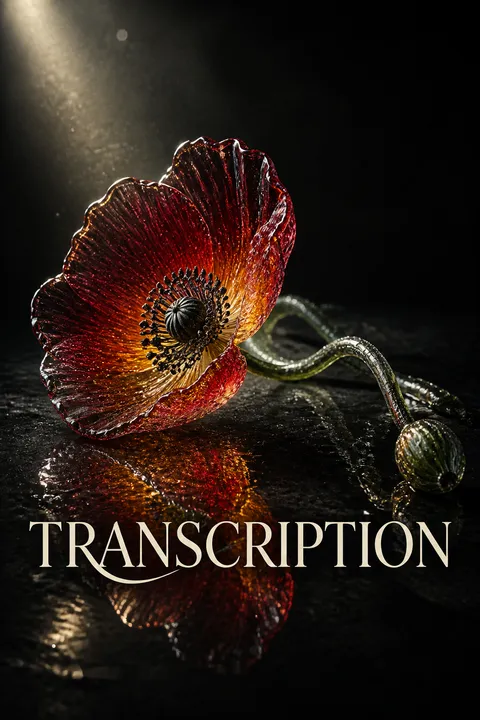
College memories dominate: the devastating dissolution with Mia, her affair, and the narrator's hospital stint. He finds solace in the unlikely friendship of Anisa, whose kindness and complexity become medicinal, their intimacy charged with unresolved emotions. Together, they encounter the glass flowers—a museum's luminous, fragile exhibit that becomes metaphysical hinge, shifting the way the narrator perceives nature, art, and the boundary between the real and constructed. This museum scene reframes memory, offering a 'third way' for interpreting loss and fabrication—what is lived, what is created, and how we choose to see both. The narrator's gradual release from pain through Anisa signals a movement toward acceptance and mourning.
Chance Encounters, Old Wounds
A casual meeting in Providence reopens old wounds. The narrator seeks confirmation of his memories with Mia, only to find that the stories he built—including those of her boyfriend Andrés—are unreliable, perhaps even crafted through misunderstanding or the need for narrative stability. The revelation that much of his pain has been anchored on stories that may not have truly happened forces a recalibration: the intimacy and betrayal once felt might have been projections or fabrications. Now, facing uncertainty, the narrator reckons with the ambiguous reliability of both memory and storytelling, the emotional fallout echoing through his psyche.
Glass Flowers' Revelation
The museum's glass flowers become emblematic: artificial yet indistinguishable from nature, eternally poised between real and made. The narrator's encounter with these objects offloads his pain into an aesthetic understanding, suggesting that fiction—an ability to shift perspective, to "choose one's hinge"—isn't escape but a method for survival. The flowers, survivor-artifacts of war and artistry, invite a grasp of continuity amidst destruction: beauty's endurance and fragility. The narrator learns to apply this technique to trauma, family, and the present, recognizing that shifting one's focus is both a defense and a source of wonder, making the unbearable, if not bearable, at least remakable.
Memory's Delicate Hinge
The chapter explores the narrator's and Thomas's family dynamics. The glass flowers' duck-rabbit effect becomes a powerful metaphor for approaching relationships—especially intergenerational trauma—with both skepticism and appreciation. Through the interplay of memory, storytelling, and invention, tenderness and distance are made to coexist. The narrative acknowledges that no account of a family or history can be whole—what is cut, forgotten, or fabricated remains essential and present through omission, much like negative space in art. Fiction and memory combine, not to distort, but to make meaning—and survival—possible.
The Mentor's House
Arriving at Thomas's house, the narrator is drawn into a space saturated with history, art, and casual disregard for formality. Paintings, books, and curiosities abound—each memento a transmission of knowledge and loss. The inability to record the forthcoming interview becomes a metaphor for the unmediated presence that the narrator both fears and craves. As mundane needs—hunger, thirst—surface, their interplay with art and memory underscores how living and remembering are inseparable. Thomas embodies both wisdom and vulnerability; the narrator's own distractions, cravings, and discomforts expose their relationship's inherent asymmetry and mutual longing.
Interviews and Erasures
What should be a straightforward interview with Thomas is transformed by technical failure into an ambiguous performance: when the narrator pretends to record, he blurs the boundaries between truth and fiction, confession and recollection. Their conversation spirals through memory, trauma, and invention—whether or not the record exists, the truth itself becomes unstable. The act of erasure (what is not said, not recorded) becomes as significant as what is present. The 'cut'—in both narrative and family memory—forms an ethical and aesthetic question, with the narrator's actions (deceit, longing, self-justification) echoing in the fragile trust between interviewer and subject.
Family, Distance, and Transmission
The book delves into the impossibility of perfect transmission within families. Thomas's reflections on radio, the history of sound, and the transmission of trauma frame how familial communication is always a mixture of static, interference, and longing. Issues of memory loss, suppressed stories, and painful silences pervade: a father studying the wrong dangers (bombs, not rivers), a son unable to connect, a daughter at risk of being left behind. Nowhere is love or blame simple; each distance—temporal, physical, emotional—becomes a channel through which inheritance is both possible and fraught.
Childhood Echoes
The struggles with Eva's school refusal mirror patterns of inheritance and anxiety. The narrator's relationship with Eva is laced with echoes of his own anxieties and those of his father and Thomas. As he tries to reach her through screens and stories, the difficulty of protecting, nourishing, and understanding a child becomes central. These tensions recall childhood fears, ambitions, and the weight of adult expectation. The generational transmission of both love and psychic trouble is refracted through mundane rituals: meals uneaten, calls dropped, promises broken.
Daughters and Difficulties
The exploration of parental fear intensifies via Max, Thomas's son, whose daughter Emmie refuses to eat ("ARFID"), and whose household becomes a surreal "gingerbread house" of candy and deregulation. Parenting advice is shown to be contradictory, often amplifying guilt and confusion. The arrival of Thomas as a grandfather further complicates emotional terrain—his intellectual defenses colliding with the raw fear and shame of witnessing a child's suffering. Max's struggle to define love, nourishment, and authority in the face of a daughter who is "failing to thrive" reverberates with previous generations' inability to fix or understand pain.
Inheritance of Suffering
The "Wonka experiment" with Emmie reveals both the desperation and fragility of hope in families: when nothing else works, parents let go completely—of rules, meals, even screen time. The result is a kind of accidental miracle, but one dependent on new rituals (e.g., unboxing videos, ASMR) that seem both trivial and vital. The pandemic further complicates everything, amplifying anxieties while prompting moments of grace and provisional normalcy. Suffering's inescapability—its transformation, transference, and periodic remission—becomes a form of inheritance as potent as any asset, as love and guilt wrap around each other.
Pandemic and Partings
As the world contracts during the pandemic, Thomas becomes seriously ill and is hospitalized. Max is forced into a "virtual goodbye," channeling generations of unspoken love, resentment, grief—all finally uttered with the knowledge it may be the last time Thomas can hear him. The nurse, the device, the delay and glitch of technology—all accentuate the uncanniness of trying to connect, to say what must be said, before the signal dies. The act of parting is loaded with the knowledge that so much remains unfixable, yet also with gratitude for the moment of witness and vulnerability. This is mourning reimagined for a digital age.
Virtual Goodbyes
When Thomas survives, Max visits—changed now from son to witness, from mourner to caretaker. They circle topics of death, memory, and the unsayable; recurrence and absence shape every gesture. Max's secretive recording attempts, his fantasy that Thomas remembered his "final" words, the shifting boundaries of who recalls what, expose the deep tension between wanting documentation and accepting the impossibility of definitive closure. The past, rendered present, is less a destination than a reckoning.
Returning—Changed, Unchanged
Personal and historical recollections merge. The distinctions between documentary and invention, real and remembered, shift underfoot. Thomas's request for a trip to Switzerland—a euthanasia pilgrimage, perhaps—clashes with Max's insistence on remembering shared experiences that Thomas partially or stubbornly forgets. The emotional centerpiece is the realization that even within loving relationships, each participant has a different account of the story—a "non-euclidean" family, each at the edge of, but not within, the same reality. Grief and love are poised between assertion, correction, and the acceptance of what must be let go.
Rifts, Records, and Resolutions
The culminating debate surrounds the reliability, honesty, and betrayal in Max and the narrator's efforts to "record" or reconstruct their loved ones' words. At a memorial conference, tensions flare as it is revealed that parts of the celebrated final interview were staged, rewritten, or faked. Friends and family contend with whether "truth" is a matter of accuracy or affect, whether fiction or confession brings us closer to understanding, or only creates new wounds. The possibility of forgiveness, as well as the acknowledgment that no capture is complete, forms the moral crux of the journey.
The Touch Increases
The final reflection returns to art, memory, and skill: a citation from glass artist Leopold Blaschka, proclaiming that "the touch increases in every generation." The touch—both literal craft and metaphor for care, attention, and love—is no guarantee. If inheritance is always mixed with loss, if nothing is perfectly preserved, nonetheless something persists and transforms, handed down in spite of—and perhaps because of—all the failures and misunderstandings. The ending is neither consoling nor hopeless, but invites a continued attempt to hold, shape, and transmit meaning in the face of transience.
Analysis
Modern crisis of presence, truth, and inheritanceBen Lerner's The Transcription is an intricate meditation on the difficulties of connection—across generations, memories, and technologies. The novel refracts the psychic wounds of the 20th and 21st centuries—war, migration, illness, estrangement—through the intimate crises of family, love, and everyday anxiety. Its unsparing depiction of the failures of language, memory, and caregiving is balanced by moments of grace, humor, and beauty: the possibility that attention, even if flawed, can transmit something of value. Through devices lost and broken, interviews staged or half-membered, children elusive and elders declining, Lerner interrogates whether meaning can ever be made whole. The novel's central lesson is that fiction—the act of creative, compassionate "transcription"—is inescapable in human relationships. Rather than rendering reality less true, it offers a method to live with the untranslatable, the irretrievable, and the unresolved. The ultimate message is humane: while we inherit suffering, we also inherit "the touch," the fragile, incremental capacity for love, repair, and meaning.
Review Summary
Reviews of Transcription are largely positive, with many praising Ben Lerner's masterful prose, nuanced dialogue, and ability to pack profound themes into under 150 pages. The novel's exploration of technology, memory, father-son relationships, and COVID resonates deeply with many readers. Common comparisons are drawn to Katie Kitamura's Audition and Rachel Cusk's Parade. Some critics find the narrative fragmented or insufficiently cohesive, feeling the parts outshine the whole. A few readers found it overly self-conscious or slow. Most agree it rewards rereading and lingers long after finishing.
People Also Read



Characters
The Narrator
The unnamed narrator is a writer and academic, balancing complex emotional lives as husband, father, friend, mentee, and would-be chronicler of the past. He is defined by restlessness: never fully present, always turning over questions of connection, truth, and culpability. His relationships are marked by anxiety—about technology, family, meaning, and memory. As a father, he struggles to reach his daughter, haunted by generational cycles of trauma and self-doubt. As a mentee, he is drawn to Thomas's intellectual brilliance, yet perpetually senses inadequacy and alienation. The narrator's psychological life is rich with self-interrogation, regret, and a desperate urge to reconcile the stories he tells himself with the often unfathomable reality of those he loves.
Thomas
Thomas is the narrator's mentor, a German-Jewish émigré intellectual who embodies erudition and distance. Profoundly influential on several generations, Thomas's speech is an intricate weave of history, art, trauma, and wit. As a teacher and interlocutor, he is compassionate yet often unreachably abstract; as a parent and partner, obtuse and avoidant. His own history—escaping the Nazi era, negotiating family tragedy, and transforming personal suffering into intellectual work—is both a template and a source of loss for those who love him. With age, his memory frays, but his desire to transmit meaning through language, even in his final days, is undimmed. He is both revered and feared for his ability to see—and evade—the emotional core of his and others' stories.
Max
Max, Thomas's son, exists in the shadow of his father's genius and distance. An attorney, he channels his hurt and love into precise, sometimes combative dialogue with both Thomas and his own family. His struggles are concrete: raising a daughter with eating difficulties, negotiating a marriage strained by stress and inherited anxieties. The pressure to thrive, to succeed, and to transmit a healthier legacy is constant. Max yearns for closure with Thomas, but finds that the patterns of avoidance, partial records, and intellectualization are impossible to escape. His journey—accusing, forgiving, confessing—forms the heart of the novel's modern familial struggle.
Mia
Mia is the narrator's former partner and eventual spouse, their history marked by rupture and misunderstanding. Her early relationship with another man, Andrés, shatters the narrator's self-concept and haunts his adult relationships. Ambitious and independent, Mia is both support and mirror to the narrator; her absence and presence shape the narrator's understanding of love, loss, and the possibility of forgiveness. She is, throughout, an emblem of the unknowable other: one whose inner life and choices consistently elude the full grasp of the narrator.
Eva
Eva is the narrator's ten-year-old daughter, the vessel for both his love and anxieties. She wrestles with her own fears—school refusal, shifting friendships, the world's dangers—all of which echo and amplify her father's insecurities. Eva's relationship to screens, communication, and routine mirrors the narrator's struggles with presence and absence; she becomes the locus upon which questions of generational transmission, care, and hope are focused. Her small recalcitrances and need for reassurance distill the adult themes of the book into the concrete.
Adelle
Adelle is Max's wife, a lawyer and mother deeply invested in her family's survival and healing. Her insistence on facing Emmie's eating struggles with honesty and her suggestion to record Thomas reflect a pragmatic desire to anchor her family amid uncertainty. Adelle's emotional labor, courage in crisis, and flashes of irritation with both husband and father-in-law reveal her as both stabilizer and challenger—a crucial mediator in the family's cycles of pain and affection.
Emmie
Max and Adelle's daughter, Emmie, is paradoxically robust and fragile. Her eating disorder destabilizes the family, becoming a site where all fears, hopes, and inept interventions collide. Emmie's old-soul demeanor, resilience, and quiet suffering echo both the narrator's daughter Eva and the inherited trauma of her forebears. She is the recipient and transformer of generational patterns—her own struggles and moments of breakthrough offering both threat and fragile hope to those who care for her.
Anisa
A college friend to the narrator and Mia, Anisa becomes the interlocutor through whom old pain is dissipated and reframed. Her warmth, perceptiveness, and independent trajectory offer an alternative to the anxious, self-protective world of the narrator. The short-lived, charged friendship with the narrator unlocks new ways of seeing, and her presence—real and remembered—demonstrates both the allure and pain of proximity and distance.
Rosa
As a close friend to Thomas and Max, Rosa bridges generations and disciplines, entrusted with memorializing and interpreting Thomas's legacy. Her capacity to blend candor with affection, particularly in the emotionally fraught aftermath of Thomas's death, makes her both judge and comforter. Rosa's ability to hold together the many fracturing threads—art, truth, memory, and loyalty—provides an anchor as family and friends attempt to make meaning from chaos.
Andreas (Andrés)
Andrés, the focus of the narrator's and Max's sometimes fabricated stories, represents the elusiveness of other people's narratives—how easily a detail can become an obsession, a misunderstanding a trauma. Whether present or only imagined, Andrés's role exposes the frailty of memory, the ease with which stories become "real," and the ways individuals cling to or let go of narrative to process relationships.
Plot Devices
Fragmented Narrative Structure
The book employs a mosaic, non-linear structure, moving between past and present, dreams and waking, first- and third-person perspectives, and the voices of multiple narrators. This approach embodies the process of memory: recursive, unstable, forever subject to revision and interference. Chapters are linked less by plot than by emotional resonance and recurring motifs—trains, screens, flowers, records, interviews—creating a web of meaning rather than a linear arc.
Technology as Metaphor
Smartphones, landlines, virtual meetings, and recording devices operate on literal and symbolic levels. The act of losing a phone or failing to record becomes a meditation on modern existence—how technology both enables and impedes genuine contact, serving as both prosthetic and screen for emotional reality. The fascination with "recording" exposes anxieties about completeness, honesty, and the impossibility of capturing the whole truth.
Recursion, Reenactment, and Substitution
The novel is shot through with scenes that repeat across generations—children fetching water, lines of parents, failed communication, hunger, and abandonment. The displacement of trauma onto new situations (school refusal, eating disorders, digital anxieties) demonstrates how suffering is never simply inherited but always refigured. Fiction, confession, and fabrication coexist, challenging ideas of authenticity and exposing the necessity—and limits—of invention in the face of loss.
The "Third Option": Art as Survival
Artifacts like the glass flowers and discussions of translation, painting, and cinema serve as metaphors for the doubleness of experience: both real and constructed, beautiful and artificial, lived and retold. The "hinge" between art and life is not escape but adaptation, and the "third option"—neither truth nor lie, neither full presence nor total absence—offers a way to survive unanswerable pain.
Download PDF
Download EPUB
.epub digital book format is ideal for reading ebooks on phones, tablets, and e-readers.








































