
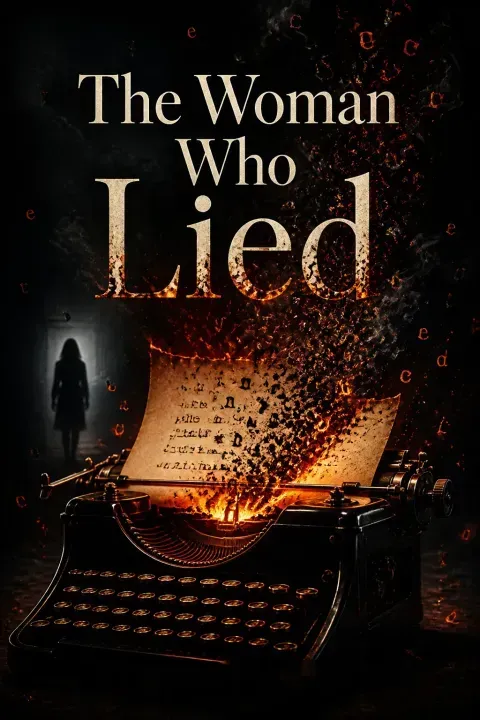


Plot Summary
Prologue
Emilia Ward1 sits across from DC Anthony Haddock10 in a stifling interview room, her butterfly-patterned notebook open between them. She has not slept. The bestselling crime writer1 explains that someone is using the plot of her unpublished novel, Her Last Chapter, against her.
Only close friends and family have read the manuscript. The harassment began with echoes of her early books. Then a murder occurred, mirroring the novel's climax exactly. Haddock10 absorbs her list of names in silence.
The implication is clear: in Her Last Chapter, DI Miranda Moody dies at the end. If the pattern holds, so will Emilia1. The notebook meant for plotting fiction now contains the evidence of a real terror campaign, and the clock is ticking.
The prologue establishes an elegant inversion: the crime writer becomes the target of crimes she invented. Emilia's butterfly notebook, chosen for its symbolism of renewal, now catalogs her destruction. The ticking-clock structure introduces fatal stakes before the narrative begins, creating dramatic irony that colors every subsequent incident. We know from the outset that harassment will intensify to murder. The framing also implicates the reader in a detective's logic: the list of early readers forms a suspect pool, and the question becomes not what happens but who within Emilia's trusted circle has weaponized her fiction against her.
The Kew Gardens Hoax
On a Friday in March, Emilia1 rides the bus home through Richmond after lunch with her editor. She has just proposed killing off DI Miranda Moody, her series protagonist of ten books. A bomb scare at Kew Gardens forces passengers to disembark. Later, watching the news, Emilia1 realizes the hoax involved a duffel bag containing a transistor radio, an exact replica of a scene from her debut novel.
Elliot2 dismisses it as coincidence. Days later, a package arrives on their porch: inside a jeweler's box lies a ceramic seagull with its head severed. Miranda Moody's well-known phobia makes the ugly figurine unmistakably personal. The parcel has no postage stamp. Someone hand-delivered it to her home, using her married name.
The bomb scare functions as a sophisticated inciting incident because it deploys genre awareness: we recognize the pattern before Emilia fully admits it. The decapitated seagull marks a shift from public spectacle to intimate violation. Elliot's rational dismissal represents the ordinary world's resistance to extraordinary threat, while the severed head acts as both warning and signature. Whoever is doing this knows Emilia's work intimately enough to weaponize its details, transforming her creative output into a vulnerability. The use of her married name, Rathbone rather than her pen name Ward, signals personal knowledge that transcends fandom.
Seagulls, Trolls, and Wreaths
While walking home, Emilia1 spots her ex-husband Jonas6 leaving a restaurant with a much younger woman. They have coffee; he admits he is tempted to stray from Kristin7. Returning to her house, Emilia1 finds a troll doll hanging by the neck from the cherry tree.
It mirrors her second Miranda book, where a serial killer left troll dolls at murder scenes. Later, after Elliot2 leaves for a business trip, a funeral wreath arrives with a card reading In Sympathy.
The florist tells Emilia1 a man in his thirties ordered it, paying cash and claiming to act for Miranda Moody. The same person sent lilies a week earlier. The stalker is taunting her with her own fictional detective's name, using intimate knowledge of both her books and her home address.
The troll doll and wreath escalate the campaign from a single bizarre package into a pattern of sustained psychological warfare. Using Miranda Moody as the sender's name is particularly cruel: it suggests Emilia's creation has turned against her. Jonas's parallel storyline of temptation and betrayal reinforces the novel's concern with hidden lives and fractured loyalties. Each object functions as a signature, a claim of ownership over Emilia's stories and her life. The cash payment and absence of postal markings narrow the field to someone with local access, deepening the sense that Emilia's intimate circle has been compromised by an enemy within.
Psycho Killer at 3 A.M.
Emilia1 returns home to find every kitchen skylight gaping open. A floorboard creaks overhead. She flees and calls Trevor8, her father-in-law, who searches the house and finds no one. The skylights should be on a timer nobody has used in months.
Days later, while her best friend Ottilie3 stays overnight after Elliot2's worried call from Iceland, Talking Heads' 'Psycho Killer' blasts through every speaker at three in the morning. The attic skylight stands open again, letting in freezing air.
Ottilie3 examines the Alexa device and concludes the smart-home system has been hacked. This tactic comes straight from Emilia1's fourth book, where a killer terrorized a family through their digital assistants. The stalker has accessed their home without breaking a single lock.
The skylight and Alexa incidents mark a crucial escalation: the stalker is no longer leaving objects but entering the house's digital and physical systems, blurring the boundary between external threat and internal violation. The choice of 'Psycho Killer' is theatrical, almost playful, suggesting the perpetrator enjoys the performance aspect of the terror. Ottilie's presence during the Alexa incident is a planted clue that rewards rereading. Trevor's security expertise creates cognitive dissonance: the ex-policeman who urges vigilance cannot protect against an enemy who bypasses physical barriers entirely, accessing the most intimate domestic space through the very technology meant to secure it.
The Concert Ticket Trap
A Saturday morning phone call from a woman claiming to be from West Middlesex Hospital: Jasmine9 has been in a serious accident. At the hospital, there is no record of her admission. Panic sets in. It emerges that Jasmine9 and her friend Nancy lied about their whereabouts and attended a concert the night before.
Tickets were sent anonymously to Nancy's boyfriend, Jake, with a handwritten note asking him to look after the girls, signed simply M. The scheme mirrors a subplot from Her Last Chapter involving missing teenagers lured to a concert.
But the book has not been published. The only people who have read the manuscript are Emilia1's inner circle: Elliot2, Trevor8, Ottilie3, Louise4, Jonas6, Kristin7, her parents, and her editor. The stalker is someone she trusts.
The hoax hospital call weaponizes a parent's worst fear, making this the most sadistic incident yet. The concert ticket plot reveals critical new information: the stalker has access to the unpublished manuscript, collapsing the suspect pool from the public to Emilia's intimate circle and transforming the mystery from external threat to betrayal narrative. The note's protective tone toward the girls is the first indication of moral boundaries within the campaign: whoever is doing this wants to terrify Emilia but not harm her children. The signature 'M' for Miranda Moody continues the stalker's unsettling identification with Emilia's fictional creation, as though the character herself has stepped off the page.
The Insect on Her Ankle
Louise4 leaves an urgent voicemail. She sounds tearful, apologetic, insisting she needs to explain everything face to face. She never meant for things to go this far. Emilia1 drives to Louise4's basement flat in Kingston. The front door is ajar.
Inside, Louise4 lies face down on the living room floor, the back of her skull matted with blood. As Emilia1 kneels beside her friend, she notices something on Louise4's bare ankle: a crude drawing of an insect's head. A praying mantis.
The exact marking from Her Last Chapter, where Miranda Moody's colleague was killed while hunting the serial killer. Emilia1 wrote this death, and now it has happened. What was harassment has become murder, and the manuscript's climax has begun to unfold in real time.
Louise's death is the pivot from psychological thriller to murder mystery. The insect marking creates a chilling feedback loop between Emilia's creative work and reality: she literally wrote a version of this death before it occurred. The voicemail message transforms Louise from investigator to potential conspirator, raising questions about her involvement that will dominate the second half of the narrative. The detail that Louise is found face down, struck from behind rather than stabbed while bound, signals that a different killer operates here under different motives and methods, planting a crucial clue that will separate the real serial killer from the copycat.
The Real Praying Mantis
DI Janine Murray5 of Devon and Cornwall Police arrives at Emilia1's door. She has been hunting the praying-mantis murderer for seventeen years. His victims were stabbed and had insect heads carved into their ankles, a detail never released to the press.
Yet Emilia1's unpublished manuscript features an identical signature. Murray5 demands to know how. The answer shatters everything: Louise4 gave Emilia1 the story. During lockdown, when Emilia1 confessed she had writer's block, Louise4 offered a manuscript about a girl named Daisy searching for her mother's killer.
Emilia1 wove it into Her Last Chapter. Now Murray5 reveals the impossible: Jennifer Radcliffe, one of the praying-mantis victims, was Louise4's mother. And Louise4's real name was Daisy Louise Greene.
This turning point introduces the novel's deepest structural irony: Emilia believed she was writing fiction, but she was transcribing a true crime narrative disguised as a story. The revelation reframes the entire harassment campaign and Louise's murder as consequences of this buried truth. Murray functions as an external revealer of secrets, forcing Emilia to confront the implications. The detail that the insect carving was kept from the press means the manuscript's accuracy cannot be coincidence; someone intimately familiar with the case fed Louise the information, or Louise herself knew from personal experience. The line between authentic testimony and plagiarized fiction dissolves entirely.
Louise's Handwriting Match
Jake finds the crumpled concert ticket note and Jasmine9 brings it home. Emilia1 compares its cursive handwriting to birthday cards she has saved. The match is exact. Louise4 wrote the note. She was behind the harassment campaign.
The realization reorders everything: Louise4 targeted Emilia1 deliberately, enrolling her son Toby at Wilfie's school to engineer their friendship. When the praying-mantis murderer struck again after sixteen years, Louise4 saw her chance.
She fed Emilia1 her true story disguised as fiction, then staged the earlier book-mirroring incidents to generate publicity for Her Last Chapter. She wanted the world to read the book and recognize the killer. She was dying of an inoperable brain tumor and had run out of time to find justice for her mother.
Louise's reveal as the harasser transforms her from victim to architect of the plot. Her terminal illness provides tragic motivation: a woman using her last months to solve her mother's murder through whatever means necessary. The ethical complexity is rich; Louise weaponized Emilia's career and terrorized her family, yet her goal was justice. The campaign served dual functions: generating publicity for the book and testing whether someone in Emilia's circle would recognize themselves in the Daisy and Ash sections and react. The handwriting match, arriving after Louise's death, creates the novel's most disorienting reversal: the victim and the tormentor were the same person.
Elliot Is Ash
Rereading the Daisy sections of the manuscript with fresh eyes, Emilia1 catalogs the clues she overlooked. Ash grew up by the Devon sea. Ash attended Exeter University. Ash suffered a breakdown as a teenager. Every detail matches Elliot2.
Louise4's mother-in-law, Frances, reveals Louise4 specifically targeted Emilia1 because she knew Trevor8 from his police days. The implication lands like a physical blow: Elliot2 is the Ash from Louise's story, the child of the man Louise4 believed killed her mother.
Trevor8, the ex-policeman who fusses over security and reads every one of Emilia1's books, must be the Doodle Man. When Trevor8 arrives at the house with an injured arm, claiming he fell chasing a shoplifter, Emilia1 can barely suppress her terror.
This section deploys misdirection with precision. Every clue pointing to Elliot and Trevor is factually accurate but leads to a false conclusion, exploiting the reader's genre expectations that the killer will be found within the family unit. The psychological torment for Emilia is acute: she must perform normalcy while believing her husband's father is a serial killer and her husband may be complicit. The domestic setting darkens; the open-plan kitchen with its bifold doors becomes a glass cage. Emilia's isolation deepens as she sends her children away, cutting herself off from everyone except the one person she still believes is her ally.
The Beanie in the Drawer
DS Watkins arrives to question Elliot2 about his bicycle, found abandoned near Louise4's flat. The bike was stolen the night before Louise4 died. The thief on the Ring camera footage wore a distinctive Scandinavian-brand beanie, a style Louise4 favored.
Now, searching for socks, Emilia1 finds that exact beanie stuffed in Elliot2's bedside drawer. Elliot2 has never worn beanies. He is taken to the station for questioning. Overwhelmed and convinced everyone she loves has betrayed her, Emilia1 calls Ottilie3, who invites her to stay at her South Kensington flat.
Before leaving, Emilia1 confronts Trevor8, accusing him of being the killer. Trevor8 denies everything, wounded, and walks out. Emilia1 flees to Ottilie3 's, believing her oldest friend is her only remaining refuge.
The beanie functions as the pivot point of the frame-up: someone with access to the house planted evidence to implicate Elliot. The bicycle's discovery near the crime scene makes him a suspect, while the beanie in his drawer seems to confirm guilt. Emilia's flight to Ottilie represents a crucial narrative turn: in her desperation, she runs toward the person she believes is her only remaining ally, when that person is actually the source of the threat. This is classic thriller structure: the protagonist unknowingly seeks shelter with the antagonist. The betrayal, when it comes, will be doubly devastating because it exploits a friendship of nearly thirty years.
Ottilie Is Ash
At Ottilie3's flat, Emilia1 drinks drugged hot chocolate and dozes on the velvet sofa. She wakes groggy and disoriented. A black cat with a white bib and pink nose weaves through the room, wearing a tartan collar.
The memory surfaces: Louise4 showed her a photo of her new kitten, Hamish, with that exact collar. This is Louise4's cat. DI Murray5's voice echoes in her mind: Ash could be female, and Louise4 was bisexual. Ottilie3 attended a Devon university for one term.
Ottilie3 had a breakdown at fourteen. Ottilie3's father was a police commissioner. Emilia1 stares at her oldest friend and finally sees the truth she has been blind to for decades. Ottilie3 is Ash. Ottilie3 has been the target of Louise4's hunt all along.
The cat's tartan collar is a Chekhov's gun established in an early scene when Louise showed Emilia the photo. The revelation that Ash is female subverts the gendered assumptions both Emilia and the reader have carried throughout the narrative. Ottilie's presence during the Alexa incident, her phone calls with Trevor, her immediate willingness to host Emilia, all retroactively take on sinister meaning. The friendship of nearly thirty years becomes the story's central horror: the person who knows Emilia best is the person who has been methodically destroying her life, and Emilia walked directly into her hands.
The Valentine's Day Stabbing
Ottilie3 stops pretending. She admits she killed Louise4, claiming she only meant to confront her about the harassment campaign and lost control. Then the deeper confession spills out. At fourteen, Ottilie3 discovered her adored father was having an affair with their cleaner, Jennifer Radcliffe.
Her mother killed herself when she learned of the betrayal. On Valentine's Day 1998, Ottilie3 walked half a mile to Jennifer's house and stabbed her. Her father, a high-ranking police officer who knew about the real serial killer's methods, covered up the crime by carving an insect mark into Jennifer's ankle, making her look like another praying-mantis victim.
Ottilie3 spent months institutionalized. When she later met Daisy4 at Exeter, neither recognized the other. Until Daisy4 visited for Christmas and confronted Charles. Ottilie3 ended the friendship and fled.
Ottilie's confession recontextualizes the entire narrative. The praying-mantis killer was a convenient scapegoat for an intimate family crime, a cover-up enabled by institutional corruption. The tragedy compounds across generations: a father's infidelity triggered a daughter's violence, which was hidden, leaving Louise to spend her entire life hunting the wrong man. Ottilie's claim that killing Louise was unplanned rings false given the stolen bicycle, the planted beanie, the drugged drink, and the ten-hour head start she gave herself. Beneath the performed vulnerability lies a capacity for cold calculation that has been honed over decades of maintaining an elaborate fiction of normalcy.
Butterworth and the Truth
DI Murray5, unable to reach Emilia1, forces entry to Ottilie3's flat and finds her unconscious beside a radiator, barely breathing. At the hospital, Emilia1 wakes to Elliot2's face. He was released: the beanie was planted. Murray5 delivers the final revelations.
Martin Butterworth12 has been arrested for the serial killings throughout Devon; his DNA matched the latest victim. He was the tall, hooded man Louise4's neighbor saw lurking. As for Jennifer Radcliffe's death, whether Butterworth12 killed her after Ottilie3 left or Ottilie3's confession is true remains unresolved.
Louise4, dying of a brain tumor and racing against her own mortality, spent her final months chasing the wrong family's secrets. Ottilie3 vanished with a ten-hour head start and is being hunted across international borders.
The resolution refuses tidy closure. The ambiguity around Jennifer's actual killer mirrors the novel's central theme: stories can be manipulated, and objective truth is often unreachable. Butterworth's capture provides justice for the serial killings but leaves the question mark over Jennifer's death intact. Louise's terminal illness reframes her entire trajectory as tragedy: she dedicated her life and her death to a quest built on partially incorrect assumptions. Emilia's survival is contingent on Murray's persistence and on Ottilie's decision, conscious or not, to administer a non-lethal dose, a detail that will take on new meaning in the epilogue.
Epilogue
Three months later. A brown envelope with a Central American postmark lands on Emilia1's doormat. Inside, a typed story. Ottilie3 writes of a girl called Liza who, at fourteen, learned her father had betrayed her mother, walked to the other woman's house, and stabbed her.
She writes of a father who carved a dead woman's ankle to protect his child. She insists the drug dose was never meant to kill. She writes that she loved Emilia1 like a sister and will miss her for the rest of her life. Some stories deserve to be told, the letter asks. Does this one?
Emilia1 reads it twice, then tears the pages into tiny shreds. She walks into the kitchen, where Elliot2 sings along to the radio, where the new puppy scrambles across the parquet, where Hamish the cat dozes on Jasmine9's lap. She chooses her family. She chooses silence.
The epilogue's power lies in its moral ambiguity. Ottilie's letter is simultaneously a confession, a love letter, and a test. By asking whether this story deserves to be told, she places the burden of narrative control back on Emilia, mirroring the novel's central preoccupation with who gets to tell whose story. Emilia's decision to destroy the letter rather than take it to police represents her final break from the cycle of stories consuming lives. After a year in which fiction repeatedly became reality, she chooses to let one story die. The domestic scene she returns to is populated with symbols of the trauma: Hamish, the puppy Elliot finally agreed to, the open, messy life she no longer feels she must perform perfectly. Integration replaces erasure.
Analysis
The Woman Who Lied constructs its thriller architecture around the ethics of storytelling itself. At every narrative level, the novel interrogates what it means to take someone else's story and repurpose it for your own ends. [Emilia1] appropriates [Louise4 ]'s trauma as fiction. [Louise4] weaponizes [Emilia1 ]'s career to expose a killer. [Ottilie3 ]'s father rewrites a domestic murder as the work of a serial killer, exploiting inside police knowledge to protect his daughter. The title's ambiguity is deliberate and damning: every woman in these pages lies, but their deceptions span a moral spectrum from self-protective omission to calculated misdirection to murderous cover-up.
The nested structure, a fictional detective's investigation layered within a true crime within a frame narrative, mirrors the novel's preoccupation with the permeability between fiction and reality. [Emilia1 ]'s writer's block makes her vulnerable to [Louise4 ]'s gift of a ready-made story, and her willingness to use it reflects both creative desperation and a blindness to the ethical implications of appropriating another person's pain. [Louise4 ], in turn, is so consumed by her lifelong quest for justice that she treats [Emilia1] as a tool rather than a friend. The line between authentic testimony and plagiarism, between investigation and obsession, blurs until it vanishes entirely.
The friendship between [Emilia1] and [Ottilie3] provides the novel's emotional core. Their thirty-year bond, forged in the loneliness of boarding school, survives [Kristin7 ]'s betrayal only to shatter against [Ottilie3 ]'s darkest secret. The tragedy is that [Ottilie3] genuinely loves [Emilia1 ], seeing her as the sister she never had, even as she drugs her and frames [her husband2] for murder. The epilogue's ambiguous letter, with its implicit question about whether some stories deserve to be buried, offers no easy resolution. [Emilia1 ]'s choice to destroy the confession rather than pursue justice suggests a hard-won, morally complex understanding: living with uncertainty may be the price of peace, and some truths, once spoken, destroy more than they redeem.
Review Summary
The Woman Who Lied receives mostly positive reviews, with readers praising its intricate plot, suspenseful atmosphere, and clever twists. Many enjoyed the book-within-a-book concept and the protagonist Emilia's character development. Some found the story slow-paced initially but were ultimately satisfied with the unexpected ending. Critics noted the complex narrative structure and numerous characters, which occasionally led to confusion. Overall, readers appreciated Douglas's storytelling skills and ability to keep them guessing until the final reveal.
People Also Read




Characters
Emilia Ward
Crime novelist turned targetA bestselling author of the DI Miranda Moody series, thirty-eight, mother to [Jasmine9] and Wilfie, married to [Elliot2] after a painful divorce from [Jonas6]. Emilia presents as warm and sociable but harbors deep insecurities rooted in emotionally distant parents who sent her to boarding school. Her writing began as empowerment after [Jonas6]'s betrayal: Miranda Moody represented the strength she wished she possessed. Throughout the story, she must confront her tendency to see what she wants to see rather than what is there, a pattern that has shaped her relationships with [Jonas6], [Kristin7], [Ottilie3], and [Louise4] alike. Her creative desperation during lockdown made her vulnerable to using someone else's story, a decision with fatal consequences.
Elliot Rathbone
Emilia's loyal second husbandA graphic designer in his late thirties, dark-haired and physically affectionate, Elliot is also prone to anxiety rooted in a teenage breakdown. His fastidiousness about cleanliness and order masks a deep need for control. He married [Emilia1] despite her having a four-year-old daughter and treats [Jasmine9] as his own. His strong moral code means he despises betrayal, which paradoxically makes [Emilia1] afraid to be fully honest with him about [the manuscript]'s origins. He installs [security cameras] and alarms to protect his family, yet cannot stop the escalating campaign of terror. His father [Trevor8] was once a police officer, a fact that later becomes a source of suspicion.
Ottilie Bentley-Gordon
Best friend with buried secrets[Emilia1]'s best friend since boarding school at age eleven. Tall, blonde, and effortlessly glamorous, she runs an interior-design business and maintains a string of short-lived relationships. Ottilie's mother died when she was young, and her father Charles, a former police commissioner, lives in Germany. She is fiercely loyal to [Emilia1] and has never forgiven [Kristin7] for the betrayal. Underneath her confident exterior, [Emilia1] senses an unfulfilled restlessness. She had a breakdown at fourteen and missed a term of school. She attended a Devon university for one term before dropping out. Her past conceals a violent act that has shaped every subsequent relationship, including her bond with [Emilia1].
Louise Greene
Detective with a hidden agendaA detective constable with the Metropolitan Police who befriends [Emilia1] at a school coffee morning. Short and slim with a gamine pixie cut, she favors jumpers with animal motifs. She is a single mother to Toby after divorcing Mike. Louise helps [Emilia1] with police procedural details for her books. Born Daisy Louise Greene, she dropped Daisy after her mother Jennifer Radcliffe was murdered when Louise was ten. She has spent her life hunting the man she believed killed her mother, a fixation that led her to join the police and eventually to target [Emilia1] as a means of exposing the truth. Her terminal brain tumor adds tragic urgency to her escalating campaign.
DI Janine Murray
Veteran detective seeking answersA detective inspector from Devon and Cornwall Police who has been hunting [the praying-mantis killer12] for seventeen years. In her late fifties with a neat white bob and piercing blue eyes, she is tough, direct, and deeply frustrated by the case that has haunted her career. She smokes, drinks weak coffee, and has a dry, occasionally sardonic manner. Her personal life is pared down: an ex-husband, a girlfriend named Kim, an elderly father. She sees through [Emilia1]'s evasions with practiced ease and becomes the force that drives the investigation toward the truth, connecting [the fictional manuscript] to the real murders with dogged precision.
Jonas
Emilia's unfaithful ex-husbandWiry and blond, charming but fundamentally weak. He left [Emilia1] for her friend [Kristin7] but shows signs of repeating the pattern with a younger colleague named Connie. He is a good father to [Jasmine9], though often unreliable. His admission that he was already involved with [Kristin7] before [Emilia1]'s pregnancy with [Jasmine9] reveals the full scope of his betrayal, complicating [Emilia1]'s understanding of their shared history. Despite everything, he remains supportive of her writing and is one of her early readers.
Kristin
Jonas's wife, Emilia's former friendTall, dark-haired, and still stunning at nearly forty. She betrayed [Emilia1] by having an affair with [Jonas6] while all three were friends at university, a wound that has never fully healed. She is competitive with [Emilia1] and carries guilt she masks with defensiveness, though she proves to be a genuinely caring stepmother to [Jasmine9]. Her suspicious behavior at [Emilia1]'s book launch and the discovery of a troll doll in her kitchen supplies make her an early suspect in the harassment campaign, though she is ultimately innocent.
Trevor Rathbone
Elliot's ex-police fatherSixty-two, a former police officer now working as a security guard. Fit and active, he was devastated by his wife May's death and moved closer to [his son2]'s family. He is protective of [Emilia1] and the children, frequently urging better home security, and reads all of [Emilia1]'s books. He has a slightly flirtatious friendship with [Ottilie3] that later takes on darker implications. His police background and connection to Devon make him a suspect when [the praying-mantis case12] emerges, though his alibi during a later murder clears him.
Jasmine
Emilia's sensitive teenage daughterFifteen years old, blonde, socially anxious, and still recovering from the mental health impact of lockdowns. She is close to [Elliot2] despite the complicated family dynamics. Her disappearance to the Tonal Whiplash concert, orchestrated by [Louise4] through anonymous tickets, becomes a pivotal plot point that reveals the stalker has access to [the unpublished manuscript]. She is more perceptive than [her mother1] realizes, eventually demanding honesty about the terror campaign.
DC Anthony Haddock
Young detective on the caseThe detective assigned to [Emilia1]'s initial harassment complaints. Freckled and boyish with rumpled shirt and light brown hair, he seems inexperienced but proves diligent and increasingly concerned as the incidents escalate to murder. He liaises between [Emilia1] and [DI Murray5] when the Devon connection emerges.
DS Marcus Saunders
DI Murray's partner, Louise's lover[DI Murray5]'s younger partner, secretly in a relationship with [Louise4]. It was Saunders who told [Louise4] about [the praying-mantis murderer12]'s reemergence after sixteen years, unwittingly setting in motion the chain of events that would lead to her death. His grief after identifying [Louise4]'s body is disguised as illness, and his unofficial investigation complicates the case.
Martin Butterworth
The real serial killerA hulking ex-convict recently released after sixteen years for armed robbery. He is the actual praying-mantis serial killer, having murdered eight women across two periods separated by his imprisonment. His sister Lorraine lived below Trisha Banks, his latest victim. His DNA match to the most recent killing finally provides the evidence to arrest him, resolving the case that has haunted [DI Murray5] for nearly two decades.
Plot Devices
Her Last Chapter manuscript
Unpublished novel as blueprint for crime[Emilia1]'s tenth and final DI Miranda Moody novel, containing [the Daisy and Ash subplot] that [Louise4] supplied. Because only a small circle of trusted friends and family have read it, any incident matching its contents proves the perpetrator is someone [Emilia1] knows intimately. It functions as both a MacGuffin that everyone wants to read and a ticking clock: in the book's climax, Miranda Moody dies, implying [Emilia1] may be next. The manuscript also serves as a Trojan horse for [Louise4]'s true story, hidden within [Emilia1]'s fiction and distributed to the very people who might recognize themselves in its pages.
The praying-mantis marking
Serial killer signature connecting crimesAn insect head carved or drawn on victims' ankles. In the real serial killings by [Martin Butterworth12], it is carved with a knife into the skin. On both Jennifer Radcliffe and [Louise Greene4], it is drawn with a pen. This distinction becomes the crucial clue that two different perpetrators are at work: a real serial killer and a copycat who used the marking to disguise a personal crime. The fact that the carving was never disclosed to the press means anyone who knew about it had inside police knowledge, narrowing the suspect pool to law enforcement or their families.
Louise's Daisy and Ash story
True crime disguised as fictionA manuscript-within-the-manuscript that tells the autobiographical story of [Louise4]'s mother's murder and [Louise4]'s search for the killer. It is written in third person with deliberately gender-neutral language for the character Ash, allowing both [Emilia1] and the reader to automatically assume Ash is male. The story describes Ash's seaside Devon home, Exeter University attendance, and teenage breakdown, details that map onto multiple characters depending on how they are read. [Louise4] gave this story to [Emilia1] during lockdown, exploiting her writer's block to plant her true narrative within a bestselling novel.
The Ring doorbell cameras
Surveillance that reveals and deceivesSecurity cameras installed by [Elliot2] at [Louise4]'s recommendation after the initial harassment incidents. They capture the figure lurking on the driveway and the bicycle thief moments, but can be circumvented by someone who knows the house's layout and the alarm code, as [Ottilie3] does after staying with the family. The grainy footage of the bike thief in [a beanie] becomes key evidence that initially implicates [Louise4], then [Elliot2], before the truth about the frame-up emerges. The cameras symbolize the paradox of surveillance: they record events but cannot interpret them, providing data without meaning.
The Scandinavian beanie
Planted evidence framing the innocentA distinctive hat with a recognizable brand badge, worn by [Louise4] and later found hidden in [Elliot2]'s bedside drawer. The beanie was worn by the thief who stole [Elliot2]'s bicycle the night before [Louise4]'s murder. Its discovery in [Elliot2]'s drawer convinces [Emilia1] that her husband is involved in the crimes, triggering her desperate flight to [Ottilie3]'s flat where the final confrontation occurs. In reality, [Ottilie3] stole the bike, wore the beanie to implicate [Louise4], and later planted it in [Elliot2]'s drawer to redirect suspicion after [Louise4]'s death, a calculated strategy of misdirection that nearly succeeded.
About the Author


Download PDF
Download EPUB
.epub digital book format is ideal for reading ebooks on phones, tablets, and e-readers.








































