
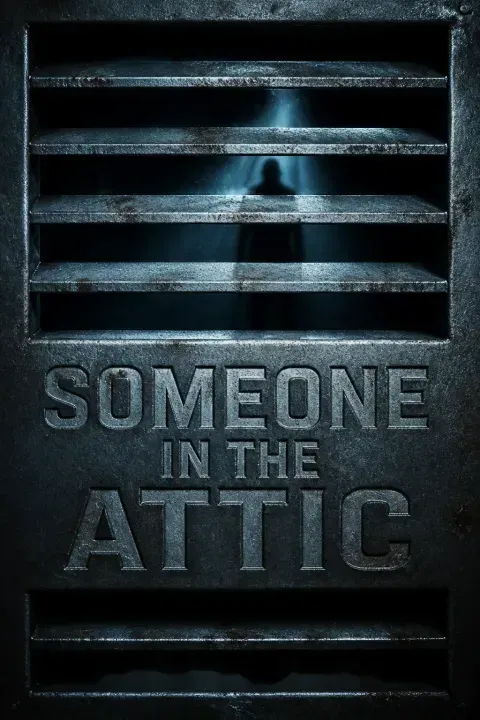


Plot Summary
The Bathwater Intruder
Anya Hase7 soaks in her bath in Blackrock, alone with a bottle of Pinot Grigio. Her partner Chris is in Los Angeles, and she has been dodging his calls while mentally drafting her exit from the relationship. The dog barks downstairs. Overhead, scratching mice grow improbably loud. Then the attic hatch swings open.
A figure in black, face hidden by a balaclava, drops to the landing floor. Anya7 freezes under the cooling water. Half a minute later, she is dead. The gardaí later rule it an accidental drowning: too much wine, too hot a bath, a woman who slipped under. Nobody questions the empty wine glass, the open magazine, or the small green rabbit paperweight resting on the page.
The novel opens not with its protagonist but with a victim, establishing an omniscient menace. Anya's internal monologue reveals her narcissism and her casual cruelty toward those who love her, yet her death is immediate and pitiless. The bath, a symbol of private relaxation, becomes a trap. The intruder emerging from above literalizes the title and primes the reader for a story about violated domestic spaces. The paperweight, described with strange specificity, will become the first link in a chain of clues. By starting with a death the world dismisses as an accident, Mara plants a seed of unease that will germinate across the entire novel.
Footage from the Attic
Julia Birch1 has uprooted her children Isla5 and Luca6 from San Diego to a luxury gated community in Foxrock called Brentwood, co-parenting with her ex-husband Gabe4 in a nesting arrangement. One Friday evening, Isla5 shows her a TikTok under the hashtag #TheLoft: a masked figure climbs out of an attic hatch, descends a beige carpet, and pans across a hall with a recognizable sunburst mirror and Louis Poulsen lamp.
The video matches their house exactly. Gabe4 dismisses it as a copycat prank. The account, Lepus123, vanishes when Isla5 tries to message it. An unsettling creak from the ceiling punctuates the silence. Julia1 insists it was Photoshopped, but a cold dread settles beneath her skin like a damp chill.
This turning point introduces the central mystery through the eyes of a mother already straining under the weight of a transatlantic move, a sulky teenager, and an anxious younger child. The TikTok, a modern digital artifact, becomes the contemporary equivalent of a ghost story: a mediated haunting that blurs the line between the real and the fabricated. The gated community, chosen for its security, is immediately rendered porous by the video's implied violation. Julia's rational dismissal is a defense mechanism, but the creaking ceiling suggests that the rational world she clings to is already compromised.
A Rabbit of Green Stone
Julia1 and Eleanor3 attend the funeral, both conflicted by years of drifting and the vitriolic fight Anya7 had picked with Julia1 over business advice. Chris's sister Lynn,14 relishing her role as gossip conduit, describes the scene Anya7 left behind: the empty wine bottle, the magazine open to an article about fertility, and a small green stone paperweight shaped like a rabbit holding the page flat.
Chris had never seen it before. Lynn14 insinuates Anya7 was having an affair. Julia1 bites her tongue, remembering Anya's7 adamant childfree stance. The paperweight's incongruity tugs at her memory. Something about it feels like a message, not a trinket.
Funerals in fiction are often stages for exposure, and here the green rabbit paperweight is the first tangible clue that Anya's death was not a simple accident. Lynn's gossipy narration is both comic relief and a vehicle for information. The paperweight's link to fertility sits in ironic contrast to Anya's self-centered personality, suggesting a hidden life or a deliberate plant. Julia's suppressed guilt about her falling-out with Anya adds emotional texture; the funeral forces a reckoning with a friendship that ended badly, and that unresolved history becomes part of the atmospheric tension surrounding Anya's death.
Luca's Night Visitor
Nine-year-old Luca6 wakes to breathing in his darkened room and a medicinal eucalyptus smell. He finds yellow attic insulation fluff tangled in his rabbit Basil's fur. The videos reappear under new accounts, showing the kitchen, his backpack, his iPad running the game Among Us. Julia1 searches the attic and finds nothing but a stray AirPod.
She reports to the police, but Detective Connell explains that without a direct threat it is a civil matter. She sees a dubious article about a woman who discovered her ex-boyfriend living in her attic. Luca6 grows increasingly anxious, whispering that the man watches through the vent above his bed. Julia's1 reassurance rings hollow even to her own ears.
The encroachment shifts from digital to physical through Luca's uncorrupted child's perception. His senses, which the adults dismiss, are accurate: the smell, the insulation, the fear. The repeated motif of the vent as a point of voyeurism evokes primal childhood fears of being watched. Julia's climb into the attic and the subsequent police brush-off illustrate a recurring horror trope: the authority figures who cannot help. Her Googling of 'how to tell if a video is fake' underscores the modern anxiety of living in a world where reality can be fabricated, leaving people unable to trust their own eyes or the institutions meant to protect them.
Scan in the Hoodie
At Shirin9 and Tony's10 barbecue, Tony10 preens and needlessly interrogates Gabe4 about his marital status and an apparent mutual acquaintance named Siegler-Barrows. Alastair2 corners Julia1 with unending questions. Gabe4 loses his hoodie, and when Alastair2 returns it, an envelope falls out that Gabe4 hastily pockets.
Later Shirin,9 gathering empty glasses, finds an ultrasound scan on the patio. She disappears inside, confronts Tony,10 and by dawn he has packed and left, his affair exposed. Shirin9 tells Julia1 the scan showed a baby that was not hers. Gabe's4 relief at Tony's10 exit is palpable. The scan's true origin is yet unknown.
The barbecue scene is a masterclass in social anxiety and hidden agendas. Every character is performing a version of themselves: Tony the charming lech, Shirin the gracious hostess, Gabe the easygoing artist, Alastair the overeager neighbor. The dropped scan is a classic thriller MacGuffin that accidentally triggers a marital explosion. Gabe's reaction hints at his own secret; his relief when Tony is gone suggests he believed Tony knew something dangerous. The scene also deepens the supporting cast, making Brentwood feel populated with real people whose private dramas will intersect with the central mystery in unexpected ways.
The Overly Helpful Neighbor
Driven to the edge by the videos and his uncanny knowledge of her fridge contents and childhood nickname, Julia1 tracks Alastair2 to a darkened townhouse and confronts him in the back garden. He is holding a crowbar, having thought she was an intruder.
When she lists her evidence, he dismantles each point: the vermouth was visible in her grocery bag, Eleanor3 called her 'Juju' at the gate, the AirPod was just one of his pair, and the book gift came from seeing her reading in the car. He looks wounded, not dangerous. Julia1 recoils in shame. She apologizes profusely, her certainty crumbling into self-recrimination. She leaves, convinced she has made a fool of herself.
This is the crucial misdirection scene. Alastair performs vulnerability so convincingly that Julia's suspicion becomes guilt. The encounter exploits the reader's own biases: the socially awkward loner is often the villain in these stories, but here he seems genuinely hurt, and Julia's aggressive probing looks like paranoia. The scene also lays down the clues that will later incriminate him, but in the moment they read as simple explanations. The crowbar, a potential weapon, is neutralized by Alastair's earnestness. Julia's retreat is a psychological defeat that will delay the revelation and make the eventual betrayal feel even more violating.
A Hare in the School Bag
After Eleanor3 hears noises in her own attic, Julia1 visits to check. While they talk in the kitchen, Georgia, Eleanor's3 three-year-old, pads downstairs clutching a small green object. It is another stone rabbit, identical to the one described at Anya's7 death scene. Georgia says it was in her school bag.
Eleanor3 panics, recognizing the paperweight as a direct threat to her child. Julia1 and Eleanor3 examine the stone and realize it is likely jade, and that their old friend group called themselves JADE, using their initials. The object, combined with the videos, feels like a targeted campaign tied to their shared past. The specter of their dead friend Donna8 rises.
The appearance of the second paperweight escalates the threat from creepy videos to physical menace. By placing the object in a child's backpack, the stalker demonstrates access to the most vulnerable point of a mother's world. The JADE connection reframes the entire mystery as a reckoning with the past, specifically with Donna's death and the guilt all three remaining women carry. Eleanor's fear for Georgia mirrors Julia's fear for Luca, uniting them in maternal dread. The paperweight becomes a totem of unresolved grief and unspoken blame, suggesting that whoever is behind this knows the intimate architecture of their friendship and their shared trauma.
Donna's Last Night
Two decades earlier, four friends go to a party in Dublin. Anya,7 selfish and domineering, tells the others that Donna8 has already left. It is a lie. In truth, Donna8 is upstairs, drunk and sick, having just kissed Gabe.4 When she emerges, her friends are gone. Stranded and upset, she tries to phone her brother Andy13 for a lift but the call is garbled.
She climbs to the roof for better signal and, fumbling for a paper with Gabe's4 number, she reaches too far and falls to her death. Anya7 later changes her story, claiming she only said Donna8 intended to go home. The guilt over that night has poisoned Julia,1 Eleanor,3 and Andy13 ever since.
The flashback chapters serve as the emotional core of the novel, explaining the psychological terrain upon which the present-day terror is built. Donna's death was a preventable tragedy, born from a cascade of small selfish acts: Anya's lie, the group's willingness to believe it, Andy's refusal to collect his sister, and Gabe's departure. The novel subtly argues that tragedies are rarely caused by single villains but by collective moral failure. Each character carries a burden of what they did and did not do. This shared guilt explains why Julia and Eleanor so readily believe the campaign is about Donna: it confirms their deepest fear that they deserve punishment.
Smoke Detector Secrets
After a kitchen smoke incident where the hall alarm stays silent, Julia1 unscrews it and finds it is a RyCo spy camera disguised as a detector. She takes it to the police, who suggest the previous tenant, Hugo, may have installed it. When Shirin9 eventually breaks down under questioning, she admits to an affair with Hugo.
Tony,10 suspecting it, replaced the real smoke alarm with a camera to gather proof. The camera was positioned to capture the hallway, not the attic hatch. Julia1 feels a small measure of relief that this particular intrusion is not about the videos, but the revelation that Tony10 was watching her family adds another layer of violation to their home.
This discovery expands the novel's thematic concern with surveillance and the erosion of privacy. Brentwood, the gated community designed to keep threats out, has become a panopticon where neighbors spy on neighbors. Tony's camera, installed for personal vendetta, accidentally captured Julia's family, revealing how easily surveillance intended for one target becomes indiscriminate. The police's helplessness underscores a recurring point: in a world of cheap spy technology, citizens are increasingly on their own. The camera also provides a clue to Gabe's behavior, as Tony overheard his phone calls and used the information to needle him, explaining the tension between them.
Not Andy After All
Using Alastair's2 help and a mountain bike ad, Julia,1 Eleanor,3 Drew,11 and Alastair2 locate Andy Wilson Straub13 in a suburban home. He answers the door on crutches, his leg in a boot from a cycling accident weeks earlier. He could not possibly be the person climbing out of attics.
Inside, Andy13 breaks down and confesses his own guilt: he pretended he could not hear Donna's8 call for a ride that night because he was too lazy to drive into town. Her death was his fault, he believes, just as his father told him. Mother and son have been estranged for a decade. Julia1 and Eleanor3 offer absolution and promise to reunite him with his mother.12
This scene functions as both a red herring resolution and a profound moment of grace. The dead end of their investigation yields something more valuable than a culprit: the opportunity to heal an old wound. Andy's confession mirrors Anya's lie, showing how many people participated, through action or inaction, in Donna's death. The guilt that binds all these characters is the novel's true subject. Julia's decision to bring Andy and his mother together demonstrates her moral arc: from a woman who ran away from grief to one who actively repairs the past. It also tightens the narrative by eliminating a suspect, forcing the reader to reexamine who else had motive.
The Anagram Unscrambled
Returning from Andy's13 house, the group gathers at Julia's1 to examine the videos. Alastair2 points out that 'Lepus' means hare, not rabbit, and that the paperweight is a hare, linking to Anya's7 surname Hase, German for hare. Drew11 identifies the stone as peridot, not jade, dismantling the JADE theory.
Later alone, Julia1 puzzles over the name Clive Gannet, the incompetent temp at Raycroft Estates whom Alastair2 mentioned. On a notepad, she rearranges the letters and stares: Clive Gannet is an anagram of Vincent Gale.2 She texts Alastair2 with her discovery, then reads Shirin's9 reply that Hugo never met Alastair.2 The pieces click. Alastair2 is Vincent Gale.2
The anagram revelation is the climax of the novel's puzzle box structure. Throughout, Alastair has been feeding the investigation, positioning himself as an ally while subtly guiding the group toward and away from clues. The name he chose for his fake identity is a hidden confession: an anagram embedded in plain sight, waiting for someone smart enough to decode it. Julia's discovery is both intellectual triumph and terrifying realization, because she has already texted the revelation directly to the killer. The scene underscores the novel's interest in language, codes, and the stories we tell ourselves; Alastair literally contains his own clue.
The Pawn in Check
Alone in the house, Julia1 watches a new TikTok video showing herself sitting on the couch, filmed moments ago. The attic hatch creaks open. Alastair,2 dressed in black, descends the stairs. Her limbs are heavy; the wine he poured earlier was spiked with crushed sleeping pills. He kneels beside her and confesses.
He is Vincent Gale,2 the employee Anya7 fired after Julia's1 advice. He lost his job, his fiancée, and custody of his daughter. He killed Anya7 by pressing her head under the bathwater. He has been living in Julia's1 attic, leaving clues to taunt her. He will kill her and make it look like suicide, then go after Eleanor.3
The villain's monologue delivers the final pieces of the puzzle with chilling precision. Alastair's rage is rooted in perceived injustice: the system rewarded the woman who wronged him, while he lost everything. His chess metaphor, 'taking out the Queen, and now the pawns,' reveals a methodical, game-like approach to revenge. The drugging of Julia's wine is a nightmarish echo of Anya's death: death in domestic comfort, staged as accident. The detail that Alastair planted the AirPod and left clues deliberately transforms the previous investigative scenes into a retrospective horror show, where every 'helpful' gesture was an act of sadistic control.
The Fireplace Poker
As the drugs drag Julia1 toward unconsciousness, she forces herself to vomit, retching on the carpet. Alastair2 watches, undisturbed. Then a roar and a sickening crunch: Eleanor,3 whom Julia1 called before the confrontation, has arrived. She swings the heavy iron poker from the fireplace and strikes Alastair2 across the head.
He collapses, dead. Eleanor3 cradles Julia,1 calling for an ambulance, her voice shaking. At the hospital, Julia1 wakes to Gabe's4 tearful face. She learns that the sleeping pills combined with wine would have killed her without intervention. Eleanor,3 the friend she had underestimated for a lifetime, saved her.
Eleanor's rescue reframes her character entirely. Throughout the novel, she appeared as the dramatic, slightly shallow friend, but her willingness to rush into danger and use lethal force redefines her as the story's true hero. The poker, a domestic object usually symbolizing hearth and home, becomes a weapon of deliverance. Julia's forced vomiting, though ultimately insufficient to save herself, demonstrates a fierce will to survive. The aftermath scene with Gabe at the hospital provides emotional closure, but the central relationship arc that resolves is the friendship between Julia and Eleanor, proving that the bonds they dismissed as faded were stronger than any of them knew.
Epilogue
Julia1 quits her redundancy consultancy and starts her own business. She and Eleanor3 visit Donna's8 mother12 and arrange the long-overdue reconciliation between Andy13 and his mother.12 Isla5 learns from friends in San Diego that Riley's mother Heather15 fabricated the assault story to torment the family; the pregnancy was a lie, the baby scan a fake.
The family moves to an older, character-filled house in Stillorgan with no attic. Gabe4 lands his first Irish gallery exhibition and starts painting again.
Tony's10 body is eventually found in a colleague's mobile home in Skerries: he fled there after Shirin9 confronted him, but a faulty coffee machine he had brought from their house exploded and killed him. Shirin,9 unburdened, moves her lover Hugo into Brentwood.
Julia1 and Andy13 begin a tentative romance, their boys bonding over video games. The house in Brentwood stands empty, its secrets now public record. In the new home, Julia1 often pauses to listen, but the only sounds are the ordinary noises of a full, chaotic household. There is no one in the attic.
The epilogue is a deliberate cooling of temperature after the fever pitch of the climax. Each character receives a resolution that feels earned rather than sentimental. Julia's professional reinvention signals a rejection of the corporate callousness that inadvertently contributed to Vincent Gale's ruin. The reunion of Andy and his mother closes the novel's oldest wound, offering a redemption the other characters sought but could not achieve for Donna herself. The revelation that Heather fabricated the assault is a dark comic twist, revealing that the entire transatlantic move was predicated on a lie, yet the lie forced the family into a new life that ultimately suited them. Tony's death by coffee machine is an example of the thriller genre's taste for poetic justice: the object he took from his wife killed him. Julia's new house, older and creakier but ghost-free, represents a middle ground between the sterile luxury of Brentwood and the haunted past. The final line about no one in the attic restates the title as a negation, turning the novel's central fear into a closed chapter.
Analysis
Someone in the Attic operates on two distinct but interwoven levels: a contemporary thriller about a family terrorized by a home invader, and a psychological excavation of guilt and the long afterlife of a single tragic night. The novel's true subject is not the masked figure in the attic but the unmasked failures of friendship, parenting, and moral courage that have festered for two decades.
The gated community of Brentwood is the novel's central metaphor. Julia1 chose it for safety after fleeing a manufactured scandal in California, only to discover that gates cannot keep out the past or the people who hold keys. The novel systematically dismantles the illusion of domestic security: the spy camera installed by a neighbor, the letting agent who duplicates keys, the friendly dog-walker who is in fact a killer. Every boundary is porous. The attic itself becomes a liminal space, a dark unconscious hovering over the family below, literalizing the psychological repression Julia1 has practiced for twenty years.
Andrea Mara structures her mystery around misread clues and false assumptions. The paperweights, the TikTok account names, and the suspect's own helpfulness all point toward the truth, but the characters are blinded by their belief that the crime must be rooted in Donna's8 death. This is a sophisticated narrative choice: the guilt they carry is so heavy that it occludes all other possibilities. The real motive is more banal and more disturbing: a workplace grievance escalated into murderous obsession. Alastair's2 revenge is not about Donna8 at all, but about a system that, in his mind, protected powerful women while destroying an ordinary man.
The novel also offers a nuanced examination of female friendship. The JADE group was never a sisterhood of equals; it was a hierarchy with Anya7 at the top, dispensing cruelty and generosity in equal measure, and Donna8 at the bottom, absorbing the blows. Julia's1 position was one of passive complicity: she never bullied Donna,8 but she never stopped Anya7 either. Her moral awakening comes late, but it does come. Eleanor,3 dismissed throughout the narrative as shallow and dramatic, emerges as the most steadfast of them all. Her climactic swing of the poker is both a literal rescue and a symbolic correction of the passivity that let Donna8 die.
Technology in the novel is a double-edged sword. TikTok, the viral video platform that provides the initial fright, is also the medium through which Isla5 finds connection with new friends in Ireland. The spyware app that Alastair2 uses to eavesdrop is the same type his own ex-fiancée used to control him. The camera that Tony10 installs to catch his wife's9 affair is eventually what exposes his own secrets. Technology amplifies human weakness but does not create it.
Ultimately, the novel suggests that the most dangerous attics are psychological. The unexamined guilt, the buried resentments, and the comfortable lies we tell ourselves are the real spaces where intruders can hide. Julia's1 journey from denial to confrontation, from Brentwood to a creaky old house in Stillorgan, from isolation to community, is a movement toward honesty. The empty attic at the end is not just a literal absence but a spiritual one: she has cleared out the ghosts.
Review Summary
Someone in the Attic is a creepy psychological thriller that gripped many readers from the start. While some praised its fast pace, twists, and suspenseful atmosphere, others found the plot illogical and characters underdeveloped. The story follows Julia, who discovers disturbing videos of her home on TikTok. Many readers enjoyed the Dublin setting and short chapters but felt the ending was anticlimactic. Overall, reviewers were divided - some found it chilling and addictive, while others thought it lacked substance and relied too heavily on implausible scenarios.
Characters
Julia Birch
Protective mother and survivorA recently returned expatriate who sold her HR consultancy business in San Diego for seven figures, Julia is pragmatic, efficient, and emotionally guarded. She fled Dublin twenty years ago partly to escape the guilt of her friend Donna's8 death, and now she projects stability for her children while managing an acrimonious co-parenting arrangement with her ex-husband Gabe4. Beneath her capable exterior, she is haunted by the belief that she failed Donna8 and fears she is failing Isla5. Her arc moves from avoidance to confrontation: she learns that running from problems only allows them to follow. By the end, she chooses messy reality and genuine connection over sterile safety.
Alastair O'Ryan / Vincent Gale
Charismatic neighbor and hidden avengerPosing as a helpful, slightly awkward IT contractor and neighbor in Brentwood, Alastair is in fact Vincent Gale, the former Hase Accounting employee whom Anya7 fired after he tried to poach clients. His dismissal, compounded by Anya's7 public humiliation campaign, cost him his job, his engagement, and contact with his daughter. Intelligent, patient, and profoundly narcissistic, he constructed an elaborate revenge against the women he blamed for his ruin: planting videos, infiltrating their homes, and ultimately murdering Anya7. His chess metaphor reveals a mind that treats human lives as pieces to be sacrificed. He genuinely believed himself the victim, a psychological trait that made his performance of wounded innocence believable.
Eleanor Jordan-Keogh
Loyal friend and unlikely heroJulia's1 childhood friend, a former PR executive now stay-at-home mother of three living in a Dublin 4 townhouse. Eleanor is dramatic, opinionated, and occasionally tone-deaf, but her loyalty is absolute. She maintained contact with Donna's mother12 when Julia1 could not, and she rushed into danger without hesitation when Julia's1 life was at stake. Her arc transforms her from a slightly comic figure into the story's true moral center. She embodies the novel's argument that bravery is not about fearlessness but about showing up. Her uncomplicated willingness to swing the poker when her friend needed saving reduces Julia's1 years of emotional avoidance to a footnote.
Gabe Birch
Ex-husband and secret burden-bearerAn artist with twinkly eyes and an aversion to responsibility, Gabe has coasted through life on charm and Julia's1 financial support. After their divorce, he maintained friendships with everyone, including Anya7, out of a deep-seated need to avoid conflict. When Isla's5 bullying of Riley led to a manufactured assault accusation, Gabe secretly took over negotiations with Riley's mother Heather15, which spiraled into an exploitative 'relationship' and a fake pregnancy extortion. His Google searches about date-rape drugs reflect his suspicion that Heather15 drugged him. Gabe's arc involves learning that protecting his family sometimes requires hard truths, not just evasive charm.
Isla Birch
Angry teenage daughterThirteen-year-old Isla is furious about the move from San Diego, lashing out at Julia1 while burying herself in TikTok and soccer. She was the reason they fled: after months of bullying by a classmate named Riley, Isla took Riley's phone and messaged a boy, giving him Riley's address. The boy turned out to be fictitious, but Riley's mother Heather15 used the incident to construct a false sexual assault story that forced the family's exit. Isla does not know any of this. Her arc from hostile silence to tearful apology when she learns the truth mirrors Julia's1 own journey toward honesty.
Luca Birch
Anxious truth-tellerJulia's1 nine-year-old son, a quiet boy who loves chess, his rabbit Basil, and his Nintendo Switch. Luca is the first to sense the intruder, smelling eucalyptus and finding insulation fluff in Basil's fur, but the adults dismiss his fears as childish imagination. His insistence that a man watches him through the vent becomes one of the novel's most chilling refrains. He represents the unmediated perception that adults have learned to suppress: he knows there is a man in the attic long before anyone else believes it. His vindication, when the truth comes out, is both a relief and a rebuke to his mother's1 rational skepticism.
Anya Hase
Dead friend and catalystThe Queen Bee of the friendship group, Anya was a narcissist who demanded loyalty but offered little in return. She ran her own accounting firm, using pressure tactics to make friends into clients, and fired Vincent Gale2 after Julia's1 advice without following proper procedure. She lied about seeing Donna8 get into a taxi on the night of the party, a lie that contributed to Donna's8 death. Her murder by Vincent Gale2, staged as an accidental drowning, is the novel's first act. Anya is a difficult character to mourn; the novel asks whether people who cause harm deserve the grace of grief.
Donna Wilson Straub
The ghost of the pastThe quiet, kind member of the JADE friendship group who died twenty years ago after falling from a roof at a party. Donna was shy, idolized Julia1, tolerated Anya's7 cruelty, and harbored a secret crush on Gabe4. On the night of her death, she was left behind by her friends, too drunk and sick to find her way home alone. Her fall was an accident, but it was enabled by a chain of small betrayals. She represents the price of social callousness and the novel's central question about collective responsibility.
Shirin Hudson
Neighbor with secretsTony's10 elegant, long-suffering wife, an Iranian-born woman who had an affair with the previous tenant Hugo as retaliation for Tony's10 serial cheating. When she finds the baby scan, she assumes it is Tony's10 and confronts him, triggering his departure. She later becomes a friend to Julia1 and, after Tony's10 death, moves Hugo into the house. She is a survivor who learned to play the role of the perfect wife while quietly refusing to be a victim.
Tony Hudson
Creepy neighbor and serial cheaterA preening, tanned golfer in his sixties who spies on his wife9 via a hidden camera and makes lecherous comments about neighbors. He flees after Shirin9 discovers his affair, driving to a colleague's mobile home in Skerries. A faulty coffee machine he had brought from the house explodes, killing him. His fate serves as dark comic relief.
Drew Redking
Gym-buffed ally and whiskey heirA personal trainer and scion of the Redking whiskey family, Drew moved to Brentwood after transforming his life from video-game nerd to fitness enthusiast. He becomes a helpful presence in the investigation, using his car for the trip to Dalkey, but is initially suspected by Julia1 of being Andy13. He is affable, occasionally socially awkward, and proves to be a genuine friend.
Kathleen Wilson Straub
Grieving mother of DonnaDonna's8 mother, widowed and now alone in the Kerrybrook house where Julia1 grew up. She has not seen her son Andy13 since he left after a fight with his father a decade ago. Her forgiveness and warmth toward Julia1 and Eleanor3 provides one of the novel's most affecting emotional scenes.
Andy Wilson Straub
Estranged brother burdened by guiltDonna's8 older brother, once a slouching gamer, now a fit, successful professional with a young son. He has lived with the guilt of refusing to pick Donna8 up on the night she died, a decision his father blamed him for until his own death. He is ultimately innocent of the attic campaign, and his reunion with his mother12, facilitated by Julia1 and Eleanor3, offers a note of redemption.
Lynn and Glyn
Gossipy sister-in-law and her husbandChris's sister Lynn is the primary source of information about Anya's7 death scene, relishing the drama while making passive-aggressive digs at the dead woman. Her husband Glyn is a weary foil. Lynn's later discovery that Glyn was the man Anya7 had been seeing provides a closing ironic twist.
Heather Walters
Manipulative mother of RileyThe mother of Isla's5 bully in San Diego. She fabricated a story that her daughter was sexually assaulted by a stranger who obtained their address through Isla's5 actions, using the lie to torment Julia1 and extort money from Gabe4 under the pretense of a pregnancy. Her scheme is exposed when Riley brags about the deception at school.
Plot Devices
The Loft TikTok videos
Viral trend weaponized for terrorA social media craze where people film themselves climbing out of attic hatches to promote a TV series. Vincent Gale2 co-opts the format, creating videos that appear to show a masked intruder in Julia's1 house. He posts them under accounts named Lepus123, etc., and deletes them after Julia1 views them. The videos are partly edited from Isla's5 own TikTok clips and partly filmed by Gale during his real intrusions into the house. They function as both psychological torture and a trail of clues Gale plants to play his cat-and-mouse game.
The green hare paperweights
Clue linking victims and perpetratorTwo identical green stone figurines shaped like hares (not rabbits). One is found in Anya's7 bathroom after her death, the other appears in Eleanor's3 child's backpack. The group initially believes the stone is jade, connecting to their old nickname JADE, and that the animal is a rabbit. Alastair2 later reveals the stone is peridot and the animal is a hare, linking to Anya's7 surname Hase (German for hare) and to the Lepus accounts. The paperweights were planted by Gale as deliberate clues to his revenge motive, and they ultimately redirect the investigation from Donna's8 death to Anya's7 business.
The RyCo spy camera
Hidden surveillance and false leadA fake smoke detector installed in the hallway by Tony Hudson10 to spy on his wife Shirin's9 affair with the previous tenant Hugo. It captures audio and video, which Tony10 uses to blackmail and torment. Julia1 discovers it and initially fears it is part of the attic campaign. The camera's existence explains how Tony10 knew details about Gabe's4 life and why Gabe4 was so anxious around him. It serves as a red herring, expanding the novel's theme of domestic surveillance while temporarily distracting from the real threat.
The Smobik spyware app
Audio surveillance of Julia's phoneA listening app that Alastair2 secretly installs on Julia's1 phone during one of his attic intrusions, allowing him to hear her phone calls and read her texts. Julia1 assumes it is a game Luca6 downloaded. The app explains how Alastair2 knew Julia's1 plans, including the police call, and enabled him to text her pretending to be Detective Stilwell. Its discovery at the end of the novel adds to the chilling realization that Alastair2 had been monitoring her throughout the investigation.
The 'Clive Gannet' anagram
Hidden identity clueThe name of a supposedly incompetent temp at Raycroft Estates, mentioned by Alastair2 early in the novel. Julia1 eventually rearranges the letters to form VINCENT GALE2, realizing Alastair2 himself is the fired employee seeking revenge. The anagram is a clue hidden in plain sight, a game Alastair2 plays with his victims to demonstrate his intellectual superiority. It reflects the novel's interest in language, codes, and the stories people tell to conceal themselves.
About the Author

Download PDF
Download EPUB
.epub digital book format is ideal for reading ebooks on phones, tablets, and e-readers.








































