
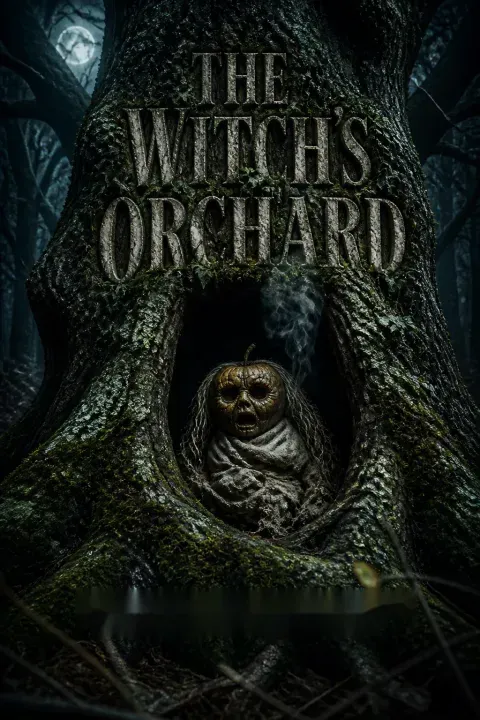


Plot Summary
A Haunted Boy's Plea
Annie Gore,1 a private investigator scraping by in Louisville, meets eighteen-year-old Max Andrews2 at Roxanne's diner. He has driven six hours from Quartz Creek, North Carolina, carrying a scrapbook filled with photographs, newspaper clippings, and hand-drawn notes. Ten years ago, three little girls were kidnapped from his mountain town.
The first was Jessica Hoyle.5 The second, Olivia Jacobs,7 was returned two weeks later, covered in scratches and unable to speak. The third was Max's2 sister, Molly, taken from their farmhouse while he practiced piano in the next room. In each case, the kidnapper left behind an applehead doll, a shriveled-faced folk craft the region's grandmothers once made.
Max2 has been saving since he was fourteen, renting out a cabin, waiting tables, doing whatever work he could find. He offers Annie1 eight hundred dollars a day plus room and board. She sees something of her own stubborn, haunted past in his eyes and accepts the job for one week.
This opening establishes the novel's emotional contract: what follows is not merely a cold-case investigation but an exhumation of grief that has festered for a decade. Max's scrapbook, assembled since he was a child, is an artifact of arrested development, a boy who could not grow up because his sister's disappearance froze him in time. The applehead dolls function as both folkloric talismans and forensic signatures, connecting a modern crime to older, darker layers of Appalachian identity. Annie's own background, a mountain girl who escaped through military service, positions her as both insider and outsider, someone who understands the culture's insularity but has the detachment to see what locals might miss.
Three Families, Three Wounds
Annie1 visits the three families connected to the kidnappings. Kathleen Jacobs, Olivia's7 mother, refuses to let Annie1 speak to her daughter, who has been completely nonverbal since her return. She reveals Olivia7 was brought back with scratches and bruises, left on the porch swing in the middle of the night.
Mandy Hoyle,6 Jessica's5 mother, invites Annie1 into her run-down house and confides that she had fallen asleep in her car at the church playground when Jessica5 vanished from the swings. Her husband Tommy,12 an abusive drunk, started a fraudulent donation campaign the next day.
At the Andrews farmhouse, Max2 shows Annie1 Molly's empty room, stripped bare by a father who could not bear the memory. Their mother killed herself three years after Molly was taken. A photo of the family before everything fell apart is the only evidence that joy once lived in these walls.
The three families map distinct responses to catastrophic loss: Kathleen's hypervigilant protection, Mandy's desperate hope mixed with self-blame, and the Andrews family's complete dissolution. The novel refuses to sentimentalize poverty or suffering, presenting Mandy's exhaustion and Kathleen's defensiveness as rational adaptations to impossible circumstances. The empty room in the Andrews house, stripped of every trace of Molly yet never repurposed, literalizes the psychological state of ambiguous loss, a grief that cannot complete itself because the object is neither confirmed dead nor confirmed alive. Annie's methodical questioning reveals her discipline, but her emotional reactions, particularly to Mandy's bruised wrist and desperate blue eyes, betray her own unhealed childhood.
The Body in the Stones
On her third morning in Quartz Creek, running the forest trail behind the cabin, Annie1 approaches the strange circle of quartz-studded boulders where she had encountered old Susan McKinney9 the day before. Crows cover the ground, fighting over something red.
When Annie1 shoos them away, she finds a young woman lying in the center of the stones, dressed in a red velvet dress with white lace at the collar. Her honey-brown hair is arranged in careful waves around her pale face. A ragged ring of red encircles her throat where she was strangled. Annie1 recognizes the white scar on the chin from the photographs in Max's2 scrapbook.
It is Molly Andrews, no longer a missing child but a murdered young woman. Annie1 calls the sheriff, then phones Shiloh4 to be with Max.2 As she waits, the crows perch on the boulders and scream, their calls echoing off the quartz in a chorus that sounds like grieving.
The discovery of Molly's body transforms the investigation from a cold search into an active murder case. The scene is deliberately composed: the velvet dress, the arranged hair, the body laid out like a doll inside a natural amphitheater. This is not a disposal but a presentation, a ritualistic display that echoes both the applehead dolls left ten years ago and the folkloric traditions the town both embraces and fears. The crows, central to the local witch legend, function here as an almost supernatural chorus, witnesses to violence that the human community failed to see. Annie's discovery ties her fate to Molly's, making her not just investigator but participant in a story that began long before she arrived.
Ransacked and Reckless
After hours giving her statement at the sheriff's station, Annie1 returns to Crow Caw Cabin to find the door hanging open. Her rucksack has been dumped, her clothes strewn across the floor, her laptop stolen. Worst of all, Max's2 casebook, his decade-long scrapbook of the investigation, is gone.
When Max2 arrives with Shiloh,4 grief has burned away his boyish softness. He sits in the chair by the door, head in his hands, then looks up and tells Annie1 he wants her to find who killed Molly, to discover where she was kept, to make sure this never happens again.
His voice is stone. The bewildered young man who hired her is gone, replaced by someone hardened beyond his years. Annie1 accepts the new mission. Deputy AJ Barnes8 arrives to dust for prints and tells Annie1 he will get her the original case files, even if it costs him his job.
The burglary introduces a second antagonist, someone who feels threatened enough by Annie's presence to break into her cabin. The theft of Max's casebook, an object with no monetary value but immense emotional significance, suggests intimate knowledge of what matters to the investigation. Max's transformation marks his passage from passive hope to active demand for justice, an evolution catalyzed by the brutal certainty of his sister's death. AJ's decision to share police files represents the first alliance Annie forms within the town's power structure, a bridge between her outsider status and the insider knowledge she needs to solve the case.
Fire in the Toy Factory
Tam Hoyle, Jessica's5 older brother, tells Annie1 at a secret meeting that his father Tommy12 and cousin Dwight15 have been seen at the abandoned DrakeCo Toy Factory. Annie1 drives to the decaying brown-brick building on a hilltop. As she sits in her car, she hears gunshots, actually exploding chemical bottles, and a woman's scream.
She forces her way inside through a loose plywood panel. Upstairs, she finds a meth lab in flames. Dwight Hoyle15 lies dead, half his face melted. His wife Elaine screams in the corner, paralyzed with shock. Tommy12 is trapped under a flaming beam, begging for help.
Annie1 kicks the beam until it splinters, drags Tommy12 toward the stairs just as AJ8 arrives. The building collapses behind them. Annie1 wakes up propped against AJ's8 cruiser, an oxygen mask on her face, her jeans leg cut away where shrapnel grazed her shin. The Hoyle cousins' meth operation is destroyed, but so is any chance to question Dwight.15
The meth lab explosion represents the collision of two hidden economies: the criminal enterprise that filled the void after the factory closed, and the dark secret that kept the kidnapped girls concealed for a decade. Dwight's death, seemingly accidental, cuts off a potential witness whose blackmail of Deena might have unraveled the entire case earlier. Annie's physical recklessness, charging into a burning building to save an abusive man she despises, reveals the moral code beneath her cynical exterior: she values life even when the life in question has caused immense harm. The scene also parallels the earlier explosion that ended her military career, connecting past trauma to present action.
Pastor's Secrets, Widow's View
Annie1 learns from her contact Leo13 that Pastor Bob Ziegler11 joined the Army in 1969 to avoid prison after a statutory rape charge involving a fourteen-year-old girl. She confronts Bob11 in his church office, watching his face drain of color before he admits the truth, insisting he did not know the girl's age and that he has lived a righteous life since.
Later, Annie1 drives up Lilac Overlook Lane to Deena Drake's3 elegant mountaintop home. Finding the door unlocked and Deena3 absent, she searches the house: the expensive but aging furniture, the library full of gardening books, the bedroom still holding Harvey Drake's suits in the closet.
From the bathroom window, she studies the valley below, sensing something subtly wrong with the house's proportions from the outside. Deena3 returns, catching Annie1 on the porch. She is defensive but poised, telling yet another version of the local witch legend in which a mother trades her daughters for apples during a terrible winter.
The investigation into Bob Ziegler and Deena Drake represents the twin poles of Annie's suspicion: the male authority figure with a sexual past, and the elegant widow present at every crime scene. Bob's confession complicates easy vilification, his remorse and subsequent life of service creating moral ambiguity. Deena's polished surface and carefully maintained home suggest a woman frozen in time, preserving her dead husband's belongings as if he might return. The witch story she tells, in which daughters are traded away by a desperate mother, unconsciously encodes her own psychology, a projection of her longing and loss onto folklore. Annie's failure to articulate what bothers her about the house's dimensions is a crucial missed clue.
Olivia Speaks in Spirals
Nicole Jacobs brings her sister Olivia7 to Annie's1 cabin at night, defying their mother's orders. Annie1 shows Olivia7 photographs from the case file. When she displays Jessica Hoyle's5 last school portrait, Olivia7 begins to moan and rock violently.
Asked to draw what she saw during her kidnapping, Olivia7 grabs a yellow highlighter and fills page after page with the same spirals she has been making for ten years. Annie1 then asks about the Witch of Quartz Creek, and Olivia's7 moans become screams, her terror so complete that Nicole has to take her home.
After they leave, Annie1 studies the spirals, unable to decode their meaning. AJ8 suggests they look like seashells or snail shells. The drawings are Olivia's7 only language, a code that contains the location of her captivity but which no one has ever learned to read.
Olivia's visit is the novel's most heartbreaking sequence, dramatizing how trauma can lock itself inside a person who lacks the conventional means to express it. The spirals, later revealed to be roses, represent both Olivia's imprisonment and the key to her captor's identity. Her reaction to the witch story confirms that the legend was weaponized against her, a threat that kept a terrified five-year-old silent for a decade. Nicole's decision to bring Olivia to Annie against her family's wishes demonstrates the younger generation's desperation to break the cycle of secrecy that has paralyzed their town. The scene also establishes Olivia not as a passive victim but as someone who has been trying to communicate for years, unheard.
A Doll at the Festival
The First Baptist Fall Festival fills the church grounds with costumed children and candy-sticky air. Shiloh,4 despite her exhaustion from making dozens of cakes for the event, works the cakewalk booth while her four-year-old daughter Lucy14 plays on a blanket behind her mother's candied-apple table.
Someone describes overhearing Shiloh's4 scream. Lucy14 is gone. On the blanket, among the toys, lies an old applehead doll dressed in a store-bought Lovely Lady Lavender dress, its shriveled face staring up at the frantic adults. The entire festival empties into search parties.
Dogs follow Lucy's14 scent to the parking lot before losing it. Deputies comb the woods. Shiloh's4 parents weep. Max2 stands beside Shiloh4 like a stone. By dawn, no trace of Lucy14 has been found, and Shiloh4 grips Annie's1 shoulder and whispers the same words Max2 spoke: find her.
Lucy's kidnapping closes the temporal gap between the original crimes and the present, proving that whatever darkness took Jessica, Olivia, and Molly is still active. The Lovely Lady Lavender doll connects the new crime to the town's lost factory, a symbol of economic death now repurposed as a signifier of predation. Shiloh, who has spent the novel nurturing others with her baking and her steady presence, becomes the latest mother to join the community of the bereaved. The shift from investigating old crimes to racing against a live kidnapping raises the stakes exponentially, transforming Annie from a historical researcher into the only person standing between a child and a killer.
A Rifle in the Fog
The morning after Lucy's14 disappearance, Annie1 runs through the fog-shrouded forest, her chest aching with a cough she cannot shake. A rifle shot cracks past her head. She drops and slides down the gorge bank as two more rounds chunk into the dirt above her.
She sprints along the creek, rounds flying overhead, until she reaches the stone circle where Molly's body was found. The echoing stones amplify every sound, so she bolts up the hillside to Susan McKinney's9 cabin and throws herself inside. Susan,9 returning from a frost-nipped rose-hip expedition, finds Annie1 bleeding from a graze along her hip.
She presses a herbal poultice to the wound, wraps her in an afghan, and brews elderberry tea while the sheriff's deputies clear the hillside. They find fresh rifle brass in a deer stand, but the shooter has vanished into the mist. Susan9 tells Annie1 the witch story her way: a mother who traded daughters for apples.
The shooting confirms that Annie has come dangerously close to the truth. Susan's role as healer and storyteller positions her as the novel's ambiguous wise woman, a figure who could be either protector or predator. The multiple versions of the witch story that different characters tell reflect the novel's central theme: narratives are shaped by the teller's needs. Susan's version, in which a mother sacrifices her children for survival, resonates differently than Deena's, in which daughters are stolen. Annie's physical deterioration, her cough, her wounds, her exhaustion, mirrors the emotional toll of immersion in Others' trauma. She is literally being consumed by the case.
The Monster's Confession
Mandy Hoyle6 arrives at Annie's1 cabin carrying Max's2 stolen casebook and Annie's1 gun case, found under the seat of her car that Tommy12 borrowed. She tells Annie1 she is finally leaving him. Annie1 drives to the hospital to confront Tommy,12 who lies handcuffed to his bed, bandaged and drugged.
When Annie1 asks about the scarecrow Dwight15 claimed to have seen at the Andrews house on the day Molly was taken, Tommy's12 drug-loosened mind slips into grief for his sister Odette. He admits he abused her for years. Odette told the old witch in the woods, Susan McKinney,9 who in turn told Sheriff Kerridge. Kerridge threatened to kill Tommy12 if he ever touched a girl again.
Tommy12 weeps that the witch took his girls, his pretty Odette and his pretty Jessica,5 as punishment. But Annie1 realizes the chronology does not fit: Odette died a year before the kidnappings began. Tommy's12 confession explains why Kerridge might have been motivated to help someone take Jessica5 away from her father, but it does not identify the kidnapper.
Tommy's confession recontextualizes the entire case. If Sheriff Kerridge believed Jessica was being abused and could not prove it legally, he might have conspired to remove her from Tommy's reach through extralegal means, a corrupt act born of righteous desperation. The revelation that Odette confided in Susan McKinney explains the anonymous tip that directed suspicion toward Susan, likely made by someone who knew Susan and Kerridge were close. The layers of abuse, the failure of institutions to protect children, and the vigilante response of a lawman form a moral knot that cannot be easily untied. Kerridge's death, now revealed as murder, was not the end of the story but its concealed center.
Roses, Not Spirals
Shiloh4 arrives at Annie's1 cabin, hollow with grief, clutching a tiny shoe found in the woods that turned out not to be Lucy's.14 She notices Olivia's7 spiral drawings spread on the coffee table and freezes. Her mother taught her to draw roses the same way, starting from the center and spiraling outward.
The spirals are roses. Rosewater vanilla. Rose hips. The largest private rose garden in the county belongs to Deena Drake.3 Annie's1 mind races through the evidence: Deena3 at the church, at the picnic, at the Andrews house. The house whose proportions looked wrong. The hidden room.
As Annie1 grabs her keys, Max2 appears and tells her Susan McKinney9 was leaving, muttering about getting them out before it is too late. Annie1 floors Honey's accelerator up Lilac Overlook Lane, calling AJ8 with a garbled message. She finds Bob Ziegler's11 warm Buick and Deena's3 Range Rover in the driveway.
The decoding of Olivia's spirals is the novel's most elegant reveal, a clue hidden in plain sight that required the right set of eyes to interpret. Shiloh, a baker who pipes roses onto cakes, possesses the exact specialized knowledge to translate Olivia's drawings. This moment validates Olivia's decade of effort to communicate, proving she was never the silent, helpless victim others assumed but a witness who kept trying to speak. The convergence of storylines, Susan's departure, Max's report, the cars in the driveway, creates the narrative velocity of a thriller while remaining grounded in the characters' emotional realities. Annie's determination to go alone, without waiting for backup, is both heroic and symptomatic of her lifelong pattern of self-reliance.
The Hidden Nursery
The front door of Deena's3 house hangs open. Bob Ziegler11 lies on the floor, a bullet wound in his side, his blood pooling on the expensive rug. Annie1 improvises a pressure bandage with his belt and her sweatshirt, telling him to hold on. Upstairs, she hears a child crying.
Following the sound behind the tapestry beside Deena's3 bed, she discovers a steel door disguised as wattle-and-daub paneling. Inside is a long room with two twin beds, skylights, chests of wooden toys, and racks of handmade velvet dresses in red and blue. Deena Drake3 is tied to a chair with a blue velvet sash, her ankles bound with curtain cord.
Lucy Evers14 huddles on one of the beds. Before Annie1 can react, a candlestick smashes into her skull from behind. She glimpses a young woman with ice-blue eyes and pale blond hair before losing consciousness. It is Jessica Hoyle,5 alive and holding a gun.
The revelation of the hidden nursery transforms Deena's elegant mountaintop home from a widow's refuge into a purpose-built prison. The two beds, the two colors of dresses, the two of everything, materialize Deena's obsession with replacing the twin daughters she lost. Jessica's emergence as the active threat rather than Deena subverts the expected power dynamic: the captive has become the captor, the victim the perpetrator. Bob Ziegler's presence, unexplained, suggests the tangled relationships that have kept these secrets buried. The room's existence confirms Annie's earlier intuition about the house's wrong proportions, a perceptual discrepancy that nagged at her subconscious without breaking into conscious awareness.
A Mother Surrenders Her Daughters
Annie1 regains consciousness on the floor of the hidden room, her head throbbing. While Lucy14 presses a wet cloth to her face, Deena3 begins to talk, unspooling ten years of secrets. After her husband Harvey died and she miscarried their twin daughters on the same bathroom floor, grief drove her to Susan McKinney9 for help.
Susan9 gave her a book of folklore and sent her away. Deena3 made two applehead dolls as poppets for her lost babies, then saw Jessica Hoyle5 swinging alone at the church playground while Mandy6 slept. She asked Jessica5 if she wanted to come with her. The child said yes. Sheriff Kerridge searched Deena's3 car, saw Jessica,5 and closed the door.
He later told Deena3 to take the girl away from her abusive father. She took Olivia7 next, but Olivia7 was defective and would not sing. So she took Molly. Dwight Hoyle15 saw Molly in her car and blackmailed her for a thousand dollars a month. When Kerridge threatened to confess, she poisoned him with grayanotoxin from her garden and staged his heart attack.
Deena's confession is a case study in how profound grief, if denied expression, can curdle into monstrous possession. The language she uses, that Jessica said yes, that Molly was so eager to please, reveals a woman who has convinced herself that she was rescuing children rather than stealing them. Her use of grayanotoxin, a plant-based hallucinogen, to drug the girls into compliance echoes the folkloric tradition of witch's brews while grounding the story in botanical reality. The blackmail by Dwight Hoyle adds a financial motive for continued secrecy, layering economic desperation onto psychological compulsion. Sheriff Kerridge's complicity, initially motivated by a desire to protect Jessica from abuse, demonstrates how corruption can begin with good intentions and end in murder.
The Sister She Killed
Jessica5 returns, wearing one of Deena's3 dresses, and levels Annie's1 own gun at her. Her story spills out in a torrent. She and Molly had been sneaking out of the hidden room for years while Deena3 slept. When Annie1 arrived in town and knocked on the door asking about Molly, Molly heard and decided to run to Max.2 Jessica5 caught her at the bottom of the mountain.
They fought. Jessica5 strangled her, then dressed her in the red velvet doll dress and left her in the stone circle where the crows would find her. She took Lucy14 from the festival as a replacement sister. She shot Bob Ziegler11 when he came for cookies and saw her loading travel bags into the car.
Now she intends to kill Annie1 and Deena,3 stage a suicide, and flee with Lucy14 using Deena's3 passport. As Jessica5 raises the gun, the door swings open. Shiloh4 stands in the doorway in socked feet, her father's .45 Colt steady in her hands. Annie1 shouts for Shiloh4 to aim for the shoulder. Shiloh4 fires. Annie1 swings a pipe into Jessica's5 face. Lucy14 runs to her mother.
Jessica's confession completes the novel's tragic arc, revealing that the kidnapping ten years ago was not the end of the story but its beginning, setting in motion a second generation of violence. Jessica's murder of Molly, the sister she claimed to love, is the story's darkest inversion of the witch legend: the daughters do not escape together but destroy each other. Her plan to replace Molly with Lucy replicates Deena's original crime, showing how abuse perpetuates itself across generations of captivity. Shiloh's arrival, armed and precise, redefines her character from nurturing baker to protective warrior, a mother who will kill to save her child. The shot to the shoulder, deliberately nonfatal, distinguishes her act from the casual cruelty of the kidnappers.
Epilogue
Annie1 recovers in the hospital, her various wounds bandaged, her cough finally treated. AJ8 brings her clean clothes and news that Sheriff Jacobs10 has suspended himself. Mandy Hoyle6 visits, hugging Annie1 with surprising strength, then goes to sit with Jessica,5 who is handcuffed to her hospital bed and facing a long legal reckoning.
Deena's3 Savannah family has sent a lawyer and she will likely end up in a private psychiatric facility. Before leaving town, Annie1 returns to Susan McKinney's9 cabin, where the old woman reads her cards one final time and presses a jug of elderberry wine into her hands.
Max2 refuses to let Annie1 refund his money, instead giving her the woodblock print of crows that hung above the cabin fireplace. Driving Honey through the mountains toward Louisville, Annie1 calls Leo13 and agrees to meet him for dinner at Roxanne's. She is battered, exhausted, and exactly where she belongs.
The epilogue resists tidy resolution while honoring the emotional truth of survival. Jessica's fate, shackled to a hospital bed with her abused mother at her side, offers no easy redemption but holds open the possibility of reckoning. Mandy's embrace of Annie, whose investigation exposed her daughter as a murderer, embodies the novel's moral complexity: love persists even when the beloved has done unforgivable things. Susan's final card reading and gift of wine affirm her role as the community's true wise woman, a figure who sees clearly but cannot force others to see. Annie's return to Leo and Roxanne's closes the geographic circle of the story, placing her back where she began but fundamentally changed, carrying the weight of what she has witnessed and the knowledge that she will do it again.
Analysis
The Witch's Orchard operates at the intersection of crime fiction and Southern Gothic, using the mechanics of a kidnapping investigation to excavate deeper truths about motherhood, trauma, and the stories communities tell to survive. The multiple versions of the Quartz Creek witch legend, told differently by nearly every character, function as the novel's organizing metaphor. Is the witch a jealous mother who stole daughters, a grieving woman who traded children for apples, or a crone who consumed her young to steal their beauty? The answer depends on who is telling the story and what they need the story to do. Deena Drake3 constructed an elaborate fairy tale in which she was the rescuer and the girls were gifts, a narrative that allowed her to see her captivity as care. Jessica5 internalized the same story but cast herself as the princess who would inherit the castle, a role that required eliminating her sister when Molly chose freedom. The novel's true subject is not who took the girls but what happens to identity when it is raised inside a delusion. Jessica5 is neither innocent victim nor pure monster but a young woman who learned survival strategies inside a closed system and applied them with the only tools available: manipulation, violence, and the desperate logic of possession. The novel also anatomizes class and regional identity with precision. The Hoyles are dismissed as trashy, their daughter's disappearance taken less seriously because of who they are. The FBI agents who came ten years ago saw hillbilly caricatures, not people. Annie's1 value as an investigator is not just her skill but her insider status as an Appalachian woman who understands both the culture's strengths, its resilience, its herbal knowledge, its storytelling traditions, and its pathologies, its insularity, its tolerance of abuse, its suspicion of outsiders. The applehead dolls crystallize this duality. They are simultaneously charming folk art and sinister poppets, grandmothers' crafts and kidnappers' calling cards. The novel refuses to resolve this tension, insisting that the same traditions that sustain communities can also hide their worst crimes. Ultimately, The Witch's Orchard is about the terrible power of stories. The witch legend justified Deena's3 kidnappings, silenced Olivia7 with terror, and helped Jessica5 rationalize murder. But stories can also liberate. Mandy's6 version of the tale, in which a mother who traded her daughters weeps until apple trees grow from her grief, offers a different possibility: that loss, fully mourned, can finally bear fruit.
Review Summary
The Witch's Orchard is a captivating debut mystery set in Appalachia, featuring PI Annie Gore investigating a decade-old case of missing girls. Readers praise the atmospheric setting, well-developed characters, and intriguing blend of folklore and suspense. The slow-burning plot keeps readers guessing until the end, with many hoping for a series. While some found pacing issues, most enjoyed the vivid descriptions, haunting imagery, and narrator Emily Pike Stewart's performance in the audiobook. Overall, it's highly recommended for mystery and folklore enthusiasts.
People Also Read




Characters
Annie Gore
Hard-bitten private investigatorA short, wiry woman in her early thirties with dishwater blond hair perpetually in a ponytail, a previously broken nose, and freckles across her pale skin. She grew up in a violent Appalachian household, shuttled between her abused mother and her grandmother, and escaped through the Air Force where she was recruited into the Office of Special Investigations by a man named Leo13. She drives a vintage amber Datsun 260Z named Honey and lives in a tiny apartment above a diner in Louisville. She carries a custom .357 Korth Mongoose, a gift from Leo13, and practices Muay Thai. Her childhood taught her to spot the signs of domestic abuse, to distrust authority, and to fight for people who cannot fight for themselves. She is stubborn, sarcastic, and constitutionally incapable of leaving a question unanswered, which makes her an excellent investigator and a difficult person to love.
Max Andrews
Grief-stricken young artistAn eighteen-year-old who has spent more than half his life searching for his kidnapped sister. Quiet and sensitive with birdlike intensity and hands callused from hard work, he is a self-taught woodblock printmaker of exceptional talent who has been offered art school scholarships and an internship in Japan but refused them all. His mother killed herself when he was eleven, his father16 became a long-haul trucker to escape the empty house, and he essentially raised himself. He built a scrapbook about the kidnappings starting at age ten, saved every dollar from odd jobs and an Airbnb cabin rental, and has been waiting for someone who could finally give him answers. His arc moves from haunted passivity to hardened determination.
Deena Drake
Elegant widow with secretsA Savannah debutante who married a factory owner and moved to the mountains, Deena is in her fifties with a silver-blond bob, impeccable skin, and the kind of Southern gentility that uses 'hors d'oeuvres' unironically. She lives alone in a glass-fronted luxury cabin on Lilac Overlook, surrounded by her dead husband's hunting trophies and his still-hanging suits. She was the piano teacher for Max2 and present at every crime scene. Her roses win prizes, her house is immaculate, and her grief for her husband and the twin daughters she miscarried the night he died has calcified into something monstrous. She uses a plant toxin, grayanotoxin from mountain laurel, to drug the girls into compliance, keeping them in a hidden nursery behind her bedroom tapestry.
Shiloh Evers
Baker and protective motherA towering woman in her mid-twenties with big curly brown hair, an easy laugh, and hands that produce magical baked goods. She was Max2 and Molly's babysitter the summer of the kidnappings and has looked after Max2 ever since. After culinary school in Asheville, she returned to Quartz Creek and opened a bakery, raising her daughter Lucy14 as a single mother. Her father taught her to shoot clay pigeons by age eight, a skill that proves decisive. She represents the nurturing maternal force that Deena3 twisted into possessiveness, and her arc transforms her from a supportive friend into a warrior who shoots to save her child.
Jessica Hoyle
First kidnapped girlTaken at nearly six years old from the church playground while her mother6 napped, Jessica has ice-blue eyes, pale blond hair, and a beauty as sharp as cut glass. For ten years she lived in Deena's3 hidden nursery, secretly avoiding the drugged tea, teaching herself to drive via the internet, and saving cash stolen from Deena's3 purse for an escape plan. She was old enough when taken to remember her real family but young enough to be warped by captivity. She came to see Molly as her true sister and Deena's3 house as her castle. Her intelligence and will to survive curdled into violence when her world threatened to collapse.
Mandy Hoyle
Abused mother searching for her daughterA wiry, underweight woman with corn-silk blond hair and huge blue eyes that make her look like a storybook fairy. She works as a waitress at Ellerd's Diner, endures regular beatings from her husband Tommy12, and has spent ten years refusing to leave Quartz Creek because she believes Jessica5 might return. She was pregnant and exhausted when Jessica5 was taken, and has carried the guilt of falling asleep ever since. Her resilience is quiet and absolute. She has been squirreling away money in a sock drawer for years, planning an escape to a cousin in Virginia, but could not bring herself to go.
Olivia Jacobs
Silent witness who draws spiralsNow fifteen, she was the second girl kidnapped and the only one returned. She is autistic and completely nonverbal, communicating mostly through an iPad with picture cards, occasional screams, and the spirals she draws obsessively. The FBI agent who questioned her slapped her across the face, traumatizing her further. Her spirals, which everyone assumed were meaningless, are actually roses, drawn the way her captor's garden looked through the skylights of her prison. She was returned because Deena3 deemed her 'defective' for refusing to sing.
Deputy AJ Barnes
Loyal deputy and allyA stocky former college football player with warm pecan skin, dimples, and a gentle country manner. He was Max's2 scout troop mentor and has watched out for the boy for years. He lives down the lane from the Andrews farmhouse and becomes Annie's1 confidant, source of police files, and lover. He is caught between his loyalty to Sheriff Jacobs10 and his determination to solve the case, ultimately choosing the investigation over his career safety. He calls every woman over twenty 'ma'am' and makes Annie1 laugh at her own darkness.
Susan McKinney
Mountain wise womanAn elderly woman who lives in a three-room cabin deep in the woods, with frizzy steel-gray hair, beetle-black eyes, and an unnerving ability to look through people. She reads fortunes with an old deck of playing cards, brews herbal remedies, and serves as the community's unofficial therapist for women with nowhere else to go. She was close friends with the late Sheriff Kerridge and was briefly suspected in the kidnappings after an anonymous tip. She gave Deena3 the folklore book that inspired the applehead dolls and has spent years trying to help Mandy Hoyle6 leave her abusive husband.
Sheriff Cole Jacobs
Conflicted lawmanOlivia's7 uncle, a tired man in his mid-fifties with dark circles and a permanent scowl. He has kept a board of evidence in his home office for ten years, unable to solve his own niece's kidnapping. He is hostile to Annie1 initially, protective of his family and territorial about his town. He is secretly having an affair with Deena Drake3, which blinds him to her crimes and gave her an alibi for the night Lucy14 was taken. His suspension at the end of the novel is an act of accountability.
Bob Ziegler
Pastor with a hidden pastA tall, thick-necked man with a horseshoe of white hair and a booming preacher's presence, dubbed 'Santa Claus in a glen plaid suit.' He joined the Army at eighteen to avoid prison after a statutory rape charge involving a fourteen-year-old girl at a party. After his service, he attended seminary, married Rebecca, and has pastored First Baptist for decades. He was at the Andrews house on the day Molly was taken, ostensibly for marital counseling with Janice and Greg Andrews16. He is shot by Jessica5 when he stumbles upon her escape preparations.
Tommy Hoyle
Abusive husband and fatherTall, lanky, perpetually angry, with rust-colored stubble and a mouthwash-and-grilled-cheese smell. He abused his sister Odette for years, beats his wife Mandy6, and was suspected in his daughter Jessica's5 kidnapping because he started a fraudulent donation campaign the day after she disappeared. He lost his job when the toy factory closed and has been underemployed and drunk ever since. His drug-addled hospital confession reveals the link between his abuse of Odette and the chain of events that led to Jessica's5 kidnapping.
Leo
Annie's mentor and loverA former OSI officer and current private security contractor who recruited Annie1 into special investigations during her Air Force years. He has a South Texas accent he mostly hides, wears three-hundred-dollar T-shirts, and operates in glamorous international cities while Annie1 works the Appalachian back roads. He calls her every morning, sent her the custom Korth Mongoose she carries, and shares a wordless understanding forged through shared trauma. He represents home for Annie1, a constant presence across distance and time.
Lucy Evers
Kidnapped childShiloh's4 four-year-old daughter, tall for her age with a mop of frizzy dark curls and a stuffed pony named Peppa. She is taken from the Fall Festival by Jessica5, who lured her away by claiming to be a princess offering a castle tour. She is found alive in Deena's3 hidden room, drugged with Deena's3 tea but physically unharmed.
Dwight Hoyle
Blackmailing cousinTommy's12 older cousin, a plumber sent to fix a pipe at the Andrews house the day Molly was taken. He saw Deena3 put Molly in her car and blackmailed her for a thousand dollars a month for ten years. He and his wife Elaine recently moved back from Charlotte and set up a meth lab in the abandoned toy factory. He died in the explosion.
Greg Andrews
Absent fatherMax2 and Molly's father, a former biology teacher who became a long-haul trucker after his daughter's disappearance and his wife's suicide. He stripped the house of all family photos and his wife and daughter's belongings in a desperate attempt to erase grief. He initially asks Annie1 to stop investigating, then relents and asks her to continue after Lucy14 is taken.
Plot Devices
Applehead dolls
Ritual token of child replacementShriveled-faced folk dolls crafted from dried apples, dressed in handmade velvet and lace clothing. Deena3 made two as grief poppets for her miscarried twin daughters, then left one behind each time she took a girl, creating a signature that became the kidnapper's trademark. Each doll's dress color matched the theme of the hidden nursery: blue for the first daughter, red for the second. The dolls connect modern crime to Appalachian folk tradition, blurring the line between superstition and psychology. They function simultaneously as evidence, symbol, and psychological crutch for Deena's3 delusion that she was trading for rather than stealing children.
Olivia's spiral drawings
Visual code concealing the truthFor ten years, Olivia Jacobs7 has drawn the same spirals obsessively in crayon. On the surface they appear to be meaningless repetitions, the perseverative output of an autistic mind. In reality, they are her attempt to communicate what she saw through the skylights of Deena's3 hidden nursery: the concentric petals of Deena's3 prize-winning roses. The spirals are the novel's central mystery object, a Rosetta stone that requires the right translator. Shiloh4, who pipes buttercream roses onto cakes, is the one who finally decodes them, recognizing her mother's rose-drawing technique in Olivia's7 marks. The spirals represent the novel's argument that traumatized people do communicate their truth, often clearly, but the world lacks the patience or knowledge to listen.
Grayanotoxin tea
Plant poison used for controlA toxin derived from mountain laurel, a plant abundant in the Appalachians. Deena3 learned to brew it into a honeyed tea from the folklore book Susan McKinney9 gave her. In small doses it produces hallucinogenic effects and lowered inhibition, which Deena3 used to make the girls believe they were sick and could not survive outside her care. In larger doses, as used on Olivia7 just before she was returned and on Sheriff Kerridge in a cake, it causes cardiac distress that mimics natural heart attack. The toxicology report on Molly's body reveals the long-term organ damage the tea provided, providing forensic evidence of the girls' captivity and drugging. The poison connects Deena's3 genteel rose garden to the darker applications of botanical knowledge.
The stone circle
Natural amphitheater of echoes and deathA circle of gray boulders embedded with shimmering quartz, located in the forest between Max's2 cabin and the gorge. The stones create an acoustic anomaly that amplifies and echoes every sound, which the local crows have learned to exploit, screaming into the circle at night to broadcast their cries across the valley. Local legend claims the echoes are the Devil laughing at the witch's blood. Molly's body was laid out in the center of this circle, dressed like a doll, and it was here that Olivia's7 kidnapper threatened her with the witch story. The circle serves as a threshold space between the rational investigation and the folkloric undertow of the mountains, a place where the boundary between natural and supernatural feels permeable.
The hidden nursery
Concealed prison behind a tapestryA steel-doored panic room concealed behind a tapestry in Deena's3 bedroom, designed to look like the Tudor-style wattle-and-daub walls. It measures approximately twenty feet long, lit by skylights, and furnished with two twin beds with handmade wool blankets (one red, one blue), chests of antique wooden toys, a small bathroom, and a closet filled with matching velvet dresses in child and adult sizes. A keypad secures the door from the inside. Here Deena3 kept Jessica5 and Molly for ten years, telling them they were sick girls whose families had sent them away for treatment. The room's existence explains Molly's pale skin and the absence of any sign of her in the outside world. Annie's1 earlier feeling that the house's exterior proportions did not match its interior was her subconscious registering the hidden space.
Download PDF
Download EPUB
.epub digital book format is ideal for reading ebooks on phones, tablets, and e-readers.








































