
Plot Summary
Maze Beckons Once More
Abigail, now fae, re-enters the Maze, haunted by her past and uncertain future. The Maze is alive, its trees hungry and watchful, and Abigail feels both threatened and strangely drawn to its darkness. Her thoughts circle around Valroy, the enigmatic Unseelie prince: should she solve the Maze, wed him, or kill him to save two worlds? The Maze is a prison and a puzzle, but also a place of stalling—Abigail's way of buying time to decide her heart and fate. Her encounters with Anfar, the sea beast, reveal the complexity of loyalty and the strange allure Valroy holds over friend and foe alike. The chapter sets the tone of cyclical struggle, desire, and the impossibility of simple choices in a world ruled by fae logic.
Dinner With Devils
Abigail is swept into Valroy's home for a tense dinner with Bayodan, Cruinn, and Anfar. The meal is a performance of power, humor, and sexual tension, with Valroy's predatory attention on Abigail both thrilling and terrifying her. The Unseelie court's dynamics are on full display: loyalty is transactional, affection is blunt, and cruelty is laced with dark humor. Abigail's new Seelie nature makes her an outsider, yet she is drawn into their games, her resistance eroding as she realizes her captivity is as much psychological as magical. The dinner becomes a battleground of wits and desire, with Abigail's internal struggle between revulsion and longing for Valroy intensifying.
Temptation and Torment
Abigail's relationship with Valroy deepens into a dangerous dance of seduction and dominance. Valroy's pursuit is relentless, his affection laced with threats and promises of pleasure and pain. Abigail is both repulsed and fascinated, her body betraying her with longing even as her mind recoils. The Unseelie court's acceptance of open sexuality and violence challenges Abigail's mortal sensibilities, pushing her toward surrender. The chapter explores the psychological complexity of consent, power, and the allure of the forbidden, as Abigail begins to accept her own desires and the impossibility of returning to her old self.
Fae Desires Unleashed
The tension between Abigail and Valroy erupts in a night of raw, primal intimacy. Their lovemaking is violent, passionate, and transformative, breaking down the last barriers between them. Abigail's surrender is both a defeat and a liberation, as she discovers pleasure in submission and the thrill of being hunted and claimed. The Unseelie world's lack of shame and celebration of desire is both shocking and freeing for Abigail, who begins to embrace her new identity. The chapter is a turning point, marking Abigail's acceptance of her place in Valroy's world and the deepening of their bond.
Seelie Schemes and Sacrifice
In the Seelie court, Queen Titania and her courtiers debate Abigail's role as a potential assassin and pawn. The political machinations are ruthless: Abigail is seen as both a weapon and a liability, her fate to be decided by the needs of the many. Titania's strategy is cold and pragmatic, exploiting Abigail's feelings for Valroy as a potential weakness. The chapter highlights the parallels between Seelie and Unseelie cruelty, the inevitability of betrayal, and the impossibility of simple heroism in a world where love is a vulnerability.
Exploring the Maze's Heart
Abigail is sent to explore the Maze, encountering its shifting, perilous paths and the monstrous beings within. She is tested physically and emotionally, nearly drowning and facing creatures that embody the Maze's hunger and violence. Each trial is a lesson in the nature of power, suffering, and the cost of survival. Abigail's journey through the Maze is both literal and metaphorical, forcing her to confront her own fears, desires, and the reality that there are no easy answers or safe havens in Tir n'Aill.
The Blacksmith's Truth
Abigail meets the Maze's blacksmith, a being forged by war and betrayal, who creates weapons for Valroy's endless conflicts. His existence is a meditation on the inevitability of violence and the futility of trying to end all suffering. The blacksmith's cynicism challenges Abigail's hope, forcing her to question whether any act—no matter how righteous—can truly change the world. The encounter deepens Abigail's understanding of the Maze and the cycles of destruction that define both Seelie and Unseelie.
Music, Memory, and Longing
Drawn by haunting music, Abigail finds Valroy playing a pipe organ among his stolen treasures. The music is a window into Valroy's soul: longing, grief, and love. Their reunion is tender, marked by mutual vulnerability and the acknowledgment of feelings neither can fully express. The chapter explores the power of art, memory, and shared pain to bridge the gap between predator and prey, and hints at the possibility of redemption through love.
The Hunt Begins
The long-anticipated hunt commences: Valroy gives Abigail a head start, transforming the Maze into a deadly playground. Abigail flees, shifting forms and using every ounce of cunning and power to evade him. The chase is both terrifying and exhilarating, a ritual of dominance and surrender that blurs the line between violence and desire. The Maze itself conspires against Abigail, her escape always just out of reach. The hunt is a crucible, burning away the last remnants of her old self.
Prey and Predator
Exhausted and cornered, Abigail is finally caught by Valroy. Their union is fierce, passionate, and cathartic, a consummation of all the tension and longing that has built between them. Abigail's surrender is total, but not without agency—she chooses to yield, finding power in her vulnerability. The experience is both shattering and healing, marking the true beginning of their partnership as equals in darkness and desire.
Surrender and Survival
In the wake of their union, Abigail and Valroy find a fragile peace. Their relationship is marked by tenderness and mutual dependence, but the threat of war and betrayal looms. The Seelie and Unseelie courts maneuver for advantage, with Abigail caught in the middle. Old loyalties are tested, and new alliances are forged in the crucible of shared suffering. The chapter explores the cost of survival in a world where love is both a weapon and a wound.
The Weeping Willows
Seeking a reason to hate Valroy, Abigail demands to see the Maze's worst atrocity: the Weeping Willows, a grove of living trees made from tortured Seelie victims. The horror is overwhelming, a testament to the depths of Unseelie cruelty. In a moment of righteous fury, Abigail destroys the grove, freeing the trapped souls but triggering catastrophic consequences. The act is both a mercy and a declaration of war, shattering the fragile peace and setting the stage for tragedy.
War's Price and Betrayal
The destruction of the Weeping Willows is seen as an act of war by the Unseelie. Abigail is forced to flee, her actions condemned by both courts. Bayodan and Cruinn, her guardians, are caught between loyalty and pragmatism, manipulating events to prevent greater bloodshed. Abigail's refusal to apologize leads to her capture by the Seelie, who see her as both a traitor and a scapegoat. The chapter explores the impossibility of moral purity in a world built on cycles of violence and revenge.
Chains, Choices, and Crowns
Imprisoned and facing execution, Abigail is forced to choose between her own life, her love for Valroy, and the fate of two worlds. In a desperate gambit, she offers to marry Valroy in exchange for a thousand years of peace. The bargain is accepted, but the cost is high: Abigail's agency is both affirmed and denied, her freedom bought with the promise of future war. The chapter is a meditation on sacrifice, compromise, and the limits of power.
Wedding of Shadows
The wedding of Abigail and Valroy is a spectacle of fae excess, blending Seelie and Unseelie traditions in a celebration that is both joyous and ominous. Their love is real, but shadowed by the knowledge that peace is temporary and betrayal inevitable. The court's acceptance is grudging, and old enemies lurk in the background. The chapter is a bittersweet affirmation of love's power to bridge divides, even as it cannot erase the wounds of the past.
Treachery at the Altar
On the night of their coronation, Valroy is betrayed by those closest to him. Titania, Bayodan, and Cruinn conspire to assassinate him, using a cursed dagger to strike him down. Oberon is killed in the chaos, and Valroy is captured and imprisoned. Abigail is left alone, her crown stained with blood, her trust shattered. The chapter is a devastating reversal, exposing the futility of hope and the inevitability of violence in a world ruled by fear and ambition.
Blood, Loss, and Exile
In the aftermath of the betrayal, Abigail is left to pick up the pieces. The Unseelie court is in chaos, and the promise of peace is broken. Valroy, crucified and exiled, clings to the memory of Abigail's love as his only solace. Abigail, now queen in name only, must decide whether to seek vengeance, forgiveness, or a new path forward. The story ends on a note of uncertainty and longing, with the fate of Tir n'Aill—and the lovers—hanging in the balance.
Analysis
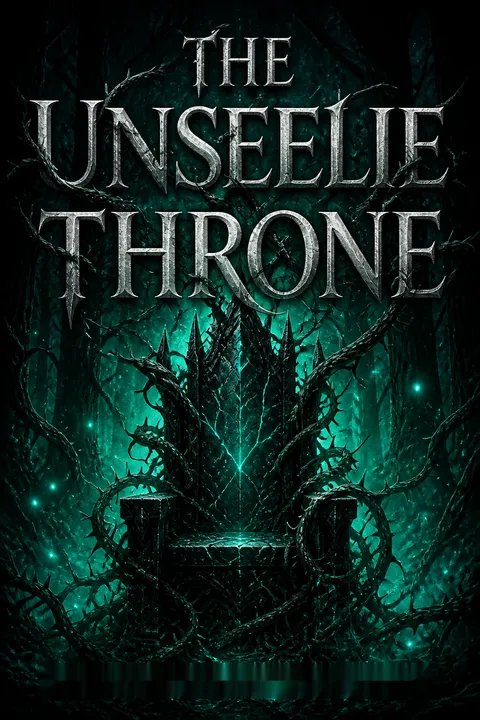
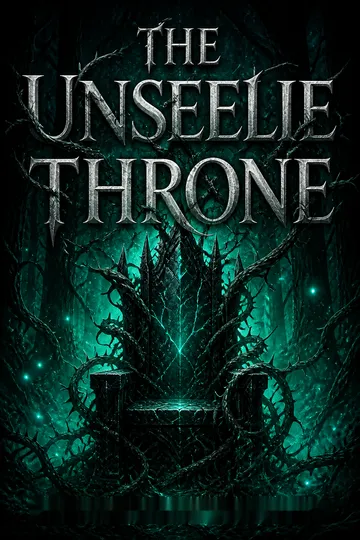
A dark romance of power, agency, and impossible choicesThe Unseelie Throne is a masterful exploration of the intersections between love, power, and survival in a world where every choice is fraught with danger and compromise. Kathryn Ann Kingsley crafts a narrative that is both sensual and brutal, inviting readers to question the boundaries of consent, the allure of the forbidden, and the cost of agency in a world ruled by cycles of violence. The story's central relationship—between Abigail and Valroy—is a study in contrasts: predator and prey, dominance and surrender, cruelty and tenderness. Their love is both a weapon and a wound, a source of strength and vulnerability. The novel's use of the Maze as both setting and metaphor underscores the impossibility of escape from fate, while the recurring motifs of the hunt, the Weeping Willows, and the cursed dagger force characters and readers alike to confront the limits of moral purity and the necessity of compromise. In the end, The Unseelie Throne is a meditation on the power of love to transform, redeem, and destroy—a story that refuses easy answers and lingers in the mind long after the final page.
Review Summary
The Unseelie Throne receives mixed reviews averaging 3.98 stars. Critics cite excessive purple prose, repetitive internal dialogue, and slow pacing, particularly Abigail's prolonged maze-solving. Many find the writing flowery and the plot stagnant across books. However, fans praise the dark romance between Abigail and villain Valroy, their chemistry, and explicit scenes. The cliffhanger ending frustrates readers invested in the conclusion. Character development concerns focus on Abigail's indecisiveness, while Valroy's vulnerable yet villainous nature captivates. Side characters and world-building receive appreciation, though some desire more lore depth.
People Also Read
Characters
Abigail Moore
Abigail is the heart of the story: a mortal woman transformed into a powerful Seelie fae, thrust into the center of a conflict she never sought. Her journey is one of self-discovery, as she grapples with desire, fear, and the burden of impossible choices. Abigail's relationships—with Valroy, her guardians, and the courts—are marked by ambivalence and longing. She is both prey and partner, victim and agent, her strength found in vulnerability and her power in surrender. Abigail's arc is a meditation on agency, love, and the cost of survival in a world where every choice is a compromise.
Valroy
Valroy is the Unseelie prince: seductive, cruel, and deeply wounded. His power is absolute within the Maze, but his heart is vulnerable to Abigail's influence. Valroy's love is possessive and violent, yet also genuine and transformative. He is both the story's greatest threat and its most compelling victim, his longing for acceptance and fear of betrayal driving much of the plot. Valroy's arc is one of self-revelation, as he learns to balance dominance with tenderness and to accept the possibility of redemption through love.
Bayodan
Bayodan, the goat king, is a master tactician and Abigail's guardian. His loyalty is pragmatic, his affection genuine but always secondary to the needs of the court. Bayodan's actions are driven by a desire to prevent greater bloodshed, even at the cost of personal betrayal. He is both mentor and manipulator, his wisdom tempered by a willingness to do what is necessary. Bayodan's arc is a study in the ethics of power and the tragedy of good intentions gone awry.
Cruinn
Cruinn is a being of glass and shifting form, Abigail's other guardian and a symbol of fluid identity. Their loyalty is to Abigail, but their actions are often ambiguous, caught between competing allegiances. Cruinn's relationship with Bayodan and Abigail is intimate and supportive, but their role in the final betrayal complicates their character. Cruinn embodies the story's themes of transformation, ambiguity, and the difficulty of knowing one's true self.
Titania
Titania is the architect of many of the story's schemes, her love for her people matched only by her willingness to sacrifice individuals for the greater good. She is both mentor and antagonist to Abigail, her affection always conditional and her trust hard-won. Titania's arc is one of tragic necessity, as she is forced to choose between personal loyalty and political survival. Her actions drive much of the plot's conflict and underscore the story's central question: can love and power coexist?
Anfar
Anfar is a creature of the deep, both monstrous and deeply human in his loneliness. His friendship with Valroy is fraught, marked by mutual dependence and unspoken pain. Anfar's role is that of observer and occasional participant, his perspective offering a counterpoint to the court's machinations. His arc is one of longing for connection and the difficulty of finding a place in a world that fears and misunderstands him.
Perin
Perin is a selkie caught between worlds, his loyalty to Abigail genuine but his agency limited. He serves as a touchstone for Abigail's humanity and a reminder of the costs of fae politics. Perin's arc is one of reluctant involvement, his actions shaped by the needs of others and the manipulations of greater powers.
Oberon
Oberon is Titania's consort and the embodiment of Seelie pride and arrogance. His role is largely reactive, his fate sealed by the machinations of others. Oberon's death is a catalyst for the story's final tragedy, his character a reminder of the fragility of power and the inevitability of loss.
Puck (Robin Goodfellow)
Puck is a shapeshifter and spymaster, his true motives always hidden. As both dog and fae, he moves between worlds, his loyalty to Abigail genuine but his actions always suspect. Puck embodies the story's themes of ambiguity, deception, and the impossibility of certainty in a world of shifting allegiances.
The Blacksmith
The blacksmith is a monstrous figure, his life defined by violence and the creation of weapons. His encounter with Abigail is a turning point, forcing her to confront the futility of trying to end all suffering. The blacksmith's arc is a meditation on the inevitability of war and the tragedy of those who are shaped by it.
Plot Devices
The Maze
The Maze is both setting and metaphor: a shifting, sentient prison that reflects the characters' internal struggles. Its paths are unpredictable, its dangers both physical and psychological. The Maze's rules are mutable, its challenges tailored to force Abigail and others to confront their deepest fears and desires. As a plot device, the Maze embodies the story's themes of cyclical struggle, the impossibility of escape, and the necessity of transformation. It is both a test and a teacher, its lessons harsh but essential.
The Hunt
The hunt is a recurring motif, symbolizing the dynamic between predator and prey, dominance and surrender. It is both a literal chase and a metaphor for the psychological games played by the characters. The hunt's outcome is always predetermined—Abigail will be caught—but the process is transformative, breaking down barriers and forging new identities. As a plot device, the hunt explores the boundaries of consent, the allure of danger, and the possibility of finding freedom in submission.
The Weeping Willows
The Weeping Willows are the Maze's greatest horror: living trees made from tortured Seelie victims. Their destruction by Abigail is both an act of mercy and a declaration of war, shattering the fragile peace and forcing all characters to confront the consequences of their actions. As a plot device, the Willows symbolize the cost of power, the impossibility of moral purity, and the inevitability of violence in a world built on cycles of revenge.
The Cursed Dagger
The dagger is a weapon capable of killing even the immortal, given to Abigail as both a tool and a test. Its presence forces Abigail to confront the limits of her agency and the cost of survival. The dagger's use in the final betrayal underscores the story's themes of trust, sacrifice, and the futility of trying to escape fate.
Dual Narrative Structure
The story frequently shifts between Abigail's and Valroy's points of view, allowing readers to experience both the predator and the prey, the lover and the beloved. This structure deepens the psychological realism of the characters, highlighting the ways in which love, power, and vulnerability are intertwined. The dual narrative also allows for foreshadowing, dramatic irony, and the gradual revelation of secrets and motivations.
Maze of Shadows Series
About the Author
Other books by Kathryn Ann Kingsley
Download PDF
Download EPUB
.epub digital book format is ideal for reading ebooks on phones, tablets, and e-readers.








































