
Plot Summary
Death and Rebirth's Bargain
Abigail Moore, a mortal witch, surrenders herself to the deadly Gle'Golun flowers to prevent the Unseelie Prince Valroy from claiming her and unleashing war. Her sacrifice is not the end; instead, she is reborn by the Morrigan's will, emerging as something both fae and other—her body entwined with vines, her hair threaded with leaves, her soul now part of the living world. Confused and terrified, Abigail's new existence is a liminal state between life and death, prey and power. Her transformation is both a gift and a curse, setting her on a path where her very nature becomes the battleground for two worlds. The pain of loss, the terror of change, and the weight of destiny press upon her as she awakens to a world that is no longer hers.
The Bloody Prince's Grief
In the aftermath of Abigail's death, Valroy, the Unseelie Prince, is consumed by grief and fury. His court is decimated as he seeks vengeance for her loss, executing those he suspects of betrayal. The once vibrant Moonlit Court is reduced to a shadow of itself, ruled by fear and blood. Valroy's obsession with Abigail's memory is palpable—her absence haunts him, and his inability to save her festers into a wound that poisons his every action. The field of the Gle'Golun, once eternal, withers inexplicably, and Valroy is left with only a crude wooden talisman as proof of Abigail's existence. His pain is not just personal; it is the catalyst for a new era of violence and instability in Tir n'Aill.
Awakening in Wild Magic
Abigail's rebirth is a bewildering ordeal. She finds herself shifting between forms—sometimes animal, sometimes tree, sometimes a swarm of bees—her body and mind at the mercy of wild, untamed magic. Naked and alone, she is discovered by Bayodan and Cruinn, two Unseelie outcasts who have sworn fealty to her. They become her protectors and guides, helping her navigate her new existence as a "wood wife," a fae of life and growth. Abigail's fear of her own power is matched only by her terror of Valroy's inevitable pursuit. The world is strange and beautiful, but she is hunted, and her very identity is a source of danger and wonder.
Seelie and Unseelie Schemes
As Abigail grapples with her transformation, the courts of Seelie and Unseelie are thrown into turmoil. Valroy's wrath threatens to spill into open war, while the Seelie Queen Titania is plagued by visions of destruction. Both courts see Abigail as the key to their survival or doom. Bayodan and Cruinn, though Unseelie, are loyal to Abigail above all, risking their lives to keep her hidden. The boundaries between friend and foe blur, and Abigail is forced to confront the reality that her fate is not her own. The Morrigan's unseen hand manipulates events, and every alliance is fraught with peril.
The Queen's Prophecy
Queen Titania is tormented by prophetic dreams of Valroy's ascension and the annihilation of the Seelie. In her visions, Abigail is both victim and weapon—a Seelie queen in chains, her power unraveling Titania's own magic. Titania's fear is not just for her people, but for the balance of all things. She resolves to find Abigail before Valroy can, believing that the girl's choices will determine the fate of both courts. The prophecy is a warning and a call to action, setting Titania on a collision course with the Bloody Prince.
Monsters and Guardians
Bayodan and Cruinn become Abigail's unlikely family, offering comfort and guidance as she learns to control her powers. They teach her that monstrosity and beauty are not opposites, and that her new form is a source of strength. Abigail's struggle to accept herself mirrors the larger conflict between Seelie and Unseelie—life and death, creation and destruction. Her protectors' loyalty is tested as Valroy's forces close in, and Abigail must decide whether to hide, fight, or surrender to her fate.
The Maze's New Prey
Valroy, learning of Abigail's resurrection, is both enraged and elated. He sees her as his rightful prey, the missing piece in his quest for power. His obsession drives him to new extremes, rallying his monstrous armies and plotting to reclaim her at any cost. Abigail, meanwhile, is haunted by dreams of Valroy—dreams that blur the line between desire and fear. The Maze, once her prison, becomes the stage for a new and more dangerous game, with Abigail as both hunter and hunted.
The Seelie's Reluctant Heroine
Forced to seek refuge among the Seelie, Abigail is taken in by Uri, a hearth elf, and brought before Beatrice, the enigmatic hag. The Seelie are wary of her, seeing both a savior and a threat. Abigail's struggle to master her powers is paralleled by her efforts to fit into a society that is as duplicitous as it is beautiful. She is both welcomed and watched, her every move scrutinized for signs of allegiance or betrayal. The Seelie's hopes rest on her shoulders, but Abigail is uncertain she can bear the weight.
The Unseelie's Broken Court
Within the Unseelie court, Anfar mourns the fate of Lady Astasha, a once-proud fae now reduced to a shell by Valroy's cruelty. The court is fractured, its members cowed or dead. Valroy's loneliness is laid bare—his desire for love twisted by his nature and his mother's design. The prince's friendship with Anfar is one of the few remaining bonds, but even this is strained by grief, jealousy, and the looming specter of war. The Unseelie are a court of monsters, but their pain is all too human.
The City of Dawn's Welcome
In the City of Dawn, Abigail is given a new name and a new chance. She learns to shape her home from living wood, to summon objects from memory, and to shift her form at will. The Seelie teach her the ways of their kind, but also warn her of the dangers that lurk in the shadows. Abigail's sense of self is fragile, caught between the girl she was and the fae she has become. The city is a place of wonder and peril, and Abigail must decide who she will be in this new world.
The Hag's Twin Faces
The hag who guides Abigail is not one, but two—Beatrice and Bernadette, Seelie and Unseelie, twin faces of wisdom and warning. They reveal the Morrigan's true purpose: Abigail is the counterbalance to Valroy, prey to his predator, life to his death. The hag's lessons are harsh but necessary, forcing Abigail to confront her fears and accept her role in the coming conflict. The boundaries between good and evil, monster and savior, blur as Abigail learns that her power is both a blessing and a curse.
Lessons in Becoming Fae
Under Titania's tutelage, Abigail learns to control her shapeshifting, to harness the song of life that runs through all things. She discovers that her connection to the world is deeper than she imagined—she is not just a part of the forest, but its heart. The lessons are as much about self-acceptance as they are about magic. Abigail's journey is one of becoming—becoming fae, becoming powerful, becoming herself. The more she learns, the more she realizes that her fate is inseparable from the fate of Tir n'Aill.
The Price of Sacrifice
Abigail's willingness to sacrifice herself is both her greatest strength and her deepest flaw. She is haunted by the lives lost in her name, by the friends who suffer for her sake, and by the knowledge that her choices may doom or save two worlds. Valroy's threats force her to confront the limits of her selflessness—can she bear the cost of surrender, or must she find another way? The price of sacrifice is never paid by one alone, and Abigail's burden is shared by all who love her.
The Prince's Obsession
Valroy's obsession with Abigail is a force of nature—destructive, possessive, and all-consuming. He is both lover and tormentor, offering her the world even as he threatens to destroy it. His love is a weapon, and his cruelty is born of pain. The prince's desire for Abigail is matched only by his need to possess her utterly. Their relationship is a dance of power and vulnerability, each testing the other's limits, each drawn to the other's darkness and light.
The Queen's Gambit
Titania, recognizing Abigail's unique power, devises a plan to use her as a weapon against Valroy. The queen's gambit is a dangerous one, relying on Abigail's ability to outwit the prince at his own game. Abigail is given a dagger that can kill even the immortal, and a mission that may cost her soul. The choice before her is stark: kill Valroy and save the world, or surrender to him and risk everything. The queen's hope is Abigail's burden, and the fate of all hangs in the balance.
The Gathering Storm
As Autumn arrives, the tension between Seelie and Unseelie reaches its breaking point. Valroy prepares for his coronation, the courts maneuver for advantage, and Abigail is caught in the eye of the storm. Old friends become enemies, and new alliances are forged in desperation. The world teeters on the brink of war, and every choice is fraught with consequence. The storm is coming, and no one will escape unscathed.
The Wedding That Wasn't
Valroy's wedding is interrupted by Abigail's return, and the court is thrown into chaos. Astasha, the broken pawn, is finally granted release by Anfar in a moment of mercy and grief. The spectacle of the failed wedding is a turning point—Abigail asserts her agency, striking a new bargain with Valroy and setting the terms for their final game. The court watches as the balance of power shifts, and the true contest begins.
The Maze Begins Again
With the bargain struck, Abigail is once more cast into the Maze, the center of which is Valroy himself. The rules are unclear, the stakes are everything, and the outcome is uncertain. Abigail's journey is not over—it has only begun anew. The Maze is both prison and proving ground, and as she steps into its shadows, she knows that her fate, and the fate of all, will be decided by the choices she makes within.
Analysis
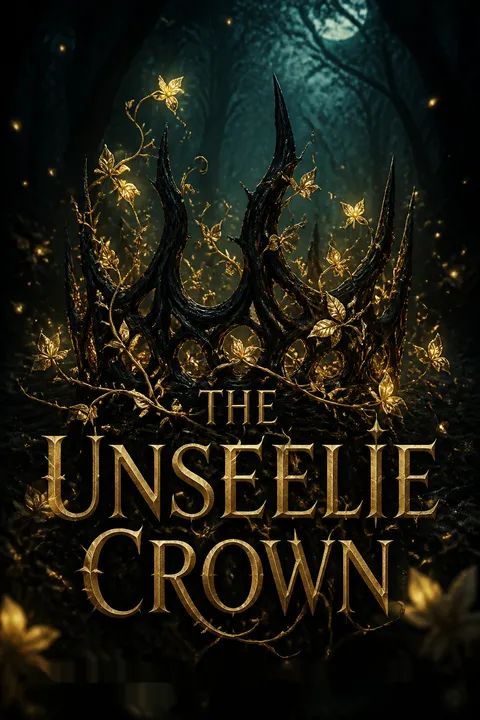
Kathryn Ann Kingsley's The Unseelie Crown is a dark, lush exploration of transformation, power, and the perilous allure of desire. At its heart, the novel is a psychological labyrinth, using the fantasy trappings of fae courts and magical bargains to probe the boundaries between self and other, love and obsession, sacrifice and agency. Abigail's journey from mortal witch to fae queen is both a literal and metaphorical death and rebirth, forcing her to confront the costs of selflessness and the dangers of surrendering to another's will. Valroy, as both lover and monster, embodies the seductive pull of power and the pain of being shaped by forces beyond one's control. The narrative's recursive structure—each new beginning a return to the Maze—mirrors the cyclical nature of trauma and healing, desire and fear. The story's use of prophecy and foreshadowing underscores the tension between fate and choice, while the richly drawn supporting cast highlights the complexity of loyalty, love, and monstrosity. Ultimately, The Unseelie Crown is a meditation on the necessity of embracing one's own darkness in order to find the light, and a warning that the greatest battles are fought not on fields of war, but within the heart.
Review Summary
The Unseelie Crown receives mixed reviews (3.71/5 average). Critics consistently note significant pacing issues, with many calling it "filler" that lacks plot progression. Abigail returns to her starting point, frustrating readers who found her character less compelling and overly passive. However, fans praise Valroy's character development as he grapples with newfound feelings, and appreciate the slow-burn tension and dark fantasy elements. The book's repetitiveness and excessive exposition disappoint many, though some readers remain invested in the world-building and complex relationship dynamics between the leads.
People Also Read
Characters
Abigail Moore
Abigail is a mortal witch whose self-sacrifice to prevent war transforms her into a fae of life and growth. Her journey is one of profound psychological upheaval—she is torn between fear and desire, selflessness and self-preservation. Abigail's relationships are complex: she is both hunted and protected, both victim and savior. Her struggle to accept her new identity mirrors her struggle to accept her own worth. Abigail's development is marked by increasing agency—she moves from passive sacrifice to active participant, learning to wield her power and shape her fate. Her connection to Valroy is fraught with danger and longing, and her choices are the fulcrum on which the fate of two worlds balances.
Valroy
Valroy is the Unseelie Prince, bred for war and destruction by the Morrigan. His grief over Abigail's death unleashes a reign of terror, but her resurrection rekindles his obsession. Valroy is a study in contradictions—cruel yet capable of love, monstrous yet vulnerable. His desire for Abigail is both possessive and genuine, and his pain at her rejection is raw and consuming. Valroy's psychological complexity lies in his inability to reconcile his nature with his longing for connection. He is both the Maze's master and its prisoner, and his development is a tragic arc of love twisted by power.
Bayodan
Bayodan is an Unseelie lord exiled for his loyalty to Abigail. He is both monstrous and nurturing, embodying the wild, untamed aspects of fae nature. Bayodan's relationship with Abigail is protective and affectionate, offering her stability in a world of chaos. His partnership with Cruinn is a model of fae devotion, and his willingness to defy Valroy marks him as both brave and doomed. Psychologically, Bayodan is grounded but haunted by the knowledge that his strength may not be enough to save those he loves.
Cruinn
Cruinn is a fae of shifting forms, their body made of glass and their gender mutable. They are Abigail's other guardian, offering comfort and acceptance. Cruinn's psychological depth lies in their embrace of monstrosity as beauty, teaching Abigail to accept herself. Their love for Bayodan and loyalty to Abigail are unwavering, and their ability to adapt mirrors the story's themes of transformation and survival. Cruinn's presence is a balm in a world of violence, and their development is a quiet assertion of selfhood.
Titania
Titania is a ruler haunted by prophecy and the burden of leadership. Her visions of destruction drive her to seek Abigail as both weapon and hope. Titania is cunning, compassionate, and ruthless when necessary. Her relationship with Oberon is a rare source of intimacy, but her public face is one of command. Psychologically, Titania is torn between hope and fear, her actions motivated by a desire to preserve her people at any cost. Her mentorship of Abigail is both genuine and self-serving, and her development is a study in the costs of power.
Anfar
Anfar is Valroy's oldest friend and a sea fae marked by loss. His love for Astasha and his loyalty to Valroy place him in an impossible position. Anfar's psychological arc is one of grief and resignation—he is a witness to the destruction of all he values, and his final act of mercy for Astasha is both a release and a wound. Anfar's development is a meditation on the limits of loyalty and the inevitability of change.
Astasha
Once a proud lady of the Unseelie, Astasha is reduced to a shell by Valroy's punishment. Her fate is a warning and a mirror for Abigail, embodying the costs of power and the dangers of becoming a tool in others' games. Astasha's psychological presence is one of absence—her mind is gone, and her death is a mercy. She is a symbol of what is at stake, and her story haunts the narrative.
Uri
Uri is Abigail's first friend among the Seelie, offering practical help and emotional support. She is earthy, blunt, and fiercely loyal, providing a touchstone of normalcy in a world of magic and danger. Uri's psychological role is that of the everywoman—her fears and hopes ground the story, and her development is a testament to the power of kindness.
Puck (Robin Goodfellow)
Puck is a legendary fae trapped in the form of a dog as punishment for his transgressions. His presence is both comic and poignant, offering Abigail companionship and aid. Puck's psychological depth lies in his acceptance of his fate and his willingness to help despite his limitations. He is a reminder that even the mighty can be brought low, and that redemption is possible.
The Morrigan
The Morrigan is the goddess who sets the story in motion, creating Valroy and resurrecting Abigail. Her motives are inscrutable, her presence felt in every twist of fate. Psychologically, the Morrigan represents the forces of destiny and chaos, her actions shaping the lives of all. She is both mother and destroyer, and her development is the shadow behind every choice.
Plot Devices
Duality and Transformation
The narrative is structured around opposites—Abigail's transformation from mortal to fae, Valroy's shift from lover to monster, the courts' dance of war and peace. Shapeshifting and magical metamorphosis are literal and symbolic, reflecting the characters' psychological journeys. The duality of Beatrice/Bernadette, the twin hags, embodies the story's central tension: every power has its price, every blessing its curse.
The Maze as Metaphor
The Maze is both a literal prison and a metaphor for Abigail's journey. Its center is Valroy, and to solve it is to confront the self, the other, and the nature of desire and power. The structure of the story mirrors the Maze—circular, recursive, with no clear exit. Each return to the beginning is a new test, and the only way out is through.
Prophecy and Foreshadowing
Titania's dreams, the Morrigan's schemes, and the recurring motif of prophecy drive the plot and create a sense of inescapable destiny. Dreams blur into reality, and characters are haunted by visions of what may come. Foreshadowing is used to build tension and to highlight the psychological stakes—every choice is shadowed by what might be.
Bargains and Power Plays
The story is propelled by bargains—Abigail's sacrifice, Valroy's deals, Titania's gambit. Every relationship is transactional, every promise a potential trap. The shifting terms of these bargains reflect the instability of power and the dangers of trust. The narrative structure itself is a series of escalating games, each with higher stakes.
Psychological Intimacy and Conflict
The emotional core of the story is the psychological struggle between Abigail and Valroy, between self and other, love and destruction. Intimacy is both weapon and wound, and the characters' development is marked by their ability to confront and accept their own darkness. The use of close third-person perspective and interiority deepens the reader's connection to the characters' inner lives.
Maze of Shadows Series
About the Author
Other books by Kathryn Ann Kingsley
Download PDF
Download EPUB
.epub digital book format is ideal for reading ebooks on phones, tablets, and e-readers.








































