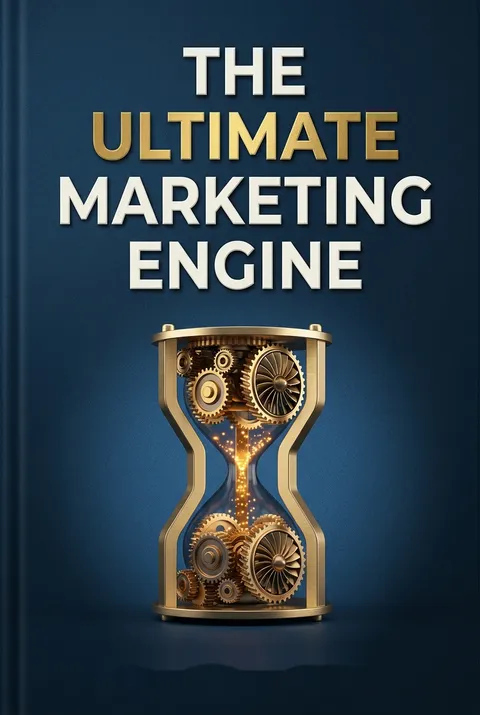

Key Takeaways
1. The Ultimate Marketing Engine is a Successful Customer
The Ultimate Marketing Engine is a successful customer.
Shift your purpose. Most businesses focus on profitably acquiring and retaining customers, which is a limiting and unsustainable approach. Instead, the true purpose of a business should be to discover what it takes to make your customer successful, concentrating all efforts on that goal for an expanding roster of ideal customers. Growth should come with your customers, not from them.
Success is the metric. The key distinction lies in the word "successful." Your business truly succeeds when your customer succeeds. This means understanding their desired transformation and dedicating your resources to helping them achieve it, rather than just completing a transaction. This perspective fundamentally changes how you view marketing and business growth.
Not all customers are ideal. You cannot make every customer successful. Ideal customers possess the right problems, circumstances, characteristics, motivation, beliefs, behavior, and budget. Recognizing your unique value and understanding who your ideal client is allows you to promise and deliver solutions to their greatest problems, creating predictable growth.
2. Redefine the Customer Journey with the Marketing Hourglass
The seven behaviors of the marketing hourglass are: know, like, trust, try, buy, repeat, and refer.
Beyond the funnel. The traditional customer journey, often depicted as a narrowing funnel, is company-centric. It focuses on what's effective for the business, not the customer. The Marketing Hourglass reframes this by adding stages after purchase, emphasizing that the ultimate measure of marketing success is referrals, not just customers.
Customer-centric stages. The hourglass outlines seven behavioral stages that customers naturally experience. These stages guide your marketing efforts by focusing on what the customer is trying to achieve, rather than what your business is trying to sell.
- Know, Like, Trust, Try: Educate prospects on your value, suitability, and whether they are an ideal fit.
- Buy, Repeat, Refer: Exceed expectations, foster loyalty, and encourage advocacy.
Filtering function. The "Like, Trust, and Try" phases are crucial for filtering out non-ideal customers and attracting those who truly value your unique offerings. By educating prospects on your value, you attract customers less concerned with being the lowest price, leading to more ideal and profitable relationships.
3. Cultivate a "Customers as Members" Mindset
In a stable membership relationship, the goal is to help every member get the transformation they are seeking, not the product you are selling.
Reframing relationships. Shift your perspective from viewing customers as transactional entities to seeing them as "members." This isn't about creating a literal membership program, but adopting a mindset where the primary goal is the customer's transformation and success, not just your transaction. This deepens the relationship beyond a simple purchase.
Intrinsic rewards. This mindset aligns with the intrinsic rewards people seek from mission-driven organizations. It fosters a sense of belonging built on engagement, investment, and evangelism, rather than extrinsic perks. Consider the "TOLO" (They Only Live Once) concept: how would you treat someone if you knew it was their last week, but they didn't? This prompts a profound shift in how you approach customer care.
Key differences:
- Engage vs. Transact: Members engage deeply; customers transact.
- Invest vs. Purchase: Members invest in a long-term strategy; customers make a one-time purchase.
- Evangelize vs. Refer: Members passionately advocate; customers simply refer.
This distinction drives loyalty, repeat business, and powerful word-of-mouth.
4. Map the Customer Success Track for Transformation
The concept behind developing the CST is that you go to work on understanding the transformation that your customers want to make when they buy your product or engage your services.
Beyond customer experience. While customer experience is vital, the Customer Success Track (CST) transcends it by focusing on customer actualization. It's a dynamic map that monitors and measures customer progress based on the transformation they seek, ensuring you deliver results beyond the initial promise.
Five elemental questions: To develop your CST, consider:
- Where are customers now? Define their starting stage and needs.
- What are their characteristics? Identify demographics, challenges, and the promise of moving forward.
- What milestones must they achieve? Pin down specific, measurable accomplishments.
- What activities must we take? Outline tasks for you or the customer to hit milestones.
- What systems must we create? Document processes to ensure consistent passage through stages.
A strategic blueprint. The CST becomes a powerful tool for your business, not just for customers. It informs your mission, refines your messaging, acts as a dynamic sales aid, guides service delivery, and provides a framework for hiring and training. It ensures predictable growth by aligning your business with your customers' evolving success.
5. Solve the Real Problem Your Ideal Customers Face
People don’t buy products or services because they want them, but because they believe they will solve a problem.
Problem-solving is paramount. No one truly wants what you sell; they want their problems solved. Your job as a marketer is to deeply understand these problems and then connect your solutions to them. This means moving beyond surface-level needs to uncover the underlying issues that keep your ideal customers up at night.
Three core questions. Customers subconsciously ask:
- Do you get me? (Clarity) Can you articulate my problem better than I can?
- Can I trust you? (Confidence) Do you have the expertise and integrity to solve it?
- Did you keep your promise? (Control) Did the solution deliver as expected, giving me a sense of control?
Addressing these questions builds lasting relationships and makes your competition irrelevant.
Uncovering trigger problems. Research your ideal customers through interviews ("Ask Method") and analyzing online reviews ("Review Method"). Listen for repeated words, phrases, and themes that describe their pain points and the value you provide. These "trigger problems" are the raw ingredients for a potent marketing message, allowing you to frame your solutions in the customer's own language.
6. Narrow Your Focus to Your Most Profitable and Referring Customers
There’s no shortage of the right customers, only a lack of focus.
Choose your customers. You don't need, nor do you want, every customer. Focusing on the top 20% of your ideal, most profitable customers allows you to deliver exceptional results and concentrate marketing efforts on attracting more like them. Saying "no" to non-ideal customers, though scary, is a strategic imperative for sustainable growth.
Behavior over demographics. While niche targeting can be useful, prioritize customer behavior over demographics. Ideal customers often share traits like respect for your work, long-term thinking, teachability, and community involvement. These behaviors indicate a better fit and a higher likelihood of success and referrals.
Profit and referrals. Analyze your customer list by profitability and referral activity. Identify the "gold mine" customers who are both profitable and actively refer your business. These customers are your best match, and understanding their common characteristics will guide your marketing to attract more ideal clients, increasing your long-term recurring revenue (MRR).
7. Craft a Core Story Script and Narrative to Attract Ideal Customers
To understand the heart and mind of a person, look not at what he has already achieved, but at what he aspires to.
Your Core Story Script. Use your understanding of customer problems to create a compelling story that resonates with your ideal customer. This script should:
- Define the problem they face.
- Explain the external forces driving it (it's not their fault!).
- Paint a vivid picture of their world without the problem.
- Explain that a solution exists (your business).
- Call them to action.
You are the wise mentor, guiding the hero (your customer) through their challenges.
Narrative vs. story. While a brand story presents a hero's journey, narrative is how the reader perceives and connects the dots, making the story their own. Your narrative should tap into deep-seated aspirations, allowing prospects to see their ultimate destination even before you reveal the path. This is achieved by offering "story bits" (trigger problems) that customers can rearrange to construct their unique narrative.
Content by journey stage. Deploy your core story across all stages of the Marketing Hourglass. Tailor content to address changing questions and objectives at each stage:
- Know/Like: Introduce the hero, villain, and mentor.
- Trust/Try: Prove your expertise and solution.
- Buy: Provide guidance and support.
- Repeat/Refer: Reinforce value and encourage advocacy.
This ensures your message consistently guides ideal customers toward your solution.
8. Your Website is the Strategic Hub for the Customer Journey
Your website is the hub of your marketing engine.
Beyond a brochure. Your website is no longer just a digital brochure; it's the central hub of your marketing engine. It must perform multiple critical jobs, guiding prospects through their journey long before they consider a purchase. Strategy, research, and planning must precede its creation to ensure it effectively serves your business.
Key website purposes:
- Get found: Optimized for search engines.
- Build trust: Validates challenges, functions flawlessly.
- Educate & Inform: Teaches prospects about their problems and your solutions.
- Nurture & Convert: Captures emails, offers clear calls to action.
Your website must anticipate and address customer questions at every stage, from initial awareness to conversion.
Must-have elements. A high-performing homepage includes:
- Promise: Your problem summary statement, front and center.
- Story Bits: Elements of your Core Story Script.
- Ideal Customers: Showcases who gets results.
- Trust Elements & Social Proof: Awards, testimonials, client logos.
- Core Offerings: Your most profitable solutions.
- More Content: Educational resources, blog posts.
- Multiple Calls to Action: Tailored to different visitor stages.
Implement content hubs and upgrades to organize information and convert visitors into leads.
9. Automate Engagement with Essential Marketing Funnels
Marketing automation supplements your human connection, but it does not replace it.
Strategic follow-up. Once you attract prospects to your website and capture their interest, automated marketing funnels are crucial for nurturing relationships and converting leads. These aren't about replacing human connection but enhancing it by providing timely, relevant information that builds trust and guides prospects through their journey.
Six essential funnels:
- Prospect Nurture: Welcomes new readers, introduces your brand, builds trust with useful content.
- Speaking: Maximizes opportunities from presentations by providing automated follow-ups and content upgrades.
- Networking: Cultivates relationships with new contacts by sharing personalized, valuable information.
- Strategic Partner: Recruits and activates partners, teaching them how to generate referrals.
- Sales Follow-up: Keeps deals moving after a sales pitch, addressing objections and reinforcing value.
- Referral: Guides referred leads through their journey, acknowledging the referrer and providing relevant information.
Efficiency and personalization. These funnels, even simple pre-written email sequences, save time and ensure consistent engagement. Modern CRM platforms allow for personalization based on recipient actions, further building trust and moving prospects toward conversion by delivering content tailored to their specific needs and stage.
10. Scale by Actively Generating Referrals and Serving the Entire Ecosystem
You don’t get more referrals by asking for them; you get more referrals by looking for ways to be more referable.
Active referral generation. While 83% of satisfied customers are willing to refer, only 29% actually do. This gap highlights the need for active, intentional referral generation, not just passive hope. Effective lead generation is a logical outgrowth of implementing all previous steps, culminating in a system that generates referrals as a byproduct of exceptional value.
Ecosystem thinking. Your business operates within an ecosystem of customers, partners, suppliers, employees, and owners. Achieving "ridiculously consistent growth" means addressing the problems and needs of everyone in this ecosystem. Ask: "What problem is everyone trying to solve?" This holistic approach restores balance and makes your business indispensable to all stakeholders.
Strategic partner network. Beyond customer referrals, cultivate a network of non-competing businesses that also serve your ideal customers. These strategic partners can be a significant source of new business due to their reach and trust with their own client bases.
- Identify: Partners you'd confidently refer your best customers to.
- Educate: Share your ideal customer profile and core message.
- Activate: Co-brand content, host joint workshops, co-create content, and engage in joint marketing efforts.
By helping partners succeed, you become more referable and gain access to new audiences.
Review Summary
Reviews for The Ultimate Marketing Engine are generally positive, averaging 4 out of 5 stars across 60 reviews. Many readers appreciate its practical, customer-focused marketing advice, particularly the "marketing hourglass" framework and the concept of treating customers as members. Fans praise its actionable guidance for small business owners, while critics find it too basic and generalized, offering little innovation beyond standard marketing principles. Several reviewers note it serves as a solid refresher for experienced marketers but may not provide fresh insights for those already well-versed in marketing strategy.
People Also Read








About the Author
Other books by John Jantsch

Download PDF
Download EPUB
.epub digital book format is ideal for reading ebooks on phones, tablets, and e-readers.








































