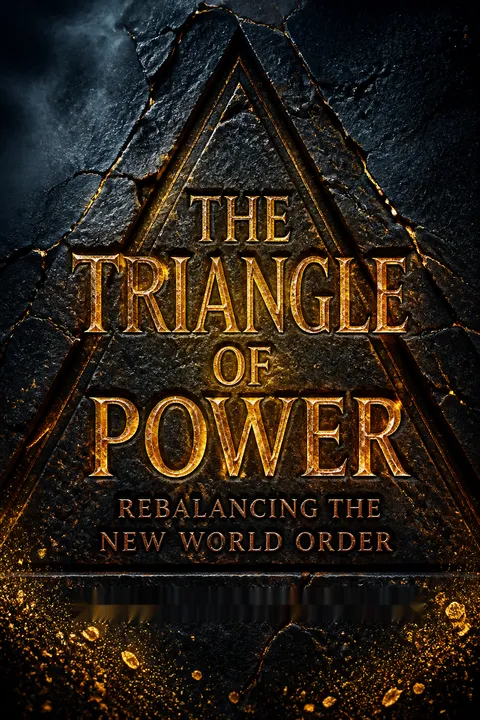

Key Takeaways
1. The Post-Cold War Era is Over, Ushering in an Age of Disorder
February 24, 2022, was the day that ended the post-Cold War era.
A historical turning point. Russia's full-scale invasion of Ukraine in 2022 marked the definitive end of the post-Cold War era, signaling a profound shift in global dynamics. This event, akin to 1918, 1945, or 1989, shattered assumptions of lasting peace and exposed the fragility of the existing international order. The author's personal exchange with Russian Foreign Minister Lavrov underscored the deep-seated imperialist mindset driving Russia's actions, revealing a world where established rules could be blatantly disregarded.
From order to disruption. The decades following the Cold War saw a gradual slide from a unipolar Western-led order to increasing disorder and disruption. The West, overconfident in its victory, missed opportunities to solidify global influence and adapt international institutions. Key moments contributing to this decline included:
- The 9/11 terrorist attacks and the subsequent "War on Terror"
- The costly failures of wars in Afghanistan and Iraq
- The 2008 global financial crisis, damaging the West's economic model
- The rise of China and other emerging economies
An "interregnum" of uncertainty. The world is now in an "interregnum," an in-between period where the old order is dead, but the new one is not yet clearly defined. This era is characterized by heightened geopolitical upheaval, challenged liberal democratic values, and the weaponization of everything from technology to trade. The author argues that the next few years will fundamentally shape the dynamics of the new international order for decades to come, making global cooperation more critical than ever to contain competition and prevent broader conflict.
2. The "Triangle of Power" – West, East, South – Defines the New Global Balance
The core argument of this book is that the forces molding our emerging world represent a Triangle of Power—the Global West, Global East, and Global South—and the interplay among these three will decide the shape of the world to come.
A new geopolitical framework. The author proposes the "Triangle of Power" as the defining framework for understanding the emerging world order, moving beyond simplistic bipolar or unipolar views. This model identifies three distinct, yet interconnected, global spheres whose interactions will determine the future. These spheres, despite internal diversity, share similar values and interests, influencing global dynamics.
Defining the three poles:
- Global West: Comprises the US, Europe, and democratic allies (e.g., Japan, Australia, Canada, South Korea). Represents ~15% of global population, >50% of global economy. Traditionally defends the rules-based liberal order, based on democracy, market economy, and fundamental rights.
- Global East: Led by China, supported by Russia, Belarus, North Korea, Iran. Represents ~20% of global population and GDP. Challenges the current order, advocating for inviolable state sovereignty, non-interference, and autocracy.
- Global South: The global majority from Asia, Africa, Middle East, Latin America. Represents >50% of world's nations and population, <25% of global GDP. Diverse, but united by underrepresentation in the current order and a desire for power redistribution.
Interplay of dynamics. The future will be forged by the prevalence and balance of three dynamics within this triangle: competition, conflict, and cooperation. Competition is a certainty, but whether it spills into conflict or is contained by cooperation depends on how these three spheres manage their interactions. The Global South, positioned in the middle, holds significant sway in determining the pendulum's swing, often adopting a transactional rather than ideological approach.
3. The Global West Must Reaffirm Democracy and Adapt its Economic Model
For the Global West to stay on top of the game it will have to begin by making sure its own house is in order—proving to itself and the world that democracy is still the most successful model of governance.
Democracy's inherent messiness. The Global West, historically dominant in politics, economics, and technology, faces internal challenges that threaten its global leadership. Democracy, while the best form of government, is inherently messy, characterized by constant dissent, cumbersome compromise, and the rapid spread of disinformation. Rising populism, fueled by economic inequality and cultural anxieties, further exacerbates these issues, leading many voters to feel the system is tilted against them.
Economic model under strain. The West's capitalist economic model, while generating immense wealth, struggles with equitable distribution. The 2008 financial crisis and subsequent euro crisis exposed deep cracks, leading to a resurgence of protectionism and state intervention. The US, while a superpower, grapples with:
- Antiquated infrastructure
- Widespread homelessness and poverty
- Lack of a robust social safety net
- Deep political polarization
Adapting to a changing world. To maintain its position, the Global West must prove that democracy delivers freedom, equal opportunity, and justice, and that capitalism can provide both growth and welfare. This requires retooling public systems to narrow income gaps, ensure economic stability, and provide accessible healthcare and education. Globally, the West must make greater contributions to leveling the world's political and economic playing field, demonstrating that its values are not just preached but practiced.
4. The Global East Challenges Western Hegemony with Divergent Strategies
The conclusion I drew is that China’s and Russia’s “friendship without limits” means less than we think. For China it is transactional. For Russia it is necessary.
United in opposition, divided in approach. The Global East, led by China and supported by Russia, Iran, and North Korea, is united in its rejection of the current liberal world order and Western hegemony. However, their strategies and underlying strengths differ significantly. China pursues a patient, long-term economic and technological ascent, while Russia employs a more aggressive, disruptive, and short-term imperialist approach.
China's strategic rise. China's state-driven capitalism and centralized decision-making have fueled its impressive economic and technological growth, making it a formidable global contender. Its "Belt and Road Initiative" and "Made in China 2025" strategy aim to reshape global trade and innovation. China's approach is characterized by:
- Strategic patience and long-term planning
- Leveraging economic power and infrastructure projects
- Selective engagement with the multilateral order (e.g., WTO)
- Developing sophisticated technological state control (e.g., Social Credit System)
Russia's disruptive decline. In contrast, Russia, a petrostate reliant on natural resources, is a former great power in decline, marked by economic stagnation and imperial nostalgia. Its invasion of Ukraine, a "colossal tactical and strategic mistake," has further isolated it and deepened its dependence on China. Russia's strategy focuses on:
- Aggressive disruption and securing spheres of influence
- Weaponizing energy, military might, and disinformation
- Exploiting crises to drain Western resources
- Limited capacity for relevant, marketable innovation due to brain drain and sanctions
Fragile autocracies. While autocracies like China and Russia appear stable due to tight control and economic progress (in China's case), their systems are inherently fragile. Authoritarian regimes are tolerated only as long as they deliver continuous growth or relentless control. The Global East's economic cooperation remains tactical, grounded in short-term political objectives, and its influence is often underestimated by the West.
5. The Global South Emerges as the Pivotal Force Demanding Agency and Equity
The more I listen to leaders from the Global South, the more I understand that the keys that will unlock the new world order are in their countries’ hands.
A resurgent global majority. The Global South, a diverse group of over a hundred countries across Asia, Africa, the Middle East, and Latin America, is geopolitically resurgent and increasingly confident. Historically underrepresented, these nations are now leveraging the power vacuum created by East-West upheavals to assert their own interests. Their collective bargaining power is at its peak, and they are no longer content to be bystanders in global affairs.
"Tactical non-alignment." Many Global South nations, like India, Brazil, and South Africa, adopt a strategy of "tactical non-alignment" or "multi-alignment." They avoid openly siding with either the West or the East, instead making transactional deals that suit their national interests. This approach allows them to:
- Protect their interests without running afoul of big powers
- Profit from concessions offered by both East and West
- Diversify their partnerships and reduce dependency
Core demands for a new order. The Global South's assertiveness stems from three central demands for a more equitable international system:
- More voice on the global stage: Reform of the UN Security Council, greater inclusion in fora like the G7/G20.
- Level economic and technological playing field: Fairer prices for raw materials, reciprocal market access, generous sharing of technological advances, WTO reform.
- Overhaul of multilateralism: Reform of the World Bank and IMF, restraint on the "weaponization" of international systems (e.g., dollar control).
Opportunities and vulnerabilities. While the Global South benefits from increased leverage, it also faces substantial risks. Internal obstacles like poverty, instability, and corruption persist. The disproportionate strength of certain countries (e.g., India, Brazil) could undercut collective action, and smaller states remain vulnerable to being "bought off." The West's failure to address the South's concerns risks pushing these nations further towards alternative alliances, particularly with China.
6. Global Competition Intensifies Across All Spheres, Requiring Careful Management
Competition enables innovation. Innovation enables growth. Growth enables welfare.
A new era of intense rivalry. The global playing field has fundamentally changed, moving from an era of dominant global powers to a multipolar world of increasing competition. This rivalry plays out across political, economic, technological, and geopolitical spheres, involving states, regions, and entire power blocs. The outcome of this competition—whether it leads to cooperation or conflict—hinges on the ability to establish a new rules-based global order that balances interests across the Global West, East, and South.
Competing political and economic models. Political systems are in a contest of narratives over which model best delivers prosperity, security, and welfare. Democracies boast innovation and freedom, while autocracies claim stability and efficiency. Economically, zero-sum thinking has returned, with nations prioritizing national interests and economic nationalism. Key aspects include:
- Political systems: Democracy's messiness vs. autocracy's control; legitimacy based on delivery of welfare and security.
- Economic models: EU's regulatory power, US's free markets (with rising protectionism), China's state capitalism, Russia's petrostate decline, Global South's diverse approaches.
- Control over rules: Whoever sets global trade rules (WTO, IMF) gains a significant advantage.
The contest for technological hegemony. Technology is the single most disruptive factor shaping the new world order, driving both political power and economic growth. The competition for technological dominance, particularly in areas like AI, quantum computing, and data, is fierce.
- Data control: China centralizes data for state benefit; US allows private companies to mine data; Europe prioritizes individual data sovereignty.
- Strategic technologies: US bans on chip exports to China, European blocks on Chinese tech takeovers, highlight the geopolitical stakes.
- Innovation vs. control: Autocracies risk stifling innovation through excessive control, while democracies struggle to regulate technology without hindering progress.
Geopolitical power shifts. Geopolitics is back, with power defined by a mix of hard, soft, and smart power. The US remains a military and economic superpower but faces internal political instability. The EU is evolving into a geopolitical player, leveraging trade and regulation. China's patient, consistent use of power contrasts with Russia's disruptive tactics. Middle and emerging powers in the Global South are also punching above their traditional weight, making geopolitical power increasingly relative.
7. Modern Conflict Blurs Traditional Lines, Demanding Societal Resilience
Hybrid warfare—including economic, technological, and psychological weapons—will shape our future conflicts and the way we fight them.
The evolving face of warfare. Conflict has dramatically changed, moving from localized civil wars and proxy fights to resurgent interstate wars, as seen in Ukraine and Gaza. The methods of warfare have also transformed, with high-tech weaponry and hybrid tactics blurring the lines between peace and formal war. The international peace and security systems, particularly the UN, are ill-equipped to respond effectively to this new complexity.
The weaponization of everything. Global interconnectedness, while fostering growth, has also multiplied the tools for conflict. Virtually everything can be weaponized:
- Economic: Sanctions, asset freezes, supply chain disruptions, trade tariffs.
- Technological: Cyberattacks, hacking, infrastructure sabotage (e.g., Baltic Sea cables).
- Information: Digital disinformation, propaganda, deepfakes, social media manipulation.
- Human migration: Using migrants as a pressure tactic against neighboring states.
Hybrid warfare in action. Russia's war on Ukraine exemplifies hybrid warfare, combining traditional land grabs with widespread cyber operations, energy disruptions, and disinformation campaigns aimed at destabilizing Western support. The West, in turn, has deployed unprecedented economic sanctions and financial offensives. This "weaponization of everything" creates ambiguity, making it difficult to attribute attacks and risking unexpected escalations.
Blurring foreign and domestic policy. Domestic dynamics increasingly drive foreign policy, with politicians leveraging international issues for internal political gain. Social media, rising inequality, and diaspora communities amplify these pressures, making it harder to foster dialogue and find common ground. National security now relies heavily on civilians' "cognitive resilience" to withstand hybrid attacks and maintain perspective. The ultimate danger is that local conflicts, fueled by these blurred lines, could ensnare great powers and lead to widespread war.
8. Cooperation on Global Challenges is Imperative, Driven by Shared Interests
The good news is that, despite competition and conflict, our own interests will necessarily drive us toward cooperation.
The inescapable need for collaboration. Global challenges like climate change, pandemics, technological disruption, and financial instability transcend national borders and cannot be solved by any single country. These "global public goods" necessitate international cooperation, driven not just by moral imperatives but by shared interests in stability, prosperity, and economic growth. The increasing frequency and intensity of extreme weather events, for instance, underscore the urgency of collective action.
Climate change as a model for cooperation. Climate change has become an iconic example of a global problem requiring multilateral solutions. The Paris Climate Accords, with their voluntary Nationally Determined Contributions (NDCs), demonstrated a successful model for engaging diverse nations, including major emitters. However, challenges remain, particularly in providing adequate climate finance for developing countries, which are disproportionately exposed to climate risks. The credibility of high-income Western countries hinges on fulfilling these commitments.
Trade as a driver of growth. Global trade remains a key driver of economic growth and poverty reduction, but it faces threats from protectionism, supply-chain disruptions, and geopolitical tensions. The WTO, once a pillar of liberalization, is now paralyzed, hindering efforts to set new rules for digital trade and resolve disputes. Regional trade agreements, while offering some benefits, risk fragmenting the global trading system. A functioning, active WTO is indispensable for global economic recovery and preventing trade conflicts from escalating geopolitical tensions.
Security as the ultimate global good. Despite ongoing conflicts, peace is the ultimate global public good, and cooperation in security remains vital. Non-proliferation treaties, though under strain, have historically provided stability. Multilateral institutions like the International Atomic Energy Agency (IAEA) play crucial roles in monitoring nuclear activities and managing crises. Regional organizations also contribute to peacekeeping and stability. The indivisible nature of security means that instability in one region inevitably affects others, underscoring the need for systemic measures to achieve and sustain peace.
9. Reforming International Institutions is Crucial for a Rebalanced World Order
The UN is the worst form of global governance, save all the others.
The enduring relevance of multilateralism. Despite criticisms of inefficiency and paralysis, international institutions like the UN remain indispensable for global governance. They provide frameworks for cooperation on development, climate, non-proliferation, and crisis management. The author argues against a complete overhaul, advocating instead for incremental, demand-driven reform to ensure legitimacy and effectiveness in a changing world.
UN Security Council reform. The UN's core structures, particularly the Security Council, are outdated and unrepresentative of today's power dynamics. The author proposes a three-pronged reform:
- Expanded permanent membership: Double to ten, adding one from Latin America, two from Africa, and two from Asia, plus ten rotating members.
- Abolish veto power: The veto, established after WWII, now obstructs decision-making.
- Suspend voting rights: Any Security Council member violating the UN Charter should have its voting rights suspended.
These reforms aim to address the Global South's lack of agency and the paralysis caused by great power vetoes.
Beyond the UN. Other institutions like the WTO, IMF, and World Bank also require reform to better reflect global power shifts and address the needs of developing countries. The rise of alternative financial institutions (e.g., BRICS' New Development Bank) and regional organizations (e.g., ASEAN, African Union) highlights the demand for more inclusive and equitable governance structures. These new forms of cooperation, while potentially fragmenting, can also be pragmatic steps towards a rebalanced multilateralism if they feed into a larger system based on shared values and rules.
Global rules and representation. Successful cooperation rests on establishing and adhering to a fresh set of global agreements, forged with a more equal voice among countries. This requires:
- Respect for international law and treaties: "Pacta sunt servanda" (agreements must be kept) is fundamental to preventing anarchy.
- Human rights as a compass: While not to be policed with a "professorial attitude," human rights remain an indispensable guide.
- Fairer distribution of voice: Legitimacy and durability of any order depend on actors perceiving equal footing and having agency.
10. Values-Based Realism and Dignified Foreign Policy are the West's Path Forward
This was values-based realism and dignified foreign policy in action. And this, for the sake of the future world order, is what the West must do.
Navigating a complex world. The author's experience, including a state visit to China, reinforces the belief that "values-based realism" combined with "dignified foreign policy" is the Global West's most effective response to the current disorder. This approach acknowledges the importance of Western values while recognizing the realities of global diversity and the need to engage with actors who do not share them.
Defining the approach:
- Values-based realism: A set of universal values (freedom, fundamental rights, international rules) that takes into account the realities of global diversity, culture, and history of nation-states, regions, and continents. It means staying true to values but understanding that global problems require collaboration beyond like-minded countries.
- Dignified foreign policy: Grounded in mutual respect, leading by example, not exhortation. It involves consistently upholding political freedom and ethical warfare, engaging in dialogue, not monologue, and understanding that solutions cannot be dictated to others.
The West's strategic imperative. The Global West, as the architect of the passing order and still the most powerful global group, has a particular responsibility to lead this shift. This involves:
- Proactive institutional reform: Addressing the Global South's demands for greater agency and representation.
- Flexibility in engagement: Engaging partners, competitors, and adversaries in appropriate fora, recognizing that relationships are often issue-specific.
- Sustaining unity: Despite internal differences and the impact of a second Trump administration, maintaining the core transatlantic alliance (NATO) and European cohesion.
A rebalanced future. The future global order will be a mix of competition, conflict, and cooperation. The goal is to tilt the balance towards cooperation, which is essential for addressing shared challenges like climate, security, and technology. The author foresees a "rebalanced world order" based on a new symmetry of power among the Global West, East, and South as the most desirable scenario, preventing collapse and containing chaos. This requires political leaders to make conscious decisions to engage, adapt, and build institutions that last, with the Global South playing a pivotal role in shaping the new balance of power.
Review Summary
Reviews of The Triangle of Power are largely positive, averaging 4.23/5. Many praise Stubb's accessible framework dividing the world into Global West, East, and South, and his concept of "values-based realism." Fans appreciate his humble, reflective tone and measured optimism. Critics note the book lacks analytical depth, offers little genuinely new insight, and can feel padded or superficial. Several reviewers highlight his UN reform proposals as particularly interesting, while others feel the Western-centric perspective limits the analysis.
People Also Read





Download PDF
Download EPUB
.epub digital book format is ideal for reading ebooks on phones, tablets, and e-readers.








































