
Plot Summary
Shadows Over Summer Light
The novel opens with Tove and her family arriving at their summer house, seeking rest and togetherness. Yet beneath the surface of the idyllic setting, Tove's internal struggles with mental illness and alienation simmer. The landscape is described with painterly attention, but the light and beauty are tinged with foreboding. Tove's attempts to connect with her children and husband, Arne, are fraught with tension and misunderstanding. The family's routines—meals, excursions, and small talk—are haunted by Tove's sense of being an outsider in her own life. The summer's promise of renewal is shadowed by the threat of psychological unraveling, and the stage is set for a confrontation with forces both internal and cosmic.
The Glass Wall Within
Tove's narrative voice reveals her acute self-awareness and the pain of feeling separated from her family by an invisible barrier. She psychoanalyzes herself, referencing Jungian archetypes—the Magician and the Orphan—to make sense of her own and Arne's roles. Her mental illness is depicted as a cycle of mania, psychosis, and crushing depression, with the "glass wall" as a metaphor for her inability to participate in ordinary life. The voices in her head, sometimes cruel, sometimes seductive, blur the line between self and other. Tove's artistic ambitions and her obsession with folk tales and their dark, sexual energy become both a refuge and a source of further alienation.
The Magician and the Orphan
Tove's identification with the Magician archetype—one who transforms, who is both revolutionary and dangerous—contrasts with her view of Arne as the Orphan, needy and manipulative. These roles play out in their marriage and parenting, with Tove's creative, chaotic energy clashing with Arne's desire for order and normalcy. The archetypes also inform Tove's understanding of her children, especially her daughter Ingvild, whose compliance and hidden darkness mirror Tove's own divided self. The folk tales Tove loves, with their forbidden doors and monstrous transformations, become a lens for viewing her family's dynamics and the secrets lurking beneath the surface.
Fractured Families, Fractured Selves
The narrative shifts between several families: Tove's, Gaute and Kathrine's, and others. Each is marked by its own fractures—infidelity, suspicion, illness, and the struggle to communicate. Gaute, a teacher, becomes obsessed with the possibility that his wife Kathrine is unfaithful, his paranoia fueled by circumstantial evidence and his own insecurities. Kathrine, a pastor, is caught between her public role and private doubts, her pregnancy both a source of hope and anxiety. Children in these families are sensitive barometers of adult distress, their nightmares and silences echoing the larger malaise. The novel explores how personal and collective histories—trauma, guilt, and longing—shape the present.
The Star Rises
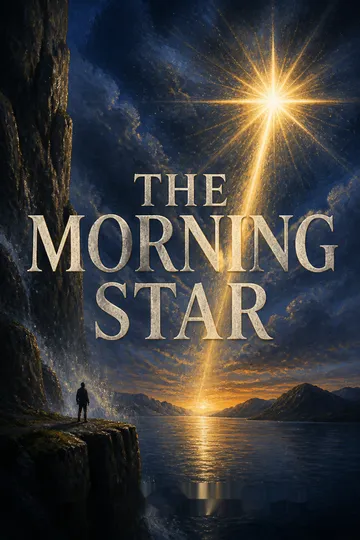
A new star appears in the sky, its light both beautiful and unsettling. The event is witnessed by multiple characters and quickly becomes a national and existential mystery. The star's arrival coincides with a series of uncanny events: a string of days without any recorded deaths, a sense of time suspended, and a growing unease that something fundamental has shifted. The star's presence is interpreted variously—as a scientific anomaly, a religious sign, or a harbinger of apocalypse. Its light casts old fears and desires into sharp relief, and the boundaries between the living and the dead, the real and the imagined, begin to blur.
Rituals in the Woods
A gruesome triple murder is discovered in the woods, the victims members of a black metal band. The killings are ritualistic, echoing both the transgressive history of the genre and ancient sacrificial practices. Investigators struggle to make sense of the scene, which is both meticulously staged and inexplicably clean of evidence. Video footage reveals masked figures enacting animalistic rites, and a shadowy presence that defies explanation. The murders become a focal point for the novel's exploration of evil, the allure of the forbidden, and the thin line between performance and reality. The investigation draws in characters from different walks of life, each bringing their own fears and obsessions.
The Uncanny and the Unseen
As the investigation deepens, characters experience phenomena that challenge their understanding of reality. Tove's visions and voices intensify, taking on a prophetic quality. Jesper, the surviving band member, is rendered mute and catatonic, haunted by something he cannot articulate. The boundaries between dream and waking life, self and other, become porous. The star's light seems to animate the dead, and animals behave strangely. The uncanny is not just a psychological disturbance but a force that invades the world, demanding recognition. The novel's realism is shot through with the supernatural, yet always grounded in the characters' emotional truths.
The Weight of Guilt
Guilt is a pervasive force, shaping the actions and self-understanding of many characters. Helge, an architect, is haunted by a childhood memory of witnessing a man's death and failing to intervene—a secret he finally confesses to the dead man's son, Syvert. Tove is consumed by shame over her illness and its impact on her family. Gaute's suspicions and accusations poison his marriage, even as he longs for forgiveness. The novel interrogates the limits of responsibility: what can be forgiven, what must be lived with, and how the past continues to exert its power. Confession is both a relief and a burden, never fully resolving the pain it seeks to address.
The Science of Consciousness
A subplot follows Jarle, a neurologist, as he investigates a patient who appears to have returned from brain death. The case raises profound questions about the nature of consciousness, the reliability of scientific knowledge, and the possibility of life after death. Jarle's reflections on the brain, memory, and the self are woven into the narrative, offering a counterpoint to the novel's supernatural elements. The scientific and the mystical are not opposed but intertwined, each grappling with the mystery of what it means to be alive, to be aware, and to face the unknown. The collapse of certainty in science mirrors the collapse of meaning in the characters' lives.
The Devil's Possibility
The investigation into the murders leads to a confrontation with the idea of the Devil—not just as a symbol of evil, but as a possible presence in the world. The police investigator, Geir, seeks out Kathrine, the pastor, to ask if she believes the Devil could be real. The question is both absurd and deeply unsettling, forcing characters to confront the limits of their own beliefs. The novel does not offer easy answers, instead dwelling in ambiguity: evil is at once a human creation, a psychological force, and something that exceeds understanding. The Devil's possibility is the possibility that meaning itself can be undone.
The Collapse of Meaning
Tove's descent into psychosis is depicted with harrowing intimacy. Her sense of self dissolves, and she becomes convinced she is the agent of destruction, the bearer of a terrible gift. The world loses its coherence, and the ordinary becomes terrifying. Yet even in the depths of despair, there are moments of connection—her mother-in-law's kindness, her children's tentative forgiveness, the possibility of art as a way back to meaning. The collapse of meaning is not total; it is always shadowed by the hope of return, of being "normal" again, of finding a place in the world.
The Return of the Dead
As the star's influence grows, the dead begin to return—not as literal zombies, but as presences, memories, and voices that cannot be silenced. Tove's visions become apocalyptic: the dead rise, the gates of death's kingdom open, and she is given a task she does not understand. The world is filled with omens—animals behaving strangely, dreams that seem to foretell disaster, a sense that time itself is unraveling. The return of the dead is both a metaphor for unresolved grief and a literal event within the novel's cosmology. The living and the dead are no longer separate; the third realm is at hand.
The Third Realm Revealed
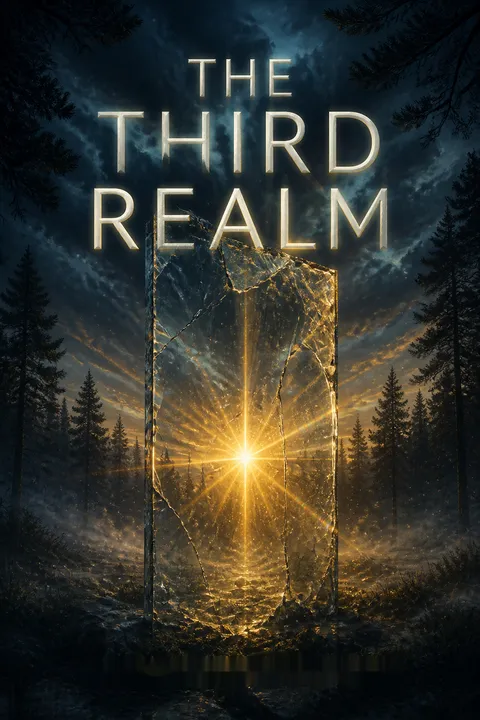
The novel's title is finally explicated: the third realm is the age of the spirit, following the ages of God and Christ. It is an era in which boundaries dissolve—between life and death, self and other, meaning and meaninglessness. The characters are caught in the transition, their old certainties stripped away. Some respond with terror, others with resignation, a few with hope. The third realm is not a utopia but a space of radical uncertainty, where new forms of connection and understanding are possible, but so are new dangers. The star's disappearance marks the end of one world and the beginning of another.
The Limits of Forgiveness
In the aftermath of crisis, the characters struggle to forgive themselves and each other. Tove's family visits her in the hospital, their love mixed with fear and resentment. Gaute and Kathrine attempt to rebuild trust, their reconciliation fragile and incomplete. Helge seeks absolution for a childhood failure, but finds that forgiveness is not a simple transaction. The novel insists on the difficulty of healing, the persistence of wounds, and the necessity of facing what cannot be undone. Forgiveness is not erasure but a way of living with the past, of making space for the future.
The End of Certainty
The novel closes with a sense of profound uncertainty. The star vanishes as mysteriously as it appeared. The world resumes its course, but nothing is quite the same. The boundaries between science and faith, reason and madness, are shown to be porous. Characters are left with questions rather than answers: What is consciousness? What is evil? What does it mean to be alive? The third realm is not a solution but an opening, a space in which new meanings can be forged—or lost. The novel ends with a gesture toward hope, but also with the recognition that certainty is forever out of reach.
The Gift and the Task
Tove is told she has been given a gift: to see what others cannot. But the gift is also a task, a responsibility that isolates her even as it connects her to something larger. She is both chosen and cursed, her visions a source of terror and insight. The novel explores the ambivalence of such gifts—artistic, spiritual, or psychological—and the loneliness they entail. Tove's journey is emblematic of the human struggle to find meaning in suffering, to transform pain into creation, and to bear witness to the mysteries that shape our lives.
The Vanishing Star
With the disappearance of the star, the extraordinary events of the summer recede. Death returns to the world, and the routines of daily life resume. Yet the characters are changed by what they have experienced: their relationships, beliefs, and sense of self have been altered, sometimes subtly, sometimes irrevocably. The novel suggests that moments of rupture—personal or cosmic—leave traces that cannot be erased. The vanishing star is both an ending and a beginning, a reminder that the world is always on the brink of transformation.
The World Without Death
For seven days, no one dies. The suspension of death is both a miracle and a horror, a sign that the order of things has been upended. The characters respond with awe, fear, and confusion. The event is linked to the appearance of the star, the return of the dead, and the dissolution of boundaries. The world without death is not a paradise but a liminal space, filled with anxiety and longing. The return of mortality is both a relief and a loss, a return to the known and the finite.
Analysis
Karl Ove Knausgård's The Third Realm is a profound meditation on the fragility of meaning in a world where the boundaries between self and other, life and death, reality and the uncanny are constantly dissolving. Through its interwoven narratives, the novel explores the psychological and existential crises of contemporary life—mental illness, family breakdown, the search for authenticity, and the confrontation with evil—while situating these within a cosmic drama marked by the appearance of a mysterious star and the suspension of death. Knausgård's characters are haunted by guilt, longing, and the impossibility of certainty; their struggles are both intensely personal and emblematic of a broader cultural malaise. The novel's use of archetypes, symbolism, and shifting perspectives creates a tapestry in which the ordinary and the supernatural are inseparable. Ultimately, The Third Realm suggests that meaning is not given but made, always provisional and always at risk. The lessons are hard-won: forgiveness is difficult, healing is incomplete, and the unknown is inescapable. Yet the novel also affirms the possibility of connection, creation, and hope—even, or especially, in the face of the void.
Review Summary
The Third Realm receives widespread acclaim as the third installment in Knausgård's Morning Star series. Readers praise its dark, philosophical exploration of biblical themes, apocalyptic imagery, and black metal culture. The novel reunites characters from previous books while introducing new perspectives on mysterious events following a star's appearance—notably, people have stopped dying. Reviewers highlight Knausgård's masterful character development, atmospheric tension bordering on horror, and intricate plotting that connects across volumes. Most express intense anticipation for subsequent books, though some criticize repetitive elements and dialogue weaknesses. The immersive, hypnotic prose keeps readers captivated despite dense philosophical meditations.
Characters
Tove
Tove is the novel's emotional and psychological center, a painter whose struggle with bipolar disorder and psychosis shapes much of the narrative. Her relationship with her husband Arne and their children is marked by love, frustration, and a sense of alienation—she often feels separated from them by a "glass wall." Tove's artistic sensibility is deeply entwined with her mental illness; she is drawn to the darkness and wildness of folk tales, seeking to express the inexpressible in her work. Her inner life is rich with voices, visions, and archetypes, especially the Magician, which she identifies with. Tove's journey is one of suffering, insight, and the search for meaning in chaos. Her breakdown and recovery are depicted with raw honesty, and she emerges as both a victim and a seer, burdened with a gift that isolates her but also connects her to deeper truths.
Arne
Arne is Tove's husband, a university professor whose need for order and normalcy often clashes with Tove's volatility. He is depicted as the Orphan archetype—needy, manipulative, but also reliable and loving in his own way. Arne struggles to understand Tove's illness, oscillating between support and resentment. His relationship with their children is more straightforward, and he often serves as the family's anchor. Arne's own creative ambitions (a secret novel) and his fear of sexuality and chaos are sources of tension. He is both a caretaker and a gatekeeper, embodying the limits of rationality in the face of the unknown.
Ingvild
Ingvild, Tove and Arne's teenage daughter, is outwardly the "good girl"—responsible, mild, and accommodating. Yet Tove senses a darkness in her, a capacity for anger and rebellion that mirrors her own. Ingvild's adolescence is marked by a growing distance from her mother, a desire for independence, and a struggle to define herself. She is sensitive to the family's tensions and often acts as a mediator. Her relationship with Tove is both loving and fraught, emblematic of the generational transmission of trauma and longing.
Gaute
Gaute is a schoolteacher whose narrative is dominated by suspicion and paranoia regarding his wife Kathrine's fidelity. His need for certainty and control leads him into obsessive behaviors, damaging his marriage and his own sense of self. Gaute is also a devoted father, and his interactions with his children reveal both tenderness and insecurity. His journey is one of reckoning with his own limitations, the impossibility of absolute knowledge, and the necessity of forgiveness. Gaute's arc is a study in the corrosive effects of doubt and the painful process of rebuilding trust.
Kathrine
Kathrine is a pastor whose public role as a spiritual leader is complicated by private doubts, a difficult marriage, and an unexpected pregnancy. She is intelligent, compassionate, and deeply reflective, but also burdened by the expectations of others and her own ambivalence. Kathrine's faith is tested by the events of the novel—the appearance of the star, the suspension of death, and the confrontation with evil. Her relationship with Gaute is marked by both love and estrangement, and her pregnancy becomes a symbol of renewal and uncertainty. Kathrine embodies the novel's exploration of faith, doubt, and the search for meaning in a world without guarantees.
Helge
Helge is a successful architect whose life is shadowed by a childhood memory: witnessing a man's death and failing to intervene. This secret shapes his sense of self, his relationships, and his creative work. Helge's narrative is one of confession and the search for absolution, culminating in a meeting with the dead man's son. He is also depicted as a man struggling with aging, creative block, and the fear of losing relevance. Helge's story is a meditation on the weight of guilt, the possibility of forgiveness, and the ways in which the past continues to shape the present.
Jesper
Jesper is the sole surviving member of the murdered black metal band. Traumatized and rendered mute, he becomes a symbol of the unspeakable, the witness to horrors that cannot be articulated. Jesper's catatonia is both a psychological defense and a sign of possession—he is haunted by forces beyond his control. His eventual brief return to speech, delivering a cryptic message to Tove, marks a turning point in the novel's engagement with the supernatural. Jesper embodies the limits of language and the persistence of trauma.
Line
Line is a nineteen-year-old whose coming-of-age story intersects with the novel's darker themes. Her infatuation with Valdemar, a charismatic and dangerous figure from the black metal scene, leads her into a world of ritual, violence, and ambiguous consent. Line's narrative explores the vulnerabilities of youth, the search for identity, and the allure of transgression. Her experiences are both a personal crisis and a microcosm of the novel's larger concerns with evil, agency, and the boundaries of the self.
Valdemar
Valdemar is a former black metal musician, now the leader of a secretive group engaged in ritualistic performances. He is magnetic, intelligent, and deeply unsettling—a figure who blurs the line between art and reality, seduction and violence. Valdemar's philosophy is one of radical presence, the embrace of pain and the rejection of modernity. His relationship with Line is both passionate and abusive, culminating in a scene of ritualized violence. Valdemar is both a product and a manipulator of the novel's occult energies, a symbol of the dangers and seductions of the third realm.
The Voice / The Visitor
The Voice, sometimes manifesting as a visitor or a shifting presence, is the novel's most enigmatic character. It appears to Tove and others in various guises—family members, animals, strangers—delivering messages, prophecies, and commands. The Voice is at once a symptom of mental illness, a Jungian archetype, and a supernatural force. It foretells the coming of the star, the opening of the gates of death, and the dissolution of boundaries. The Voice is both a tormentor and a guide, embodying the novel's exploration of the uncanny, the collapse of meaning, and the possibility of new forms of understanding.
Plot Devices
Multiperspectival Narrative Structure
The novel employs a shifting, multiperspectival structure, moving between first-person and third-person narration, and between the inner lives of several key characters. This device allows for a rich exploration of subjectivity, the unreliability of perception, and the ways in which personal and collective histories intersect. The fragmentation of narrative mirrors the fragmentation of self experienced by many characters, and the gradual convergence of storylines builds a sense of mounting tension and interconnectedness.
Foreshadowing and Symbolism
Foreshadowing is woven throughout the novel, from the early references to folk tales and forbidden doors to the appearance of the star and the suspension of death. Symbols—such as the glass wall, the star, the church, and the animal masks—acquire layered meanings, linking personal crises to larger metaphysical questions. The use of Jungian archetypes provides a framework for understanding character dynamics and the recurrence of certain motifs. The novel's symbolism is both psychological and cosmic, grounding the uncanny in the details of everyday life.
The Collapse of Boundaries
A central plot device is the dissolution of boundaries—between the living and the dead, sanity and madness, science and faith, art and violence. The appearance of the star and the suspension of death serve as catalysts for this collapse, forcing characters to confront the limits of their understanding and the permeability of their identities. The novel's structure and imagery reinforce this theme, with dreams, visions, and supernatural events intruding on the ordinary. The collapse of boundaries is both a source of terror and a space of possibility.
Investigative and Confessional Modes
The novel incorporates elements of the detective story, with the investigation into the murders providing a narrative spine. Yet the search for truth is always complicated by confession, ambiguity, and the limits of knowledge. Characters confess secrets, seek absolution, and confront the impossibility of full understanding. The investigative mode is mirrored in the scientific subplot, where the boundaries of life and death are probed but never fully resolved. The novel's mysteries are ultimately existential rather than procedural.
The Use of Dreams and Visions
Dreams and visions play a crucial role, both as symptoms of psychological distress and as vehicles for prophecy and revelation. Characters' dreams are often shared, recurring, or echoed in the world around them, suggesting a collective unconscious at work. The boundary between dream and reality is porous, and the novel's most significant events are often anticipated or explained through dream logic. This device allows the novel to explore the limits of rationality and the power of the irrational.
Morgenstjernen Series
Download PDF
Download EPUB
.epub digital book format is ideal for reading ebooks on phones, tablets, and e-readers.








































