
Plot Summary
Death's Invisible Roommate
The novel opens with a meditation on death, likening it to a silent lodger sharing a flat—always present, never seen, and inevitably encountered. The narrator, Kristian, is gripped by despair and loneliness, contemplating suicide but compelled to write his story first. This existential dread is not just personal but philosophical, as he reflects on the impossibility of truly communicating loneliness or the experience of death. The act of writing becomes a last assertion of selfhood, a way to leave a trace in a world where everything dissolves into nothingness. The tone is intimate, confessional, and suffused with a sense of futility, yet also with a flicker of hope that language, even in its inadequacy, can momentarily hold back the night.
London's Shadowed Beginnings
Arriving in 1980s London to study photography, Kristian is overwhelmed by the city's bleakness and his own isolation. He wanders the city, taking photographs and seeking meaning in its decaying industrial landscapes. The city is a character in itself—gritty, indifferent, and full of chance encounters that seem charged with fate. Kristian's sense of being an outsider is heightened by his struggle to connect with others and to find artistic purpose. The randomness of life, the unpredictability of human connection, and the search for meaning in a world that resists interpretation are central themes, setting the stage for the relationships and obsessions that will define his journey.
Encounters with Hans
Kristian meets Hans, a Dutch artist and eccentric thinker, whose ideas about technology, randomness, and the boundaries between art and life both fascinate and unsettle him. Hans's studio is a chaotic blend of biology and machinery—stuffed animals, mannequins, and homemade robots. Their conversations challenge Kristian's assumptions about art, intention, and the physicality of ideas. Hans's critique of Kristian's early photographs—accusing them of being too conceptual and disconnected from the world—plants seeds of doubt and ambition. The dynamic between the two men is fraught with rivalry, admiration, and a sense of being kindred spirits lost in the labyrinth of modernity.
The Rat Run and Turtles
Hans demonstrates his "Rat Run," a labyrinth navigated by a stuffed, mechanized rat, and his homemade robotic turtles that respond to light and obstacles. These creations blur the line between life and machine, art and plaything, unsettling Kristian and forcing him to confront the limitations of his own work. The philosophical discussions that ensue—about randomness, fate, and the nature of creativity—echo throughout the novel. Hans's insistence on the physical grounding of ideas and his skepticism toward the separation of art from the world push Kristian to question his own artistic direction, foreshadowing the existential crises to come.
Homecoming and Family Fractures
Kristian's visit home for Christmas is marked by nostalgia, discomfort, and the resurfacing of old family dynamics. His relationships with his parents and sisters are strained, shaped by unspoken resentments and differing worldviews. The rural landscape, once familiar, now feels alien and empty compared to the chaotic richness of London. Family rituals—decorating the tree, sleigh rides, holiday meals—are tinged with melancholy and a sense of disconnection. The episode with his niece Ane, who crosses a boundary of innocence, and the subsequent tension, highlight the fragility of familial bonds and the impossibility of returning to a simpler past.
The Weight of Absence
Kristian's sense of absence—of home, of connection, of purpose—intensifies. He drifts through encounters with old friends, fleeting romances, and the rituals of daily life, haunted by the feeling that everything is slipping away. The motif of absence becomes a lens through which he views art, family, and selfhood. The emptiness of the house, the futility of preserving memories, and the inevitability of being forgotten are recurring themes. Yet, in the act of photographing the traces of life—empty rooms, half-eaten meals, abandoned objects—Kristian seeks to capture something enduring amid the transience.
The Lighter and the Tramp
A seemingly trivial incident—giving a cigarette and lighter to a homeless man—spirals into tragedy when the man is later found dead. Kristian's involvement is ambiguous, but the event becomes a crucible for guilt, paranoia, and self-examination. The lighter, an ordinary object, is transformed into a symbol of fate, responsibility, and the uncontrollable consequences of action. The police investigation, the fear of exposure, and the burden of secrecy weigh heavily on Kristian, intertwining with his artistic struggles and sense of alienation. The episode crystallizes the novel's exploration of moral ambiguity and the limits of self-knowledge.
Art, Guilt, and Critique
Back at art school, Kristian faces harsh criticism from teachers and peers, particularly regarding his self-portraits and conceptual series. The tension between intention and execution, originality and cliché, becomes acute. The photograph of the boiled cat—shocking, raw, and enigmatic—emerges as a breakthrough, both celebrated and unsettling. The process of creation is depicted as fraught with doubt, failure, and the intrusion of personal history. The intersection of art and guilt, the desire for recognition, and the fear of being exposed as a fraud are central to Kristian's development as an artist and as a person.
Vivian's Theatre and the School of Night
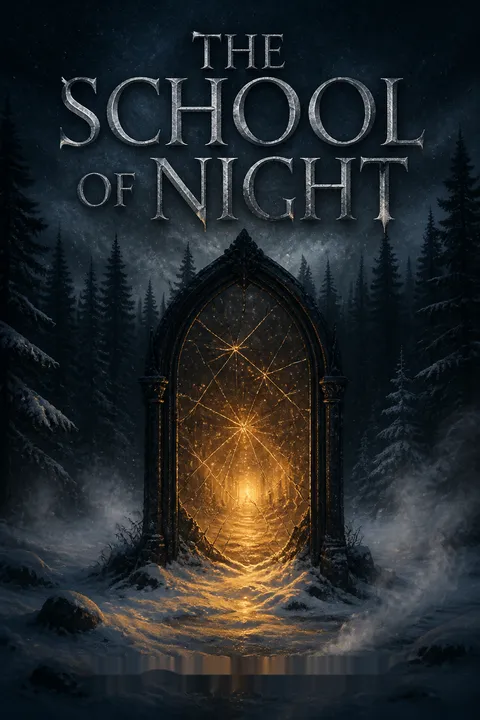
Kristian becomes involved with Vivian, a theatre director staging Marlowe's Doctor Faustus, and is drawn into a circle of artists obsessed with the occult, secrecy, and the boundaries of knowledge. The "School of Night"—a historical and symbolic reference—serves as a metaphor for the pursuit of forbidden truths and the dangers of transgression. The production blurs reality and performance, past and present, and Kristian's role as photographer becomes entangled with his personal and artistic identity. The relationships within the group are marked by rivalry, seduction, and the allure of darkness, echoing the novel's themes of fate and the limits of understanding.
The Cat on the Chopping Board
The act of boiling and dissecting a cat for the sake of art is both grotesque and revelatory. The resulting photograph is hailed as a masterpiece, capturing the tension between life and death, beauty and horror. The process is physically and emotionally taxing, symbolizing the sacrifices demanded by true creativity. The image becomes a touchstone for Kristian's subsequent work, setting a standard he fears he may never reach again. The episode encapsulates the novel's meditation on the relationship between art, violence, and the search for meaning in a world indifferent to human striving.
The Police and the Past
The investigation into the tramp's death culminates in Kristian's arrest and interrogation. The experience is dehumanizing, surreal, and deeply unsettling. The ambiguity of his guilt, the unreliability of memory, and the arbitrariness of justice are foregrounded. The episode serves as a crucible for self-examination, forcing Kristian to confront the consequences of his actions and the impossibility of escaping the past. The eventual release—due to another's confession—offers no real absolution, leaving him marked by shame and a sense of irreparable loss.
The Unraveling of Self
In the aftermath of the investigation, Kristian's sense of self is fractured. Relationships with friends, lovers, and family are strained or broken. The pursuit of artistic success becomes both a refuge and a source of further alienation. The tension between public recognition and private emptiness intensifies. The novel explores the ways in which trauma, guilt, and the demands of art can erode the foundations of identity. The motif of the mirror—literal and metaphorical—recurs, symbolizing the difficulty of seeing oneself clearly and the dangers of self-absorption.
The Artist's Ascent
Kristian's career flourishes—exhibitions, critical acclaim, and international recognition follow. Yet, the ascent is shadowed by the unresolved wounds of the past, the loss of intimacy, and the hollowness of achievement. The retrospective at MoMA becomes a moment of reckoning, forcing him to confront the trajectory of his life and work. The juxtaposition of early and late photographs, installations, and the recurring image of the cat serve as a visual autobiography, mapping the evolution of his vision and the scars left by experience. The price of success is revealed to be isolation, regret, and the persistent ache of absence.
Love, Loss, and Leo
In middle age, Kristian finds a measure of stability with Yelena and their son Leo. The joys and anxieties of parenthood are depicted with tenderness and honesty. The fragility of happiness is underscored by the sudden, devastating loss of Leo in an accident. The event is a cataclysm, obliterating meaning and plunging Kristian and Yelena into grief and estrangement. The narrative dwells on the impossibility of consolation, the inadequacy of language, and the irreversibility of loss. The motif of absence returns with renewed force, now irrevocable and absolute.
The Collapse of Meaning
In the wake of Leo's death, Kristian's life unravels. Art loses its power to console or explain. Relationships disintegrate, and the world becomes alien and hostile. He flees to an isolated island, seeking oblivion and the erasure of self. The routines of daily life—writing, fishing, walking—are stripped of significance. The landscape is indifferent, the future closed. The novel's philosophical preoccupations—death, meaning, the limits of art—are brought to a bleak culmination. The possibility of redemption or renewal is left in doubt, as absence becomes the defining reality.
Exile and the End of Art
Kristian's exile is both literal and existential. Cut off from the world, he reflects on the arc of his life, the failures of love, and the futility of artistic ambition. The arrival of Hans, long absent, signals a final reckoning. The boundaries between reality and hallucination blur, as the past returns in the form of memories, ghosts, and mirrors. The encounter with Hans is both a confrontation with fate and a descent into the underworld of self. The novel's motifs—mirrors, photographs, the occult—converge in a meditation on the impossibility of escape from one's own story.
The Return of Hans
Hans's reappearance is enigmatic, charged with symbolism and ambiguity. He serves as both guide and judge, leading Kristian to a confrontation with his deepest fears and desires. The motif of the mirror recurs, as Hans offers Kristian a vision of his lost son, Leo, "behind the mirrors." The encounter is both a moment of grace and a final descent into night. The boundaries between life and death, self and other, are dissolved. The novel ends with a sense of closure that is also an opening—into darkness, memory, and the unknowable.
Mirrors, Memory, and Night
The final chapter is a meditation on the porous boundary between life and literature, memory and invention, self and other. The act of writing is revealed as both a defense against and a surrender to the night. The novel closes with acknowledgments, a gesture toward the real world that underscores the fictionality of the narrative. The themes of absence, longing, and the search for meaning are left unresolved, echoing in the silence that follows the last word. The night is both an ending and a beginning, a space where the self is dissolved and remade in the act of remembering.
Analysis
Karl Ove Knausgaard's The School of Night is a profound meditation on the intersections of art, mortality, and the search for meaning in a world marked by absence and loss. Through the life of Kristian Hadeland, the novel explores the costs and consolations of artistic ambition, the fragility of human connection, and the inescapability of the past. The narrative is both intimate and expansive, weaving together personal confession, philosophical inquiry, and cultural history. The recurring motifs of mirrors, photographs, and the occult serve as metaphors for the difficulty of self-knowledge and the dangers of seeking forbidden truths. The novel's structure—fragmented, recursive, and richly allusive—mirrors the psychological complexity of its protagonist and the uncertainties of memory and identity. Ultimately, The School of Night is a work about the limits of language, the persistence of longing, and the necessity of facing the darkness within and without. It offers no easy answers, but in its refusal of consolation, it achieves a rare and unsettling honesty, inviting readers to confront the night that lies at the heart of all human striving.
Review Summary
The School of Night receives widespread acclaim as Karl Ove Knausgård's most accessible and suspenseful work, with readers praising its standalone quality despite being fourth in The Morning Star series. The novel retells the Faust myth through Kristian Hadeland, an unlikable, narcissistic photographer who makes a metaphorical deal with the devil. Reviewers highlight the book's psychological horror, page-turning tension, and masterful ambiguity. Set primarily in 1980s London, it explores themes of artistic ambition, morality, and the cost of success through compelling, claustrophobic prose that disturbed and captivated readers equally.
Characters
Kristian Hadeland
Kristian is the novel's protagonist and narrator, a Norwegian photographer whose life is marked by alienation, ambition, and a persistent sense of absence. His relationships—with family, lovers, friends, and the city—are fraught with longing and disappointment. Driven by a need to create and to be seen, he is also tormented by guilt, especially after the death of a homeless man in London. His artistic journey is a quest for authenticity, but it is shadowed by self-doubt, moral ambiguity, and the fear of irrelevance. As he ages, the losses accumulate—of love, of his son Leo, of meaning itself—culminating in exile and a confrontation with the limits of art and selfhood. Kristian's psychological complexity is rooted in his inability to reconcile the demands of intimacy with the imperatives of creation, making him both sympathetic and elusive.
Hans
Hans is a Dutch artist and thinker whose influence on Kristian is profound and ambivalent. He is a catalyst for Kristian's artistic and existential crises, challenging him to question the boundaries between art and life, intention and randomness, self and other. Hans's studio is a space of chaos and invention, filled with uncanny creations that blur the line between the living and the mechanical. His philosophical musings are both inspiring and destabilizing, pushing Kristian toward breakthroughs and breakdowns. Hans's eventual disappearance and mysterious return at the novel's end position him as a figure of fate, judgment, and the inescapable past. Psychologically, Hans is both a mirror and an antagonist, embodying the dangers and possibilities of transgression.
Yelena
Yelena is Kristian's later-life partner, a German-Russian academic whose independence and self-sufficiency both attract and frustrate him. Their relationship is marked by mutual respect but also by emotional distance and unspoken resentments. Yelena's intellectual pursuits and her ability to move through the world without needing Kristian challenge his desire for intimacy and recognition. The loss of their son Leo exposes the fragility of their bond, leading to estrangement and the collapse of their shared life. Yelena's psychological depth lies in her capacity for endurance, her refusal to be defined by grief, and her insistence on autonomy even in the face of devastation.
Leo
Leo is Kristian and Yelena's young son, whose presence brings joy, vulnerability, and a fleeting sense of redemption to Kristian's life. His curiosity, trust, and capacity for wonder are depicted with tenderness, making his sudden death all the more shattering. Leo's absence becomes the central void around which the novel's final movements revolve, symbolizing the irreversibility of loss and the limits of consolation. Psychologically, Leo represents both the possibility of renewal and the inevitability of grief, his memory haunting Kristian's exile and final reckoning.
Vivian
Vivian is a theatre director whose production of Doctor Faustus draws Kristian into a circle of artists obsessed with the occult and the boundaries of knowledge. Their relationship is marked by attraction, competition, and a shared fascination with darkness. Vivian's intelligence, ambition, and emotional complexity make her both a muse and a threat to Kristian's sense of self. Her involvement in the "School of Night" and her manipulation of artistic and personal boundaries echo the novel's themes of transgression and the dangers of seeking forbidden truths. Psychologically, Vivian is both a mirror and a foil, embodying the allure and peril of artistic obsession.
Helene
Helene is Kristian's older sister, whose life is rooted in family, tradition, and the rural landscape of their childhood. Her calmness, lack of ambition, and acceptance of the ordinary stand in contrast to Kristian's restlessness and longing for transcendence. The distance between them is both emotional and existential, highlighting the novel's exploration of the costs and consolations of different ways of living. Helene's psychological stability is both enviable and limiting, a reminder of what is lost and what is preserved in the pursuit of art and meaning.
Liv
Liv is Kristian's younger sister, whose life is marked by instability, addiction, and a relentless search for experience. Her wildness and inability to find a place in the world are sources of pain for the family and for Kristian, who both envies and pities her. Liv's suicide attempt and eventual death are pivotal events, crystallizing the novel's themes of absence, failure, and the limits of love. Psychologically, Liv embodies the dangers of unchecked desire and the fragility of selfhood in a world that offers little support or understanding.
Ane
Ane is Helene's daughter, a young woman who aspires to be a writer and looks to Kristian as a model of escape from the constraints of family and tradition. Her presence in the novel is brief but significant, representing the possibility of renewal and the persistence of longing across generations. Ane's psychological complexity lies in her ambivalence toward her own roots and her desire to forge a different path, echoing Kristian's own journey.
Liz
Liz is a fellow tenant in Kristian's London building, whose ordinariness and vulnerability both attract and repel him. Their brief affair is marked by miscommunication, unmet expectations, and the impossibility of true intimacy. Liz's psychological depth is revealed in her longing for connection, her pride, and her capacity for disappointment. She serves as a counterpoint to the more dramatic figures in Kristian's life, embodying the consolations and limitations of the ordinary.
The Tramp
The homeless man whose death becomes the axis of Kristian's guilt and self-examination is both a character and a symbol. His presence is fleeting, his life and death largely unknowable, yet the consequences of their encounter reverberate throughout the novel. The tramp embodies the randomness of fate, the limits of responsibility, and the ways in which ordinary actions can have extraordinary consequences. Psychologically, he is both a blank and a mirror, reflecting Kristian's fears, desires, and the inescapability of the past.
Plot Devices
Mirrors and Reflections
Throughout the novel, mirrors serve as both literal and metaphorical devices, symbolizing the difficulty of self-knowledge, the dangers of narcissism, and the porous boundary between reality and illusion. The act of photographing, the motif of the mirror in art and myth, and the recurring image of the self reflected and distorted are central to the narrative structure. Mirrors are sites of revelation and deception, places where the self is both encountered and lost. The motif culminates in the final encounter with Hans, where the mirror becomes a threshold between life and death, memory and oblivion.
The Occult and the School of Night
The historical and symbolic references to Marlowe, Doctor Faustus, and the "School of Night" provide a framework for the novel's exploration of transgression, secrecy, and the pursuit of meaning beyond the ordinary. The occult serves as both a plot device and a thematic undercurrent, linking the characters' artistic ambitions to the dangers of overreaching and the inevitability of loss. The blending of historical fact, myth, and personal obsession creates a sense of ambiguity and unease, reinforcing the novel's preoccupation with the limits of knowledge and the costs of seeking what should remain hidden.
Photographs and Objects
Ordinary objects—a lighter, a cat's skeleton, a camera, a photograph—are transformed into symbols of fate, guilt, and the persistence of the past. The act of photographing is both an assertion of presence and a confrontation with absence. Objects become charged with meaning, serving as anchors for memory and as reminders of the uncontrollable consequences of action. The motif of the object recurs in the novel's installations and exhibitions, where the boundaries between art and life, subject and object, are continually blurred.
Narrative Structure and Temporal Dislocation
The novel's structure is non-linear, moving between past and present, memory and anticipation, reality and hallucination. The recursive nature of memory, the unreliability of self-narration, and the impossibility of returning to a lost origin are central to the narrative. The use of retrospective confession, shifting perspectives, and the blending of fiction and autobiography create a sense of dislocation and ambiguity. The structure mirrors the psychological fragmentation of the protagonist and the novel's thematic concern with the inescapability of the past.
Foreshadowing and Symbolic Repetition
The novel is rich in foreshadowing, with early episodes—such as the meditation on death, the encounter with Hans, the lighter and the tramp—echoing and refracting through later events. Symbolic repetition—the mirror, the cat, the lighter, the motif of absence—creates a sense of inevitability and fate. The recurrence of certain phrases, images, and situations reinforces the novel's exploration of the cyclical nature of loss, guilt, and the search for meaning.
Morgenstjernen Series

Download PDF
Download EPUB
.epub digital book format is ideal for reading ebooks on phones, tablets, and e-readers.








































