
Plot Summary
Childhood Shadows and Secrets
The story opens with Syvert's recollections of his Norwegian childhood in the late 1970s, where music, snow, and the warmth of home are interwoven with the shadows of loss and guilt. A pivotal moment occurs when young Syvert witnesses a car in the water, its headlights shining, and fails to act, a secret he carries into adulthood. The chapter establishes the emotional landscape: a family marked by the early death of the father, the struggles of a hardworking mother, and the complex, sometimes fraught, bond between brothers. The past is not just remembered but relived, as the sensory details of youth—smells, sounds, and the ache of longing—set the tone for a novel obsessed with the persistence of memory and the ghosts that shape us.
Homecomings and Hauntings
Syvert, now a young man, returns home after military service, greeted by the familiar yet changed rhythms of his family. The house is heavy with the absence of the father and the burdens of the present: a mother stretched thin by work, a younger brother, Joar, haunted by dreams of death. The chapter explores the awkwardness of re-entry, the friction between independence and responsibility, and the subtle ways grief lingers in daily life. Football practice, small-town routines, and the search for work are set against the backdrop of a Norway on the cusp of change, both politically and personally. The past is never far away, as Syvert's guilt and Joar's fears intertwine, hinting at deeper family secrets yet to be revealed.
Brothers, Mothers, and Memory
The relationship between Syvert and Joar deepens, marked by moments of tenderness, rivalry, and misunderstanding. Their mother, stoic yet vulnerable, becomes a focal point as her health falters and her emotional distance is both a shield and a wound. The chapter delves into the nature of memory—how it is constructed, altered, and sometimes weaponized within families. Through everyday rituals—meals, chores, shared stories—the characters negotiate their places in the world and in each other's lives. The specter of the absent father looms, and the question of what is inherited—traits, traumas, silences—becomes increasingly urgent.
The Weight of the Past
Syvert's discovery of letters in Russian among his father's belongings sets off a chain of revelations. The letters, passionate and intimate, reveal a secret love affair and the existence of a half-sister in Russia. The shock of this knowledge destabilizes Syvert's sense of self and family, forcing him to confront the constructed nature of his own history. The chapter is suffused with the ache of betrayal and the longing for connection, as Syvert grapples with the implications of his father's double life. The past, once thought to be settled, proves to be a living force, demanding reckoning and, perhaps, forgiveness.
Dreams, Guilt, and Radioactivity
As the Chernobyl disaster unfolds, the novel's atmosphere becomes charged with anxiety and uncertainty. Radioactive clouds drift over Norway, and the invisible threat mirrors the invisible wounds within the family. Syvert's dreams of his father become more vivid, blurring the line between memory and imagination. Guilt—over the car in the water, over family failures, over the inability to save or understand—permeates the narrative. The chapter explores how personal and collective fears intersect, and how the search for meaning persists even in the face of randomness and decay.
The Unraveling of Family
The family is tested by the mother's cancer diagnosis, which brings old wounds to the surface and forces new roles upon Syvert and Joar. The revelation that their father had planned to leave them for another woman, and that their mother concealed this truth for years, fractures their sense of belonging. The chapter is marked by scenes of care and conflict, as the brothers struggle to support each other and their mother, even as the foundations of their family are shaken. The limits of love—what can be given, what must be withheld—are explored with painful honesty.
Letters from the Other Side
Syvert enlists the help of a local translator to read his father's Russian letters, uncovering a world of longing, hope, and heartbreak. The letters from Asya, his father's Russian lover, are filled with yearning for a life that could never be. Through these missives, Syvert glimpses the emotional richness and complexity of his father's hidden life, and the pain of separation and unfulfilled dreams. The act of translation becomes a metaphor for the struggle to understand those we love, and the impossibility of ever fully bridging the gaps between languages, cultures, and hearts.
The Russian Connection
The narrative shifts to Russia, where Alevtina, Syvert's half-sister, navigates her own family, career, and memories. Her story echoes and diverges from Syvert's, as she contends with the legacy of Soviet history, the death of her mother, and the challenges of motherhood and ambition. The chapter explores the ways in which personal and national histories intertwine, and how the search for identity is shaped by forces both intimate and immense. The eventual contact between Syvert and Alevtina is tentative, fraught with expectation and the weight of all that has been lost and all that might be found.
Science, Forests, and Faith
Alevtina's work as a biologist and her fascination with the interconnectedness of forests become a lens through which the novel contemplates the nature of existence. The chapter weaves together scientific inquiry, philosophical speculation, and spiritual longing, as characters grapple with questions of consciousness, mortality, and the possibility of transcendence. The forest emerges as a symbol of both the unknowable and the communal, a living network that mirrors the tangled roots of family and history. The boundaries between science and faith, reason and wonder, are blurred, inviting the reader to dwell in uncertainty.
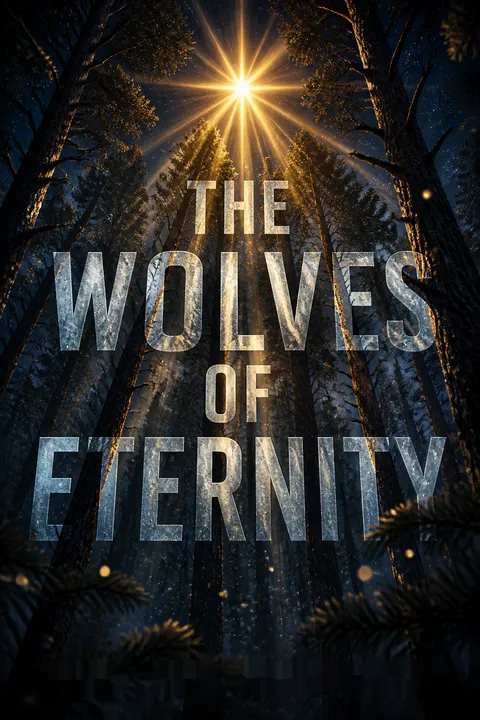
The Wolves of Eternity
The novel's philosophical core is revealed through meditations on Russian cosmism, the belief in the eventual conquest of death and the resurrection of all who have ever lived. Through essays, letters, and imagined dialogues, the narrative explores the allure and terror of eternity, the desire to overcome the finality of loss, and the ethical dilemmas of such ambitions. The wolves of eternity are both the ancestors who haunt us and the future selves we might become. The chapter is at once speculative and deeply personal, as the characters confront the limits of human striving and the inevitability of death.
Encounters and Estrangements
Syvert and Alevtina finally meet in Moscow, their encounter charged with hope, awkwardness, and the burden of unspoken expectations. The siblings struggle to find common ground, their differences as pronounced as their similarities. The city itself, with its layers of history and contradiction, becomes a backdrop for their tentative attempts at connection. The chapter is marked by moments of grace and disappointment, as the possibility of reconciliation is shadowed by the realities of distance, language, and the irreducible strangeness of others.
The Star Over Moscow
A strange new star appears in the sky, captivating and unsettling the characters across Norway and Russia. Its arrival coincides with acts of violence and upheaval, both personal and societal. The star becomes a symbol of the unknown, the miraculous, and the terrifying, prompting reflections on fate, coincidence, and the human need for significance. The chapter interlaces scenes of chaos and wonder, as the characters are drawn together and pulled apart by forces beyond their control.
Violence, Miracles, and Meaning
Syvert is caught up in a violent robbery in Moscow, an event that leaves him shaken and reflective. The aftermath is marked by bureaucratic entanglements, existential questioning, and a renewed sense of vulnerability. Meanwhile, the world seems to pause: for three days, no one dies. The suspension of death is both a miracle and a mystery, inviting speculation and awe. The chapter explores how moments of crisis can strip life to its essentials, revealing both its fragility and its stubborn resilience.
Siblings in the New World
Syvert and Alevtina meet again, this time with greater honesty and vulnerability. Their conversation is raw, at times painful, as they confront the truths of their shared and separate histories. Through laughter, tears, and the slow work of understanding, they begin to forge a new kind of kinship, one that acknowledges both the wounds of the past and the possibilities of the future. The chapter is suffused with the bittersweet recognition that family is both given and made, and that connection is always a work in progress.
The End of Death
The novel's philosophical threads converge in meditations on the end of death—both as a scientific aspiration and a human fantasy. Through essays, dreams, and the voices of the dead, the narrative contemplates what it would mean to live forever, to resurrect the lost, to escape the wolves of eternity. The chapter is both elegiac and hopeful, acknowledging the pain of loss while celebrating the persistence of love and memory. The desire to conquer death is revealed as both a blessing and a curse, a testament to the human refusal to accept finality.
The Circle Remains Unbroken
The story closes with the characters returning to their respective homes, changed yet still themselves. The past remains present, but its weight is lessened by the work of understanding and forgiveness. The circle of family, history, and longing is not closed, but remains open, inviting new stories, new connections, new hopes. The wolves of eternity still howl at the edges, but their song is now one of continuity as much as loss. Life goes on, incomplete and whole, finite and infinite, always beginning again.
Analysis
The Wolves of Eternity is a profound meditation on the persistence of the past, the complexity of family, and the human longing to overcome the boundaries of death and time. Through its interwoven narratives, philosophical digressions, and richly drawn characters, the novel explores how memory, guilt, and longing shape our identities and our relationships with others. The discovery of hidden family ties—across nations, languages, and histories—serves as both a plot engine and a metaphor for the ways in which we are all haunted by what is lost, unspoken, or unknown. The novel's engagement with Russian cosmism and the dream of immortality situates personal grief within a broader cultural and metaphysical context, inviting readers to consider the ethical and existential implications of our desire to conquer death. At its heart, The Wolves of Eternity is a story about the work of understanding—of translating not just words, but lives, across the gulfs of time, culture, and experience. It is a testament to the power of honesty, the necessity of forgiveness, and the ongoingness of life, even in the face of loss. The novel suggests that while the past can never be fully recovered or redeemed, the act of seeking connection—however imperfect—remains our most vital and human task.
Review Summary
The Wolves of Eternity, the second book in Karl Ove Knausgård's Morning Star trilogy, receives mixed but largely positive reviews. Readers appreciate its exploration of death, family connections, and Russian literature, particularly the philosophical depth in its second half set in Russia. Many find the first 400 pages following Norwegian teenager Syvert slow and mundane, though some see this as intentional characterization. The book connects two half-siblings—Syvert and Russian biologist Alevtina—whose stories converge meaningfully. Most reviewers note the mysterious star appears only near the end, making this feel like a transitional installment.
People Also Read

Characters
Syvert Løyning
Syvert is the novel's central figure, a Norwegian man marked by the early loss of his father and the burdens of guilt, secrecy, and longing. His role as both son and brother is complicated by the discovery of his father's secret Russian family, which destabilizes his sense of identity and belonging. Syvert is introspective, practical, and emotionally reserved, yet driven by a deep need for connection and understanding. His psychological arc is one of reckoning—with the past, with his own failures, and with the limits of what can be known or healed. Through his journey, Syvert embodies the novel's central questions about memory, inheritance, and the possibility of forgiveness.
Joar Løyning
Joar, Syvert's younger brother, is characterized by his intelligence, honesty, and emotional sensitivity. He is both a source of comfort and challenge for Syvert, their relationship oscillating between camaraderie and conflict. Joar's bluntness and rationality often serve as a counterpoint to Syvert's more emotional and guilt-ridden perspective. His own struggles—with dreams of death, with the loss of their father, with the illness of their mother—mirror and amplify the novel's themes of vulnerability and resilience. Joar's development is marked by a gradual acceptance of uncertainty and the limits of control.
Evelyn Løyning (Mother)
Evelyn is a figure of strength and sacrifice, working tirelessly to support her sons after the death of her husband. Her emotional reserve is both a shield and a source of pain, as she withholds crucial truths about the family's past. Her illness brings old wounds to the surface, forcing her and her sons to confront the realities of love, loss, and the impossibility of perfect understanding. Evelyn's psychoanalysis reveals a woman shaped by disappointment, duty, and the need to protect her children—even at the cost of honesty. Her eventual vulnerability becomes a catalyst for healing.
Syvert Løyning Sr. (Father)
Though dead before the novel's main events, Syvert Sr. is a haunting presence, his life and choices reverberating through his family. His secret affair with a Russian woman and the existence of a daughter in Russia are the novel's central mysteries, forcing his children to reevaluate their own histories. Psychoanalytically, he represents the unknowable other, the parent whose inner life is forever out of reach. His legacy is one of both love and betrayal, and his absence is as formative as any presence could be.
Alevtina Kotov
Alevtina is Syvert's half-sister, raised in Russia by her mother Asya and a stepfather. She is intelligent, ambitious, and emotionally complex, her life shaped by the legacies of Soviet history, the loss of her mother, and the challenges of motherhood and career. Her work as a biologist and her fascination with the interconnectedness of forests mirror her own search for connection and meaning. Alevtina's psychological journey is one of coming to terms with absence, longing, and the possibility of new kinship. Her relationship with Syvert is fraught with expectation, disappointment, and the slow work of understanding.
Asya (Alevtina's Mother)
Asya is present primarily through her letters, which reveal a woman of deep feeling, longing, and hope. Her love affair with Syvert Sr. is marked by both joy and sorrow, as the realities of distance, politics, and family make fulfillment impossible. Asya's voice is a testament to the power of longing and the pain of separation. Her death leaves Alevtina with unanswered questions and a legacy of both love and loss.
Vasilisa
Vasilisa is a friend of Alevtina's and a writer whose meditations on death, memory, and Russian cosmism form the novel's philosophical backbone. She is reflective, solitary, and haunted by the loss of her younger brother. Her psychoanalysis reveals a woman who seeks meaning in the face of mortality, turning to both science and spirituality for answers. Vasilisa's writings serve as a chorus, amplifying the novel's central themes and inviting the reader to dwell in uncertainty.
Yevgeny
Yevgeny is a Russian lorry driver whose story intersects with the novel's broader themes of violence, survival, and the search for meaning. He is practical, resilient, and marked by the hardships of post-Soviet life. His encounters with both the miraculous and the brutal serve as a counterpoint to the more introspective narratives, grounding the novel in the realities of contemporary Russia. Yevgeny's development is one of endurance and adaptation.
Lisa
Lisa is Syvert's partner, a woman of warmth, pragmatism, and emotional intelligence. She serves as both a grounding force and a catalyst for Syvert's self-examination, challenging his assumptions and encouraging honesty. Her own history of loss and resilience mirrors the novel's broader concerns with inheritance and the work of love. Lisa's role is to remind Syvert—and the reader—of the ongoingness of life, even in the face of uncertainty.
Papa (Alevtina's Stepfather)
Papa is Alevtina's stepfather, a man of books, music, and abstraction. His emotional distance is both a source of pain and a model for Alevtina's own struggles with intimacy and connection. His psychoanalysis reveals a man shaped by loss, disappointment, and the need for control. His death becomes a turning point for Alevtina, prompting her to seek out her Norwegian family and to reckon with the unfinished business of the past.
Plot Devices
Interwoven Narratives and Epistolary Revelations
The novel employs a dual narrative structure, alternating between Syvert's life in Norway and Alevtina's in Russia, with additional perspectives from friends, family, and philosophical voices. This interweaving allows for a rich exploration of parallel lives, cultural differences, and the universality of longing and loss. The use of letters—especially those from Asya to Syvert Sr.—serves as both a plot device and a metaphor for the work of translation, interpretation, and the impossibility of perfect understanding. The epistolary form bridges past and present, living and dead, and becomes a vehicle for both revelation and concealment.
Memory, Dreams, and the Unreliable Self
Memory is both a theme and a structural device, as characters revisit, revise, and sometimes invent their own histories. Dreams blur the boundaries between past and present, self and other, reality and fantasy. The novel is acutely aware of the unreliability of memory and the ways in which personal narratives are constructed, deconstructed, and reconstructed over time. This device allows for a deep psychological exploration of guilt, longing, and the desire for redemption.
Philosophical Digressions and Scientific Inquiry
The narrative is punctuated by essays, lectures, and philosophical meditations on Russian cosmism, the nature of consciousness, the possibility of immortality, and the interconnectedness of life. These digressions serve both as thematic amplification and as a means of situating the personal stories within broader historical, scientific, and metaphysical contexts. The forest, in particular, becomes a recurring symbol of both the unknowable and the communal, a living network that mirrors the tangled roots of family and history.
Miraculous Events and the Suspension of Death
The appearance of a mysterious new star and the temporary cessation of death serve as both plot points and metaphors for the novel's preoccupation with the miraculous, the inexplicable, and the human refusal to accept finality. These events disrupt the ordinary flow of life, prompting characters to reflect on fate, coincidence, and the search for meaning. The suspension of death is both a blessing and a curse, inviting both awe and anxiety.
Encounters, Estrangements, and the Work of Forgiveness
The novel's emotional arc is driven by encounters—between siblings, between parents and children, between past and present. These meetings are often fraught with expectation, disappointment, and the slow work of understanding. Estrangement is as common as reconciliation, and the work of forgiveness is shown to be ongoing, incomplete, and essential. The narrative structure allows for both the intimacy of confession and the distance of observation, inviting the reader to dwell in the spaces between.
Morgenstjernen Series

Download PDF
Download EPUB
.epub digital book format is ideal for reading ebooks on phones, tablets, and e-readers.








































