
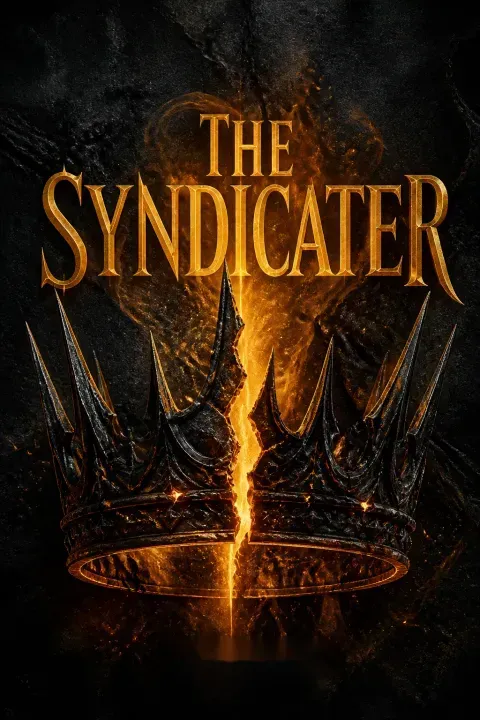


Plot Summary
Prologue
In 1985, a fifth man11 meets with envoys from the Tenebrae Outfit and Shadow Port on a cold winter night. He is a negotiator for an organization most do not know about, a man who has climbed to the top on the backs of greedy, hungry bastards. But he is bored.
Money, power, influence, a double life of devotion and deviance: none of it satisfies anymore. He needs a worthy adversary. As the cars pull up, a twisted idea takes root: if no enemy exists, he can create one. He greets the men with a smile, his ennui cracking. The game that will span decades and ruin countless lives begins with that smile.
This prologue frames the villain not as a simple sadist but as a man suffering from the ultimate anhedonia of absolute power. His boredom becomes the catalyst for decades of systematic abuse, positioning evil as a creative act born from spiritual emptiness. The smile that ends the scene is a chilling inversion of hope: where others smile at joy, he smiles at the prospect of manufactured suffering, setting up the central theme of the novel—that some monsters are forged deliberately, and their creators will one day face the consequences of their own design.
The Fountainhead File
Morana Vitalio4 wakes in the middle of the night to a message from the Shadow Man.1 He attaches a folder titled Fountainhead with a 48-hour window. She opens it to find photographs: a young red-haired girl, then a teenager, then a woman wearing a man's shirt. Morana4 realizes with a jolt that the woman is Luna, Tristan's long-lost sister.2
The most recent photo is intimate, taken by a lover. Morana4 deduces the Shadow Man1 is that lover. She begins tracing the message's origin, her fingers flying across the keyboard even as the weight of the revelation presses on her. She has to tell Tristan,3 but first she must be absolutely certain.
This section introduces the central mystery and the moral complexity of the Shadow Man. His decision to send the photos is both a gift and a power move, establishing the dynamics of control and debt that define his interactions with the group. Morana's role as the bridge between the hidden world and her family is reinforced; she is the one who decodes, who connects the dots, and who carries the emotional weight of unmasking truths that will shatter the people she loves.
Kneeling Before the Lost
Tristan Caine3 storms into an abandoned warehouse in Gladestone, gun drawn, expecting a trap. Instead he sees a petite woman with flame hair sitting in an armchair. It is his sister.2 She stares at him, trembling, and he stops. Time suspends. He walks toward her, each step a decade, and then he kneels, offering his trembling hands.
She places hers in his. Both sob. He pulls her into an embrace that feels like the first real breath of his life. They hold each other on the floor, crying out decades of separation. Dante Maroni,5 Morana,4 and Alpha7 watch from the doorway, silent witnesses to a reunion that was never supposed to happen.
The visual of the feared predator kneeling encapsulates the core theme of the book: that love, especially familial love, is the only force that can disarm a man like Tristan. His lifelong search was not about vengeance but about reclamation, and the release of tears signals a psychic unblocking that will allow him to finally begin healing. The presence of the other men standing guard emphasizes the family they have built around this wound.
Sibling Confessions by the Lake
That evening, Tristan3 takes Luna2 to the edge of the lake, his childhood refuge. She sits wrapped in herself, looking at the water. He learns she has no memory of him, but his eyes feel familiar. He asks if she is happy; she says she is trying. She reveals that a dying monster told her the truth about her brother3 just two days ago.
He does not press further. He tells her how he survived because he knew she was out there somewhere. She admits she almost gave up, but something kept her going. They do not name the thing. For now, the simple act of sitting together under the darkening sky is enough to begin binding the wounds of the past.
The lake represents a liminal space where trauma is confronted and gradually dissolved. Both siblings speak in fragments, each revelation a careful gift. Tristan's admission that he endured for her is not manipulative but foundational; it gives her existence a purpose she never knew she had. The conversation reveals their shared trait: the inability to articulate pain, yet a desperate need to be understood.
Blackthorne Dances In
During Tempest's14 first birthday party, a tall man in a black suit approaches the table. Dante5 introduces him as Blackthorne, a powerful CEO.1 He charms the group, exchanging pleasantries with Morana,4 Alpha,7 Zephyr,8 and Amara.6 Then his mismatched eyes land on Luna.2 He takes her hand, kisses it, and asks who she is. She answers: Tristan Caine's sister.2
He sits beside her, his gloved hand settling on her thigh under the table. No one notices. Luna's2 body hums with recognition; this is her husband, the Shadow Man,1 playing a role. The public display of clandestine possession thrills her. When Tristan3 later appears, he greets Blackthorne1 with chilled familiarity, unaware of the deeper connection.
The scene is a masterclass in double meaning, where every word and gesture carries a secret layer. Dainn's theatrical entrance serves multiple purposes: he establishes himself as a legitimate figure in the group's social circle, he asserts ownership over Luna in a way that only she can decode, and he gathers intelligence on her new environment. The fact that he can sit among them undetected underscores the theme of hidden identities and the thin line between monster and ally.
I Love Him
The group gathers in the study to consolidate information. Suspicion falls on Luna.2 Morana4 states that the Shadow Man1 knows her. Luna,2 trembling, finally erupts. She reveals she is his wife, his lover, his flamma. She recounts her life as a slave of The Syndicate, her attempted suicide, and how he saved her. She tells them she tortured and killed Hector, the man who murdered Zephyr's8 sister, and she enjoyed it.
Tristan3 is livid, betrayed that she kept this secret. She shouts back, explaining that without his love she would be dead, that he returned her to them as the most selfless act he could perform. Her defiance cracks Tristan's3 fury; he whispers that he loves her too, and they embrace, the room in stunned silence.
This is the emotional fulcrum of the novel. Luna's transformation from silent victim to fierce advocate for her own truth is a powerful assertion of agency. Her confession rewrites the narrative: the Shadow Man is not a villain but a savior, albeit a monstrous one. The scene explores the tension between love and ownership, and how trauma can twist the meaning of both. Tristan's eventual acceptance is not a defeat but a recognition that some bonds transcend conventional morality.
The Pier and the Project
Morana4 meets the Shadow Man1 alone on a public pier. He is Dainn Blackthorne, the man from the party.1 He hands her a file titled Project Ouroboros. She flips through it, sickened: it details a decades-old program in which The Syndicate supplied babies for government experimentation. Electrocutions, drugs, mutilations.
He reveals that the project was restarted with the Alliance of their fathers, and that he himself was its subject, created in a lab by the man he now hunts, his biological father.11 He also tells her that Xander9 is Luna's2 son, spirited away as a baby for his safety. In exchange for this truth, Morana4 hands over her finished codes, which he will use to reboot The Syndicate.
This scene brings together the novel's threads of inherited trauma and systemic evil. The revelation that Dainn is a product of the very organization he seeks to destroy complicates the moral binary. His clinical delivery of horrifying facts reflects his emotional difference, yet his decision to share them with Morana indicates a burgeoning, if unconventional, trust. The exchange of information for codes formalizes their alliance, setting the stage for the new order.
A Father's Mask Cracks
Shortly after the study meeting, Zephyr8 receives frantic calls from her mother. She calls her father's phone; no answer. A sick feeling takes hold. Alpha7 sends Victor to investigate. The truth is devastating: Zephyr's8 father had been working for The Syndicate for years. He adopted Zenith not out of kindness, but because the organization needed someone to monitor her after she escaped.
His files contain letters ordering him to keep her under surveillance. Zephyr's8 mother, upon discovering the truth, killed him in a rage, then called her daughter repeatedly. Zephyr8 collapses, gasping as the father she loved is revealed as the architect of her family's destruction, even responsible for the attack that cost Alpha7 his memories.
The betrayal of a parent strikes at the root of identity. Zephyr's grief is compounded by the realization that the love she received may have been a performance, a cover for unspeakable complicity. This subplot critiques the illusion of the 'good family' and shows how the Syndicate's reach corrupted even the most intimate bonds. Her breakdown mirrors the broader theme of innocence lost, and the brutal process of rebuilding trust after it has been shattered.
The Basement Ultimatum
Morana4 wakes hanging from chains in a basement. Luna2 is dragged in beside her. Tristan3 is shoved onto a chair, a knife wedged in his side. The older woman orchestrating this is Luna's2 biological mother, the loyalist12 who gave Luna2 to The Syndicate as a baby.
With a video call to the Syndicater,11 she forces Tristan3 to relive the choice that destroyed his childhood: pick one woman to live, or both die. Luna2 begs him to choose Morana,4 to save Xander.9 The mother12 mocks, the master11 watches. Tristan3 refuses to choose. The tension snaps when a voice from the camera intervenes: the Shadow Man1 has arrived at the Syndicater's11 location.
The basement scene deliberately echoes the original trauma, forcing the characters to confront unresolved wounds. The mother's betrayal is the ultimate inversion of maternity; she weaponizes her daughter to serve a master. Luna's willingness to sacrifice herself completes her arc from victim to protector. The demand that Tristan choose reopens the helplessness of his childhood, but this time he has an answer: refusal. That refusal is a statement of moral agency.
Fire and Blood
On the screen, Dainn1 steps into the frame behind the Syndicater.11 He flicks a lighter, and the desk ignites. The Syndicater11 does not run; he smiles, welcoming death from his greatest creation. As the flames consume him, Dainn1 offers the act as a gift to Luna.2 In the basement, Tristan3 works his hands free, retrieves a hidden gun, and stabs the guard.
Chiara,13 the younger woman, tries to flee but falls to a scream. Tristan3 levels his gun at the older woman.12 She stammers his name; he fires twice, once for his sister,2 once for himself. Dainn1 descends the stairs, and Tristan3 lands a single punch to his jaw, then steps aside. Both men free the women.
The dual executions mark the end of the old regime. Dainn's patricide is ritualistic, a final severing from the man who engineered him, while Tristan's shooting is visceral, a repayment for decades of betrayal. The single punch Dainn allows is a symbolic concession, a momentary acknowledgment of Tristan's anger. In allowing it, Dainn demonstrates a kind of respect, recognizing that pain cannot be negotiated away.
A Ring for a Broken Hand
Morana4 lies in the hospital, confronting the reality that her left arm is now permanently disabled from nerve damage compounded by the chains. She sobs, mourning the loss of her body's wholeness and the simple act of tying Tristan's3 tie. He sits beside her, scarred and bandaged from his own wound.
Without a word, he takes her left hand, the one she cannot feel, and slides a sapphire ring onto her finger. He presses his lips to it. It is a proposal, a promise that he will love every broken part of her until death. Morana4 cries harder, understanding that he has claimed the very part of her she thought worthless. It is the most profound declaration he has ever made.
Tristan's proposal is a masterstroke of non-verbal communication. By placing the ring on the hand she can no longer use, he insists that her value is not in her function but in her being. The act redefines their bond: no longer defined by mutual enmity or even passion, but by a stubborn, tender commitment to carry each other's damage. The ring becomes a symbol not of perfection but of enduring imperfection.
A Monster's Truce
Tristan3 finds Dainn1 in the hospital waiting room. He tells him to leave. Dainn1 counters that he has as much right to be there. They trade barbs about each other's past sins. Dainn1 points out that Tristan3 once wanted to kill Morana,4 while he always wanted to save Luna.2 Tristan's3 anger deflates into weariness.
He thanks Dainn1 for saving his sister.2 Dainn1 discards the gratitude, but offers to send top nerve specialists to examine Morana's4 arm, a gesture that surprises Tristan.3 They sit in silence, two predators who have called a ceasefire. For Luna's2 sake, Tristan3 will tolerate this man. For Luna's2 sake, Dainn1 will tolerate the world.
The truce is born not of friendship but of necessity, a recognition that their shared love for the same woman forces a coexistence. Dainn's offer of medical help is a rare crack in his armor, showing that his obsession with Luna has expanded, however minutely, to include those she loves. It is a transactional peace, but in their world, transactions are the most honest form of communication.
Epilogue
Six months after the basement, Morana4 walks down the aisle toward Tristan3 on a seaside altar. He places a ring on her left hand again, and they exchange raw vows. A kitten, her wedding gift, mews in a box.
One year later, Amara6 delivers twin boys safely, even as she grieves her mother, who died peacefully in her sleep not long after the horrors, and Vin, whose body was recovered from a river alongside his lover. Eighteen months on, Zephyr8 watches Alpha,7 scarred and massive, attend a tea party with their daughter Kyra, a glittery star stuck on his eyepatch.
Two years after the reunion, Lyna2 looks over a full house in Bayfjord. Dainn1 stands behind her. The Syndicate has been reborn under his control, the council of the four families ensuring no child will suffer as they did. It is a new era.
The epilogues deliver the cathartic closure that the genre demands while refusing to sanitize the cost. Each couple carries permanent scars: Morana's arm, Amara's grief, Zephyr's disillusionment, and Lyna's past. The happiness is hard-won and explicitly linked to their collective effort to dismantle the systems that harmed them. Dainn's transformation from weapon to guardian completes the ouroboros symbol: the snake that devoured children now protects them, a paradoxical but hopeful resolution.
Analysis
"The Syndicater"11 is a conclusion that grapples with the question of whether a monster born from the system can dismantle it without becoming the thing he fights. Dainn1 represents the ouroboros in human form: a product of unimaginable cruelty who turns that cruelty back upon its creators, but who also, through his devotion to Luna,2 finds a way to regenerate into something that can nurture rather than destroy. The novel argues that love, even in its most possessive and unconventional forms, is the only force capable of breaking generational cycles of abuse. The four couples, each with their own distinct dynamic, demonstrate that healing is not linear and that family is not defined by blood but by choice. The epilogues show that the end of one era does not erase scars; rather, those scars become the foundation for a future in which children are shielded from the horrors their parents endured. The book ultimately affirms that while the darkness cannot be banished, it can be guarded, and that the guardians need not be saints -- they need only be willing to sacrifice, protect, and occasionally burn the old growth to make way for the new.
Review Summary
The Syndicater received mixed reviews, with many readers expressing disappointment. Common criticisms included rushed pacing, underdeveloped character arcs, and unresolved plot points. Some felt the focus on certain couples overshadowed others, particularly Tristan and Morana. While the reunion scene was praised, many found the ending unsatisfying. Positive aspects included emotional moments and spicy scenes. Despite disappointment, many readers expressed continued love for the series and characters. Some reviewers emphasized the importance of respectful criticism and condemned harassment of the author.
People Also Read
Characters
Dainn (The Shadow Man, Mr. Blackthorne)
CEO, myth, and devoted husbandDainn is a man of multiple masks: the reclusive billionaire CEO of the Blackthorne Group, the feared Shadow Man who hunts monsters from the underworld, and a protector who devotes his entire existence to one woman. Created in a laboratory as part of The Syndicate's eugenic experiments, he lacks normal emotional responses yet feels a singular, all-consuming attachment to Luna2. His moral compass operates on a single axis: what serves her. He dismantles and rebuilds power structures as easily as he kills, all with the same detachment. Beneath the cold exterior is a startling capacity for patience and a reverence for her trust that borders on worship. He is both the monster under the bed and the only safe place in the dark.
Luna / Lyla / Lyna
Tristan's long-lost sister and survivorAbducted as a toddler, Luna spent her entire life in the hands of The Syndicate, first as a numbered subject, then as a sexual slave. She lost all memory of her origins, living in a hollow state until a chance encounter with a mysterious man1 on a stormy night gave her something to hope for. She is fragile and fierce, a woman who attempted to end her life multiple times yet found an ember of strength that refused to be extinguished. Her trust, once shattered, is the most guarded and precious thing she possesses. With Dainn1, she reclaims her body, her pleasure, and her voice. Her journey is one of self-discovery, where she learns to inhabit the woman she was born as, the woman she became to survive, and the woman she chooses to be.
Tristan Caine
The Predator, Morana's husbandTristan is the lethal enforcer of the Tenebrae Outfit, known for his cold silence and deadly efficiency. He survived a childhood of torture and loss, preserved by a single purpose: finding his baby sister2. That obsession made him into a weapon, but it also left him incapable of processing emotion until Morana4 entered his life. His love for her is as consuming as his hatred for their enemies. With the return of his sister2, a lifetime of suppressed feeling erupts, forcing him to reconcile the boy he was with the man he has become. He is fiercely protective, often to the point of overbearing, but his actions speak a language his words cannot. He shows love through guarding, cooking, and an absolute refusal to abandon those he claims as his.
Morana Vitalio / Caine
Hacker, strategist, and Tristan's anchorA genius coder raised by a man who trained her to be his weapon, Morana possesses one of the sharpest minds in their world. She met Tristan3 as an enemy, and they danced a deadly game that transformed into an unbreakable bond. She is the emotional translator for a man who cannot articulate his own heart. Her physical injury, sustained while protecting others, forces her to confront her sense of identity beyond her skills. She is stubborn, loyal, and unafraid to poke at dangerous truths. She becomes the bridge between the Shadow Man1 and her family, using her intellect to uncover the secrets that could destroy them all. Her love for Xander9, a boy she has unofficially adopted, reveals a maternal ferocity that surprises even her.
Dante Maroni
The Outfit boss and Amara's kingDante inherited a criminal empire built on blood, but he has reshaped it with stricter codes and a vision of protection rather than predation. He is charming, calculating, and a devoted father to his daughter Tempest14 and later his twin sons. His relationship with his half-brother Alpha7 has grown from rivalry to genuine kinship. He is the strategic heart of the group, often the one to suggest caution and long-term planning. His love for Amara6, his best friend turned wife, is the foundation of his moral compass. He has learned from past mistakes that secrecy destroys relationships, and he now advocates radical honesty, even when it hurts.
Amara Maroni
Psychologist, mother, and consigliereA survivor of childhood abduction and torture, Amara channeled her trauma into a career as a psychologist specializing in trauma victims. She operates a rehabilitation center for rescued children, using her position as the Outfit boss's wife to fast-track its growth. Her scarred voice and wrists are visible testaments to her past, yet she wears them openly now. She is the emotional anchor of the group, the one who reads people with clinical precision and unerring empathy. Her relationship with Dante5 has survived separation, miscarriage, and betrayal, emerging stronger each time. She becomes a mother to Tempest14 and later twin boys, while also grieving the deaths of her mother and her oldest friend.
Alpha Villanova
The scarred guardian of Los FortisA giant of a man with a missing eye and a body covered in scars, Alpha built his own empire from nothing. He lost his memories in a brutal attack orchestrated by his former best friend, and spent years not knowing who he was or the woman he once loved. Now reunited with Zephyr8, he is rediscovering tenderness alongside his ferocity. He cannot read, a vulnerability he guards fiercely, but he can read people. His protective instincts extend to all under his care, and he has become a fierce ally to Dante's5 family. The news of his impending fatherhood cracks open a softness he thought long dead. He names his daughter after his late mother.
Zephyr Villanova
Alpha's rainbow, a stylist with resilienceZephyr is a woman of vivid color and even more vivid emotions. She met Alpha7 as a teenager, lost him, and found him again a decade later, only to lose her beloved sister Zenith to the very organization that haunted their past. She battles bouts of depression and anxiety, but her pregnancy rekindles a determination to find joy. She is a talented hairstylist who uses makeovers as a form of emotional healing, both for herself and for others like Luna2. Her discovery that her father was a Syndicate operative shatters her understanding of her childhood, but she emerges from the wreckage with a fierce commitment to build a healthier family with her own child.
Xander
The brilliant boy with a hidden pastXander is a highly intelligent, likely neurodivergent child who was found in a Syndicate initiation house. He lives with Tristan3 and Morana4, who are legally adopting him. He has an encyclopedic knowledge of numbers, patterns, and technology, and an emotional reserve that belies his age. He is fiercely protective of those he loves, especially Tempest14 and his friend Lex10. His past is a mystery, but he has a connection to a 'guardian' who turns out to be the Shadow Man1 himself. His bond with his biological mother, Luna2, is tentative but tender, and he proves to be the linchpin of many revelations.
Lex
Xander's chaotic, loyal friendLex is a boy who loves mischief almost as much as he loves Xander9. He was recruited by the Shadow Man1 to help plant information at an orphanage, and he relished the secret mission. He lives at Amara's6 rehabilitation center, where he charms everyone with his smile while hiding a sharp cunning. He deliberately drops clues about a 'guardian' just because he is bored. His capacity for loyalty is fierce, and his chaotic energy provides a foil to Xander's9 seriousness.
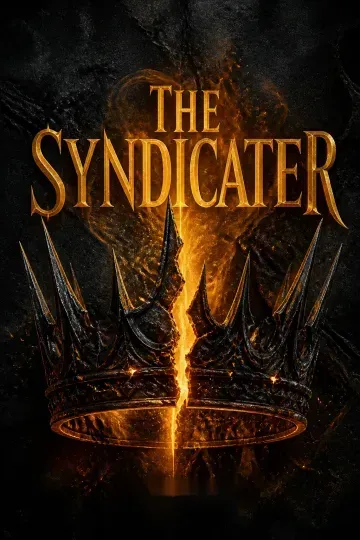
The Syndicater (the Snakehead)
The hidden master of The SyndicateThe unnamed leader of The Syndicate is a man consumed by ennui. He has spent decades climbing to the top of a global trafficking and corruption network, only to find that absolute power dulls the appetite. His solution is to create a worthy adversary: he uses his own genetic material in a eugenics project, hoping to breed a rival capable of challenging him. He is erudite, utterly amoral, and delights in manipulation. He treats the lives of children as commodities and views his own son1 as his 'greatest creation.' His death at the hands of that son1 fulfills his twisted design.
The Loyalist (Luna's biological mother)
Tristan's false mother and Syndicate operativePlaced in Tristan's3 family home under the guise of a stepmother, this woman spent years raising Tristan3 while secretly serving The Syndicate. She gave birth to Luna2 and, out of hatred for the father, handed the baby over to the organization. She later recruited her own daughter Chiara13 into the fold. Her loyalty to the Syndicater11 is absolute, shaped by a twisted adoration. She is elegant, cruel, and sees the destruction of families as 'just business.' Her revelation that she and Tristan3 share no blood undoes a lifetime of his self-loathing, but her final act is to force the same impossible choice that originally destroyed his childhood.
Chiara
Tristan's manipulative ex-lover and half-sisterOnce involved with Tristan3 and later exposed as a snake within the Maroni household, Chiara is the daughter of the loyalist12. She harbors a deep-seated resentment for being cast aside. Her attempt to infiltrate the rehabilitation center and her role in the basement kidnapping reveal her as a willing participant in her mother's12 schemes. She meets a brutal end.
Tempest Maroni
Dante and Amara's spirited daughterThe firstborn child of the Maroni family, born prematurely but full of fight. Her presence lightens every room and serves as a symbol of the new generation that will not inherit the traumas of their parents. She is doted on by all, including Xander9, who considers himself her protector.
Plot Devices
Project Ouroboros File
Exposes Syndicate's eugenics programA classified dossier hidden in Lorenzo Maroni's study, detailing a multi-decade program where The Syndicate supplied infants to government agencies for brutal experiments. The file connects the numbered victims (e.g., 5057) to the project, reveals that the Syndicater11 fathered Dainn1 as part of the experiment, and exposes the Alliance's complicity. Dainn1 steals it and uses it to understand his own origins and to dismantle the organization from within.
Morana's Codes
Rebooting The Syndicate's digital infrastructureA set of encryption-breaking codes created by Morana4 as a contingency against her enemies. Stolen years ago, she has been rebuilding them. The Shadow Man1 asks her to complete them, and she hands them over during their pier meeting. He uses them to seize control of The Syndicate's digital network, wiping old leadership and installing a new order that halts all child-related trafficking.
The Gold Choker Necklace
Symbol of possession and protectionA custom-made gold choker that Luna2 wears constantly. It was given to her by Dainn1 when they married, a tangible emblem of his claim over her. To outsiders, it is merely jewelry; to Luna2, it is a reminder that she belongs to someone who will burn the world for her. Dante5 initially fears it might be a slave collar, but later realizes it represents something far more complex.
The Number Sequence (5057, 5705)
Identifier for Syndicate victimsThe Syndicate branded its victims with numbers formed from the digits 5, 0, 7, which sum to 17, an allusion to the ouroboros (the snake eating its tail, forming an eight, 1+7). These numbers were used to categorize children in the trafficking and experiment networks. Zenith's number was 5057. Vin's final message contained scrambled versions of these numbers, helping lead to the project's discovery.
The Snake Ring (Ouroboros Symbol)
Mark of The Syndicate's hierarchyThe Syndicater11 wears a snake ring, a symbol adopted at all levels of the organization. The design shows two snakes eating their own tails, forming an infinity-shaped eight. It represents the cycle of predation and the self-devouring nature of power. The symbol appears on files, in branding, and in tattoos of members, becoming a visual shorthand for the network's hidden influence.
FAQ
Synopsis & Basic Details
What is The Syndicater about?
- A Dark Verse Conclusion: The Syndicater is the sixth and final book in the Dark Verse series, concluding the interconnected stories of characters deeply scarred by a shadowy criminal organization known as The Syndicate. It follows the intertwined fates of survivors, focusing on the search for a long-lost sister, the unraveling of a horrific human experimentation project, and the ultimate confrontation with the architects of their trauma.
- Found Family vs. Hidden Evil: At its core, the story explores the resilience of a found family forged through shared pain and loyalty, contrasting their bonds with the pervasive evil of The Syndicate, an organization built on secrecy, manipulation, and the destruction of innocent lives. The narrative weaves together multiple perspectives as the characters uncover hidden truths about their pasts and the true nature of the enemy they face.
- Breaking Cycles of Trauma: The central theme revolves around the characters' fight to break destructive cycles of violence, betrayal, and abuse that have plagued their lives and families for generations. Their journey culminates in a reckoning with the past and a determination to build a future free from the darkness that shaped them, particularly for the sake of the next generation.
Why should I read The Syndicater?
- Emotional & Thematic Depth: Readers should delve into The Syndicater for its raw emotional intensity and complex thematic exploration of trauma, healing, love, and resilience. The story doesn't shy away from the dark realities of the characters' pasts but offers a powerful message of hope and the possibility of finding light even after enduring unimaginable horrors.
- Satisfying Series Conclusion: As the final installment, it provides crucial answers to long-standing mysteries and brings the intricate plotlines and character arcs developed throughout the Dark Verse series to a compelling and often surprising conclusion. It ties together seemingly disparate events and characters, revealing a larger, interconnected narrative.
- Unique Character Dynamics: The book features deeply flawed yet compelling characters with unique psychological complexities and relationship dynamics, particularly the unconventional and intense bond between Dainn (the Shadow Man) and Lyla (Luna/Lyna), and the hard-won connections within the found family.
What is the background of The Syndicater?
- Decades of Criminal Operations: The story is set against the backdrop of a vast, secretive criminal empire, The Syndicate, which has been operating for decades, involved in illicit trades like human trafficking, drugs, and weapons. Its influence is deeply embedded, operating through layers of smaller companies and powerful individuals across different cities like Tenebrae City, Shadow Port, and Los Fortis.
- Project Ouroboros & Human Experimentation: A key historical element is Project Ouroboros, a horrific human experimentation program initiated in the 1950s and potentially restarted later, involving the abduction and numbering of babies for perverse scientific purposes. This project is revealed to be the root cause of much of the trauma experienced by the main characters, linking their seemingly separate pasts.
- Interconnected Underworld Families: The narrative draws upon the history and interactions of powerful underworld families and organizations, including the Tenebrae Outfit (Maroni), Shadow Port (Vitalio), Los Fortis (Villanova), and the mysterious Blackthorne Group, whose leaders and members have been unknowingly or knowingly entangled with The Syndicate for years.
What are the most memorable quotes in The Syndicater?
- "No tree, it is said, can grow to heaven unless its roots reach down to hell.": This epigraph, attributed to Carl Jung, sets the thematic stage for the entire book, suggesting that profound growth and ascension (heaven) are inextricably linked to confronting and integrating the deepest darkness and trauma (hell). It foreshadows the characters' journeys through their pasts to find healing.
- "We will become ashes before we are apart.": Spoken by Dainn to Lyla, this quote encapsulates the intense, possessive, and unbreakable nature of their bond. It signifies his absolute devotion and refusal to ever truly leave her, even when circumstances force temporary separation, highlighting their connection forged in the fires of trauma.
- "It ended where it begins.": This phrase, echoing the symbol of the ouroboros, is spoken by the Syndicater and later by Dainn in the epilogue. It represents the cyclical nature of the story, where the end of the old, corrupt era of The Syndicate leads to the beginning of a new one under Dainn's control, implying a transformation rather than complete destruction of the system.
What writing style, narrative choices, and literary techniques does RuNyx use?
- Multi-Perspective & Nonlinear Structure: RuNyx employs a multi-perspective narrative, shifting between the viewpoints of the main characters (Dainn, Lyla, Amara, Alpha, Morana, Dante, Zephyr, Tristan, Luna/Lyna, Xander), often within the same chapter or section. The timeline is frequently nonlinear, incorporating flashbacks and interludes (like the opening scene and the Syndicater's perspective) to gradually reveal interconnected histories and deepen the sense of mystery and fate.
- Sensory & Emotional Intensity: The writing style is characterized by intense emotional and sensory descriptions, particularly in depicting trauma, desire, and psychological states. The author uses vivid language to convey the characters' internal turmoil and physical sensations, making their experiences visceral for the reader.
- Symbolism & Motif Repetition: Recurring symbols (snakes, fire, water, specific objects like the gold necklace or the ring) and motifs (patterns, numbers, colors, physical scars) are woven throughout the text, adding layers of meaning and reinforcing key themes like cycles, transformation, and the lasting impact of trauma.
Hidden Details & Subtle Connections
What are some minor details that add significant meaning?
- Xander's Counting Patterns: Xander's habit of doing things in threes (chewing, sipping, patting backs) and his explanation of the significance of the number three in physics, math, and coding (Chapter 14) is a subtle detail that highlights his unique, gifted mind and how he finds comfort and order in patterns, contrasting with the chaos of his origins.
- Amara's Scar & Uncovered Neck: Amara's increasing comfort in leaving the scar on her neck exposed (Chapter 18, 29) is a quiet visual detail symbolizing her healing journey and growing acceptance of her past trauma, moving from hiding it to owning it as a part of her resilience.
- Lyla's Gold Necklace: The gold choker necklace Lyla wears (Chapter 13, 31) is initially noted by Dante for its expense and custom design, subtly hinting at her connection to wealth and someone who cherishes her. Later, it's revealed to be a gift from Dainn, becoming a tangible symbol of his devotion and her sense of belonging to him, even when they are apart.
What are some subtle foreshadowing and callbacks?
- Dainn's Ennui & Creating an Adversary: In the opening scene (And so it begins), the negotiator (Dainn) feels jaded and bored, contemplating creating a worthy adversary. This subtly foreshadows his later actions in dismantling The Syndicate and potentially taking control, transforming the system he helped build, and finding purpose in the challenge.
- The Number Patterns (5, 7, 17, 8): The recurring numbers 5 and 7, initially appearing in Vin's message (Chapter 27) and later linked to Project Ouroboros victims (5057, 5507 - Chapter 32), are subtly foreshadowed by Xander's focus on the number three (Chapter 14) and Morana's later deduction that 5+5+7=17 and 1+7=8, connecting the victim numbering to the Ouroboros symbol (Chapter 32).
- Lyla's Fear of Disappointing Tristan: Lyla's internal fear of disappointing her brother (Chapter 8, 20) subtly foreshadows the tension and conflict that arises when she reveals her relationship with Dainn (Chapter 30, 31), highlighting the emotional stakes of her hidden life.
What are some unexpected character connections?
- Amara and Dainn's Past Meeting: The revelation that Amara and Dainn (as Mr. Blackthorne) met years ago at a conference on child loss (Chapter 8, 22) is an unexpected connection. It subtly shows Dainn's long-term planning and interest in topics related to Lyla's trauma and Xander's situation, linking his public persona to his private motivations related to them.
- Chiara and Tristan's Biological Mother: The shocking reveal that Chiara is the daughter of Tristan's biological mother (Chapter 36) creates an unexpected and disturbing connection. It explains Chiara's obsessive behavior towards Tristan and adds another layer of twisted family history to the narrative, highlighting the pervasive corruption within the Maroni circle.
- Lex and Xander's Shared Past: The subtle hints that Lex and Xander knew each other for longer than initially believed, potentially sharing a "guardian" (Chapter 16, 27), reveal an unexpected depth to their bond and suggest they were together in a different, unknown location before the orphanage, hinting at Dainn's earlier involvement with both boys.
Who are the most significant supporting characters?
- Xander: Beyond being Luna's son and Tristan's nephew, Xander is significant as a symbol of hope and the future generation. His unique intelligence, resilience, and ability to form bonds (with Lex, Morana, Tristan, Zephyr, Amara, and even Dainn) make him a central figure in the found family's journey and a key motivation for breaking the cycle of trauma.
- Nellie: The manager of the rehabilitation center, Nellie, is a significant supporting character as she represents the compassionate, dedicated individuals working to heal the victims of The Syndicate. Her vigilance and communication with Amara (Chapter 16, 27) are crucial in uncovering subtle clues about the children's pasts and potential threats.
- Victor: Alpha's second-in-command, Victor, is significant for his loyalty and role in uncovering the truth about his brother Hector's betrayal and death (Chapter 3, 18, 30, 33). His dedication to Alpha and his willingness to help the found family (like investigating Zephyr's parents - Chapter 33) solidify his place as a trusted ally.
Psychological, Emotional, & Relational Analysis
What are some unspoken motivations of the characters?
- Dainn's Need for Control: Beyond protecting Lyla, Dainn's unspoken motivation is a deep-seated need for control, stemming from his own experiences as a subject of experimentation (Project Ouroboros). His desire to "reboot" The Syndicate (Chapter 32) and sit at the top is driven by a need to control the system that once controlled him, ensuring its power is wielded according to his will.
- Lyla's Fear of Disruption: Lyla's unspoken motivation for hesitating to fully integrate with her family and reveal her relationship with Dainn is a fear of disrupting the seemingly stable, loving lives they have built (Chapter 8, 20). Having grown up feeling like "damaged goods," she worries her presence and secrets will bring chaos and disappointment.
- Tristan's Need for Redemption: Tristan's relentless search for Luna and his fierce protectiveness of her and Morana are fueled by an unspoken need for redemption. He carries the guilt of failing to protect his sister as a child and later failing to prevent Morana's shooting, driving him to ensure the safety of the women he loves at any cost.
What psychological complexities do the characters exhibit?
- Trauma-Informed Attachment: Characters like Lyla and Dainn exhibit trauma-informed attachment styles. Lyla's need for physical validation and her comfort with Dainn's possessiveness (Chapter 8, 26) stem from her past lack of safety and control. Dainn's intense, exclusive devotion to Lyla (Chapter 1, 8, 17, 26, 38) is a complex response to his own emotional detachment and the void left by his traumatic upbringing.
- Processing Grief and Betrayal: Zephyr and Alpha demonstrate complex psychological processing of grief and betrayal. Zephyr's physical manifestations of stress and her later struggle with anxiety during pregnancy (Chapter 5, 16, 25, 33) show how trauma impacts the body. Alpha's difficulty trusting others after Hector's betrayal (Chapter 3, 18, 30) and his physical reactions to triggered memories (Chapter 33) highlight the lasting psychological impact of fractured trust.
- Identity and Belonging: Morana and Lyla grapple with complex issues of identity and belonging. Morana's struggle with her birth name and feeling like an "imposter" (Chapter 15, 32) reflects the psychological impact of her stolen identity. Lyla's journey to reconcile "Lyla" (the survivor) and "Luna" (the lost girl) and ultimately choose "Lyna" (the phoenix) (Chapter 20, 37, Epilogue 4) is a profound exploration of reclaiming selfhood after trauma.
What are the major emotional turning points?
- Tristan and Luna's Reunion: The moment Tristan and Luna (Lyla) physically reunite in the warehouse (Chapter 12) is a major emotional turning point. Their shared tears and immediate physical connection, despite years of separation and no memory on her part, signify the powerful, innate bond of family and the beginning of their healing process together.
- Luna's Confession: Luna's powerful confession to the found family about her past, her relationship with Dainn, and her act of killing Hector (Chapter 30, 31) is a pivotal emotional turning point. It shatters the perception of her as merely a victim, reveals the depth of her trauma and resilience, and forces the others to confront uncomfortable truths about the Shadow Man and the consequences of their world.
- Tristan's Proposal to Morana: Tristan placing the ring on Morana's permanently disabled left hand (Chapter 37, Epilogue 1) is a deeply emotional turning point in their relationship. It symbolizes his unwavering commitment and acceptance of her, scars and all, transforming her physical loss into a profound declaration of love and partnership in the face of adversity.
How do relationship dynamics evolve?
- Tristan and Luna: From Myth to Reality: Their relationship evolves from Tristan's idealized search for a lost sister (a myth) to a complex, real-world bond between two adults scarred by trauma (reality). They navigate the awkwardness of getting to know each other, the shock of her hidden life, and the pain of shared history, ultimately forging a deep, accepting sibling connection (Chapter 12, 19, 31, Epilogue 4).
- The Found Family's Deepening Trust: The relationships within the found family (Dante, Amara, Tristan, Morana, Alpha, Zephyr) deepen through shared crises and mutual support. Events like Morana's shooting, Zephyr's pregnancy, Luna's return, and the final confrontation solidify their bonds, moving beyond alliance to genuine, protective family (Chapter 5, 11, 16, 18, 30, 33, 35, Epilogues).
- Dainn and Lyla: From Savior/Saved to Partnership: Their dynamic evolves from Dainn as Lyla's rescuer and protector to a partnership of equals, albeit an unconventional one. Lyla gains agency and confidence, challenging Dainn and making her own choices (Chapter 8, 20, 26, 37). Their relationship becomes a unique blend of his possessiveness and her newfound strength, built on mutual trust and acceptance of their dark natures (Epilogue 4).
Interpretation & Debate
Which parts of the story remain ambiguous or open-ended?
- The Full Extent of Project Ouroboros: While the file reveals the horrific nature of the project (experimentation on babies, numbering), the full scope, specific experiments conducted, and the identities of all involved government organizations remain somewhat ambiguous (Chapter 32). The narrative focuses more on its impact on the characters than a complete historical breakdown.
- Dainn's True Name: Despite revealing his identity as Mr. Blackthorne and the Shadow Man, Dainn's biological birth name remains unknown to the reader and Morana (Chapter 32, Epilogue 1). This maintains a layer of mystery around his origins and reinforces his identity as someone who transcends conventional names and labels.
- The Future of The Syndicate under Dainn: While the epilogue states Dainn has taken over The Syndicate and is dismantling harmful trades (children, flushing the market), whether the organization can truly be reformed or if power will inevitably corrupt remains open-ended (Epilogue 4). His methods are still ruthless, leaving the long-term impact of his leadership open to interpretation.
What are some debatable, controversial scenes or moments in The Syndicater?
- Luna's Act of Killing Hector: Luna's confession that she killed Hector by burning him alive and found it satisfying (Chapter 31) is a controversial moment. It challenges the perception of her as a purely innocent victim and forces readers to grapple with the complex psychological impact of trauma, vengeance, and whether her act is justified or a disturbing consequence of her past.
- Dainn's Methods of Protection and Control: Dainn's actions, such as orchestrating events, manipulating others, and his intense
Dark Verse Series
About the Author
Other books by RuNyx


Download PDF
Download EPUB
.epub digital book format is ideal for reading ebooks on phones, tablets, and e-readers.








































