
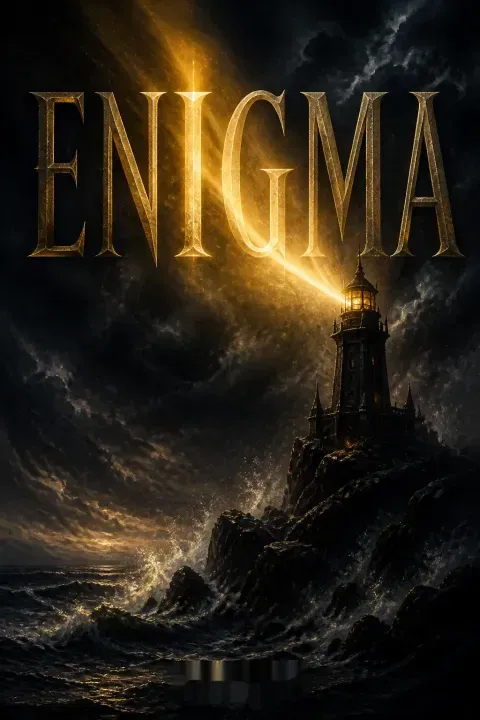


Plot Summary
Prologue
A girl stands on a moonless cliff above Mortimer University's beach, weighing her destruction. She is of sound mind, yet she steps to the edge, body resisting, scream cutting off abruptly as she plunges. No one witnesses; they are always watching.
Below, on the dark sand, she dies. The prologue cuts to twelve-year-old Salem1 at her grandfather's funeral, fascinated not by grief but by death's consequence. She has always been curious about what hides inside skin, ever since she fell into a pit at age four beside a dead rabbit.
At the funeral, her sister Olivia10 dismisses her as a freak. Salem1 then stumbles upon a mysterious online group called Mortemia, signs up under the username goldengirl01,1 and receives notice that she must complete an initiation task.
The prologue establishes the book's central preoccupation: death as both spectacle and mystery, viewed through Salem's clinical yet morbidly curious gaze. The opening suicide foreshadows the pattern of deaths that will consume the novel, while twelve-year-old Salem's fascination with corpses and her emotional detachment mark her as an outsider. Her sister's cruelty and her parents' indifference explain why she seeks belonging in the predatory online group Mortemia, a decision that will haunt her. The dual timeline, from the anonymous girl's jump to Salem's childhood trauma, weaves together the themes of surveillance, performance, and the price of curiosity. Salem's early encounter with death, and her family's inability to see her, primes her for the dangerous entanglements awaiting at Mortimer University.
A Corpse on the Beach
Twenty years old and newly arrived at Mortimer University, Salem1 walks the cliff at night and spots a human-shaped lump on the beach. Compelled by her forensic ambition and the ghost of her sister Olivia,10 she descends the carved steps to examine the body.
She begins taking clinical notes of the young female corpse, noting bruises on the wrist and a tiny symbol behind the ear. Lost in observation, she fails to notice another presence until a low, smoky voice tells her to stay still.
The stranger,2 a tall man with long dark hair and tattooed hands, is sketching the scene. He calls her little asp, toys with her questions, and warns her she has just put herself in a game she does not understand. When authorities approach, Salem1 snaps a photo of him and flees.
This opening scene immediately subverts gothic romance expectations: the heroine is not frightened by the corpse but professionally intrigued, her detachment revealing a mind shaped by trauma and social isolation. The unnamed man's compulsion to draw at a death scene, his casual menace, and his cryptic warning establish him as both threat and mirror. Their meeting over a dead body, with Salem documenting and him sketching, suggests two artists of different mediums confronting mortality. The photo she takes becomes a plot device that binds them, while his nickname 'little asp' hints at a deeper recognition she cannot yet place.
The Psychology Lecture Standoff
Salem1 attends Introduction to Psychology, taught by the renowned Dr. Merlin,3 a man whose scarred cheek and oily charm unsettle her instincts. The stranger from the beach, Caz2 strolls in late and takes his place as Merlin3's teaching assistant, a position he has acquired mysteriously.
During class discussions about nature versus nurture, Salem1 voluntarily raises her hand for the first time, arguing that innate traits persist regardless of external factors. Caz2 counters that environment can contain dark impulses.
Their intellectual sparring electrifies the room. After class, Salem1 visits Merlin3's office alone, pretending to seek comfort about her sister. There, on his mantelpiece, she spots Olivia's ruby pendant and knows Merlin3 is lying when he claims it belonged to his ex-wife.
The classroom debate externalizes the novel's psychological stakes: Salem believes people are born broken, Caz believes they can be restrained. Their attraction manifests as intellectual combat, a safer arena than vulnerability. Merlin's scar, revealed to be from a fingernail scratch, and Olivia's pendant on display, transform him from merely suspicious professor into sadistic trophy collector. Salem's decision to smile at him while recognizing her sister's jewelry demonstrates her capacity for cold performance, a survival tactic honed since childhood. The classroom becomes a microcosm of Mortimer's power structures, where knowledge is a weapon and everyone wears masks.
The Bonfire and the Dare
At the traditional freshmen bonfire, Salem1 attends reluctantly with her new friend Aditi.5 When a predatory senior named Derek designs a game to force a kiss from her, Salem1 subverts him by approaching Caz2 instead. She crosses the firelit clearing, reaches up on her toes, and presses a brief kiss to his lips while their eyes remain open.
The act shocks the crowd and wipes the smirk from Derek's face. Caz2 tastes the berry flavor she leaves behind and feels his obsession crystallize. Salem1 recognizes she has acted irrationally for the first time, drawn into his orbit despite her self-protective instincts. The dare breaks her pattern of isolation and publicly aligns her with the mysterious artist2 everyone fears.
The bonfire kiss is a negotiation of power disguised as a party game. Salem, who has been exploited by predatory men since childhood, weaponizes the dare to choose her own predator, someone whose danger she finds exhilarating rather than degrading. For Caz, the public claim disrupts his mission of staying detached: she has thrown the gauntlet, and his possessiveness overrides strategic caution. The scene crystallizes their dynamic of domination and surrender, where she cedes control in specific, charged moments while maintaining her icy autonomy elsewhere.
The Library Basement Panic
Needing answers about Merlin3's office access, Salem1 follows Caz2 into the library basement, a narrow stairwell that triggers her severe claustrophobia. Memories of being trapped in a casket at her grandmother's funeral overwhelm her.
She begins to hyperventilate, clawing at the locked door. Caz2 appears behind her, pressing her against the wall with his body, his voice cutting through her panic. He commands her to shed her skin, a bizarre instruction that somehow calms her.
With his pencil, he traces the contours of her face, her neck, down to the edge of her shirt, studying her with an artist's intensity. When she whispers a question about the dead girl and whether they made her do it, Caz2 freezes. He warns her not to follow him again and leaves her disoriented.
This scene establishes physical intimacy as a form of emotional regulation between them. Caz doesn't comfort Salem in conventional ways; he overwhelms her senses with his presence, his voice, his touch, redirecting her panic into arousal. His pencil tracing her body blurs the line between artistic study and sexual possession. The moment she mentions a coercive 'they,' his entire demeanor shifts, revealing that her investigation brushes against his own secret mission. The exchange demonstrates that vulnerability, for both of them, is inseparable from danger.
The Morning Walk Confrontation
After weeks of avoiding Caz2 following a disturbing dream, Salem1 takes a predawn walk and encounters Baron,7 a sharply dressed postgraduate who reveals he knows her childhood username goldengirl01.1 He offers an elliptical warning before Caz2 intercepts them, radiating territorial fury.
Caz2 demands to know her connection to Baron.7 When Salem1 deflects, he grabs her hair, presses his forehead to hers, and lists every way she has been off her routine: skipping the library, avoiding the girls, looking dead on her feet.
For the first time in her life, someone has noticed her breaking pattern. The recognition moves her profoundly. Caz,2 seeing her exhaustion, mutters an oath and drags her toward the library. When she glimpses his unusual black metal card bearing a vulture insignia, old terror resurfaces and she flees.
Caz naming Salem's deviations from her routine is more intimate than any physical touch. For a woman who went selectively mute for five years without her family noticing, being truly seen is the ultimate seduction. Baron's knowledge of goldengirl01 introduces a threat from her past that complicates her present investigation. The vulture card triggers Salem's trauma, associating Caz with the group that once exploited her, and her flight demonstrates that trust between them remains fragile. The scene balances romantic intensity with genuine menace.
The Murder Board Revealed
After Caz2 asks Aditi5 about Salem1's secrets, Salem1 decides to trust him with her murder board. She removes the cover in her dorm room, revealing ten years of deaths, autopsy photos, and string connections. Caz2 studies each element with professional intensity until he reaches the photo of an unidentified male who died falling from the lighthouse. His body goes rigid.
Rage, raw and barely contained, radiates from him. Salem1 recognizes the reaction and realizes the dead man is Caz2's brother, Laz.9 He had been investigating Olivia10's death for their father when he disappeared. Caz,2 unable to speak, leaves her room abruptly. Salem1 wraps her arms around him from behind, grounding him as he had grounded her. He leaves without a word.
The board is Salem's psyche exteriorized: methodical, obsessive, and fueled by a guilt she cannot articulate. Caz's violent reaction to his brother's photo transforms their relationship from mutual fascination to shared grief. Both have lost siblings to Mortimer's secrets, both have come seeking answers, and both have been hiding their true purpose. The scene also demonstrates how Salem's investigative skills give Caz information he desperately needed. Their parallel trajectories suddenly intersect, making them allies whether or not they trust each other.
Public Claim at the Café
After two days of silence, Caz2 spots Salem1 laughing with a male student at the campus café. Seeing her smile directed at someone else ignites a possessive fury. He storms inside, tells the man to leave, then fists Salem1's hair and kisses her deeply in front of the entire café, cameras clicking.
The kiss is not gentle; it is a declaration of ownership, a message to whoever is watching that she is off-limits. Salem,1 furious at his audacity yet secretly pleased by the public validation, ignores him afterward.
The video circulates, and campus gossip explodes. Later, in psychology class, Caz2 uses a hypothetical about criminal gangs and secret mortgages to hint at the society he is infiltrating, his pencil slick with her arousal from moments earlier.
Caz's public kiss is strategic as well as primal. By claiming Salem openly, he reinstates the protection her sister's death had granted her: a warning to the secret society that she is not to be touched. Salem's simultaneous fury and secret pleasure reveal her internal conflict between independence and the desire to be chosen. The classroom discussion about secrets as currency, with Caz tasting her on his pencil, merges intellectual and sexual provocation. Merlin's visible discomfort at the topic suggests Caz is deliberately provoking his handler.
The Forest Altar Ceremony
Salem1 wakes naked on a stone altar in the forest clearing, Caz2 painting her by moonlight. He has undressed her while she slept and positioned her as his living canvas. When she demands answers, he refuses until she lowers the blanket.
She complies, then deliberately touches herself while he works, their arousal building in tandem. Unable to resist, Caz2 bends her over the altar, fists her hair, and thrusts inside her. Her orgasm shatters her. Afterward, he reveals his true surname is Vanguard, not van der Waal.
Salem1 remembers that her father killed the Vanguards. In the ruined temple where Caz2 has been squatting, he tells her his story: his parents died, his uncle disowned him and his brother Laz,9 and Laz9 made a deal with Salem1's father to protect Olivia10 at Mortimer in exchange for scholarships.
The altar scene ritualizes their union in a space between sacred and profane. By painting Salem as she touches herself, Caz makes her an active participant in her own objectification; she is both muse and collaborator. His revelation about his true identity tests the fragile trust between them, linking their families through blood and debt. Caz's homelessness, sleeping in a temple ruin despite his wealth, underscores his ascetic devotion to his mission. The sex act on the altar becomes a sacrament of mutual possession, foreshadowing their later marriage.
Lara Walks Into the Sea
Earlier that day, Salem1 peeks through a keyhole in her advisor Dr. Bayne4's office and sees her classmate Lara6 performing oral sex on a stranger while Bayne4 discusses bouquets and gardeners in coded language. That evening, outside a bar, Salem1 finds Lara6 standing catatonic by the sea.
Salem1 grips her hands, asking who is making her do this. Lara6 utters one lucid word, bird, then climbs the low wall and walks into the dark water. Salem1 chases but the riptide threatens, and Baron7 pulls her back. Emergency responders search but find nothing.
When Caz2 arrives, he wraps Salem1 in his arms, warming away the shock. Lara6's body is never recovered. Salem1 now knows with certainty: a secret society is selecting female students, drugging them with a datura-derived compound, and driving them to death.
Lara's death crystallizes the novel's horror: the secret society operates through chemical coercion and psychological breaking, not merely murder. Her final word, bird, links to the vulture imagery haunting Salem's dreams and provides a crucial clue. Salem's near-drowning, pulled back by Baron, mirrors her sister's fate while establishing that she now has allies. The scene's horror lies not in gore but in the systematic destruction of will: Lara is already gone before she enters the water, her mind broken by drugs and ritual degradation. Salem's inability to save her reinforces the stakes of her investigation.
The Gala and Delirium
At the Mortimer charity gala, Caz2 unveils his long-awaited collection, Delirium. Eleven disturbing paintings line the walls, but the centerpieces are two massive canvases of Salem:1 one curled around a skull, snakes in her hair; the other lying on an altar with a shadowed figure gripping her serpentine locks.
The crowd recognizes her immediately. Salem1 walks to him through the staring guests, rises on her toes, and kisses him deeply, claiming him back. Her mother,11 present for the first time in years, tells Salem1 that Caz2 loves her and that Salazars always find their life partners at Mortimer.
Caz2 raises a hundred million for charity, keeping only the two paintings of Salem.1 Afterward, he proposes a future marriage, a merger of the Salazar and Vanguard lines.
The paintings transform Salem's trauma into art. Once, leaked photos made her a victim; now, Caz's immortalizing gaze makes her a goddess. The public declaration reverses the secrecy that has shrouded their relationship, daring the society to retaliate. Selina's observation that Salazars find life partners at Mortimer reframes the university not just as a place of death but of legacy and love. Caz's proposal, couched in terms of a business merger, is deeply romantic in its assumption of permanence. The scene represents Salem's full emergence from her shell, able to accept public adoration.
The Cave Ritual Exposed
On New Year's night, while Caz2 meets with his secret Order, Salem1 defies him and investigates the lighthouse. She finds a tunnel leading to an underground cave where five cloaked men in skeleton masks surround an altar. On the altar lies Melissa,8 unconscious.
Dr. Bayne4 removes his mask, revealing himself as the group's leader. Merlin,3 also unmasked, gloats about drugging and breaking Olivia,10 using video blackmail, and ordering her to end her life from the cliff. The new initiate, masked, approaches Salem,1 but when he nuzzles her neck, she recognizes Caz.2
He slams Merlin3's head against rock as Baron7's Order allies storm the cave, neutralizing the Mortemia faction. An Order leader apologizes to Salem1 and promises Melissa8 will receive medical care. The datura-based drug will flush from her system within a day.
The climactic revelation unmasks the conspiracy: Bayne, not Merlin, is the true architect, using his botanical expertise to synthesize a will-destroying drug. His warmth and fatherly concern were predation all along. Olivia's suicide is reframed as coerced murder, her mind chemically broken. Caz's role as double agent, seducing Salem as part of his cover while genuinely falling for her, complicates his loyalty. The Order, while morally ambiguous, enforces a code that protects families. Salem's survival depends on her lover belonging to the very secret world she has been investigating.
The Vanguard Legacy Restored
In the aftermath, Caz2 reveals his uncle revived Mortemia after being rejected by the Order for violating its codes. Salem1's father, investigating Olivia10's death with Laz9's help, had been targeting the group when he killed Caz2's uncle and then himself.
Caz2 gives Salem1 her sister's pendant, stolen from Merlin3's office. He proposes marriage, a formal merger of the Salazar and Vanguard lines their fathers once envisioned. Salem,1 still healing, hesitates: she wants to be the best version of herself first. Caz2 promises to wait however long she needs.
Five years later, she finally says yes at a friend's wedding, and they marry in a ceremony of nine guests. Salem1 becomes a respected forensic consultant solving cold cases. Caz2 remains an exclusive artist, and together they live in a historic poet's mansion, remembering to live.
The resolution honors gothic romance conventions while subverting them. The haunted lovers marry not in a castle but in an intimate ceremony, their bond stronger for having faced literal and psychological darkness. Salem's decision to wait, to become whole before legally binding herself, is a quiet act of agency. Her career as a cold-case consultant extends her childhood fascination with death into service, giving other families the closure she once craved. The epilogue's image of them working together, her examining bones while he stands guard against press vultures, suggests their partnership remains a refuge from the world's predation. Memento vivere, remember to live, becomes their shared creed.
Epilogue
Five years after the cave, Salem1 works as a forensic consultant specializing in cold cases. She and Caz2 are married, living in a renovated poet's mansion. He drives her to late-night crime scenes, stands guard against reporters who salivate for candid shots of the reclusive Vanguard heir.2
Examining skeletons at a riverside site, Salem1 realizes a decades-old serial killer has resurfaced. Caz2 casually suggests the killer may have simply moved locations, sparking an epiphany. She looks at the tattoo on his neck, memento vivere, remember to live, and kisses him amid the police tape and camera crews, grateful she is alive, he is alive, and they are living.
The epilogue nestles their dark romance within a future of quiet domesticity and shared purpose. Salem's professional detachment, once a symptom of trauma, has become a tool for justice. Caz's protective presence, once a threat to other men, has become a steady anchor. The reappearance of a serial killer suggests that their work is never truly finished: death remains inevitable, but the pursuit of answers gives life meaning. The epilogue's final image, their kiss amid forensic lights, affirms that even in proximity to death, life can be fiercely, stubbornly lived. The necklace Salem now wears is not Olivia's pendant but the shared tattoo, a permanent mark of belonging.
Analysis
At its core, Enigma is a study of how trauma shapes the architecture of desire. Salem1 and Caz2 are both forged by abandonment: she by a family that never saw her, he by relatives who stripped him of his birthright. Their attraction is not despite their damage but because of it. Salem1's childhood encounter with death, her years of elective mutism, and her violation by an online predator have taught her that safety is impossible, so she seeks a danger she can control. Caz2's rage, the legacy of watching his brother9 sacrifice everything, finds its only relief in possessing her. Their dynamic, dominance and surrender, rough sex and tender aftercare, is a consensual reenactment of powerlessness that restores agency to both participants. The novel argues that kink, when practiced with genuine care, can be a form of healing. Beyond the central romance, the book examines institutional rot. Mortimer University, with its ancient stones and elite pedigree, is a monument to the violence that preserves power. The secret societies, both the predatory Mortemia and the ambiguously moral Order, are not aberrations but the logical extension of a system built on exclusivity and silence. The Excellency Awards, meritocratic in name, became a hunting ground because the institution's values are predation dressed as tradition. Salem1's investigation exposes what everyone already knows but no one acts upon: that prestigious spaces protect predators and consume victims. The novel's gothic atmosphere, misty cliffs, haunted lighthouses, underground caves, is not decorative. It externalizes the psychological landscape of characters who live perpetually in fog, unsure whom to trust, navigating by instinct. When the fog finally lifts, the truth is disappointingly banal: Bayne4's evil is petty, Merlin3's is narcissistic, and the Order's justice is merely pragmatic. The real horror is not the supernatural but the human capacity to systematize cruelty. Yet the epilogue insists that life persists. Salem1's career as a cold-case consultant and her marriage to Caz2 are not escapes from darkness but integrations of it. They have learned to live alongside death, to find peace in the company of another person who understands that the wound is, as Rumi writes in the epigraph, the place where light enters.
Review Summary
Enigma received mixed reviews, with readers divided on its dark academia romance. Some praised the atmospheric writing, intriguing characters, and gothic vibes, while others found the plot underdeveloped and the romance lacking chemistry. Positive reviews highlighted the mystery elements and character growth, while critical reviews cited pacing issues and an anticlimactic ending. Many readers enjoyed the side characters, particularly Baron. Overall, fans of RuNyx's previous works seemed more likely to enjoy Enigma, while new readers had varied experiences.
Characters
Salem Salazar
Forensic-obsessed cold-case hunterA twenty-year-old legacy student at Mortimer University with sun-kissed skin, wild dark curls, and striking golden eyes. She has been fascinated by death since childhood, dissecting dead animals to understand why they died. Socially isolated and emotionally guarded, she went selectively mute for five years after a traumatic incident involving leaked childhood photos. She arrives at Mortimer on a mission to investigate her sister Olivia10's supposed suicide, which she refuses to accept. Beneath her icy, aloof exterior, she craves affection she has never received and struggles to trust anyone. Her forensic mind processes everything analytically, including her own feelings. She is intelligent, stubborn, and morally flexible in pursuit of truth. Her relationship with Caz2 cracks open her emotional shell, teaching her that she is capable of being loved.
Cazimir Vanguard (Caz van der Waal)
Double-agent artist seeking revengeA towering, tattooed postgraduate art student with long dark hair, mercury-gray eyes, and a voice described as sea and smoke. Born Cazimir Vanguard, he lost his parents and was disowned by his uncle, living on the streets with his older brother Laz9. He spent time in juvenile detention for killing the predator who exploited Salem1 as a child. Now at Mortimer under a false identity, his mission is to infiltrate a secret society and discover what happened to his missing brother. He is possessive, volatile, and artistically brilliant, expressing his darkness through disturbing paintings. His obsession with Salem1 begins when he recognizes her on the beach, and their relationship becomes the first thing that gives him peace. He communicates through physical dominance and quiet aftercare, understanding Salem1's needs better than she does.
Dr. Merlin
Sadistic psychology professorA handsome, charismatic psychology professor in his late forties with a scar on his cheek from a fingernail scratch. He collects trophies from his victims, displaying jewelry on his office mantel. He was responsible for drugging, blackmailing, and psychologically breaking Olivia10, ultimately ordering her to jump from the cliff. He recruits vulnerable students and uses group psychology principles to control his Mortemia faction. His narcissism makes him easy for Caz2 to manipulate, as he believes Caz2 genuinely wants to join his inner circle.
Dr. Bayne
Kindly advisor, secret cult leaderSalem1's academic advisor, an older man with white hair and a grandfatherly demeanor. He lost his daughter years ago, or so the story goes; in truth, his daughter was the first initiate he used in his ritual. He is the actual leader of the Mortemia faction, a skilled botanist who developed the datura-based drug that breaks victims' wills. His warmth and apparent concern for Salem1 are entirely predatory. He conducts the cave rituals while discussing his crimes in coded language about flowers and gardeners.
Aditi
Scholarship student, loyal friendA petite, dark-skinned fine arts student who works at the campus café. Warm, observant, and fiercely loyal, she becomes one of Salem1's first real friends. She has a casual sexual relationship with Baron7 that slowly deepens. She is tech-savvy and uses her café position to gather gossip and information, helping Salem1 navigate the university's secrets.
Lara
Mean girl turned victimA beautiful first-year student from Salem1's social circle who torments Salem1 about her family scandals. She is seen being degraded in Dr. Bayne4's office before walking catatonic into the sea. Her final lucid word, bird, provides a crucial clue about the secret society.
Baron Nathaniel Whitmore
Hacker ally with hidden motivesA sharply dressed postgraduate who knows everyone's secrets. He initially blackmails Salem1 by revealing her childhood username, then becomes an uneasy ally. A member of the Order, he works with Caz2 to infiltrate Mortemia. His relationship with Aditi5 begins as casual but grows possessive. He runs an ethical hacking business and serves as the group's intelligence resource.
Melissa
Artistic friend, targeted initiateA fine arts major and Salem1's friend, bubbly, impulsive, and from a warm family. She is drugged and selected as a Mortemia initiation victim, rescued by Salem1 and the Order. Later marries Jacob, the man who carried her from the cave.
Laz Vanguard
Caz's protective older brotherCaz2's older brother who made a deal with Salem1's father to protect Olivia10 at Mortimer in exchange for scholarships. He fell in love with Olivia10 and was investigating her death when he disappeared. His body was found at the lighthouse, listed as unidentified. His death drives Caz2's mission.
Olivia Salazar
Salem's dead sister, coercion victimSalem1's perfect older sister, beautiful, accomplished, and loved by all. She was drugged, raped, and blackmailed by Merlin3, who eventually drove her to jump from the lighthouse. Her final email to Salem1 contained the line, they're making me do this, which launched Salem1's investigation.
Selina Salazar
Salem's distant, image-conscious motherA classically beautiful woman who prized perfection and social standing. She failed to understand Salem1's eccentricities, focusing more on Olivia10. After losing her husband and elder daughter, she gradually mends her relationship with Salem1, eventually accepting Caz2 as a son.
Plot Devices
The Murder Board
Salem's investigation hubA large pinboard in Salem1's dorm room covered with photographs, autopsy reports, news clippings, and string connections documenting ten years of student deaths at Mortimer. All victims applied for the Excellency Awards. The board includes Olivia10's file and the unidentified male, who is later revealed to be Caz2's brother Laz9. Salem1 adds new evidence as she gathers it, including the symbol tattoo behind victims' ears. The board represents her obsessive drive for truth and becomes the first piece of herself she voluntarily shares with Caz2, catalyzing their alliance.
Datura-derived drug
Will-destroying botanical compoundA customized drug developed by Dr. Bayne4 from datura (jimsonweed, devil's trumpet) that induces hallucinations, catatonia, and suggestibility. Administered to female students selected for Mortemia initiations, it breaks their psychological defenses and makes them compliant to commands, including self-destruction. The drug's effects flush from the system within twenty-four hours, leaving no trace for autopsies. Its existence explains how Olivia10, Lara6, and other victims could be driven to apparent suicide without physical restraint.
Olivia's ruby pendant
Proof of Merlin's guiltA red ruby heart-shaped pendant with a tiny diamond, given to Olivia10 on her thirteenth birthday. It was missing from her body and possessions after her death, presumed stolen. Salem1 spots it in Merlin3's office catch-all bowl alongside other women's jewelry. Merlin3 claims it belonged to his ex-wife, but Salem1 recognizes it instantly. Caz2 later steals it during a break-in and returns it to Salem1 after the cave climax. The pendant serves as tangible evidence linking Merlin3 to Olivia10's death and as an emotional token of Salem1's mission.
The Lighthouse
Ritual site and death monumentAn abandoned 17th-century lighthouse on the rocks beyond the campus. Rumored haunted after its caretakers vanished, it contains a hidden staircase leading to an underground cave system where the Mortemia faction conducts its initiation rituals on a stone altar. Olivia10 jumped from the lighthouse; Laz9's body was found beneath it. Salem1's great-grandmother's journals record seeing cloaked figures there on full moon nights. The lighthouse symbolizes the hidden history of violence beneath Mortimer's prestigious surface.
Caz's paintings (Delirium)
Public declaration of love and possessionA collection of thirteen paintings: eleven disturbing works of death and darkness, plus two central canvases depicting Salem1 as a Medusa-like goddess, one curled around a skull and the other on an altar. Caz2 painted them after finding his muse in Salem1, and the act of creating them ended a yearlong artistic block. He unveils the collection at the Mortimer charity gala, raising a hundred million for charity while keeping the two Salem1 portraits. The paintings serve as an immortal declaration of his love, transforming Salem1's earlier trauma with leaked photos into empowered artistic representation.
FAQ
Synopsis & Basic Details
What is Enigma about?
- Dark Academia Mystery: Enigma follows Salem Salazar, a young woman attending the elite, historically significant Mortimer University, who is driven to investigate a series of unexplained student deaths, including her sister's apparent suicide, which she believes are connected to the prestigious Excellency Awards.
- Psychological Thriller & Romance: The narrative intertwines Salem's forensic investigation and her own psychological complexities with a charged, mysterious relationship with Caz van der Waal, a postgrad artist with a hidden past and a connection to the university's dark secrets.
- Uncovering Secret Societies: As Salem and Caz delve deeper, they uncover layers of manipulation, ritual, and violence linked to exclusive legacy societies operating within Mortimer, forcing them to confront their own traumas and the dangerous cost of truth.
Why should I read Enigma?
- Intriguing Psychological Depth: The novel offers a deep dive into the minds of characters shaped by trauma, exploring themes of loneliness, detachment, and the complex journey towards healing and connection, particularly through Salem's unique perspective.
- Atmospheric & Gothic Setting: Mortimer University, a sprawling castle perched on a cliffside, serves as a powerful, almost sentient backdrop, its ancient architecture, hidden passages, and local legends contributing to a pervasive sense of mystery and foreboding that enhances the plot.
- Captivating, Unconventional Romance: The relationship between Salem and Caz is central, built on mutual obsession, shared darkness, and intense chemistry, offering a unique exploration of trust, vulnerability, and finding solace in another person's chaos.
What is the background of Enigma?
- Centuries of Elite History: Mortimer University, established in the 1500s on the site of an even older castle, has a long history as an exclusive institution for the privileged, with traditions like the Excellency Awards and deep-rooted legacy families shaping its culture.
- Layers of Hidden Darkness: The campus and surrounding town are steeped in local folklore and dark rumors, from the lighthouse's vanishing caretakers and the library's past as a prison for "human sacrifices," suggesting a history of hidden violence and secrets beneath the academic facade.
- A Society of Power Brokers: The university is home to powerful, often invisible, secret societies for legacy students, hinted to be involved in shaping global power dynamics and maintaining their exclusivity through generations, adding a layer of high-stakes intrigue to the campus mysteries.
What are the most memorable quotes in Enigma?
- "Beauty is terror. Whatever we call beautiful, we quiver before it.": This epigraph from Donna Tartt sets a tone of unsettling beauty and the inherent danger or fear associated with things that are intensely captivating, mirroring the allure and terror of Mortimer and its secrets.
- "I would rather touch her hand if it were dead, than I would touch any other woman's living.": This quote, an epigraph from George Eliot, speaks to a profound, almost morbid obsession or singular devotion, foreshadowing the intense, death-adjacent connection between Salem and Caz.
- "You will always be fond of me. I represent to you all the sins you never had the courage to commit.": This quote, an epigraph from Oscar Wilde, encapsulates the dynamic between Salem and Caz, where Caz embodies the wildness and defiance that Salem, constrained by trauma and expectation, has suppressed, making him both alluring and a reflection of her hidden desires.
What writing style, narrative choices, and literary techniques does RuNyx use?
- Atmospheric and Sensory Prose: RuNyx employs rich, descriptive language, particularly focusing on sensory details (scents, sounds, textures) and environmental descriptions (mist, sea, old stone) to build a strong, often gothic, atmosphere that mirrors the characters' internal states.
- Dual Perspective and Internal Monologue: The narrative frequently shifts between Salem's and Caz's first-person perspectives, offering deep insight into their complex psychological landscapes, motivations, and often contradictory thoughts and feelings, enhancing the sense of intimacy and mystery.
- Symbolism and Foreshadowing: The author weaves in recurring symbols (vultures, the lighthouse, tattoos, specific colors) and subtle foreshadowing (throwaway lines, dreams, historical anecdotes) that gain significance as the plot unfolds, adding layers of meaning and hinting at future events and thematic connections.
Hidden Details & Subtle Connections
What are some minor details that add significant meaning?
- Salem's Childhood Rabbit Encounter: The early memory of Salem being trapped with a dead rabbit and fixating on its exposed insides foreshadows her later forensic interests and her unique, detached perspective on death, highlighting how early trauma shaped her coping mechanisms and career path.
- Merlin's Fingernail Scar: The small scar on Dr. Merlin's cheek, which Salem recognizes as likely caused by a fingernail, subtly hints at a past struggle or victim interaction, foreshadowing his violent nature and potentially linking him to a previous victim who fought back.
- The Skeleton Key: Caz possessing a skeleton key that opens almost every non-digital lock in the old university buildings is a seemingly small detail that signifies his deep, hidden access and knowledge of Mortimer's physical structure and secrets, hinting at his infiltration long before it's fully revealed.
What are some subtle foreshadowing and callbacks?
- The Mortemia Vulture Logo: The distinct vulture logo Salem sees when first stumbling upon the Mortemia group online, and later recognizes on Caz's membership card (though slightly different), subtly links Caz to the secret society from early on, foreshadowing his involvement and the group's predatory nature.
- Lara's "Bird" Comment: Lara's final, lucid word "Bird" before walking into the sea, combined with Aditi's later mention of Baron's "bird-watching group" and Salem's recurring vulture dreams, strongly foreshadows the bird/vulture symbolism associated with the secret societies and their victims/activities.
- Great-grandmama Evelin's Journal Entry: Evelin's account of seeing a cloaked figure near the lighthouse on a full moon night and hearing sounds, coupled with her missing journal entries around New Year's, subtly foreshadows the society's rituals taking place at the lighthouse around that time, linking the historical past to the present events.
What are some unexpected character connections?
- Caz as Salem's Childhood Stranger: The reveal that Caz was the rough teenage boy Salem met years ago, who accidentally broke her phone and later had her leaked photos buried, is a significant, unexpected connection that recontextualizes their initial meeting and Caz's early protective instincts towards her.
- Dr. Bayne's Daughter as a Victim: The shocking revelation that Dr. Bayne's own daughter was the first victim initiated by the radical group he helped lead adds a layer of twisted irony and depravity to his character, highlighting how deeply embedded the evil was within the university's seemingly benevolent figures.
- Laz Vanguard and Olivia Salazar's Relationship: The discovery that Caz's brother, Laz, was not only hired by Salem's father to protect Olivia but also became her romantic partner, creates a profound, tragic link between the two families and victims, explaining Caz's personal stake in avenging both his brother and Olivia.
Who are the most significant supporting characters?
- Aditi: More than just a friend, Aditi is a crucial source of information (working at BBC, tech-savvy friend) and unwavering emotional support for Salem, representing genuine connection and loyalty in a world of deceit. Her relationship with Baron also provides a direct link to the Order.
- Baron Whitmore: Initially appearing ambiguous or even threatening, Baron evolves into a complex ally for Caz and Salem. His position within the Order and his willingness to help, often for self-serving reasons or for Aditi, make him pivotal in the plan to dismantle Mortemia.
- Dr. Bayne: While ultimately revealed as a villain, Dr. Bayne's initial portrayal as a kind, empathetic advisor who has suffered loss makes his betrayal and complicity in the society's rituals particularly impactful, highlighting the theme of evil hiding in plain sight within trusted institutions.
Psychological, Emotional, & Relational Analysis
What are some unspoken motivations of the characters?
- Salem's Need for Control: Beyond seeking justice, Salem's obsession with forensic investigation and uncovering truth is driven by a deep-seated need for control in a life marked by unpredictable trauma and helplessness (the pit, the casket, the leaked photos), where understanding the 'how' and 'why' provides a sense of agency.
- Caz's Search for Peace: While driven by vengeance for his brother, Caz's pursuit of Salem and his need for her presence are motivated by a subconscious search for peace and stability. He explicitly states she gives him "a modicum of peace in a world of chaos," revealing a deeper emotional need beneath his rage and mission.
- Merlin's Sadistic Pleasure: Dr. Merlin's primary motivation isn't just power within the society, but a profound, sadistic pleasure in psychologically breaking people, particularly those who are "good" or "bright," as evidenced by his gleeful description of tormenting Olivia and his collection of victim trophies.
What psychological complexities do the characters exhibit?
- Salem's Detachment and Vulnerability: Salem exhibits a complex psychological duality, presenting as cold, detached, and analytical due to trauma, while secretly harboring deep vulnerability, a craving for connection, and a capacity for intense emotion that is only unlocked by Caz and her friends.
- Caz's Controlled Rage: Caz embodies the psychological complexity of controlled rage. His anger is a constant, powerful force, but he has developed intense discipline (martial arts, art) to channel it, making him unpredictable and dangerous, yet capable of profound gentleness and protection towards Salem.
- The Impact of Loneliness: Both Salem and Caz are deeply marked by loneliness and abandonment. Salem's isolation leads to her early fixation on death and difficulty forming bonds, while Caz's loss of his family and brother fuels his solitary mission, making their eventual connection a powerful antidote to their shared pain.
What are the major emotional turning points?
- Salem's Panic Attack in the Library: Salem's claustrophobia-induced panic attack in the library stairwell is a major emotional turning point, forcing her to confront her trauma and allowing Caz to witness her vulnerability, shifting their dynamic from rivalry to reluctant intimacy and protection.
- Caz Seeing Laz's Photo on the Murder Board: Caz seeing his brother's photo on Salem's murder board, confirming his death and the manner of it, is a devastating emotional turning point that unleashes his raw pain and rage, leading to a moment of profound vulnerability where he allows Salem to comfort him.
- Salem's Conversation with Her Mother: Salem's phone call with her mother, where her mother expresses genuine love and acknowledges Salem's strengths, is a significant emotional turning point in their relationship, beginning the process of healing and challenging Salem's long-held belief that she was unloved and a disappointment.
How do relationship dynamics evolve?
- Salem and Caz: From Rivals to Refuge: Their relationship evolves from initial suspicion and intellectual sparring to a complex bond built on shared trauma, mutual understanding, intense physical chemistry, and eventually, deep emotional trust and love, becoming a refuge from the dangerous world around them.
- Salem and Her Friends: From Isolation to Chosen Family: Salem's dynamic with Aditi and Melissa transforms from cautious acquaintance to genuine, supportive friendship. They actively choose to include and protect her, helping her break down her walls and experience true camaraderie and belonging for the first time.
- Salem and Her Mother: From Distance to Connection: The relationship between Salem and her mother shifts from polite, strained distance, marked by unspoken grief and misunderstanding, to tentative connection and eventual reconciliation, as they both acknowledge past hurts and express genuine love and appreciation for each other.
Interpretation & Debate
Which parts of the story remain ambiguous or open-ended?
- The Full Extent of the Order's Influence: While the Order is presented as the "good" secret society that dismantles Mortemia, the full scope of its power, activities, and potential moral compromises remains somewhat ambiguous, hinting that even the "legitimate" society operates in morally gray areas.
- The Fate of Mortemia Members: While Merlin and Bayne are captured, the ultimate fate of the other masked Mortemia members and the extent to which they face justice within or outside the Order is not explicitly detailed, leaving some ambiguity about the long-term consequences for all involved.
- The Nature of the "Bird" Symbolism: While the vulture/bird symbolism is strongly linked to the secret societies and victims, its precise meaning within the rituals or hierarchy of Mortemia/the Order remains open to interpretation, adding a layer of symbolic mystery.
What are some debatable, controversial scenes or moments in Enigma?
- The Library Stairwell Scene: The scene where Caz corners Salem in the narrow stairwell, triggers her claustrophobia, and then uses her vulnerability to initiate a sexual encounter is highly debatable. Some readers might view it as a problematic power dynamic and non-consensual act, while others might interpret it through the lens of trauma response, mutual attraction, and Caz's specific, albeit unconventional, method of helping her confront her fear by overwhelming it with sensation.
- The Altar Scene: The climax where Caz has sex with Salem on the altar in the cave, immediately after rescuing her from a traumatic situation, is controversial. While presented as a moment of intense connection and reclaiming agency for Salem, the context of the location and the preceding events could be interpreted as disturbing or exploitative by some readers.
- The Public Kiss at BBC: Caz kissing Salem publicly at the café after she's been avoiding him, effectively "claiming" her in front of others, can be debated. While framed as a protective gesture and a declaration of his feelings, it also asserts possession in a public space without her explicit consent at that moment, raising questions about control and autonomy within their relationship dynamic.
Enigma Ending Explained: How It Ends & What It Means
- Mortemia's Downfall and Justice: The radical Mortemia society, responsible for the student deaths and rituals, is dismantled by the intervention of the older, more powerful Order. Merlin and Bayne are apprehended, bringing a form of justice for the victims, including Olivia and Laz. This signifies the breaking of a specific cycle of violence and corruption within Mortimer.
- Healing and Found Family: Salem and Caz, along with their friends Aditi and Melissa, and Salem's mother, form a chosen family unit that provides love, support, and healing from their past traumas. Salem reconciles with her mother, and Caz finds a maternal figure in Selina, highlighting the theme that connection and acceptance are crucial for overcoming isolation and pain.
- Love as Survival and Legacy: The epilogue shows Salem and Caz years later, thriving in their careers (forensic consultant and acclaimed artist) and deeply in love. Their relationship, forged in shared darkness and vulnerability, becomes a testament to survival and the power of love to create a new legacy, symbolized by Caz's art immortalizing Salem and their connection, and their shared tattoo "memento vivere" (remember to live). The ending suggests that while darkness and mystery may still exist (ongoing cold cases, the Order's secrets), they choose to focus on living fully and finding peace together.
About the Author
Other books by RuNyx





Download PDF
Download EPUB
.epub digital book format is ideal for reading ebooks on phones, tablets, and e-readers.








































