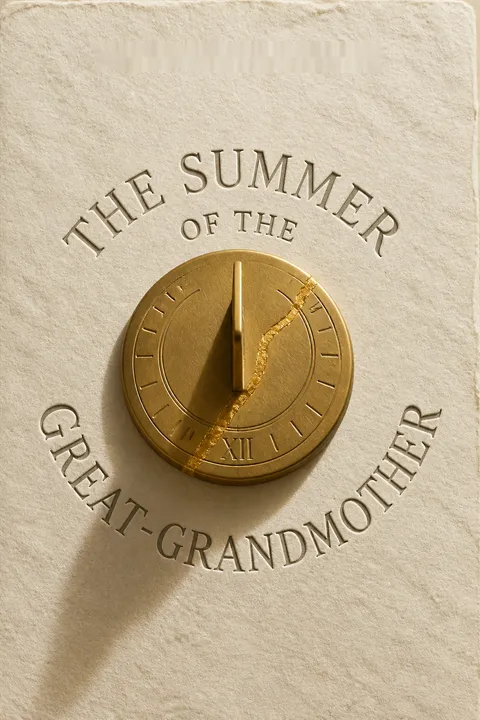

Key Takeaways
1. The Swift Descent of Senility and the Author's Profound Struggle
My mother’s plunge into senility reminds me of that toboggan ride.
A rapid decline. The summer marks a "swift descent" for the author's ninety-year-old mother, a period of accelerating senility likened to an uncontrollable toboggan ride down a mountainside. This decline is characterized by confusion, fear, and a loss of familiar recognition, making each day an extreme experience for the family. The author observes her mother's mind becoming increasingly clouded, with only rare, brief flashes of her former self.
Emotional numbness. The author experiences a profound emotional numbness, an "anesthesia" akin to the initial moments after a deep cut, as she grapples with her mother's altered state. This detachment is a coping mechanism against the overwhelming pain of witnessing her mother's degeneration, particularly the "infinitely pathetic" loss of control and identity. Despite this, an "enormous wave of protectiveness" surges through her, highlighting the deep, if conflicted, bond.
Unforeseen demands. The family had anticipated increased care needs, assembling a "bouquet of young girls" for round-the-clock assistance. However, the reality proves "more exacting than any of us anticipated," with the mother requiring constant attention, especially at night, and exhibiting challenging behaviors like refusing food or expressing a constant desire to "go home." This relentless demand tests the author's endurance and forces her to confront the harsh realities of her mother's condition.
2. The Indispensable Role of Family and Community in Crisis
The strength of the family gives me strength.
A flowing household. The mother's arrival is not into an isolated setting, but a "house which, like a river, continuously flows with living," filled with four generations of "opinionated, noisily articulate, varied and variable beings." This vibrant, multi-generational household, including children, grandchildren, and a retinue of young helpers, provides a constant backdrop of life, laughter, and activity, even amidst the somber reality of the great-grandmother's decline.
Collective caregiving. The burden of care is shared by an "extraordinary" group of young helpers—friends of the children—who provide twenty-four/seven support, demonstrating remarkable patience and gentleness. Beyond the paid help, the wider community, including neighbors and friends, pitches in with meals, support, and understanding, embodying a collective spirit of compassion. This communal effort allows the family to keep the mother at home, a privilege the author deeply appreciates, contrasting it with the "horrors" of nursing homes.
Interdependence and support. The author acknowledges that she "couldn't get along without them," recognizing the profound interdependence that sustains the household. Discussions with family members, even when reaching "no decisions," provide crucial "sustained and supported" feelings. This collective strength is vital for navigating the emotional and practical challenges, allowing the author moments of respite and perspective, and affirming the belief that "we are supposed to share all of life with each other, dying and decay as well as feasting and fun."
3. Memory as the Essence of Self and the Storyteller's Tool
Her loss of memory is the loss of her self, her uniqueness, and this frightens me, for myself, as well as for her.
Memory defines identity. The author deeply connects memory to identity, observing that her mother's fading recollections equate to "the loss of her self, her uniqueness." This realization is profoundly unsettling, not only for her mother but also for the author, who relies on memory as her "most essential tool as a storyteller." The inability to recall shared pasts, like the spontaneous trip to Castle Conway, highlights the tragic erosion of her mother's integrated being.
The storyteller's trove. For the author, memory is not merely recall but a "creative unconscious" that stores sensory experiences and narratives, surfacing them when needed for her stories. She reflects on how her subconscious "flipped it up out of the water" for her, allowing her to describe places and people from a childhood summer she was thought to have ignored. This "enormous underwater treasure trove" is a vital source for her writing, contrasting sharply with her mother's "sunken ship" of a mind.
Honoring the past. The author's journey through her mother's past, through stories of Mado and Greatie, is an attempt to grasp the "ousia"—the essence of being—of these women and, by extension, her mother. She recognizes that her own identity is deeply intertwined with her forebears, who "bequeathed to me the basic structure of my own particular pattern, both in my cells and in the underwater areas of my imagination." This exploration of ancestral memory is a way to honor her mother's full life, even as her present self diminishes.
4. Confronting Fear, Death, and the Paradox of Love
I want my mother to die.
A desperate prayer. The author confesses a raw, painful desire for her mother's death, crying out to the stars, "Take her, God! Take her!" This is not a lack of love, but a desperate plea for release from the indignity and suffering of senility, a state she describes as "unliving, unloving." This stark admission reveals the profound anguish of witnessing a loved one's prolonged decline, challenging conventional notions of grief and compassion.
The fear of becoming. This desire is intertwined with a deep personal fear: "Will I ever be like that, a travesty of a person?" The mother's condition serves as a stark memento mori, forcing the author to confront her own mortality and the potential loss of self. This fear, though selfish, is a natural human response to the "horrors of our time" – the prospect of institutionalized decay and the loss of dignity in old age.
Love's complex demands. The author grapples with the paradox of love in the face of such suffering, questioning how to "honor her body as it is now, and as it will be when she dies." She acknowledges that "the love of truth without the truth of love is usually cold and cruel," suggesting that true love, though sometimes "irrational, absurd," is what enables her to endure. Her ultimate hope is to love her mother "enough, when the time comes, to let her go into a new birth, a new life of which I can know nothing."
5. The Healing Power of Art, Music, and Intuition
If I want an answer to my questions about all-rightness, all I need to do is play the C minor Fugue.
Music as solace and perspective. Music, particularly Bach's C minor Toccata and Fugue, serves as a powerful "outlet" and "exorciser of anguish" for the author. When overwhelmed by her mother's condition or her own frustrations, playing the piano brings her "back into enough perspective so that I can return to Mother with love." This act of engaging with complex musical structure provides a sense of order and meaning in a chaotic time.
Intuition over intellect. The author frequently contrasts the limitations of the "intellectual self" with the deeper understanding offered by intuition. She finds meaning in the "language of the fugue," in the "underwater world" where she meets characters and comprehends mysteries, rather than in "intellectual certainty" or "provable fact." This reliance on intuition allows her to grasp truths that defy rational explanation, such as the ultimate meaning of life and death.
Art as integration. Art, in its various forms—music, poetry, storytelling—is presented as "the great integrater," bridging the "rift" between conscious and intuitive minds, between mind and heart. It allows for a "wholeness instead of brokenness," enabling the author to affirm the "irrationality of Christmas" and the "unacceptable Christianity" that transcends mere logic. This integration is crucial for navigating the complexities of her mother's decline and her own spiritual journey.
6. Reconciling the Past Self with Present Reality
How do I reconcile my mother then and my mother now?
A stranger in familiar form. The author struggles to reconcile the vibrant, adventurous, witty mother she knew with the "stranger" now sitting on the sofa, "shrunken and lined," with "the light behind her face... no longer there." This disjunction is deeply painful, as the present reality obscures the rich tapestry of her mother's past, a past filled with travel, music, and a "flair for business" that kept the family afloat during lean times.
The weight of memory. Memories of her mother's past, from her elegant dressing table rituals to her spontaneous trip to Castle Conway, highlight the stark contrast with her current diminished state. The author reflects on her mother's "incorrigible scattering of greenery" when arranging flowers, a small detail that evokes a lost talent and a vibrant personality. These recollections, though cherished, intensify the grief for the person her mother once was.
Accepting the "ousia." Despite the profound changes, the author strives to see beyond the physical and mental decline to the "ousia"—the essence of her mother's being—that remains. She acknowledges that the "atypical rage" and "wild accusations" are not from the true mother she knows, but a manifestation of frustration against her inability to control her own deteriorating brain. This understanding, though intellectually grasped, is a constant emotional challenge, requiring her to love the person beyond the affliction.
7. Embracing Imperfection and Rejecting False Guilt
I don’t think real guilt is ever much of a problem for us. It’s false guilt that causes the trouble.
The burden of perfectionism. The author identifies "perfectionism" as an "imprisoning" force, leading to "false guilt" and making her "overtired and irritable." She recounts a conversation with a friend that illuminated this distinction, realizing that striving to be the "perfect daughter" or "in control of the situation" is not only arrogant but "stupid," draining her energy and hindering her ability to truly help.
Freedom in acceptance. By accepting her own "real guilt" for inevitable human failings, the author finds a measure of freedom. This acceptance allows her to shed the "load of false guilt" and engage with life more authentically, whether it's taking time for herself at the brook or making difficult decisions about her mother's care. This freedom is crucial for her to be a "wife and strength and help" to her husband, and a "daughter to my mother."
Beyond human control. The author challenges the humanist conceit that "man is in control of the universe," arguing that this belief leads to immense self-blame when things inevitably go wrong. Her own struggles with pain and defeat, and her mother's loss of control, reinforce the understanding that much of life is beyond human manipulation. This perspective allows her to find peace in acknowledging her limitations and trusting in a greater, loving power.
8. Life as a Continuous Cycle of Births and Deaths
Our lives are a series of births and deaths: we die to one period and must be born to another.
Metaphorical deaths and births. The author views life as a continuous process of "births and deaths" that extend beyond physical beginnings and endings. These include transitions from childhood to adolescence, from single to married life, and from one way of living to another, such as moving between city and country. Each transition involves a "death to one period and... birth to another," shaping the self.
Dying freely and consciously. The author sees her mother's decline as "practice in dying" for herself, emphasizing the importance of "doing my dying freely, consciously." This involves letting go of "self-will, self-indulgence, self-deception," which, paradoxically, makes one "more fully alive." She recognizes that true aliveness comes from being "wholly involved in someone or something else," rather than being consumed by self.
The violence of new birth. Drawing an analogy to physical birth, the author reflects on the "violence with which the mother works to expel the baby but by the violence with which the baby struggles to be born." This perspective reframes her mother's struggle not just as a decline into death, but as a potential "new birth," a traumatic but ultimately transformative journey into the unknown. This "good analogy" offers a hopeful, albeit challenging, interpretation of her mother's final passage.
9. The Mystery of God's Love Amidst Suffering and Loss
What that ultimate meaning may be I do not know, because I am finite, and the meaning I hope for is not.
Groping for ultimate meaning. The author grapples with the profound question of ultimate meaning, especially in the face of her mother's suffering and the broader injustices of the world. She acknowledges her own finiteness and inability to fully comprehend God's infinite plan, yet clings to the hope that "God, if he is God, if he is worth believing in, is a loving God who will not abandon or forget the smallest atom of his creation."
The paradox of divine love. The author confronts the "irrationality" and "folly" of God's love, particularly in the narrative of the Crucifixion and the Old Testament stories of divine wrath. She questions how a loving God could permit suffering, harden hearts, or cause the death of innocents. This struggle, however, is an "affirmation of faith," as "you cannot get angry at someone who is not there," leading her to a deeper, albeit often painful, understanding of God's ways.
Faith beyond comprehension. Her faith is not based on "provable literalism" or a "small and comprehensible" God, but on the "mysterium tremendens et fascinans." She finds strength in the "language of the fugue" and the "poetry" of the Creed, recognizing that faith is not legislated but experienced intuitively. This allows her to affirm God's love even when her "Christology is extremely shaky," finding solace in the "particularity" of the Incarnation and the ultimate value of all life.
10. The Enduring Legacy of Forebears and the Intergenerational Dance
Without them I would be someone else; I would not be me.
Ancestral imprints. The author deeply feels the influence of her forebears—Mado, Greatie, and Judge William Johnson—who left "indelible imprints on her psychic genetic pattern." Through their stories, she connects with a lineage of courage, compassion, and intellectual curiosity, recognizing that these "uneducated" women possessed a vast knowledge and spirit that shaped her own identity. Their lives, filled with resilience and generosity, provide a "tradition of compassion and generosity to live up to."
The shifting dance of generations. With her mother's passing, the author recognizes a "pattern has shifted; we have changed places in the dance. I am no longer anybody’s child. I have become the Grandmother." This new role, though initially unwanted, signifies a continuation of the family's intergenerational narrative. She observes her grandchildren, Léna and Charlotte, absorbing stories of "Gracchi," ensuring that the legacy of their great-grandmother will live on, even if in fragmented form.
Love's continuity. The ultimate lesson from her forebears and her mother is the "refusal to love is the only unbearable thing." This truth, articulated by her granddaughter Charlotte, underscores the enduring power of love across generations. The author's commitment to her family, her storytelling, and her faith is a testament to this legacy, ensuring that even as individuals pass, the "ousia" of their love and being continues to resonate, shaping those who come after.
Review Summary
Reviews of The Summer of the Great-Grandmother are largely positive, averaging 4.16/5. Many readers connect deeply with its themes of aging, dementia, and anticipatory grief, finding L'Engle's emotional honesty both moving and relatable. The family history sections in the middle divide readers — some find them fascinating, others dull or self-congratulatory, with a few noting problematic handling of slavery. The book's reflections on mortality, dignity, and intergenerational storytelling resonate strongly, particularly with readers experiencing similar caregiving situations.
People Also Read

Crosswicks Journals Series
About the Author



Download PDF
Download EPUB
.epub digital book format is ideal for reading ebooks on phones, tablets, and e-readers.








































