
Plot Summary
Rome's Broken Survivor Returns
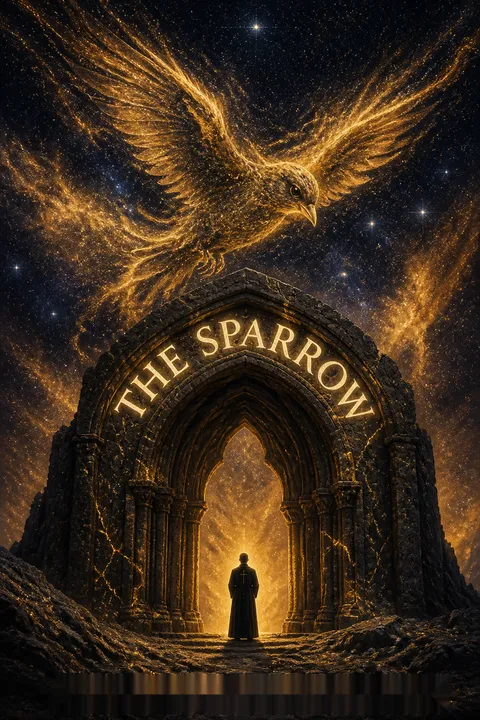
In 2059, Father Emilio Sandoz, sole survivor of the Jesuit mission to Rakhat, is smuggled back to Rome, physically and emotionally destroyed. The world is abuzz with rumors of scandal and horror, and the Jesuits shield him from the press and public. Sandoz is haunted by trauma, unable to speak of what happened, and the Society of Jesus is desperate to understand the truth. His superiors, especially Father General Giuliani, are patient but determined, knowing that the world demands answers. Sandoz's silence and suffering set the stage for a slow, painful process of revelation, as the Jesuits begin to probe the mystery of what happened on Rakhat and why their mission ended in disaster.
Signals from the Stars
In 2019, at the Arecibo Observatory in Puerto Rico, astronomer Jimmy Quinn detects an extraordinary radio signal: alien music, unmistakably sentient, from the Alpha Centauri system. The discovery electrifies the scientific community and the world, but the Jesuits, with their history of exploration, act with unprecedented speed. They see the music as a sign of God's other children and an opportunity for contact. The signal's beauty and proximity inspire awe and hope, but also foreshadow the dangers of misunderstanding and the limits of human knowledge. The music's call sets in motion a chain of events that will draw together a unique group of people for a journey that will test faith, friendship, and the very meaning of humanity.
Gathering the Chosen Few
The Jesuit mission to Rakhat is assembled not by bureaucratic process, but by the organic convergence of talent, friendship, and circumstance. Father Sandoz, a gifted linguist and Puerto Rican Jesuit, is joined by Jimmy Quinn, the astronomer who found the signal; Sofia Mendes, a brilliant but emotionally scarred AI analyst; Anne and George Edwards, a doctor and engineer couple; and others, including the wise and wry Father Yarbrough. Their relationships are forged in the crucible of shared meals, laughter, and mutual respect, but also by the wounds and secrets each carries. The team's formation is marked by a sense of destiny, as if each member has been prepared by life's hardships for this singular purpose.
The Mission's Unlikely Genesis
The mission is born from a blend of faith, science, and serendipity. The Jesuits act quickly, seeing the music as a divine invitation, while the world debates and hesitates. The team's technical expertise, Sofia's connections to asteroid mining, and the Society's resources make the impossible possible: a plan to travel to Rakhat using a modified asteroid as a starship. The mission's origins are both practical and mystical, with each member's skills and wounds fitting together like a puzzle. The sense of being "called" is palpable, but so is the awareness that every step is a gamble, and that the line between providence and coincidence is thin and perilous.
Bonds of Friendship Forged
As the team trains and prepares, bonds of deep friendship and love are forged. Sandoz finds a surrogate family in the Edwardses, and a complex, unspoken connection with Sofia. Jimmy's unrequited love for Sofia, Anne's maternal wisdom, and the camaraderie of shared hardship create a web of relationships that will sustain—and later haunt—them. The mission's emotional core is not just faith, but the human need for connection, understanding, and forgiveness. These bonds will be both a source of strength and a cause of unbearable pain as the mission unfolds.
Sofia's Indentured Past
Sofia Mendes's story is one of survival against impossible odds. Orphaned in war-torn Istanbul, she sells herself into intellectual indenture to escape starvation, becoming a tool for powerful men. Her brilliance and emotional detachment are both armor and wound. Sofia's journey to freedom is hard-won, and her eventual inclusion in the mission is both a professional triumph and a personal risk. Her relationship with Sandoz is marked by mutual respect, intellectual sparring, and a growing, dangerous intimacy. Sofia's past is a reminder of the world's cruelty, but also of the possibility of redemption and new beginnings.
Discovery: The Music of Rakhat
The confirmation of the alien signal from Rakhat changes everything. The team's excitement is tempered by the enormity of what they face: the technical, ethical, and spiritual challenges of first contact. The music is beautiful, but its meaning is unknown, and the team debates whether their mission is scientific, religious, or both. The world's reaction is a mix of awe, skepticism, and greed, but for the Jesuits and their companions, the discovery is a call to action—and a test of faith. The music's allure is irresistible, but it conceals dangers that none can foresee.
The Jesuit Mission Assembles
The mission's final preparations are marked by technical challenges, personal doubts, and moments of grace. The team's training is grueling, and the reality of leaving Earth—and possibly never returning—becomes stark. Each member must confront what they are leaving behind, and what they hope to find. The Jesuits' spiritual exercises, the team's laughter and arguments, and the ever-present sense of being part of something larger than themselves create a mood of anticipation and dread. The launch is both an act of faith and a leap into the unknown, with no guarantee of success or survival.
Launching Toward the Unknown
The voyage to Rakhat aboard the Stella Maris is long, strange, and transformative. The crew adapts to the asteroid-ship's peculiarities, endures the physical and psychological stresses of space, and deepens their relationships through music, study, and shared rituals. The passage of time is distorted by relativity, and the crew's isolation becomes both a crucible and a refuge. Moments of joy and humor are interspersed with tension and longing. The journey is not just across space, but into the depths of each character's soul, as they confront their hopes, fears, and the limits of their faith.
Rakhat: First Contact
Landfall on Rakhat is a moment of awe and terror. The planet is beautiful, its life forms wondrous and strange. The team's first contact is with the Runa, a gentle, communal, and seemingly innocent species. Sandoz's linguistic genius and Askama, a Runa child, become the bridge between worlds. The humans are welcomed, and a period of mutual learning and apparent harmony follows. The team is lulled into a sense of safety, believing they have found Eden. But beneath the surface, cultural misunderstandings and unseen dangers are gathering, and the seeds of tragedy are sown.
Eden's Fatal Mistake
The humans' introduction of gardening to the Runa, meant as a gesture of friendship and self-sufficiency, has catastrophic effects. The Runa's reproductive cycle, controlled by the predatory Jana'ata, is disrupted, leading to a population boom. The humans, ignorant of the planet's true social structure, unwittingly trigger a crisis that will bring violence and death. The fragile peace is shattered as the Jana'ata respond with brutal force, and the team's illusions of benevolence and control are destroyed. The cost of interference is paid in blood, and the mission's purpose is thrown into question.
The Price of Interference
The Jana'ata's response to the Runa's unauthorized breeding is swift and merciless. Babies are slaughtered, villages destroyed, and the humans are powerless to stop the carnage. Sofia's act of resistance inspires the Runa but leads to her death, along with Jimmy and George. Anne and D.W. are killed by outcast Jana'ata. Sandoz and Marc are taken captive, and the mission is in ruins. The survivors are broken, haunted by guilt and grief, and the dream of peaceful contact is revealed as a tragic misunderstanding. The price of good intentions is unbearable loss.
The Fall of the Mission
Sandoz and Marc are delivered into the hands of Supaari, a Jana'ata merchant who initially offers protection but ultimately betrays them. Both are subjected to hasta'akala, a mutilation that renders their hands useless, symbolizing their utter dependence and powerlessness. Marc dies from his wounds, and Sandoz is left alone, physically and spiritually shattered. The hope of rescue fades, and Sandoz's faith is tested to its breaking point. The mission's collapse is complete, and the survivors are left to confront the meaning of their suffering.
Captivity and Betrayal
Sandoz is sold into the harem of Hlavin Kitheri, the Reshtar of Galatna, a poet and aristocrat whose songs first drew the humans to Rakhat. Sandoz is raped repeatedly, his body and soul violated in ways he cannot comprehend. The beauty of the music is revealed as a mask for unspeakable cruelty. Sandoz's sense of self is destroyed, and his faith in God is poisoned by the horror of his experience. The betrayal by Supaari and the indifference of the Jana'ata complete his isolation, and he is left with nothing but pain and rage.
The Depths of Despair
In the darkness of captivity, Sandoz is reduced to a state of animal terror and despair. He is forced to participate in acts of violence and degradation, culminating in the accidental killing of Askama, the Runa child who had been his student and friend. Rescued by a UN team, Sandoz is judged and condemned, his story misunderstood and his suffering dismissed. The return to Earth is a journey through hell, as Sandoz is consumed by guilt, shame, and the conviction that God has abandoned or betrayed him. The depth of his despair is matched only by the incomprehension of those who seek to judge or heal him.
Confession and Reckoning
In Rome, after months of silence and agony, Sandoz is compelled by Giuliani and his friends to tell the full story of what happened on Rakhat. The confession is an act of violence and catharsis, as Sandoz relives the horrors of rape, loss, and the destruction of his faith. The Jesuits and his friends are forced to confront the limits of their understanding and the inadequacy of their theology. Sandoz's suffering is laid bare, and the question of God's role in human pain is left unresolved. The act of confession is both a wound and the beginning of healing.
The Long Road to Healing
In the aftermath of confession, Sandoz begins the slow, uncertain process of recovery. The Jesuits, chastened and humbled, offer support and understanding, but the wounds are deep. Sandoz is left to grapple with the meaning of his suffering, the possibility of forgiveness, and the challenge of living in a world where faith and doubt coexist. The mission's legacy is ambiguous: a warning about the dangers of hubris, the limits of good intentions, and the mystery of grace. The story ends not with answers, but with the hope that wisdom and healing may come, drop by drop, through the awful grace of God.
Analysis
Mary Doria Russell's The Sparrow is a profound meditation on faith, suffering, and the limits of human understanding. At its core, the novel asks: What does it mean to seek God in a universe that is both beautiful and indifferent, where good intentions can lead to horror, and where the search for meaning may end in silence? Through the journey of Emilio Sandoz and his companions, Russell explores the intersection of science and religion, the dangers of hubris, and the necessity of humility. The novel's structure—alternating between hope and aftermath—mirrors the process of trauma and healing, confession and forgiveness. The characters' relationships, marked by love, loss, and the longing for connection, ground the cosmic questions in the everyday realities of friendship and grief. The novel's central tragedy—the massacre of the Runa, the destruction of the mission, and Sandoz's rape—serves as both a warning and a challenge: to recognize the limits of our knowledge, to resist the temptation to impose our will on others, and to find, in the midst of suffering, the possibility of grace. The Sparrow does not offer easy answers, but it insists on the importance of bearing witness, of telling the truth, and of seeking wisdom "through the awful grace of God." Its lessons are as relevant to our world as to the imagined future: humility, compassion, and the courage to face the darkness without surrendering to it.
Review Summary
The Sparrow is a thought-provoking science fiction novel exploring themes of faith, first contact, and human nature. Readers praise Russell's masterful storytelling, complex characters, and exploration of profound philosophical questions. The dual timeline narrative follows a Jesuit mission to an alien planet and its sole survivor's return. While some find it emotionally devastating, others criticize its handling of sensitive topics. Despite mixed opinions, many consider it a powerful, genre-transcending work that leaves a lasting impact on readers.
People Also Read





Characters
Father Emilio Sandoz
Emilio Sandoz is the novel's central figure: a Puerto Rican Jesuit priest, linguist, and survivor of unimaginable trauma. His journey is one from hope and spiritual ecstasy to utter devastation. Sandoz's brilliance and sensitivity make him both the ideal missionary and the most vulnerable to suffering. His relationships—with Sofia, Anne, Jimmy, and the Jesuits—are marked by deep affection and unspoken longing. Sandoz's faith is tested beyond endurance, and his psychological collapse is both personal and universal: he becomes a symbol of the limits of human understanding and the agony of seeking meaning in suffering. His eventual confession is an act of courage, and his slow healing is a testament to the resilience of the human spirit.
Sofia Mendes
Sofia is a Sephardic Jew, orphaned by war and sold into intellectual indenture. Her intelligence, emotional reserve, and trauma shape her relationships and choices. Sofia's journey is one of gradual opening: from self-protective detachment to genuine love and vulnerability, especially with Jimmy and her friends. Her technical skills are vital to the mission, but her real contribution is her capacity for endurance and her insistence on truth. Sofia's tragic death, resisting the massacre of the Runa, is an act of valor and a final assertion of agency. Her legacy is one of courage, complexity, and the possibility of redemption.
Jimmy Quinn
Jimmy is the astronomer who discovers the alien signal, a gentle giant with a gift for friendship and a longing for love. His unrequited feelings for Sofia, his humor, and his decency make him beloved by the group. Jimmy's journey is from naivete to tragic loss, as he witnesses the destruction of his friends and the collapse of the mission. His relationship with Sofia, culminating in marriage and the hope of a child, is a rare moment of grace. Jimmy's death is a symbol of the cost of innocence in a world that punishes the well-intentioned.
Anne Edwards
Anne is a doctor, anthropologist, and surrogate mother to the group. Her wisdom, humor, and capacity for love make her the heart of the mission. Anne's relationship with George is a model of enduring partnership, and her bond with Sandoz is maternal and fierce. She is the first to see the dangers of interference, and her death is a devastating blow. Anne's legacy is her insistence on honesty, her refusal to accept easy answers, and her belief in the necessity of compassion, even in the face of horror.
George Edwards
George is an engineer, Anne's husband, and a steady, optimistic presence. His technical skills are crucial, but his real strength is his ability to adapt and support others. George's grief after Anne's death is raw and unvarnished, and his struggle to find meaning in loss mirrors the novel's central themes. His relationship with Jimmy and Sofia after the tragedy is a testament to the power of chosen family and the endurance of love.
Father D.W. Yarbrough
D.W. is the mission's Father Superior, a Texan Jesuit with a sharp wit and a deep sense of responsibility. He is both mentor and friend to Sandoz and the others, guiding them with humor and pragmatism. D.W.'s own vulnerabilities—his sexuality, his declining health—are handled with dignity and realism. His death, alongside Anne's, marks the end of the mission's innocence and the beginning of the group's descent into chaos and loss.
Supaari VaGayjur
Supaari is a Jana'ata merchant, both benefactor and betrayer. His relationship with the humans is complex: he is fascinated by them, profits from them, and ultimately delivers Sandoz into captivity. Supaari embodies the ambiguities of cross-cultural contact: he is neither villain nor hero, but a creature of his society's values and limitations. His actions are driven by self-interest, but also by a kind of empathy. Supaari's betrayal is devastating, but his explanations force the humans to confront the limits of their own understanding.
Hlavin Kitheri (The Reshtar)
Hlavin Kitheri is the Reshtar of Galatna, a third-born Jana'ata and the planet's greatest poet. His music is the siren song that draws the humans to Rakhat, but his beauty conceals monstrous cruelty. Kitheri's rape of Sandoz is the novel's central horror, a violation that destroys the boundary between art and atrocity. Kitheri is both a symbol of alien otherness and a mirror of human capacity for evil masked as culture. His actions force Sandoz—and the reader—to question the meaning of beauty, power, and the divine.
Askama
Askama is a Runa child, Sandoz's student and friend, and the embodiment of innocence and hope. Her relationship with Sandoz is the novel's emotional core, a symbol of the possibility of understanding and love across species. Askama's death, at Sandoz's hands in a moment of trauma and confusion, is the final shattering of his soul. She represents both the promise and the peril of contact, and her memory haunts Sandoz and the survivors.
Father Vincenzo Giuliani
Giuliani is the Father General of the Society of Jesus, a master of Romanita—patience, strategy, and the long view. His relationship with Sandoz is marked by both affection and calculation: he is determined to salvage the mission's legacy and Sandoz's soul. Giuliani's insistence on confession is both an act of compassion and a demand for truth. He represents the institutional Church at its best and worst: capable of great wisdom, but also of blindness and cruelty. His own journey is one of humility, as he confronts the limits of reason and the necessity of grace.
Plot Devices
Dual Timelines and Interwoven Narratives
The novel's structure alternates between the aftermath of the mission (Rome, 2059–2060) and the events leading up to, during, and after the journey to Rakhat (2014–2040s). This dual timeline creates suspense and emotional resonance, as the reader gradually uncovers the truth behind Sandoz's trauma. The interweaving of personal, scientific, and theological narratives allows for deep character development and thematic complexity. The structure also mirrors the process of confession and healing: the past must be revisited and understood before the present can be redeemed.
Foreshadowing and Irony
The novel is rich in foreshadowing: the beauty of the music, the sense of destiny, the repeated warnings about unintended consequences. The irony of the Jesuits' good intentions leading to catastrophe is central. The reader is made aware early on that the mission has ended in disaster, and the slow revelation of how and why creates a sense of inevitability and dread. The use of dramatic irony—where the reader knows more than the characters—heightens the emotional impact and underscores the novel's themes of hubris, faith, and the unpredictability of contact.
Symbolism and Theological Allusion
The novel is saturated with religious symbolism: the music as a call from God, the journey as a pilgrimage, the garden as Eden, the massacre as a fall from grace. Sandoz's suffering is explicitly linked to the Passion of Christ, and the questions of theodicy (why God allows suffering) are woven throughout. The use of biblical and classical allusions (Aeschylus, Job, the Gospels) deepens the novel's exploration of faith, doubt, and the possibility of redemption. The symbols are never simple or didactic; they serve to complicate and enrich the narrative.
Psychological Realism and Confession
The novel's psychological depth is achieved through the use of confession, therapy, and dialogue. Sandoz's trauma is revealed gradually, through flashbacks, dreams, and finally, a harrowing act of confession. The limits of language—what can and cannot be said—are central, both in the context of first contact and in the process of healing. The novel explores the ways in which trauma fragments identity and memory, and the necessity of bearing witness, both for the survivor and the community.
Cultural Misunderstanding and the Dangers of Good Intentions
The central tragedy of the novel arises from the humans' inability to understand the true nature of Rakhati society. Their well-intentioned actions—introducing gardening, seeking peaceful contact—have catastrophic consequences. The novel uses this as a meditation on colonialism, the limits of empathy, and the dangers of projecting one's own values onto the other. The plot is driven by a series of misunderstandings, each with escalating consequences, culminating in violence, betrayal, and loss.
The Sparrow Series
Download PDF
Download EPUB
.epub digital book format is ideal for reading ebooks on phones, tablets, and e-readers.








































