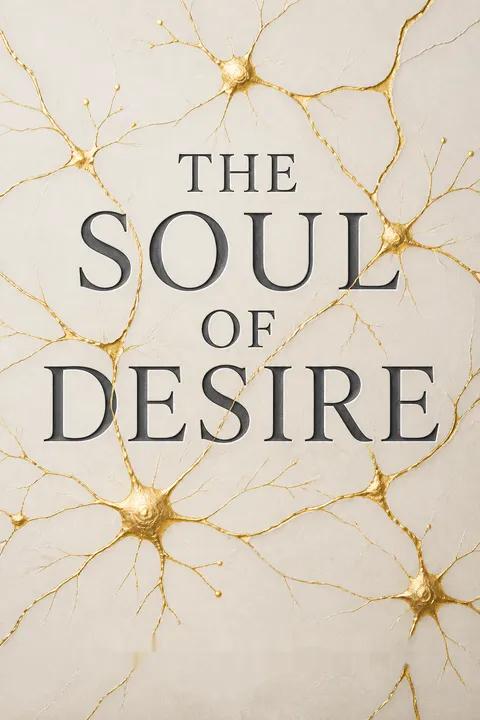

Key Takeaways
1. Desire: The Primal Longing for Beauty and Connection
The whole life of the good Christian is a holy longing. . . . That is our life, to be trained by longing.
We are longers. Humans are fundamentally creatures of desire, yearning for breath, nourishment, and security from birth. This primal longing extends to emotional nurture, shaping our relationships and brains. As Saint Augustine noted, our entire existence is a "holy longing," a continuous training in what we truly want.
Desire's true nature. While often misdirected by envy or superficial wants, our deepest desires are for beauty, goodness, truth, and joy, ultimately finding their source and fulfillment in God. This longing is innate, yet it is also formed and pruned by our habits and "liturgies," whether conscious or not. When we align our desires with God's, we become more distinctly ourselves.
The problem of desire. Our desires can easily go awry, leading to devouring rather than creating beauty. Shame, often fueled by envy, channels our longing in disintegrating ways, as seen in Aaron's affair. However, God does not destroy desire; he resurrects and renews it, intending it to be the leading edge of new creation, energizing our relationships with Him and others.
2. Beauty: Not a Luxury, But a Necessity for Flourishing
In all that awakens within us the pure and authentic sentiment of beauty, there is, truly, the presence of God.
Beauty is essential. Beauty is not an optional add-on but a fundamental necessity for our very survival and flourishing. It is what draws our attention with wonder and welcome, ultimately leading us to worship God in gratitude and joy. As Simone Weil observed, authentic beauty is a sign of God's incarnation in the world.
Balthasar's reversal. Western thought often prioritizes truth, then goodness, then beauty. Theologian Hans Urs von Balthasar suggests reversing this: beauty first, then goodness, then truth. We first encounter the world through our senses, drawn by beauty, which then attracts us to goodness, enabling us to comprehend truth. This aligns with how the brain works—sensing before making sense.
God as artist. The biblical creation narrative reveals God as an artist, bringing order out of chaos, separating and linking elements in rhythmic patterns. He "saw that it was good," implying aesthetic beauty and joy in His creation. We, as image bearers, are called to reflect this generativity, creating beauty in every aspect of our lives, from relationships to artifacts.
3. Integration: The Mind's Dance of Differentiation and Linkage
Integration is like a river that flows between two banks, one bank being chaos and the other rigidity.
Flourishing through integration. The mind flourishes when its various functional domains are both differentiated (unique) and linked (connected). This process, called integration, keeps us in a "river" between the extremes of chaos and rigidity. The middle prefrontal cortex acts as the conductor, orchestrating this integration.
The social engagement system. Our capacity for integration is deeply tied to our social engagement system, which develops through secure attachment with others. This system helps us co-regulate distressing emotions and widens our "window of tolerance"—the range of emotional tone within which we can effectively function.
Beyond fixing problems. When individuals like Carmen and Graham are overwhelmed by distress, their middle prefrontal cortices go offline, making creativity impossible. Educating them about their minds' functioning, within a supportive community, helps them move from merely "fixing problems" to imagining their lives as masterpieces in the making, joining the Holy Trinity in the dance of new creation.
4. Trauma and Shame: The Disintegrating Forces of Unmet Desire
Evil’s intention for our space and time is very different than the creation of beauty, and it is difficult to resist its attempts to get a foothold.
Grief as a constant. We are people of grief, experiencing pain from unmet longings and losses, both large and small. Evil exploits this, aiming to annihilate beauty by using trauma and shame to disintegrate us. This leads to coping mechanisms rather than creative agency, often manifesting as anxiety, depression, addiction, or relational brokenness.
Trauma's impact. Trauma, whether from absence of support (Trauma A) or harmful events (Trauma B), overwhelms the brain, leading to disintegration. It isolates neural activity, pushing us out of our window of tolerance into hyper- or hypoarousal. Shame, a core feature of trauma, convinces us to hide our brokenness, consuming energy that could otherwise be used for creation.
Left-brain dominance. Trauma and shame often shift our primary mode of attention from the right hemisphere's "here and with" curiosity to the left hemisphere's "separate from" analysis and judgment. This makes us see ourselves and others as problems to be fixed, rather than beauty to be created, hindering our capacity to receive love and engage in new creation.
5. Confessional Communities: Crucibles for Truth-Telling and Healing
Whenever the truth is fully spoken, we believe Jesus shows up.
Beyond individual therapy. While individual psychotherapy is valuable, it has limits. Confessional communities, comprised of 6-8 members and two clinicians, offer a more robust "mass effect" to counter shame's isolating power. These are not just therapy groups but spiritual formation spaces, explicitly inviting the Holy Spirit and biblical narratives to transform lives.
The power of collective witness. In these communities, members learn to "confess" (tell the truth about) their lives, desires, and griefs with vulnerability. The presence of multiple "brains in the room" makes it harder to hide shame and provides a diverse "cloud of witnesses" to offer empathy, challenge, and support, as seen when Ian's anger helped Gabe access his own.
Mixed-sex dynamics. Many communities are mixed-sex, reflecting real life and providing opportunities to address longings and griefs related to both genders. This allows members to confront the cultural lie that sex is the ultimate desire, instead revealing the deeper longing to be seen, soothed, safe, and secure, transforming scary sexual dynamics into sacred connection.
6. Perseverance: The Long Obedience to Unlocking Imagination
To persevere in an integrating manner, we must pay attention to how we are paying attention to what we are sensing, imaging, feeling, and thinking and how we are behaving physically.
Neuroplasticity requires time. Healing and growth in the brain, like the 2mm/day growth of an injured neuron, require consistent, repeated effort over time. Our modern world trains us for instant gratification, but true transformation demands perseverance, a "long obedience in the same direction."
Directing attention. Our attention is the ignition key for mental change. Trauma and shame often hijack our attention, locking it onto past regrets or future anxieties. In community, we practice redirecting our attention to the present moment, to receiving empathy, and to noticing our internal states without judgment, thereby stimulating neuronal activation and growth (SNAG the mind).
Overcoming resistance. Perseverance is crucial because we contend with "the world, the flesh, and the devil"—cultural pressures, our own corrupting tendencies, and evil's active subversion. Like sitting with a Mark Rothko painting, we must patiently dwell with discomfort and ambiguity, allowing beauty to reveal itself and transform our shame-laden imaginations.
7. Dwelling: Cultivating Presence in the House of the Lord
To dwell with God is to dwell within his family—the trinitarian family of Father, Son, and Spirit—and necessarily to do so over a long period of time.
Where are you? Dwelling begins with asking "Where are you?" and "With whom am I living?" These questions, echoing God's query to Adam, invite us to explore our embodied minds—our sensations, images, feelings, thoughts, and narratives—and our relational context. They are bids for intimacy, foundational to secure attachment and new creation.
The land of the living. To dwell "in the land of the living" means being fully present to our current reality, not lost in past regrets or future fears. This requires slowing our pace, allowing time to notice and engage with others. Like deep reading a complex novel, dwelling in community demands tolerating ambiguity and emotional distress to truly connect.
From tabernacle to temple to us. The psalmist's desire to "dwell in the house of the LORD" evolves through biblical history: from tabernacle to temple, to Jesus as the living temple, to the Holy Spirit dwelling within us, and finally to us as the body of Christ, pillars of beauty in the new Jerusalem. Confessional communities facilitate this journey, moving members from observing beauty to becoming part of it.
8. Gazing: Encountering Beauty in the Midst of Brokenness
To gaze on an object of beauty is to be present and look upon it on its terms, not on our own.
Gazing vs. glancing. We don't merely glance at beauty; we gaze upon it, allowing it to capture our attention and transform us. This applies not only to art or nature but also to each other, seeing God's beauty reflected in human faces. Gazing is an integrating process, countering shame's disintegrating effects that lead to clutching, hoarding, or violence.
Beauty in the war zone. It seems counterintuitive to find beauty in trauma, yet this is precisely what God does in the incarnation and resurrection. Like Vedran Smailovic playing his cello in war-torn Sarajevo, we are called to create and offer beauty in the rubble of our lives. This requires courage to gaze upon our own and others' shame and affliction, as Brendan's confession revealed.
The Easter lens. Good Friday is "good" only because of Easter. The resurrection transforms the grotesque horror of crucifixion into a gateway to life and beauty. In community, we gaze upon each other's wounds through this Easter lens, allowing the "mass effect" of collective love to absorb shame and initiate new neural activity, turning pulverization into profound beauty, as seen in Rouault's Crucifixion or Michelangelo's Pietà.
9. Inquiring: God's Curious Pursuit for Our Transformation
God is in the business of new creation, and when he is doing something new, he often begins by asking questions.
Curiosity as creation. Inquiring is an act of curiosity, a fundamental element of creating and curating beauty. God, a curious God, asks questions not just for information but to engage us, draw us out, and foster intimacy. These questions, like "Where are you?" and "What do you want?", are invitations to deeper self-awareness and connection.
Beyond surface desires. Our questions often mask deeper fears and shame. When Jesus asks "What do you want?", he probes beyond superficial desires (like James and John's request for status) to uncover the true longings for being seen, soothed, safe, and secure. In community, asking these questions helps unearth buried shame, liberating energy for new creation.
Drinking the cup. Jesus' question, "Can you drink the cup I am going to drink?", introduces the necessity of suffering for true transformation. Saying "no" to our addictive impulses and setting boundaries, though painful, is an act of self-protection and a path to deeper connection. This suffering, when shared in community, produces perseverance, character, and hope, transforming grief into beauty.
10. Practicing for Heaven: Co-Creating Beauty from Pulverized Lives
The more finely the mineral is pulverized, the greater the refraction of the light and the more expansive the beauty will be.
Heaven begins now. We are called to practice for heaven, living in the "age to come" that overlaps with "this present age." This means giving an account for every "empty word"—every sensation, image, feeling, thought, and impulse—in a conversation with Jesus, free from shame, preparing us for eternal co-creation.
Kintsugi: Beauty from brokenness. The Japanese art of kintsugi, mending broken pottery with gold, symbolizes the work of confessional communities. We don't hide fracture lines; we highlight them, bonding shattered lives with new relational connection and overlaying them with gold, making them more beautiful than before they were broken.
Exporting beauty. The principles learned in confessional communities—vulnerability, perseverance, gazing, inquiring, and loving one another—can be exported to every domain of life: families, schools, businesses, and churches. By shifting from problem-solving to beauty-creation, we become outposts of goodness and justice, transforming our world by creating beauty from its pulverized parts.
Review Summary
Reviews for The Soul of Desire are overwhelmingly positive, averaging 4.35 out of 5. Readers praise Thompson's integration of interpersonal neurobiology with Christian faith, particularly his exploration of beauty, shame, and community. Many highlight the concept of "confessional communities" and the transformative power of vulnerability as standout themes. Some critiques note redundancy, density, and an occasionally inaccessible writing style. The second half divided readers, with some finding it awkward while others considered it the book's strongest portion.
People Also Read




About the Author


Download PDF
Download EPUB
.epub digital book format is ideal for reading ebooks on phones, tablets, and e-readers.








































