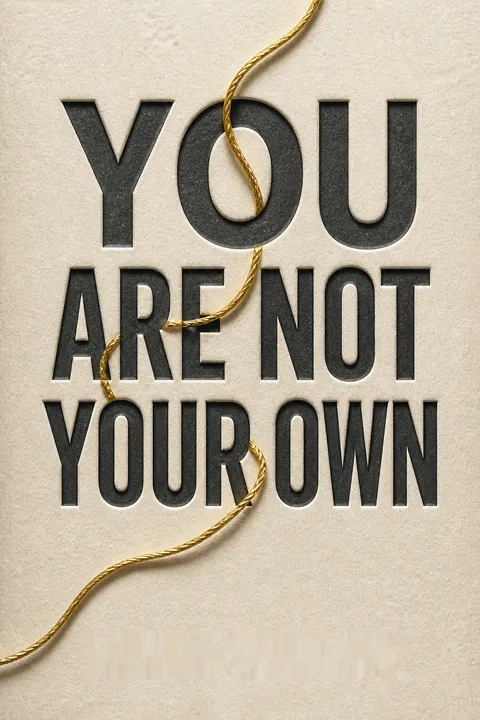

Key Takeaways
1. Modern Society's Inhuman Foundation
A DEFINING FEATURE OF LIFE in the modern West is our awareness of society’s inhumanity and our inability to imagine a way out of it.
A sick world. Modern Western society, despite rising living standards, suffers from a profound spiritual and mental sickness. This "inhumanity" manifests in everything from mass shootings and abuse cover-ups to meaningless jobs and broken communities, leaving most people in a mode of mere "survival." We instinctively know this isn't how we were made to live, yet feel powerless to change it.
Zoochosis analogy. Like zoo animals exhibiting "zoochosis"—repetitive, purposeless behaviors born of captivity—contemporary humans suffer from anxiety because we live in an environment not truly made for us. Society's designers, ourselves, built a world for a "human" that doesn't exist: one naturally at home in a cage of self-ownership.
Specific examples:
- Incels: Men driven to violence by a culture glorifying sex as existential validation.
- Stay-at-home moms: Undervalued and isolated, struggling against career-centric societal norms.
- Mentally ill: Dramatic rise in anxiety and depression, leading to declining life expectancy driven by overdose and suicide.
- Unsustainable consumption: Magical thinking about endless resources and disposal, fueled by corporate deception.
2. The Core Lie: You Are Your Own
This is the fundamental lie of modernity: that we are our own.
Sovereign individualism. The foundational belief of modern Western life is that each person is their own sovereign, belonging only to themselves. This idea, rooted in early political liberalism, has expanded to encompass all aspects of existence, making limitless freedom the ultimate virtue.
The great price. This radical freedom comes at a heavy cost: the individual becomes solely responsible for their life's meaning, identity, values, and belonging. With no external judge or redeemer, we are burdened to justify our own existence, leading to a desperate need for self-crafting and expression.
Vicious competition. As everyone frantically crafts their own identity, society transforms into a space of intense competition for attention, meaning, and significance. This relentless struggle leaves us exhausted and empty, constantly seeking more to buy, improve, or consume, leading to widespread self-medication.
3. The Burdens of Self-Belonging
To be your own and belong to yourself means that the most fundamental truth about existence is that you are responsible for your existence and everything it entails.
Existential justification. If we are our own, we bear the immense burden of justifying our lives—finding purpose, defining success, and ensuring our existence "matters." This quest for validation is relentless, as no single achievement or relationship can permanently ground our worth.
Identity crafting. We are tasked with defining "who I am," a process of self-discovery and self-expression that is never-ending. From teenage identity crises to midlife redefinitions, we constantly seek external affirmation for our chosen selves, leading to a perpetual state of insecurity.
Uncertain meaning and values. Without external authority, meaning becomes subjective, something we "impose" rather than discover. Morality, too, is reduced to personal preference, often quantified by "efficiency" or "measurable harm," leaving us with fluid ethics and a constant need to prove our righteousness.
4. Society's Tools Fail Us
To cope with the inhumanity of our society, we develop newer and better techniques, which, being based on a false anthropology, only extend that inhumanity in new ways, requiring further coping techniques.
Empty promises. Society promises a "fully realized human" if we embrace self-ownership, relentlessly self-improve, and utilize all available techniques. This promise, however, is inherently unfulfillable because the goal is self-defined and constantly shifting, leading to perpetual striving without arrival.
New problems from old solutions. Societal "progress" often introduces new anxieties and competitions. Fast food saves time but harms health; smartphones connect us but foster addiction. Each new technique designed to solve old problems creates unintended consequences, perpetuating a cycle of disorder.
Profound dependence. Despite the rhetoric of autonomy, the burdens of self-belonging make us profoundly dependent on others for validation, affirmation, and recognition. This reliance on external sources for internal security is exhausting, leading many to burnout as they chase an unachievable ideal.
5. The Pervasive Culture of Self-Medication
Everything can be treated, nothing can be cured.
Coping mechanisms. As society fails to deliver on its promises, we resort to "self-medication"—methods to lessen the burden of self-belonging without challenging its premise. This includes everything from prescription drugs and entertainment to obsessive self-improvement and social media engagement.
Ubiquitous need. Our society is shockingly frank about the intolerability of modern life without some form of "medication." The widespread use of antidepressants, alcohol, and even legal cannabis reflects a collective resignation, framing dependency as mental health "treatment" or "living your best life."
Distraction and diversion. "Staying busy" and technological diversions are common coping strategies, even for the self-reflective. Social media, video games, and low-stakes online competitions offer fleeting justification and identity, diverting us from higher-stakes existential anxieties.
6. Burnout: The Cost of Endless Competition
Exhaustion means going to the point where you can’t go any further; burnout means reaching that point and pushing yourself to keep going, whether for days or weeks or years.
Hyper-competition. A society built on self-belonging fosters escalating competition for visibility, affirmation, and self-improvement. From school reading scores to career advancement, life becomes a relentless game where everyone must constantly strive to avoid falling behind.
Meritocracy's tyranny. Our meritocratic system, which equates success with personal worth, morally deforms both "winners" (hubris) and "losers" (humiliation). Parents, driven by risk management, turn children into "capital projects," optimizing every activity for future competition.
Weariness of the self. This constant striving leads to widespread fatigue and burnout, a "weariness of the self" where rest feels like defeat. The demands for action become so overwhelming that inaction becomes the only recourse, leaving us exhausted and feeling inadequate.
7. The Comfort of Belonging to Christ
That I am not my own, but belong with body and soul, both in life and in death, to my faithful Savior, Jesus Christ.
Counter-intuitive comfort. The idea of "not being your own" is deeply uncomfortable in a culture that idolizes autonomy. Yet, the Heidelberg Catechism presents this belonging to Christ as our "only comfort" in life and death, a radical alternative to the burdens of self-ownership.
Beyond human abuse. While human authority can be abusive, belonging to Christ is different. He perfectly desires our good without conflict with His own will, unlike humans who inevitably instrumentalize others. His ownership ennobles us, making us co-heirs, not subhuman "things."
Freedom in limits. Belonging to Christ necessitates limits, but these are not stifling; they are liberating. They free us from the "malady of the infinite" and the endless striving of self-justification, allowing us to live as we were created to live.
8. Justification: A Gift, Not a Quest
Your life is significant whether you choose to see it that way or not, which is almost the opposite of the responsibility to self-justify.
Existential validation. In Christ, our existence is inherently justified because a loving God intentionally created and sustains us. We are not tasked with proving our worth; our life is a gift, already purposeful, whether we feel it or not.
Moral righteousness. Belonging to Christ provides an objective moral judge and clear laws (loving God and neighbor), offering comfort amidst moral chaos. This doesn't remove the burden of sin, but through Christ's sacrifice, we are declared righteous, freeing us from ceaseless self-purification.
Grace, not striving. Our restlessness and insecurity, even within the church, stem from clinging to autonomy. Accepting God's grace means acknowledging our inability to justify ourselves, finding peace in Christ's completed work, and living in joyful participation in His love.
9. Identity: Secure in God's Gaze
You don’t have to work out and finalize who you are, and have been; you don’t have to settle the absolute truth of your history or story. In the eyes of the presence that never goes away, all that you have been and are is still present and real; it is held together in that unifying gaze.
Beyond self-creation. The modern project of identity formation and expression is a "sham." Our personhood is a real creation, objectively sustained by God, not a fluid self we must constantly invent or affirm. Our identity is never in question because it's grounded in God's perfect will.
God's loving gaze. We are not reducible to images or stereotypes; our true identity is who we are before God. His loving gaze, not human affirmation, truly knows and validates us, freeing us from the anxious, perpetual self-expression demanded by social media and the attention economy.
True self in relationship. Our "true self" is not something we create, but something we live out in transparent relationship with God. This means accepting our createdness, our limits, and our dependence, finding fulfillment in His unwavering love rather than the fleeting whims of self-affirmation.
10. Meaning and Values Beyond Efficiency
But if I am not my own but belong to Christ, then the meaning I experience in life has an objective existence when it rightly reflects the truth about God and creation and my neighbor.
Objective meaning. Meaning is not a subjective story we invent, but inheres in creation and our experiences, reflecting truths about God and reality. The love for family, the beauty of a sunset—these are objectively good, whether we perceive them or not.
The "drug test." If meaning were merely a feeling, a pill could simulate it, making meaningless work feel purposeful. But we desire actual meaning, not just the sensation. In Christ, our experiences reflect the real being of the world, making life truly significant.
Prodigality over efficiency. Belonging to Christ means values like love, gratitude, and beauty supersede efficiency. This "prodigality" involves joyful, over-abundant self-giving, unconstrained by productivity or performance, and delighting in God's contingent gifts without utilitarian justification.
11. True Belonging Embraces Limits
If we are not our own but belong to Christ, then we are not free to belong wherever and to whomever we choose.
Given commitments. Our most significant commitments—to Christ, church, family, and place—are not chosen but given. These natural bonds place obligations on us, regardless of personal preference, challenging the modern liberal right to define our own communities.
Costly love. Belonging to others, especially in the church and family, is difficult and involves sacrifice. It means loving imperfect people, giving sacrificially, and submitting to leadership, often without immediate reward or recognition. This self-denial is an affirmation of humanity, not a resignation.
Freedom to delight. Embracing these limits frees us from the anxiety of infinite choice. We can delight in the specific gifts God has given us—our spouse, children, friends, nature—without constantly wondering about "better" options. This presence and gratitude are profoundly liberating.
12. Faithful Resistance in an Unjust World
Our task is not to spend time pondering this success, but to obey our orders, and by doing so we enter into combat with the power of the city itself.
Beyond revolution or retreat. The "spirit of the city"—human autonomy aided by technology—is deeply ingrained. We cannot evangelize, volunteer, or revolutionize our way out of this problem. Our task is not to save the city, but to glorify God within it.
Waiting without hope. This means "waiting without hope" for finite human solutions, but with absolute faith in God's ultimate redemption. This posture fosters grace for others and frees us from bitterness when our efforts don't yield immediate, measurable results.
Prodigal action. We resist the city's spirit through "prodigal action"—simple, faithful, anonymous acts of love that testify to our dependence on God. This involves discerning and rejecting the false promises of self-belonging, prioritizing goodness over efficiency, and embracing limits.
Review Summary
Readers overwhelmingly praise You Are Not Your Own, calling it transformative, incisive, and deeply relevant to modern Western culture. Many highlight Noble's sharp diagnosis of "self-belonging" as an unbearable burden, with the first half described as heavy but necessary. The gospel-centered second half is widely celebrated as a relief and comfort. Reviewers frequently recommend it to young people, weary souls, and anyone exhausted by cultural pressure to self-define. A few note minor repetitiveness or wish for more eschatological hope, but most consider it essential reading.
People Also Read




About the Author
Other books by Alan Noble

Download PDF
Download EPUB
.epub digital book format is ideal for reading ebooks on phones, tablets, and e-readers.








































