


Plot Summary
The Exile of Patroclus
Patroclus1 is the disappointing son of King Menoitius — small, slow, not strong enough to race among boys his age. His mother is simple-minded, barely aware of him. At ten, a nobleman's son tries to steal his dice. Patroclus1 shoves him; the boy's skull cracks on rock. The killing demands exile, and his father, calculating that banishment costs less than a funeral, ships him to Phthia.
There, among a barracks of cast-off foster boys, Patroclus1 encounters Peleus9 'son up close for the first time — golden-haired Achilles,2 lounging on a bench with a lyre, who barely glances at the new arrival before asking his name. He had seen the boy years before, winning a footrace. His own father had pointed and said: that is what a son should be.
Chosen as Companion
Patroclus1 withdraws into himself — haunted by nightmares of the dead boy's cracked skull, skipping drills to hide in storerooms. Achilles2 finds him there and, instead of reporting him, offers to take him to a lyre lesson. The music that pours from Achilles2 'fingers is devastating — warm and bright, like water lit by sun.
Afterwards, Achilles2 marches to his father and declares Patroclus1 his therapon, his sworn companion, the honor every foster boy has competed for. When Peleus9 asks why this stained exile, Achilles2 offers a single justification: the boy surprises him.
That night Patroclus1 is moved into Achilles2 'room. They juggle, tell stories, learn each other's rhythms. In the warmth of Achilles2' easy presence, the dead boy's ghost gradually stops visiting. For the first time, Patroclus1 knows what it feels like to be chosen.
The Kiss on the Beach
Their friendship sharpens into something neither dares name. At thirteen, Patroclus1 notices Achilles2 'scent — almond and sandalwood — the way his bare foot falls open to touch his own. One summer afternoon on the sand, sitting close enough to feel each other's warmth, Patroclus1 leans forward and presses his mouth to Achilles2 '.
For one breath, sweetness. Then Achilles2 'face closes like a door. He stands and runs — the fastest boy in the world — up the beach and out of sight. That evening, Thetis3 materializes before Patroclus1 like a blade drawn from water.
She is Achilles2 'mother, a sea-goddess, and she seizes his throat. Achilles2 is leaving, she says. By morning, he is gone — sent to study with the centaur Chiron7 on Mount Pelion. The room where they slept is stripped bare, Patroclus1' cot removed as if he never existed.
The Road to Pelion
Weeks pass in gray misery. Then Patroclus1 walks to the crossroads, stares north toward Pelion, and runs. No food, no plan — only sandals and desperation. Hours later, stumbling through forest, he hears a rustle. Achilles2 tackles him from behind. He never went to Chiron.7
He waited on the road, hoping Patroclus1 would follow. They cling to each other in the dirt until a deep voice interrupts. Chiron7 himself — not a man but a centaur, dark-bearded and enormous — stands watching them with ancient eyes.
Though Thetis3 sent orders to bar Patroclus,1 Chiron7 judges the boy worthy and carries them both to his cave on Pelion. Its walls are rose quartz, its shelves lined with instruments of healing and jars of herbs. That night they sleep side by side, and the world feels remade.
Lovers in the Rose-Quartz Cave
Years dissolve in study and play — medicine, music, star-mapping, the tracking of deer through snow. Chiron7 declares Achilles2 the greatest warrior alive, beyond any teaching. He tells Patroclus1 his gift lies not in fighting but in healing.
They are happy in a way that seems stolen from the gods' allotment. Then one evening, Achilles2 tells Patroclus1 something his mother admitted: she cannot see them on Pelion. The implication settles between them like a held breath. That night, Achilles2 leans forward in the dark and kisses him.
Their bodies find each other with trembling, fierce urgency. Afterwards, neither is sorry. They swear themselves to one another. Achilles2 declares he will be the first hero who is also happy, and Patroclus1 is the reason. They press their palms together like a seal.
Stolen to Scyros
A herald shatters the idyll: Paris17 of Troy has stolen Helen, and Agamemnon5 demands war. At Phthia, the ancient oath Patroclus1 swore as a nine-year-old — binding all Helen's suitors — is read aloud, his name among them. Before anything can be decided, Thetis3 acts.
She steals Achilles2 from his bed and hides him on Scyros, disguised as a girl named Pyrrha among Princess Deidameia10's foster sisters. Patroclus,1 half-mad, supplicates Peleus9 in the posture of sacred petition. The old king whispers a single word: Scyros.
Patroclus1 sails immediately and finds Achilles2 among the dancers, recognizing him by movement alone. But reunion brings shock: Deidameia10 is pregnant by Achilles,2 married to him by Thetis3 'arrangement. Achilles2 swears the coupling was coerced. Patroclus,1 unwilling to lose him again, forgives.
The Trumpet and the Prophecy
Odysseus4 arrives at Scyros with trinkets for the women and a concealed plan. As the girls browse mirrors and perfume, a trumpet blast sounds the alarm for attack. Every woman screams — except one, who snatches a sword and braces to fight. Achilles2 stands exposed, and Odysseus4 smiles.
In private, he delivers the terms: stay home and Achilles2 'brilliance withers to obscurity. Troy is the only path to everlasting fame. Then Thetis3 appears and adds the cost — if he goes, he will never return. Achilles2 chooses glory and asks Patroclus1 to come.
The answer is immediate and absolute. Afterwards, Patroclus1 climbs Scyros' highest cliff and confronts Thetis3 alone. She reveals the critical detail: Achilles2 dies only after Hector8 does. If Hector8 lives, so does Achilles.2 Patroclus1 seizes this as his private mission.
Iphigenia's Blood
They return to Phthia, where twenty-five hundred Myrmidons wait. Peleus9 equips his son with divine armor, swift horses, and a long ash spear crafted by Chiron7 — weeks of love shaped into polished wood. The fleet gathers at Aulis, but divine calm kills the wind for two sweltering months.
The priest Calchas names the cost: Artemis demands sacrifice. Agamemnon5 lures his daughter Iphigenia with the lie of marriage to Achilles.2 She arrives glowing, eager for her groom. Instead, she is dragged to the altar and her father cuts her throat.
Blood spatters Achilles2 'face. The wind returns. He is devastated — it is the first death he has witnessed at arm's length. Patroclus1 confronts Odysseus,4 who offers no apology, only a warning: Achilles2 is a weapon. Do not forget what he is.
First Blood at Troy
The shore of Troy is lined with soldiers in Priam11's crimson. From his ship's prow, Achilles2 throws a spear across water no weapon should be able to cross, and a Trojan bowman drops dead. The Greeks erupt. At the first council, Agamemnon5 waits for Achilles2 to kneel and pledge fealty.
Achilles2 does not kneel. He declares himself the best of the Greeks, come freely, not as any man's subject. The silence stretches until Odysseus4 breaks it with diplomatic smoothing. Agamemnon5 assigns battle positions — Achilles2 gets a place of highest honor, a concession that papers over the insult.
Raids begin on Troy's surrounding villages. Achilles2 returns from his first outing drenched in blood, exhilarated, having killed twelve men. He did not think about what he was doing. His body simply knew.
Briseis and the Physician's Tent
When a captive girl appears on the prize dais, Patroclus1 grips Achilles2 'arm: claim her before Agamemnon5 does. Achilles2 obliges. The girl is Briseis6 — dark-eyed, bruised, terrified. In their camp, Patroclus1 cuts her bonds. To show they mean no harm, he kisses Achilles2 in front of her.
Briseis6 joins their household, learning Greek with startling speed. Meanwhile, Patroclus1 begins working under the camp physician Machaon, pulling arrows and setting bones. His hands prove gifted — men ask for him by name.
Nine years of war settle into fragile domesticity: Achilles2 fighting, Patroclus1 healing, Briseis6 at the evening fire, stories told under stars. Through it all, Achilles2 avoids Hector8 on the battlefield — every day Hector8 lives is another day Achilles2 survives, and Patroclus1 guards this secret with desperate vigilance.
Agamemnon Takes the Prize
In the ninth year, Agamemnon5 refuses to ransom a priest's daughter, and Apollo sends a plague that kills hundreds. Achilles2 calls a public assembly — overstepping the general — and forces the priest Calchas to name the cause: Agamemnon5's sacrilege.
Humiliated, Agamemnon5 agrees to return the girl but demands Briseis6 as replacement, publicly stripping Achilles2 of his greatest war prize. Achilles2 nearly draws his sword, then makes a vow instead: he will not fight again until Agamemnon5 kneels.
He sends Thetis3 to Zeus with a devastating request — make the Greeks lose until they are crushed against the sea. Zeus agrees. Patroclus1 watches in horror as Briseis6 is led away between Agamemnon5's heralds. Achilles2 will not intervene. Her suffering, he calculates, is the price of proving his irreplaceable worth.
Blood Oath for Briseis
Patroclus1 cannot endure what Achilles2 has chosen — Briseis6 as collateral in a contest of pride. He goes alone to Agamemnon5's tent, draws a knife, and slashes his own wrist, swearing a blood oath that his words are truth. He tells the king that violating Briseis6 would give Achilles2 legal cause to kill him, and every Greek king would call it just.
He is handing Agamemnon5 the trap Achilles2 set — betraying his lover to save a friend. When he returns and confesses, the pain on Achilles2 'face cuts like a blade. Her safety for my honor, Achilles2 says. But neither can sustain rage against the other. Briseis6 is safe, dressed in gold by a chastened Agamemnon.5 Yet Achilles2 still refuses to fight, and Zeus still turns the battle against the Greeks.
Wearing Achilles' Armor
Ships burn. The wall splinters. Ajax15 falls. Patroclus1 runs to Achilles2 with tears streaming, begging him to save the dying men. Achilles2 says he cannot yield — his oath and pride have fused into something immovable.
Then words come through Patroclus1 that feel channeled from somewhere beyond himself: let me wear your armor and lead the Myrmidons. The Trojans will see the crest and flee. Achilles2 resists, then relents, extracting frantic promises — stay in the chariot, do not fight, do not approach the walls.
He buckles the breastplate onto Patroclus1 'frame, ties every strap, hands him two spears, and kisses him. He tells the Myrmidons to bring him back. The chariot rolls toward the burning ships, and Patroclus1 lifts his borrowed spears against the smoke-blackened sky.
Apollo Strips the Disguise
The ruse exceeds all expectation. Trojans scatter at the sight of Achilles' armor, and Patroclus1 is seized by a savage exhilaration he has never known. He breaks every promise — fighting hand-to-hand, throwing spears with uncanny precision, killing Sarpedon, a son of Zeus.
He chases the Trojans to Troy's walls and begins to climb, delirious with visions of ending the war himself. The god Apollo appears above him, beautiful and pitiless. A divine finger unhooks the armor's straps, and Patroclus1 tumbles to earth — helmet rolling free, dark hair exposed.
The Trojans see it is not Achilles.2 A spear takes him from behind. Then Hector8 walks through the parting crowd, calm and deliberate, and drives his own spear through Patroclus1 'belly. His last thought is a name.
Hector Falls, Achilles Follows
Achilles2 'scream when the body is carried home splits the air apart. He rips out his hair, clutches the corpse through the night, refuses all food. Thetis3 brings divine armor and he storms the battlefield, burning through Trojans without mercy, even battling the river god Scamander.
He hunts Hector8 to Troy's walls and drives a spear through his throat — the exposed gap in the stolen armor that was once his own. He drags the body behind his chariot for days until old King Priam11 crosses the night alone to kneel at his feet.
The father's grief breaks through. Achilles2 weeps, returns the body, and burns Patroclus1 on a pyre, asking that their ashes be mingled. Days later, Paris,17 guided by Apollo, sends an arrow through his back. Achilles2 smiles as he falls.
Epilogue
Patroclus1 'ghost clings to the tomb — a white obelisk carved with one name: ACHILLES.2 Achilles' twelve-year-old son Pyrrhus12 arrives at Troy, cold as deep water, and refuses to honor Patroclus1 with a single letter on the stone.
Briseis6 tries to flee Pyrrhus12 'cruelty and is killed by his thrown spear as she swims for open sea. Troy falls. Odysseus4 pleads Patroclus1' case and fails. Then Thetis3 comes — not once but every day, sitting at the tomb in silence. Patroclus1 speaks to her, pouring out memories: Achilles2 laughing, playing the lyre, splashing in the river on Pelion.
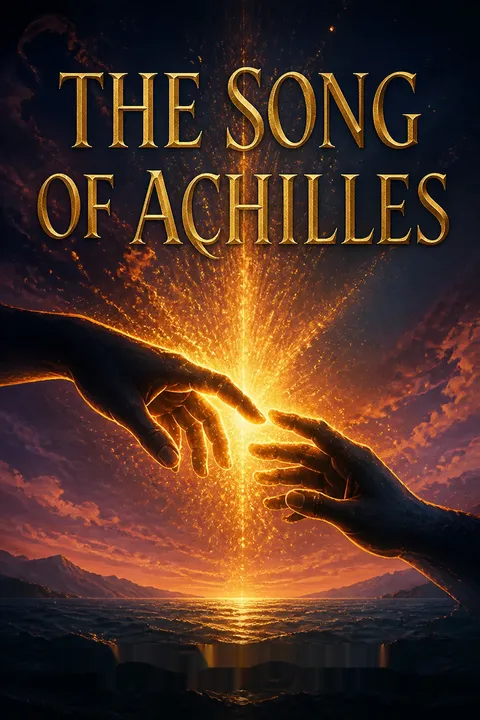
The goddess who despised him listens, and something in her yields. She carves his name beside her son's. Go, she tells him. He waits for you. In the darkness, two shadows reach for each other, and light spills between them like a hundred golden urns.
Analysis
The Song of Achilles performs a radical act of literary archaeology: it excavates the love story that Homer buried beneath ten years of war. By granting the narrative voice to Patroclus1 — historically a footnote in Achilles2 'legend — Miller argues that the most powerful force in the Iliad was never rage but grief, and that grief is simply love's receipt.
The novel interrogates what fame actually costs by making its currency visible. Every spear thrown, every city razed, every captive girl dragged to a tent — these are the transactions that purchase immortal reputation. Achilles2 'choice between fame and life is not abstract; it is embodied in Patroclus,1 who represents everything glory requires its hero to abandon: tenderness, privacy, the ordinary miracle of growing old beside someone. The tragedy is not merely that Achilles2 dies, but that preserving his fame demands he become someone capable of letting Briseis6 suffer, letting armies perish, letting rage consume what gentleness remains.
Miller's Thetis3 emerges as the novel's most psychologically complex creation: a sea-nymph raped into marriage whose only remaining power is her son's potential greatness. She despises Patroclus1 not as unworthy but as a gravitational force pulling Achilles2 toward mortality and contentment — states that undermine her entire project. Her final act of carving his name is not forgiveness but a grudging recognition that love, not slaughter, deserves remembrance.
The novel also anatomizes how warrior cultures construct masculinity. Patroclus1 'gifts — healing, empathy, moral clarity — are systematically devalued by every institution surrounding him. Yet Miller demonstrates these so-called weaknesses constitute the story's actual heroism. Achilles2 can defeat a river god; Patroclus1 walks into an enemy's tent and slashes his own wrist to save a captive woman. The novel asks which act demands greater courage — and the answer quietly reshapes how we read every war epic that came before it.
Review Summary
The Song of Achilles is a retelling of the Iliad from Patroclus' perspective, focusing on his relationship with Achilles. While many praise Miller's lyrical writing and emotional depth, some criticize the slow pacing and characterization. The novel is lauded for its exploration of love, fate, and humanity amidst war. Most readers find it deeply moving and beautifully crafted, though a few consider it overly romanticized. The book's LGBTQ+ representation and accessible approach to Greek mythology are frequently highlighted as strengths.
People Also Read





Characters
Patroclus
Exiled prince, narrator, healerThe narrator and emotional center. An exiled prince defined by what he is not—not fast, not strong, not worthy of his father's name, which ironically means 'honor of the father.' His fundamental drive is love in its most selfless and costly form: he gives up safety, status, and autonomy for Achilles2. Psychologically, Patroclus is shaped by early rejection—from his father, from the world of boys—which makes Achilles2' chosen attention feel miraculous and irreplaceable. He develops from a passive, self-effacing child into someone capable of decisive moral action: confronting Agamemnon5, mastering medicine, and finally donning armor. His identity forms not in opposition to Achilles2 but in complement—the healer beside the warrior, the conscience beside the glory-seeker. His greatest strength is moral clarity; his greatest vulnerability is that he loves someone the Fates have marked.
Achilles
Demigod warrior, belovedSon of mortal King Peleus9 and the sea-goddess Thetis3, Achilles is the greatest warrior of his generation—prophecy-confirmed, divinely beautiful, impossibly fast. Beneath the gilded surface is a boy who never learned suspicion, who trusts easily and loves without calculation. His central tension is between the human warmth he shows Patroclus1 and the divine coldness his mother cultivates in him. He craves fame as the proof of his existence—the only thing that outlasts mortality—yet his deepest happiness comes from private moments history will never record. His pride is not vanity but a refusal to be diminished; when Agamemnon5 strips his honor, Achilles would rather let armies perish than bend. He is simultaneously the most powerful person in the story and the most trapped by the terms of his own nature.
Thetis
Sea-goddess, Achilles' motherA sea-nymph forced into marriage with a mortal man, Thetis channels her rage and grief into a singular obsession: making her son immortal through fame. She is cold, terrifying, and fundamentally alien—her beauty is inhuman, her voice the sound of rocks grinding in surf. She despises Patroclus1 not merely as unworthy but as a tether pulling Achilles2 toward mortality and vulnerability. Psychologically, she represents the possessive mother who cannot accept that her child's happiness might lie outside her design. Her love for Achilles2 is genuine but poisoned by control—she arranges marriages, hides him in disguise, petitions gods for catastrophe, all in service of a fame that will substitute for the immortality she cannot directly bestow. She is driven by the terror that her son's mortal half will swallow what divinity she gave him.
Odysseus
Cunning king of IthacaKing of Ithaca, renowned for his intelligence and manipulation. He engineers situations with warmth and precision—equally comfortable telling jokes over dinner and orchestrating a child's sacrifice. He serves as the story's pragmatist, seeing people as instruments to be tuned. His genuine love for his wife Penelope provides the single glimpse of softness beneath the calculating surface. He warns Patroclus1 bluntly that Achilles2 is a weapon, not a boy to be coddled.
Agamemnon
Greek general, king of MycenaeKing of Mycenae and the Greek army's commander-in-chief. His authority rests on wealth and precedent rather than merit, and he compensates for insecurity with bluster and cruelty. His seizure of Briseis6 is not about desire but dominance—he cannot tolerate being publicly outshone by Achilles2. A connoisseur of others' pain, he savors power's petty pleasures. His greatest weakness is that the more precarious his position, the more unlikable he becomes, ensuring the very rebellions he fears.
Briseis
Captive woman, Patroclus' friendA Trojan farmer's daughter captured in Greek raids and given to Achilles2 as a war prize, though treated as family rather than property. Intelligent, resilient, and quietly brave, she learns Greek rapidly and becomes Patroclus1' closest confidante. She represents the human cost of heroic warfare that heroes prefer not to examine. Her unreciprocated love for Patroclus1 is expressed with dignity rather than desperation, and her loyalty to both men outlasts every cruelty the war inflicts upon her.
Chiron
Centaur teacher of heroesThe wise centaur of Mount Pelion, teacher of Heracles and Jason. Unlike the gods who manipulate from self-interest, Chiron educates from genuine care. He defies Thetis3' command to bar Patroclus1, judging the boy worthy on his own observation. His teaching spans medicine, music, and moral reasoning, and his final gift to Achilles2—a perfectly crafted ash spear—is shaped with love rather than bitterness, despite knowing where such weapons lead.
Hector
Troy's greatest warriorTroy's crown prince and mightiest defender, driven not by glory but by duty to his family and city. He is devout, washing blood from his hands before prayer, and deeply devoted to his wife Andromache. He represents the human dimension of the enemy—a good man defending his home against invaders. His skill and nobility make him both the gravest threat to the Greeks and the most sympathetic figure among the Trojans. Achilles2 carefully avoids him on the battlefield for years.
Peleus
Achilles' mortal fatherKing of Phthia, a good man worn thin by his divine wife's contempt. He shows Patroclus1 quiet kindness, fosters exiled boys, and when pressed by sacred petition, whispers the secret of where Thetis3 has hidden Achilles2.
Deidameia
Princess of ScyrosSharp-faced and proud, she discovers Achilles2' disguise and is secretly married to him by Thetis3' arrangement. Her pregnancy and heartbreak expose the collateral damage that divine scheming inflicts on ordinary human hearts.
Priam
Elderly king of TroyTroy's aged patriarch and father of fifty sons. Renowned for piety and devotion to family, he represents the war's cost on the Trojan side and the enduring power of a father's grief.
Pyrrhus
Achilles' son by DeidameiaRaised by Thetis3 beneath the sea, Pyrrhus inherits his father's beauty stripped of all warmth—cold, imperious, and alien to mercy. He is what Achilles2 might have become without Patroclus1' influence.
Phoinix
Aged counselor to PeleusPeleus9' oldest friend and adviser who accompanies Achilles2 to Troy. A gentle, fatherly presence, he tells the cautionary tale of Meleager—a parable aimed directly at Achilles2' stubborn pride.
Menelaus
Helen's husband, Sparta's kingRed-haired king of Sparta whose stolen wife nominally justifies the war. More genial than his brother Agamemnon5, he becomes increasingly irrelevant to the conflict's conduct—a cuckolded figurehead.
Ajax
Giant warrior of SalamisAn enormous man descended from Zeus, second-best of the Greek warriors. He holds the line where Achilles2 will not, his massive shield serving as the army's last defense when all others fall.
Diomedes
Fierce king of ArgosSharp-tongued and feral in battle, he partners with Odysseus4 in cunning schemes while fighting with savage, wolflike ferocity. His barbed wit masks a keen tactical intelligence.
Paris
Trojan prince, Helen's abductorThe beautiful Trojan prince whose abduction of Helen ignited the war. Aphrodite's favorite, he is more lover than warrior—vain, careless, and deadly only at a distance with his bow.
Plot Devices
The Prophecy of Achilles' Fate
Drives every choice in the storyThe prophecy operates on two levels. The first, revealed by Odysseus4 and confirmed by Thetis3, offers Achilles2 a binary: immortal fame through death at Troy, or long obscurity at home. This makes every subsequent action—his refusal to kneel, his withdrawal from battle, his obsession with honor—a desperate calculation about the value of a life already spent. The second level, shared by Thetis3 with Patroclus1 alone, adds a loophole: Achilles2 will die only after Hector8 does. This becomes Patroclus1' private mission—if Achilles2 never kills Hector8, Achilles2 can live. The loophole turns avoidance into a form of love, and the moment the avoidance fails, it becomes the story's most devastating payoff.
Achilles' Armor
Identity, disguise, fatal exchangeAchilles2' distinctive armor—phoenix breastplate, plumed helmet, ash spear from Chiron7—functions as a portable identity. When Patroclus1 dons it, the Trojans cannot distinguish the healer from the warrior; the disguise transforms him into something he is not. The cruelest irony is that it works too well: Patroclus1 fights with skill he should not possess and is swept into battle-madness that makes him forget his promises. When Apollo strips the armor, the reversal is instantaneous—Patroclus1 is exposed as mortal, ordinary, defenseless. Later, Hector8 wears the same armor against Achilles2, creating the eerie image of a man chasing his own reflection. The armor demonstrates that identity in war is performance, and performance exacts a lethal price.
The Oath of Helen's Suitors
Binds nations to one woman's fateDevised by Odysseus4, the oath requires every suitor of Helen to defend her chosen husband against anyone who takes her. Patroclus1 swears it at age nine, barely understanding the words, and it binds him to a war a decade later. The oath transforms a domestic dispute into a continental conflict—it gives Agamemnon5 legal cover to conscript every Greek king. For Patroclus1, it creates a private terror: he might be dragged to Troy not as Achilles2' companion but as an oath-bound soldier. Achilles2 argues the exile dissolved the bond, but the oath's shadow lingers over Patroclus1' autonomy. It demonstrates how childhood promises, sworn in ignorance, can shape the trajectory of an entire life.
Briseis as War Prize
Catalyzes the central quarrelIn Greek siege culture, captive women are distributed as prizes reflecting a warrior's honor. Patroclus1 insists Achilles2 claim Briseis6 to spare her from Agamemnon5, and she becomes part of their household—friend, confidante, almost family. When Agamemnon5 seizes her as punishment for Achilles2' defiance, the theft is not about a woman but about the public dismantling of a warrior's worth. Briseis6 is fully human in the story—intelligent, brave, loving—but the system treats her as currency. Her seizure forces Patroclus1 into his most radical act: betraying Achilles2 to protect her, choosing her body over his lover's pride. She embodies the novel's central tension between the personal cost of war and the abstract honor that fuels it.
Thetis' Bargain with Zeus
Divine intervention as weaponAfter Agamemnon5 strips Achilles2' honor, Thetis3 petitions Zeus to make the Greeks lose—to prove that without her son, they are nothing. Zeus agrees, tipping the cosmic scales so that Trojans advance, Greeks die, and ships burn. This divine bargain transforms a personal grudge into mass slaughter, making Achilles2 complicit in his own army's destruction. It reveals how divine and mortal wills intersect catastrophically: Thetis3 acts from maternal fury, Achilles2 from wounded pride, Zeus from an old debt—while the soldiers who die know nothing of these negotiations. The bargain creates the conditions that force Patroclus1' fatal decision to don the armor, making Thetis3 inadvertently responsible for the one death she should have most wanted to prevent.
FAQ
Synopsis & Basic Details
What is The Song of Achilles about?
- A love story amidst war: The novel centers on the deep, intimate relationship between Achilles and Patroclus, exploring their bond from childhood to the Trojan War.
- Fate and free will: It examines the tension between the prophecy of Achilles' early death and his choices, as well as the impact of these choices on his loved ones.
- The human side of heroes: It portrays the legendary figures of Greek mythology with a focus on their emotions, vulnerabilities, and personal struggles, rather than just their heroic deeds.
Why should I read The Song of Achilles?
- Unique perspective on myth: It offers a fresh, intimate perspective on the Trojan War, focusing on the emotional core of the story rather than just the battles and politics.
- Compelling character relationships: The central relationship between Achilles and Patroclus is deeply moving and beautifully rendered, exploring themes of loyalty and love, and sacrifice.
- Lyrical and evocative prose: Madeline Miller's writing is both poetic and accessible, bringing the ancient world to life with vivid imagery and emotional depth.
What is the background of The Song of Achilles?
- Ancient Greek mythology: The story is rooted in the myths and legends of ancient Greece, particularly the events surrounding the Trojan War, drawing heavily from Homer's Iliad.
- Heroic culture: It explores the values and beliefs of the ancient Greek heroic culture, including the pursuit of glory, the importance of honor, and the role of fate.
- Social and political context: The novel touches on the social and political structures of ancient Greece, including the roles of kings, warriors, and slaves, as well as the complex relationships between mortals and gods.
What are the most memorable quotes in The Song of Achilles?
- "I am made of memories.": This quote encapsulates the novel's exploration of memory and legacy, highlighting the importance of how we are remembered after death.
- "Name one hero who was happy.": This line underscores the tragic nature of the heroic life, questioning the value of fame and glory when they come at the cost of happiness.
- "He is half of my soul, as the poets say.": This quote beautifully expresses the deep, unbreakable bond between Achilles and Patroclus, emphasizing the profound love that lies at the heart of the story.
What writing style, narrative choices, and literary techniques does Madeline Miller use?
- First-person perspective: The story is told from Patroclus's point of view, offering an intimate and emotional lens through which to view Achilles and the events of the Trojan War.
- Lyrical and evocative language: Miller's prose is rich with sensory details and poetic imagery, creating a vivid and immersive reading experience.
- Foreshadowing and dramatic irony: The novel uses subtle foreshadowing and dramatic irony to build tension and highlight the tragic nature of the characters' fates, particularly Achilles' impending death.
Hidden Details & Subtle Connections
What are some minor details that add significant meaning?
- The lyre: The lyre, initially a gift from Patroclus's mother, becomes a symbol of their shared love and connection, representing the beauty and art that exist alongside the brutality of war.
- The color purple: The color purple, associated with royalty and power, is used to highlight Achilles' status and destiny, but also foreshadows the violence and bloodshed that will define his life.
- The sea: The sea, a constant presence in the novel, symbolizes both the freedom and the danger that surround Achilles, as well as the divine influence of his mother, Thetis.
What are some subtle foreshadowing and callbacks?
- The fig: The fig that Achilles throws to Patroclus early in their relationship foreshadows the later, more significant act of throwing a spear, highlighting the evolution of their bond.
- The description of the lyre: The description of Patroclus's mother's lyre, which is later given to Achilles, foreshadows the importance of music and art in their relationship, as well as the tragic loss of Patroclus's family.
- The mention of Meleager: Peleus's story of Meleager, a hero who refused to fight, foreshadows Achilles' own refusal to fight and the devastating consequences that follow.
What are some unexpected character connections?
- Thetis and Patroclus: Despite her initial disdain for mortals, Thetis's interactions with Patroclus reveal a complex relationship, as she recognizes his importance to Achilles and even seeks his help in protecting her son.
- Odysseus and Patroclus: Odysseus, known for his cunning and pragmatism, shows a surprising level of respect and understanding for Patroclus, recognizing his loyalty and devotion to Achilles.
- Hector and Patroclus: Though they never meet, the novel draws a subtle parallel between Hector and Patroclus, both men who are deeply loved and whose deaths have a profound impact on the course of the war.
Who are the most significant supporting characters?
- Phoinix: As Achilles' tutor and advisor, Phoinix provides a moral compass and a voice of reason, often reminding Achilles of the importance of compassion and humility.
- Briseis: As a war prize turned confidante, Briseis offers a unique perspective on the war and its impact on women, and her relationship with Patroclus highlights the human cost of conflict.
- Automedon: As Achilles' loyal charioteer, Automedon is a constant presence in the story, witnessing the events of the war and providing a sense of continuity and stability.
Psychological, Emotional, & Relational Analysis
What are some unspoken motivations of the characters?
- Thetis's fear of mortality: Thetis's actions are driven by her fear of her son's mortality and her desire to protect him from the fate that awaits him, even if it means manipulating his life.
- Achilles's desire for immortality: Achilles's pursuit of glory is fueled by his desire to transcend his mortal limitations and achieve a lasting legacy, even if it means sacrificing his own happiness.
- Patroclus's need for belonging: Patroclus's unwavering loyalty to Achilles stems from his need for belonging and his desire to find meaning and purpose in a world that has rejected him.
What psychological complexities do the characters exhibit?
- Achilles's internal conflict: Achilles struggles with the tension between his desire for glory and his love for Patroclus, torn between his destiny as a hero and his longing for a peaceful life.
- Patroclus's self-doubt: Patroclus grapples with feelings of inadequacy and self-doubt, constantly comparing himself to Achilles and questioning his own worth.
- Thetis's ambivalence: Thetis exhibits a complex mix of love and resentment towards her son, torn between her desire to protect him and her frustration with his mortal limitations.
What are the major emotional turning points?
- Patroclus's death: Patroclus's death is a major emotional turning point, triggering Achilles' grief and rage and setting in motion the final act of the Trojan War.
- Achilles's decision to fight: Achilles' decision to return to battle after Patroclus's death marks a shift in his character, as he embraces his destiny as a warrior and seeks vengeance for his loss.
- Thetis's reconciliation: Thetis's decision to honor Patroclus alongside Achilles represents a moment of emotional reconciliation, as she finally acknowledges the depth of their bond.
How do relationship dynamics evolve?
- Achilles and Patroclus: Their relationship evolves from a childhood friendship to a deep, intimate love, marked by mutual respect, loyalty, and sacrifice.
- Achilles and Thetis: Their relationship is characterized by tension and conflict, as Thetis struggles to accept her son's mortal nature and Achilles resists her attempts to control his destiny.
- Achilles and Agamemnon: Their relationship is marked by rivalry and resentment, as they clash over power, honor, and the leadership of the Greek army.
Interpretation & Debate
Which parts of the story remain ambiguous or open-ended?
- The nature of the gods: The novel leaves the nature of the gods somewhat ambiguous, questioning their motives and their role in human affairs, and whether they are truly all-powerful or simply powerful enough to manipulate mortals.
- The meaning of glory: The novel raises questions about the true meaning of glory, exploring whether it is worth the cost of human life and happiness, and whether it is a worthy pursuit at all.
- The possibility of free will: The novel leaves open the question of whether the characters are truly free to make their own choices, or whether they are simply puppets of fate, acting out a predetermined script.
What are some debatable, controversial scenes or moments in The Song of Achilles?
- Achilles's refusal to fight: Achilles' decision to withdraw from battle after his quarrel with Agamemnon is a controversial moment, raising questions about his responsibility to his fellow soldiers and the consequences of his pride.
- The sacrifice of Iphigenia: The sacrifice of Iphigenia is a deeply disturbing moment, highlighting the brutality and injustice of the ancient world and raising questions about the morality of war.
- Achilles's treatment of Hector's body: Achilles' desecration of Hector's body is a controversial act, revealing the depths of his grief and rage, but also raising questions about his humanity and the limits of vengeance.
The Song of Achilles Ending Explained: How It Ends & What It Means
- The union of ashes: The ending sees Achilles and Patroclus's ashes mingled together, fulfilling their desire to be together in death, and symbolizing the enduring power of their love.
- Thetis's final act: Thetis's decision to honor Patroclus alongside Achilles represents a moment of reconciliation, as she finally acknowledges the depth of their bond and the importance of their love.
- A lasting legacy: The ending emphasizes the importance of memory and legacy, suggesting that even in death, the stories of Achilles and Patroclus will continue to resonate, inspiring future generations.
Download PDF
Download EPUB
.epub digital book format is ideal for reading ebooks on phones, tablets, and e-readers.








































