
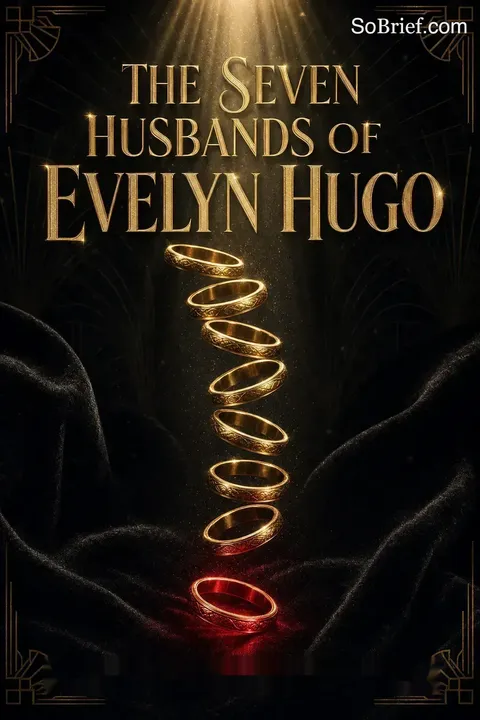


Plot Summary
Evelyn Picks Her Confessor
Monique Grant,2 a thirty-five-year-old biracial journalist stuck writing puff pieces at Vivant magazine, is stunned when her editor Frankie12 announces that Evelyn Hugo1 — reclusive, seventy-nine, seven times married — has demanded Monique2 specifically for an exclusive. No one can explain why.
At Evelyn's1 Upper East Side apartment, the aging icon dismantles every expectation: there will be no magazine feature about her gown auction. Instead, Evelyn1 wants Monique2 to write her full biography, published after her death, with all proceeds going to Monique.2 The offer is worth millions.
Evelyn1 refuses to explain why she chose Monique,2 deflecting every question with imperious calm. Monique,2 recently separated from her husband and desperate for a career breakthrough, agrees — aware she's gambling her job on a woman who has spent a lifetime controlling every narrative written about her.
A Green Dress to Hollywood
Born Evelyn Herrera in 1938 to Cuban immigrants in Hell's Kitchen, she lost her mother to pneumonia at eleven and grew up under an abusive father. By fourteen, she was stunningly developed and acutely aware of her beauty's currency.
She put on her favorite green dress, knocked on the door of Ernie Diaz13 — a twenty-two-year-old electrician rumored to be heading to Hollywood — and lied about her age. They married when she was fifteen. In Los Angeles, Ernie13 worked as a grip while Evelyn1 haunted the Formosa Cafe hoping to be discovered.
Young producer Harry Cameron4 walked in for a steak and noticed her. Within weeks, she had a deal at Sunset Studios. They bleached her hair, erased her Cuban heritage, fabricated a new biography, and rechristened her Evelyn Hugo.1
Hollywood's Golden Couple Rots
After shedding Ernie13 with studio backing, Evelyn1 was paraded on arranged dates with Hollywood bachelors. She fell genuinely — for the first time — for Don Adler,5 son of screen royalty, whose charm made her giddy in ways she'd never experienced.
Their engagement was staged on a red carpet, their wedding orchestrated by Sunset Studios, and for a brief window Evelyn1 believed she'd found someone who truly saw her. Then, on location for their film together, Don5 smacked her across the face during a trailer argument.
The blow came fast, followed by a tearful apology she believed. The second hit came weeks later. Then a third. Each time, Evelyn1 hid the bruises with pancake makeup, stayed silent, and clung to the parts of Don5 that had made her fall in love — even as her star kept rising.
Beth March Steals Her Heart
When Celia St. James,3 a gifted nineteen-year-old freelance actress from Georgia, was cast as Beth in Little Women, Evelyn1 braced for a rival. Celia3 was talented enough to steal the picture — and knew it. But over cigarettes and late rehearsals in Evelyn's1 trailer, something unexpected formed.
Celia3 was disarmingly honest, calling Evelyn1 calculating and awful in the same breath as saying she liked her. They struck a deal: Evelyn1 would help Celia3 become a star, and Celia3 would coach Evelyn's1 acting.
Over milk shakes and borrowed blouses, their bond deepened into something Evelyn1 had never experienced — total trust, the freedom to be entirely herself. She didn't have a word for what she felt. She only knew that when Celia3 stood half-undressed trying on a lilac shirt, she couldn't look away.
The Laundry Room Kiss
At the Little Women premiere after-party, Ruby Reilly11 — a fellow Sunset actress and occasional ally — cornered Evelyn1 in the laundry room with two revelations: Celia3 was a lesbian, and Don5 was upstairs with another woman.
The disclosures detonated simultaneously — jealousy on both fronts, a possessiveness about Celia3 she hadn't known she harbored. When Celia3 found her, Evelyn1 grabbed her and kissed her. Celia3 kissed back, put her hand on Evelyn's1 waist, then pulled away and fled.
That night, Harry4 drove Evelyn1 home, and she confided everything — her feelings for Celia,3 the wreckage of her marriage. Harry4 quietly revealed his own truth: he was gay. They became each other's safekeepers. Don5 filed for divorce and blackballed Evelyn1 from Sunset Studios. The next morning, Celia3 was waiting on Evelyn's1 doorstep.
Comeback from the Lake
With Don's5 influence, the studio loaned Evelyn1 out for forgettable flops designed to bury her. But she and Celia3 had begun a secret relationship — sleeping together, building a hidden life — and that gave Evelyn1 something she'd never had: a reason to fight that wasn't just ambition.
She flew to Paris, met up-and-coming director Max Girard,7 and agreed to star in Boute-en-Train. For the iconic scene, Evelyn1 suggested they slow her exit from a lake to a crawl and cut to black a millisecond before her breasts were fully visible — an infinite tease that could never be satisfied no matter how many times you paused the tape. The trick worked brilliantly. The film made her an international sensation, and she returned to Hollywood with leverage no studio could ignore.
A Marriage to Kill a Rumor
Tabloids began insinuating that Evelyn1 and Celia3 were more than friends. Evelyn's1 solution was surgical and brutal: engineer a scandal so loud it would drown out any whispers about her real life.
She manipulated singer Mick Riva14 into a drunken Vegas elopement, deliberately disappointed him in bed so he'd want an annulment, then let the papers spin the story of her heartbreak. The diversion worked — gossip shifted to her string of failed marriages. But weeks later, Evelyn1 discovered she was pregnant.
When she told Celia,3 the revelation that she'd actually slept with Mick14 shattered everything. Celia3 called her a whore, drove away, and didn't speak to Evelyn1 for five years. Harry4 drove Evelyn1 to Tijuana for an abortion while she wept the entire California coastline home.
Marriage as Box Office
Evelyn1 proposed a purely transactional marriage to Rex North,6 her costar in Anna Karenina. Born in Iceland and remade by the studios, Rex6 was pragmatic, charming, and utterly uninterested in love — the ideal partner.
They lived in separate bedrooms while presenting a glamorous front that made Anna Karenina a box-office juggernaut, generating millions and a three-picture Paramount deal. When Rex6 fell in love with actress Joy Nathan and got her pregnant, Evelyn1 orchestrated their exit: they would stage dual affairs — Rex6 with Joy, Evelyn1 with Harry4 — to justify the divorce while driving audiences to their final film together.
Ruby Reilly11 tipped off photographers. The resulting scandal sold more tickets than any marketing campaign could have. Evelyn1 and Rex6 clinked dirty martinis to their successful union.
Seven Minutes at the Oscars
At the Academy Awards, both Evelyn1 and Celia3 were nominated for Best Actress. Neither won — Ruby Reilly11 took the prize. Evelyn1 slipped into the bathroom to cry. Celia3 followed. They hadn't spoken in nearly five years, but in that tiled room everything unraveled: accusations, confessions, the admission that neither had stopped loving the other.
Celia3 said Evelyn1 should have chased her. Evelyn1 admitted she should have. Then Celia's3 hands were on her face, and Evelyn1 pressed her against the door.
In seven breathless minutes, with the ceremony continuing beyond the wall, they forgave each other with their bodies. Two producers' wives walked in and out, oblivious. Both women knew they could never live apart again. Evelyn1 married Harry.4 Celia3 married Harry's4 lover, John Braverman,10 a retired football quarterback.
America's Favorite Double-Daters
The arrangement was elegant and unprecedented. Harry4 and Evelyn1 bought an Upper East Side apartment; Celia3 and John10 lived down the street. By day, they moved through Manhattan as two glamorous straight couples. By night, Evelyn1 slept with Celia3 and Harry4 slept with John.10
The tabloids called them America's favorite double-daters. After Stonewall, Evelyn1 wept on her terrace, realizing the rioters were braver than she'd ever been. The four decided their contribution would be money — funneling millions into LGBTQ organizations in secret.
When Connor8 was born in 1975, the family felt complete. Celia3 played Scrabble with the baby, Harry4 sang her to sleep, and John10 taught her to laugh. For a suspended stretch of years, Evelyn1 had everything she'd ever wanted — hidden behind a lie sturdy enough to hold it all.
Three A.M. Costs Everything
Celia3 encouraged Evelyn1 to take a daring role in Max Girard's7 Three A.M., playing opposite her ex-husband Don Adler.5 On set, Max7 proposed an unprecedented scene: a graphic depiction of female sexual desire. Evelyn,1 thrilled by the creative audacity, agreed and filmed it without telling Celia.3
The footage was electric — audiences debated for years whether the sex was real. But when Evelyn1 confessed afterward, Celia3 broke. She said she couldn't live with her heart half-broken anymore — that Evelyn1 always gave half of herself to the world and kept only scraps for her.
Celia3 packed her things, moved back to L.A., and divorced John,10 severing the final cord connecting their four-person family. Evelyn1 flew west and begged on her knees at Celia's3 hotel room door. Celia3 wouldn't take her back.
An Oscar Won in Grief
John Braverman10 died suddenly of a heart attack at forty-nine — the fittest among them, gone first. Harry4 crumbled into bourbon and depression. Evelyn1 read hundreds of scripts searching for one project that could pull him back, and found All for Us: the story of a single mother fighting for her children in New York.
She convinced Harry4 to produce it by telling him it would finally get her an Oscar. It did. Standing at the podium, Evelyn1 thanked Harry,4 then addressed someone watching at home — a person she thought of every day.
She was talking about Celia.3 Afterward, Evelyn1 married Max Girard,7 who she believed saw the real her. Within months, she realized Max7 loved the movie star, not the woman underneath — her image projected on the world's screen, not the person behind it.
Celia's Letters Break the Silence
After Celia3 won her third Oscar, Evelyn1 sent a congratulatory letter — half expecting nothing back. Celia3 responded: reading Evelyn's1 words felt like gasping for air after being trapped underwater.
Over weeks they exchanged increasingly raw letters — apologies, confessions, the kind of honesty that only years of separation can produce. When they finally spoke by phone, Evelyn1 told Celia3 she was leaving Max,7 that she was ready to give up everything. Max7 found the letters and threatened to expose her.
She left him anyway. At dinner in Los Angeles, Celia3 revealed she had emphysema from years of smoking — perhaps ten years to live. They made plans: Evelyn1 would marry Celia's brother Robert,9 and the whole family would move to the Spanish coast to live openly at last.
The Tree on Harry's Road
Harry4 had fallen in love again — a man in L.A. whose identity Evelyn1 didn't yet know. On the night they were supposed to fly back to New York together, Evelyn's1 driver turned onto Harry's4 dark, narrow street and found a sedan bent around a fallen tree. Harry4 was slumped over the steering wheel, bleeding. The man in the passenger seat was dead. Evelyn1 did not panic.
She had the driver help her pull Harry4 into their car, then moved the dead man into the driver's seat and wiped every trace of Harry4 from the wreck. At the hospital, doctors told her Harry's4 femoral artery had been severed. She climbed into his bed, held his hand, and told him he could go. In his pants pocket, she found a folded letter — and kept it for nearly thirty years.
Married in Bed at Last
Evelyn1 retired from acting, married Robert Jamison,9 and moved her troubled teenage daughter Connor8 to a fishing village on the southern coast of Spain. Slowly Connor8 healed — playing poker with Robert,9 eating dinner with Evelyn1 every night, eventually getting into Stanford.
Evelyn1 and Celia3 lived together openly for the first time, holding hands on sidewalks, reading newspapers on their ocean-facing balcony. Evelyn1 reclaimed the Spanish she'd buried for decades. One night in bed, she proposed.
They performed their own ceremony — no witnesses, no government, just hair ties wrapped around ring fingers and vows spoken in the dark. Celia3 died of respiratory failure in Evelyn's1 arms around 2000. Robert9 died years later. Then Connor,8 at forty-one, was taken by breast cancer. Evelyn1 was left entirely alone.
James Grant's Last Letter
Evelyn1 slides a weathered, blood-stained piece of paper across the desk and speaks the name Monique2 has heard all her life: James Grant. Her father. The man she'd always believed killed himself driving drunk was actually a passenger — Harry Cameron's4 last lover, left dead in a driver's seat by the woman sitting in front of her.
Fury tears through Monique2 like a current. She shoves Evelyn1 and tells her she's glad no one is left to love her. Then Evelyn1 hands over the letter: James's words to Harry,4 explaining that he loves Harry4 deeply but will never leave his wife and daughter, because his family is his heart. Monique2 reads it alone, behind a closed door, and meets a version of her father she never knew existed — one who chose her over everything.
The Last Photo, the Last Choice
The photo shoot happens Friday. Evelyn,1 in emerald-green silk with Billie Holiday playing, commands the camera like the supernova she has always been. She pulls Monique2 in for a joint portrait. Afterward, she sends her devoted housekeeper Grace15 on an all-expenses-paid vacation.
She mentions her cancer is advanced. Every gesture carries the quiet finality of someone settling accounts. In the subway station, Monique2 understands: Evelyn1 chose her partly because of a compassionate right-to-die piece she'd once written — a story about dignity in choosing when suffering ends.
Monique2 could call for help. She could turn back. The train arrives, the doors open, and she steps inside, granting Evelyn Hugo1 the last thing she ever asked for: the right to go on her own terms.
Epilogue
Evelyn Hugo1 dies that Friday evening, reported as an accidental overdose of contradicting medications. She is buried at Forest Lawn in Los Angeles. Her will leaves the bulk of her estate to LGBTQ organizations and cancer research. Monique2 publishes a landmark excerpt in Vivant's June issue, revealing that Evelyn1 was bisexual and that the great love of her life was not any of her seven husbands but Celia St. James.3
Her full biography is forthcoming. In closing, Monique2 recalls asking whether the constant fixation on her husbands bothered her. Evelyn's1 answer was characteristically defiant: once people knew the truth, they'd be far more interested in her wife.
Analysis
The Seven Husbands of Evelyn Hugo1 interrogates the architecture of fame — not as spectacle but as survival strategy. Evelyn's1 seven marriages are not a pattern of romantic failure; they are acts of economic and sexual self-determination performed by a queer woman of color in a system designed to erase every dimension of her identity. The novel's radical insight is that the closet is not merely a hiding place but a creative engine: Evelyn's1 greatest performances occur off-screen, in staged marriages and manufactured scandals that allow her to live authentically behind the curtain.
The dual-timeline structure creates a parallel between Evelyn1 and Monique2 that extends beyond their shared connection to James Grant. Both women are performing acceptable versions of themselves — Monique2 in a marriage she knows is insufficient, Evelyn1 in a succession of heterosexual performances. The biography becomes an act of mutual liberation: as Evelyn1 strips away decades of fiction, Monique2 finds the courage to stop settling.
Reid's treatment of bisexuality is deliberately confrontational. Evelyn1 insists she is not gay, correcting Monique's2 assumption and later Celia's3 reductive framing. The novel refuses the cultural tendency to sort queer people into clean categories, arguing that the most honest identity is often the one that resists easy labeling. This extends to moral identity — Evelyn1 is neither villain nor saint, and the narrative refuses to deliver a verdict.
Perhaps most provocatively, the novel argues that love and power are not opposites but collaborators. Every romantic decision Evelyn1 makes serves both her heart and her ambition simultaneously, and the tragedy is not that she chose career over love but that the world forced her to believe the two were mutually exclusive. The final devastating irony: by the time she could afford to stop hiding, everyone was gone. The fame was just the noise left echoing after the music stopped.
Review Summary
The Seven Husbands of Evelyn Hugo is a captivating and emotional novel that has resonated deeply with many readers. The book explores themes of love, ambition, and identity through the life story of Hollywood icon Evelyn Hugo. While most praise its compelling narrative, complex characters, and representation of LGBTQ+ relationships, some criticize its handling of race and certain plot elements. The novel's exploration of Old Hollywood and Evelyn's journey as a bisexual Cuban-American actress has left a lasting impact on many, though a few readers found it lacking depth or problematic in its portrayal of relationships.
People Also Read






Characters
Evelyn Hugo
Hollywood's most married iconBorn Evelyn Herrera to Cuban immigrants in Hell's Kitchen, she reinvented herself into a Hollywood legend through beauty, cunning, and an unflinching willingness to use whatever tools she had. Beneath the brassy blonde hair and studio-crafted persona, Evelyn is a bisexual woman navigating a world that demands she choose one identity. She is fiercely strategic, capable of genuine love but equally capable of sacrificing intimacy for ambition. Her psychology is shaped by early poverty and an abusive father—she learned young that survival requires control, and she never unlearned it. What makes her compelling is not her beauty but her refusal to apologize for how she wielded it. She craves family above fame yet struggles to stop performing long enough to keep one.
Monique Grant
Reluctant biographerA thirty-five-year-old biracial journalist—black father, white mother—working below her potential at Vivant magazine. Monique carries a lifetime of straddling identities: never fully one thing, always explaining herself. Her recently failed marriage has shaken her confidence, and she enters Evelyn's1 story at her lowest professional and personal ebb. What drives her is a deep need to tell meaningful stories, instilled by a father who died when she was eight and who told her to find work that makes her heart feel big. Monique's arc is one of growing assertiveness—learning to negotiate, to demand her worth, and to stop being polite when boldness is required. Her emotional intelligence makes her the right vessel for Evelyn's1 secrets, even when those secrets cut her personally.
Celia St. James
Evelyn's great forbidden loveBorn Cecelia Jamison in Georgia, Celia is a three-time Oscar-winning actress whose girl-next-door beauty masks formidable intelligence and romantic absolutism. A lesbian in 1950s Hollywood, she hides behind fake relationships while aching for authenticity. Celia believes love should be enough, that the world should change to accommodate truth, and she resents every compromise demanded by secrecy. This idealism makes her both noble and cruel; when hurt, she weaponizes words with surgical precision. Her talent is undeniable—Method-trained, emotionally fearless on camera—and her vulnerability comes from wanting a simple life with the most complicated woman alive. She is Evelyn's1 moral counterweight: where Evelyn1 schemes, Celia demands honesty, even when honesty is impossible.
Harry Cameron
Evelyn's soulmate and partnerA gay Hollywood producer who becomes Evelyn's1 best friend, creative partner, and eventually her fifth husband. Harry is kind, strategic, and deeply closeted—not out of shame but out of survival instinct in an era when exposure could mean prison or death. He possesses a midwestern warmth that softens Evelyn's1 sharpest edges and provides the one thing no romantic partner ever could: unconditional, uncomplicated love. Harry created Evelyn Hugo1—literally discovered her, named her, guided her career—and their bond transcends every conventional category. He is devoted to their daughter Connor8 and capable of deep romantic love with men. His vulnerability lies in alcohol, which becomes his private refuge from pain. He is the emotional anchor of Evelyn's1 entire life.
Don Adler
Abusive Hollywood princeHollywood royalty and Evelyn's1 second husband, Don is charismatic, handsome, and deeply insecure about living up to his famous parents. He is the first man Evelyn1 genuinely loves—and the first to abuse her. His violence escalates when his career falters and Evelyn's1 ascends, revealing a man who conflates love with ownership and can only be kind when he's winning. Later in life, sobriety and professional decline bring genuine contrition.
Rex North
Pragmatic fourth husbandBorn Karl Olvirsson in Iceland, Rex is Evelyn's1 fourth husband and her most transparent arrangement—a marriage of mutual career ambition with no pretense of romance. Devastatingly handsome and emotionally detached, Rex treats their partnership like a business deal and honors every term. He is the only husband who never hurts Evelyn1 and the one she remains fondest of despite their complete lack of passion.
Max Girard
Image-obsessed sixth husbandA French New Wave director who falls in love with Evelyn's1 image rather than her reality. Max is talented, passionate, and genuinely believes he sees the real Evelyn1—but what he sees is the movie star, the muse, the public spectacle. His love is worship, not intimacy, and the distinction slowly devastates the woman he claims to adore. When threatened, he retaliates with exposure.
Connor Cameron
Evelyn and Harry's daughterBorn in 1975, Connor is the emotional center of Evelyn's1 later life—the reason she retires, the person she moves continents for. As a teenager, she responds to trauma with recklessness and self-destruction, but she possesses her mother's1 resilience and her father's4 kindness. Her recovery in Spain becomes one of the novel's quiet triumphs.
Robert Jamison
Celia's brother, husband sevenCelia's3 older brother and Evelyn's1 seventh husband. A silver-haired financier with a weakness for women, Robert agrees to the marriage out of devotion to his sister. He becomes an unexpected father figure to Connor8—teaching her poker, painting her bedroom, offering steady, undemanding presence. His role in the family is quietly indispensable.
John Braverman
Harry's lover, Celia's beardA retired football quarterback who serves as Celia's3 fake husband and Harry's4 real lover. Physically imposing but emotionally gentle, John is the family's protector and peacekeeper—the one who remembers small details and asks how you slept.
Ruby Reilly
Actress frenemy and survivorA Sunset Studios actress who oscillates between rival and ally. Blunt and competitive, Ruby becomes a fellow survivor of Don Adler's5 abuse and helps Evelyn1 plant stories when the price is right.
Frankie Troupe
Monique's demanding editorEditor-in-chief of Vivant, a striking, no-nonsense Black woman whose high standards both inspire and intimidate Monique2. She serves as the professional obstacle Monique2 must learn to negotiate.
Ernie Diaz
Evelyn's ticket out of povertyEvelyn's1 first husband, a young electrician she married at fifteen to escape Hell's Kitchen. Kind but unremarkable, Ernie is her first tool and first casualty—used and discarded with calculated efficiency.
Mick Riva
Vegas-elopement pawnA famous singer Evelyn1 manipulates into a drunken Vegas marriage. Charming but shallow, Mick is an unwitting prop in her scheme to redirect gossip away from Celia3.
Grace
Evelyn's devoted companionEvelyn's1 warm, genuine housekeeper in her final years, providing daily comfort and human connection to a woman who has outlived everyone she loved.
Plot Devices
The Gown Auction
Pretense for Monique's summonsEvelyn1 announces she will auction twelve of her most famous gowns for breast cancer research, generating media interest that gives her a legitimate reason to request a journalist from Vivant magazine. The auction is a decoy: Evelyn1 has no interest in a magazine piece about dresses. She needs a plausible pretext to reach Monique Grant2 without revealing her true intentions. The gowns themselves carry biographical weight—the emerald-green dress from the 1959 Oscars, the navy-blue silk she wore winning her own Oscar—each corresponding to a defining moment. They function as both commercial objects and emotional artifacts, relics of a life performed in public whose real story was always happening offstage.
The Tabloid Articles
Public narrative vs. private truthInterspersed throughout the novel, gossip columns from fictional outlets like Sub Rosa and PhotoMoment provide the public version of events Evelyn1 is privately narrating. They function as a chorus of misunderstanding—consistently getting the story wrong, painting Evelyn1 as heartbreaker or victim when she is orchestrating every headline. The articles ground the reader in specific decades and cultural attitudes while demonstrating how the media's eagerness to tell a heterosexual narrative made it easy for Evelyn1 and Celia3 to hide in plain sight. The gap between what the tabloids report and what Evelyn1 confesses is the novel's central tension—proof that the most effective lies are the ones people desperately want to believe.
James Grant's Letter
Connects Monique to Evelyn's pastA love letter written by Monique's2 father to Harry Cameron4, found in Harry's4 pocket the night of the fatal car crash and kept by Evelyn1 for nearly thirty years. The letter is the novel's deepest revelation and most intimate artifact. In it, James explains that he loves Harry4 but cannot leave his wife Angela and daughter Monique2—that his family is his heart. The letter reframes Monique's2 understanding of her father: he didn't die driving drunk as she'd always believed, and he was capable of passionate love he chose to sacrifice for her. It explains why Evelyn1 chose Monique2 as biographer—guilt, restitution, and the belief that Monique2 deserved the truth about who her father was.
The Hair-Tie Wedding Rings
Symbol of authentic loveAfter seven elaborate, public, and mostly fraudulent marriages, Evelyn's1 truest wedding happens in bed with Celia3, using hair ties as rings. The device crystallizes the novel's argument about love and legitimacy—that no government document, religious ceremony, or public spectacle can validate a relationship the way two people simply choosing each other can. The ceremony is improvised, slightly absurd, and deeply sincere. Evelyn1 officiates herself, noting the irony that after all her weddings, she's finally marrying the right person. The hair ties are the antithesis of the Tiffany diamond Don5 once gave her—worthless objects made priceless by what they represent.
Monique's Right-to-Die Article
Foreshadows Evelyn's final actBefore meeting Evelyn1, Monique2 wrote a deeply compassionate article about physician-assisted suicide for the Discourse—the piece that first brought her to Vivant's attention and, more crucially, to Evelyn's1. Evelyn1 chose Monique2 partly because that article demonstrated an understanding of dignity in death: the belief that suffering people deserve agency over their endings. This device operates as slow-burning foreshadowing whose significance doesn't fully register until the novel's final pages, when Monique2 realizes Evelyn1 is planning to end her life and must decide whether to intervene. The article represents Monique's2 core philosophy—compassion for complexity—and becomes the ethical test of the entire narrative.
FAQ
Synopsis & Basic Details
What is The Seven Husbands of Evelyn Hugo about?
- A legendary actress's life: The novel centers on Evelyn Hugo, a reclusive Hollywood icon, who decides to reveal the truth about her life, including her seven marriages, to an unknown journalist, Monique Grant.
- Strategic marriages and ambition: Evelyn's story is a complex narrative of ambition, strategic relationships, and the sacrifices she made to achieve fame in Hollywood.
- A hidden love story: Beneath the surface of her scandalous marriages lies a profound and enduring love story with another woman, Celia St. James, which shapes Evelyn's life and legacy.
Why should I read The Seven Husbands of Evelyn Hugo?
- Compelling character study: The novel offers a deep dive into the life of a complex and fascinating character, Evelyn Hugo, exploring her motivations, vulnerabilities, and the price of fame.
- Intricate plot and relationships: The story is filled with unexpected twists, emotional depth, and intricate relationships that challenge conventional notions of love and sacrifice.
- Exploration of identity and truth: The book delves into themes of identity, sexuality, and the power of truth, making it a thought-provoking and emotionally resonant read.
What is the background of The Seven Husbands of Evelyn Hugo?
- Mid-20th Century Hollywood: The story is set against the backdrop of mid-20th century Hollywood, exploring the glamour, power dynamics, and societal constraints of the era.
- Cultural norms and expectations: The novel examines the cultural norms and expectations surrounding fame, marriage, and sexuality, particularly for women in the entertainment industry.
- Historical context of LGBTQ+ struggles: The narrative touches upon the historical context of LGBTQ+ struggles, highlighting the challenges faced by those who had to hide their true identities.
What are the most memorable quotes in The Seven Husbands of Evelyn Hugo?
- "People think that stories are shaped by people. In fact, it's the other way around.": This quote encapsulates the theme of how narratives shape our understanding of ourselves and others, highlighting the power of storytelling.
- "Don't be so tied up trying to do the right thing when the smart thing is so painfully clear.": This quote reflects Evelyn's pragmatic and often ruthless approach to life, emphasizing her willingness to prioritize her goals over conventional morality.
- "I'm not a good person, Monique. Make sure, in the book, that that's clear.": This quote reveals Evelyn's self-awareness and her desire to be portrayed honestly, even if it means acknowledging her flaws and moral compromises.
What writing style, narrative choices, and literary techniques does Taylor Jenkins Reid use?
- First-person narrative with dual timelines: The story is primarily told from Monique's perspective, interspersed with Evelyn's first-person accounts, creating a dynamic narrative that shifts between the present and the past.
- Interwoven media snippets: The use of newspaper articles, blog posts, and magazine excerpts adds depth and context to the story, highlighting the power of the media on Evelyn's life and public image.
- Character-driven storytelling: The novel focuses on the complex characters and their relationships, using dialogue and internal monologues to reveal their motivations and inner conflicts.
Hidden Details & Subtle Connections
What are some minor details that add significant meaning?
- The color emerald green: Evelyn's frequent wearing of emerald green, especially in her iconic dress, symbolizes her ambition, power, and the complex nature of her public persona.
- The recurring mention of the Formosa Cafe: This location, where Evelyn first meets Harry, becomes a symbol of her early ambition and the start of her journey to stardom.
- The significance of the name "Edward": Evelyn's use of "Edward" in her letters to Celia, a name she never used publicly, reveals a hidden layer of intimacy and vulnerability in their relationship.
What are some subtle foreshadowing and callbacks?
- Evelyn's comments about her own death: Early in the book, Evelyn mentions that she will be dead when the book is published, foreshadowing her terminal illness and planned departure.
- Recurring references to "the right thing": Evelyn's repeated statements about doing "the right thing" often precede morally ambiguous actions, highlighting the complexity of her character and her justifications.
- The mention of the "three A.M." movie: The film, initially a symbol of Evelyn's sexuality and power, later becomes a reminder of her exploitation and the sacrifices she made for fame.
What are some unexpected character connections?
- Monique's father and Harry Cameron: The revelation that Monique's father was Harry's lover adds a layer of complexity to the narrative, connecting Monique's personal life to Evelyn's past.
- Robert Jamison's connection to Celia: Robert's role as Celia's brother and Evelyn's eventual husband creates a complex web of relationships, highlighting the interconnectedness of their lives.
- Ruby Reilly's shared experience with Don Adler: The revelation that Ruby was also abused by Don Adler creates a bond between her and Evelyn, highlighting the shared struggles of women in Hollywood.
Who are the most significant supporting characters?
- Grace: Evelyn's assistant, Grace, provides a grounded perspective and a sense of normalcy amidst Evelyn's extraordinary life, offering a glimpse into Evelyn's private world.
- Luisa: Evelyn's housekeeper, Luisa, represents a connection to Evelyn's past and a reminder of her Cuban heritage, offering a sense of stability and loyalty.
- Robert Jamison: Celia's brother and Evelyn's final husband, Robert, provides a sense of family and support, highlighting the importance of chosen relationships.
Psychological, Emotional, & Relational Analysis
What are some unspoken motivations of the characters?
- Evelyn's need for control: Evelyn's strategic marriages and calculated decisions stem from a deep-seated need for control over her life and narrative, driven by her past experiences of powerlessness.
- Monique's desire for validation: Monique's eagerness to write Evelyn's biography is fueled by a desire for validation and recognition, stemming from her own insecurities and career struggles.
- Harry's longing for genuine connection: Harry's unwavering loyalty to Evelyn and his deep love for John reveal a longing for genuine connection and acceptance, hidden beneath his professional demeanor.
What psychological complexities do the characters exhibit?
- Evelyn's internal conflict: Evelyn grapples with a constant internal conflict between her ambition and her desire for authentic love, leading to morally ambiguous choices and emotional turmoil.
- Celia's struggle with societal expectations: Celia's internal struggle with her sexuality and her desire for a conventional life highlights the societal pressures and personal sacrifices she faces.
- Monique's journey of self-discovery: Monique's journey is marked by her struggle with self-doubt and her gradual realization of her own strength and talent, as she navigates her personal and professional challenges.
What are the major emotional turning points?
- Evelyn's confession of love for Celia: Evelyn's admission of her love for Celia marks a turning point in her life, as she finally acknowledges her true feelings and desires.
- The revelation of Harry's death: The revelation of Harry's death and the circumstances surrounding it is a major emotional turning point, highlighting the fragility of life and the impact of loss.
- Monique's discovery of her father's letter: Monique's discovery of her father's letter to Harry is a major emotional turning point, forcing her to reevaluate her understanding of her father and her own identity.
How do relationship dynamics evolve?
- Evelyn and Harry's evolving friendship: Evelyn and Harry's relationship evolves from a professional partnership to a deep and enduring friendship, marked by mutual respect and unwavering loyalty.
- Evelyn and Celia's complex love story: Evelyn and Celia's relationship is a complex and tumultuous love story, marked by passion, betrayal, and ultimately, a deep and enduring connection.
- Monique and Evelyn's shifting dynamic: Monique and Evelyn's relationship evolves from a professional arrangement to a complex bond, marked by mutual respect, understanding, and a shared sense of vulnerability.
Interpretation & Debate
Which parts of the story remain ambiguous or open-ended?
- The true nature of Evelyn's feelings for her husbands: While Evelyn is clear about her love for Celia, her feelings for her husbands remain ambiguous, leaving readers to question the authenticity of her relationships.
- The extent of Evelyn's manipulation: The novel leaves open the question of how much Evelyn manipulated those around her, blurring the lines between her strategic decisions and genuine emotions.
- The long-term impact of Evelyn's actions: The novel leaves open the question of the long-term impact of Evelyn's actions on those around her, particularly on Connor and the other people she affected.
What are some debatable, controversial scenes or moments in The Seven Husbands of Evelyn Hugo?
- Evelyn's decision to cover up Harry's accident: Evelyn's decision to cover up Harry's accident and frame James Grant is a controversial moment, raising questions about her morality and the lengths she will go to protect her loved ones.
- Evelyn's use of her sexuality for career advancement: Evelyn's strategic use of her sexuality to advance her career is a controversial aspect of her character, sparking debate about the exploitation of women in Hollywood.
- Evelyn's decision to have an abortion: Evelyn's decision to have an abortion after her marriage to Mick Riva is a controversial moment, raising questions about her choices and her views on motherhood.
The Seven Husbands of Evelyn Hugo Ending Explained: How It Ends & What It Means
- Evelyn's planned death: Evelyn's decision to end her life on her own terms, after revealing her truth, highlights her desire for control and her acceptance of mortality.
- Monique's role as Evelyn's biographer: Monique's role as Evelyn's biographer is not just a professional opportunity but a personal journey of self-discovery, as she grapples with Evelyn's story and her own identity.
- The legacy of truth and love: The ending emphasizes the importance of truth and authentic love, as Evelyn's story is finally revealed, leaving behind a legacy of honesty and vulnerability.
About the Author




Download PDF
Download EPUB
.epub digital book format is ideal for reading ebooks on phones, tablets, and e-readers.








































