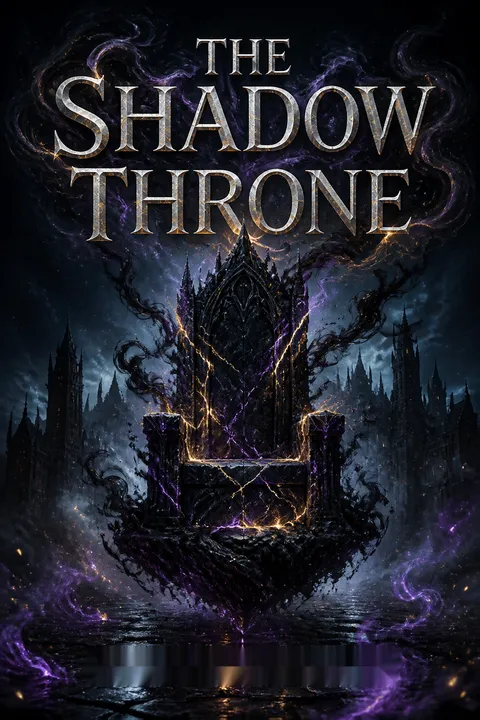

Plot Summary
Shadows in the Cobweb
In the heart of Vordan's Ministry of Information, the infamous "Cobweb," Duke Orlanko orchestrates a regime of fear and surveillance. He manipulates the city's imagination, using the threat of his secret police, the Concordat, to keep the populace in check. Orlanko's mastery is not in brute force but in making people police themselves, haunted by rumors of disappearances and shadowy agents. Yet, even he feels the city's tension rising as the king's health fails and political factions stir. Orlanko's control is threatened by the return of Colonel Janus bet Vhalnich, a rising hero, and the mysterious "Gray Rose," a rogue agent. The city is restless, and Orlanko senses that the coming death of the king will unleash chaos he may not be able to contain.
Princess and the Binding
Princess Raesinia, the king's daughter, navigates the suffocating rituals of court life while hiding a supernatural secret: she cannot die. Bound by a demonic magic, she is forced to fake her own death to escape the palace and lead a dual life among the city's revolutionaries. Her father, the dying king, warns her of Orlanko's growing power and urges her to trust Janus, who is soon to become Minister of Justice. Raesinia's immortality is both a weapon and a curse, isolating her from those she loves and making her a pawn in Orlanko's schemes. Her clandestine activities, aided by her bodyguard Sothe, set the stage for a city on the brink of revolution.
Conspiracies in the Dregs
In the vibrant, chaotic Dregs district, Raesinia meets with a circle of young conspirators—Cora, Faro, Maurisk, and others—who dream of overthrowing Orlanko's regime. Their cabal is a mix of idealism, financial acumen, and youthful bravado, united by a desire for a Vordan free from foreign influence and secret police. They recruit Danton, a simple-minded man with a magical gift for oratory, to become the voice of the people. As Raesinia juggles her royal duties and revolutionary ambitions, the group's actions begin to ripple through the city, setting off economic shocks and stirring the masses. The lines between friend and foe blur, and the cost of secrecy grows ever higher.
Return of the Colonials
Colonel Janus bet Vhalnich returns to Vordan with his trusted officers, Marcus d'Ivoire and Winter Ihernglass, after a victorious campaign abroad. Janus is appointed Minister of Justice, tasked with counterbalancing Orlanko's influence and protecting the soon-to-be queen. Marcus is made captain of the Armsmen, the city's police, while Winter is sent undercover to infiltrate the revolutionary Leatherbacks. The city is a powder keg: foreign priests preach in the streets, the poor grow restless, and the king's death looms. Janus and his allies must navigate a labyrinth of political intrigue, secret societies, and supernatural threats as they prepare for the coming storm.
Masks and Revelations
Winter, living as a man in the army, is forced to don a dress and infiltrate the all-female Leatherbacks, only to discover their leader is her lost love, Jane. Their reunion is fraught with guilt, longing, and the scars of old betrayals. As Winter becomes entangled in Jane's world of Dockside justice and protection, she witnesses the harsh realities of life under Orlanko's regime. Meanwhile, Marcus uncovers dark secrets about his own family's destruction, hinting at Orlanko's long reach. The personal and political collide, as old wounds and new alliances shape the fate of the city.
The Mob Awakens
Danton's magical oratory, crafted by Raesinia and her cabal, electrifies the populace. His speeches call for cheap bread and the restoration of the Deputies-General, Vordan's ancient representative assembly. The city erupts in protest, culminating in a run on the banks that shakes the financial foundations of the regime. Orlanko responds with mass arrests, sending his black-coated Concordat into the streets to crush dissent. The revolutionaries are hunted, and Raesinia's friends are captured or killed. The mob, once leaderless, now surges with purpose, and the city teeters on the edge of open revolt.
Danton's Voice Rises
As Danton's influence grows, the city's factions—students, dockworkers, radicals, and monarchists—struggle to unite. Raesinia and her allies orchestrate a mass demonstration, using Danton's voice to demand the release of prisoners and the convening of the Deputies-General. The authorities, paralyzed by indecision and fear of the mob, hesitate to act. The revolutionaries' careful planning is threatened by betrayal from within, as one of their own is revealed to be a Concordat informant. The stakes rise, and the revolution's success hangs by a thread.
The Vendre Besieged
The Vendre, Vordan's notorious prison, becomes the focal point of the revolution. Orlanko's mass arrests fill its dungeons with political prisoners, including Raesinia's friends and Jane's Leatherbacks. The mob, led by Jane and the revolutionaries, lays siege to the fortress. Inside, Marcus and the Armsmen struggle to maintain order and prevent a massacre. Winter and Jane risk everything to rescue their comrades, while Raesinia faces betrayal and near death. The siege culminates in a bloody assault, but the revolutionaries prevail, freeing the prisoners and striking a blow against Orlanko's regime.
The Fall of the Last Duke
With the Vendre fallen and the mob in control, Orlanko's grip on the city is broken. The Deputies-General are convened, and Raesinia is crowned queen. Orlanko attempts a desperate coup, seizing the palace and trying to eliminate Raesinia, but is thwarted by Janus, Marcus, and Sothe. The queen's survival and the revolution's triumph are secured, but at great cost. Orlanko flees to rally the Royal Army and his foreign allies, vowing revenge. The city celebrates, but the threat of counter-revolution and foreign intervention looms.
The Deputies-General Convene
The Deputies-General, a fractious assembly of radicals, monarchists, and reformers, attempt to govern the city and chart a new course for Vordan. Debates rage over the queen's role, the rights of the people, and the fate of the revolution. Winter and Jane's Leatherbacks demand recognition as soldiers, challenging gender norms and inspiring others. Betrayals and old grudges simmer beneath the surface, and the revolution's unity begins to fray. The specter of Orlanko's return and the threat of foreign war cast a shadow over the fragile new order.
Betrayals and Sacrifice
The aftermath of the revolution is marked by loss and reckoning. Ben, Raesinia's loyal friend, is killed; Faro, a trusted ally, is unmasked as a traitor, forced by Orlanko to betray the cabal. Jane and Winter struggle with their love and the scars of war, while Abby and the Leatherbacks face the trauma of battle and the uncertainty of their place in the new Vordan. Marcus confronts the truth about his family's murder, and Raesinia mourns those lost in the struggle. The revolution's victory is bittersweet, and the price of change is measured in blood and broken hearts.
The Queen Ascends
With Orlanko defeated and the Deputies-General in session, Raesinia is crowned queen. She navigates the treacherous waters of court politics, balancing the demands of the revolutionaries, the army, and the remnants of the old regime. Janus, now Minister of War, becomes her chief ally and advisor, but his true motives remain mysterious. Sothe, her loyal bodyguard, warns of dangers yet to come. The queen's reign begins under the shadow of foreign threats and the unresolved question of her own supernatural nature.
The Battle for Vordan
Orlanko, having fled north, rallies the Royal Army and his foreign backers for a counterattack. Janus, with the Colonials, volunteers, and Jane's Leatherbacks, prepares to defend the city. The battle is a desperate gamble, pitting raw recruits and unconventional tactics against disciplined regulars and heavy cavalry. Winter and Jane's company fight bravely, suffering heavy losses but holding the line. Janus' genius and the courage of the revolutionaries turn the tide, and Orlanko's forces are routed. The victory secures the revolution, but the threat of war remains.
Aftermath and Reckoning
The city erupts in celebration, but the wounds of battle and revolution run deep. The queen and Janus struggle to consolidate power, facing resistance from nobles, the army, and the Deputies-General. Winter and Jane's company become a symbol of change, inspiring others but also facing prejudice and skepticism. Marcus, now a colonel, helps rebuild the army and seeks justice for his family. Orlanko escapes, plotting revenge, while the Priests of the Black and foreign powers watch Vordan with growing alarm.
The Price of Revolution
The revolution's survivors grapple with the cost of their victory. Jane and Winter reconcile, but the future is uncertain. Abby searches for her father, and the Leatherbacks mourn their dead. Raesinia, isolated by her secret and her crown, relies on Sothe and Janus, even as she questions their motives. The city is transformed, but the old order is not easily erased. The revolution's ideals are tested by the realities of power, and the promise of a new Vordan is shadowed by the threat of war and the machinations of unseen enemies.
The Enemy in Shadow
The Priests of the Black, long thought extinct, move against Vordan. Adam Ionkovo, a Penitent Damned, escapes captivity and attempts to assassinate the queen, only to be thwarted by the mysterious Steel Ghost. The Church's secret war against demonic magic continues, and Janus' true goals remain hidden. Sothe warns Raesinia that Janus may not be the ally he seems. The revolution's victory is fragile, and darker forces gather on the horizon, threatening to engulf Vordan in a new and more terrible conflict.
The World Watches
The news of Vordan's revolution sends shockwaves across the continent. In Elysium, the leaders of the Church debate how to respond to the rise of a "demon queen" and the threat of Janus, the new Demon King. In Borel, Hamvelt, and Murnsk, diplomats and priests conspire, spreading rumors and preparing for war. The fragile peace is shattered by the ambitions of kings, priests, and bankers, all determined to shape Vordan's fate to their own ends. The revolution's triumph is only the beginning of a larger struggle.
War on the Horizon
As Vordan celebrates its hard-won freedom, the first letters of war arrive from the great powers of the world. The queen, Janus, and their allies must prepare for a new and even greater conflict, one that will test the limits of their courage, their ideals, and their loyalty to one another. The shadow of the Church, the threat of foreign armies, and the secrets of the Thousand Names all converge, promising that the story of Vordan is far from over.
Analysis
Revolution, identity, and the cost of change
The Shadow Throne is a sweeping tale of revolution, blending military fantasy, political intrigue, and personal drama. At its heart, the novel interrogates the nature of power—who wields it, who suffers for it, and what it means to claim it for oneself. Through its cast of dual-identity protagonists, the story explores the psychological toll of secrecy, the longing for authenticity, and the pain of being used as a symbol or tool. The supernatural elements serve as metaphors for trauma, alienation, and the inescapable past, while the revolution itself is both a promise of hope and a crucible of suffering. The book's lessons are hard-won: that change is costly, that ideals must be tempered by reality, and that the struggle for justice is never truly over. In a world where every victory is shadowed by new threats, the true triumph is the refusal to surrender—to fear, to despair, or to the easy certainties of the old order.
Review Summary
The Shadow Throne, the second book in The Shadow Campaigns series by Django Wexler, shifts dramatically from its military-focused predecessor to center on political intrigue and revolution in Vordan City. Readers praise the strong female characters, particularly Winter and new POV character Princess Raesinia, noting excellent LGBT representation. While some miss the extensive battle scenes from book one, most appreciate the superior characterizations and world-building. The pacing receives mixed reviews, with political scheming dominating over action. Overall, reviewers rate it 4-5 stars, calling it a worthy sequel.
People Also Read


Characters
Raesinia Orboan
Raesinia is the young, seemingly fragile princess who becomes queen of Vordan. Secretly bound by a demonic magic that grants her immortality, she is both a symbol of hope and a pawn in the games of powerful men. Her dual life—royal figurehead by day, revolutionary conspirator by night—reflects her deep loneliness and the burden of her secret. Psychoanalytically, Raesinia embodies the struggle for agency in a world determined to use her, wrestling with guilt, isolation, and the fear of being unlovable. Her relationships—with her dying father, her loyal bodyguard Sothe, and her revolutionary friends—are marked by secrecy and sacrifice. Over the course of the story, she grows from a sheltered girl into a determined, if haunted, leader, willing to risk everything for her people.
Janus bet Vhalnich
Janus is the legendary colonel who returns from foreign victory to become Vordan's Minister of Justice and, ultimately, its savior in the revolution. He is a master of both military and political strategy, always several moves ahead of his enemies. Janus is calm, inscrutable, and often manipulative, using people as pieces in his grand designs. His true motives are ambiguous, and even his closest allies—Marcus, Raesinia, Winter—struggle to understand him. He is haunted by knowledge of the supernatural, the Thousand Names, and the threat of the Priests of the Black. Janus' psychological complexity lies in his blend of idealism and ruthlessness, his willingness to do whatever is necessary for the greater good, and his isolation as a man who can never fully trust or be trusted.
Marcus d'Ivoire
Marcus is Janus' loyal subordinate, promoted to captain of the Armsmen and later a colonel. He is a man of conscience, struggling to reconcile duty with morality in a city rife with corruption and fear. Marcus is haunted by the mysterious destruction of his family, a trauma that shapes his distrust of authority and his drive for justice. His relationships—with Janus, Winter, and the revolutionaries—are marked by loyalty, self-doubt, and a longing for belonging. Marcus' development is a journey from passive obedience to active leadership, as he learns to make hard choices and accept the costs of command.
Winter Ihernglass
Winter is a woman living as a man in the army, forced to confront her identity when sent undercover among the Leatherbacks. Her reunion with Jane, her lost love, is both a source of healing and new pain. Winter is defined by her resilience, her capacity for love, and her struggle with trauma and guilt. She is also host to a supernatural entity, the Infernivore, which both protects and alienates her. Winter's journey is one of self-acceptance, as she learns to reconcile her past, her love for Jane, and her place in a world that refuses to see her as she is. Her psychological arc is one of vulnerability, courage, and the search for a home.
Jane Verity ("Mad Jane")
Jane is the charismatic, unpredictable leader of the Leatherbacks, a gang of Dockside women who become a revolutionary force. She is both a survivor and a savior, haunted by past abuse and driven by a need to protect those she loves. Jane's relationship with Winter is the emotional heart of the story, a bond forged in pain and tested by betrayal, jealousy, and the demands of leadership. She is both nurturing and ruthless, capable of great tenderness and great violence. Jane's psychological complexity lies in her struggle to balance her own needs with her responsibilities, her fear of abandonment, and her refusal to be a victim.
Duke Orlanko
Orlanko, the "Last Duke," is the head of the Ministry of Information and the Concordat, ruling Vordan through surveillance, terror, and psychological manipulation. He is brilliant, cold, and utterly ruthless, believing that order justifies any means. Orlanko's psychoanalysis reveals a man obsessed with control, haunted by the chaos he senses beneath the surface of society. His relationships—with his agents, the king, and his enemies—are transactional and devoid of genuine affection. As his power crumbles, Orlanko becomes increasingly desperate, willing to unleash violence and even supernatural forces to maintain his grip.
Sothe
Sothe is Raesinia's bodyguard, a former Concordat agent who becomes her most trusted ally. She is a master of stealth, assassination, and subterfuge, haunted by her past and fiercely protective of Raesinia. Sothe's psychological depth lies in her struggle to trust, her guilt over past actions, and her willingness to sacrifice herself for those she loves. Her relationship with Raesinia is one of devotion, but also of caution, as she warns against trusting even Janus. Sothe embodies the costs of living in the shadows and the possibility of redemption.
Danton Aurenne
Danton is a simple-minded man with a supernatural gift for oratory, used by Raesinia's cabal as the voice of the revolution. He is both a tool and a victim, unaware of the forces that shape his fate. Danton's speeches ignite the city, but his innocence makes him vulnerable to manipulation and ultimately leads to his martyrdom. Psychologically, Danton represents the power and danger of symbols, the ease with which individuals can be used and discarded by movements larger than themselves.
Cora
Cora is the youngest member of Raesinia's cabal, a financial genius whose schemes fund the revolution. She is bright, eager, and fiercely loyal, but the violence and betrayals of the revolution leave her scarred. Cora's psychological arc is one of coming of age in a world that devours the young, forced to confront the costs of her ideals and the limits of her power.
Alek Giforte
Giforte is the vice captain of the Armsmen, a man whose competence and loyalty are undermined by debts and blackmail at Orlanko's hands. He is a father, a leader, and a survivor, forced to choose between his conscience and his family's safety. Giforte's psychological struggle is one of guilt, shame, and the hope for redemption, as he ultimately sides with the revolution and seeks to atone for his complicity.
Adam Ionkovo
Ionkovo is a member of the Priests of the Black, a host to a demon and a master of shadow magic. He is both a tool of the Church and an independent actor, driven by a sense of mission and a cold detachment from ordinary humanity. Ionkovo's psychological profile is one of alienation, fanaticism, and the corrosive effects of power. His actions—assassination, escape, and supernatural warfare—signal the return of ancient threats and the escalation of the conflict beyond mere politics.
Plot Devices
Dual Identities and Masks
The novel is structured around characters who lead double lives—Raesinia as princess and revolutionary, Winter as woman and soldier, Jane as protector and avenger. Masks, both literal and figurative, are central: the Gray Rose, the Penitent Damned, and the public personas adopted by Danton and others. This device allows for dramatic irony, tension, and the exploration of themes of authenticity, secrecy, and the costs of living a lie. The narrative structure alternates between perspectives, revealing secrets to the reader before the characters, and using foreshadowing to build suspense.
Magical Realism and Supernatural Intrigue
The presence of magic—Raesinia's binding, Winter's Infernivore, the Priests of the Black—elevates the stakes from political revolution to existential struggle. Supernatural elements are woven into the fabric of the world, often hidden beneath the surface, and are used to explore questions of power, agency, and the nature of humanity. Foreshadowing is used to hint at the true extent of these forces, and the gradual revelation of their influence parallels the characters' journeys of self-discovery.
Revolutionary Upheaval and Social Change
The plot is driven by the tension between order and revolution, embodied in the city's descent into riot and the rise of the Deputies-General. The use of mass movements, economic shocks (the bank run), and the manipulation of public opinion (Danton's speeches) are key devices. The narrative structure mirrors the chaos of revolution, with shifting alliances, betrayals, and the constant threat of violence. The personal is always political, and the fate of individuals is inseparable from the fate of the city.
Betrayal, Sacrifice, and Redemption
Betrayal—by Faro, by Giforte, by the institutions of power—drives much of the plot's emotional arc. Sacrifice, both willing and coerced, is a recurring motif: Ben's death, Jane's choices, Raesinia's isolation. Redemption is possible but never easy, and the novel uses these devices to explore the costs of loyalty, the pain of loss, and the hope for forgiveness. The structure uses parallel arcs—personal and political—to reinforce these themes.
The Chessboard of Power
Janus' approach to revolution and war is explicitly likened to chess, with characters as pieces and the outcome always uncertain. The narrative structure reflects this, with plans within plans, reversals, and the constant need to adapt. Foreshadowing and dramatic irony are used to show the limits of even the most brilliant strategy, and the ultimate unpredictability of human action.
The Shadow Campaigns Series


About the Author

Download PDF
Download EPUB
.epub digital book format is ideal for reading ebooks on phones, tablets, and e-readers.








































