


Plot Summary
Prologue
A street boy arrives at Lady Duxbury's4 London townhouse bearing a single black boot embroidered with roses. His message is frantic: a woman has been taken to Leavenhall Lunatic Asylum, and she threw the boot from the carriage window as proof. Lady Duxbury4 recognizes it instantly and panics — this is her fault.
What began as an innocent effort to help repressed women has spiraled into catastrophe. She dispatches urgent notes to the others and tips the boy generously. A menacing bouquet sits on her table from an unnamed sender. Inside the boot's tongue, she finds her own original letter — the invitation that started everything. The story rewinds two months to show how it all began.
The Countess's Forbidden Library
London, 1895. Eleanor Clarke1 lives under the thumb of Cecil,5 her wealthy merchant husband, who controls her mail, her time with toddler son William, and every halfpenny of his fortune. Her maid Bennett12 — the only person who witnesses the bruises beneath her sleeves — smuggles a secret note into Eleanor's1 vanity: an invitation from the Countess of Duxbury.4
At Lady Duxbury's4 townhouse, Eleanor1 joins Rose Wharton,2 a lonely American whose brother-in-law10 demands she become more English, and nineteen-year-old Lavinia Cavendish,3 whose father9 confiscated her books for fear her intense emotions signal inherited madness.
Lady Duxbury4 reveals she knows their reading is restricted. She offers her personal library — novels by women, stories of real heroines — asking only for trust and friendship. Rose,2 starved for belonging, is the first to accept.
Bruises Behind the Bookshelf
Over their first weeks together, trust compounds. Eleanor1 — whose years of gauging Cecil's5 moods have made her uncannily perceptive — steers panicking Lavinia3 from a crowded ballroom into a quiet parlor under the pretense of viewing a painting.
Rose2 admits her brother-in-law's10 tyranny over her marriage. Eleanor1 nearly reveals Cecil's5 violence — until a bruise peeks beneath her sleeve and she falls silent. Lady Duxbury4 later confronts Eleanor1 privately, gently lifting her arm to expose the mottled discoloration, insisting that no transgression warrants such punishment.
Then she mentions an oddity: a loose wooden knot in the library bookshelf. Eleanor1 presses it. A panel clicks open, revealing a blue leather diary spanning decades. Lady Duxbury4 — the woman with three dead husbands — wants Eleanor1 to read her life.
Three Husbands, One Lost Son
Eleanor1 pieces together a shattered life across decades of entries. As a girl named Clara, Lady Duxbury4 fell in love with Elias,14 a bookshop owner who saved her from brothel recruiters at a train station.
Her friend Alice — now the powerful Lady Meddleson8 — betrayed the affair, ensuring Elias14 received a false rejection while Clara was locked in her room, pregnant. She married a viscount for the child's sake. She adored their son George, but her second husband's cruelty proved fatal: he locked the boy outside during a storm, and George died of the resulting illness.
After the second husband's death, Clara briefly reunited with Elias14 before consumption claimed him. The hair brooch she wears daily holds his lock of hair and their son's portrait — both loves pressed forever against her heart.
Not Madness — Poetry
At tea, Lavinia3 finally confesses what terrifies her: her grandmother was committed to a lunatic asylum, and she fears she'll follow. Her emotions are too intense — not anger but rage, not sadness but an annihilating despair.
Lady Duxbury4 asks her to close her eyes and describe what those feelings actually look like. What follows stuns the room. Lavinia3 speaks of rage as a conflagration trapped inside a vessel, clawing for release. She describes sorrow as a black lake that swallows even the moon's reflection.
When she opens her eyes, terrified she's confirmed her madness, Lady Duxbury4 declares the opposite: if Lavinia3 were a man, she'd be lauded like Wordsworth. She isn't mad — she's a poet. Lady Duxbury4 presses her to write, recommending Elizabeth Barrett Browning's Aurora Leigh as a starting flame.
The Brothel Guide in Theodore's Desk
Rose's2 husband Theodore6 has been confiscating her novels at his dying brother Byron's10 insistence. Searching Theodore's6 desk for one, she discovers Swell's Night Guide — a directory of London's brothels, complete with illustrations of partially clothed women.
She vomits into a bowl of his fountain pens. Confronting him, she meets first denial, then confession: Byron10 gave it, claiming Theodore6 was too besotted with his wife to control her properly. Theodore6 swears he's never opened it and hurls the book into the fire.
They reconcile partially — he promises her freedom to read and speak freely when they're alone. Rose's2 brave little pug Pluto, who growled and bared his teeth when Theodore6 stepped too close, relaxes. Alone afterward, Rose2 feels the baby quicken for the first time — the pregnancy she has told no one about.
Hatpins, Ghosts, and Poison Gardens
Lady Duxbury4 hosts an overnight trip to her country estate. An American woman named Smith, wearing men's trousers and an absurdly flowered hat, teaches hatpin fighting — how to spin, draw the pin, and strike a killing blow into a pillow-wrapped dummy.
Eleanor1 excels, imagining saving her son. That evening, a medium in widow's weeds conducts a séance connecting them to the ghost of the former Lady Duxbury, who suffered postpartum despair and took her own life. Eleanor1 confesses she endured similar darkness after William's birth.
The next morning, Rose2 reveals her pregnancy. Lady Duxbury4 then unlocks a hidden garden of poisonous plants — belladonna, foxglove, hemlock — explaining that in small doses they heal, in large ones they kill. She offers Rosewood Cottage as refuge, available anytime.
Blackmail at Lady Meddleson's
Armed with diary knowledge — Lady Meddleson8 has an illegitimate son from a footman's affair — Eleanor1 pays the powerful countess a visit. She refuses the lowly chair offered and settles onto the silk settee reserved for duchesses.
When Eleanor1 reveals what she knows and demands Rose2 receive an invitation to the season's most exclusive soiree, Lady Meddleson8 capitulates with visible fury. Eleanor1 adds a parting shot: Lady Duxbury4 sends her regards. Leaving through the rear mews, Eleanor1 finds Lady Duxbury's4 footman unconscious and a ruffian lunging from the shadows.
Without hesitation, she spins and drives her hatpin into the man's shoulder — her first real act of self-defense. He staggers away. Her bonnet lies ruined in the mud, but she is alive, trembling, and changed.
Lavinia's Journals Seized
The family maid reports Lavinia's3 continued reading. Lord Eversville9 discovers her poetry journals and hauls Lavinia3 into his study, where her weeping mother already sits. He reads her verses aloud — conflagrations, the desire for the ground's embrace, the Icarus imagery — and each line sounds damning in his gruff voice.
He pounds the desk, cracks a journal's spine, and declares it time to follow her grandmother's path. Her mother begs: not like my mother. Lavinia3 retreats to her room, facing the loss of not only her freedom but her budding connection with Mr. Wright,7 a book-loving aspiring solicitor she has grown to admire at recent balls. The opening line of a new poem she'd been composing all day slips from memory, stitch by stitch, like thread pulled from lace.
Cecil Cancels Peru
Cecil's5 annual trip to Peru — Eleanor's1 only weeks of breathing room — is canceled as punishment for her night at Rosewood Cottage. William, left with Cecil5 during her absence, clung to her in terror when she returned. Cecil5 fires the nurse and orders Eleanor1 into gowns he selects, dismantling her last scrap of autonomy.
The beating that follows leaves a livid bruise across her cheekbone. When Eleanor1 arrives at Lady Duxbury's4 leaning on the butler Davies's11 arm, the damage is visible to all. She requests what she has never dared to request: help leaving Cecil5 tonight.
Lady Duxbury4 details an escape plan that sounds prepared weeks in advance — hired carriage, widow's weeds disguise, a remote estate in Northumberland, Davies11 as guard. Rose2 offers to collect Eleanor's1 belongings under the guise of charity donations.
The Packed Trunk
Lavinia3 offers her slippers, but Rose2 insists Eleanor1 take her rose-embroidered boots — black kidskin with a secret pocket sewn into the tongue. Tearful farewells follow; they fear this may be their last meeting.
At home, Eleanor1 finds her travel trunk already in Cecil's5 study, her maid Bennett12 beside it with a blackened eye. Cecil5 has discovered the jewelry, the clothing, the proof of planned departure. Bennett12 claims she stole everything, trying to shield Eleanor.1 Cecil5 beats her anyway.
When Eleanor1 confesses she was planning to leave with William, Dr. Gimbal15 — the physician who guided her through pregnancy and postpartum darkness — enters and hands Cecil5 signed commitment papers for Leavenhall Lunatic Asylum. Eleanor1 is stripped of her gown, locked in a carriage, and driven away from her son.
One Boot in the Mud
Before the carriage reaches the asylum, Eleanor1 spots a boy on the street. She throws him a guinea and yanks off one of Rose's embroidered boots, shoving it through the narrow window with a desperate message: tell Lady Duxbury4 she's been taken to Leavenhall.
The boot splatters into the mud as the carriage turns the corner. Inside the asylum, Eleanor1 endures a coffin-sized cell, mass troughs for washing, and screams that echo through stone walls all night.
When she's falsely blamed for a brawl in the yard, guards chain her to a wall and blast her with freezing water for twelve minutes. A needle follows — paraldehyde, a sedative that drags her into black oblivion. Her only thought before consciousness dissolves: the boot. The boot is her only hope.
Coleridge Saves a Daughter
Lady Duxbury4 summons Lavinia3 and Rose2 with urgent notes. They learn Eleanor1 has been committed. Lavinia3 suggests the mentor of Mr. Wright7 — a bookish aspiring solicitor she's fallen for at balls — who specializes in freeing wrongfully committed women.
Meanwhile, Lavinia's mother9 presents Lord Eversville9 with poetry by Coleridge and Blake. He reads these celebrated men's dark, violent imagery and compares it to his daughter's verses. He relents — Lavinia3 may write poetry and attend her sister Delilah's debut.
At the ball, she dances with Mr. Wright,7 asks for his legal help, and accepts his request to court her. Rose2 finally tells Theodore6 about the baby; he weeps with joy. At Lady Meddleson's8 soiree, the women spread a fever rumor to cover Eleanor's1 absence while Byron10 grudgingly acknowledges Rose's2 strength.
Eleanor Returns for William
The solicitor's petitions and Lady Duxbury's4 bribes extract Eleanor1 from the asylum in five days. Drugged and barely conscious, she is carried out by Davies.11 Lady Duxbury4 nurses her back to health and hands her a small glass vial of nightshade extract: half will incapacitate, all of it kills.
Eleanor1 insists on returning for William immediately. At home, Cecil5 knocks Davies11 unconscious with a granite bust and drags Eleanor1 into his study. He snaps her poisoned hatpin in half, threatens a worse asylum where no one will ever find her.
As he rants, he plucks a date from the gift box Lady Duxbury4 sent weeks earlier. He chokes. His face turns purple. He reaches for Eleanor.1 She steps back and watches until his body goes still. Then she climbs the stairs and lifts her sleeping son into her arms.
Epilogue
Lady Duxbury4 opens a fresh diary and surveys what the Secret Book Society has wrought. Lavinia3 is engaged to Mr. Wright,7 reads her poetry aloud at social gatherings, and has joined London's suffrage movement. Rose2 and Theodore6 are reunited in love with a baby daughter named Clara — Lady Duxbury's4 namesake and goddaughter.
Rose2 now leads the Society for the Advancement of the Poor, employing Sam,13 the brave street boy who delivered the boot, in her household. Eleanor1 is a widow finding light beyond her mourning weeds, visiting Lady Duxbury4 with William,1 whose laughter fills the countess's quiet rooms.
Lady Duxbury4 vows to continue helping repressed women, honoring Elias's14 dying wish. When a new woman — Lady Pempton, who once declined the original invitation — appears at her door, she is warmly welcomed into the society.
Analysis
The Secret Book Society operates on a radical premise for historical fiction: that reading itself is an act of rebellion. In Victorian England, where women's novels were pathologized as catalysts for promiscuity and hysteria, Lady Duxbury's4 library becomes foundational infrastructure for resistance. But Martin does something more sophisticated than celebrate books as salvation — she interrogates how patriarchal systems manufacture madness as a diagnostic convenience, turning disobedience into disease.
Lavinia's3 arc crystallizes this most sharply. The same emotional intensity that would earn a man the mantle of Romantic genius earns a woman commitment papers. Her father9 cannot recognize poetry when he reads it because the frame through which he interprets her words — hereditary insanity — distorts every metaphor into a symptom. Only when confronted with Coleridge's equally feverish imagery, celebrated for centuries, does the double standard become legible.
The novel's treatment of domestic abuse avoids victimhood narrative. Eleanor1 does not escape through male rescue or legal triumph. She escapes through a collective of women who have systematically armed her: Lady Duxbury4 with knowledge and resources, Smith with combat skills, Rose2 with practical logistics, Lavinia3 with Mr. Wright's7 legal connections. Each woman contributes a piece no individual could have assembled alone. This is collective female agency, architecturally precise.
Martin also complicates the morality of liberation. The poison garden exists. The nightshade vial is offered. Cecil5 chokes on dates that Lady Duxbury4 sent. Whether Eleanor1 used the extract remains deliberately unresolved — the novel refuses to judge the survival methods of those whom every institution has abandoned. The intergenerational pattern of women's suffering — Lady Duxbury's4 mother-in-law's postpartum despair, Eleanor's1 similar episode, Lavinia's3 grandmother's commitment — argues this is not individual pathology but systemic repetition, breakable only through the solidarity the book society provides.
Review Summary
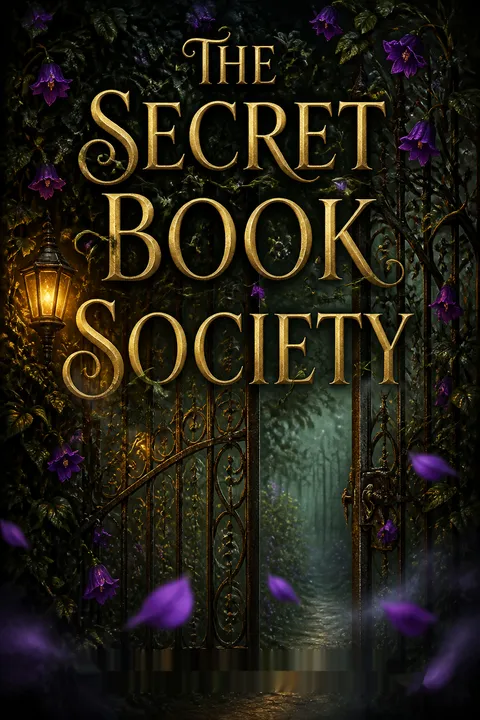
The Secret Book Society is a highly-rated historical fiction novel set in Victorian London. Readers praise its portrayal of women's struggles, forbidden book clubs, and female friendships. The story follows four women who find empowerment through reading and supporting each other. Many reviewers appreciate the feminist themes, character development, and historical accuracy. Some criticize one-dimensional male characters and predictable plot elements. Overall, the book is described as captivating, emotional, and a celebration of women's resilience in a restrictive society.
People Also Read


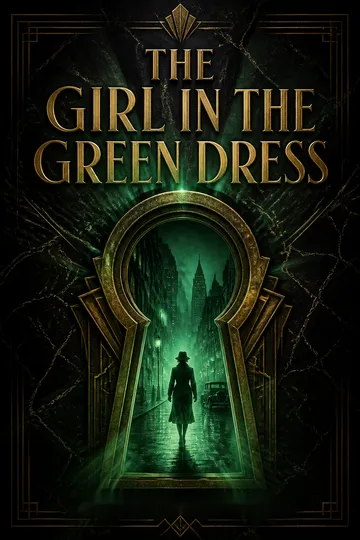


Characters
Eleanor Clarke
Abused wife, desperate motherA viscount's daughter married off to Cecil Clarke5, a self-made merchant whose fortune was built on Peruvian guano. Eleanor lives inside a cage of silk and sapphires—her mail opened, her meals chosen, her time with toddler William rationed to supervised hours every other day. Years of reading Cecil's5 volatile moods have made her preternaturally skilled at perceiving others' emotions, a survival mechanism refined into something resembling empathy. She presents a porcelain-perfect exterior while hiding bruises beneath fitted sleeves. Her wardrobe is her sole remaining autonomy: she selects colors to match her emotional state, wearing calming blue on bad days, yellow when she dares to hope. Beneath her compliance runs a deep, unspoken rage—the kind Lavinia3 would recognize as a conflagration.
Rose Wharton
Bold American outsiderAn American heiress whose marriage to Theodore Wharton6 was supposed to be her fairy tale—she chose love over a duke. But Theodore's6 dying brother Byron10 is preparing Theodore6 to inherit the earldom, and Rose's boldness, her accent, her very American-ness are deemed liabilities. She is starved for connection in a London that treats her like an exotic oddity. Her self-deprecating humor masks genuine pain; her bluntness is both her greatest flaw and most endearing quality. Rose's character deepens significantly through volunteer work with London's impoverished, transforming from a woman who once assumed poverty was laziness into someone who saves meals for hungry children and buys shoes for bare feet. She carries a secret pregnancy that becomes both her vulnerability and her resolve.
Lavinia Cavendish
Shy poet fearing madnessAt nineteen, Lavinia is the quietest storm in any room—a young woman who feels everything at maximum volume and has been taught this makes her broken. Her grandmother was committed to an asylum for similar intensity, and Lavinia lives beneath that shadow. She speaks barely above a whisper, shrinks from crowds, and suffers panic attacks at balls. But underneath the protective shell of silence lives someone magnificent: a natural poet whose descriptions of emotion can stop a room mid-breath. Her father9 confiscated her books after she punched her brother for throwing one in the fire. Her journey is one of discovering that the passion her family calls madness is actually genius—and finding the courage to let it breathe rather than suffocate it.
Lady Duxbury
Enigmatic widowed orchestratorThe countess who orchestrates the Secret Book Society has survived more than anyone suspects. Thrice widowed by her mid-thirties, she maintains an air of unshakable confidence while concealing a past scarred by forced marriages, a lost child, and the manipulations of a treacherous former friend8. She hires servants from poorhouses and boxing rings, keeps her doors perpetually open—unable to bear them closed after years of imprisonment—and wears a brooch whose contents represent the only two people she has ever truly loved. Lady Duxbury reads each woman's needs with uncanny precision, providing exactly the right book, the right tool, the right moment. Her generosity is born from personal devastation: she builds the sanctuary she was never given.
Cecil Clarke
Eleanor's controlling husbandA self-made merchant whose fortune came from Peruvian bird droppings. He purchased Eleanor's1 noble blood the way he buys sapphires—as a display of power. His control extends to her mail, meals, time with their son, and eventually her clothing. His mercurial temper oscillates between cold indifference and explosive violence, always intensified by drink. Beneath his cruelty lies the insecurity of a man who was once rejected by a duchess and has spent his life punishing noblewomen for it.
Theodore Wharton
Rose's conflicted husbandRose's2 husband is a younger brother thrust into an unwanted inheritance. He fell in love with Rose2 for her boldness, then spent months trying to sand it down at his dying brother's10 insistence. The conflict between the man Rose2 married—playful, tender, impulsive—and the rigid earl-in-training he is becoming drives their marriage to its breaking point. Beneath his compliance with Byron10 runs genuine, stubborn love for his wife.
Mr. Wright
Lavinia's bookish suitorLavinia's3 love interest is charmingly awkward, fiercely protective of women—shaped by his widowed mother and four sisters—and wears his hair unfashionably long. He reads the Brontës, compares Lavinia3 to Jane Eyre, and studies law under a solicitor who specializes in freeing women wrongfully committed to asylums. His clumsy earnestness disarms Lavinia3 precisely because he makes no pretense of perfection.
Lady Meddleson
Lady Duxbury's treacherous nemesisLady Duxbury's4 former friend wields social power like a blade. Behind a porcelain exterior of affected sweetness, she has systematically destroyed Clara's relationships—sabotaging her love affair, exposing secrets to each husband, and orchestrating isolation. Her motivations stem from jealousy and a desperate craving for love she has never received. She guards her own devastating secret with ferocious determination.
Lord Eversville
Lavinia's fearful fatherLavinia's3 father expresses love through control. Terrified his daughter will follow her grandmother into an asylum, he confiscates her books and monitors her behavior, unable to distinguish artistic passion from clinical madness. A permanent crease at his brow deepens with every perceived misstep, yet his affection for his daughter is genuine beneath the fear—a man who once wooed his wife with Tennyson.
Byron, Earl of Amsel
Theodore's dying, domineering brotherTheodore's6 older brother is dying of cancer and clinging to legacy with white-knuckled fury. Once dubbed London's most eligible bachelor four seasons running, he now weaponizes his authority over Rose2 and Theodore6, demanding perfection from a future countess he never wanted. His cruelty toward Rose2 is fueled by his own terror of irrelevance—a young man's pride caged in a failing body.
Davies
Lady Duxbury's pugilist butlerLady Duxbury's4 butler and former boxing champion, retired after too many blows to the head. His broken nose and massive frame belie a fierce loyalty to the women of the society, whom he guards with his life.
Bennett
Eleanor's loyal maidEleanor's1 maid and closest confidante, the only witness to the bruises and the tears. She smuggles the Secret Book Society invitation into Eleanor's1 vanity and later helps plan the escape, taking blame to protect her mistress.
Sam
Scrappy street boyA resourceful boy of about twelve who shines boots and pastes bills on scaffolding, saving every penny for a Hansom cab license. Rose2 befriends him through her charity work. His bravery proves pivotal to the story's climax.
Elias
Lady Duxbury's true loveA bookshop owner who saved young Clara from brothel recruiters and became the love of her life. Father of her son George. He dies of consumption, leaving Clara the hair brooch she never removes.
Dr. Gimbal
Eleanor's trusted physicianEleanor's1 longtime doctor who guided her through a difficult pregnancy and postpartum despair. He shares stories of his own wife's similar struggles, fostering a bond built on mutual vulnerability and trust.
Plot Devices
Lady Duxbury's Diary
Reveals backstory, drives blackmailA blue leather journal hidden behind a secret panel in Lady Duxbury's4 library, triggered by pressing a disguised wooden knot. Eleanor1 discovers it after Lady Duxbury's4 pointed hint and reads it secretly, concealed behind larger books. The diary chronicles Clara's life across three marriages—her love for Elias14, forced unions with abusive men, the death of her son George, and the repeated betrayals of Lady Meddleson8. It serves dual narrative functions: deepening understanding of Lady Duxbury's4 enigmatic character and providing Eleanor1 with crucial leverage—knowledge of Lady Meddleson's8 illegitimate son—that she later uses to secure Rose's2 invitation to the season's most exclusive soiree. Lady Duxbury4 intentionally leads Eleanor1 to find it, trusting her with the most dangerous currency in Victorian England: secrets.
Rose's Rose-Embroidered Boots
Symbol of friendship, rescue toolBlack kidskin leather boots with bold rose embroidery alongside the laces and a secret pocket sewn into the tongue. A gift from Rose's2 father, they symbolize her American identity, her connection to home, and the possibility of return. Rose2 keeps the Secret Book Society invitation tucked in the hidden pocket. The boots travel through four pairs of hands across the story: from Rose's2 father to Rose2, from Rose2 to Eleanor1 when her shoes are ruined, from Eleanor1 out a locked asylum carriage window to a street boy13, and from the boy13 to Lady Duxbury4 as proof of Eleanor's1 imprisonment. Each transfer represents an act of love and trust. The boots function as the narrative's most tangible through-line, connecting the women's friendship to Eleanor's1 rescue.
Hatpin Fighting
Self-defense empowermentA combat technique taught by Smith, a brash American woman in men's trousers, during the Rosewood Cottage weekend. The women learn to spin, draw a long hatpin from their elaborate hats, and deliver a stabbing strike to dummy targets. Eleanor1 masters the skill fastest, fueled by imagining the defense of her son. The training transforms a frivolous Victorian fashion accessory into a weapon of female resistance. It pays off when Eleanor1 is attacked in an alley behind Lady Meddleson's8 house and stabs her assailant in the shoulder—her first real act of physical self-defense. The hatpin reappears throughout the climax as Eleanor's1 improvised weapon, though circumstances force an alternate resolution to her final confrontation.
The Book of Herbal Remedies
Knowledge of healing and harmA handwritten compendium of botanical medicine passed through generations of women, gifted to Lady Duxbury4 by a loyal maid. It contains recipes for headache cures, pregnancy tonics, complexion pastes, and methods for safely preparing belladonna and foxglove extracts. Lady Duxbury4 introduces it at tea as a healthier alternative to commercial pills laced with arsenic and mercury. Rose2 uses it for remedies during her pregnancy; Eleanor1 studies it with growing fascination. The book embodies dual knowledge—the same botanical wisdom that heals can also harm, depending solely on dosage—and connects to the broader theme that women denied formal education found power in folk knowledge, passed hand to hand in defiance of institutions that would keep them ignorant.
The Poison Garden
Literal tools of last resortA locked enclosure at the rear of Rosewood Cottage containing meticulously cultivated toxic plants: belladonna, foxglove, hemlock, monkshood, and datura. Lady Duxbury4 walks the women through the garden in heavy gloves and leather aprons, explaining each specimen's dual nature—small doses heal ulcers and calm nerves, large doses kill within hours. She notes that many women unknowingly grow datura in their own gardens, calling them innocent poisons. Only Lady Duxbury4 and her housekeeper hold keys, but access is granted to the women at any time. The garden physically manifests the novel's moral ambiguity: when every institutional door is locked against a woman, the natural world offers tools that require no permission to use.

Download PDF
Download EPUB
.epub digital book format is ideal for reading ebooks on phones, tablets, and e-readers.








































