
Plot Summary
Death in the Hallway
In 1950s Virginia, the respected coroner Abney is called to the Markey house, where Morris Markey, a once-famous New Yorker writer, lies dead in his own hallway, shot behind the ear with his own rifle. The scene is ambiguous: suicide seems unlikely given the mechanics, but murder is hard to prove. Markey's wife and daughter are questioned, but no clear answers emerge. In Markey's study, Abney finds a half-written article about a decades-old murder: "Who Killed Joe Elwell?" The question of suicide or murder lingers, both in the present and in the story Markey was writing, setting the stage for a tale about the mysteries that haunt both life and death.
Southern Boy in New York
Flashing back to 1920, young Morris Markey, a war veteran from Virginia, tries to find his place in the frenetic world of New York's literary and social scene. At a crowded party, he feels out of place among the ambitious, witty, and often cruel crowd. He is overshadowed by the likes of F. Scott Fitzgerald and his dazzling wife Zelda, who are the talk of the town. Markey's Southern manners and outsider status make him both invisible and vulnerable, but he is determined to make his mark as a reporter, believing that the right story could change his life.
The Glittering Stranger
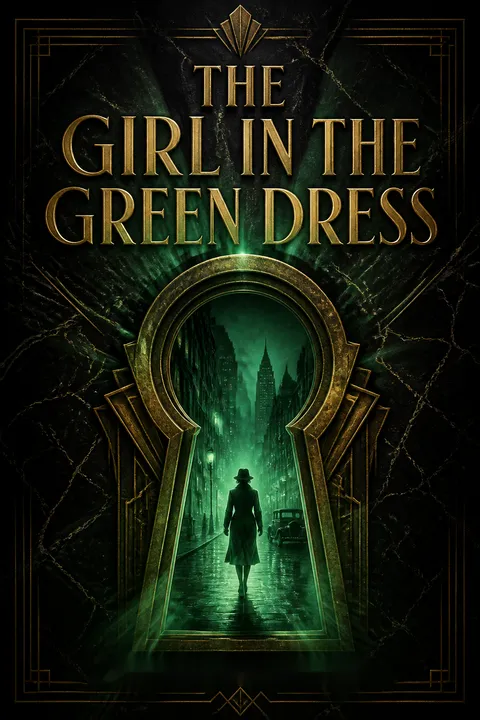
One night, Markey and his friend Spook witness the arrival of Joseph Elwell, a flamboyant, wealthy gambler, and a stunning girl in a green dress. The next morning, Markey is awakened by screams: Elwell has been shot in his locked home, a bullet through his forehead. Markey, first on the scene, finds no sign of forced entry or robbery, but plenty of secrets: a house full of women's photographs, a missing gun, and the lingering scent of a beautiful, possibly dangerous woman. The locked-room mystery and the vision of the girl in green ignite Markey's ambition and obsession.
A Locked Room Mystery
Markey investigates Elwell's murder, noting the oddities: the doors were locked, the victim was at ease, and valuables were untouched. The housekeeper, Mrs. Larsen, is loyal but evasive. Markey's reporting brings him into contact with the city's elite and its underbelly, as he chases leads about Elwell's many lovers, his gambling debts, and the enigmatic girl in green. The police are baffled, and the press—hungry for sensation—fans the flames of speculation, turning the case into a citywide obsession.
The Girl in Green
Markey's pursuit of the girl in the green dress becomes personal. He enlists Zelda Fitzgerald's help to track down Viola Kraus, the "most beautiful girl in New York," who claims to have been Elwell's fiancée. Viola's story is full of contradictions, and her family—especially her sister Selma and brother-in-law Walter Lewisohn—are evasive and powerful. Zelda, both ally and provocateur, pushes Markey to see the case as more than a simple crime of passion, hinting at deeper motives and dangers.
Zelda's Daring Invitation
Zelda, bored and brilliant, draws Markey into her orbit. Together, they navigate the city's speakeasies, theaters, and parties, using Zelda's social daring and Markey's dogged curiosity to pry open the secrets of the case. Their partnership is electric, full of flirtation, rivalry, and mutual recognition as outsiders in a world obsessed with status and spectacle. Zelda's insight and recklessness both help and hinder Markey's investigation, as they chase the elusive truth behind Elwell's death.
The Most Beautiful Suspect
The press fixates on Viola as the likely killer, especially after a pink kimono with a missing monogram is found in Elwell's house. Viola's shifting stories and her connection to powerful men make her both a target and a protected figure. Markey, torn between sympathy and suspicion, uncovers the web of lies and loyalties that bind Viola, her family, and Elwell. The city's appetite for scandal grows, and Markey's own reputation rises with each new revelation.
The Press and the Pink Kimono
The discovery of the pink kimono and the missing monogram becomes a sensation, fueling wild theories in the newspapers. Markey's reporting shapes public opinion, but he begins to question the ethics and consequences of his work. The police, under pressure, focus on the women in Elwell's life, while Markey suspects that the real story is being obscured by wealth, influence, and the city's hunger for spectacle. The truth seems further away than ever.
The Fitzgeralds' Wild Nights
Markey is drawn deeper into the Fitzgeralds' world of parties, excess, and emotional volatility. Zelda's brilliance and instability become more apparent, as does Scott's insecurity and dependence on her for inspiration. Their marriage is both a performance and a battleground, mirroring the city's own contradictions. Markey's relationship with Zelda becomes more complicated, blurring the lines between friendship, desire, and rivalry. The case, the city, and their own lives begin to spiral out of control.
The Widow and the Will
Markey interviews Elwell's estranged wife and their son, uncovering the financial and emotional stakes behind the murder. The will, which leaves everything to Elwell's parents, adds another layer of motive and resentment. The widow's bitterness and the son's alienation reflect the broader theme of families torn apart by ambition, betrayal, and the pursuit of status. Markey sees parallels to his own life and the lives of those around him, deepening his sense of the case's complexity.
The American Protective League
Markey discovers that both Elwell and his neighbor Griswold were members of the American Protective League, a wartime organization that spied on suspected traitors and radicals. The APL's legacy of suspicion, surveillance, and betrayal haunts the present, suggesting that Elwell's murder may be connected to secrets far more dangerous than love affairs. As Markey investigates, he becomes a target himself, surviving an attempt on his life and realizing that the case is bigger—and more perilous—than he imagined.
The Dancer's Secret
Markey finally tracks down Leonora Hughes, the dancer in the green dress, and learns that she left Elwell's house long before the murder. The real threat, she reveals, is Walter Lewisohn, whose obsession and violence have been covered up by wealth and influence. Markey realizes that the city's elite are willing to sacrifice anyone to protect their own, and that the truth is often buried beneath layers of lies, fear, and complicity.
The Bridge Game Gambit
Invited to a bridge game at the exclusive Studio Club, Markey faces Victor von Schlegell, Selma Lewisohn, and the shadowy figures who control the city's secrets. The game becomes a metaphor for the investigation itself: alliances shift, truths are revealed, and the stakes are life and death. Markey learns that Elwell's murder was not a crime of passion, but a calculated act tied to wartime profiteering, espionage, and the ruthless protection of reputations.
The True Killer Revealed
In a final twist, Markey discovers that Mrs. Larsen, the loyal housekeeper, is the true killer. Driven by grief and rage over her husband's death—caused by the APL's actions—she killed Elwell as an act of atonement and justice. She also killed Griswold to protect herself. Markey is left with a terrible choice: expose the truth and destroy lives, or let the city believe a more palatable lie. The cost of truth, he realizes, is often too high for those who must bear it.
The Price of Truth
Markey's reporting brings him fame and success, but also guilt and disillusionment. He sees how the city rewards spectacle over substance, and how the truth is often sacrificed for comfort, profit, or survival. His relationships—with Zelda, with his colleagues, with himself—are strained by the compromises he must make. The case fades from public memory, but its consequences linger, shaping the lives of all involved.
The Final Byline
Years later, Markey's own death is as ambiguous as the cases he covered. His wife reflects on his restless ambition, his brilliance, and his brokenness. The stories he told—about murder, love, and the search for meaning—outlive him, even as the truth behind them remains elusive. The city moves on, but the questions he raised about justice, identity, and the cost of belonging remain.
Epilogue: Stories That Remain
In the aftermath, the narrative reflects on the power of stories to shape reality, the impossibility of knowing the whole truth, and the ways in which we construct meaning from chaos. The characters—real and fictional—are remembered not for what they did, but for how they are imagined and retold. The line between fact and fiction blurs, leaving only the enduring need to matter, to be seen, and to be remembered.
Analysis
A modern meditation on truth, ambition, and the cost of belongingThe Girl in the Green Dress is more than a historical mystery; it is a profound exploration of the ways in which stories—personal, social, and journalistic—shape our understanding of reality. Through its intricate plot and psychologically rich characters, the novel interrogates the nature of truth in a world obsessed with spectacle, status, and self-invention. The locked-room mystery becomes a metaphor for the emotional and social traps that ensnare individuals, especially outsiders and women. The interplay between Markey and Zelda embodies the era's tensions between authenticity and performance, ambition and vulnerability. The novel's critique of the media—its power to create and destroy, to reveal and obscure—feels especially resonant today. Ultimately, the book suggests that the search for meaning, justice, and connection is both necessary and fraught, and that the stories we tell—about ourselves, about others, about the world—are both our salvation and our undoing.
Review Summary
People Also Read







Characters
Morris Markey
Markey is a Southern war veteran and ambitious journalist, forever feeling like an outsider in New York's glittering, competitive world. Driven by a need to matter and to be interesting, he is both sensitive and restless, haunted by trauma and self-doubt. His relationships—with Zelda, with his colleagues, with the city—are marked by longing, rivalry, and a deep sense of not quite belonging. Markey's pursuit of the Elwell case becomes a quest for meaning, justice, and self-understanding, but also exposes his vulnerabilities and the limits of his own integrity. His arc is one of ambition, disillusionment, and ultimately, tragic self-awareness.
Zelda Fitzgerald
Zelda is the magnetic, unpredictable wife of F. Scott Fitzgerald, embodying the spirit and contradictions of the Jazz Age. She is both muse and rival, dazzling and destructive, craving attention and authenticity. Zelda's relationship with Markey is a dance of attraction, competition, and mutual recognition as outsiders. Her psychological complexity—her need to be seen, her fear of insignificance, her struggle with mental health—drives much of the novel's emotional energy. Zelda is both a symbol of the era's possibilities and its costs, her fate foreshadowing the dangers of living only for spectacle and sensation.
Joseph Elwell
Elwell is a wealthy gambler, bridge expert, and socialite whose murder sets the plot in motion. Outwardly charming and successful, he is also a collector of women, secrets, and enemies. His relationships—with Viola, the Lewisohns, and the city's elite—are transactional and often exploitative. Elwell's hidden involvement with the American Protective League and his role as an informant add layers of danger and ambiguity to his character. In death, he becomes both a symbol of the city's glamour and its moral rot.
Viola Kraus
Viola is the "most beautiful girl in New York," caught between her own desires, her family's ambitions, and the city's expectations. Her shifting stories and alliances make her both a suspect and a victim, manipulated by men and by the press. Viola's psychological fragility and need for validation mirror the era's obsession with appearance and reputation. Her arc is one of survival, self-deception, and the high cost of beauty in a world that prizes it above all else.
Selma Lewisohn
Selma is Viola's older sister, married to the unstable and dangerous Walter Lewisohn. She is both protector and betrayer, using her intelligence and connections to navigate a world that offers women little real power. Selma's affair with Victor von Schlegell and her willingness to manipulate the truth for self-preservation reveal the compromises required to survive in high society. Her psychological complexity lies in her simultaneous loyalty and ruthlessness.
Walter Lewisohn
Walter is a powerful banker whose obsession with Leonora Hughes and volatile temper make him both a suspect and a threat. Protected by money and influence, he is able to evade justice for much of the novel, embodying the impunity of the city's elite. Walter's psychological instability and capacity for violence are both a personal tragedy and a social indictment, showing how privilege can mask—and enable—dangerous pathology.
Victor von Schlegell
Victor is Viola's ex-husband and a vice president in the rubber industry, with possible ties to wartime profiteering and espionage. He is both a lover and a manipulator, using charm and connections to protect himself and those he cares about. Victor's psychological profile is one of adaptability and moral flexibility, willing to shift allegiances and narratives to suit his interests. His relationship with Selma and his role in the cover-up highlight the blurred lines between love, loyalty, and self-preservation.
Mrs. Marie Larsen
Mrs. Larsen is Elwell's devoted housekeeper, outwardly respectable and reliable. Beneath her calm exterior, she harbors deep grief and rage over her husband's death in the war, caused by the APL's actions. Her decision to kill Elwell—and later Griswold—is both an act of atonement and a desperate assertion of agency in a world that has rendered her invisible. Mrs. Larsen's psychological journey is one of suppressed trauma, moral reckoning, and the ultimate cost of justice.
Leonora Hughes
Leonora is the girl in the green dress, a talented performer caught in the crossfire of obsession and violence. Her beauty and independence make her both a target and a scapegoat, but she refuses to be defined by others' fantasies. Leonora's fear of Walter Lewisohn and her refusal to play the victim highlight the dangers faced by women in a predatory society. Her arc is one of resilience, self-protection, and the limits of courage.
F. Scott Fitzgerald
Scott is Zelda's husband and a rising literary star, both inspired and threatened by his wife's brilliance. His charm, wit, and ambition mask deep insecurities and a fear of irrelevance. Scott's relationship with Markey is one of rivalry and reluctant respect, while his marriage to Zelda is a source of both creative energy and emotional turmoil. His psychological complexity lies in his simultaneous need for adulation and his awareness of its emptiness.
Plot Devices
Locked Room Mystery
The central device is the classic locked-room mystery: Joseph Elwell is found dead in his locked home, with no sign of forced entry or exit. This structure creates suspense and invites multiple theories, allowing the narrative to explore themes of secrecy, surveillance, and the limits of perception. The device also serves as a metaphor for the characters' emotional and social entrapment.
Unreliable Narration and Shifting Perspectives
The story is told through Markey's perspective, but his own biases, ambitions, and psychological wounds color the narrative. Other characters—Viola, Selma, Zelda, the police—offer competing versions of events, creating a web of unreliable accounts. This device highlights the difficulty of discerning truth in a world of competing narratives and the ways in which stories are shaped by those who tell them.
Foreshadowing and Parallels
The novel uses foreshadowing—Markey's own death, the fate of Zelda, the recurring motif of suicide versus murder—to create a sense of inevitability and tragedy. Parallels between characters (Markey and Zelda, Elwell and Griswold, the city and its inhabitants) reinforce the themes of ambition, alienation, and the search for meaning.
Social Satire and Media Critique
The role of the media is central: Markey's reporting shapes public opinion, but also distorts the truth. The frenzy over the pink kimono, the obsession with beauty and scandal, and the willingness to sacrifice individuals for a good story all serve as a critique of the era's—and our own—media culture. The device of the "story within a story" (Markey's articles, the city's gossip) blurs the line between fact and fiction.
Psychological Realism and Trauma
The narrative delves deeply into the psychological effects of war, ambition, and social pressure. Markey's trauma, Zelda's instability, and Mrs. Larsen's grief are rendered with sensitivity and complexity, using interior monologue, dreams, and symbolic motifs (the buzzing in Markey's head, the recurring image of the parade) to convey the characters' inner lives.
Download PDF
Download EPUB
.epub digital book format is ideal for reading ebooks on phones, tablets, and e-readers.








































