
Key Takeaways
1. The Second Klan: A Mainstream American Phenomenon
Far from appearing disreputable or extreme in its ideology, the 1920s Klan seemed ordinary and respectable to its contemporaries.
A different Klan. The "second Klan" of the 1920s was vastly different from its post-Civil War predecessor, operating openly and even boasting its affiliation. It was stronger in the North than in the South, expanding its list of enemies beyond African Americans to include Catholics, Jews, immigrants, and bootleggers, particularly where black populations were smaller. This iteration of the Klan was a mass social movement, claiming millions of members and owning media outlets and even colleges.
Ordinary and respectable. Unlike the first Klan's secret, night-time operations, the second Klan thrived in daylight, organizing large public events where elected officials often spoke. Its members spanned all social strata, though lower-middle-class and skilled working-class individuals formed its core. Membership offered prestige, business networking, and a perceived route into the middle class, making it appear a legitimate and even desirable organization.
Politics of resentment. The Klan built its power on a politics of resentment, blaming immigrants and non-Protestants for societal ills and job theft, while revering wealthy businessmen. It denounced "elites" as big-city liberal professionals and secular urbanites, fostering hostility that intensified its sense of righteousness. This anti-elitism, though less anti-Semitic or anti-Catholic today, continues to resonate in contemporary political rhetoric, blurring conventional left-right distinctions.
2. Six Ancestors Shaped the Klan's Ideology
In its prejudices it was, just as it claimed, “100% American.”
Deep historical roots. The 1920s Ku Klux Klan was not an anomaly but a synthesis of six long-embedded American traditions. These "parents" provided the ideological components that made the Klan resonate with millions: the original Klan's white supremacy, nativism's anti-immigrant fervor, temperance's moral crusades, fraternalism's male bonding and rituals, Christian evangelicalism's religious zeal, and populism's anti-elite sentiment.
A blend of bigotries. The original Klan's legacy of white supremacy and terrorism against African Americans was foundational, but the second Klan broadened its scope. Nativism, with its anti-Catholic and anti-Semitic strains, provided a "respectable" tradition of hostility towards new immigrants. Temperance movements, like the WCTU and Anti-Saloon League, mirrored the Klan's moralistic stance and identified immigrants as sources of vice.
Community and faith. Fraternal organizations, such as the Masons, offered a blueprint for the Klan's secret rituals, hierarchical titles, and male-only bonding, making its practices seem ordinary. Christian evangelicalism fueled the Klan's moral righteousness and anti-science views, positioning it as a defender of "old-time religion." Finally, a conservative form of populism channeled anger towards "un-American" minorities and urban elites, rather than economic power structures, solidifying the Klan's claim to represent "the people."
3. Fear, Purity, and Conspiracy: The Klan's Emotional Core
The Nordic American today is a stranger in . . . the land his fathers gave him . . . a most unwelcome stranger, one much spit upon, and one to whom even the right to have his own opinions and to work for his own interests is now denied with jeers and revilings.
A tremulous reality. The Klan's ideology was deeply intertwined with intense emotionality, particularly feelings of fear, humiliation, and victimization. Its discourse created "feeling rules" that organized often inchoate attitudes into a specific "structure of feeling," where supporters perceived their imagined unified and virtuous America as under constant, surreptitious attack.
Purity and pollution. A core Klannish yearning was for "purity," which encompassed multiple, overlapping meanings:
- Racial purity: Signified by white skin and the anti-miscegenation obsession.
- Religious purity: Protestantism as the true faith, Catholicism as a corrupt "scarlet mother."
- Sexual chastity: Victorian morality, blaming Jews and Catholics for "immoral" entertainments and "white-slave dens."
- Abstinence from alcohol: Blaming Catholics and Jews for Prohibition violations.
- Homogeneity: Diversity seen as pollution, leading to extreme nationalism and isolationism.
Conspiracy and anti-intellectualism. These anxieties were fueled by conspiracy allegations, which were difficult to disprove due to their secretive nature and accompanying "sham facts." The Klan blamed everything from crime and job theft to moral decay on elaborate plots by "aliens," Catholics, and Jews. This narrative, combined with a strong anti-intellectualism and suspicion of science (especially evolution), armored Klanspeople against contradictory evidence and reinforced their belief in a divinely ordained mission to "rescue Americanism."
4. A Modern Business Model for Mass Recruitment
The minute we said Ku Klux, editors from all over the United States began literally pressing us for publicity.
Profits over principles. The second Klan's explosive growth in the early 1920s was driven by an aggressive, modern sales approach, effectively operating as a "hybrid of a social club and a multi-level marketing firm." William Joseph Simmons, Elizabeth Tyler, and Edward Young Clarke transformed the Klan into a lucrative business, literally owning the organization and prioritizing recruitment for financial gain.
Pyramid scheme structure. The Klan established a decentralized franchise system, dividing the country into domains, provinces, and local chapters (Klaverns). Recruiters, known as Kleagles, worked on commission, keeping a portion of the $10 initiation fee (Klecktoken) and passing the rest up the hierarchy. This system, combined with dues and sales of Klan regalia (costumes, trinkets, records), generated significant revenue, with leaders like Tyler and Clarke netting hundreds of thousands of dollars.
Strategic growth tactics. Beyond financial incentives, the Klan employed several modern strategies:
- Local autonomy: Klaverns adapted their agendas to local grievances, focusing on issues like temperance or specific immigrant groups.
- Exaggerated size: Leaders inflated membership numbers, creating a bandwagon effect that attracted more recruits and intimidated opponents.
- Publicity: Despite its aura of secrecy, the Klan actively sought media attention, using professional PR, newspaper ads, and even congressional hearings to boost its profile and membership.
- Ritual and community: Arcane rituals, secret vocabulary, and elaborate costumes fostered a sense of belonging and exclusive privilege, making membership a captivating "participatory theater" for many.
5. Spectacles and Evangelicalism: Public Displays of Power
These performances were “calculated to inspire curiosity on the part of those outside the Klan and make them want to be inside.”
Mass entertainment. The Klan mastered the art of public spectacle, staging hundreds of wildly popular "Klonvocations" and "Klantauquas" that served as both entertainment and recruitment tools. These extravagant events, often held on Independence Day, were open to all and featured:
- Carnival-like amusements: music, rides, games, sports, food, hot-air balloons.
- Daredevil acts: parachutists, airplane stunts with flashing fiery crosses.
- Long parades: featuring bands, floats, and thousands of white-robed participants, sometimes with streetlights turned off for dramatic effect.
Choreographed power. These mass gatherings were meticulously choreographed, with hundreds or thousands of participants forming symbolic shapes in large fields, often using cars to define space. Mass "naturalizations" of new members were dramatic highlights, reinforcing the value of belonging. While offering wholesome family entertainment, these spectacles also functioned as generalized threats, subtly intimidating non-members and reinforcing the Klan's perceived strength.
Pan-Protestant movement. The Klan actively sought to incorporate existing Protestant churches, positioning itself as a pan-Protestant evangelical movement. An estimated forty thousand ministers joined, turning their congregations into "Klan sanctuaries and recruiting camps." Klan "invasions" of church services, featuring cash donations and patriotic sermons, bought goodwill and legitimized the organization. This mobilization of evangelical ministers foreshadowed the rise of the Christian Right, demonstrating how bigotry could become a major theme among preachers.
6. Vigilantism and the Reinvention of Manliness
Such an outfit would quite likely look around for a way of saving the country described neither in the four gospels nor the federal Constitution.
Masculinity in flux. The Klan offered a powerful outlet for male bonding and a reassertion of manliness in a rapidly changing 1920s economy. As white-collar jobs increased and women entered the workforce, traditional male camaraderie diminished. Klan rhetoric, appealing to "real Men" and shaming enemies with feminine labels, resonated with those seeking to restore a perceived loss of masculine identity.
Law and order crusaders. The Klan positioned itself as the leading "law-and-order" group, capitalizing on rising crime rates (often linked to Prohibition and blamed on immigrants). This discourse, shared by many police, justified actions outside the law. Vigilantism, though often non-lethal in the North, was a core tradition, glorified by films like Birth of a Nation and hinted at in recruitment pitches.
Vigilante actions. While most Klansmen did not participate in violence, some did, often with impunity due to sympathetic juries and police collusion. Actions included:
- Raids on saloons, gambling parlors, dance halls, and brothels, sometimes with police.
- Issuing verbal warnings or burning crosses as generalized threats.
- Kidnappings, beatings, and mock lynchings to terrorize targets.
- Targeting labor unions, especially those with "non-Nordic" workers, sometimes aligning with corporate owners.
These acts, whether physical or symbolic, cemented Klan solidarity and reinforced members' pride in defending "true Americanism," often blurring the lines between legal enforcement and extralegal intimidation.
7. KKK Feminism: Women's Activism in a Bigoted Movement
The charm of the home depends upon the woman, because the Woman is the Home.
Women's political awakening. Despite the Klan's conservative gender norms, at least half a million women joined, clamoring to participate and interpreting political activism as a female responsibility. The ratification of the Nineteenth Amendment in 1920, coupled with increasing women's education and employment, created a new landscape for women's public engagement, even within conservative movements.
Entrepreneurial leaders. Figures like Elizabeth Tyler, Daisy Douglas Barr, and Alma Bridwell White defied conventional expectations, demonstrating remarkable entrepreneurial skill and ambition. They were instrumental in commercializing the Klan, leading women's auxiliaries, and spreading its message through extensive lecturing and publishing. Their careers highlight a "conservative feminism" that, while often endorsing traditional roles, also asserted women's right to public leadership and influence.
Autonomy and activism. Klanswomen formed their own groups, like the Women of the Ku Klux Klan (WKKK) and Ladies of the Invisible Empire (LOTIE), complete with their own rituals, costumes, and manifestos. They often challenged male attempts to control them, as seen in the "umbrella-wielding" confrontation in Oregon. Their activism included:
- Organizing social events, pageants, and youth groups.
- Promoting charitable work and placing Protestant Bibles in schools.
- Supporting woman suffrage and advocating for women's economic independence.
- Campaigning against immorality (liquor, dance halls, films, immodest dress).
While their "family values" often aligned with broader societal norms, Klanswomen's active participation and demands for organizational autonomy reveal a complex, often contradictory, form of feminist engagement within a bigoted movement.
8. Oregon: A Case Study in Klan Political Dominance
Oregon was arguably the most racist place outside the southern states, possibly even of all the states.
A fertile ground. Oregon, with its overwhelmingly white, Protestant, and native-born population, provided exceptionally fertile ground for the Klan. Its history of discriminatory laws against people of color, including bans on black residency and interracial marriage, meant the Klan's agenda fit comfortably within existing state traditions. The post-WWI recession and a visible "Roaring Twenties" cultural shift further fueled a demand for moral and economic action.
Klan's rapid ascent. When recruiter Luther Ivan Powell arrived in 1921, he found a ready-made base in anti-Catholic organizations like the Federation of Patriotic Societies. The Klan quickly established Klaverns across the state, with Portland becoming a major stronghold. Key figures like Fred Gifford, an ambitious engineer and prominent Mason, and fiery evangelists like Reuben H. Sawyer and James R. Johnson, propelled the Klan's influence, often using anti-Japanese sentiment and anti-union rhetoric to gain support.
Political triumph and legal challenge. The Klan's most significant campaign in Oregon was a constitutional amendment to abolish all private schools, primarily targeting Catholic institutions. This "schools bill," championed by Klansman Speaker of the House Kaspar K. Kubli, won overwhelmingly in the 1922 election, alongside the Klan-backed Governor Walter M. Pierce. However, the U.S. Supreme Court ultimately struck down the amendment in 1924, ruling it violated constitutional rights, particularly property rights, though the state continued to enact other "Americanism" statutes.
9. Waging Political and Economic Warfare
If you wanted anything done in Indiana, “you went to Stephenson [Grand Dragon of Indiana] first, and afterward or not at all to those who had official power to grant it.”
A parallel government. The Klan operated as a powerful political machine, effectively functioning both inside and outside the electoral system. It influenced nominations, mobilized voters for its candidates, and lobbied officeholders, electing numerous senators, congressmen, and governors. This political clout was so significant that in some states, like Indiana, the Klan effectively controlled government, with Grand Dragon David Stephenson boasting, "I am the law."
The "Klanbake" of 1924. The Klan's national political power was dramatically showcased at the 1924 Democratic Party convention, dubbed "the Klanbake." The Klan fiercely opposed Catholic candidate Al Smith, mobilizing pastors and staging mass rallies and cross-burnings near the convention site. Their efforts contributed to a prolonged deadlock, ultimately blocking Smith's nomination and solidifying the Klan's reputation as a national political force.
Economic boycotts and "poison squads." Beyond electoral politics, the Klan waged economic warfare, urging members to patronize "right" (Klan-approved) businesses and boycott "alien" enterprises. This "vocational Klanishness" aimed to disadvantage enemies—people of color, Catholics, and Jews—and secure customers and jobs for members. Women's "poison squads" were particularly effective, spreading rumors and influencing shopping habits. While less successful against large corporations like Hollywood, these boycotts created significant pressure, forcing some "alien" businesses to close and sending a clear message that opposing the Klan was unsafe.
10. The "Middling" Classes: Who Joined the Klan?
In bringing community status, Klan membership could not only advantage those on the way up but also offer compensatory status to those stuck in one social level or even on the way down.
A diverse "middling" base. While often stereotyped as uneducated hicks, Klan members primarily came from the "middling" classes—small businessmen, lower middle-class employees, and skilled workers. This demographic points to a dynamic class identity, where membership offered both economic advantages and crucial social prestige, particularly for those seeking upward mobility or compensatory status in a rapidly changing society.
Beyond economic gain. Klan membership provided more than just financial opportunities; it offered a powerful sense of community and respectability. For many, joining was a sign of ambition, a way to be seen as "middle-class" by aligning with patriotic, religious, and moral values. This was especially true for working-class members, who found a path to social elevation through the brotherhood and sisterhood of local Klan groups.
Key occupational groups. Specific professions were notably overrepresented among Klansmen:
- Small businessmen and their employees: Often shared values and were subject to employer pressure.
- Ministers: Many became Klan officers, using their pulpits to recruit and legitimize the organization, often receiving financial benefits.
- Lawmen: Police chiefs, sheriffs, and their subordinates joined in large numbers, drawn by the Klan's law-and-order stance and its "blue line" of support.
- Fraternal order members: Men already accustomed to the benefits and rituals of groups like the Masons were predisposed to join the Klan.
The Klan's ability to attract a diverse "middling" base allowed it to claim representation for "middle America," simultaneously denying class differences and asserting a collective political identity.
11. Decline and Enduring Legacy of Klan Ideology
The Klannish spirit—fearful, angry, gullible to sensationalist falsehoods, in thrall to demagogic leaders and abusive language, hostile to science and intellectuals, committed to the dream that everyone can be a success in business if they only try—lives on.
Rapid fall from grace. The Klan's influence and membership plummeted after 1925, almost as quickly as it had risen. This decline was largely due to:
- Profiteering and corruption: Leaders' embezzlement and exorbitant fees alienated rank-and-file members.
- Power struggles: Internal conflicts and rival Klans fractured the organization.
- Scandals: High-profile crimes and moral hypocrisy, most notably Indiana Grand Dragon D.C. Stephenson's conviction for kidnapping, rape, and murder, shattered the Klan's image of respectability.
Lasting victories. Despite its organizational collapse, the Klan achieved significant, enduring victories. It successfully pushed for state eugenics laws, leading to forced sterilizations of "defective stock." Its most impactful triumph was the Johnson-Reed Act of 1924, which enshrined the Klan's racial hierarchy into federal immigration law, severely restricting immigration from Southern and Eastern Europe and Asia until 1965.
A persistent spirit. The Klan's legacy extends beyond specific laws. It profoundly influenced public discourse, legitimizing bigotry and intensifying racial and religious animosities. Its mandatory patriotism, defining "true" Americanism repressively and condemning dissent as treasonous, reappeared in later movements like McCarthyism. While the Klan itself is diminished, its core "Klannish spirit"—characterized by fear, anger, susceptibility to falsehoods, anti-intellectualism, and a commitment to a racialized, homogeneous national identity—continues to resonate in contemporary right-wing populism, demonstrating its enduring, if sometimes dormant, presence in American history.
Review Summary
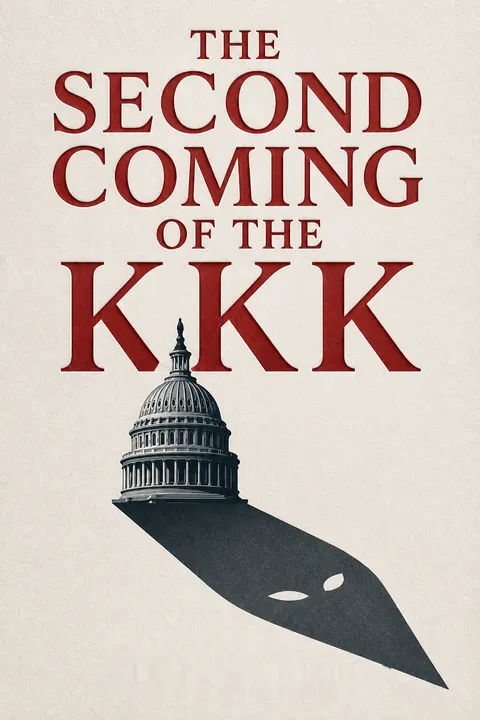
The Second Coming of the KKK examines the 1920s resurgence of the Klan as a mainstream, nationwide movement with millions of members. Reviewers praise Gordon's well-researched exploration of the Klan's six ideological components: racism, nativism, temperance, fraternalism, Christian evangelicalism, and populism. Many note disturbing parallels to contemporary politics, particularly Trump-era rhetoric. The book details the Klan's marketing strategies, women's involvement, and political influence across both parties. While some critics appreciated the objective historical analysis, others found the Trump comparisons excessive or the writing style dry. Most agreed the work provides valuable context for understanding American right-wing populism and religious nationalism.
People Also Read




About the Author

Download PDF
Download EPUB
.epub digital book format is ideal for reading ebooks on phones, tablets, and e-readers.








































