


Plot Summary
Prologue
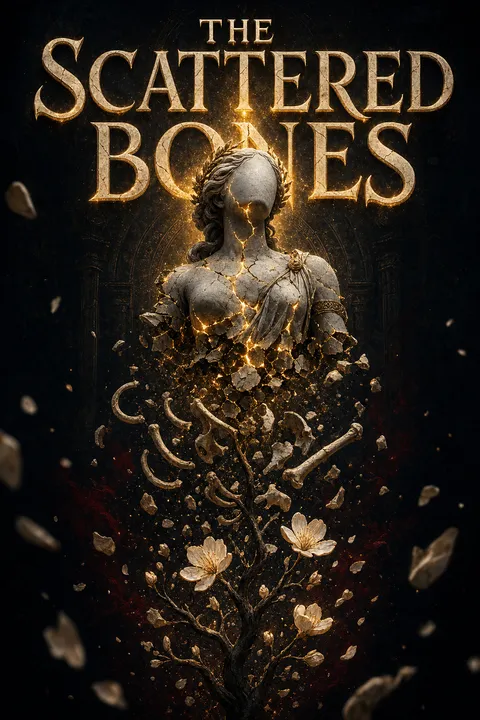
A woman crawls dying through the Sivatag, a desert that devours everyone who enters, kept moving only by the voice of a white-eyed stranger3 in her mind and by a dead man's name2 she recites like scripture. She descends into a frozen tomb, tearing skin from her palms on the ice, and reclaims a severed, magic-preserved leg, cradling it despite its curse.
She locks it in a chained chest beside a torso she has already saved. She no longer looks like the beauty she once was. She has become a scarred, godless wanderer with one purpose: to recover every scattered piece of the husband she watched murdered,2 and to test whether the stranger's impossible promise3 is truth or madness.
The opening plunges us into consequence before cause, a structural gambit that makes the reader hungry for the story behind the bones. The desert functions as purgatory, a landscape of atonement where physical suffering externalizes grief. Scarano fuses devotion and derangement: reciting a dead lover's name is simultaneously prayer, mnemonic, and symptom of trauma. The Stranger's telepathic presence is deliberately ambiguous, possibly divine, possibly a hallucination born of despair, and that uncertainty becomes the engine of suspense. Crucially, we learn faith here is not comfort but currency, a thing demanded of the protagonist by a being who withholds help. The bones themselves promise a resurrection narrative built on love strong enough to defy death's finality.
A Girl Made Holy
At ten, Sellah1 is delivered to the temple of Hreinasta, the Pure One,4 by parents10 starved for prestige. Raised in luxurious isolation, fed the finest food, kept flawless and untouched, she is groomed as a potential vessel for the primordial goddess who inhabits beautiful young women and erases their souls for decades.4
When the current host grips her jaw and pronounces her divine, Sellah1 is chosen as the next body Hreinasta4 will claim. For eleven cycles she believes this the highest honor, praying devoutly, never questioning that on her twenty-first birthday her consciousness will vanish so a deity can wear her flesh. Her mother10 never embraces her again. She becomes a treasured relic, worshiped by many and loved by no one.
The offering establishes the novel's central critique: purity culture as a system that converts girls into objects. Sellah's isolation is gilded but total, a cage built from other people's ambition and piety. Scarano frames consent as impossible when it is extracted from a child, seeding the moral argument the story will later voice explicitly. The vessel doctrine literalizes self-erasure demanded of women by institutions that claim to honor them. Hreinasta's obsession with youth and beauty, despite her vow of chastity, hints at hypocrisy at the heart of the sacred. Sellah's early devotion is not villainized but pitied, the sincere faith of someone who has never been offered an alternative to worship.
The Thief at Midnight
A towering intruder in black2 crouches in Sellah's1 room, a thief pledged to Varas, god of thieves,8 attempting to rob Hreinasta's4 sanctuary as his guild's final test. Terrified yet transfixed by his gravel voice and the scar splitting his lip, she does not scream. Instead she hands him one of her gold-threaded vessel gowns to lay before his god, proof no one could doubt where it came from.
He swears to keep their meeting secret, then coaxes her name from her. He calls himself Kaid.2 Before slipping out the window into the snow, he hints he will come back so she need not be so lonely. For a girl who has never been touched or truly spoken to, this trespass cracks open a world she was never meant to glimpse.
The meeting inverts the fairy-tale intrusion: the thief steals not treasure but companionship, and the maiden is complicit. Kaid's scar marks him as forbidden fruit precisely because Hreinasta's vessels must be unblemished, so his imperfection becomes the first thing Sellah desires. Their exchange is transactional yet tender, a gift of the gown that will later damn them both. Scarano uses voice as an erotic and emotional register, the low rumble that reaches past Sellah's conditioning to the buried self. The scene reframes theft as liberation: what Kaid truly smuggles into the sealed room is the possibility of being seen as a person rather than a holy vessel.
Lessons on the Rooftop
Kaid2 keeps returning, teaching Sellah1 to scale the temple walls and pick locks while sharing stories of his heists. He reveals his brutal history: a bastard cast out by a powerful father, his mouth carved open by a market vendor until Varas8 himself intervened and took him in.
When Sellah1 admits Hreinasta4 will claim her body at twenty-one and sleep her soul for decades, Kaid2 is horrified, arguing she was sacrificed as a child who never truly consented. His outrage cracks her once unshakable faith.
She begins to see how her parents10 and fellow acolytes have always treated her as a thing, and how only this dangerous thief2 speaks to her as a human. Their friendship deepens into something neither dares name, forbidden because a single touch would break her vows.
This section dramatizes conscientization, the awakening of critical awareness in someone raised inside an ideology. Kaid functions as the outside perspective that renders the familiar strange: what Sellah called honor, he names predation. The physical lessons double as metaphor, climbing and lock-picking as skills of escape and agency, tools that will literally save her later. Scarano is careful that the seduction is intellectual and emotional before it is physical; the deepest transgression is Sellah learning to want a self. The mutual loneliness of thief and vessel establishes love as recognition rather than possession, two abandoned people discovering they are legible to each other for the first time.
The First Forbidden Touch
Unable to bear watching Sellah1 dissolve into the goddess,4 Kaid2 confesses he loves her and vows never to return, condemning Hreinasta4 as a selfish being who enslaves girls rather than practice her own preached purity. When he climbs away, Sellah1 races across the rooftops and seizes his hand, the first deliberate touch of her life, a wordless declaration that she chooses him.
Overwhelmed, he weeps and flees anyway. Weeks of silence follow before he reappears bearing an emerald he stole and begged Varas8 to let him keep. She sits beside him for the first time, and their bond becomes openly tender. Both understand the cruelty of the countdown: her twenty-first birthday, when the transfer will steal her, is now only months away.
The stolen touch is the novel's true point of no return, a rebellion enacted through skin rather than words. Sellah reclaims her body by choosing whom it will touch, converting a religious prohibition into an act of self-possession. Kaid's tears and retreat complicate the romance-hero archetype: his restraint is love expressed as refusal, a man determined not to take what she cannot freely give. The emerald, treasure asked for rather than merely stolen, signals his transformation from opportunist to devotee. Scarano threads scarcity through the romance, the ticking birthday making every gesture heavier. Desire and grief become inseparable, joy shadowed by the certainty of loss.
Choosing Him Completely
Sellah1 finally traces the scar on Kaid's2 lips and asks him to teach her what love feels like. Their first kiss is reverent and restrained, and it undoes them both. On the nights that follow he shows her pleasure while refusing to take anything she does not freely offer, until she declares that her body, mind, and heart are hers alone to give.
They become lovers. Sellah1 asks for a future, a family, a life beyond the temple, and Kaid2 promises to smuggle her south by ship, warning that their life will be poverty and endless flight from the gods' wrath. She accepts gladly, choosing dirt, fear, and freedom with him over the worshiped emptiness of vanishing inside the Pure One.4
Here consent becomes the story's sacrament. Every intimacy is negotiated, Kaid repeatedly ceding control, so that Sellah's autonomy is not merely permitted but centered. The romance stages an alternative theology: worship redirected from an absent, hoarding goddess toward a mutual, embodied devotion between equals. Scarano contrasts two economies of the body, Hreinasta's, which preserves flesh by emptying it of will, and Kaid's, which honors flesh as the seat of choice. Sellah's request for a family articulates the specific poverty of her upbringing, a childhood without play or affection. Her willingness to trade safety for agency reframes the runaway plot as a moral awakening rather than mere passion.
Married Beneath the Moon
With their escape only days away, Kaid2 climbs to their rooftop and asks Sellah1 to marry him in the old way, invoking Elskere, the wed gods9 who forsook their own names to become one being. Kneeling under the stars, the pair exchange vows, surrendering their former selves to be called husband and wife.
As they seal the promise, a sudden wind extinguishes every torch across the holy city, cloaking Szent in a darkness that shields them while they consummate the marriage. For the first time Sellah1 belongs to no one but herself and the man she chose. They intend to flee in three days, certain their secret is still safe, their long-dreamed future finally within arm's reach.
The clandestine wedding functions as counter-liturgy, a sacred rite performed outside the sanctioned temples, witnessed only by the sky. By choosing Elskere over Hreinasta, Sellah transfers her faith to a deity of union rather than isolation, an act of theological defiance disguised as romance. The extinguished torches read as divine endorsement, suggesting the marginalized gods favor her where the dominant one condemns. Scarano invests the vow's language, the forsaking of names, with foreshadowing weight, since identity dissolved and reforged will recur. Dramatic irony saturates the scene: the reader senses the three-day countdown is a trap. The happiness is real precisely because it is doomed, love flaring brightest at the edge of catastrophe.
Carved Into Pieces
On the eve of their escape, Valka's5 soldiers shatter the door to Sellah's1 chamber, the smear of Varas's8 ash on her white gowns having betrayed her sin. Hauled before Hreinasta4 and the monstrous god of war,5 Kaid2 is bound by a spell that keeps his soul awake and tethered to every part of his flesh. To spare Sellah1 more violence, he stops resisting.
Valka5 severs his arms, hands, and legs, then beheads him, while Sellah1 kneels in her husband's2 blood and forces herself to watch until the end. Hreinasta4 coldly declares she will claim Sellah1 as her vessel regardless of lost purity, burying the murder in secret. Sellah1 snatches Kaid's torso2 from the flames and vanishes into the night, godless and shattered.
The execution is the book's traumatic core, a spectacle of institutional cruelty rendered unbearable by the soul-binding that denies its victim the mercy of unconsciousness. Hreinasta's decision to claim Sellah anyway exposes the true logic of the system: purity was never the point, image and control were. The dismemberment literalizes how power fragments those who defy it, and the scattering of the body seeds the entire quest. Sellah's refusal to look away is an act of devotion and defiance both, bearing witness so Kaid does not suffer alone. Rescuing the torso is her first act as an agent of her own vengeance, grief hardening instantly into unbreakable resolve.
A Covenant With Darkness
Wandering the frozen realm with Kaid's preserved torso2 in a chained chest, Sellah1 is approached at her fire by a cloaked man with solid white eyes3 who offers the impossible: gather every scattered bone from the realm's most cursed places and he will return her husband2 to life. She must complete each trial alone, on absolute faith, receiving no aid.
Ravaged by grief, she swears the covenant, and his touch plants a pull in her chest that guides her toward Kaid's remains.2 Her earliest hunts carry her through the killing heat of the Sivatag and into the vine-strangled ruins of Death's abandoned temple, where a shadow-dwelling evil nearly traps her forever. She flees at the last instant clutching her husband's severed hands.2
The covenant reframes the grieving woman as a questing knight, gendering the hero's journey around loss rather than glory. The Stranger's insistence on faith without help is both spiritual test and psychological realism: recovery from trauma is something no one can do for the sufferer. His demand for belief inverts conventional divine mercy, making faith a transaction rather than a gift. The abandoned temple of Death, colonized by evil in the god's absence, introduces the theme of vacated sacredness, holiness that curdles when a deity is erased. Sellah's willingness to trust a being she suspects is dangerous measures the depth of her desperation, hope indistinguishable from self-destruction.
The Hunter's Frozen City
The pull drags Sellah1 north to a hunting village guarded by Lovec, god of the hunt,6 who abandoned his mountain city a century ago after black-magic tigers slaughtered his secret human bride. To reach Kaid's severed arm2 in Lovec's6 ruined temple, she must cross streets prowled by the beasts.
Bleeding and outmatched, she kills tiger after tiger, dedicating each death to Kaid2 and to Lovec's murdered wife.6 Recognizing a fellow mourner, the returned god6 paints her cheeks in blood, claims her as his hunter, and heals her wounds.
When villagers rally behind her, Lovec6 finally reclaims his home. Sellah1 escapes with another piece of her husband,2 no longer certain every god has forsaken her, and begins to suspect grief itself has made her divine kin.
Lovec introduces the counter-pantheon, the wild, forgotten gods whose defining wound is love lost to injustice. His parallel to Sellah, a spouse butchered by dark magic, establishes the novel's recurring recognition motif: the marginalized recognize one another. The blood mark transforms her from outcast to consecrated, reversing Hreinasta's rejection. Scarano suggests authentic divinity lies not in demanding worship but in shared suffering, a theology of solidarity. The tigers, monsters born from a jealous chief's cruelty, echo the human violence that created them, blurring the line between beast and man. Sellah's dawning realization that the gods who matter still see her reweaves her shattered faith into something chosen rather than inherited.
Surrender in the Drowned City
The bond next leads to the Vesi, a sunken holy city ruled by Udens, god of the sea,7 who forbids harm to any creature within his waters. After the Stranger3 teaches her to swim, Sellah1 dives for Kaid's calf,2 lured deep by a hypnotic school of neon fish that transforms into fanged monsters and strangling seaweed.
Realizing she cannot fight without desecrating the god's domain, she goes limp and surrenders, refusing to injure a single creature even as she drowns. Moved by her restraint, Udens,7 a grieving deity who mourns the sea beasts mankind hunted to extinction, spares her, feeds her air through his gentle fish, and delivers her to the limb. She surfaces bruised but alive, another bone reclaimed and another god quietly won.
Udens reframes heroism as restraint rather than conquest, subverting the trial-by-combat expectation. Where every other realm rewards violence, the Vesi rewards reverence, forcing Sellah to relinquish the warrior identity Kaid forged in her. Her surrender is not weakness but a sophisticated reading of power, understanding that submission can be the only path through. Udens extends the pattern of grieving gods, his sorrow directed at ecological loss, an ecological grief that reads as strikingly modern. The shape-shifting fish, beauty concealing lethality, mirror the deceptive surfaces throughout the novel. Sellah's mercy toward creatures that nearly kill her demonstrates that suffering has enlarged rather than hardened her, distinguishing her from the vengeful gods she resembles.
The Edge of the World
The pull sends Sellah1 up the Verdens Kant, the endless cliffs at the boundary of the realm where time stretches unnaturally and no climber has ever reached a top. Bleeding fingers and trembling limbs carry her past ledges the Stranger's3 voice guides her toward, until exhaustion and a torn thigh send her falling.
As she bleeds out alone, the Stranger3 breaks his own rule, confessing he cannot let her die because she is his only hope. He straps her to his back, scales the cliffs, lays her on a misty plateau, stitches the wound, and nurses her fever for days. Recovered, she finds Kaid's thigh2 among the clouds, newly unsettled by how possessively the dark man3 now names her as his.
The mountain externalizes the endlessness of grief, a climb without summit where time itself distorts, mimicking mourning's warped chronology. The Stranger's intervention violates the covenant's core rule, and his justification, that she is his only hope, curdles the paternal warmth into something proprietary. Scarano plants unease deliberately: the being who claims to love her also owns her, and the reader must weigh comfort against control. The rescue reveals the covenant's hidden asymmetry, that the Stranger needs Sellah as urgently as she needs him. Her recovered thigh advances the resurrection, but the emotional register darkens, foreshadowing that the price of her miracle may be steeper and stranger than she has let herself understand.
The Beast in the Grass
In the towering grasslands of the Mitte Midagi, a colossal crocodile swollen by black magic hunts Sellah,1 dragging her by its tail into a cave heaped with treasure. Battered, her shoulder wrenched from its socket and her arm shredded between its jaws, she recalls Lovec's blessing,6 claws across mountains of gold, and drives a jeweled sword through the creature's skull.
She retrieves Kaid's severed forearm2 from a lake floor lined with the bones of failed treasure hunters, then loads a sack of jewels onto her cart, reasoning she and Kaid2 will need coin for the life she still refuses to stop believing in. Only two pieces of her husband2 remain, and her dread of what the Stranger3 truly is sharpens with every recovered bone.
This trial marks Sellah's fullest embodiment of the warrior Kaid trained, her survival now a synthesis of every god's gift. The hoard of gold amid the bones of the greedy delivers a moral: she takes treasure not from avarice but as provision for a future, distinguishing need from lust for wealth. The cave, a belly of accumulated death, literalizes the digestive logic of monsters and misers alike. Scarano deepens the psychological thread by pairing physical triumph with mounting spiritual suspicion; competence does not soothe Sellah's fear of the covenant's true cost. The near-complete reassembly generates dramatic tension, the reader sensing that the final piece will demand confronting the very god who caused the fragmentation.
Robbing the God of War
The last piece, Kaid's head,2 lies inside a fortress temple guarded by Valka5 himself. Refusing to meet War5 in open battle, Sellah1 paints her eyes with Varas's ashes8 as her husband2 once did, prays to the thief god,8 and infiltrates as Kaid2 taught her, dropping through a high window into a barracks of sleeping soldiers. She finds his skull walled behind a mural of his own execution and smashes it free.
Caught by the guards, she boldly impersonates Varas,8 convincing the warriors a god has robbed them, and strides out unharmed. But Valka5 lands before her, unfooled, and beats her nearly to death. As his blade descends, she throws herself into a waiting patch of darkness, and the Stranger3 snatches her from the killing stroke.
The climax pays off every skill Kaid taught, transforming the pampered vessel into a con artist who weaponizes divine anonymity itself. Her impersonation of Varas is thematically rich: she becomes the thief her husband was, honoring him by embodying his craft. The mural of Kaid's execution, the temple's grotesque trophy, forces Sellah to confront the image of her trauma before literally shattering it, an act of psychological reclamation. Valka's easy penetration of her bluff restores the terror of true divine power, reminding us mortal cleverness has limits. The last-second rescue reasserts the Stranger's centrality and his growing power, the darkness he commands now strong enough to steal a soul from War's own blade.
Stitched Back to Life
Hidden in the warm south, Sellah1 and the Stranger3 sew Kaid's scattered pieces2 together, and the dark man3 summons violent, ancient magic to force life back into the corpse. Kaid2 wakes disoriented and forever slightly altered by death, but he knows Sellah1 as his wife.
Only then does the Stranger3 reveal his identity: Death, the banished primordial god whose cult Hreinasta4 erased. Ages ago the Pure One4 murdered her own twin, Death's3 beloved, out of jealousy, binding and scattering her exactly as Kaid2 was scattered, then burning her heart so she could never return.
Sellah's1 grief-born faith is what dragged Death3 back into existence. Having claimed his first acolyte, he can now rise against Hreinasta,4 and he vows to guard Sellah's1 family forever.
The revelation recontextualizes the entire quest as two mirrored love stories separated by eons, Sellah's grief unknowingly resurrecting the god of death himself. Faith, the currency demanded throughout, is revealed as ontologically creative: belief literally reconstitutes the divine, a striking meditation on how gods depend on their worshipers to exist. Hreinasta emerges as the true monster, a being who conflates goodness with self-image and becomes the evil she condemns. The parallel between the burned heart and the saved torso retroactively justifies Sellah's earliest instinct. Kaid's imperfect return, marked by death's residue, refuses easy resurrection, insisting that what is lost never fully heals, only reforms into something new and precious.
Epilogue
Nine cycles later, Sellah1 and Kaid2 live on a fertile southern farm with two dark-haired daughters, having wed again in a proper ceremony before Elskere9 and been celebrated by Lovec,6 his restored wife, Udens,7 and Death himself.3 Kaid2 still drifts into moments of absence, a lingering scar of his dismemberment, but their love is whole and their harvests abundant.
Their girls swim with Udens's7 pink fish in the Vesi and hug their father when they glimpse his scars. Death, the Stranger who became Sellah's true father,3 has promised to keep challenging Hreinasta4 and to protect the family always. The couple denied any future behind temple walls now fall asleep hand in hand over their sleeping children.
The epilogue delivers the pastoral reward that the temple denied Sellah: play, affection, chosen family, and children raised in love rather than sacrifice. Kaid's permanent absences refuse a frictionless happy ending, honoring that trauma leaves residue and that the resurrected are never quite what they were. The gods who blessed the couple form an alternative pantheon of the wounded and the loyal, replacing Hreinasta's cold hierarchy with kinship forged through shared loss. Death as adoptive father completes Sellah's arc from abandoned daughter to beloved child. The promise to restore Lovec's wife extends the theme of grief redeemed. Scarano closes on domestic tenderness as the truest form of the sacred, worship reimagined as ordinary devotion.
Analysis
The Scattered Bones is a dark fantasy romance that uses a resurrection quest to interrogate purity culture, consent, and the machinery by which institutions convert women into objects of worship. Its central invention, a goddess who inhabits beautiful girls and erases their souls, literalizes the self-annihilation that patriarchal piety often demands, and Sellah's1 rebellion is fundamentally a reclamation of bodily autonomy. Every intimacy in the romance is negotiated, Kaid2 ceding control until Sellah1 declares her body hers to give, so that the love story doubles as an argument: that devotion freely chosen is holier than sacrifice coerced. Scarano stages a theological insurgency in which the dominant, image-obsessed deity4 is exposed as the true evil, while the forgotten gods, each defined by grief and loss, become a counter-pantheon of solidarity. The recurring recognition motif, wherein the wounded recognize the wounded, proposes that authentic divinity lies not in demanding tribute but in shared suffering. The dual timeline is the book's most effective instrument, letting tenderness and horror amplify each other, so that flashbacks of a moonlit wedding sharpen the anguish of a widow assembling a corpse.1 Faith itself receives an unusually radical treatment: belief is ontologically creative, capable of dragging a banished god back into being, which reframes worship as a mutual dependency rather than one-way submission. The resurrection refuses to be clean; Kaid2 returns permanently altered, insisting that trauma leaves residue and that what is lost reforms rather than fully heals. The trials also encode modern anxieties, from ecological grief in the sea god's7 mourning to the critique of performative religiosity in Sellah's1 status-hungry parents.10 Ultimately the novel argues that chosen family, ordinary domestic tenderness, and love that survives dismemberment constitute the truest sacred, relocating the divine from marble temples to a farmhouse bed where parents clasp hands over sleeping children.
Review Summary
People Also Read


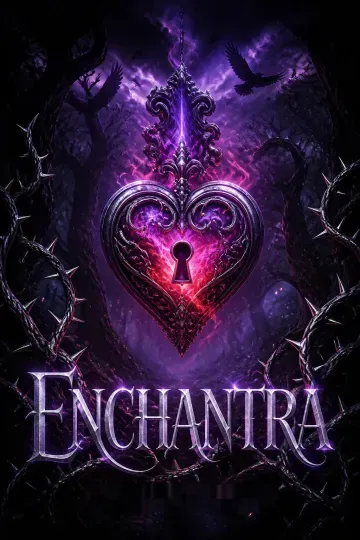
Characters
Sellah
Vessel turned bone-seekerChosen at ten as the future body of the goddess Hreinasta4, Sellah is raised in gilded isolation, groomed for beauty and purity, and starved of affection. Intelligent and devout at first, she gradually recognizes her sanctioned destiny as erasure. Her narration threads longing with grief, and her defining hunger is simply to be seen as a person. Once she chooses love over duty, she reveals ferocious resolve, enduring deserts, drowning cities, and monstrous beasts on a quest that transforms her from pampered relic into scarred warrior. Psychologically she is driven by abandonment: parents who used her, a faith that would consume her. Her arc is a reclamation of self-ownership, learning that faith, body, and love are hers alone to give, and that suffering can enlarge rather than harden the heart.
Kaid
Scarred thief, forbidden loveA towering thief pledged to Varas8, marked by a scar splitting his lip and a childhood of poverty and rejection by his powerful father. Rescued as a boy by the god of thieves himself8, Kaid becomes the best of his guild, blessed and ambitious. Beneath his charm and gravel voice lies profound loneliness that recognizes its match in Sellah1. He is defined by restraint, refusing to take anything she cannot freely give, and by devotion so complete he reframes love as worship. His fury at her fate awakens her conscience. Where Sellah1 is sheltered, he knows the world's cruelty intimately, and he wants nothing more than to give her the family and freedom both were denied. His courage under unimaginable suffering becomes the moral center she draws strength from.
The Stranger
White-eyed keeper of a vowA cloaked figure with solid white, pupilless eyes who appears to Sellah1 in her deepest despair and speaks directly into her mind. Ancient and unsettling, at once elderly and youthful, he reeks of dark and forgotten magic. He offers her the impossible, the return of her dead husband2, in exchange for faith and the recovery of every scattered bone, insisting he cannot aid her in her trials. His warmth toward Sellah1 grows into something paternal, and he calls her his child, yet his possessiveness carries an edge of danger. Mysterious in origin and purpose, he becomes her only constant companion across a godless world, tethering her voice and sanity to existence when she has nothing and no one else.
Hreinasta
The Pure One, jealous goddessThe primordial goddess of purity, worshiped above all others in the holy city, who inhabits the bodies of beautiful young women and suppresses their souls for decades. Obsessed with youth and image despite her vow of chastity, she demands sacrifice she will not endure herself. Cold, vain, and controlling, she embodies the hypocrisy of institutional holiness, punishing in others the very desires she cannot govern in herself. Her jealousy drives the story's central cruelty.
Valka
Towering god of warThe immense god of war, deity of soldiers, assassins, and executioners, who carries out punishments in secret at Hreinasta's4 command. Ruthless and disciplined, he binds souls to flesh so victims stay conscious through their dismemberment. Yet he shows flickers of grim respect for genuine bravery, granting small mercies. He is both instrument and connoisseur of violence, unbowed by any power save the primordial goddess herself4.
Lovec
Grieving god of the huntThe god of the hunt who dwelt in the frozen North until his secret human wife was butchered by magic-born tigers, driving him to abandon his mountain city. A brokenhearted widower who guards his grief like a shield, he recognizes kindred sorrow in Sellah1 and marks her as his hunter. His story of forbidden love destroyed by others' cruelty mirrors her own, making him an unexpected ally among gods.
Udens
Mourning god of the seaThe genderless god of the sea, a beast of the depths who sank a holy city to make sacred waters. He forbids humans from harming any creature in his domain, mourning the sea monsters his worshipers' ancestors hunted to extinction. Fearsome in his true monstrous form yet gentle when at peace, he tests devotion through restraint rather than combat, and rewards mercy with protection.
Varas
God of thieves, Kaid's patronThe god of thieves who once saved Kaid2 from death and welcomed him into his guild. His acolytes prove themselves by stealing from other temples, wearing his holy ash to hide in shadow. Loyal to his own, he becomes a quiet ally when his greatest thief2 is wronged.
Elskere
The wed gods of loveThe joined husband and wife deity who forsook their separate names to become one being, patrons of marriage. Couples wed in their name, and their blessing binds two souls together. Sellah1 and Kaid2 invoke them in a clandestine moonlit vow rather than at a temple altar.
Sellah's parents
Ambitious, distant familyA wealthy city magistrate and his wife who offer their youngest daughter1 to Hreinasta's4 temple to gain prestige and silence social judgment. They treat Sellah1 as an object of pride rather than a child, withholding affection and visiting only to be seen worshiping, embodying the transactional coldness she flees.
Plot Devices
The scattered bones
Quest engine and love tokenAfter Kaid2 is dismembered, his soul is magically bound to his flesh and his severed parts are hidden across the realm's most cursed regions, preserved from decay by black magic. Each limb calls to Sellah1 through a bond in her chest, and recovering all of them is the condition of the Stranger's3 promise to resurrect him. The bones structure the entire quest, sending Sellah1 from desert to frozen mountain to drowned city to the edge of the world. Physically painful to touch because of their curse, they force her to endure suffering to hold what remains of the man she loves2. Their gradual reassembly measures both her progress and her mounting dread of what the miracle will finally cost.
The covenant of faith
Binding no-help ruleThe Stranger's3 bargain hinges on absolute faith: he swears to return Kaid2 to life, but Sellah1 must complete every trial alone and unaided, or the promise fails. This rule generates the novel's tension, since the mysterious being who clearly cares for her repeatedly refuses to save her from lethal danger. The device also functions thematically, equating recovery from grief with a journey no one can walk on another's behalf. Its single violation, when he breaks the rule to keep her from dying, exposes a hidden truth about why he needs her. Faith here is not comfort but currency, literally sustaining the being who demands it.
Dual timeline structure
Interleaves romance and questThe novel alternates between present-tense quest chapters, in which Sellah1 hunts Kaid's remains2, and past chapters that unfold their forbidden romance from first meeting to execution. This braiding lets the reader feel her grief before fully understanding its source, so that each tender flashback deepens the pain of the present hunt. The structure withholds the full horror of the execution until the emotional investment is complete, then detonates it. It also mirrors Sellah's1 psychology, a mind that survives the brutal now by reciting and reliving the beloved past, using memory as both anchor and torment.
The vessel doctrine
Engine of oppressionHreinasta4 inhabits the bodies of beautiful young women, suppressing their souls for decades until their flesh ages, then discarding them. Girls are offered as children, kept pure and untouched until twenty-one, when the goddess may claim them. This doctrine is the cage Sellah1 is born into and the fate she rebels against, literalizing the erasure of female selfhood by a system that calls consumption an honor. It supplies the ticking clock over the romance and reveals the goddess's4 hypocrisy: a deity sworn to purity who hoards youth and beauty, demanding a sacrifice she never makes herself.
Divine marks and blessings
Signs of earned favorThe wild, forgotten gods mark those they claim: Lovec6 paints Sellah's1 face in blood, Varas's8 ash lets a thief vanish into shadow, and Udens7 grants safe passage to those who show mercy. These marks track Sellah's1 transformation from a girl the dominant goddess4 rejected into someone the marginalized gods recognize and protect. They function as physical proof that faith and suffering, not obedience, earn true divine favor, and they pay off tangibly when a blessing lends her strength in a monster's cave or a stolen prayer bluffs a temple full of soldiers. The marks externalize her shifting allegiance from institutional religion to a communion of the wounded.
Download PDF
Download EPUB
.epub digital book format is ideal for reading ebooks on phones, tablets, and e-readers.








































