
Key Takeaways
1. The Nile: Cradle of a Nation and Divine Kingship
The fact that Egypt was unified under Narmer instead of remaining a series of rival power centers or warring city-states—the situation in many neighboring lands—can likewise be attributed to the Nile.
Unification's Foundation. Ancient Egypt's unique geography, particularly the Nile River, was the indispensable catalyst for its unification and the development of its distinctive civilization. The river served as a natural artery for transport and communication, enabling a dominant authority to exert control over disparate communities from the first cataract to the delta. This linear oasis, flanked by vast deserts, fostered a collective psyche that saw the world as a delicate balance between order and chaos, a concept deeply rooted in the Nile's annual, life-giving inundation.
Narmer's Legacy. The Narmer Palette, dating to around 2950 B.C., marks the beginning of ancient Egyptian history, celebrating the first ruler of a united Egypt. This artifact, found at Nekhen, showcases an already sophisticated iconography of kingship, depicting the monarch smiting his enemies and embodying the strength of wild animals. Narmer's reign solidified the concept of divine kingship, where the ruler was not merely a leader but an incarnation of the celestial god Horus, a belief that would underpin pharaonic government for three millennia.
Prehistoric Roots. The cornerstones of Egyptian culture were laid long before Narmer, in the remote prehistoric past. Communities in the fertile Nile Valley and surrounding grasslands developed key cultural elements, including monumental stone structures like the "calendar circle" at Nabta Playa (early fifth millennium B.C.) and sacred rock art in the Eastern Desert. These early societies, often semi-nomadic cattle herders, demonstrated a high degree of organization and a deep connection to their environment, prefiguring the later pharaonic obsession with permanence and religious expression.
2. Pyramids: The Ultimate Projection of Absolute Power
The Great Pyramid was, indeed, the product of something extraordinary: not extraterrestrial intelligence but a superhuman authority.
Architectural Zenith. The pyramids of Giza, particularly the Great Pyramid of King Khufu, represent the pinnacle of pharaonic culture and the most audacious expression of absolute power in the ancient world. Built from 2.3 million stone blocks, each weighing over a ton, Khufu's pyramid stood as the tallest building globally for 44 centuries, a testament to unparalleled engineering precision and an untrammeled exercise of political and economic control. Its construction required a massive, meticulously organized workforce, demonstrating the state's ability to mobilize vast human and material resources.
Cost of Ambition. The construction of these colossal monuments, like Sneferu's Bent and Red Pyramids, demanded immense administrative effort and came at a significant human cost. The state, which owned all land, imposed a nationwide system of taxation and corvée labor, compelling able-bodied men to toil in quarries and on construction sites under harsh, dangerous conditions. While the ruling elite enjoyed immense wealth and privilege, the common people faced a life of subjugation, with their labor directly funding the king's grandiose projects and ensuring his eternal well-being.
Divine Monopoly. The ideology underpinning the Pyramid Age asserted the king's monopoly on truth and his status as "the perfect god," making opposition unthinkable. This era saw the concentration of power in the hands of the royal family, with high offices reserved for trusted relatives. The pyramids were not merely tombs but "resurrection machines," designed to unite heaven and earth for the king's everlasting destiny among the circumpolar stars, a destiny initially reserved solely for the monarch.
3. Afterlife for All: Democratization of Eternal Destiny
If necessity is the mother of invention, the grim realities of life in post–Sixth Dynasty Egypt created a particularly fertile environment for theological innovation.
Shifting Beliefs. The collapse of the Old Kingdom and the ensuing civil war (First Intermediate Period) profoundly reshaped ancient Egyptian funerary religion, democratizing afterlife beliefs previously reserved for kings. As royal authority waned and daily life became more uncertain, the hope of a transcendent afterlife in the company of the gods spread through the general population. This blurring of distinctions meant that every Egyptian could now aspire to divinity and eternal life, albeit by emulating the king.
Osiris's Rise. The god Osiris, ruler of the underworld and symbol of resurrection, became the champion of the dead, his chthonic realm displacing the celestial setting for the afterlife journey. This led to significant changes in burial customs:
- Mummified bodies were swathed in a single cocoon of bandages, resembling Osiris.
- Coffins became canvases for "Coffin Texts," magical formulae to assist the deceased.
- The Book of Two Ways, the earliest afterlife book, described journeys through a dangerous underworld to the Field of Offering.
Practical Magic. Overcoming death and navigating the underworld required powerful magic, leading to the creation of new funerary objects and concepts. The heart scarab, inscribed with a spell to prevent the heart from bearing false witness at the final judgment, became crucial. The concept of a last judgment, where one's deeds were weighed against Maat (truth), emerged, influencing later religions. Even humble shabti figurines, initially substitute bodies, evolved into magical servants to perform arduous tasks in the afterlife, reflecting a practical approach to eternal comfort.
4. Middle Kingdom: A Golden Age Forged by Tyranny
Its was a utopian vision—or dystopian, depending on your standpoint—of absolute order, underpinned by a rigid bureaucratic framework and by the suppression of all dissent.
Order from Chaos. The Twelfth Dynasty, founded by Amenemhat I after a period of civil war, ushered in a new era of stability and cultural flourishing, often considered the golden age of Egyptian literature and craftsmanship. However, this order was achieved through ruthless efficiency and a despotic model of monarchy. Amenemhat I, a commoner who seized the throne, established a new capital, Itj-tawy, and initiated a program of "pacification" that involved suppressing internal dissent and securing borders with fortified defenses like the "Walls of the Ruler."
Bureaucratic Control. The dynasty implemented a highly centralized command economy, with extensive royal estates and a meticulous system of taxation. This allowed for massive state-planned construction projects, including pyramids and monumental temples dedicated to Amun, which served to reinforce royal authority. The government's control extended to every aspect of society, with officials appointed to key posts based on loyalty rather than local ties, and entire populations forcibly relocated to new, rigidly designed settlements like Kahun.
Propaganda and Surveillance. To maintain its grip on power, the Twelfth Dynasty deployed sophisticated propaganda, including literary works that emphasized loyalty to the king and justified authoritarian rule by contrasting it with periods of chaos. The regime also relied on a pervasive surveillance state, with officials like the chief steward Qenamun acting as "master of secrets" to monitor the population. This era culminated in Senusret III, whose terrifying portrait sculpture and ruthless policies, including the neutering of provincial governors and the construction of formidable Nubian fortresses, epitomized the dynasty's iron-fisted approach to governance.
5. Empire's Dawn: Egypt's Rise as a Global Power
He had a bold vision for Egypt’s destiny, one that involved not merely cementing the victories of Kamose and Ahmose but actively extending the nation’s borders to forge an Egyptian empire.
Expulsion and Expansion. The New Kingdom began with the heroic expulsion of the Hyksos invaders by King Ahmose, marking a period of national renewal and the reestablishment of Egyptian independence. Ahmose and his successors, particularly Thutmose I and Thutmose III, transformed Egypt into an imperial power, extending its borders from Syria to sub-Saharan Africa. This expansion was driven by a desire for security, access to vital resources like gold, and a renewed sense of national destiny.
Warrior Pharaohs. The Thutmoside dynasty was characterized by warrior kings who personally led their armies into battle. Thutmose I launched devastating campaigns in Nubia and a preemptive strike against Mittani in Mesopotamia, marking the furthest extent of Egyptian power. Thutmose III, after a period of co-regency with Hatshepsut, solidified this empire through 17 military campaigns in the Near East, culminating in the decisive Battle of Megiddo. These conquests brought immense wealth and tribute, transforming Egypt into the dominant force in the eastern Mediterranean.
Cosmopolitan Society. The empire's expansion led to an unprecedented influx of foreigners into Egypt, including prisoners of war, mercenaries, and diplomatic brides. This transformed Egyptian society into a cosmopolitan melting pot, with foreign influences appearing in art, architecture, and even the royal harem. While official propaganda maintained a facade of Egyptian superiority, the reality was a dynamic cultural exchange that enriched the nation, albeit with the underlying tension of a militarized state.
6. Akhenaten's Revolution: A Radical Challenge to Tradition
Never before had the institution of monarchy been elevated to such an absolute position.
Solar Supremacy. Akhenaten, initially Amenhotep IV, instigated a radical religious revolution, elevating the Aten (the visible sun disk) from supreme god to sole god. This monotheistic doctrine, a stark departure from millennia of polytheistic tradition, was deeply intertwined with the king's own identity. Akhenaten declared himself and his family the sole intermediaries between the Aten and humanity, effectively making the royal family a holy family and supplanting traditional deities.
Akhetaten: A New Horizon. To realize his utopian vision, Akhenaten founded a new capital city, Akhetaten (modern Amarna), a virgin site chosen for its natural landscape that resembled the hieroglyph for "horizon." This city was designed as a grand, open-air temple to the Aten, with monumental buildings and a ceremonial Royal Road reflecting the path of the sun. The city's architecture and art, characterized by distorted royal statuary emphasizing Akhenaten's unique, androgynous divinity, were unlike anything seen before in Egypt.
Iconoclasm and Control. Akhenaten's zealotry led to the active proscription of other deities, particularly the powerful Amun, whose names and images were systematically defaced across the country. This state-sponsored iconoclasm, coupled with a pervasive security apparatus, aimed to impose the king's new doctrine on all of society. However, this radical shift bred deep unpopularity, and after Akhenaten's death, his revolution was swiftly reversed by a counter-revolution led by powerful courtiers and the Amun priesthood, restoring traditional beliefs and ushering in the reign of Tutankhamun.
7. Ramesside Era: Military Might and Imperial Overstretch
Immortalized by Percy Bysshe Shelley’s poem “Ozymandias,” the fallen colossus of Ramesses II in his mortuary temple at western Thebes has come to symbolize the transience of power.
Warrior Kings and Grandeur. The Ramesside Period (Nineteenth and Twentieth Dynasties) saw a resurgence of military-focused monarchy, with kings like Seti I and Ramesses II striving to restore Egypt's imperial reputation. Ramesses II, "Ozymandias," was the most prolific builder in Egyptian history, commissioning colossal temples and statues, often by dismantling and reusing blocks from earlier monuments. His new capital, Per-Ramesses, was a military-industrial complex, designed to project power and produce armaments.
Kadesh and Its Aftermath. The defining event of Ramesses II's reign was the Battle of Kadesh against the Hittites, a massive, indecisive encounter that he spun into a "great victory" through extensive propaganda on temple walls. This stalemate eventually led to the world's first comprehensive peace treaty, a pragmatic alliance driven by the rising threat of Assyria. This period also saw the fortification of Egypt's western frontier against Libyan incursions, a sign of new threats emerging.
Decline and Disintegration. Despite initial triumphs, the Ramesside era was marked by imperial overstretch and internal decay. Ramesses III, "the last great pharaoh," repelled invasions by the Libyans and the Sea Peoples, but these costly wars exhausted the economy. The late Twentieth Dynasty saw a spiraling decline:
- Widespread corruption and tomb robberies, even in the Valley of the Kings.
- Strikes by necropolis workers due to unpaid wages.
- Food shortages and famine.
- Loss of foreign territories and control over Nubian gold mines.
- The rise of powerful regional figures, particularly the High Priest of Amun in Thebes, who effectively usurped royal authority.
8. Fractured Realm: Foreign Rule and Internal Strife
For the first time in Egyptian history, the underdogs had become overlords.
Libyan Ascendancy. Following the death of Ramesses XI, Egypt entered a period of profound change, with the Nile Valley divided and ruled by Libyan generals who had risen through the ranks of the Egyptian army. This marked the first time in Egyptian history that the country fell under foreign control not through invasion, but through the internal rise of an ethnic minority. The Libyan rulers, while adopting some pharaonic trappings, maintained their tribal, feudal structures, leading to a decentralized state with two parallel kingdoms in the delta and Upper Egypt.
Cultural Shift. Libyan rule brought significant cultural changes:
- Open display of Libyan ethnic markers (feather decorations, names).
- Simplification of the Egyptian language in official inscriptions.
- Recycling of royal titles and monuments, often without understanding their nuanced symbolism.
- A casual approach to mortuary provision, with communal family vaults replacing grand royal tombs.
- The rise of "theocratic" government, where Amun was proclaimed the true king, and the pharaoh merely his chief servant, a convenient fiction to legitimize foreign rule.
Thebes's Resistance. The traditionally minded Upper Egypt, particularly Thebes, chafed under delta rule. The Amun priesthood, wielding immense economic and political power, frequently asserted its autonomy, leading to civil strife and power struggles between rival Libyan factions. The systematic plundering of royal tombs by Theban military rulers, ostensibly to finance their regimes, further debased the monarchy and stripped the necropolis of its treasures, symbolizing the complete breakdown of traditional values.
9. Saite Renaissance: A Brief Resurgence Amidst Global Powers
The rulers of the western delta city of Sais were the great survivors of ancient Egyptian history.
Saite Ascendancy. Amidst the political fragmentation of the Libyan Period, the rulers of Sais emerged as cunning and ambitious power brokers. Tefnakht and his successors gradually expanded their influence across the delta, challenging Kushite claims to Egypt. The Kushite pharaohs, like Piankhi and Taharqo, launched invasions to "purify" Egypt and restore the cult of Amun, but their rule was ultimately undermined by internal Egyptian resistance and the rising threat of Assyria.
Assyrian Interventions. The Assyrian Empire, a new superpower, repeatedly invaded Egypt in the 7th century B.C., culminating in the sack of Thebes in 664 B.C. This devastating event marked the end of Kushite rule in Egypt and left the country as an Assyrian province. However, the Saite rulers, particularly Psamtek I, skillfully navigated this complex geopolitical landscape, using Assyrian protection to consolidate their power before eventually throwing off their vassal status and reunifying Egypt.
Pragmatic Revival. Psamtek I initiated a "Saite Renaissance," restoring centralized control and promoting traditional Egyptian culture, albeit with a pragmatic embrace of foreign elements. He built up a powerful army with Greek mercenaries and established diplomatic ties with Greek city-states. His most significant act was the "adoption" of his daughter, Nitiqret, as the eventual successor to the God's Wife of Amun in Thebes, a diplomatic masterstroke that secured Saite control over Upper Egypt. This period saw a brief resurgence of Egyptian power and prosperity, but it was a fragile independence, constantly threatened by the shifting alliances of the Near East.
10. Cleopatra's Legacy: The Final Act of Pharaonic Egypt
Her life would be devoted to maintaining their independence; her death would signal the end of pharaonic Egypt.
Roman Shadow. By Cleopatra's birth in 69 B.C., Egypt's independence was precarious, overshadowed by the rising power of Rome. The Ptolemaic dynasty, weakened by internal feuding and native revolts, resorted to paying exorbitant protection money to Roman generals like Pompey and Caesar, effectively turning Egypt into a Roman client state. This financial drain and the presence of Roman legions fueled widespread resentment among the Egyptian populace, who increasingly viewed their Greek rulers as morally and financially bankrupt.
Cleopatra's Struggle. Cleopatra VII, a shrewd and charismatic ruler, understood the imperative of navigating Roman politics to preserve Egypt's sovereignty. She cultivated alliances with powerful Roman figures, notably Julius Caesar and Mark Antony, using her personal charm and Egypt's wealth to secure their support. Her relationship with Caesar, and the birth of their son Caesarion, symbolized a potential Romano-Egyptian union, but Caesar's assassination left her vulnerable.
The End of an Era. Cleopatra's entanglement with Mark Antony, and their joint ambition to establish an eastern empire, ultimately led to a fatal confrontation with Octavian. The Battle of Actium in 31 B.C. resulted in a decisive defeat, and Octavian's subsequent invasion of Egypt sealed its fate. Cleopatra's suicide in 30 B.C., followed by Caesarion's elimination, marked the end of the Ptolemaic dynasty and the proud three-thousand-year-old tradition of pharaonic independence. Egypt became a Roman imperial possession, its immense wealth now serving the Roman Empire.
Review Summary
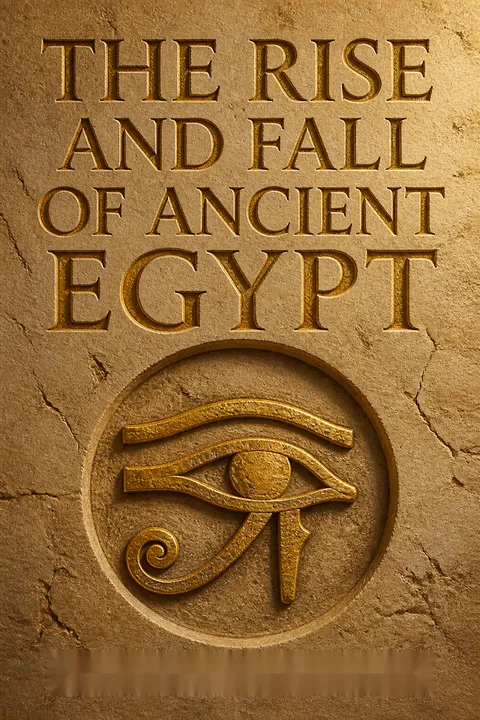
The Rise and Fall of Ancient Egypt by Toby Wilkinson receives mixed reviews averaging 4.13/5 stars. Supporters praise its chronological narrative, accessible writing style, comprehensive 3,000-year scope, and thorough research. Many found it engaging and perfect for beginners seeking an overview of pharaonic history. Critics fault Wilkinson's heavy emphasis on despotic power and propaganda, arguing he judges ancient Egypt through modern political lenses and uses anachronistic terms like "totalitarian." Some found the focus too narrow on kings and monuments, lacking coverage of daily life, art, and culture. Several note the book starts slowly but improves with the New Kingdom period.
People Also Read

Download PDF
Download EPUB
.epub digital book format is ideal for reading ebooks on phones, tablets, and e-readers.








































