
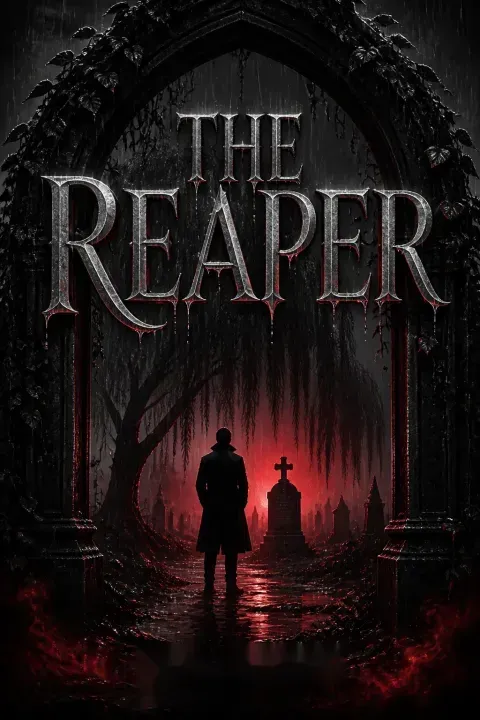


Plot Summary
Prologue
In the orange glow of a cigarette, a man sits in his car outside a cemetery, watching Tristan Caine2 and Morana Vitalio1 kiss among the graves. Rain streaks the windshield as lightning illuminates them. The watcher5 strokes a silver skull ring on his finger, a relic from a former life when the skull was his crowning jewel, not his ghost.
He has waited years in the shadows, watching the Predator2 grow sloppy and distracted by the woman1 he was supposed to kill. The man5 considers the thin line between justice and vengeance: which side he lands on depends entirely on the girl.1 It is time to bring the dead back to life.
The prologue establishes the novel's governing tension between patience and eruption, between the long game and the decisive strike. The skull ring, once a symbol of fraternal belonging among the three Alliance partners, has become a memento mori for a man who has been dead to the world for two decades. His observation that Tristan has grown 'irrational, sloppy' because of emotional investment in Morana introduces the central paradox: love as both tactical vulnerability and existential salvation. The cemetery setting, with lovers kissing among corpses, literalizes the book's preoccupation with how new life emerges from old graves, how the past is never truly buried, only waiting.
She Comes With Me
Morana1 rides back to Tristan's2 penthouse, rain-soaked and silent, still trembling from the kiss she forced him to give in the cemetery. In his car, she notices a pendant dangling from the rearview mirror inscribed 'Baby sister.' Luna's ghost rides with them.
At the penthouse, she retreats to the guest room while Dante3 confronts Tristan.2 Through the walls, she hears Dante3 argue that bringing her to Tenebrae is catastrophic while someone is framing him for treason. Tristan's2 reply comes low and irrefutable: she comes with him. Later, in the dark of her bedroom, he enters.
She feigns sleep as his finger ghosts over the bandage on her arm, traces her jawline, hovers above her lips without touching. Only after he leaves does she realize he stayed hidden in the shadows, watching her take pleasure from her own hands while thinking herself unobserved.
This turning point establishes the fundamental paradox of their relationship: Tristan publicly claims her while privately withholding touch. The pendant of Luna signals that his past is always present, that Morana is entering a space crowded with ghosts. His declaration 'she comes with me' is the first time Morana hears him stake a claim on her life rather than threaten it. The ghost-touch scene reveals his restraint as a form of intimacy more exposing than a caress. When she discovers he watched her afterward, the power dynamic equalizes: she performed, he witnessed. Neither is the sole possessor of the other's secrets anymore.
Into the Lion's Den
The next morning, Dante3 corners Morana1 alone. He warns that Tenebrae is not like Shadow Port, that his father Lorenzo Maroni4 will smile while slitting her throat, that Tristan2 bringing her there now is reckless. The weight of responsibility crashes down: possibly triggering a war, being used as leverage against Tristan,2 every consequence of her choice.
Her vision darkens. Her coffee mug shatters on the floor. She cannot breathe. Tristan2 finds her, pulls her back from the edge with his hand firm on her throat and his chest pressed to hers, commanding her to breathe. When she calms, he silently slides a bar of chocolate across the counter.
Then they fly to Tenebrae on a private jet. Dante3 sketches the compound's geography: five wings spread across lakeside hills, Tristan's2 cottage the farthest and most isolated, the training center forbidden territory. Morana1 listens, calculating what she is walking into.
Morana's first panic attack is the body's rebellion against a lifetime of suppressed terror. Dante's warnings simply detonate ammunition already loaded: years of being unprotected, of having no one who would fight for her. Tristan's response is clinical yet intimate. He knows exactly how to pull her back because he recognizes the abyss. The chocolate is a masterstroke of characterization: a man of lethal violence offering the most childlike comfort, wordlessly acknowledging a shared vulnerability. Dante's geography lesson maps the emotional architecture of Tristan's exile. The cottage by the lake is both sanctuary and cage, a place Maroni built to contain what he could not control.
The Predator's Public Claim
Lorenzo Maroni's4 living room is a stage. Eight armed men line the walls. Chiara Mancini,9 a redhead who calls Tristan2 hers, fixes Morana1 with open hostility. When Maroni4 orders a guard to search Morana1 for weapons, Tristan2 intercepts the man's wrist and promises to break anyone who touches her without permission.
Then he goes to his knees. His hands slide under her skirt, tracing up her bare calves, her thighs, finding the knives she once pressed to his back. No one can see where his fingers stop, but everyone understands: she belongs to him. Maroni's4 smile sharpens.
He has found the predator's2 weakness. That night, after dinner where Tristan's2 hand never leaves her thigh, he comes to her room. Against the dresser mirror, their eyes locked in their reflections, he makes her say his name, Tristan,2 for the first time as he takes her, then rips Maroni's4 gift dress from her body.
The body search is a ritual of public claiming disguised as a security measure. By kneeling, Tristan inverts the power structure: he appears to submit while asserting absolute dominion. The intimacy of his hands beneath her skirt, performed before an audience of hostile men, transforms a potential violation into a display of consensual ownership so potent it rearranges the room's politics. Maroni's recognition of Morana as Tristan's 'Achilles' heel' is the exact moment the older man believes he has gained leverage, not realizing that threatening her will become his undoing. In private, Tristan sheds the predator and demands she speak his name, collapsing the distance between feared enforcer and the lost boy beneath.
What the Cameras Revealed
Working in Dante's3 warm, quiet wing, Morana1 accesses the surveillance cameras she installed years ago in Gabriel Vitalio's7 office. On screen, Tristan2 storms in like a hurricane, ignoring guns trained on him. He twists Gabriel's7 arm, snaps his thumb, demands to know where she is.
When Gabriel7 calls her a whore, Tristan2 whispers her name like a vow and promises to return and kill him slowly if she is harmed. Asked why he cares, he answers: that is for him to know and her to find out. Morana1 replays the footage four times, tears streaming.
No one has ever fought for her before. When Tristan2 returns that evening, she launches into his arms, pressing the softest kiss to his lips. She tells him he is beautiful and her heart beats for him. He freezes completely, the boy beneath the predator2 exposed, unsure how to receive tenderness.
This is the hinge where Morana's intellectual understanding of Tristan's protection becomes visceral knowledge. The footage functions as an emotional artifact: she can rewind and re-witness his violence on her behalf, transforming what might seem threatening into proof of devotion. His refusal to answer Gabriel's question preserves mystery while confirming depth. Morana's response, throwing herself into his arms, is the first time she initiates physical affection without sexual context, and his frozen shock reveals a man who has never been held. Her words 'beautiful man' and 'my heart beats for you' bypass the predator entirely, reaching the abandoned boy who was called a monster for doing the brave thing.
Blood by the Lake
At Maroni's4 lavish party, a mysterious man5 with a grave voice warns Morana1 that someone in the room intends to kill her tonight. He mentions the Alliance and vanished girls, then vanishes into the crowd. Tristan,2 apparently unarmed, dances with her publicly and quietly slips her knife from her thigh.
Later, drawn to the moonlit lake by his cottage, Morana1 is cornered by an assassin with a gun. Before he can fire, a blade presses against his throat. Tristan2 materializes from the shadows, demanding who sent him. The assassin mutters that she should not have dug into old graves, then twists the gun and shoots himself through the head, splattering Tristan2 with blood.
Tristan2 searches the corpse while Morana1 stumbles back to the mansion. But the night's horror is not finished. In her bedroom, a second attacker tries to smother her with a pillow. She smashes his skull with a lamp, photographs his face, and runs barefoot across the dark lawns to Dante's3 door.
The two attacks within hours escalate the stakes from abstract threat to visceral survival. Tristan's silent theft of her knife and his subsequent materialization behind the assassin demonstrate his preternatural awareness of threats to her: he had already set a trap, using her as bait without her knowledge. The assassin's suicide rather than capture signals an organization that kills its own, foreshadowing the Syndicate's ruthless reach. Morana's fight with the second attacker, using only a lamp and her thighs, proves she is not a passive victim awaiting rescue. Her barefoot flight through darkness to Dante's door literalizes her journey from isolation toward a network of protectors who will keep her alive.
Smothered in the Dark
Dante3 calls Tristan,2 who arrives within minutes, his eyes wild with a fury she has never seen. He scoops Morana1 into his lap, holding her while shudders wrack her body and sobs choke her throat.
When she finally sleeps, exhausted, he carries her through the dark woods to his cottage2 by the lake, a place no one else has ever been invited. He lowers her into a hot bath, kneels beside the tub, and wipes blood from her face with unbearable gentleness. He washes her hair with his own shampoo, bandages the cut on her foot, and dresses her in his t-shirt.
In his bed, with his hand wrapped around her throat, not threatening but anchoring, he whispers a vow against her skin: they will die a thousand deaths before touching her again. For the first time in her life, Morana1 feels utterly safe.
The cottage is the final threshold: Tristan's last bastion of solitude, now surrendered to her. The bath scene inverts their first encounter. Where once he was the threat, now he is the healer, handling her broken body with a reverence that suggests he has never been permitted to care for anything gently. His hand around her throat, a gesture she once interpreted as menace, has transformed into a grounding ritual: he holds her pulse to reassure himself she is alive. Her realization that she has 'never felt safer' in the bed of the most dangerous man she knows crystallizes the book's thesis: safety is not the absence of threat but the presence of someone who will annihilate any threat to you.
The Reaper in the Machine
Settled into the cottage, Morana1 dives into the darknet to investigate the missing girls. While searching, a dialogue box appears from a user called 'imreaper00' with a black and white skull icon. He tells her she is missing a keyword: flesh trade. Then he vanishes before she can question him.
The new search terms unlock a hidden layer of horrifying data: girls as young as infants, auctioned and sold across borders. Most records trace back to a single source called 'Distance Y,' which she decodes as an anagram for 'The Syndicate,' a global organization trading in children and connected to Tenebrae.
Days later, 'imreaper00' returns her stolen computer codes, untouched and unused, with a cryptic message that it is time they met. The same person5 who orchestrated the theft that brought her into Tristan's2 path has been guiding her toward the truth all along.
The Reaper's digital manifestation as imreaper00 literalizes his ghost-like existence: present but unseen, powerful but intangible until the final act. His return of the codes, untouched, reframes the entire preceding plot. The theft was never about the software's destructive potential. It was bait to bring Morana and Tristan into each other's orbit, a two-decade scheme executed by someone who could only love from a distance. The Syndicate's revelation as a child trafficking network transforms the story from personal vendetta to systemic horror, expanding the moral stakes beyond any single character's revenge. The skull icon, matching both Maroni's ring and the Reaper's own jewelry, creates a visual thread stitching past to present.
Dante's Vanishing Act
Dante3 insists Morana1 and Tristan2 accompany him to a club called Mayhem for a meeting with an informant about the Syndicate. While Dante3 disappears into the back, a red-haired woman9 drapes herself over Tristan2 at the bar. Furious, Morana1 drags him into the alley and claims him with her mouth.
Minutes later, an explosion rocks the building. Flames consume the club's rear. Three bodies are pulled from the wreckage, one wearing Dante's3 clothes and watch. Morana1 collapses sobbing, believing she has lost the man who became her protector.3 But back at the cottage, she pieces together inconsistencies: Dante's3 odd behavior for days, Tristan's2 unnaturally stony calm.
She realizes the death is a ruse. Tristan2 confirms Dante3 faked it to infiltrate the Syndicate underground, where his famous name would be a fatal liability. Meanwhile, Amara,6 believing the lie, disconnects her phone and vanishes completely.
Dante's staged death is the pivot into the novel's final movement, transforming the story from reactive self-defense to proactive infiltration. The parallel between Morana's public grief and her private knowledge mirrors her earlier realizations about Tristan: intimacy grants access to truths hidden from the rest of the world. Her alleyway claiming of Tristan, ostensibly a jealous outburst, becomes their last moment of raw connection before the narrative fractures. Amara's disappearance introduces tragic dramatic irony: the one person who most needs to know Dante is alive is the one person who cannot be told. The explosion, in destroying the old heir, clears space for the new Alliance that will rise from the ashes.
The Limping Man's Invitation
With Tristan2 away chasing a lead, Morana1 checks into a hotel under a false identity with a red wig. On the third night, a waiter delivers a note summoning her to a warehouse at midnight, signed by 'The Reaper.5' She hacks the hotel security cameras and watches footage of a limping man5 with a cane and beard handing the note to the desk clerk.
On his finger gleams a silver skull ring identical to the one Maroni4 wore at Dante's3 funeral. That same night, Tristan2 returns to her hotel room, his face haunted beyond recognition. Whatever he witnessed on his mission has cracked him open.
He breaks down in her arms, sobbing for the first time since boyhood, confessing his guilt over killing his father and his terror that Luna is dead. Morana1 holds him through the storm, rocking him, and then tells him she is in love with him. He cannot say it back, but she does not need him to.
The Reaper's invitation and Tristan's breakdown are two forms of unmasking that converge on the same hotel night. The limping man with the skull ring, glimpsed in surveillance footage, shifts from ominous stalker to tragic figure: his injury, his cane, his patient years of watching all speak to a man who has sacrificed his body and life to a long game. Tristan's collapse is the necessary counterpart to his earlier emotional silence. After two decades of suppression, his grief erupts not as violence but as weeping, and Morana's response, holding rather than fleeing, rewires his understanding of vulnerability. Her 'I love you,' spoken first and without demand for reciprocation, is an anchor thrown into his darkness.
Your Father Is Alive
Morana1 and Tristan2 go to the warehouse early to scout it. The Reaper5 is already there. Limping, weathered, leaning on a cane, he tells them a story spanning twenty-three years. He was the third partner in the original Alliance, the man who handled all the information while Maroni4 and Gabriel Vitalio7 ran the businesses.
He discovered Maroni4 had joined a global Syndicate that trafficked children. When he threatened exposure, Maroni4 murdered his pregnant wife and took his infant daughter, giving her to Gabriel Vitalio7 to raise as insurance. Gabriel's7 own daughter was stolen and never found.
The Reaper5 faked his death, watched Morana1 from afar for two decades, and orchestrated the theft of her codes to bring her and Tristan2 together, knowing Tristan2 would protect her when the Syndicate eventually came for her. The father Morana1 believed she had is not her father. The identity she built her life upon is a lie.
The warehouse revelation shatters Morana's ontological foundations. She has been a replacement child her entire life, occupying the space of Gabriel's lost daughter while her biological father watched from the shadows, unable to claim her. The Reaper's two-decade scheme reframes the entire narrative: the stolen codes, the framing of Tristan, even the anonymous tips leading her toward the Syndicate were all acts of paternal love executed from exile. His statement that watching Tristan fall in love with her has been his 'only peace' introduces a startling tenderness into the brutal world of the mafia. The revelation also clarifies the moral architecture: Maroni and Gabriel are not merely rival bosses but architects of atrocity against children, including their own.
Three Bodies, One Warehouse
Lorenzo Maroni4 and Gabriel Vitalio7 arrive, summoned by the Reaper.5 The Reaper5 declares he has spent years dismantling their operation, then twists his cane to reveal a hidden blade and slits Maroni's4 throat. He names his murdered wife as Maroni4 chokes on his own blood. But Maroni,4 falling, stabs the Reaper5 fatally.
Gabriel,7 kneeling in the spreading blood, breaks into madness, screaming that his real daughter was replaced, that he participated in the child trade, that Morana1 deserved every cruelty he inflicted. Dante3 watches his father4 die without lifting a finger.
Morana1 demands to know if Gabriel7 kidnapped Luna Caine. He confesses he did, laughing. Morana1 raises her gun. Tristan2 tells her not to do it, that he has the shot, but her finger tightens on the trigger. She fires. Gabriel7 slumps dead. All three patriarchs lie bleeding on the warehouse floor. Morana1 collapses.
The warehouse bloodbath functions as a ritual purification: the three men who built a regime on stolen children die together, their competing claims to power and paternity dissolved in blood. The Reaper's murder of Maroni is justice. Maroni's fatal stab is the last reflexive violence of a dying order. But Morana's killing of Gabriel is something more complex: it is simultaneously an execution of a child trafficker, a suicide of her former identity, and an assertion of agency over the narrative of her life. Tristan's plea for her not to pull the trigger is a plea to preserve her from becoming what he became at fourteen: a child who killed a father figure. She pulls it anyway, and in doing so, she both damns and frees herself.
Who Am I Now
In the aftermath, Morana1 shatters. She does not know her real name, her mother, or who she is supposed to be. A panic attack seizes her in the bathroom of the cottage. Tristan2 breaks down the door, carries her into the cold shower, and holds her as she gasps.
When she whispers that it should have been her who was taken, that she does not know who she is, he grips her throat and forces her to meet his eyes. He tells her she is exactly where she is supposed to be, that she is his, that she is the girl he killed for and the woman he would die for.
Dante3 takes over the Tenebrae Outfit, colder and harder than before. The three of them form a new Alliance: Dante3 in Tenebrae, Tristan2 and Morana1 in Shadow Port. They toast to the future, to finding the missing girls, to the family they have chosen. Amara6 remains missing.
Morana's identity crisis is the psychological cost of revelation. To learn that your entire life was a performance, that the man who raised you kept you as collateral while his real child suffered unknown horrors, is to have the ground beneath your feet liquefy. Tristan's response bypasses philosophy entirely and goes to the body: his hand on her throat, the cold water, the physical anchoring that says 'you exist because I feel your pulse.' His definition of her identity as 'mine' is primitive, possessive, and exactly what she needs: not an answer to 'who am I' but a certainty that she belongs. The new Alliance represents a generational rupture: an old order built on exploitation replaced by one built on chosen family and shared trauma.
Epilogue
Weeks later, Tristan2 watches Morana1 sleep in their Shadow Port penthouse, marveling at the woman1 who has made his dead heart beat. She stirs, grumbling about soreness from the previous night. He carries her to the bath and then prepares breakfast, a routine that has become his quiet joy.
When she joins him, he reveals what he did two nights ago: a tattoo on his left ring finger spelling her name. He cannot marry her until he fulfills his promise to find Luna, he explains, but he wants her to walk into any room and know every part of him belongs to her. She weeps, tells him she loves him.
Then she hands him an envelope containing a lead on Luna's location: a specific address five hours away. Later, he takes her on a proper date to Crimson, the restaurant where everything began, and gifts her a red 1969 Mustang, an exact replica of her destroyed car. He cannot say the words, but she understands.
The epilogue inverts the book's opening: where once a man in a car watched them from shadow, now Tristan watches Morana from the intimacy of their shared bed. The tattoo on his ring finger is the ultimate Tristan gesture: permanent, wordless, and archaic in its devotion. He cannot verbalize his love but inscribes it on his body where a wedding band would sit, marking himself as hers even without the ceremony he refuses until Luna is found. The Mustang, replicating her destroyed car, is a restoration of her past on her own terms. Her gift of Luna's possible address repays his devotion with hope, the one currency he has been bankrupt of for two decades. Their relationship, forged in mutual obsession and tempered by shared trauma, achieves a hard-won domesticity that feels earned precisely because of how impossible it once seemed.
Analysis
The Reaper5 operates on a principle of narrative recursion: the past is never truly past, only buried, and every buried thing will eventually be unearthed. The novel structures its romantic arc around a paradox, presenting safety as something found through danger rather than its absence. Morana1 discovers protection not despite Tristan's2 lethality but because of it. His capacity for violence, which the world has used to dehumanize him for twenty years, becomes the very thing that allows her to sleep without a knife under her pillow for the first time in her life. This reframes the dark romance genre's central question: not whether a monster can love, but what it means when the monster is the only person who has ever loved you properly.
The revelation of Morana's1 true parentage functions as both plot twist and psychological excavation. She has always felt alien in her own life because she was, literally, a replacement child, kept as collateral while the man who raised her7 mourned his stolen daughter. The emotional neglect she endured was not a failure of fatherhood but the successful execution of a cruel system designed by Lorenzo Maroni.4 Identity in this world is not inherited but assigned by those who hold power over children's bodies.
The Syndicate's child trafficking operation provides the novel's moral bedrock, distinguishing the mafia's acceptable crimes from the unforgivable. This distinction allows the protagonists to remain sympathetic while operating within a brutal system. The new Alliance that forms in the aftermath, between Dante,3 Tristan,2 and Morana,1 represents a generational rupture: an old order built on exploitation and silence replaced by one built on chosen family and the possibility of accountability.
The novel also offers a portrait of how extreme trauma shapes attachment. Tristan's2 fixation on Morana1 began when he was a traumatized fourteen-year-old who had just killed his father to save her. For two decades, she was simultaneously his reason for survival and the imagined endpoint of his vengeance. His inability to verbalize love while tattooing her name on his skin, cooking her breakfast every morning, and promising death to anyone who touches her is a study in alexithymia formed by torture and isolation. Morana,1 conversely, spent her life performing emotional self-sufficiency while starving for connection. Their relationship works because they speak the same nonverbal language: protection as love, physical presence as commitment, shared silence as intimacy. The Reaper's5 dying wish that Morana1 help the lost children extends the narrative's moral horizon beyond personal revenge toward something resembling systemic justice, a path the new Alliance has only begun to walk.
Review Summary
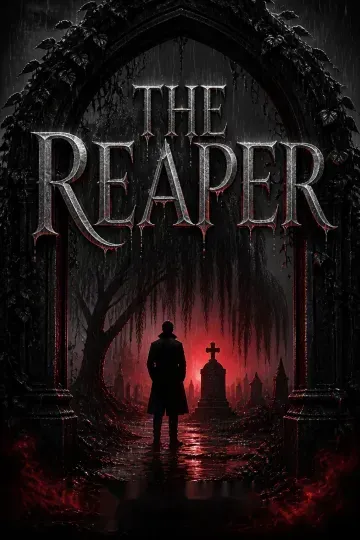
The Reaper receives mostly positive reviews, with readers praising the character development, intense romance, and plot twists. Many find Tristan and Morana's relationship captivating, appreciating their chemistry and growth. The book is lauded for its dark themes, emotional depth, and engaging storyline. Some readers note improvements from the first book, particularly in pacing and character interactions. While a few criticize repetitive prose and placement of certain scenes, the majority express enthusiasm for the series and eagerness to continue reading.
People Also Read


Characters
Morana Vitalio
Brilliant hacker, pawn of the pastA genius coder raised as the neglected daughter of Shadow Port's mafia boss Gabriel Vitalio7. Morana spent her life building digital armor because no one built physical protection around her. Emotionally starved and fiercely self-reliant, she learned to hide vulnerability behind sharp wit and sharper competence. Her encounter with Tristan Caine, the man who swore to kill her2, becomes the key that unlocks the truth about her identity: she is not who she was raised to be. Fierce, resilient, and hungry for genuine connection, she evolves from an isolated survivor into a woman who claims her own life, her own love, and her own capacity for lethal justice. Her genius with code makes her dangerous; her capacity for loyalty makes her beloved.
Tristan Caine
The Predator, scarred protectorThe Tenebrae Outfit's most feared enforcer, forged by atrocity. At fourteen, he killed his own father to protect a toddler from murder, then watched his mother abandon him and his baby sister vanish. Raised as a weapon by Lorenzo Maroni4 through torture and isolation, he became lethal, silent, and seemingly unfeeling. For twenty years he fixated on Morana Vitalio1, believing his purpose was to eventually kill her for her family's perceived crimes. Proximity to her instead awakens a long-buried capacity for tenderness and ferocious protectiveness. Profoundly traumatized and emotionally inarticulate, he demonstrates love through action: cooking every meal, holding her throat to feel her pulse, tattooing her name on his skin, and annihilating anyone who threatens her safety.
Dante Maroni
Heir trapped in dutyHeir to the Tenebrae Outfit and Tristan's2 only friend since boyhood. Dante wears charm and control like armor, but beneath his polished exterior lies a man trapped in a life he never chose. He offers Morana1 kindness and protection when she has no one else, becoming the brother she never had. His secret passion is sculpting, a dream buried under the crushing weight of his father's4 expectations and the brutality of the world he was born into. Brave, strategic, and capable of deep loyalty, he risks everything by faking his own death to infiltrate the Syndicate, sacrificing his identity to pursue a justice his father's4 empire was built to prevent.
Lorenzo Maroni
The Bloodhound, charming monsterThe charismatic, aging kingpin of the Tenebrae Outfit whose courtly manners conceal bottomless cruelty. He prizes control above all else and spent twenty years trying to break Tristan Caine2 through torture and isolation, never succeeding. His involvement in the Syndicate's global child trafficking operation is the hidden rot at the core of his empire. To the world, he is the Bloodhound, a man whose reputation makes grown men kneel and kiss his ring. To his son3 and his captive enforcer2, he is a reminder that power without conscience creates only monsters.
The Reaper
Ghost hacker, silent guardianA figure from the Outfit's past who exists in shadows and digital code. Known online as imreaper00, he is a brilliant hacker who contacts Morana1 through the darknet, guiding her investigation into the missing girls and the Syndicate. He wears a silver skull ring, a relic of the original Alliance between three men whose pact ended in murder and stolen children. Limping on a cane, weathered by decades of hiding, he has been watching Morana1 from a distance her entire life. His motives are deeply personal, rooted in losses suffered twenty years ago that set him on a patient path toward justice.
Amara
Scarred exile, loyal friendDante's3 estranged love and Morana's1 first true female friend. Her voice was permanently damaged by the scar across her throat, a wound from torture she endured as a girl in the Outfit's service. Banished from the Tenebrae compound for reasons tied to her relationship with Dante3, she lives in exile in Shadow Port. Brave, scarred, and fiercely loyal, she tells Morana1 the truth about Tristan's2 past when no one else would, becoming the emotional lifeline Morana1 desperately needs in a world of hostile strangers. When she believes Dante3 has died, she vanishes without a trace.
Gabriel Vitalio
Shadow Port boss, broken fatherHead of the Shadow Port mafia and the man Morana1 believed was her father. Cold, cruel, and obsessed with power, he treated Morana1 with contempt her entire life while mourning the biological daughter who was stolen from him as an infant. He participated in the child abductions twenty years ago and has been slowly going mad ever since, haunted by the knowledge that the girl he raised is not his and his real daughter suffered unknown horrors. His hatred for the child who replaced his own festers beneath a mask of calculated composure, making him both villain and victim of the Syndicate's machinery.
Vin
Silent soldier, secret allyA scarred, grim Outfit soldier with a limp and vacant eyes. Despite his intimidating appearance and curt manner, he secretly aids Morana1 by providing her a knife when she first arrives unarmed. He later becomes her trusted guard and self-defense instructor. His loyalty to Dante3 is absolute, and through that loyalty, he extends protection to those Dante3 cares about.
Chiara Mancini
Venomous rival, trapped wifeThe stunning wife of Leo Mancini and Tristan's2 former lover. She uses beauty and manipulation as weapons in a marriage she never chose, having been raped by her husband. Her hostility toward Morana1 stems from territorial jealousy and the threat of being displaced. A product of the Outfit's cruelty toward women, she has become cruel herself, preying on vulnerable young men to punish the system that broke her.
Zia
Gentle housekeeper, maternal warmthAmara's6 mother and the housekeeper of Dante's3 wing. She shows Morana1 unconditional maternal affection the moment they meet, stroking her hair and calling her 'child' as though she has always been family. Her kindness, freely given without expectation, gives Morana1 her first taste of what a loving parent feels like. She also adores Dante3 with a fierce, motherly devotion that transcends class and blood.
Plot Devices
The Stolen Codes
Catalyst that ignited the plotMorana's1 proprietary software program, two years in the making, capable of accessing and destroying any digital information in existence. Stolen by her ex-boyfriend Jackson and used to frame Tristan Caine2 for crimes against the Outfit, the theft is what initially brought Morana1 to Tenebrae seeking answers and revenge. The codes function as both a MacGuffin that sets the entire narrative in motion and a symbol of Morana's1 formidable genius: they are valuable enough to kill for, dangerous enough to frame the most feared man2 in the underworld. Their eventual return, untouched and unused, reveals that the theft served a purpose entirely different from what anyone assumed.
The Skull Ring
Symbol of the broken AllianceA silver ring bearing a detailed skull design, originally crafted as a gift for the three partners of the Alliance. Lorenzo Maroni4 wears one prominently, a symbol of his power and his hidden past. When a second identical ring appears on the hand of a mysterious limping man5 who watches from the shadows, it signals the return of someone who was supposed to be dead. The ring functions as a visual thread connecting the novel's three patriarchs across time, its reappearance a promise that the secrets of the past will not remain buried. The skull that was once a 'crowning jewel' has become a memento mori for all who wore it.
The Syndicate
Hidden network of child traffickersA global clandestine organization trading in abducted children, referred to in coded darknet records as 'Distance Y.' Connected to the disappearances of toddler girls from Tenebrae twenty years ago, including Luna Caine and the real Morana Vitalio. The Syndicate is the hidden evil that shattered the original Alliance when one partner discovered the other two were supplying children and threatened to expose them. Its existence transforms the story from a personal revenge quest into a confrontation with systemic atrocity. The organization remains largely in shadow throughout the novel, its full reach unknown, making it a threat that extends far beyond any single book's resolution.
Luna's Pendant
Tether to a lost sisterA small silver pendant inscribed 'Baby sister,' hanging from the rearview mirror of Tristan's2 car. It belonged to Luna Caine, who vanished from her bedroom when she was a toddler, and represents Tristan's2 most private possession: a constant, visible reminder of the sister he failed to protect and the promise he made to find her. Its presence in his car surprises Morana1, signaling that she has been invited into a guarded space no one else enters. The pendant haunts the narrative as a physical token of unresolved grief, of a love that has had no object for two decades but has never diminished.
The Darknet Handle (imreaper00)
Digital ghost guiding the huntAn online identity on the shadow net, bearing a black and white skull icon, that contacts Morana1 during her investigation into the missing girls. This mysterious figure bypasses her sophisticated security measures to guide her toward the truth about the Syndicate, the flesh trade, and her own origins. Skilled enough to track her through multiple VPNs and familiar enough to call her by name, the Reaper5 represents a ghost from the old world reaching into the new through the medium Morana1 understands best. The handle is the digital equivalent of the skull ring: a marker of identity that connects past and present, the dead and the living.
FAQ
Synopsis & Basic Details
What is The Reaper about?
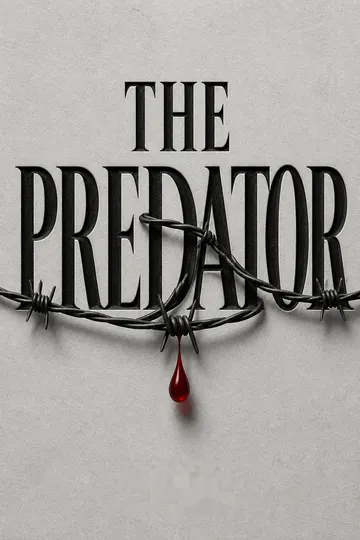
- Continuation of Dark Verse: The Reaper picks up directly after The Predator, focusing on Morana and Tristan's intertwined destinies amidst mob warfare.
- Unveiling Hidden Truths: Morana grapples with her identity as she learns about her true parentage and the dark secrets of the Outfit.
- Navigating Dangerous Alliances: The story explores the complex relationships between Morana, Tristan, and Dante as they navigate a world of violence and betrayal.
Why should I read The Reaper?
- Intense Emotional Journey: The Reaper delves into the psychological complexities of its characters, offering a raw and emotional reading experience.
- Complex Relationship Dynamics: The evolving relationship between Morana and Tristan is full of tension, passion, and unexpected tenderness.
- Intriguing Mob World: The story provides a glimpse into the dangerous and fascinating world of organized crime, with its own rules and codes.
What is the background of The Reaper?
- Mob Warfare: The story is set against the backdrop of a long-standing rivalry between the Shadow Port and Tenebrae Outfit crime families.
- Family Secrets: The characters are burdened by the secrets and betrayals of their families, which influence their actions and relationships.
- Power Dynamics: The story explores the power dynamics within the Outfit and the struggle for control between different factions.
What are the most memorable quotes in The Reaper?
- "I love you as certain dark things are to be loved, in secret, between the shadow and the soul.": This quote from Pablo Neruda encapsulates the intense, hidden nature of Tristan and Morana's love.
- "You don't owe these people a thing. And I sure as fuck don't. Don't let them control you.": Tristan's words to Morana after her panic attack highlight his desire for her to be free from the control of others.
- "His demons dance with mine. That's all I can give you.": Morana's explanation to Dante about her connection with Tristan reveals the shared darkness that binds them together.
What writing style, narrative choices, and literary techniques does RuNyx use?
- Intense Internal Monologues: The narrative frequently delves into the characters' thoughts and feelings, providing insight into their motivations and inner conflicts.
- Descriptive and Atmospheric Prose: RuNyx uses vivid language to create a dark and sensual atmosphere, immersing the reader in the story's world.
- Dual POV: The story is primarily told from Morana's perspective, with occasional glimpses into Tristan's thoughts and feelings, creating a sense of mystery and intrigue.
Hidden Details & Subtle Connections
What are some minor details that add significant meaning?
- Luna's Pendant: The pendant hanging in Tristan's car, inscribed with "Baby sister," reveals his enduring grief and love for Luna, influencing his protective nature.
- Bruised Knuckles: Tristan's bruised knuckles after visiting Gabriel Vitalio's mansion foreshadow his violent actions and protective instincts towards Morana.
- Chocolate Offering: Tristan offering Morana chocolate after her panic attack is a subtle gesture of care, contrasting with his tough exterior.
What are some subtle foreshadowing and callbacks?
- The Stormy Night: The opening scene with the stormy night foreshadows the turbulent events and emotional turmoil that will unfold throughout the story.
- The Cemetery: The cemetery setting is revisited multiple times, symbolizing the characters' confrontation with death, loss, and the choices that define their lives.
- The Lake: The lake near Tristan's cottage becomes a recurring motif, representing both tranquility and danger, and serving as a backdrop for key moments in the story.
What are some unexpected character connections?
- Nerea and Amara: The revelation that Nerea is Amara's half-sister adds complexity to the social dynamics within the Outfit and highlights the different paths available to women in that world.
- Vin's Loyalty: Vin's quiet support of Morana, despite his allegiance to the Outfit, suggests a hidden sense of morality and a willingness to defy expectations.
- Reaper's Identity: The Reaper's true identity as Morana's biological father creates a shocking twist and recontextualizes her entire life story.
Who are the most significant supporting characters?
- Dante Maroni: Dante's internal conflict between loyalty to his family and his friendship with Tristan and Morana makes him a complex and compelling character.
- Amara: Amara's past trauma and her unwavering support for Morana make her a strong and sympathetic figure.
- Vin: Vin's quiet competence and unexpected acts of kindness suggest a hidden depth and a moral compass that sets him apart from other members of the Outfit.
Psychological, Emotional, & Relational Analysis
What are some unspoken motivations of the characters?
- Tristan's Need for Control: Tristan's desire to protect Morana stems from his past trauma and his need to control the chaos in his life.
- Morana's Yearning for Connection: Morana's attraction to Tristan is driven by her desire for connection and belonging, after a lifetime of isolation.
- Dante's Desire for Redemption: Dante's decision to go undercover is motivated by his desire to atone for his family's sins and create a better future.
What psychological complexities do the characters exhibit?
- Tristan's PTSD: Tristan's nightmares and violent tendencies reveal the lasting psychological impact of his traumatic childhood.
- Morana's Trust Issues: Morana's difficulty trusting others stems from her upbringing and her experiences with betrayal.
- Dante's Guilt: Dante's guilt over his family's actions and his inability to protect Amara drives him to seek redemption.
What are the major emotional turning points?
- Morana's Panic Attack: Morana's panic attack in Tristan's penthouse forces her to confront her own vulnerabilities and accept his help.
- Tristan's Confession: Tristan's confession about his past and his feelings for Morana allows them to connect on a deeper level.
- Dante's Decision: Dante's decision to go undercover marks a significant shift in his character and sets him on a path towards redemption.
How do relationship dynamics evolve?
- Morana and Tristan: Their relationship evolves from animosity to grudging respect to passionate love, as they learn to trust and rely on each other.
- Morana and Dante: Their relationship evolves from suspicion to friendship, as they find common ground and support each other in their struggles.
- Tristan and Dante: Their relationship evolves from brotherhood to something more complex, as they navigate their shared history and their individual desires.
Interpretation & Debate
Which parts of the story remain ambiguous or open-ended?
- The Syndicate's Motives: The exact goals and motivations of the Syndicate remain unclear, leaving room for future exploration.
- Luna's Fate: The ultimate fate of Luna Caine is left unresolved, creating a lingering sense of hope and uncertainty.
- The Future of Shadow Port: The long-term impact of Morana and Tristan's leadership on Shadow Port is left open to interpretation.
What are some debatable, controversial scenes or moments in The Reaper?
- Morana's Initial Attraction to Tristan: Some readers may find Morana's initial attraction to Tristan, despite his past actions, to be problematic.
- Tristan's Violence: Tristan's use of violence to protect Morana may be seen as both protective and controlling.
- The Graphic Content: The explicit scenes of violence and sexual nature may be disturbing to some readers.
The Reaper Ending Explained: How It Ends & What It Means
- Alliance's New Leadership: Morana and Tristan take over Shadow Port, setting the stage for a new era in the Dark Verse series.
- Uncertain Future: The threat of the Syndicate remains, hinting at future conflicts and challenges for the characters.
- Hope Amidst Darkness: Despite the violence and betrayal, the ending offers a glimmer of hope for Morana and Tristan's future together.
Dark Verse Series

About the Author
Other books by RuNyx


Download PDF
Download EPUB
.epub digital book format is ideal for reading ebooks on phones, tablets, and e-readers.








































