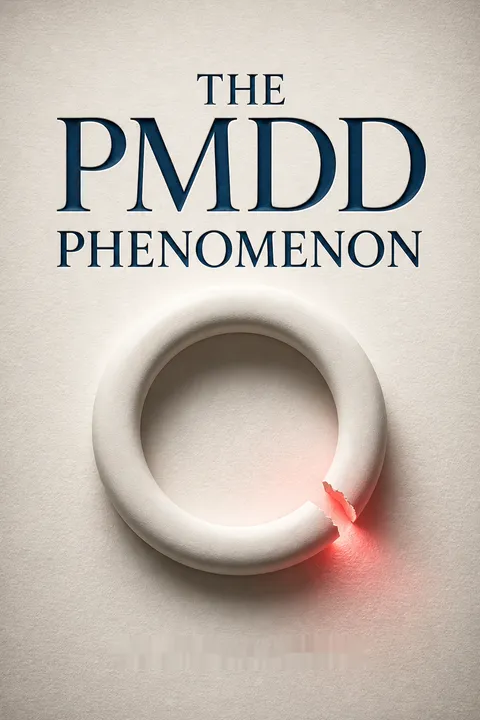

Key Takeaways
1. Premenstrual Dysphoric Disorder (PMDD) is a Real, Biologically-Based Condition
Premenstrual dysphoric disorder is a real disorder.
Historical recognition. Despite modern debates, premenstrual suffering has been documented for centuries, with descriptions from Hippocrates to 20th-century physicians detailing mood changes, sadness, irritability, and even psychosis. The condition has evolved through various names like "premenstrual tension" and "late luteal phase dysphoric disorder," reflecting a growing medical understanding, not a recent invention. The term PMDD gained national consciousness with FDA approval of fluoxetine in 2000, but the underlying experience is ancient.
Beyond PMS. While many women experience mild premenstrual syndrome (PMS), PMDD represents a severe, debilitating form affecting 3-9% of menstruating women. It's not merely "bad PMS" or an excuse for ill temper; it's a distinct mood disorder with symptoms so intense they disrupt personal, social, and work relationships. Women describe feeling like "two personalities" or "an angry stranger living in her head," highlighting the profound impact on their sense of self and daily functioning.
Scientific validation. Research confirms PMDD is not "made up" or a marketing scheme. Studies show measurable biological differences in women with PMDD compared to those without, particularly concerning the neurotransmitter serotonin and hormones like allopregnanolone. These physiological distinctions, coupled with consistent prevalence across diverse cultures, underscore that PMDD is a legitimate medical condition deserving of serious diagnosis and treatment, not ridicule or dismissal.
2. Understanding PMDD, PMS, and PME is Key to Proper Diagnosis
When PMS is severe … when the premenstrual symptoms cause so much anguish, irritability, or depression that women feel out of control … when these symptoms affect relationships with spouses, lovers, children, friends, and coworkers, then we’re no longer talking about simple PMS.
Defining the spectrum. Premenstrual symptoms exist on a continuum: about 10% of women have no symptoms, 85% experience mild-to-moderate PMS, and 5% suffer from severe PMDD. A third category, Premenstrual Exacerbation (PME), describes when an existing physical or emotional disorder (e.g., migraines, depression, asthma) significantly worsens during the premenstrual phase, without a symptom-free interval. Differentiating these conditions is crucial for effective, targeted treatment.
Diagnostic criteria. PMDD has specific research criteria outlined in the Diagnostic and Statistical Manual of Mental Disorders (DSM-IV), requiring at least five specific symptoms (including one core mood symptom) to be present in the luteal phase, remit after menstruation, and be absent post-menses. Crucially, these symptoms must "markedly interfere" with daily life, distinguishing PMDD from milder PMS. This rigorous definition ensures consistent diagnosis for research and clinical practice.
Beyond the label. While the "PMS" label became trivialized, creating PMDD as a distinct diagnosis acknowledges the severe, disabling nature of the condition for millions of women. This medical recognition validates their suffering and opens doors to appropriate treatment and insurance coverage. For PME, the focus shifts to managing the underlying condition, which is exacerbated by hormonal shifts, often requiring continuous treatment rather than just luteal phase intervention.
3. The Menstrual Cycle's Complex Influence on Body and Mind
The current and most popular theory is that the changing levels of estrogen and progesterone—not the overall levels, but the change in the levels—cause changes in the neurotransmitters in the brain, and those neurotransmitter changes are responsible for the symptoms women experience.
Hormonal symphony. The menstrual cycle is an intricate dance between the brain and reproductive organs, orchestrated by five major hormones: gonadotropin-releasing hormone (GnRH), follicle-stimulating hormone (FSH), luteinizing hormone (LH), estrogen, and progesterone. These hormones don't just regulate menstruation; they exert systemic effects throughout the body, influencing numerous other processes, including brain chemistry.
Serotonin's central role. While women with PMDD don't have abnormal levels of estrogen or progesterone, their brains appear to be uniquely sensitive to the fluctuations of these hormones, particularly the sharp drop in the late luteal phase. This sensitivity is thought to disrupt neurotransmitter systems, especially serotonin, which is linked to mood, aggression, and carbohydrate cravings.
- Low serotonin is associated with depression, irritability, and anger.
- SSRIs, which increase serotonin availability, effectively treat PMDD.
Multiple contributing factors. PMDD is likely a complex interplay of biological, psychological, and social factors. Beyond serotonin, research points to:
- Special sensitivities: An inborn predisposition to react strongly to hormonal shifts.
- Stress hormones: Altered cortisol responses to stress in women with PMDD.
- "Feel-good" chemicals: Lower premenstrual endorphin levels, affecting pain and mood.
- Circadian rhythm dysregulation: Differences in melatonin, prolactin, and body temperature cycles.
This multifaceted view explains why a combination of treatments often yields the best results.
4. Accurate Diagnosis Relies on Consistent Symptom Tracking
To get a true PMDD diagnosis, each woman must keep a two-month daily record of what symptoms she experiences and at what intensity.
The indispensable diary. A daily symptoms diary is the cornerstone of accurate PMDD diagnosis. It provides an objective, prospective record of symptoms, their timing, and intensity, preventing reliance on imprecise memory. This tool helps both the woman and her physician identify the characteristic luteal-phase-only pattern of PMDD, distinguish it from PME (where symptoms are present all month but worsen premenstrually), and rule out other disorders.
Beyond self-perception. Many women underestimate the severity and duration of their symptoms, or misattribute them to other life stressors. The diary often reveals a clearer, more consistent pattern than initially perceived, clarifying the cyclical nature of the distress. This objective data is vital for:
- Confirming the diagnosis (PMDD requires a symptom-free follicular phase).
- Guiding treatment decisions (e.g., continuous vs. intermittent medication dosing).
- Providing a baseline to measure treatment effectiveness.
Impact on daily life. The diagnostic criteria also emphasize the functional impairment caused by PMDD, requiring symptoms to "markedly interfere with work or school or with usual social activities and relationships." The diary helps document this impact, from increased interpersonal conflicts and social isolation to decreased productivity. Recognizing this interference is a critical step towards seeking help and reclaiming lost years of productive life.
5. Selective Serotonin Reuptake Inhibitors (SSRIs) are the Most Effective Medical Treatment
The efficacy of selective serotonin-reuptake inhibitors in premenstrual syndrome: a systematic review.
Targeted relief. SSRIs, like fluoxetine (Sarafem) and sertraline (Zoloft), are the first-line medical treatment for PMDD due to their direct action on serotonin, a key neurotransmitter implicated in premenstrual mood symptoms. Unlike for major depression, where SSRIs take weeks to work, they often provide rapid relief for PMDD—sometimes within days—suggesting a different underlying mechanism related to serotonin availability rather than receptor down-regulation.
Flexible dosing. A significant advantage of SSRIs for PMDD is the option for intermittent dosing, where medication is taken only during the symptomatic luteal phase. This approach is as effective as continuous dosing for "pure" PMDD or severe PMS, offering benefits like:
- Reduced cost.
- Fewer side effects due to shorter exposure.
- Potential to delay "poop-out" (when medication loses effectiveness over time).
However, women with PME often benefit more from continuous dosing, possibly with a luteal phase increase.
Considerations and safety. While highly effective for up to 80% of women, SSRIs are not without considerations. Potential side effects include gastrointestinal issues, sleep disturbances, and sexual dysfunction, though these often abate or can be managed by switching medications or adjusting dosage. It's crucial to discuss all medications and supplements with a doctor due to potential drug interactions, such as with MAOIs or sumatriptan (for migraines), to avoid rare but serious conditions like serotonin syndrome.
6. Lifestyle Changes, Especially Exercise, Offer Significant Support
But exercise may be the single best thing you can do to feel better—immediately and in the long term.
Beyond medication. While medication can be transformative, lifestyle adjustments offer foundational support for managing PMDD. Exercise stands out as the most impactful self-help method, consistently shown to improve mood, decrease anxiety, and reduce stress reactions. It's not about intense workouts; even moderate, enjoyable activity for 30 minutes, 3-4 times a week, can yield significant benefits.
Exercise benefits:
- Endorphin release: Natural "feel-good" chemicals.
- Stress reduction: Lower heart rate and blood pressure responses to stress.
- Distraction: Breaks cycles of worry and depression.
- Sense of accomplishment: Boosts self-esteem and control.
- Improved overall health: Enhances physical well-being, which indirectly lessens premenstrual distress.
Dietary wisdom. While no specific "PMS diet" has proven effective, general healthy eating habits are crucial. Eliminating caffeine, excessive sugar, and alcohol can prevent exacerbating symptoms like jitteriness, anxiety, and blood sugar fluctuations, which are magnified premenstrually. Indulging cravings in moderation, especially for chocolate (which contains mood-enhancing compounds), is often better than strict deprivation, which can lead to binge eating and reinforce feelings of being out of control.
7. Targeted Nutritional Supplements Can Help, But Beware of Unproven or Dangerous Options
Only calcium has had consistent statistical success in relieving premenstrual symptoms.
Calcium's role. Calcium is the most consistently effective nutritional supplement for PMDD, showing a statistically significant reduction in negative affect, water retention, and food cravings. Taking 900-1200 mg daily in divided doses (no more than 500 mg at once) can offer relief and also supports long-term bone health, which may be compromised in women with premenstrual disorders. Calcium carbonate is common, but calcium citrate is better for sensitive stomachs.
Mixed evidence for others. Other supplements like magnesium (320-500 mg daily), vitamin B6 (up to 100 mg daily), and vitamin E (400 IU daily) have shown mixed or preliminary results. While generally safe at recommended doses, their efficacy is less certain, and benefits are often subtle and slow to appear (2-4 months). Omega-3 fatty acids, while beneficial for general health and mild depression, lack strong evidence for direct PMDD symptom relief.
Dangerous choices. Certain supplements, despite popular claims, are not recommended due to safety concerns or lack of efficacy:
- Tryptophan and 5-HTP: Linked to eosinophilia-myalgia syndrome (EMS), a potentially fatal blood disease.
- DHEA and Melatonin: Hormones that can have serious side effects or worsen depressive symptoms.
- Special "PMS formulas": Often overpriced, with unverified ingredients or potentially toxic doses of certain vitamins.
Always consult a physician before taking any supplement, especially given the unregulated nature of the market.
8. Complementary Therapies Offer Varied, Often Subtle Benefits
If a treatment works reliably and effectively in scientific studies, then you are assured it has some value.
Evidence-based approach. The world of complementary and alternative medicine (CAM) is vast, but scientific scrutiny is essential to distinguish effective treatments from placebos or harmful practices. While many CAM modalities lack rigorous research, some have shown promise for specific premenstrual symptoms, often with subtle effects. It's crucial to approach CAM with caution, prioritizing safety and discussing options with a doctor.
Promising options:
- Chasteberry (Vitex agnus castus): One 20mg tablet daily has shown significant improvement in mood swings, irritability, anger, headaches, and breast symptoms, with effects seen after three cycles. It may reduce prolactin levels and have progesterone-like effects.
- St. John's Wort (Hypericum perforatum): A 300mg tablet daily (standardized to 0.3% hypericin) can reduce depressed mood, anxiety, and confusion, similar to low-dose antidepressants. However, it can interact with oral contraceptives and SSRIs.
- Ginkgo (Ginkgo biloba): 120-160mg daily may reduce breast symptoms and improve concentration by increasing blood flow. It acts as a blood thinner, so caution is needed with other anticoagulants.
- Relaxation Response: Practicing this technique (progressive relaxation and focused meditation) for 15-20 minutes twice daily can significantly improve symptoms, likely by reducing stress.
Less conclusive or unrecommended:
- Black Cohosh, Reflexology, Acupuncture: Show mixed or preliminary results, or lack specific PMDD research.
- Evening Primrose Oil, Massage, Homeopathy, Chiropractic, Dong Quai: Generally not supported by robust scientific evidence for PMDD.
- Kava: While effective for anxiety, it carries a risk of liver toxicity and is currently under review.
9. Psychological Therapies Enhance Coping and Relationships, Not Cure
During this biologically vulnerable time, irritability trumps insight time after time.
Coping, not curing. Premenstrual disorders are biological, so psychological therapies cannot eliminate the underlying hormonal shifts. However, they are invaluable for managing the experience of symptoms, improving coping mechanisms, and repairing strained relationships. Women often feel powerless during symptomatic phases, and therapy can provide tools to regain a sense of control over their reactions.
Cognitive Behavioral Therapy (CBT). CBT is particularly promising, focusing on identifying and restructuring distorted thoughts and replacing destructive behaviors with constructive ones. For example, replacing "I'm totally out of control" with "My hormones are changing, but I can manage this." CBT helps women:
- Recognize irrational thoughts.
- Develop stress reduction and assertiveness skills.
- Break cycles of automatic, negative responses.
Studies show CBT can significantly reduce symptom severity, depression, and irrational thinking, with lasting effects.
Couples therapy. Often, a woman's premenstrual symptoms strain her closest relationships. Couples therapy helps partners understand the biological basis of PMDD, learn effective communication strategies, and develop joint management plans. This collaborative approach can prevent emotional escalation, rebuild trust, and foster a supportive environment, transforming a vicious cycle of emotions into a shared challenge.
Support groups and stress reduction. While scientific evidence for support groups is mixed, connecting with others who share similar experiences can reduce feelings of isolation and stigma. Stress reduction techniques like deep breathing, prioritizing tasks, and thought stopping, though not direct PMDD treatments, can significantly lower overall stress levels, making the premenstrual phase more manageable for women who are already biologically vulnerable to stress.
10. Other Medical Interventions Exist for Specific Symptoms or Severe Cases
But for some women, surgery can save their lives.
Beyond SSRIs. For women who don't respond to SSRIs or have specific symptoms, other medical treatments are available. These range from targeted symptom relief to more drastic measures like ovulation suppression or surgery, reserved for the most severe, treatment-resistant cases.
Symptom-specific treatments:
- Pain relievers (NSAIDs): Effective for headaches, cramps, and backaches (e.g., naproxen sodium, mefenamic acid).
- Diuretics (Spironolactone): Helps reduce bloating, weight gain, and may also alleviate irritability, depression, and breast tenderness by eliminating excess water.
- Antianxiety medications (Alprazolam, Buspirone): Can reduce anxiety and tension, but may cause sedation, increased appetite, and potential for dependence (alprazolam). Buspirone requires continuous use.
- Other antidepressants (Bupropion, Nefazodone, Venlafaxine): While not as effective as SSRIs for PMDD, they may be used for PME of depression or to counteract SSRI side effects (e.g., bupropion for sexual dysfunction).
Hormonal interventions (last resort):
- Progesterone/Estrogen: Progesterone is generally ineffective and can worsen symptoms. Estrogen, particularly via patches, may help premenstrual migraines and depression, but oral contraceptives have mixed results for mood.
- Ovulation suppression (GnRH agonists): Medications like leuprolide (Lupron) halt the menstrual cycle, eliminating hormonal fluctuations and symptoms. This is a "chemical menopause" and requires estrogen add-back to prevent menopausal symptoms and bone loss. It's a trial run for surgery.
- Surgery (Oophorectomy): Removal of ovaries is a last resort for women with severe, treatment-resistant PMDD or PME (e.g., suicidal depression, uncontrolled diabetes exacerbation). It eliminates ovarian hormones, but requires lifelong hormone replacement therapy.
11. A Comprehensive Game Plan and Support System are Essential for Lasting Relief
As with any other disorder, the best treatment strategy for a woman with premenstrual dysphoric disorder (PMDD), premenstrual exacerbation (PME), or severe premenstrual syndrome (PMS) is a combination of basic steps and individualized choices.
The integrated approach. Effective management of PMDD, PME, or severe PMS involves a multi-pronged strategy tailored to individual needs. It begins with accurate self-assessment and professional diagnosis, followed by a combination of lifestyle changes, targeted supplements, and potentially medical or psychological therapies. No single "magic bullet" works for everyone, but a holistic approach maximizes the chances of sustained relief.
Key steps for women:
- Symptom diary: Essential for diagnosis and monitoring treatment effectiveness.
- Doctor's appointment: Seek a trusted physician for diagnosis and guidance.
- Lifestyle changes: Prioritize regular exercise, a healthy diet, and stress reduction techniques.
- Informed choices: Discuss all treatment options (medication, supplements, therapy) with your doctor, weighing benefits and risks.
- Self-compassion: Recognize that PMDD is a biological condition, not a personal failing.
Support for loved ones. Understanding and support from family and partners are crucial. Loved ones should:
- Educate themselves: Learn about the biological basis and symptoms of PMDD.
- Communicate openly: Ask what the woman needs during symptomatic times and how to respond to outbursts.
- Reduce stress: Help minimize stressors during the premenstrual phase.
- Offer support: Encourage treatment and be patient with the process.
- Avoid blame: Refrain from attributing all emotions or conflicts to PMDD, and never make jokes about it.
By working together, women and their support systems can navigate the challenges of PMDD and achieve a more stable, fulfilling life.
People Also Read






Download PDF
Download EPUB
.epub digital book format is ideal for reading ebooks on phones, tablets, and e-readers.








































