
Key Takeaways
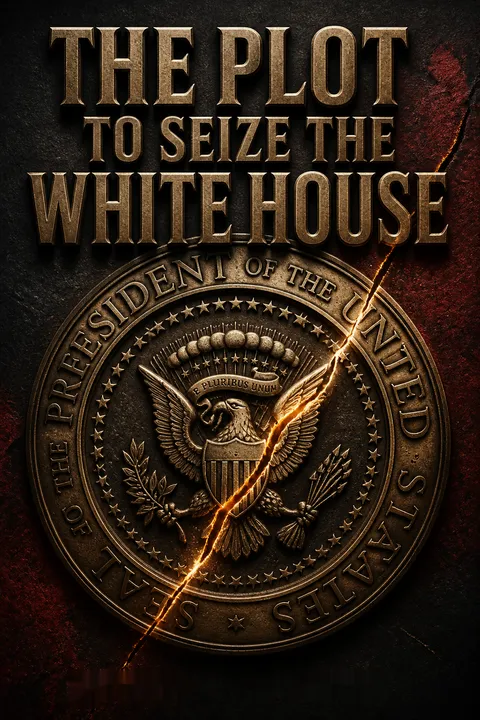
1. A Shocking Plot to Seize the White House
But it still comes as a shocking revelation that in 1933 there was an actual attempt to make a fascist puppet of President Franklin Delano Roosevelt.
Unveiling a conspiracy. In 1933, a clandestine plot emerged to overthrow President Franklin D. Roosevelt and establish a fascist dictatorship in the United States. This audacious scheme, largely unknown to the public for decades, aimed to manipulate the President into becoming a mere figurehead, controlled by powerful financial and industrial interests. The revelation of such an attempt to subvert American democracy remains a startling historical footnote.
The target: FDR. President Roosevelt, newly elected and implementing his transformative New Deal policies, became the target of this conspiracy. His progressive agenda, which included taking the country off the gold standard and increasing government spending to combat the Great Depression, deeply alarmed conservative financiers and industrialists who saw it as a threat to their wealth and the capitalist system. They sought a drastic solution to halt what they perceived as "creeping socialism."
A hero's intervention. The failure of this plot is directly attributed to Major General Smedley Darlington Butler, a highly decorated Marine Corps veteran. His reputation for patriotism, integrity, and dedication to democracy, coupled with his outspoken nature, made him a seemingly perfect, yet ultimately disastrous, choice for the conspirators to front their movement. His actions ensured the plot was exposed before it could gain traction.
2. Wealthy Elites Feared the New Deal
Conservative financiers were horrified. They viewed a currency not solidly backed by gold as inflationary, undermining both private and business fortunes and leading to national bankruptcy.
Economic anxieties. The primary motivation behind the plot stemmed from the profound economic anxieties of wealthy American industrialists and bankers. Roosevelt's decision to take the country off the gold standard, allowing for an increase in the money supply to fund New Deal programs, was seen as a direct assault on their fortunes and the stability of the financial system. They feared inflation would devalue their assets and lead to national bankruptcy.
Anti-Roosevelt sentiment. Many powerful business leaders vehemently opposed Roosevelt's New Deal, labeling it as "socialism" or even "Communism." They believed his policies were designed to destroy private enterprise and redistribute wealth, echoing fears that America was heading down the same path as Soviet Russia. This intense animosity created a fertile ground for radical solutions, including the idea of a corporate-controlled government.
Admiration for fascism. Some American business leaders openly admired European fascist regimes, particularly Mussolini's Italy, for their perceived efficiency in controlling labor unions, cutting public debt, and ending inflation. They envied the dictatorial control these regimes exerted over their economies and saw a similar model as a way to "save" America from Roosevelt's policies and the perceived threat of communism. This admiration fueled their desire for an "American Mussolini."
3. Smedley Butler: The Indispensable Man
His reputation for patriotism, integrity, and dedication to democracy, coupled with his proclivity to speak the truth as he saw it irrespective of official policy, made him a seemingly perfect front for the men who hated Roosevelt.
A decorated war hero. Major General Smedley Butler was one of the most celebrated and popular military figures in American history, a veteran of 35 years in the Marine Corps and twice a recipient of the Congressional Medal of Honor. His extensive combat experience across multiple conflicts, from the Spanish-American War to the Boxer Rebellion and interventions in Central America, earned him immense respect among rank-and-file soldiers and the public. This made him an ideal, charismatic leader for any veterans' movement.
"Old Gimlet Eye." Known affectionately as "Old Gimlet Eye" for his piercing gaze and fierce determination, Butler was renowned for his incorruptible character and blunt honesty. He was a vocal critic of military hierarchy and a staunch advocate for enlisted men, often clashing with high-ranking officials. His fearless truth-telling, regardless of consequences, cemented his image as a man of the people, making him uniquely positioned to rally a large veterans' army.
The wrong choice. Ironically, the very qualities that made Butler attractive to the plotters—his popularity, integrity, and democratic convictions—also made him the worst possible choice for their fascist agenda. They sought a figurehead who could command loyalty and inspire action, but underestimated his unwavering commitment to American democracy and his deep-seated distrust of corporate influence in national affairs. His moral compass was fundamentally opposed to their objectives.
4. The Plotters' Deceptive Strategy Unfolds
MacGuire outlined a new plan in which Butler would gather two or three hundred Legionnaires and take them to Chicago on a special train.
Initial overtures. The plot began with Gerald C. MacGuire, a bond salesman working for Grayson M.-P. Murphy, approaching Butler in July 1933. MacGuire, initially accompanied by Bill Doyle, commander of the Massachusetts American Legion, sought to enlist Butler in a scheme to "stampede" an American Legion convention. Their ostensible goal was to oust the Legion's "Royal Family" and advocate for veterans' bonuses, but Butler quickly sensed a deeper, more sinister motive.
Financial backing revealed. To convince a skeptical Butler of their seriousness, MacGuire displayed bankbooks showing large deposits, including one for $42,000 and another for $64,000, for "expenses." He later admitted these funds came from nine wealthy backers, with the largest contributor putting up $9,000. This financial muscle, combined with the use of a chauffeur-driven Packard limousine, immediately raised Butler's suspicions about the true nature of their "plain soldiers" movement.
The "Assistant President" scheme. The plot evolved into a plan to create an "American Croix de Feu," a paramilitary veterans' organization modeled after European fascist groups. MacGuire proposed that Butler lead this "superorganization" to "support" an "overworked" President Roosevelt by providing him with an "Assistant President" or "Secretary of General Affairs." The ultimate goal was to reduce Roosevelt to a ceremonial figurehead, akin to the President of France, while the conspirators' chosen dictator ran the country.
5. Butler's Unwavering Patriotism and Integrity
Unable to contain himself any longer, Butler exploded that if MacGuire and his backers tried to mount a Fascist putsch, he would raise another army of 500,000 veterans to oppose them and the nation would be plunged into a new civil war.
A fierce defender of democracy. Despite the tempting offers of money and power, Butler's core values as a lifelong democrat and patriot remained unshakeable. His indignation boiled over when he fully grasped the treasonous nature of the plot, declaring his readiness to fight against any attempt to impose fascism on the United States. This immediate and forceful rejection underscored his deep commitment to the Constitution and democratic principles.
Rejecting bribes and power. The plotters, misjudging Butler's character, even attempted to bribe him directly, offering to pay off his house mortgage. Butler, however, was profoundly offended by this crude attempt to buy his loyalty. He famously led Robert S. Clark to a hall filled with awards from "poor people all over the world," vowing never to betray their faith, demonstrating his incorruptible nature.
A history of principled stands. Butler's refusal to participate in the coup was consistent with his long career of challenging authority and speaking truth to power. From his early days protecting Marines from Navy hostility to his later role as Philadelphia's "supercop" fighting corruption, he consistently prioritized justice and the welfare of ordinary people over personal gain or political expediency. His integrity was the plotters' fatal miscalculation.
6. Unmasking the Conspiracy: Butler's Investigation
He determined to get to the bottom of the plot, while trying not to scare them off in the process.
Playing along to gather evidence. Recognizing the gravity of MacGuire's proposals, Butler shrewdly decided to feign interest to extract more information. He procrastinated, expressed doubts, and pressed MacGuire for details about the financial backing and the powerful individuals involved. This tactical approach allowed him to penetrate deeper into the conspiracy's blueprint without immediately alarming the plotters.
Corroboration through journalism. Once he had sufficient information, Butler confided in Tom O'Neil, city editor of the Philadelphia Record, who assigned his star reporter, Paul Comly French, to investigate. French's independent corroboration of MacGuire's claims, including details about the plotters' intentions and their admiration for European fascism, provided crucial supporting evidence that strengthened Butler's case. This journalistic partnership was vital for the plot's exposure.
The American Liberty League connection. A key breakthrough came with the public announcement of the American Liberty League, an organization formed by discontented industrialists and financiers to combat the New Deal. MacGuire had accurately predicted its emergence, describing it as the "superorganization" behind the plot. Its treasurer was MacGuire's boss, Grayson M.-P. Murphy, and its financiers included Robert S. Clark, directly linking the plotters to a powerful, anti-Roosevelt movement.
7. Censorship and Denials by Powerful Interests
Most papers suppressed the whole story or threw it down by ridiculing it. Nor did the press later publish the McCormack-Dickstein report which stated that every charge Butler made and French corroborated had been proven true.
Media suppression. When Butler's testimony before the McCormack-Dickstein Committee became public, much of the press, particularly those aligned with big business and anti-Roosevelt sentiments, engaged in widespread suppression, distortion, and ridicule. Newspapers downplayed the severity of the plot, buried key details, and emphasized denials from implicated figures, often portraying Butler as a publicity-seeker or a lunatic. This "conspiracy of silence" aimed to discredit the general and protect powerful interests.
Powerful denials. Prominent individuals named in connection with the plot, such as J. P. Morgan partner Thomas W. Lamont and Colonel Grayson M.-P. Murphy, vehemently denied any involvement, dismissing the allegations as "perfect moonshine" or "a fantasy." General Douglas MacArthur, also implicated as an alternative leader, expressed "amazement and amusement." These high-profile denials, amplified by the press, created a narrative that undermined Butler's credibility.
Political maneuvering. The committee itself faced immense pressure. While it initially announced intentions to subpoena all named individuals, many powerful figures were never called to testify. Crucial portions of Butler's and French's testimony, including specific names and details about the plotters' financial sources and connections, were censored from the official public record. This suggested political intervention to shield influential individuals and prevent further embarrassment to the Democratic party.
8. The McCormack-Dickstein Committee's Verdict
This committee was able to verify all the pertinent statements made by General Butler, with the exception of the direct statement suggesting the creation of the organization.
Validation of Butler's claims. Despite the media's attempts to discredit him and the censorship of certain details, the McCormack-Dickstein Committee's final report to the House of Representatives on February 15, 1935, largely vindicated General Butler. The committee explicitly stated that it had "no question that these attempts were discussed, were planned, and might have been placed in execution when and if the financial backers deemed it expedient." This official acknowledgment confirmed the reality of the fascist plot.
Corroborating evidence. The committee found substantial evidence to support Butler's testimony. It verified MacGuire's extensive travels in Europe to study fascist organizations, his detailed reports to Robert S. Clark and Albert Grant Christmas on groups like the Croix de Feu, and his handling of large sums of money from Clark for "unexplained purposes." Bank records contradicted MacGuire's denials, proving he had access to significant funds and had made specific financial transactions as alleged by Butler.
A warning to the nation. The committee's report concluded with a stark warning against extremist movements, stating that "armed forces for the purpose of establishing a dictatorship by means of Fascism or a dictatorship through the instrumentality of the proletariat, or a dictatorship predicated on racial and religious hatreds, have no place in this country." This official condemnation, though downplayed by the press, served as a crucial validation of Butler's patriotism and foresight.
9. Butler's Lifelong Fight Against War and Corporate Influence
I spent 33 years . . . being a high-class muscle man for Big Business, for Wall Street and the bankers. In short, I was a racketeer for capitalism.
Disillusionment with war. After retiring from the Marine Corps, Butler became a fervent anti-war activist, profoundly disillusioned by his experiences in numerous foreign interventions. He publicly declared that most wars were "rackets" orchestrated by big business and financial interests to protect their overseas investments, with soldiers serving as unwitting "muscle men." This radical shift in perspective made him a powerful voice against military adventurism.
Advocacy for veterans. Butler tirelessly championed the cause of "forgotten veterans," advocating for their bonuses, adequate pensions, and proper care, especially for those suffering from physical and mental wounds. He criticized the government and big business for exploiting soldiers during wartime and then neglecting them in peacetime. His efforts helped galvanize public support for the Patman Bonus Bill, which eventually passed over President Roosevelt's veto.
A voice against fascism and propaganda. Beyond exposing the White House plot, Butler continued to warn Americans about the dangers of fascism, both abroad and at home. He condemned the "propaganda capital circulates" in the press and urged citizens to be vigilant against demagogues and organizations camouflaged with patriotic trappings. His outspokenness, though often controversial, aimed to educate the public and safeguard American democracy from both external and internal threats.
10. The Enduring Threat to Democracy
If the plotters had got rid of Roosevelt, there's no telling what might have taken place. They wouldn't have told the people what they were doing, of course. They were going to make it all sound constitutional, of course, with a high-sounding name for the dictator and a plan to make it all sound like a good American program.
Averted catastrophe. The plot to seize the White House, though ultimately unsuccessful, revealed a chilling vulnerability in American democracy during a period of extreme economic and political instability. Had General Butler not been the incorruptible patriot he was, and had the conspirators maintained secrecy, the plot, backed by immense wealth and power, "might very well have succeeded," as former Speaker McCormack later acknowledged.
The power of a well-organized minority. The plot highlighted how a determined, well-funded minority could exploit public frustration and fear to undermine democratic institutions. The conspirators planned to present their coup as a "constitutional" solution, with a figurehead dictator and a seemingly "good American program," mirroring tactics used by fascist leaders in Europe. This demonstrated the deceptive nature of such movements and the importance of vigilance.
Butler's lasting legacy. Smedley Butler's patriotism and courage in exposing the plot served as a critical bulwark against fascism in America. His actions, combined with his later outspoken critiques of war profiteering and corporate influence, left an indelible mark on American political discourse. The "Business Plot" remains a stark reminder of the constant need for eternal vigilance to preserve freedom and democratic principles against those who would subvert them for personal or economic gain.
Review Summary
The Plot to Seize the White House examines a 1933-34 conspiracy by wealthy American businessmen to overthrow FDR and establish a fascist government. The book details how Marine General Smedley Butler exposed the plot when conspirators tried recruiting him to lead a veterans' army. Reviews praise the forgotten history but criticize repetitive writing and excessive Butler biography. Readers note disturbing parallels to modern politics and appreciate Butler's integrity, though some find the book borders on hero worship. Most agree the story deserves wider recognition despite editorial weaknesses and lack of footnotes.
People Also Read




Download PDF
Download EPUB
.epub digital book format is ideal for reading ebooks on phones, tablets, and e-readers.








































