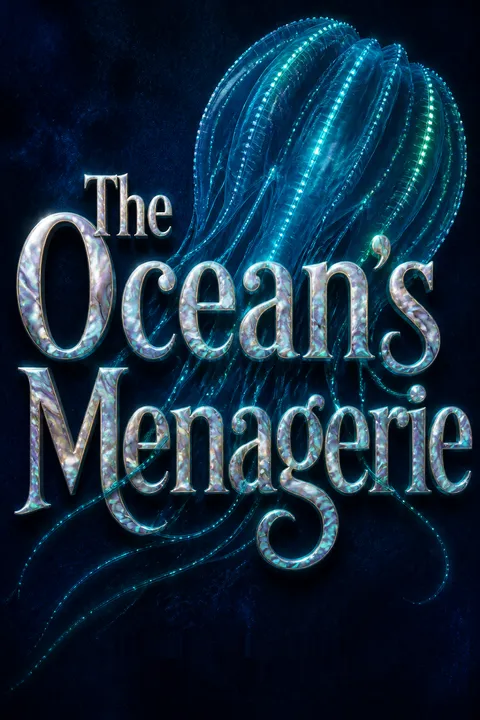

Key Takeaways
1. Ancient Invertebrates: Masters of Biological Innovation
Plenty of time and circumstance allowed these animals to perfect staggering biological feats unlike any we see on land.
Deep history. Multicelled invertebrates emerged in oceans roughly 700 million years ago, dominating for 200 million years before vertebrates. These ancient creatures, ancestors of today's sea anemones, starfish, snails, corals, clams, crabs, and worms, developed unique biological "magic tricks" that defy terrestrial norms. Their long evolutionary tenure in the sea allowed them to perfect capabilities unseen on land.
Bending rules. These spineless animals challenge our definitions of "animal" by bending fundamental biological rules. Many photosynthesize like plants, derive nutrition from the sun, don't breathe oxygen, or reproduce asexually. Their exceptional multicellular biology, often involving partnerships with bacteria and microalgae, transformed the ancient oceans and continues to baffle scientists.
Superpowers revealed. The author, a marine ecologist and curator of the Blaschka glass invertebrate collection, highlights these creatures' "superpowers"—extraordinary abilities that are often enigmatic or controversial. From building glass castles to conjuring powerful chemicals, these innovations offer stunning new approaches to engineering and medicine, revealing that we are only at the beginning of understanding life's full potential.
2. Sponges: Nature's Pharmacopoeia, Microbe-Powered Drug Discovery
It was as if, long ago, the sponges had made a deal with bacteria: make us defensive chemicals and we will provide you with food and shelter.
Master chemists. Sponges, among the most ancient animal lineages, are unparalleled in their chemical innovation, producing potent compounds with significant medical potential. These "secondary chemicals" serve vital defensive roles against predators, competitors, and pathogens in the crowded ocean. Early drug discovery expeditions, like the author's in the Bahamas, targeted brightly colored sponges, suspecting their hues signaled chemical defenses.
Bacterial partners. Initially, scientists assumed sponges produced these chemicals themselves, but later discovered that many are synthesized by symbiotic bacteria living within the sponge. This ancient partnership, where bacteria receive shelter and food, yields a treasure trove of bioactive compounds. Marine Streptomyces bacteria, for instance, are a rich source of antibiotics and anticancer agents, with one strain from a common Pacific Northwest sponge producing mayamycin, a precursor to a cancer drug.
Drug development journey. The path from a natural compound to a market-approved drug is long and arduous, as exemplified by halichondrin B from Halichondria okadai, which took 24 years to become the breast cancer drug eribulin mesylate. These discoveries underscore the immense value of marine biodiversity for human health. Understanding these complex symbioses—the "million-dollar question"—is crucial for unlocking future innovations and highlights the interconnectedness of life.
3. Corals: Reef Architects & Climate's Achilles' Heel
The organic forces separate the atoms of carbonate of lime, one by one, from the foaming breakers, and unite them into a symmetrical structure.
Living castles. Coral reefs, the richest habitats on Earth, are massive structures built by tiny, soft-bodied polyps. These "myriads of architects" (Darwin's words) partner with photosynthetic algae (zooxanthellae) in their skin, harnessing solar energy to precipitate calcium carbonate from seawater. This superpower allows them to construct intricate, strong skeletons that form vast reefs, protecting coastlines and supporting a quarter of all marine species.
Bio-inspired engineering. Corals are structural engineering marvels, with skeletons stronger than concrete, absorbing 97% of wave energy. Their internal structure reflects sunlight to optimize algal photosynthesis, a design inspiring more efficient algal biofuel reactors and solar cells. Furthermore, coral skeletons are used as templates for human bone reconstructive surgery, demonstrating their biomedical value due to their density, porosity, and ability to support osteoblast growth.
Climate's toll. Despite their ancient resilience, corals face an existential threat from climate change. Warming oceans cause temperature-sensitive zooxanthellae to evacuate, leading to coral "bleaching" and starvation. Ocean acidification further impairs their ability to build skeletons. Events like the 1997-98 El Niño and subsequent mass bleachings have decimated reefs globally, with 80% of the Great Barrier Reef severely impacted. This vulnerability highlights how their superpower, photosynthesis, becomes an Achilles' heel in a rapidly changing climate.
4. Sea Fans: Ancient Immunity's Battle Against Modern Pathogens
It was mind-bending to realize that corals and sponges have one of the most ancient immune systems, and here they were, putting a 600-million-year-old process to work in modern waters.
Reef warfare. Corals engage in slow-motion battles for space on crowded reefs, extending venom-filled "sweeper tentacles" to sting competitors. This "recognition process" is a fundamental aspect of their ancient immune system, distinguishing self from non-self. The author's saturation diving experiences revealed these aggressive, yet specific, defensive responses, highlighting the deep connection between ecological competition and biochemical immunity.
Fungal epidemic. In the 1990s, a devastating fungal epidemic (Aspergillus sydowii, a terrestrial fungus) ravaged Caribbean sea fans, causing widespread mortality. The author's research revealed sea fans fighting back with a robust immune response, forming purple halos around infections. Microscopic analysis showed immune cells releasing antimicrobial chemicals and building melanin walls to trap the fungus, a process similar to innate immunity in insects and snails, suggesting a common evolutionary origin.
Lessons for human health. This ancient invertebrate immune response, particularly the prophenoloxidase cascade, mirrors fundamental aspects of human innate immunity—our first and fastest line of defense. The sea fan epidemic demonstrated that strong selective pressure can lead to increased resistance. This insight suggests that understanding and potentially harnessing innate immune processes, perhaps through approaches like live-attenuated vaccines, could offer immediate, broad protection against pathogens, a lesson relevant to human pandemics like COVID-19.
5. Sea Slugs: Stealing Defenses for Biomedical Breakthroughs
This case of an entire organelle being deliberately stolen from animals in another phylum, tolerated in its new host, and then completing its maturation and function in the body of another species is an extreme rewriting of this rule.
Evolutionary arms race. The ocean is a constant arms race between predators and prey, leading to exquisitely designed defenses and counter-defenses. While many snails use hard shells, marine slugs (nudibranchs) lack this protection. Instead, some, like the aeolids, have evolved a "superpower": they steal and repurpose the venomous stinging cells (nematocysts) from their cnidarian prey, such as sea anemones, for their own defense.
Kleptocnidae enigma. This phenomenon, called kleptocnidae, baffled scientists for decades. Early researchers, like T. Strethill Wright, correctly hypothesized that nudibranchs acquired nematocysts from their prey, but the mechanism remained a mystery. Modern research reveals that nudibranchs use specialized cells (cnidophages) to encapsulate and transport immature, unfired nematocysts through their digestive system to storage sacs (cnidosacs) in their cerata (back projections), where they mature and become functional weapons.
Xenotransplantation insights. Kleptocnidae represents a profound bending of biological rules, particularly the "destroy nonself" principle of immune systems. The nudibranch's immune system is strangely permissive to these foreign organelles, allowing them to develop and function. Understanding how nudibranchs achieve this "xenotransplantation" without immune rejection could inspire new approaches to human organ transplantation, especially xenotransplantation using animal organs, by exploring strategies to train the immune system to code foreign tissues as self.
6. Giant Clams: Living Solar Reactors with Light-Optimizing Skin
The efficiency of the cells and the three-dimensionality of the pillars suggest new approaches for more efficient, damage-resistant solar cells and more spatially efficient solar production of algal biofuels, foods, and chemicals.
Photosynthetic giants. Giant clams, some growing up to four feet across and living for a century, are unique among bivalves for their "superpower" of photosynthesis. Like corals, they host symbiotic algae (zooxanthellae) in their skin, which convert sunlight into food. This solar energy allows them to reach enormous sizes, with fully grown Tridacna gigas relying 100% on photosynthate, making them efficient biofilters that improve water clarity on reefs.
Light-bending iridocytes. The clam's dazzling, iridescent skin is not just beautiful; it's a sophisticated solar reactor. Specialized cells called iridocytes, packed with layers of guanine crystals, manipulate light. They scatter and reflect light to increase photosynthetic efficiency and, remarkably, tune the light spectrum by compressing and relaxing their layers. This process reflects harmful UV radiation while emitting safe, longer wavelengths optimal for algal photosynthesis, creating an extraordinary micro-solar reactor.
Bio-inspired energy solutions. Engineers are intensely interested in mimicking the giant clam's light-optimizing design for more efficient alternative energy. Yale researcher Dr. Alison Sweeney calls them "the most efficient solar energy system on earth," inspiring new designs for solar cells and algal bioreactors. Their ability to arrange algae in vertical columns activated by reflective cells offers blueprints for damage-resistant, spatially efficient micro-reactors. This natural innovation provides a powerful, nature-based solution for sustainable energy and water purification.
7. Octopuses: Instant Shape-Shifters & Smart Skin Innovators
This swift, smart, uncanny match was an otherworldly transformation that enticed me into the world of the octopus.
Masters of disguise. Octopuses are quick-change artists, capable of instantly altering their skin color, pattern, and texture to camouflage or mimic other organisms. This "neural polyphenism" is orchestrated by a dedicated part of their brain, activating thousands of chromatophores (pigment sacs) and papillae (texture-changing pouches) in milliseconds. The mimic octopus, for example, can impersonate flatfish, lionfish, or even venomous sea snakes, demonstrating a sophisticated behavioral and physiological superpower.
Neural control. The rapid color change is controlled by a dedicated chromatophore lobe in the octopus brain, with over half a million neurons in Octopus vulgaris alone. Skin texture changes, from smooth to jagged, are also under neural and muscular control, with papillae erupting in a blink of an eye. These complex, coordinated changes, including the flashing blue rings of the blue-ringed octopus, are a testament to their advanced nervous system and visual assessment shortcuts.
Smart materials inspiration. The octopus's smart skin is a leading inspiration for high-tech materials. Researchers have designed artificial skin that mimics chromatophore color changes using electrical control, and synthetic papillae that can instantly shift texture. These "smart materials" with programmable stiffness, activated by electrical signals, have applications in military camouflage and even reconstructive surgery. The author's personal encounter with a spotted octopus highlighted their uncanny intelligence and the profound connection between human and invertebrate life.
8. Jellyfish: Bioluminescent Wonders & Nobel-Winning Tools
So why are the discoveries of aequorin and GFP so valuable for humans, and why does the discovery of GFP rate the highest scientific honor on our planet, a Nobel prize?
Ocean's light show. Bioluminescence, the ability to produce light, is a widespread superpower in the ocean, found in over 70% of underwater invertebrates. Jellies, including cnidarians and ctenophores, are masters of this art, with 90-100% of them bioluminescing. From the flashing comb rows of ctenophores to the explosive lures of siphonophores, light is a primary mode of communication for attracting mates, luring prey, or repelling predators in the dark ocean depths.
Nobel-winning discovery. The chemistry of bioluminescence, particularly in the crystal jelly (Aequorea victoria), led to a Nobel Prize. Dr. Osamu Shimomura, after years of painstaking work, discovered aequorin (a calcium-triggered photoprotein) and Green Fluorescent Protein (GFP). Aequorin, which flashes blue light, became an essential tool for measuring cellular calcium levels, vital for understanding processes like muscle contraction and cancer progression.
GFP's biomedical impact. GFP, which glows green, revolutionized biomedical research by allowing scientists to visually track specific genes, cells, and processes in living organisms. It acts as a "molecular spy," tagging everything from developing brain cells and cancer cells to pathogens and even nudibranch nematocysts. This ability to visualize biological dynamics in real-time has made GFP an indispensable tool across immunology, neurobiology, and cancer biology, demonstrating the profound human benefit derived from studying seemingly simple marine creatures.
9. Sea Stars: Keystone Predators with Programmable Skin
Bob described the ochre star as a keystone species that functioned like the keystone in a stone arch: they hold up the arch of the intertidal biota, and the arch falls or changes without it.
Ecological keystones. Sea stars, with their radial symmetry and thousands of tube feet, are improbable yet powerful predators. Ecologist Bob Paine's research on the ochre star (Pisaster ochraceus) established the "keystone species" concept: a few individuals can drive massive ecosystem change. By preying on mussels, ochre stars clear space on rocky shorelines, allowing a diverse array of other invertebrates and algae to thrive, fundamentally shaping the intertidal seascape.
Sticky, smart skin. Sea stars possess a unique superpower: mutable collagenous tissue (MCT) in their skin, allowing it to instantly stiffen or slacken under neural control. This "smart skin" enables them to exert immense, sustained force for hours, prying open hard-shelled prey like clams and mussels. The stiffened posture, achieved by collagen fibrils cross-linking, requires minimal energy, giving them the tenacity to overcome their prey's strong adductor muscles.
Bio-inspired medical applications. The mutable properties of sea star skin are inspiring engineers to develop "smart materials" for reconstructive surgery. Hybrid biomaterials combining sea cucumber collagen with synthetic matrices can change stiffness electrically, offering potential for improved tendon and ligament repair. Beyond this, sea stars' remarkable regenerative capabilities, allowing them to regrow lost arms or even entire bodies from a single arm, are studied as models for human tissue repair, showcasing their untapped biomedical value.
10. Spineless Futures: Adapting to a Warming, Acidic Ocean
Protecting the oceans and their ancient menagerie is essential for our own survival on this blue planet.
Oceans under siege. The oceans, vital buffers against climate change, are now suffering its consequences: warming, acidification, and increased disease outbreaks. These stressors, often compounded by overfishing and pollution, are decimating marine life. Corals face extinction, giant clams bleach, and sea stars succumb to wasting disease, leading to ecosystem collapses like the loss of kelp forests. The author emphasizes the deep grief and worry for these "castles crumbling and stars falling."
Resilience and adaptation. Despite the grim outlook, there is hope in nature's resilience and evolutionary adaptation. Some gorgonian corals, for instance, have increased in number, evolving stronger immunity or hosting heat-resistant algal symbionts. Conservation efforts, like marine protected areas (MPAs), are crucial not just for preserving biodiversity but also for acting as "engines of evolutionary innovation," fostering heat-resistant coral strains and protecting vital habitats like seagrass meadows.
Nature-based solutions & gene editing. Seagrass meadows, acting as "kidneys of the planet," detoxify pathogenic microbes, offering a nature-based solution for water hygiene, especially against sewage overflow. New technologies like environmental DNA (eDNA) and gene editing (CRISPR/Cas9) offer unprecedented tools to understand and assist evolution. CRISPR, originally a bacterial immune system, could engineer disease resistance in sea stars or heat tolerance in corals, demonstrating how protecting and studying our ancient menagerie can unlock transformative solutions for human health and planetary survival.
People Also Read



Download PDF
Download EPUB
.epub digital book format is ideal for reading ebooks on phones, tablets, and e-readers.








































