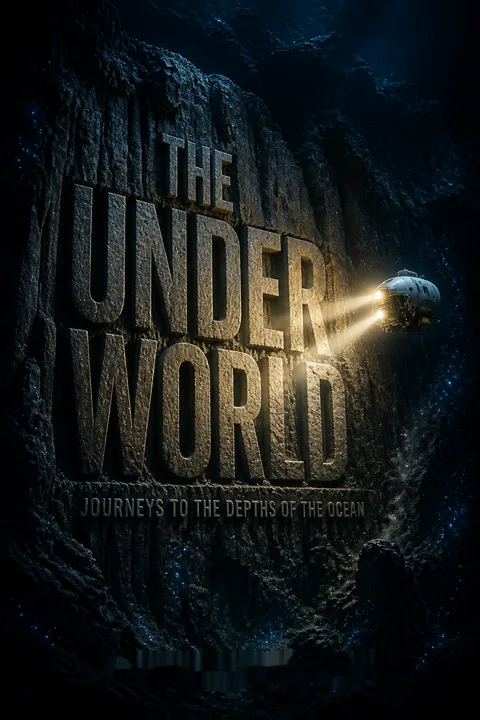

Key Takeaways
1. The Deep Ocean: Earth's Vast, Unexplored Realm
Even now, when every last crater on the moon has been named and interactive three-dimensional maps of Mars can be viewed on an iPhone, 80 percent of the seafloor has never been charted in any kind of sharp detail.
Uncharted territory. The deep ocean, defined as waters below 600 feet, covers 65% of Earth's surface and occupies 95% of its living space, yet remains largely unknown. This vast "underworld" is a realm of profound mystery, with most of its seafloor unmapped in detail, unlike celestial bodies. Our perception often stops at the shallow, sunlit epipelagic zone, which constitutes only 5% of the ocean's volume, leaving the true extent of our planet's largest domain largely ignored.
Layers of darkness. The deep is stratified into distinct zones, each with unique characteristics. These include:
- Twilight Zone (600-3,300 feet): Bioluminescent creatures, fading sunlight.
- Midnight Zone (3,300-10,000 feet): Eternal night, populated by "marvelous weirdos."
- Abyssal Zone (10,000-20,000 feet): Vast plains, geological drama, subtle life.
- Hadal Zone (20,000-36,000 feet): Ultra-deep trenches, named after Hades, the ocean's absolute nadir.
A planet within. This hidden world is not merely a part of Earth; it is our planet, a shadow kingdom that has historically been marked with "Here Be Dragons." Its inaccessibility has fostered both wonder and fear, creating a mythical aura. Despite its critical importance to global systems, human culture remains far more interested in space, overlooking the profound mysteries and vital functions of our own planet's inner space.
2. Historical Perceptions vs. Scientific Discovery
With the Carta Marina, Magnus intended to illuminate it. He began with a conclusion, gleaned from his research: 'Inside this broad expanse of fluid Ocean, which admits the seeds of life with fertile growth, as sublime Nature ceaselessly gives birth, a conglomeration of monsters may be found.'
Monsters of the deep. Early human understanding of the deep ocean was dominated by fear and myth. Olaus Magnus's 1539 Carta Marina vividly depicted the North Atlantic teeming with menacing sea monsters, reflecting prevailing beliefs in an age before scientific exploration. These fantastical creatures, often exaggerated versions of whales or other large marine animals, were rooted in eyewitness accounts filtered through medieval superstition, solidifying the abyss as a "tabula rasa of doom."
Challenging the void. For centuries, the deep remained shrouded in mystery, with theories ranging from Pliny the Elder's monstrous forms to Edward Forbes's "azoic" hypothesis, which declared the deep lifeless below 300 fathoms. This notion, though widely accepted, was gradually disproven by sporadic discoveries of deep-sea life. The scientific community, however, struggled to reconcile life without sunlight, oxygen, or food, leading to the persistence of the "dead zone" idea.
The Challenger's revelations. The HMS Challenger expedition (1872-1876) definitively debunked the azoic theory. This three-and-a-half-year global circumnavigation, equipped with advanced dredging and sounding tools, revealed nearly five thousand new species, vast mountain ranges, and bioluminescent wonders. The Challenger Report, a fifty-volume opus, transformed understanding, showing the deep was teeming with life, far from a barren wasteland or a mere hideout for prehistoric monsters.
3. Pioneering Manned Deep-Sea Exploration
We were the first living men to look out at the strange illumination: And it was stranger than any imagination could have conceived.
The itch for submergence. The desire to explore the deep in person dates back to antiquity, with legends like Alexander the Great's glass cage. Early attempts at submersibles, like the 17th-century Drebbel or the 18th-century Turtle, were primitive and shallow-diving, unsuitable for the immense pressures of the abyss. The true challenge was not just building a vessel, but ensuring human survival in an environment that could crush any imperfection.
Beebe's Bathysphere. William Beebe, a naturalist with a flair for adventure, partnered with engineer Otis Barton to create the Bathysphere in 1930. This hollow steel sphere, with its quartz viewports, allowed Beebe and Barton to make the first human observations of the deep. Their dives, reaching over 3,000 feet, revealed a "pulsing nightclub of life" and the "uncanny quality of the light," a pure, indescribable blue that transformed their understanding of the ocean's mid-waters.
Trieste conquers the trench. Decades later, Auguste Piccard's bathyscaphe, the Trieste, revolutionized deep-sea diving by being autonomous and capable of far greater depths. On January 23, 1960, Don Walsh and Jacques Piccard piloted the Trieste to the Challenger Deep, the ocean's absolute nadir at 35,800 feet. This monumental dive, despite mechanical issues and immense pressure, proved that humans could reach and survive the deepest parts of the ocean, opening a new age of undersea exploration.
4. Modern Deep-Sea Technology and Access
With the right types of robotic systems, we can do things that nobody would imagine.
Robots and observatories. Modern deep-sea exploration relies on sophisticated technology, including remote operated vehicles (ROVs) like Jason, autonomous underwater vehicles (AUVs), and cabled observatories like the Regional Cabled Array (RCA). These tools allow continuous, real-time monitoring of the abyss, streaming data and images from thousands of feet down. This "interactive marine laboratory in cyberspace" provides unprecedented insights into dynamic geological and biological processes.
Advanced submersibles. Manned submersibles have also evolved dramatically. Triton Submarines, for example, developed the Limiting Factor, the first commercial full-ocean-depth submersible capable of repeated dives to 36,000 feet. These advanced vehicles, with their titanium pressure hulls and acrylic viewports, offer immersive visual experiences, allowing scientists and explorers to directly witness the deep's wonders, a crucial step in fostering emotional connection and understanding.
Pushing the envelope. The integration of artificial intelligence, advanced sensors, and high-resolution mapping systems is rapidly expanding our capabilities. Fleets of drones, soft-bodied robots, and hybrid vehicles are envisioned to explore previously inaccessible areas, scan DNA in water, and even venture under ice. This technological leap is transforming the deep from an "unknowable" realm into a frontier ripe for continuous discovery, enabling us to study everything from microbial life to volcanic eruptions in real-time.
5. The Deep's Astonishing Biodiversity and Ecosystems
The deep’s tiniest residents are the earth’s mightiest biological force.
Life's vibrant tapestry. Far from being barren, the deep ocean teems with astonishing biodiversity, from the microscopic to the colossal. The twilight zone alone holds more fish biomass than all other ocean regions combined, including the most abundant vertebrate on Earth, the bristlemouth. Creatures here display incredible adaptations:
- Bioluminescence: Used for communication, hunting, and defense.
- Extreme vision: Barreleye fish with upward-rotating eyes, cockeyed squid.
- Unique anatomies: Viperfish with unhinging jaws, gelatinous bodies, multiple hearts.
Chemosynthetic oases. Hydrothermal vents, discovered in 1977, revealed ecosystems thriving without sunlight, powered by chemosynthesis. These "Star Wars bar-scene" communities host unique life forms like six-foot tubeworms, football-sized clams, and albino crabs, all sustained by microbes that convert toxic chemicals into energy. Lost City, a non-volcanic vent field, further expanded this understanding, showing life emerging from chemical reactions between mantle rock and seawater, offering clues to life's origins on Earth and potentially other ocean worlds.
Microbial powerhouses. The deep biosphere, a vast realm within the ocean crust, is home to extremophiles—microbes that thrive in annihilating pressures and toxic conditions. These single-celled organisms are the "earth's mightiest biological force," recycling carbon, producing oxygen, and serving as a genomic archive. Their resilience offers insights into new medicines and biomaterials, and their study is crucial for understanding life's limits and the potential for extraterrestrial life.
6. Geological Wonders: Trenches, Volcanoes, and Plate Tectonics
Far from being a sleepy, hoary, uninteresting place, the deep is the red-hot center of creation.
Dynamic seafloor. The deep ocean floor is a geologically active and dynamic landscape, shaped by plate tectonics. The mid-ocean ridge, a 40,000-mile-long system of mountains and rift valleys, is where new seafloor is constantly created, accounting for 75% of the planet's volcanism. This process, coupled with subduction zones where old crust is recycled, reveals Earth as a self-renewing planet, constantly rearranging its "puzzle pieces."
Volcanic drama. Submarine volcanoes, like Hawaii's Kama‘ehuakanaloa (Lō‘ihi) and Axial Volcano, are sites of immense geological drama. They host unique ecosystems, spew superheated fluids, and can trigger massive seismic events and tsunamis. Exploring these active sites, often fraught with danger, provides critical data on Earth's internal processes, from magma reservoirs to the deep biosphere, and even offers insights into planetary formation.
Hadal trenches: Earth's deepest scars. The hadal zone, with its ultra-deep trenches like the Mariana and Tonga, represents the most extreme geological features. These V-shaped gashes, formed by subduction, are seismically volatile and home to unique adaptations, such as the snailfish, which thrives under immense pressure due to specialized molecules. Mapping and exploring these trenches reveals the planet's deepest "wrinkles" and the incredible resilience of life in the most forbidding environments.
7. The Deep Ocean's Critical Role for the Planet
In fact, our survival depends on the ocean. The more we’ve delved downward, the more we’ve had to revise our ideas about how the earth operates, how the climate behaves, what we can learn from the distant past, our place in the overall scheme of life—even our definition of life.
Earth's motherboard. The deep ocean is the planet's fundamental operating system, regulating global climate, geochemistry, and supporting the entire web of life. It acts as a massive buffer, absorbing 93% of excess heat and 30% of carbon dioxide from human activities since 1970. This "humming away in obscurity" is the foundation of the planet, yet its intricate workings are poorly understood, making its continued health vital for human survival.
Carbon sequestration. The twilight zone plays a crucial role in carbon sequestration through the world's largest animal migration. Trillions of fish and crustaceans ascend nightly to feed on surface plankton, then descend to excrete carbon into the deep, where it remains for centuries or millennia. This "carbon pump" sequesters an estimated 4.4 billion tons of carbon annually, equivalent to America's total annual emissions, highlighting the profound, often unseen, services provided by deep-sea ecosystems.
Historical archives. Deep-sea sediments are an invaluable archive of Earth's paleoclimatology, containing layers of fossilized microorganisms that record past temperatures, currents, and chemical compositions over eons. These "epic poems of the earth" offer critical data for understanding long-term climate patterns and geological events. Preserving these undisturbed records is essential for deciphering Earth's history and predicting future environmental changes.
8. Threats to the Abyss: Deep-Sea Mining and Pollution
If we’re serious about dealing with climate change, we’re not going to deep-sea mine.
The lure of deep-sea minerals. The discovery of manganese nodules, rich in nickel, copper, and cobalt, sparked a commercial race to mine the abyss. Despite the UN declaring these minerals the "common heritage of mankind," the International Seabed Authority (ISA) has granted numerous exploration contracts, covering vast areas like the Clarion-Clipperton Fracture Zone (CCZ). This emerging industry, driven by demand for battery metals, poses an unprecedented threat to the deep ocean.
Devastating impacts. Deep-sea mining involves tearing up the seafloor with massive machines, pulverizing nodules and sulfide vents, and creating vast sediment plumes. This process would annihilate unique, slow-growing ecosystems, many of which are still undiscovered. The plumes would choke filter-feeding animals, disrupt bioluminescence, and introduce toxic particles into the marine food chain. The damage is expected to be unquantifiable and irreversible, with recovery taking millennia, if ever.
Pollution's reach. Beyond mining, human pollution has permeated the deepest parts of the ocean. Hadal trenches are saturated with microplastics, persistent organic pollutants (PCBs, DDT), heavy metals (lead, mercury), and radioactive carbon. These toxins affect marine life's immune systems, reproduction, and survival. The presence of "hybrid-plastic creatures" like Eurythenes plasticus in the Mariana Trench serves as stark proof that no part of the ocean, or its tiniest inhabitants, remains untouched by human impact.
9. The Human Element: Curiosity, Courage, and the Drive to Explore
I define exploration as curiosity acted upon.
The explorer's spirit. The drive to explore the deep is fueled by an insatiable curiosity and remarkable courage. Pioneers like Don Walsh, William Beebe, and modern adventurers like Victor Vescovo embody this spirit, pushing the boundaries of what's thought possible. Their willingness to face extreme risks—from implosion to entanglement—highlights a profound human need to venture into the unknown, not for conquest, but for understanding.
Beyond the ego. While personal ambition and the desire to be "first" play a role, the deeper motivation for many explorers is the transformative experience itself. The solitude and grandeur of the abyss recalibrate one's perspective, fostering humility and a profound connection to the planet. This "cosmic chill and isolation" combined with "indescribable beauty" leaves an indelible mark, changing how one perceives life and their place in the cosmos.
A shared endeavor. Deep-sea exploration, though often driven by individual vision, is a collaborative effort involving scientists, engineers, pilots, and crews. The meticulous planning, problem-solving, and mutual support required for these expeditions underscore the collective human ingenuity dedicated to unraveling the ocean's secrets. This shared pursuit of knowledge, even in the face of immense challenges, reflects a noble aspect of humanity's relationship with the natural world.
10. The Future is Aquatic: A Call for Exploration and Conservation
We’re at a point in time where we have a choice.
Urgency of understanding. Our survival depends on the ocean, yet our ignorance of its inner workings is a critical vulnerability. As climate change accelerates, understanding the deep's role in regulating global systems becomes paramount. Scientists emphasize the urgent need for more research, more sensors, and more data to anticipate "serious tipping points in ocean behavior" that will profoundly affect human life.
Safeguarding the natural world. Conservationists like Sylvia Earle advocate for a "hands off" approach to the deep, especially regarding mining. They argue that the deep sea is Earth's largest, most stable, and relatively undisturbed carbon-capturing system, and its protection is a "last best chance" to stabilize the planet. Creating marine protected areas and imposing moratoriums on destructive industries are crucial steps to preserve these vital ecosystems.
Inspiring awe and action. The future of the deep hinges on public engagement. By sharing the wonders of the abyss through compelling storytelling, advanced cinematography, and direct human experience, initiatives like OceanX aim to inspire emotional connection. The goal is to shift human perception from fear and ignorance to awe and responsibility, fostering a collective will to protect this essential, magical, and still largely unknown realm.
11. The Transformative Power of Experiencing the Deep
I was immersed in awe, and experiencing awe is like mainlining the truth.
A profound embrace. The author's personal dive into Kama‘ehuakanaloa (Lō‘ihi) at 17,000 feet revealed the deep as a place of "amniotic calm" and "enveloping aura of gravitas." The experience of being in the Limiting Factor, surrounded by the "long, slow heartbeat of something very big and very serene," was profoundly transformative. It was a surrender to the ocean's overwhelming terms, a feeling of melting into its immensity and finding a sense of belonging.
Recalibrating perspective. Descending into the abyss is a process of subtraction—removing air, light, weather, horizon, and ego. In their absence, new perceptions emerge: real humility, new visions of beauty, and an understanding of life's unfamiliar schemes. This journey into inner space allows one to lose their terrestrial bearings and find themselves, recognizing their "exquisite but insignificant place in the cosmos."
An indelible mark. The deep leaves an indelible mark, recalibrating beliefs and permanently tweaking one's perspective. It's a "cosmic chill and isolation" combined with "indescribable beauty" that remains the most vivid memory. This direct encounter with elemental wildness keeps the spirit's pilot light aflame, confirming that the ocean simmers with magic, and the deeper one goes, the more magical and essential it becomes to our understanding of life itself.
Review Summary
The Underworld by Susan Casey receives mostly positive reviews (4.22/5 stars), praised for its captivating exploration of deep ocean depths. Readers appreciate Casey's infectious enthusiasm, masterful storytelling, and blend of historical research with personal diving experiences. Many found it educational and page-turning, highlighting fascinating sea creatures and submersible technology. Common criticisms include insufficient scientific depth, factual errors, excessive focus on explorers over marine life, and questions about the author's privileged access without scientific credentials. Several reviewers appreciated warnings about deep-sea mining threats. Some felt the book lacked clear organization or an index, though most found Casey's passion for ocean exploration compelling and inspiring.
People Also Read




Download PDF
Download EPUB
.epub digital book format is ideal for reading ebooks on phones, tablets, and e-readers.








































