
Plot Summary
Darkness Descends, Stars Rise
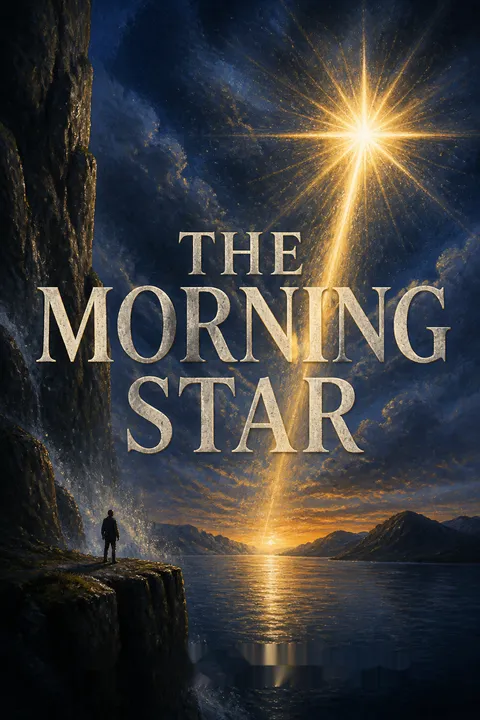
As the novel opens, a sultry August night settles over the Norwegian coast. Arne, a middle-aged academic, sits outside, savoring the peace of his sleeping children and the endless cycles of nature. But the tranquility is pierced by a sense of unease—his wife Tove's mental health is fragile, and the world itself seems subtly off-kilter. When a new, impossibly bright star appears in the sky, it is both a literal and symbolic harbinger: the boundaries between the ordinary and the uncanny begin to blur. The star's arrival is witnessed by many, each interpreting it through the lens of their own anxieties, hopes, and histories. The darkness outside is mirrored by the darkness within, as the characters' inner lives are illuminated and unsettled by this cosmic event.
Fractured Families, Fraying Minds
The narrative splinters into multiple perspectives, each character wrestling with the strains of family, marriage, and selfhood. Arne's wife, Tove, cycles through manic and depressive states, her creative energy and carelessness both a source of inspiration and chaos. Kathrine, a priest and translator, returns from a work trip to find herself unable to face her husband and children, her sense of belonging eroded. Iselin, a young woman working a dead-end job, is haunted by her past and her body, while Egil, Arne's friend, drifts through life, detached and searching for meaning. The children, too, are not immune: they sense the instability of the adults, their own fears and desires surfacing in the cracks. The star's presence seems to accelerate these fractures, as if the world's order is unraveling in tandem with their own.
The Cat's Head and the Crabs
The ordinary is invaded by the inexplicable. Tove, in a psychotic episode, decapitates the family cat and sketches its head, while Arne buries the remains, wracked with guilt and confusion. Crabs swarm the woods and roads, their presence both surreal and menacing. Other characters witness rats in daylight, birds behaving strangely, and a proliferation of insects. These phenomena are not just background oddities—they are omens, physical manifestations of the world's disorder. The boundaries between nature and civilization, sanity and madness, are porous. The characters' attempts to rationalize or ignore these signs only deepen their sense of alienation and dread.
Marriages on the Brink
Relationships buckle under the weight of unspoken resentments and unmet needs. Kathrine lies to her husband Gaute about her whereabouts, contemplates divorce, and is accused of infidelity. Arne and Tove's marriage is a battleground of care and neglect, love and exhaustion. Egil, perpetually single, is both observer and outsider, his own failures reflected in the lives of others. The characters' longing for connection is thwarted by their inability to communicate, their fear of vulnerability, and the relentless demands of daily life. The star's appearance becomes a catalyst, forcing them to confront the truths they have avoided, but also tempting them with the possibility of escape or transformation.
The Priest's Secret Night
Kathrine, the priest, spends a night in a hotel in her own city, unable to return home. She wanders the streets, calls her mother in tears, and contemplates the emptiness of her marriage and vocation. Her internal monologue is a swirl of guilt, longing, and theological reflection. She is both comforter and lost soul, her faith tested by the suffering she witnesses and the doubts she harbors. The next day, she performs a funeral for a man with no mourners, her words about death and hope echoing her own uncertainty. The star in the sky becomes a symbol of both judgment and grace, a reminder of the limits of human understanding.
Children Lost and Found
The novel's children and young adults—Iselin, Emil, Viktor, and others—navigate a world that feels increasingly unstable. Iselin is haunted by memories of adolescent humiliation and failed attempts at belonging. Emil, a nursery worker and aspiring musician, is wracked with guilt after a child in his care is injured. Viktor, Egil's estranged son, is sent to stay with his father, their relationship strained and awkward. The young are both witnesses to and victims of the adult world's failures. Their experiences are marked by loneliness, longing, and a search for meaning in a reality that seems to be slipping away.
The Gathering Storm
As the heat intensifies and the star continues to shine, the characters' lives become increasingly surreal. Tove's psychosis deepens, leading to her hospitalization. Arne's attempts to hold the family together falter. Iselin hallucinates a fire that no one else sees. Turid, a care worker, is drawn into a nightmarish episode in the woods, encountering monstrous birds and a man-beast. The boundaries between the living and the dead, the real and the imagined, grow thin. The world itself seems to be on the brink of transformation or collapse, the star a constant, unblinking witness.
The Morning Star Appears
The star's presence becomes impossible to ignore. It is seen by all, its light both beautiful and terrifying. Scientists debate its origin, but no explanation suffices. The characters respond with awe, fear, or indifference, but none are unchanged. The star is a rupture in the fabric of reality, a sign that the world is not as stable or knowable as they believed. It draws out their deepest anxieties and desires, forcing them to confront the mysteries of existence, mortality, and the possibility of the divine or the demonic.
Rituals, Revelations, and Ruptures
The novel's climax is marked by a series of violent and uncanny events. A triple murder, ritualistic and gruesome, is discovered in the woods, echoing ancient sacrificial practices. The boundaries between the living and the dead are breached: characters see ghosts, experience visions, and are drawn into dreamlike journeys through the land of the dead. The star's light seems to animate these occurrences, as if it is both cause and symbol of the world's unraveling. The characters' attempts to make sense of what is happening—through science, religion, or denial—are inadequate to the enormity of the change.
The Dead Among the Living
Several characters experience direct contact with the dead. Egil dreams of his mother, who offers him comfort and regret. Frank, an anesthetist, sees the spirits of the recently deceased at accident scenes, culminating in a vision of his dead daughter. Jostein, a journalist, undergoes a near-death experience, journeying through a mythic landscape where the living and the dead intermingle. These encounters are not easily dismissed as hallucinations; they are woven into the fabric of the narrative, challenging the characters' and readers' assumptions about reality, memory, and the persistence of the soul.
The Hospital's Threshold
The hospital becomes a central setting, a place where the boundaries between life and death, sanity and madness, are negotiated. Tove is admitted for her psychosis, her family left to cope with her absence and the stigma of mental illness. Solveig, a nurse, cares for patients on the edge of death, witnessing both miraculous recoveries and inevitable decline. The hospital is a microcosm of the world's fragility, a place where the illusion of control is stripped away and the characters are forced to confront their own vulnerability and mortality.
The Land of the Dead
Jostein's near-death experience is rendered as a journey through a mythic landscape—a forest, a heath, a river, a bridge—populated by the dead, the undead, and ancient archetypes. He searches for his son, encounters his grandmother, and witnesses rituals of passage and sacrifice. The land of the dead is both familiar and alien, echoing the landscapes of his life but stripped of their comfort and certainty. The journey is both personal and universal, a meditation on loss, memory, and the possibility of redemption or reconciliation.
The Bridge and the Abyss
The bridge in the land of the dead is a threshold, a place of decision and transformation. Jostein is drawn to cross, to follow his son into the unknown, but is held back by the memory of the living and the pull of unfinished business. The abyss is both literal and metaphorical—a confrontation with the void, the limits of knowledge, and the terror of nonexistence. The journey is interrupted, and Jostein returns to life, changed but not fully healed, his questions about death and meaning unresolved but deepened.
The Return and the Reckoning
The novel's final chapters trace the aftermath of the star's appearance and the events it has catalyzed. Families are left to pick up the pieces: Arne tries to care for his children in Tove's absence; Turid grieves for her son Ole, who has attempted suicide; Kathrine and Gaute's marriage remains in crisis. The world has not ended, but it has been irrevocably altered. The characters are left with their losses, their doubts, and the faint possibility of renewal. The star still shines, a reminder that the world is larger and stranger than they can comprehend.
On Death and the Dead
Egil's essay, "On Death and the Dead," serves as a coda and a summation of the novel's themes. He reflects on the nature of death, the persistence of the soul, and the limitations of rational knowledge. Drawing on myth, religion, and personal experience, he explores the ways in which the living and the dead are intertwined, the boundaries between them porous and shifting. The essay is both a personal confession and a universal inquiry, a search for meaning in the face of the unknown.
The World Remade
The novel ends with the suggestion that the world has been fundamentally changed. The star remains in the sky, its meaning ambiguous but undeniable. The characters are left to make sense of their experiences, to find meaning in the midst of uncertainty and loss. The world is remade—not through apocalypse or revelation, but through the slow, painful process of living with mystery, grief, and the possibility of grace.
The Meaning We Make
In the aftermath, the characters—and the reader—are left with questions rather than answers. The star, the deaths, the visions, and the ruptures have not resolved the fundamental mysteries of existence. Instead, they have exposed the limits of knowledge, the fragility of meaning, and the necessity of connection. The novel closes with a sense of humility and wonder: the world is vast, strange, and ultimately unknowable, but it is also filled with moments of beauty, love, and hope. The meaning we make is provisional, but it is all we have.
Analysis
Karl Ove Knausgård's The Morning Star is a profound meditation on the fragility of meaning in a world on the brink of transformation. Through its polyphonic structure and interwoven narratives, the novel explores the collapse of boundaries—between life and death, sanity and madness, the natural and the supernatural. The appearance of the Morning Star is both a literal event and a symbol of rupture, catalyzing a series of uncanny occurrences that force the characters to confront their deepest fears, desires, and uncertainties. Knausgård's characters are rendered with psychological depth and empathy, their struggles emblematic of the broader human condition: the longing for connection, the terror of loss, the search for meaning in the face of the unknown. The novel resists easy answers, embracing ambiguity and the persistence of mystery. Its philosophical reflections—on death, faith, and the limits of knowledge—are woven seamlessly into the fabric of the narrative, inviting the reader to participate in the search for understanding. Ultimately, The Morning Star is a work of existential humility and wonder, a reminder that the world is larger, stranger, and more beautiful than we can comprehend, and that the meaning we make is provisional but necessary. In a time of uncertainty and upheaval, the novel offers not consolation, but the possibility of grace: the courage to live with mystery, to care for one another, and to find hope in the darkness.
Review Summary
The Morning Star receives praise for Knausgård's atmospheric storytelling and character development across multiple perspectives. Readers appreciate the philosophical depth, blending everyday Norwegian life with apocalyptic tension surrounding a mysterious celestial phenomenon. Many laud the existential exploration of death and reality, comparing it favorably to genre fiction while maintaining literary ambition. Common criticisms include the open-ended conclusion and discovery that this is the first installment of a series. The 666-page count and slow pacing divide readers, though most find the journey compelling despite lacking traditional resolution.
People Also Read
Characters
Arne
Arne is a middle-aged literature professor, husband to Tove, and father to three children. He is introspective, self-critical, and often paralyzed by indecision. His marriage is strained by Tove's mental illness and his own emotional distance. Arne oscillates between moments of tenderness and frustration, longing for connection but unable to bridge the gap between himself and his family. He is haunted by guilt—over his failures as a husband and father, his drinking, and his inability to act decisively. The appearance of the Morning Star and the unraveling of his domestic life force him to confront the limits of his control and the depth of his own vulnerability.
Tove
Tove is Arne's wife, a talented but troubled artist whose creativity is entwined with her mental illness. She cycles through manic and depressive episodes, her behavior oscillating between inspired productivity and chaotic neglect. Tove's illness is both a source of suffering and a lens through which the novel explores the boundaries of reality and perception. Her psychosis culminates in the decapitation of the family cat and a series of disturbing artworks, symbolizing the breakdown of order and the intrusion of the uncanny. Tove's hospitalization is a turning point, leaving her family adrift and underscoring the novel's themes of care, abandonment, and the fragility of the self.
Kathrine
Kathrine is a priest and Bible translator, married to Gaute and mother to two children. She is intelligent, compassionate, and deeply conflicted about her faith, her marriage, and her role as a mother. Kathrine's internal struggles are rendered with psychological acuity: she is both comforter and lost soul, her sense of purpose eroded by doubt and routine. Her night in a hotel, her crisis of faith, and her encounters with death (both literal and spiritual) position her as a mediator between the sacred and the profane. Kathrine's journey is one of questioning, humility, and the search for grace amid uncertainty.
Egil
Egil is Arne's friend, a former documentary filmmaker, and the author of the novel's philosophical coda. He is introspective, solitary, and ambivalent about his own existence. Egil's relationships—with his estranged son Viktor, with Arne and Tove, and with the world at large—are marked by distance and longing. He is drawn to questions of faith, death, and meaning, but resists easy answers. Egil's near-mystical experiences, his essay on death, and his role as both witness and participant in the novel's events make him a conduit for the book's deepest themes. He is both skeptic and seeker, his detachment a shield against the pain of connection.
Iselin
Iselin is a university student and supermarket cashier, struggling with body image, social anxiety, and a sense of alienation. Her narrative is marked by memories of adolescent humiliation, failed attempts at friendship, and a longing for intimacy. Iselin's encounters with the uncanny—the man who claims to be the Lord, her hallucination of a fire, her brush with the dead—position her at the threshold between the ordinary and the supernatural. She is both vulnerable and resilient, her journey a testament to the difficulty of self-acceptance and the persistence of hope in the face of despair.
Emil
Emil works at a nursery school, caring for young children while pursuing his passion for music. He is gentle, introspective, and prone to self-doubt. Emil's guilt over a child's injury, his struggles with friendship and romance, and his longing for creative fulfillment are rendered with empathy and nuance. His relationship with Mathilde, his bandmates, and his family are sources of both comfort and anxiety. Emil's experiences reflect the novel's broader themes of care, responsibility, and the search for meaning in a world that often feels indifferent or hostile.
Turid
Turid is a care worker in a group home for the intellectually disabled, wife to Jostein, and mother to Ole. She is practical, compassionate, and exhausted by the demands of her work and family. Turid's narrative is marked by moments of grace and horror: her encounters with the residents, her nightmarish journey in the woods, and her grief over Ole's suicide attempt. She is both victim and survivor, her resilience tested by the relentless pressures of caregiving and the failures of those around her. Turid's story is a meditation on the limits of endurance, the necessity of compassion, and the cost of love.
Jostein
Jostein is Turid's husband, a once-prominent crime reporter now relegated to arts journalism. He is sharp-tongued, self-destructive, and deeply ambivalent about his own life. Jostein's near-death experience, his journey through the land of the dead, and his struggles with addiction and family are rendered with dark humor and existential dread. He is both observer and participant, his cynicism a defense against the pain of loss and the terror of meaninglessness. Jostein's narrative arc is one of reckoning: with his own failures, with the suffering of those he loves, and with the mysteries that lie beyond the reach of reason.
Viktor
Viktor is Egil's ten-year-old son, sent to stay with his father after years of estrangement. He is withdrawn, angry, and deeply affected by his parents' divorce and his mother's manipulation. Viktor's presence forces Egil to confront his own inadequacies as a father and as a human being. Their interactions are fraught with misunderstanding, longing, and the possibility of reconciliation. Viktor's fear of death, his encounter with the uncanny, and his vulnerability are emblematic of the novel's concern with the transmission of trauma and the hope for healing.
The Morning Star
The Morning Star is both a literal astronomical event and a symbolic presence in the novel. Its appearance catalyzes the unraveling of the characters' lives, the intrusion of the uncanny, and the breakdown of the boundaries between the living and the dead. The star is interpreted variously as a sign of apocalypse, a harbinger of change, or a meaningless anomaly. Its ambiguity is central to the novel's exploration of meaning, faith, and the limits of human understanding. The Morning Star is both a character and a force, its light illuminating the darkness within and without.
Plot Devices
Multiperspectival Narrative Structure
The novel employs a polyphonic structure, shifting between the perspectives of multiple characters—adults and children, men and women, the sane and the mad. Each chapter is rendered in close third-person or first-person, immersing the reader in the characters' inner lives. This structure allows for a rich exploration of subjectivity, the unreliability of perception, and the ways in which individual experiences intersect and diverge. The narrative is nonlinear, with overlapping timelines and recurring motifs, creating a sense of simultaneity and interconnectedness. The use of multiple voices also foregrounds the novel's central concern: the difficulty of communication and the persistence of mystery.
Foreshadowing and Symbolism
The novel is dense with foreshadowing and symbolic imagery: the appearance of the Morning Star, the proliferation of crabs, rats, and insects, the decapitated cat, the hallucinated fire, the bridge in the land of the dead. These motifs serve both as omens of impending catastrophe and as metaphors for the characters' psychological states. The boundaries between the natural and the supernatural, the living and the dead, are repeatedly crossed and blurred. The star itself is a central symbol, its meaning shifting according to the characters' beliefs and fears. The novel's use of symbolism is both subtle and overt, inviting multiple interpretations and resisting closure.
Intertextuality and Philosophical Reflection
The narrative is interwoven with references to myth, religion, philosophy, and literature: the Bible, Greek mythology, Kierkegaard, Nietzsche, and more. Characters reflect on the nature of death, the afterlife, the limits of knowledge, and the possibility of meaning. Egil's essay, "On Death and the Dead," serves as both a summation and a destabilization of the novel's themes, blurring the line between fiction and philosophical treatise. The novel's intertextuality deepens its exploration of the human condition, situating individual experience within a broader cultural and existential context.
The Uncanny and the Supernatural
Throughout the novel, the ordinary is invaded by the uncanny: animals behave strangely, the dead appear among the living, characters experience visions and hallucinations. These events are rendered with a matter-of-factness that resists easy categorization as either psychological or supernatural. The novel refuses to resolve the ambiguity, leaving the reader in a state of uncertainty. The uncanny is both a source of terror and a catalyst for self-examination, forcing the characters to confront the limits of their understanding and the possibility of realities beyond their own.
The Collapse of Boundaries
The novel is structured around the collapse of boundaries: between the living and the dead, the sane and the mad, the natural and the supernatural, the self and the other. The appearance of the Morning Star is both a symptom and a cause of this collapse, a rupture in the fabric of reality that exposes the characters to forces beyond their control. The narrative's structure, its use of symbolism, and its philosophical reflections all serve to reinforce this central motif. The collapse of boundaries is both a source of horror and a possibility for transformation, inviting the characters—and the reader—to reconsider the nature of existence.
Morgenstjernen Series
Download PDF
Download EPUB
.epub digital book format is ideal for reading ebooks on phones, tablets, and e-readers.








































