
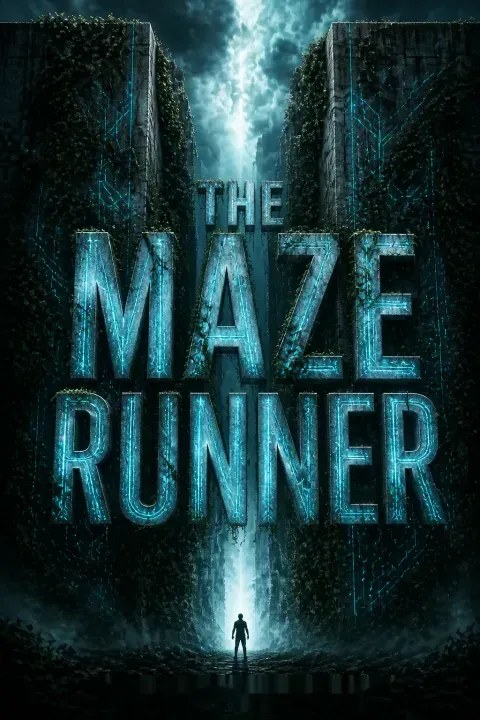


Plot Summary
The Box Lifts to Nowhere
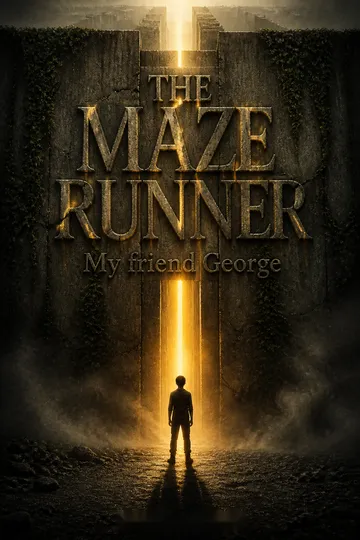
Thomas1 awakens in a cold, dark metal chamber that jolts upward like a mine lift. He remembers nothing but his first name. When the box stops, a hatch opens above, and dozens of teenage hands pull him into the Glade, a vast square courtyard bounded by ivy-covered stone walls hundreds of feet high.
The leader, Alby,5 curtly explains that this is their home, that every month a new boy arrives, and that Thomas1 will learn the rules later. A younger boy, Chuck,6 tries to befriend him, but Thomas1 is overwhelmed.
He observes the Glade's zones: gardens, a slaughterhouse, a ramshackle Homestead, and a graveyard forest. That evening, colossal stone Doors in the walls grind shut, sealing them inside for the night. Despite his terror, Thomas1 feels an unsettling familiarity with the place.
The opening plunges the reader into a disorienting new world alongside Thomas, using the lift as a womb-like rebirth. His selective memory loss creates immediate identification: he knows what trees and hamburgers are but not who he is. The Glade's farm-like order suggests a long-standing society, yet the closing Doors foreshadow entrapment and an external threat. Thomas's instinctive curiosity rather than panic hints at an inner resilience and a latent purpose that sets him apart.
A Girl in a Coma
The next morning, a siren wails. The Box delivers again, breaking its monthly schedule. Inside lies a teenage girl,2 seemingly dead, with a crumpled note: 'She's the last one. Ever.' She sits up, gasps, and utters that everything is going to change before collapsing into a coma. The Gladers are thrown into chaos; Alby5 and Newt4 question Thomas,1 sensing he knows more.
Thomas1 is bewildered but feels an inexplicable connection to the girl.2 The Med-jacks carry her to the Homestead, where she remains unconscious, mumbling fragments about the Creators and an ending. Thomas's1 unease grows; her arrival marks the end of the normal cycle and the beginning of an acceleration toward an unknown conclusion.
The girl's arrival disrupts the predictable rhythm of the Glade, functioning as a narrative catalyst. Her note declares finality, transforming the Maze from an ongoing imprisonment into a countdown. Thomas's unrecognized bond with her introduces the theme of suppressed memory and predestination, while the Gladers' suspicion of him plants seeds of later conflict. The coma becomes a ticking clock, withholding information until the story is ready to reveal it.
The Changing's Violent Truth
While exploring the gloomy Deadheads forest, Thomas1 enters the graveyard and is ambushed by Ben,10 a boy undergoing the aftermath of a Griever sting. Ben10 shrieks that Thomas1 is a traitor whom he saw in his memories during the Changing, and tries to bite his throat. Alby5 intervenes with a bow and arrow, shooting Ben10 but not killing him.
The Keepers sentence Ben10 to Banishment for attempted murder. That evening, as the Doors close, Ben10 is collared to a long pole and shoved into the Maze, his desperate screams cut off when the walls seal. Thomas1 is shaken by the violence and by Ben's10 reiterated accusation, which deepens his own confusion about his identity.
Ben's attack externalizes the danger of the Changing and the horrifying possibility that Thomas is somehow complicit in the Gladers' plight. The Banishment ritual demonstrates the community's harsh justice system, where survival trumps mercy. For Thomas, this event plants deep guilt: he is both the attacked and the cause, setting up a central tension between his emerging heroism and the dark suspicions that shadow him.
Night in the Maze
When Alby5 and Minho3 fail to return before sunset, Thomas1 watches the West Door sliding shut with Minho3 dragging a paralyzed, Griever-stung Alby.5 In a split-second decision, Thomas1 slips inside just as the walls seal. Minho3 abandons hope. Using thick ivy vines, Thomas1 laboriously hoists Alby's5 limp body over thirty feet up the wall.
He then lures a pursuing Griever away, narrowly escaping its needles and claws. Reunited with Minho,3 they improvise at the Cliff's edge, tricking four Grievers into charging off into the void. They survive until dawn, an unprecedented feat. Exhausted, Thomas1 weeps, having glimpsed the impossible abyss beyond the Maze.
This is the story's first major triumph, establishing Thomas as a figure of anomalous courage and resourcefulness. His refusal to abandon Alby, even when the veteran Minho gives up, marks him as a natural leader. The Cliff's discovery—a sheer drop into nothing—shatters the assumption that the Maze has physical boundaries, and surviving the night overturns Glade doctrine, paving the way for riskier strategies.
Whispers Inside His Skull
After the ordeal, Thomas1 visits the comatose girl.2 He suddenly hears her voice in his mind, naming him Tom and claiming they're the last ones. She says her memory is fading, but insists, 'The Maze is a code.' Thomas1 panics and flees, but the telepathic connection persists.
Later, with Teresa's2 hint, he and Newt4 overlay wax-paper tracings of the Maze maps from all eight sections. The intersecting lines form letters that spell, day by day, the words FLOAT, CATCH, BLEED, DEATH, STIFF, PUSH. They realize the wall movements were never meant to lead out but to transmit a message, and that the Maze has a deeper purpose as a test.
Telepathy elevates the bond between Thomas and Teresa beyond romance into a shared traumatic origin. The code transforms the Maze from a spatial prison into a linguistic puzzle, implying that the solution has always been about interpretation, not exploration. This intellectual breakthrough parallels Thomas's growing acceptance of his exceptional status, even as the creepy words—BLEED, DEATH, STIFF—foreshadow the cost of escape.
The Sun Disappears
Thomas1 wakes to a sky drained of color: no sun, no blue, just a flat gray ceiling. Panic spreads when the Box misses its weekly supply drop for the first time in two years. That evening, the massive stone Doors do not close. Teresa,2 now awake, admits she triggered the Ending. Grievers enter the Glade that night and drag off a boy named Adam.
Gally,7 who fled into the Maze, returns deranged, ranting that the creatures will kill one Glader per night. He then hurls himself onto a Griever and is carried away. The safety of the Glade is shattered, and the remaining boys huddle in the Homestead each night, dreading the next attack.
The dismantling of the Glade's infrastructure—sun, supplies, walls—accelerates the narrative toward its climax. The sky's artificiality confirms the environment is a simulation, eroding the Gladers' psychological anchors. The nightly killings impose a brutal arithmetic: escape is no longer a long-term goal but an immediate imperative. Gally's madness and self-sacrifice introduce the idea that the Changing can implant suicidal despair, a foreshadowing of Alby's eventual fate.
The Griever Hole
While running the Maze, Thomas1 and Minho3 follow a Griever to the Cliff and see it jump into thin air and vanish. They throw rocks, discovering a small invisible square that swallows objects. They name it the Griever Hole. Meanwhile, Alby,5 now mentally shattered by his Changing memories, sets fire to the Map Room during the night in a desperate attempt to hinder any escape.
Minho3 had secretly moved the real maps to a basement, preserving the code. Alby5 later confesses, broken and weeping that the outside world is worse than the Maze, but the Gladers remain determined to use the Hole to break free.
The Griever Hole literalizes the idea of a portal—a passage that cannot be seen but must be trusted. Alby's arson, a suicidal act of sabotage, reveals the psychological damage of recovered memory: for some, the known horror is preferable to the unknown. The survival of the maps despite his efforts signals that the community's collective will to escape overpowers individual despair, a small but crucial victory.
A Purposeful Sacrifice
Convinced that the code requires more context, Thomas1 formulates a plan. When a Griever attacks that night, he runs outside, throws himself upon the creature, and lets its needles prick him dozens of times. He collapses, is given the Grief Serum, and enters the Changing.
For three days he convulses, screaming in pain, while Teresa2 and Chuck6 watch helplessly. The other Gladers lock him in the Slammer at night for safety. When he finally awakens, disoriented but alive, he has recovered crucial fragments of his pre- Maze past, including the terrifying truth of his own involvement in the Maze's creation.
Thomas's deliberate self-stinging is an act of radical agency—he weaponizes the very mechanism of torture against his captors. It mirrors inoculation: taking in the poison to build immunity. Psychologically, it transforms him from passive victim to active co-creator of his fate, even as the physical ordeal leaves scars. The decision also deepens the emotional stakes for Teresa and Chuck, who must witness the grotesque consequences of his gamble.
We Built This Prison
At a Gathering of Keepers, Thomas1 reveals the memories recovered in the Changing. He and Teresa2 were taken as children by WICKED, an organization running experiments to find a cure for a global catastrophe called the Flare. Their above-average intelligence and telepathic bond made them useful: they helped design the Maze's architecture and codes.
Now, as test subjects themselves, they must lead the escape. Thomas1 explains the code and the Griever Hole, proposing a desperate plan: charge the Cliff that night. Minho3 and Newt4 support him; Alby,5 broken, warns that the outside world is worse but ultimately agrees to join.
This confession reframes Thomas as both perpetrator and victim, complicating the hero-villain binary. His willingness to admit guilt, knowing it could turn the Gladers against him, demonstrates a new level of moral courage. The revelation anchors the story in a dystopian tradition where the architects of oppression are also its prisoners, forcing the community to decide whether to trust the reformed insider.
A Bloody Gauntlet
Forty-one Gladers, armed with spears and clubs, sprint toward the Cliff. Grievers block their way on three sides. Alby,5 unable to bear his memories, runs into the creatures and is slain. Minho3 and Newt4 scream orders as the boys form a protective corridor. Thomas1 grips Teresa2 and Chuck,6 dashing through the carnage.
Bodies are torn apart by spinning blades; screams echo off the walls. By the time they reach the edge, twenty are dead. Thomas,1 Teresa,2 and Chuck6 leap into the invisible Hole, trusting ivy ropes tied earlier. The remaining Gladers follow as the battle rages behind them, a desperate final stand.
The battle is a grim calculus of sacrifice: the many die so the few might live. Alby's suicide is the tragic culmination of his arc, a final rejection of hope. The scene's visceral brutality strips away any romanticism of heroism, leaving only the raw mechanics of survival. That children must become warriors underscores the novel's critique of a world that forces innocence into violence.
Kill the Maze
Inside the Hole's dark tunnel, they find a computer screen. Teresa2 types FLOAT, CATCH, BLEED, DEATH, STIFF. When she types PUSH, nothing happens. A Griever lands through the Hole. Thomas1 fights it with a spear, killing it.
As more Grievers appear, Chuck6 spots a small red button under the keyboard, labeled 'Kill the Maze. 'Teresa2 slams it. Instantly, all Grievers go silent. A door at the tunnel's end slides open. Relieved, the survivors tumble through and slide down a greasy chute into a vast underground chamber. The Maze is dead.
The solution's simplicity—a button to push, not a word to type—mockingly subverts the Gladers' painstaking intellectual efforts. It's a dark joke played by the Creators, suggesting that the test was never about cognitive brilliance but about perseverance and collective action. Chuck, the innocent child, is the one who notices, reinforcing that the least corrupted can see what the clever overlook. The phrase 'Kill the Maze' is a symbolic execution of their trauma.
Chuck's Sacrifice
In the chamber, a woman from WICKED11 greets them coldly, announcing a final Variable. Gally7 appears, his body trembling, his eyes filled with tears. He croaks that WICKED controls him, then hurls a dagger at Thomas.1 In a blur, Chuck6 dives in front, taking the blade to his chest.
As Chuck6 dies in Thomas's1 arms, whispering to find his mother, Thomas1 erupts. He beats Gally7 savagely until pulled away. Gunmen burst in, shoot the WICKED woman,11 and order the Gladers to flee. They obey, leaving Chuck's6 body behind, hearts shattered.
Chuck's death is the emotional climax, a gut-punch that reframes the entire escape. His selfless act proves that humanity persists even in a system designed to erode it. The fact that Gally was controlled—a puppet of WICKED—adds a layer of tragic complexity: the line between victim and perpetrator blurs. Thomas's berserk rage, though understandable, shows how easily love can mutate into violent vengeance.
A Bus Through Ruins
The survivors pile onto a battered bus. Through a storm, a diseased woman with festering sores throws herself in front of them, shrieking about the Flare, and is run over. A rescuer, a woman with kind eyes, explains: solar flares devastated the planet, and a brain disease called the Flare now ravages humanity, driving victims insane.
WICKED has been experimenting on immune children like them to find a cure. The rescuers are rebels opposed to WICKED's methods. After hours, the bus stops at a drab building; inside, the Gladers find colorful beds, hot showers, and pizza. Thomas,1 hollowed by grief, almost smiles as he lies down.
The transition from the Maze to the wider world instantly expands the story's scope. The Flare provides a horrifying context for WICKED's actions, muddying the moral waters: can monstrous experiments ever be justified? The rebels' rescue offers a glimmer of hope, but the epilogue will undermine it. Thomas's near-smile is a fragile restoration of his humanity, a pebble of peace in a sea of chaos.
Epilogue
The epilogue is a memorandum from Ava Paige,11 Chancellor of WICKED. She writes that the Maze Trials for Group A were a success, with twenty survivors. She notes that the boy's murder6 and the subsequent 'rescue' were all orchestrated as the final Variables to test their responses.
She remarks that the subjects will eventually remember and accept that WICKED is good, as their mission is to preserve humanity at any cost. Group B's results were also extraordinary. The subjects will be allowed one night's rest before Stage 2 begins.
This memo completely subverts the preceding resolution, revealing that even the escape was a constructed experiment. It cements WICKED as a paternalistic force that values data over dignity, using murder as a measurable outcome. The phrase 'WICKED is good' hangs as bitter irony: the organization embodies the darkest utilitarian calculus, where the ends always justify the means, yet the means have poisoned whatever 'good' might have been achieved. The epilogue sets the stage for a sequel of continued defiance.
Analysis
The Maze Runner operates as a layered critique of institutionalized cruelty dressed in the language of progress. WICKED's experiments mirror real-world historical abuses where vulnerable populations were sacrificed for vaunted scientific goals, forcing the reader to ask whether a cure for the Flare can justify the dehumanization of children. The Maze itself becomes a metaphor for adolescence: a shifting, terrifying passage where identity is forged through trial, and the only map is made by running the course. Thomas's1 guilt over his role as designer challenges the simplistic innocence of victimhood; he is at once architect and prisoner, reflecting the complicity inherent in systems one is born into. The code's final word, PUSH, subverts intellectualism, suggesting that some exits require not genius but a simple, desperate act of will. Chuck's6 death, the most innocent life traded for Thomas's,1 is the brutal price of survival, a martyrdom that refuses to be sanitized. The epilogue's revelation that even the rescue was a manipulation strips away any easy catharsis, leaving the reader with a chilling question: in a world where every act of defiance is predicted, is freedom possible, or only the illusion of it?
Review Summary
The Maze Runner receives mixed reviews. Many praise its intriguing premise, fast-paced plot, and suspenseful mystery. Readers enjoy the unique world-building and camaraderie among characters. However, some criticize the lack of character development, withholding of information, and simplistic writing style. The invented slang and repetitive dialogue are points of contention. Despite these issues, many find the book engaging and exciting, eagerly anticipating the sequels. The story's originality and ability to keep readers guessing are frequently highlighted as strengths.
People Also Read

Characters
Thomas
Curious, guilt-ridden heroThe protagonist, a teen boy who arrives in the Glade with no memory except his name. He is intelligent, impulsive, and driven by an intense curiosity and a gut feeling that he should be a Runner. Beneath his confusion, he harbors a mysterious sense of belonging in the Maze. His actions consistently prioritize others' lives over rules, marking him as both reckless and heroic. As he recovers fragments of his past, he grapples with guilt over his role in the Maze's creation, seeking redemption through escape. His telepathic bond with Teresa2 sets him apart and deepens his emotional stakes.
Teresa
Telepathic catalyst and allyThe only girl to ever appear in the Glade, she arrives in a coma and later awakens with fragmented memories. She shares a telepathic bond with Thomas1, able to speak into his mind. Fierce and intelligent, she was instrumental in the Maze's design alongside Thomas1, though she cannot recall the details. She serves as Thomas's1 emotional anchor and intellectual counterpart, pushing him toward the truth. Her arrival triggers the series of catastrophic changes known as the Ending, and her scattered memories provide crucial clues for deciphering the code.
Minho
Keeper of the RunnersThe Keeper of the Runners, responsible for mapping the Maze. He is physically strong, sharp-tongued, and pragmatic, often masking his fear with sarcasm. Initially skeptical of Thomas1, he becomes his fiercest ally after witnessing Thomas's1 bravery in the Maze. Minho embodies the warrior spirit of the Glade, valuing action over sentiment. His leadership is crucial in the final battle, and his loyalty to Thomas1 helps sway the other Keepers.
Newt
Second-in-command and mediatorSecond-in-command, a blond, lanky boy with a limp from a past Griever encounter. He is the emotional glue of the group, mediating conflicts and tempering Alby's5 harshness. He treats Thomas1 with a mix of older-brother affection and exasperation. His level-headedness and deep care for the Gladers make him a natural leader when Alby5 falters. He carries a quiet sadness, having lost his Runner career to injury, yet remains fiercely determined to find a way out.
Alby
Original leader, broken by truthThe first leader of the Gladers, a dark-skinned teenager hardened by two years of survival. He is authoritative, suspicious of anything new, and bears the weight of keeping order. After being stung and undergoing the Changing, his memories of the outside world terrorize him, causing psychological deterioration. His arc challenges the group's resolve, as he becomes convinced that the known hell of the Glade is preferable to the unknown reality beyond, ultimately leading to a tragic severance from hope.
Chuck
Innocent youngest friendThe youngest Glader, a chubby, good-humored boy who latches onto Thomas1 as a buddy. He represents innocence and vulnerability, having been torn from his family. Despite his childishness, he shows moments of sharp observation and unwavering loyalty. His presence reminds Thomas1—and the reader—of the life they've lost and the stakes of their fight. His eager, sometimes annoying, friendship becomes one of Thomas's1 deepest emotional anchors.
Gally
Internal antagonist, memory-hauntedA Keeper and the primary internal antagonist, a tall, ugly-nosed boy who went through the Changing and saw Thomas1 in his visions. Convinced Thomas1 is a traitorous spy, he openly threatens him and challenges the leadership. His growing madness and resentment make him a dangerous wildcard, and his actions force the Gladers to confront the possibility that their enemy may be within. His descent is accelerated by psychological manipulation from the Creators.
Frypan
Cook and loyal supporterThe cook and Keeper of the kitchen, a bearded, jovial boy whose culinary skills keep the Gladers fed. He is one of the first Keepers to support Thomas1 after the night in the Maze, valuing deeds over suspicion. His warm personality provides brief moments of normalcy in the grim environment.
Winston
Keeper of the Blood HouseThe Keeper of the Blood House, responsible for the animals and slaughterhouse. He is pragmatic and initially skeptical of Thomas1, but eventually joins the escape. His matter-of-fact approach to the bloody work of butchering belies a deeper commitment to the Glade's order and survival.
Ben
Stung accuser, first BanishmentA Glader who was stung by a Griever and went through the Changing before Thomas1 arrived. He attacks Thomas1 in the graveyard, screaming accusations that Thomas1 is evil and was seen in his memories. His Banishment into the Maze serves as a stark warning of the Changing's dangers and the harsh consequences of violence in the Glade.
Ava Paige
WICKED Chancellor, final voiceThe Chancellor of WICKED, who appears only in the epilogue memorandum. She views the children as test subjects and orchestrates the cruel Variables of the Maze Trials, including the staged murder and rescue, believing that the ends of finding a cure for humanity justify the horrific means.
Plot Devices
The Maze
Shifting labyrinth testing the GladersThe primary setting, a gigantic labyrinth with walls that shift every night, trapping the Gladers. Its patterns are recorded by Runners on Maps, which contain a hidden code. The Maze is an artificial construct designed by WICKED to test the subjects' intelligence, resilience, and ability to work together under extreme duress. Its only exit is the Griever Hole, an invisible portal over the Cliff.
Grievers
Biomechanical monsters and enforcersHalf-organic, half-mechanical creatures that patrol the Maze, primarily at night. They can sting victims with needles, causing the painful Changing. They are programmed to kill and are a constant lethal threat. In the end stages, they systematically eliminate one Glader per night as part of the final Variable, driving the survivors toward a desperate escape.
The Changing
Memory-recovery through Griever venomA process triggered by Griever venom, during which the victim relives suppressed memories while suffering extreme physical torment. Survivors emerge with fragments of their pre-Maze past, but the experience often causes psychological damage. The Grief Serum, administered by Med-jacks, is necessary to survive. The Changing is a Variable designed to study memory recovery and emotional response.
The Code
Hidden message to deactivate GrieversA sequence of six words (FLOAT, CATCH, BLEED, DEATH, STIFF, PUSH) derived from overlaying the daily Maze maps of all eight sections. The words are the key to deactivating the Grievers and opening an exit, but their true meaning is literal: the final word instructs the user to push a physical button labeled 'Kill the Maze' rather than type the word.
The Box
Delivery elevator from outsideThe industrial elevator that delivers new Gladers and periodic supplies to the Glade. It rises from an apparently bottomless shaft and is the only physical link to the outside world. Attempts to escape through the Box have failed, as a hidden mechanism kills anyone who tries to descend too far. Its regular deliveries maintain the Glade's ecosystem.
FAQ
Synopsis & Basic Details
What is The Maze Runner about?
- Memory-Wiped Teens Trapped: The Maze Runner follows a group of teenagers who wake up in a mysterious place called the Glade, with no memory of their past lives except their names.
- Deadly Maze Escape: They are surrounded by a massive, ever-changing maze, and they must work together to find a way out while facing dangerous creatures called Grievers.
- Unraveling the Mystery: The story focuses on their struggle for survival, their attempts to understand their situation, and the secrets behind the maze and their memory loss.
Why should I read The Maze Runner?
- Intriguing Mystery: The book presents a compelling mystery that keeps readers guessing, with a unique blend of science fiction, action, and suspense.
- Character-Driven Story: The characters are well-developed, and their relationships and struggles make the story emotionally engaging.
- Fast-Paced Action: The plot is fast-paced and full of thrilling action sequences, making it a page-turner for fans of adventure and dystopian fiction.
What is the background of The Maze Runner?
- Dystopian Setting: The story is set in a dystopian world where a group of teenagers are placed in a controlled environment, suggesting a larger, more sinister organization at play.
- Experimentation Theme: The Maze is revealed to be part of a larger experiment, hinting at a world ravaged by a catastrophe and a desperate attempt to find a solution.
- Technological Elements: The presence of the Box, the Grievers, and the beetle blades suggests a technologically advanced society, though the Gladers are kept in a primitive state.
What are the most memorable quotes in The Maze Runner?
- "Wicked is good.": This phrase, found on a beetle blade and written on Teresa's arm, is a chilling reminder of the organization behind the Maze and their twisted sense of morality.
- "The Maze is a code.": This cryptic message, delivered by Teresa, hints at a deeper purpose behind the Maze and the possibility of a hidden solution.
- "You can't escape through the Box Hole.": This warning, etched on a tombstone, highlights the futility of trying to return to the world they came from and the dangers of the unknown.
What writing style, narrative choices, and literary techniques does James Dashner use?
- Third-Person Limited Perspective: The story is told from Thomas's point of view, allowing readers to experience his confusion and discovery firsthand, creating suspense and mystery.
- Fast-Paced and Action-Oriented: Dashner uses short, punchy sentences and vivid descriptions to create a sense of urgency and keep the reader engaged in the action.
- Use of Slang and Jargon: The Gladers' unique slang and jargon add to the world-building and create a sense of community, while also highlighting their isolation from the outside world.
Hidden Details & Subtle Connections
What are some minor details that add significant meaning?
- The Beetle Blades' Red Lights: The red lights on the beetle blades, initially just a detail, later symbolize the constant surveillance and control the Creators have over the Gladers.
- The Ivy's Strength: The ivy, initially just part of the environment, becomes a crucial tool for escape, highlighting the Gladers' resourcefulness and adaptability.
- The Concrete Building's Door: The door to the Map Room, described as resembling a submarine hatch, foreshadows the hidden depths and secrets within the Maze.
What are some subtle foreshadowing and callbacks?
- Alby's Warning: Alby's repeated warnings about the dangers of the Maze and the importance of following the rules foreshadow his eventual breakdown and sacrifice.
- Gally's Recognition: Gally's claim that he's seen Thomas before, during the Changing, foreshadows the revelation of Thomas's past involvement with the Maze.
- The Girl's Message: Teresa's cryptic message, "Everything is going to change," foreshadows the major shifts in the Glade's status quo and the Gladers' understanding of their situation.
What are some unexpected character connections?
- Thomas and Teresa's Telepathy: The telepathic link between Thomas and Teresa, initially a mystery, reveals a deeper connection and shared past, suggesting they were both part of the Maze's design.
- Thomas and Gally's Shared Memories: The fact that both Thomas and Gally have glimpses of each other during the Changing suggests a shared history and a connection to the Creators.
- Minho and Newt's Bond: The strong bond between Minho and Newt, often expressed through their banter and mutual respect, highlights the importance of friendship and loyalty in the Glade.
Who are the most significant supporting characters?
- Chuck's Innocence: Chuck's innocence and loyalty serve as a reminder of the humanity the Gladers are fighting to preserve, and his death becomes a catalyst for Thomas's determination.
- Frypan's Practicality: Frypan's role as the cook provides a sense of normalcy and stability in the Glade, and his support for Thomas highlights the importance of community.
- Winston's Skepticism: Winston's skepticism and adherence to rules represent the Gladers' internal conflict between order and the need for change, adding complexity to the group dynamics.
Psychological, Emotional, & Relational Analysis
What are some unspoken motivations of the characters?
- Alby's Fear of the Past: Alby's fear of his memories and the outside world motivates his strict adherence to the rules and his eventual self-sacrifice.
- Minho's Need for Control: Minho's need to be in control and his skepticism towards authority stem from his desire to protect himself and the other Gladers from the unknown.
- Newt's Desire for Order: Newt's emphasis on order and rules is driven by his need to maintain stability and prevent chaos in the face of their uncertain situation.
What psychological complexities do the characters exhibit?
- Thomas's Identity Crisis: Thomas struggles with his lack of memory and his growing sense of responsibility, leading to an internal conflict between his desire for answers and his fear of the truth.
- Teresa's Burden of Knowledge: Teresa grapples with the burden of her memories and her connection to the Creators, feeling responsible for the Gladers' predicament.
- Gally's Paranoia and Fear: Gally's paranoia and fear of the outside world, fueled by his Changing memories, lead to his antagonistic behavior and eventual breakdown.
What are the major emotional turning points?
- Chuck's Death: Chuck's death is a major emotional turning point for Thomas, fueling his rage and determination to fight against the Creators and honor his friend's memory.
- Alby's Sacrifice: Alby's self-sacrifice, driven by his fear of the outside world, highlights the psychological toll of the Maze and the desperation of the Gladers.
- The Discovery of the Code: The discovery of the code provides a glimmer of hope and a sense of purpose, shifting the Gladers' focus from survival to solving the puzzle.
How do relationship dynamics evolve?
- Thomas and Chuck's Friendship: The bond between Thomas and Chuck evolves from a reluctant alliance to a deep friendship, highlighting the importance of loyalty and companionship in the Glade.
- Thomas and Teresa's Connection: The relationship between Thomas and Teresa evolves from a mysterious connection to a deep bond, driven by their shared past and their determination to escape the Maze.
- The Gladers' Unity: The Gladers' unity is tested by the challenges they face, but their shared experiences and common goal ultimately strengthen their bonds and their resolve to survive.
Interpretation & Debate
Which parts of the story remain ambiguous or open-ended?
- The Creators' Motives: The true motives of the Creators and the purpose of the Maze remain ambiguous, leaving readers to question the ethics of their actions and the nature of the experiment.
- The Flare's Origins: The origins of the Flare and its impact on the world are only hinted at, leaving readers to speculate about the larger context of the story.
- The Nature of the Telepathy: The nature of the telepathic link between Thomas and Teresa is never fully explained, leaving readers to wonder about its origins and implications.
What are some debatable, controversial scenes or moments in The Maze Runner?
- Alby's Banishment: Alby's Banishment is a controversial moment, raising questions about the Gladers' sense of justice and their willingness to sacrifice one of their own.
- Thomas's Decision to Enter the Maze: Thomas's decision to enter the Maze, breaking the Glade's number one rule, is a debatable moment, highlighting the tension between individual action and collective safety.
- The Gladers' Acceptance of Sacrifice: The Gladers' acceptance of the idea that one of them will die to save the others raises questions about their morality and their willingness to sacrifice individual lives for the greater good.
The Maze Runner Ending Explained: How It Ends & What It Means
- The Escape Through the Griever Hole: The Gladers' escape through the Griever Hole is a symbolic act of defiance against the Creators, representing their determination to break free from the confines of the Maze.
- The Discovery of WICKED: The revelation of WICKED's true nature and their manipulation of the Gladers highlights the ethical complexities of scientific experimentation and the cost of survival.
- The Uncertain Future: The ending leaves the Gladers' future uncertain, with the world outside the Maze revealed to be ravaged by disease and conflict, suggesting that their journey is far from over.
The Maze Runner Series

About the Author
Other books by James Dashner
Download PDF
Download EPUB
.epub digital book format is ideal for reading ebooks on phones, tablets, and e-readers.








































