

Key Takeaways
Society taught you to earn women — that belief is why you fail
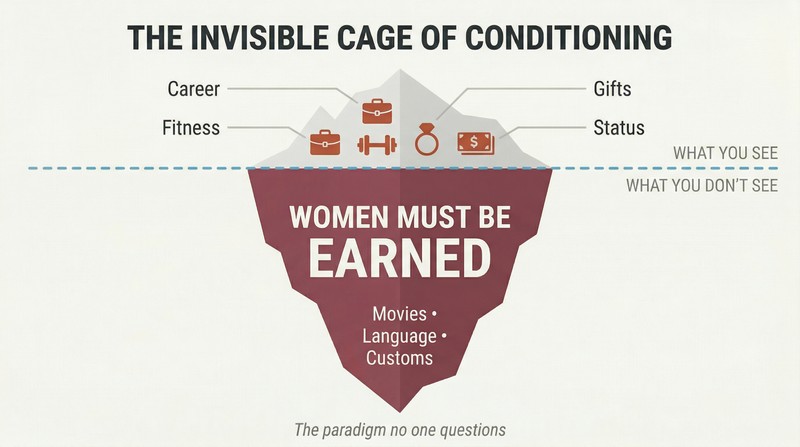
The invisible cage of conditioning. Anton argues that the single greatest obstacle to romantic success isn't rejection, appearance, or wealth — it's the belief, drilled into every male from birth, that women must be earned through achievements. Movies teach it (the hero gets the girl after saving the world), language reinforces it ("getting lucky," "out of your league," "losers don't get laid"), and customs cement it (men pay for dates, buy rings, wine and dine).
Societal design, individual cost. Civilizations prosper when men compete and produce, so tying romantic access to achievement keeps males working. But what serves society harms the individual. Men spend decades chasing careers, gym memberships, and status symbols to "deserve" women they could approach today with nothing but the right behavior. The conditioning is so pervasive it's invisible — like trees in a forest.
The formula is three traits: confidence, charm, and responsibility
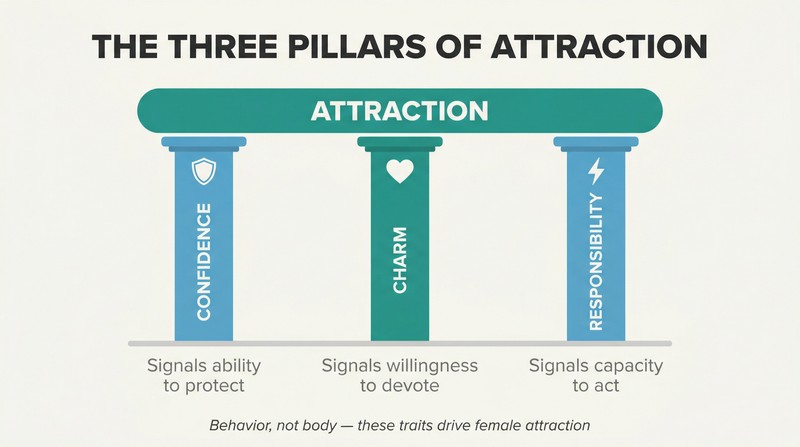
Behavior over body. Males are attracted to beauty — physical signs of health, youth, and fertility. But females are attracted to masculine behavior, not male bodies. This asymmetry explains why some of the most beautiful women date conventionally unattractive men. Anton distills female attraction into three pillars:
1. Confidence — appearing certain, which signals the ability to protect
2. Charm — making a woman feel attractive and special, signaling willingness to stay devoted
3. Responsibility — taking initiative and action, signaling both confidence and charm in practice
These aren't arbitrary preferences. They evolved because females who selected protective, devoted, action-taking partners survived pregnancy and raised offspring to adulthood. Every other quality men chase — status, humor, wealth, abs — either feeds into these three or doesn't matter at all.
Confidence is tolerating uncertainty, not feeling certain
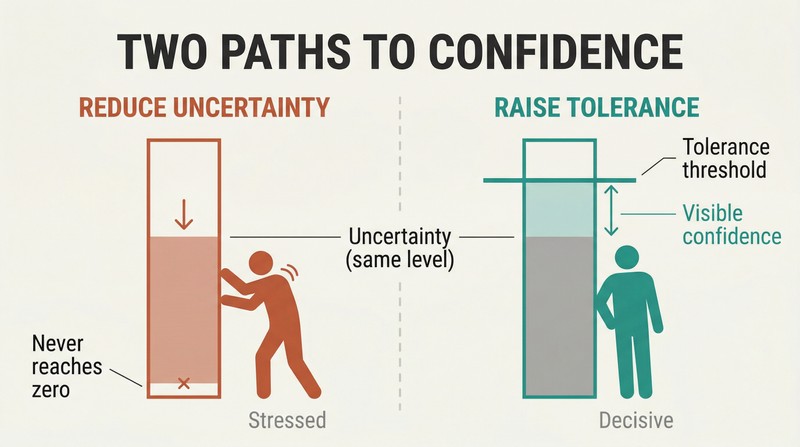
The dictionary gets it wrong. Most people define confidence as feeling sure of yourself, which creates an impossible standard — you'd need to predict the future. Anton redefines it: confidence is the ability to appear certain by tolerating uncertainty. Women don't care why a man seems sure of himself. They only see the external behavior — the decisiveness, the lack of hesitation, the calm under pressure.
Two paths to confidence. You can either reduce uncertainty (study, prepare, acquire things) or increase your tolerance of it. Since uncertainty never fully disappears, tolerance is the superior strategy. This is why actors rank among the sexiest men alive — not because acting is inherently attractive, but because the skill of appearing certain regardless of inner doubt is precisely what confidence is. Feelings are irrelevant; actions are everything.
Self-esteem is your birthright — stop earning the right to feel worthy
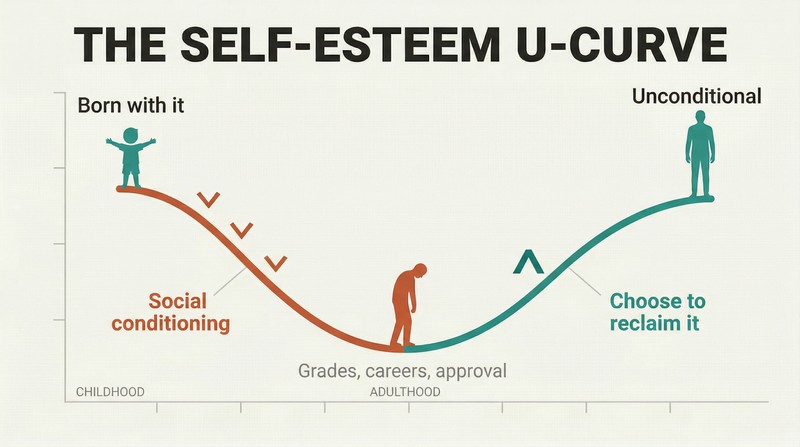
Watch any toddler. Children run around naked, steal toys from sandboxes, and stare strangers dead in the eye — completely unaffected by others' opinions. Then social conditioning kicks in: they're told to feel ashamed, to prove themselves, to earn the right to feel valuable through grades, careers, and accomplishments. By adulthood, most men have outsourced their self-worth entirely.
Unconditional acceptance wins. Tying self-esteem to achievements is fragile (lose your job, lose your confidence ), slow (years of grinding before you "deserve" to feel good), and unnecessary (women only see the external behavior, not the résumé behind it). Anton argues you should decide to value yourself unconditionally — not because you've earned it, but because no conditions need to be met. Your opinion of yourself is the only one that should matter.
Tell women exactly why you approached — excuses are repulsive
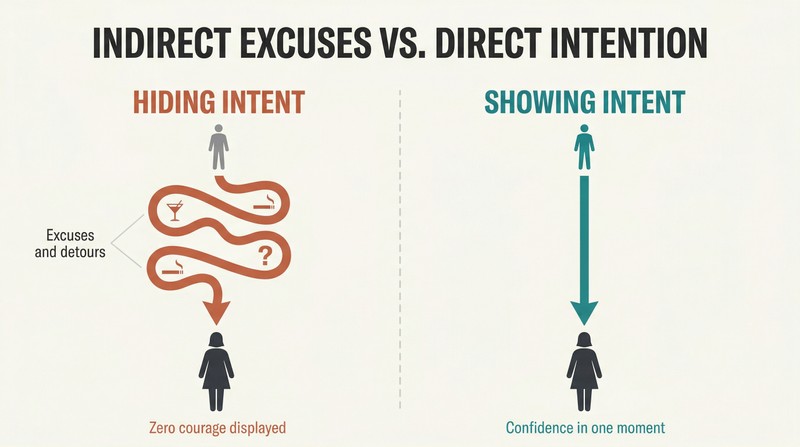
Excuses are feminine. Offering to light her cigarette, asking for directions, buying a drink, joining her dance class — these are all indirect approaches that signal low confidence. Anton calls them the equivalent of "swimming across the Atlantic when you have the option of using a jet plane." Every indirect method hides the real reason a man is talking to a woman, which requires zero courage and therefore displays zero masculine value.
The direct alternative is devastating. Walk straight toward her, maintain eye contact, smile, and tell her she's attractive and you wanted to meet her. Women's jaws drop — not because the line is clever, but because almost no man ever does this. The directness itself communicates confidence, charm, and responsibility in a single moment. It creates the perfect first impression, and first impressions are formed in roughly three seconds.
Women laugh at men they already like — humor doesn't create attraction
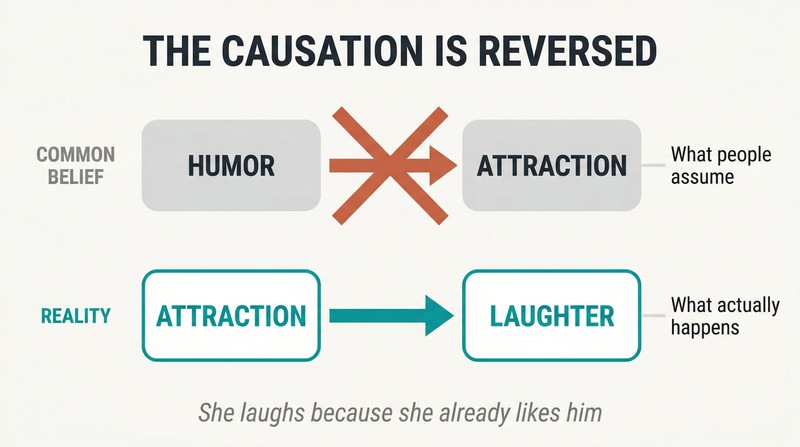
Cause and effect reversed. Surveys consistently find women say humor is the most important trait they seek in a man. Anton argues they've confused the arrow of causation: women don't like men because they're funny — they find men they're already attracted to funny. When a woman likes a man, she giggles at his mediocre jokes, creating the illusion that comedy caused the attraction.
Don't be a clown; be a lover. Males who chase humor end up performing — telling jokes, doing pranks, entertaining groups. This makes them the fun friend, not the sexual partner. Instead of trying to make women laugh, focus on making them feel attractive and desired. Charm beats comedy every time because women mentally separate entertainers from lovers — and you want to be in the second category.
You reject yourself far more often than women ever will
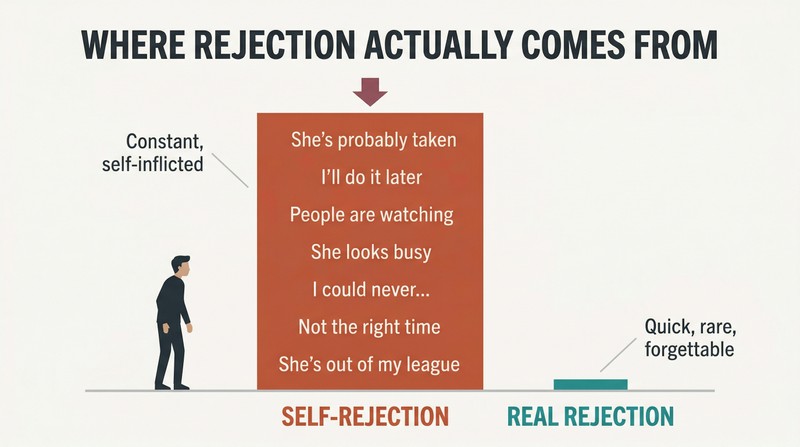
The real rejection epidemic. Anton observes that unsuccessful men aren't rejected frequently — they reject themselves constantly. They see a gorgeous woman and think "I could never get a girl like that" before she's even noticed them. They rationalize endlessly: "She's probably taken," "She looks busy," "People are watching," "I'll do it later." These excuses change with circumstances (proof they aren't real reasons), and they rob men of every opportunity.
Excuses are a signal, not a barrier. Anton reframes the appearance of excuses in your head as evidence you're about to do the right thing. The more confident the intended action, the louder the rationalizations. The men least successful with women have usually only been rejected a handful of times across years — because they never tried. Real rejection is quick, painless, and forgettable. Self-rejection is the wound that lasts.
Stop chasing wealth to attract women — behavior is the currency
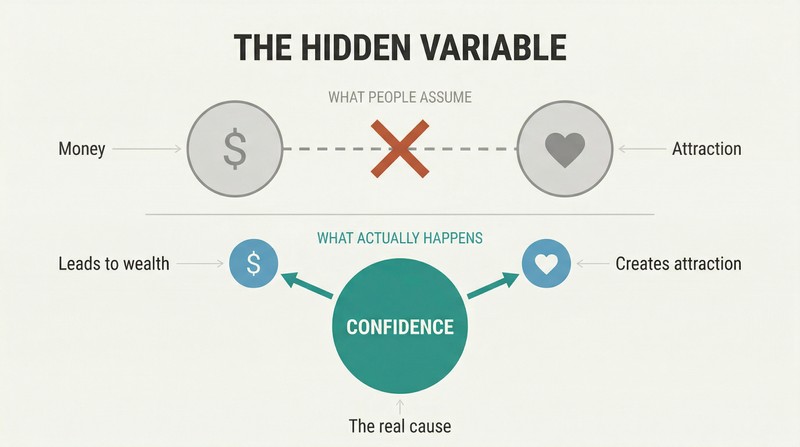
The confidence proxy. Wealthy men often succeed with women, which leads researchers and men alike to conclude that women want money. Anton calls this a logical error: observing that all apples are fruit, then concluding all fruits are apples. Wealthy men tend to be more confident — confidence is a key ingredient of financial success — and it's the confidence women respond to, not the bank account. A broke man with genuine confidence outperforms a rich man without it every time.
Money as masculine makeup. Just as the most naturally beautiful women don't need cosmetics, the most attractive men don't need wealth. Linking your confidence to your net worth means it crashes when the market does. Worse, the pursuit of money steals the very time you could spend approaching women directly. Make money for yourself, never to impress women.
"Nice guys" aren't nice — they're afraid, disguised as polite
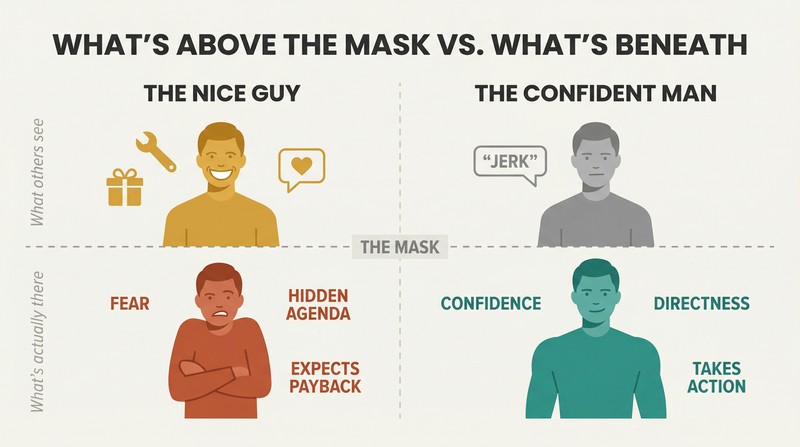
The Golden Rule fails. "Nice guys" treat women the way they'd want to be treated — showering them with favors, fixing their cars, listening to their problems — then expect romantic reciprocation. Anton calls this naïve and deceptive: they're hiding sexual intentions behind friendship gestures, then blaming rejection when the truth inevitably surfaces. The famous "let's just be friends" speech is the predictable result of months of deception, not insufficient niceness.
Why "bad boys" win. Women date men labeled "jerks" because those men possess what actually attracts women: confidence (putting themselves first), charm (making bold moves), and responsibility (taking action despite risk). A smarter strategy than avoiding the traits women complain about in the men they date would be to adopt them — the same way a woman trying to be more attractive should mimic sexy women's habits, not avoid them.
Always push the interaction further than you think you can
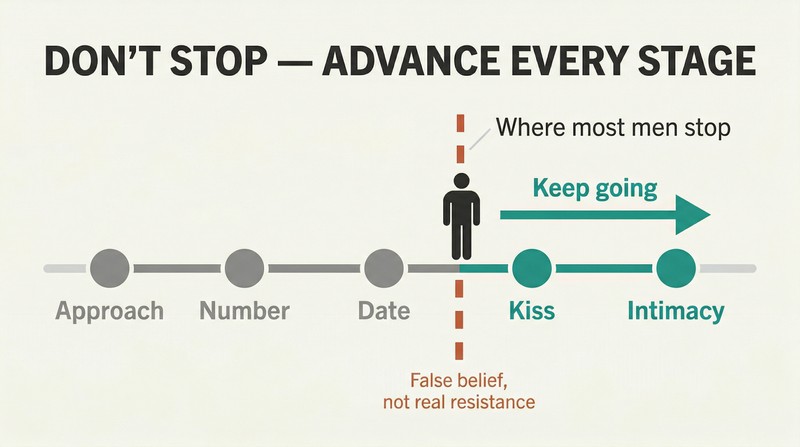
Never cut yourself short. Anton insists that men should attempt to advance every interaction to its maximum potential — approach to number, number to date, date to kiss, kiss to sex — ideally in the same encounter. Most men end dates early out of false beliefs about timing ("a kiss is all I'll get tonight") rather than actual resistance from the woman. These beliefs come from social conditioning, not real experience.
The practical rule is simple. If things are going well, don't stop. Don't end the conversation after getting her number — suggest a spontaneous date. Don't end the first date after a kiss — lead her somewhere private. Always pick up where you left off on the next meeting, never restart from zero. Men who date for months without sex aren't respecting the woman's pace — they're simply not advancing.
Analysis
The Manual operates as both dating guide and ideological manifesto, constructing an evolutionary psychology framework that reduces male-female dynamics to a single axis: vulnerability versus invulnerability. Anton's central insight — that female attraction is behavioral rather than material — challenges the culturally reinforced message that men must 'earn' romantic access through professional achievement. The three-pillar model (confidence, charm, responsibility) provides genuine structural clarity in a genre drowning in contradictory pickup tactics.
The book's most psychologically astute contribution is its redefinition of confidence as 'tolerance of uncertainty' rather than 'feeling of certainty.' This distinction echoes modern research on courage and self-efficacy, offering a practical pathway where the conventional definition provides only a Catch-22. Similarly, Anton's identification of rationalization — not rejection — as the primary barrier to romantic success is an insight with applications far beyond dating.
However, the text's strengths are inseparable from its ideological overreach. Anton weaponizes evolutionary psychology as settled fact rather than contested framework, presenting speculative claims about ancestral mating patterns as though they carry the same epistemic weight as observable behavioral data. His dismissal of feminism, while internally consistent, reveals selective reasoning: he correctly identifies that socialization disadvantages men romantically, then refuses to extend the same analytical generosity to how it constrains women.
The gender essentialism — femininity equals vulnerability, masculinity equals its absence — creates a tidy binary that collapses under scrutiny. Modern behavioral genetics suggests far more overlap between male and female psychology than Anton acknowledges, and his framework cannot account for enormous within-gender variation in attraction preferences. His claims about women ('all women will have sex on the first date,' women 'lie every day without remorse') are presented as universal truths rather than tendencies.
Read as a corrective to male passivity and the cultural myth that professional success automatically yields romantic satisfaction, the book delivers real value. Read as comprehensive gender theory, it substitutes one rigid ideology for another. The reader's task is to extract the behavioral insights while maintaining the critical thinking Anton advocates for but selectively applies.
Review Summary
The Manual receives mostly positive reviews, praised for its insights on confidence, directness, and understanding male-female dynamics. Readers appreciate its straightforward approach to seduction and self-improvement. Critics note repetitive content and some controversial views on gender roles. Many found it eye-opening and life-changing, while others felt it oversimplified relationships. The book emphasizes breaking free from societal conditioning and developing genuine confidence. Some readers recommend it alongside other dating advice books for a comprehensive understanding of attraction and relationships.
People Also Read







Glossary
Social conditioning
Society's inherited dating beliefsThe process through which individuals nonconsciously inherit the grand beliefs and behavior of their society, particularly two ideas: that males must earn females through achievements, and that females' sexuality must be controlled. Anton argues this process — operating through language, media, customs, and family — is the root cause of most male failure with women, as it suppresses natural confident behavior.
Confidence
Appearing certain despite uncertaintyRedefined by Anton as 'the ability to appear certain by tolerating uncertainty' — distinct from the dictionary definition of actually feeling certain. Since women only observe external behavior, internal feelings are irrelevant. Confidence manifests through dominance (putting yourself first), optimism (expecting positive outcomes), and courage (acting despite fear). Anton considers it the primary expression of masculinity and the most important trait for attracting women.
Charm
Making others feel goodDefined as 'the ability to make others feel good about themselves.' In dating, charm specifically means making a woman feel attractive — more attractive than other women. It encompasses being popular (appearing to have options among women), selective (having high standards), and caring (showing devotion to one particular woman). Anton explicitly distinguishes charm from humor, arguing women don't need a funny man but a man who makes them feel desired.
Responsibility
Making things happen yourselfDefined as 'the ability to make things happen' — the male's duty to initiate and drive every stage of courtship. Encompasses leading (setting direction), deciding (choosing without wavering), advancing (escalating physical intimacy), isolating (creating privacy), persisting (pushing through resistance), and attempting (trying to go further). Women avoid responsibility for sex due to social pressure, so the man must shoulder all initiative from approach through bedroom.
Women (author's definition)
Top ~10% most feminine femalesAnton distinguishes 'women' from 'females' throughout the book. 'Females' refers to all members of the biological sex. 'Women' refers specifically to the most feminine females — roughly the top 10% that males are genuinely attracted to — those who possess beauty (signs of health, youth, fertility) and feminine behavior. The book's title 'What Women Want' refers exclusively to this subset, and Anton argues that unattractive females' opinions about dating are irrelevant to his framework.
Rationalize
Making excuses to avoid actionThe mental process of manufacturing seemingly logical reasons to avoid approaching women or taking bold action. Anton identifies rationalization as the most telling sign of avoided responsibility. Rationalizations change with circumstances — proving they aren't real reasons — and intensify the more confident the intended action. Examples include 'she probably has a boyfriend,' 'she seems busy,' or 'I'll do it later when conditions are better.' Anton treats the appearance of excuses as a signal you're about to do the right thing.
FAQ
1. What is The Manual: What Women Want and How to Give It to Them by W. Anton about?
- Purpose and Audience: The book is a guide for heterosexual men seeking to improve their romantic and sexual success with women by understanding female psychology and attraction.
- Core Message: W. Anton challenges conventional dating advice, arguing that men should adopt a confident, direct, and masculine approach rather than relying on money, status, or indirect methods.
- Structure and Content: The book is divided into four parts—mindset, manners, message, and method—offering both theoretical insights and practical steps for seduction and relationship building.
- Focus on Social Conditioning: It explores how societal beliefs and upbringing mislead men about attraction, urging readers to unlearn these patterns.
2. Why should I read The Manual by W. Anton?
- Eye-Opening Perspective: The book promises to overturn common misconceptions about women and attraction, providing insights that may challenge and even upset readers.
- Practical Improvement: It offers actionable advice for developing confidence, charm, and responsibility, which the author claims will significantly improve readers' success with women and overall life quality.
- Unique Approach: Unlike mainstream dating guides, W. Anton emphasizes directness, authenticity, and understanding of natural male-female dynamics.
- Comprehensive Guidance: The book covers everything from mindset shifts to specific behaviors, making it a valuable resource for men at any stage of dating.
3. What are the key takeaways from The Manual by W. Anton?
- Confidence, Charm, Responsibility: These three traits are essential for masculine attractiveness and effective seduction, according to the author.
- Directness Over Indirectness: Men should be straightforward about their intentions, as women respond better to confidence and clarity.
- Understanding Female Communication: The book explains women's indirect communication, use of excuses, and socialized behaviors, helping men decode true intentions.
- Rejecting Social Conditioning: Success with women requires unlearning societal beliefs that promote passivity, shame, and indirectness in men.
4. What are the main concepts of attraction in The Manual by W. Anton?
- Biological Basis: Attraction is rooted in evolutionary psychology, with men drawn to feminine traits and women to masculine ones that signal protection and support.
- Masculinity and Femininity: Masculinity is defined by dominance and self-interest, while femininity is associated with vulnerability and submission; these dynamics drive attraction.
- Behavior Over Looks: Women prioritize confidence, charm, and responsibility in men over physical appearance, while men are more visually oriented.
- Role of Socialization: Societal norms often suppress natural attraction cues, making it crucial for men to reclaim authentic masculine behaviors.
5. How does W. Anton in The Manual explain the impact of socialization on men's approach to women?
- Learned Beliefs: Men are taught to "earn" women through success, money, or achievements, which leads to indirect and ineffective courtship strategies.
- Control of Female Sexuality: Society encourages women to appear cautious and play "hard to get," complicating honest courtship.
- Reduced Confidence: Social conditioning lowers men's self-esteem, making them act less masculine and more hesitant, which diminishes their attractiveness.
- Need for Mindset Shift: The book urges men to challenge these ingrained beliefs and adopt a mindset of entitlement and directness.
6. What mindset does The Manual by W. Anton recommend for men to succeed with women?
- Confidence as Appearance: Men should focus on appearing confident, as women respond to external behavior rather than internal feelings.
- Dominance and Self-Interest: Putting one's own interests first and expecting women to be submissive in courtship is seen as essential for masculine confidence.
- Optimism and Courage: Positive expectations, persistence, and the willingness to face rejection are key to overcoming social conditioning.
- Shamelessness: Overcoming shame and fear around sex and women is necessary for building true confidence.
7. What are the three essential personality traits women want in men, according to The Manual by W. Anton?
- Confidence: The appearance of certainty and dominance signals protection and support, making it the most crucial trait for attraction.
- Charm: The ability to make women feel attractive and special, combining popularity, selectivity, and genuine care without desperation.
- Responsibility: Taking initiative, leading the relationship, and persisting through resistance demonstrate maturity and reliability.
- Congruence: These traits must be expressed consistently through both words and actions for maximum effect.
8. How does The Manual by W. Anton define and explain confidence for men?
- Appearance Over Reality: Confidence is about how a man presents himself, not necessarily how he feels inside.
- Dominance and Self-Esteem: True confidence comes from self-acceptance and treating oneself as important, which is inherently attractive.
- Overcoming Shame: Men must become shameless and unafraid of rejection or social judgment to maintain high confidence.
- Expanding Comfort Zones: Facing fears and tolerating uncertainty are necessary steps to building lasting confidence.
9. What role does charm play in seduction, according to The Manual by W. Anton?
- Making Women Feel Good: Charm is about making women smile and feel valued, not just being funny or entertaining.
- Popularity and Selectivity: Being desired by other women and having high standards increases a man's attractiveness.
- Caring Without Neediness: Genuine care and protection should be offered without appearing desperate or needy.
- Nonverbal Communication: Charm is often conveyed through body language, eye contact, and touch, not just words.
10. How does W. Anton in The Manual describe women's use of excuses and lying in dating?
- Indirect Communication: Women often use excuses to avoid direct rejection or confrontation, which men may misinterpret as interest.
- Frequent Lying: The book claims women lie daily to manage social situations, often rationalizing these as harmless "white lies."
- Decoding True Intentions: Men are encouraged to maintain skepticism and look for actions that reveal genuine interest.
- Positive Excuses: When women make excuses in favor of a man, such as lying to others to spend time with him, it signals strong attraction.
11. What practical advice does The Manual by W. Anton give for approaching and seducing women?
- Be Direct and Bold: Approach women confidently, state your intentions clearly, and avoid using excuses or indirect methods.
- Lead and Make Decisions: Take control of interactions by making decisions and advancing the relationship at your own pace.
- Handle Rejection Gracefully: Accept rejection without taking it personally, and persist with new opportunities.
- Use Body Language: Expand your presence, maintain strong eye contact, and use touch appropriately to build attraction.
12. How does The Manual by W. Anton recommend handling the first date, first kiss, and moving toward intimacy?
- Create Comfort and Rapport: Focus on making the woman feel safe and comfortable through conversation and congruent body language.
- Be Confident and Attentive: Initiate the first kiss early if the moment feels right, using touch and eye contact to build sexual tension.
- Progress Naturally: Escalate physical intimacy as comfort grows, aiming to move toward sex without unnecessary delays or overthinking.
- Decide Relationship Type Post-Sex: The nature of the relationship is determined after sex, with continued confidence and charm needed to maintain attraction.
Download PDF
Download EPUB
.epub digital book format is ideal for reading ebooks on phones, tablets, and e-readers.








































