


Plot Summary
Prologue
Henry2 visits Lulu1 in a sanatorium, his hands cold, his eyes fixed on hers with an earnestness she barely recognizes. He squeezes her fingers and utters a single command: remember. She can recall so much — her father's Sunday scent of sandalwood, her brother Georgie's10 childhood laughter, the night she and Henry2 first fell in love over tablecloths and sore backs.
She remembers their babies and the silences that followed. But Henry2 offers no kiss, no embrace. He leaves with his hat in his hand, his gaze on the asbestos floor, and Lulu1 is left in the cold facility knowing she must stay quiet, smile the smile, and save her screams for the hours when the others sleep.
Queen of Molded Food
Late in 1954, Lulu Mayfield1 fries eggs for her husband Henry2 in their Greenwood Estates kitchen, fighting nausea she hasn't explained to anyone. She is pregnant with their second child, a secret she's kept for over a month, because she remembers what motherhood did to her after their son Wesley6 was born — the sleeplessness, the incompetence, the morning her neighbor Nora3 found her sobbing on the nursery floor over a missing sock.
Between the cleaning schedule she never follows and the elaborate gelatin salads that have crowned her the neighborhood's Queen of Molded Food, Lulu1 has fashioned a mask of suburban competence.
She pastes loyalty stamps into booklets, dreams of a camera she can't afford, and watches the vacant house across the street, decorating it in her imagination as a refuge only she can enter.
Henry Clangs the Glass
The annual party is in full swing — champagne flowing, Bing Crosby crooning, neighbors waltzing across the living room carpet — when Henry2 catches Lulu's1 hand drifting to her stomach. Despite her protests, he clangs his wedding ring against a goblet and announces that their family will finally be complete. The neighbors erupt in cheers. Lulu1 wants to dissolve into the carpeting.
She hasn't made it through the first trimester, and she isn't ready for anyone to know. But Henry2 is drunk on champagne and hope, and the room toasts to dreams while Lulu's1 heart pounds against her ribs. Nora3 alone doesn't cheer — she watches from across the room, hand to her heart, remembering the sock, the tears, the fragility no one else seems to see.
Butterflies Trapped in Walls
Lulu1 returns from Esther's difficult birth on the summer solstice to find the house across the street — the one she'd been decorating in her imagination — now belongs to the Betsers.5 A balding man in hiked-up pants and his wife Bitsy,4 who stands on wobbly ankles gripping her handbag, a smile never breaking from her porcelain face.
When Lulu1 brings a peach pie over, Bitsy4 barely speaks. She watches Lulu's1 lips instead of meeting her eyes, answers in fragments, and corrects her daughter Katherine's8 request for pie.
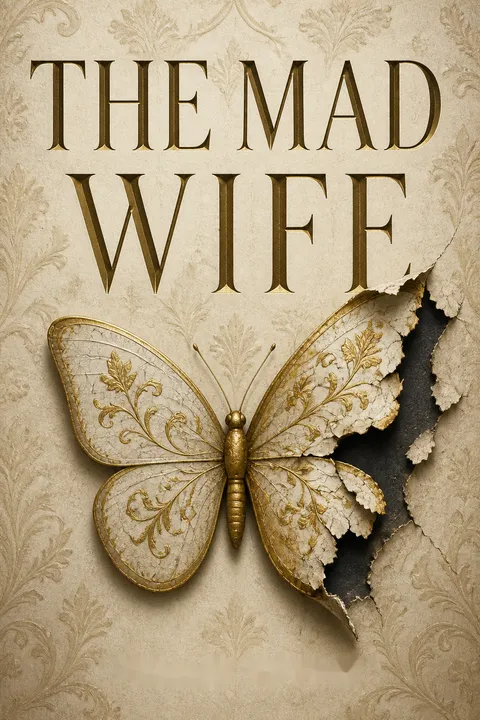
The kitchen wallpaper catches Lulu's1 attention: gold-lined butterflies on pale blue. As sunlight hits one, she swears a stenciled wing flutters. The room spins, and Lulu1 flees home, haunted by a woman who seems designed to guard something behind that frozen smile.
Luna and Old Ghosts
In the small hours before dawn, when Esther finally settles between feedings, a fat gray cat scratches at the patio door. Lulu1 pours her sour milk, names the cat Luna,16 and discovers the companionship she's been starving for — warm, silent, demanding nothing.
Each night, Luna16 curls into a crescent on Lulu's1 lap while the neighborhood sleeps, and Lulu1 drifts into dormiveglia, the Italian word her father taught her for the veiled space between sleeping and waking. But the darkness carries ghosts.
She remembers the summer afternoon she ignored her mother's warning and took her eight-year-old brother Georgie10 to the swimming hole during a polio outbreak. Days later, Georgie10 couldn't walk. A voice threads through the night wind, cool against her skin: the swimming hole was her fault.
Nora's Knollwood Story
During a card game at Lulu's1 house, Nora3 lowers her voice and recounts what she's heard about a despondent wife from Bitsy's4 old neighborhood of Knollwood. The woman put her child down for a nap, sealed off the kitchen with plastic wrap, turned on the gas, and laid her head inside the oven.
Her husband found the room so tightly sealed he couldn't smell gas when he walked in. The child was still waiting in her room. The story silences the table. When Hatti7 asks if the woman went mad, Lulu's1 answer slips out before she can stop it — something about how maybe they all do, a little.
Meanwhile, Wesley6 and Katherine8 have been playing a game Katherine8 invented about a taxi driver searching for a sick aunt and missing mother. The Betsers'5 reaction to this game strikes Lulu1 as strangely panicked.
Housewife Syndrome
Henry2 arranges for Hatti7 to watch the children and drags Lulu1 to his company dinner, where she dances with his boss Jack14 while watching Henry2 laugh in a corner with Alice,15 his young new secretary. Jack's14 mincemeat-scented cheek presses against hers as he hints that Gary Betser5 is also being considered for Henry's2 promotion.
Lulu1 barely makes it off the dance floor before telling Henry2 they need to leave. In the driveway, she faints. Henry2 carries her inside like the day he carried her over the threshold, but this time neither of them laughs.
Dr. Collins11 visits the next day and diagnoses housewife syndrome — hysteria — prescribing Miltown tranquilizers he calls emotional aspirin. Henry,2 certain he's identified the real problem, has a portable dishwasher delivered. It blocks a third of the kitchen and solves nothing.
The Medical Box
Armed with a spare key from the previous neighbor, Lulu1 lets herself into the Betser house while the wives are grocery shopping. She slinks past the ugly davenport and into the locked front bedroom.
The newspaper article from Nora's3 story is there, and it reveals more than gossip: the despondent wife was Ellen Craske17 — Bitsy's4 sister. Katherine8 is Ellen's17 biological daughter. Deeper in a box labeled Medical, Lulu1 finds a discharge form typed with Bitsy's4 name. Diagnosis: Depression. Procedure: Lobotomy. Prognosis: Compliant Behavior.
Gary's5 signature sits on the consent line. Bitsy4 nearly catches Lulu1 on her way out, but Lulu1 deflects by suggesting the faulty door latch might explain the missing cat. She escapes, but the knowledge of what Gary5 did to his wife rewrites everything.
Dr. Ruthledge's Name
Lulu1 hosts a last-minute dinner for Henry's boss,14 stretching three TV dinners into four plates and serving a deflated orange gelatin disaster. Gary5 arrives uninvited. After dinner, he corners her against the kitchen cabinets, his English Leather cologne thickening the air. He warns her about stray cats and tells her he doesn't appreciate hysterics — that he'll do anything to keep life calm.
Later that night, Lulu1 crouches in the hallway and overhears Gary5 advising Henry2 about doctors and treatments for wives who won't settle. She finds a folded paper in Henry's2 suit pocket: a phone number and a name — Dr. Ruthledge.12 The pieces lock together with a sickening click: her husband is considering doing to her what Gary5 did to Bitsy.4
The Empty Swaddle
Lulu1 dozes off in the nursery chair with Luna16 on her lap and Esther's blanket tucked around what she believes is her sleeping daughter. Henry2 opens the door at dawn and his voice breaks on her name. He reaches for the bundle, unwraps it, holds it in the air, and drops the blanket — empty — onto the floor. There is no thud, no cry, no child.
Lulu1 tries to find her, tries to push Henry2 away, but he holds her in the rocking chair, tears streaking his face, and speaks the truth she has been shielding from for weeks — that Esther is gone, has been gone since delivery. The cord had wrapped around her chest. Lulu1 never brought a living baby home. Only a pink blanket and a grief so vast her mind rewrote reality to survive it.
The Weeping Willow Chase
Wesley6 tries to help by fetching Lulu's1 camera — the last possible proof Esther existed in photographs — but opens the back and exposes the film to light. The camera shatters on the floor. Lulu1 kisses Wesley's6 head and runs.
Barefoot in her nightgown, she sprints down Twyckenham Court with Luna16 trotting alongside, the pink blanket streaming behind her. She reaches the weeping willow and tries to climb, scraping her arms bloody against bark. Henry2 catches her. Gary5 follows.
The entire neighborhood gathers in their robes and slippers. Lulu1 screams that Gary5 gave Bitsy4 a lobotomy. Gary5 laughs and calls her crazy. Bitsy4 reclaims Luna.16 When the wind lifts Bitsy's4 bangs, there are no visible scars to prove anything. Henry2 carries his wife to the car.
The Rubber Bit
The sanatorium is the same stone building where Georgie10 once fought polio, now repurposed for broken minds. Dr. Ruthledge12 pushes Lulu1 to admit Esther is dead.
She plays compliant, answering questions, swallowing stronger tranquilizers, but she spots a woman in the cafeteria — rocking, mumbling, hollow-eyed — and learns from a nurse that she was lobotomized through the eye socket, leaving no visible scars. When the doctor prescribes electroconvulsive therapy, Henry2 agrees. They place a rubber bit in Lulu's1 mouth, smear gel on her temples, and send current through her body.
Some memories melt together, the monotonous days fusing into an indistinguishable mass, but the silence of the delivery room — the moment Esther never cried — stays scorched into her mind, too deep for electricity to reach.
Nora's Needle and Truth
Nora3 arrives at the sanatorium with a sewing kit, quietly reattaching the satin binding Lulu1 had torn from Esther's blanket in a fit of grief. Between stitches and cigarette drags, she confirms what Lulu1 discovered in those boxes: Bitsy4 told Nora3 herself about the lobotomy.
Gary5 signed the consent after Bitsy's4 sister Ellen17 killed herself and Bitsy4 couldn't cope with inheriting Ellen's17 daughter. Nora3 reveals her own buried grief — she lost a pregnancy once, before her children, and never told anyone.
Then she holds up the blanket and says the sharpest thing anyone has ever said to Lulu:1 she had been carrying an empty blanket and believed it was her baby. If Lulu1 doesn't want to become another Bitsy,4 she needs to get her act together, because no one else can save her.
Lulu Steals the Car
Dr. Ruthledge12 announces that five to ten more ECT sessions will be required for best results. Henry,2 sitting beside Lulu1 on the leather couch, drops his gaze and agrees. Lulu1 asks to use the restroom. She walks calmly through the front entrance, exchanging pleasantries with a kind nurse about the lovely weather.
Outside, she opens Henry's2 car door and reaches for the sun visor — he always tucks his keys there, a habit so ingrained he does it even away from home. The keys fall into her lap, a prayer finally answered.
She races back inside for Esther's blanket, navigates past patients and staff without drawing suspicion, and drives down the pine-shrouded lane with the windows open and the blanket beside her. She has a nearly full tank and one destination: the farmhouse where she was born.
Mama Sees the Butterfly
Lulu1 arrives at the farmhouse after dark, the porch light flickering over peeling paint and sagging wood. When Mama9 opens the door, Lulu1 collapses into tears — and her mother9 does something unprecedented: she runs toward her daughter.
But it isn't the tears that stop Mama9 cold. It's the rash, a vivid butterfly shape spread across both cheeks and the bridge of Lulu's1 nose. Mama9 grabs her chin and turns her face side to side, recognizing what no doctor has: lupus, the same autoimmune disease that killed Lulu's1 father.
Not madness — a wolf consuming her from inside. She feeds Lulu1 peach pie and warm milk with cinnamon and promises to call Henry.2 The next morning, he arrives, shattered and apologetic. Lulu1 asks the simplest question: will you take me home?
Epilogue
Lulu1 returns to Greenwood Estates. Cortisone injections replace tranquilizers, and the world sharpens back into focus. Wesley's6 first permanent tooth pushes through. Hatti's7 baby survives colic. The Betsers5 sell their house, its restless soul shaking loose another family.
At the annual New Year's Eve party — this time with help from Nora,3 Hatti,7 and others — Lulu1 photographs every moment with the camera she finally bought herself. Before waking Wesley6 that morning, she loaded the film and took one picture: the rocking chair in the guest room, draped with Esther's repaired blanket.
Not an image of arrival, but departure. Henry2 asked her to remember. She will — always, in the shadow hours of dormiveglia, where her daughter calls to her across the space between worlds, in moments that belong to only them.
Analysis
The Mad Wife dissects the architecture of women's silencing — not through a single dramatic act, but through the accumulated weight of small dismissals. Lulu's1 lupus produces symptoms that 1950s medicine cannot distinguish from hysteria: fatigue, joint pain, hallucinations, a butterfly rash misread as psychosomatic blight. The novel argues that misdiagnosis is not merely medical failure but an expression of power — the authority to define what a woman's pain means and to prescribe silence when she describes it.
The book's structural gambit — an unreliable narrator who doesn't know she's unreliable — forces readers into complicity. We believe in Esther because Lulu1 does, and when the blanket falls empty, we confront our own assumptions about maternal instinct and female perception. The reveal doesn't merely shock; it implicates. If we missed the signs, how different are we from Henry?2
Bitsy4 operates as Lulu's1 dark mirror: a woman whose grief was treated with a lobotomy rather than compassion. The novel refuses to let her be a simple cautionary tale. Her clipped sentences and vacant stare are not character flaws but evidence — the aftermath of a husband who could sign away her selfhood on a consent form. Gary's5 smooth menace represents the institutional face of domestic control: not violence in the traditional sense, but the capacity to define a woman as broken and to profit from the fix.
The loyalty stamps — appearing throughout as parenthetical costs — constitute a quiet formal innovation, exposing the transactional nature of suburban femininity. Every object earned, every comfort measured in booklets, every identity purchased one stamp at a time. Lulu's1 gelatin salads, which she herself finds repulsive, function similarly — performances of competence designed not to nourish but to prove belonging.
The novel's final image — a photograph of an empty rocking chair draped with a repaired blanket — reclaims remembering from those who weaponized it. Henry2 asked Lulu1 to remember as a command. She transforms it into a choice.
Review Summary
People Also Read










Characters
Lulu Mayfield
Suburban wife unravelingBorn Lucy Oscuro on a rural Italian-American farm, Lulu is caught between who she was raised to be and the role suburbia demands. Her father's death and brother Georgie's10 polio — which she blames on herself — left her carrying guilt so heavy it has become structural. Intelligent, observant, and quietly sardonic beneath her compliance, she has let years of being told to stay silent calcify into reflex. She collects loyalty stamps and molds gelatin salads as small acts of agency within a life she didn't choose. Her marriage to Henry2 began with genuine love but has eroded into polite distance. She craves cold water, dark hours, and animal companionship — someone more comfortable in dormiveglia than daylight, whose mask of suburban competence conceals an interior life that terrifies her.
Henry Mayfield
Well-meaning, unseeing husbandHenry is the husband whose greatest failure is mistaking provision for presence. A former college rower turned junior architect, he carries his mother's13 expectations and his stutter's ghost — both managed, rarely acknowledged. He loves Lulu1 but struggles to see her, confusing symptoms with inconveniences: her exhaustion becomes a dishwasher problem, her despair a dress code issue. His compliment that she got dressed today reveals the gulf between noticing and understanding. He is not cruel — he dances poorly with guilt, hires secretaries without realizing how it looks, and genuinely believes professionals can fix what he cannot name. His tragedy is acting from love through the wrong intermediaries: his mother13, a neighbor, a doctor. He carries you over the threshold but forgets to ask where you wanted to live.
Nora Gray
Sharp-tongued loyal friendStrawberry-haired, cigarette-wielding, and sharp as a kitchen knife, Nora is Lulu's1 closest friend and the neighborhood's social nerve center. She follows the cleaning schedule religiously, measures her own body daily, and mines secrets from everyone. Beneath the sitcom-ready persona lies a woman carrying grief of her own — a fact she buries so deep that even her closest friends don't suspect it until crisis demands honesty.
Bitsy Betser
The neighbor behind the smileThe new neighbor whose porcelain composure — dimpled cheeks, tight bun, clipped sentences — suggests a woman whose calm feels constructed rather than natural. She rarely makes eye contact, watches lips instead of faces, and clings to her daughter Katherine8 as if the girl might evaporate. A mirror for Lulu's1 deepest fears, Bitsy represents what can happen when a woman's grief is treated as a malfunction requiring correction rather than compassion.
Gary Betser
The fox in the henhouseBalding, crew-socked, and smoothly manipulative, Gary presents as a harmless neighbor while operating as a calculated controller. He corners Lulu1 in her own kitchen, competes for Henry's2 promotion, and treats his wife's4 emotional struggles as problems to be solved by force rather than compassion. His willingness to make decisions about Bitsy4 without her input reveals the novel's most quietly terrifying dynamic — a man who frames domination as devotion.
Wesley Mayfield
Lulu's tender-hearted sonAlmost five, with his uncle Georgie's10 curls and freckles, Wesley is the emotional anchor Lulu1 doesn't fully appreciate. He pronounces L as Y, puts his shoes on the wrong feet, and pushes other boys away from beetles rather than let them be crushed. His bedtime rhyme with his mother — a circle, a pat, and a heart on top — becomes a tender ritual threading through the story's most critical moments.
Hatti Brooks
The ideal, nurturing motherThe neighborhood's embodiment of maternal ease — warm, selfless, pregnant with her fourth child. She wears a gold locket with her children's photos, never arrives anywhere empty-handed, and represents the effortless devotion to motherhood that Lulu1 envies and can't replicate.
Katherine
Quiet girl with wise eyesA quiet, imaginative five-year-old with freckles and gold-ribbon hair who invents games about missing mothers and draws careful butterflies. She runs only when her protective mother Bitsy4 isn't watching, and her backstory carries weight far beyond her years.
Mama
Stern farm widow with sharp eyesA farm widow who raised two children alone after her husband's death, Mama communicates through chores and proverbs rather than affection. She replaced warmth with silence after Georgie's10 polio and taught Lulu1 that chasing happiness was a fool's errand. Practical to the bone and seemingly incapable of tenderness, she carries knowledge about her late husband's illness that no one else possesses — and an observational sharpness her daughter has long underestimated.
Georgie
Lulu's brother on crutchesLulu's1 younger brother, who uses crutches and leg braces after childhood polio. Charming, sharp-witted, and fiercely independent despite his mother's9 hovering, he is the living embodiment of Lulu's1 deepest guilt and her most uncomplicated love.
Dr. Collins
Misguided family physicianThe elderly family doctor with woolly-worm eyebrows whose good intentions and limited understanding of women's health lead to a diagnosis that misses the forest for the trees.
Dr. Ruthledge
The asylum psychiatristA methodical psychiatrist whose impatience with his patients' protests reveals a man who knows how to hear but not how to listen. His treatments reflect an era's confidence that women's grief can be managed like a mechanical failure.
Marian
Henry's overbearing motherHenry's2 mother, who furnished Lulu's1 home, gifted her an etiquette book, and calls the shots from a comfortable distance. Her help is always control in elegant disguise.
Jack Ellis
Henry's handsy bossHenry's2 boss at the architecture firm who dances too close, drinks too much, and dangles a promotion like a carrot while his own wife is away getting her nerves in order.
Alice
The secretary Lulu suspectsHenry's2 young office secretary whose phone calls and proximity fuel Lulu's1 suspicion of an affair — a threat that exists mostly in Lulu's1 jealous imagination.
Luna
The midnight catA gray cat with a white mustache who visits Lulu1 nightly on the patio, asking nothing and offering warmth. Her true ownership becomes a source of neighborhood conflict.
Ellen Craske
The ghost in the gossipA deceased woman whose story haunts the novel from the margins. Her tragedy reverberates through the lives of every character on Twyckenham Court in ways none of them fully understand.
Plot Devices
Esther's Pink Blanket
Emblem of delusion and griefA pink Pepperell crib blanket with a white rabbit design that Lulu1 carries, cradles, and nurses throughout the first half of the novel as if it holds her infant daughter. When Henry2 unwraps it and it falls empty to the floor, the blanket becomes the physical marker of the book's central revelation. Lulu1 later tears off the satin binding in the sanatorium; Nora3 sews it back together during her visit. In the epilogue, Lulu1 drapes it over the rocking chair and photographs it — no longer pretending it holds a baby, but preserving it as proof that Esther existed. The blanket's journey from delusion to memorial mirrors Lulu's1 own progression from breakdown to acceptance.
The House Across the Street
Projected refuge and identityThe vacant ranch house with the large picture window becomes Lulu's1 mental dollhouse. She decorates it in her imagination during Wesley's6 nap times — olive-green sofas, walnut coffee tables, her own photographs on the walls. Each month it remains empty, it belongs to her a little more. When the Betsers5 move in with their awful davenport, Lulu's1 private sanctuary is invaded, and the house transforms from a space of longing into a site of obsession. It functions as a barometer of Lulu's1 inner state: vacant, it held possibility; occupied, it becomes the repository of every unsettling truth she uncovers about her new neighbors and, ultimately, about herself.
S&H Green Stamps
Micro-agency within captivityLulu1 collects loyalty stamps from every purchase and pastes them into redemption booklets, each household item catalogued by its book cost. The stamps represent her only sphere of consumer choice in a home furnished by her mother-in-law13 and a life structured by schedules she didn't write. The ritual of licking and sticking becomes meditative, almost compulsive — a way to impose order when everything feels uncontrollable. Nearly every object in the novel carries a parenthetical stamp value, creating a running inventory of suburban life reduced to transactional terms. The stamps also mark Lulu's1 quiet rebellion: she systematically purges her mother-in-law's13 decor one redeemed item at a time, reclaiming her home stamp by stamp.
Luna the Cat
Secret comfort and conflictA gray cat with a white mustache who appears at Lulu's1 patio door late at night, Luna becomes the only creature that asks nothing of her. She arrives unbidden, accepts sour milk, and sleeps on Lulu's1 lap while the neighborhood rests. Luna also connects the two women at the story's center: she is actually Bitsy's4 missing cat, and when her hair appears in Lulu's1 gelatin salad, the secret begins to unravel. Gary5 uses the stolen cat as ammunition against Lulu's1 credibility during her breakdown. Luna's dual ownership mirrors the novel's central tension — two women sharing a comfort neither can fully possess, each needing the animal for reasons the other cannot see.
The Butterfly Motif
Tracks delusion to diagnosisButterflies appear first as gold-flecked wallpaper in Bitsy's4 kitchen, where Lulu1 swears she sees a wing flutter. They resurface in Katherine's8 crayon drawing, where Lulu1 thinks an antenna wiggles. These early sightings register as hallucinations — evidence of deteriorating perception. But the butterfly's final appearance is medical: a vivid red rash spread across Lulu's1 cheeks and nose in the distinctive butterfly pattern of lupus. What doctors dismissed as hysteria, the butterfly rash reveals as autoimmune disease. The motif transforms from a symbol of entrapment — butterflies pressed flat into walls and paper — into the diagnostic key that unlocks the correct answer, when Lulu's mother9 recognizes the same pattern that consumed her husband.
Download PDF
Download EPUB
.epub digital book format is ideal for reading ebooks on phones, tablets, and e-readers.








































