
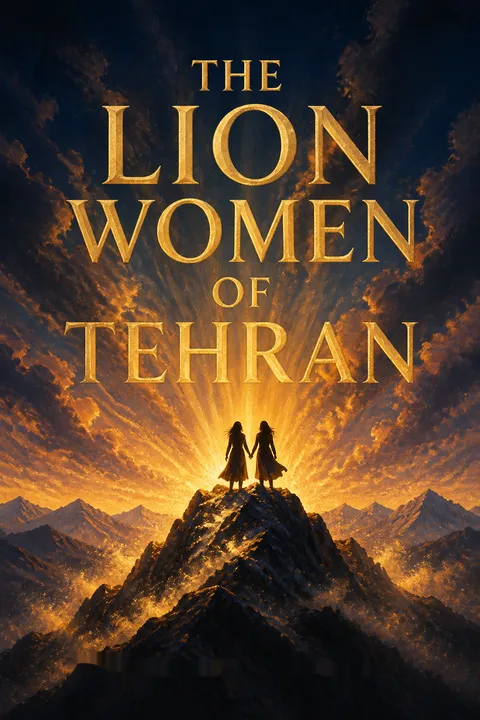


Plot Summary
A Letter Breaks Seventeen Years
In December 1981, Ellie1 stands on the lacquered floor of Bloomingdale's, spritzing perfume on customers' wrists, performing the quiet superiority of a successful saleswoman. She is thirty-eight, Iranian-born, married to a university professor named Mehrdad.3
The night before, she pulled from an airmail envelope a letter in unmistakable curlicue handwriting — the script of her childhood friend Homa,2 from whom she has been purposefully estranged for seventeen years. The letter contains pleasantries about weather and work, mentions a daughter named Bahar6 who loves to sing, then closes with a phone number and an appeal to call urgently.
Mehrdad3 encourages her to reach out. But the scent of tobacco on a coworker's breath jolts Ellie1 back to one long-ago night in Iran when an act of carelessness changed everything between them.
The Poking Girl in Line
Ellie1 is seven, fatherless since tuberculosis claimed her baba, newly exiled from an uptown mansion to the slums of south Tehran. Her mother4 — a self-proclaimed descendant of Qajar royalty — refuses to work, blames the evil eye for every misfortune, and forbids Ellie1 from playing with the neighborhood children.
School becomes Ellie's1 only portal to the outside world. On the first day, a messy-haired girl pokes her repeatedly in the lineup. Her name is Homa.2 She grins with missing front teeth, tells a pointless joke, and radiates a wildness that appalls Ellie's1 borrowed snobbery.
Weeks later, Homa2 asks Ellie1 to play hopscotch and dares her to race to school. They sprint in sync, satchels clutched to their chests, arriving breathless at the gates. Homa2 calls it a tie and takes Ellie's1 hand.
Seven Steps Into Magic
Down seven smooth stone steps into a cavernous kitchen, Homa's2 mother Monir Khanom9 teaches the girls to halve an onion with an abalone-handled knife, guiding their small hands until perfect cubes tumble from the blade. Copper pots line the walls; a white teapot painted with pink roses steams atop the samovar.
Homa2 has a living father — a communist headwaiter who brings home restaurant food — a kind mother, a chubby baby sister named Sara, and later a babbling brother.
Ellie1 absorbs every sensation: the coolness of the cellar, the pomegranate filling bursting inside ghotab pastries, the casual respect Monir Khanom9 shows two small girls with a knife. She brings culinary skills home to her grieving mother.4 But she also brings home a shameful ache — a jealousy of Homa's2 intact family she can neither name nor shed.
The Wink on the Mattress
When Homa2 convinces ten-year-old Ellie1 to skip school for the Grand Bazaar, a neighbor reports them. Mother4 confronts Ellie,1 who erupts defending Homa2 so fiercely she insults her own royal ancestry. Mother4 goes eerily calm.
Days later, Ellie1 comes home early wearing a paper crown for first-in-class and finds her mother naked in bed with Uncle Massoud10 — her dead father's brother. Mother4 catches Ellie's1 eye, lifts a finger to her lips, and winks. Within weeks she accepts his marriage proposal. They are moving uptown to a new mansion.
At goodbye, Homa2 gives Ellie1 a gold-colored necklace with a tiny turquoise-winged homa bird charm. Ellie1 gives Homa2 a pink notebook with pressed flowers and her new address. Both promise to write. Both gifts will outlast decades of silence.
Homa Storms the Classroom
By seventeen, Ellie1 has transformed. Puberty and her mother's4 world have made her the beauty queen of Reza Shah Kabir High School — popular, coiffed, calculating in her social climbing. She has stopped wearing the bird necklace. Then one September morning, a head of dark curly hair emerges from the coat racks.
Homa2 has transferred in. Before taking her seat, she walks to the front, announces Ellie1 as her dearest friend in all the world, and waves frantically. The class erupts in laughter led by the school queen bee, Afarin.12 Ellie1 produces the weakest wave in recorded history.
But Homa2 cannot be resisted. Within weeks she wins over teachers and classmates alike. Over salad olivier sandwiches at Café Andre, the girls discover their bond reignites as if seven years were seven minutes. Homa's2 father, Ellie1 learns, has been in prison since the 1953 coup.
Eyes Behind Tortoiseshell Glasses
Ellie1 first spots Mehrdad3 in the lunchtime crush at Café Andre — a lanky boy with hair parted down the middle, standing with an unfussed calm that melts her completely. At a Nowruz picnic by the river, they speak for the first time while his mother emerges from the water like a cheerful mermaid.
The courtship builds through parties and park benches. But Homa2 insists on personally vetting Mehrdad.3 They hike Alborz Mountain to a teahouse where Mehrdad3 brings Abdol5 — a shy, sheepdog-like classmate from downtown who clearly adores Homa.2
She deliberately eats with revolting table manners to torpedo any matchmaking. But descending the trail afterward, she delivers her verdict on Mehrdad:3 his eyes hold genuine goodness. She predicts happiness. For Ellie1 — not herself.
Jealousy Picks Up a Pen
At Tehran University, the friends diverge sharply. Homa2 leads student communist demonstrations and fixates on becoming a judge; Ellie1 studies English and daydreams about wedding dresses. Their political arguments intensify — Homa2 calls Ellie1 a privileged royalist; Ellie1 retorts that Homa's2 imprisoned father is no use to anyone.
Then Homa2 mentions she has asked their old high school nemesis Afarin12 to translate English-language revolutionary pamphlets into Persian. Wounded pride detonates. Ellie1 demands to do the translation herself — not from political conviction but from competitive jealousy.
Homa2 hands over three blue booklets. Ellie1 translates them overnight. The pamphlets circulate, catalyzing campus protests. Neither woman grasps that these translated pages — and the question of who produced them — will become the hinge on which both their fates turn inside the walls of Evin Prison.
Cigars and Compliments
At their friend Niloo's11 engagement party, Ellie1 spots Homa2 and Mehrdad3 close together in the kitchen — Homa2 lifting a spoonful to his smiling mouth. Jealousy detonates. She flees, accuses Homa2 of flirting with her fiancé, and drives her away in a taxi.
Retreating to a study reeking of tobacco, Ellie1 encounters the Colonel8 — their friend Sousan's7 much-older husband — who flatters her about women's bravery and claims his own sister is a communist. Charmed and champagne-loosened, Ellie1 boasts about Homa2 organizing protests and her communist activism.
The next morning, two men in dark suits shove Homa2 into a car outside the university. Weeks later, Sousan7 reveals the Colonel8 has no sister. He is SAVAK — the Shah's secret police. Ellie1 gave Homa2 away with cocktail-party chatter, and there is no retrieving those words.
What the Locked Door Took
In Evin Prison, Homa's2 fury sustains her through initial interrogations. She refuses every demand for names and contacts. But the agents press for something specific: the identity of whoever translated the pamphlets. They offer Homa2 a deal — name the translator and walk free.
Homa2 knows the translator is Ellie.1 She says nothing. An officer locks the interrogation room door and turns off the light. Six months later, Homa2 is released — pregnant from rape. Abdol,5 the shy boy who loved her since the mountain teahouse, proposes for the third time.
This time she accepts, desperate for shelter in a society that would brand her ruined. He marries her, raises the child without hesitation. They name her Bahar6 — spring. When Ellie1 finally visits the small apartment a year later, Homa2 tells her never to return.
A Wedding Without Her
Ellie1 marries Mehrdad3 in a ceremony of silk canopies and jeweled rice, fairy lights strung through garden trees. Mother4 has orchestrated every detail. But Homa's2 absence is the true presence of the evening — Mehrdad3 leans in during the festivities to acknowledge that Homa2 would have danced the hardest and mocked the band.
Ellie1 cannot taste the saffron ice cream. The years that follow bring three pregnancies, each ending in violent hemorrhaging and loss. Mother4 blames the evil eye. Mehrdad3 grieves quietly. They cannot have children.
Then in 1977, at the Grand Bazaar, Ellie1 freezes behind a barrel of walnuts as Homa2 approaches with a thirteen-year-old girl — curly-haired, a mole under her left eye. Mother and daughter buy ingredients for fesenjoon. The encounter lasts minutes. Ellie1 whispers that she is leaving for America.
Oceans Between Old Friends
At The Rockefeller University, Mehrdad3 researches biochemistry while Ellie1 walks York Avenue alone, crying each morning, eventually befriending her neighbor Angela14 and landing a cosmetics job at Bloomingdale's. When Mother4 visits, she shatters a lifelong mythology over frozen yogurt: Ellie's1 father was a philanderer who cheated throughout their marriage.
Mother4 married Uncle Massoud10 to protect Ellie,1 not merely for status. She urges Ellie1 never to return to Iran. Meanwhile, Abdol5 travels to Abadan for a cousin's wedding and enters Cinema Rex — a movie theater.
Arsonists lock the doors from outside and set it ablaze. Hundreds die. Abdol5 among them. The revolution succeeds. The Shah flees. Mandatory hijab descends. Homa2 starts a women's rights organization, marches with tens of thousands, and begins fighting a new regime even as bombs from the Iran-Iraq war fall nightly.
Snoopy Toothbrush, Blue Suitcase
When Ellie1 finally calls Tehran, Homa2 delivers two blows: Abdol5 died in Cinema Rex, and seventeen-year-old Bahar6 is being destroyed by war and repression. She begs Ellie1 to take her daughter in — temporarily, just until things improve. Mehrdad3 says the answer is obvious.
At JFK, a skinny girl with her mother's curls emerges carrying a blue suitcase. Ellie1 places a Snoopy toothbrush on the guest bed; Bahar6 lights up at the sight of it, grinning so much like Homa2 that Ellie's1 chest aches.
Over the following months, Ellie1 teaches Bahar6 English, enrolls her in high school, and discovers something astonishing: Homa2 has told her daughter stories about their friendship for Bahar's6 entire life. Homa2 stayed away not from anger, Bahar6 explains, but to protect Ellie1 from government surveillance.
Two Lions at the Library
Homa2 arrives for Bahar's6 graduation on a four-week visa, bursting from the airport gate in jeans and military boots, showering her daughter with kisses. She and Ellie1 walk arm in arm to the New York Public Library, where Homa2 marvels at the stone lions named Patience and Fortitude — knowledge acquired through the tireless reading that rebuilt her after prison.
At the Morgan Library, they stand among Persian rugs knotted by Iranian women's hands. Then Homa2 asks Ellie1 to take her to a movie theater. They watch E.T. together — Homa's2 first time seated in a cinema since Abdol5 burned in one.
She weeps through the film but walks out whole. Before returning to Iran, Homa2 gives Ellie1 the same pink notebook from childhood, now filled with Monir Khanom's9 recipes. She suggests Ellie1 should open a café.
The Truth at Bahar's Bedside
At an after-prom party, Bahar6 drinks herself into alcohol poisoning. Her friend calls an ambulance. In a hospital room scored by whirring machines, a breathing tube in Bahar's6 mouth, Ellie1 finally confesses everything — the Colonel,8 her careless boasting, how she caused the arrest.
Homa2 listens and says she always suspected. Then she reveals a truth Ellie1 never imagined: the interrogators were not after Homa.2 They wanted the pamphlet translator. They wanted Ellie.1 They offered Homa2 freedom in exchange for one name. Homa2 refused.
Her silence — her protection of Ellie1 — led to extended imprisonment and the violation that produced Bahar.6 Ellie1 is undone. Homa2 tells her it is past, that no regime can steal her spirit, that she chose to protect her friend because that is what friendship means. Then Bahar6 opens her eyes.
Zan, Zendegi, Azadi
Forty years later, on a September evening in 2022, Leily13 — Bahar's6 eighteen-year-old daughter — celebrates her birthday at Miss Ellie's Café in Lexington, Massachusetts. The café serves Persian food prepared from recipes in a faded pink notebook.
A Polaroid of two young women at a mountain vista hangs on the wall. After the party, the family gathers around Leily's13 phone. A young woman named Mahsa Amini has been killed by Iran's morality police, and protests erupt nationwide.
Leily13 scrolls to a twenty-one-second video: an old woman with white hair and a limp walks through a nighttime crowd, fist raised, chanting the movement's slogan — Women, Life, Freedom. It is seventy-nine-year-old Homa.2 Still marching. Still a lion woman. Ellie1 whispers through tears that she would expect nothing less.
Epilogue
In a letter to her granddaughter Leily,13 Homa2 writes from Tehran. She describes lying still each morning before pain arrives, imagining herself running through the city of her youth with Ellie1 at her side. She recounts being arrested upon returning to Iran after her 1982 visit and imprisoned for four more years, then forbidden to leave the country for twenty-one.
She tells Leily13 that the fury of the women screaming in the streets has been gathering power for generations — like ocean waves that travel thousands of miles before crashing ashore. She wishes her granddaughter not success but freedom, and moments tender enough to compensate for a thousand harsh ones. She closes with an instruction: love madly.
Analysis
Kamali's novel operates as a study in how personal jealousy and political systems conspire to fracture intimate bonds — and how those bonds, if genuine, can survive even the worst fractures. The friendship between Ellie1 and Homa2 is not merely a vehicle for Iranian history; it is the history, refracting seven decades of coups, revolutions, and wars through two women who met on a school bench. The novel's most devastating insight is that Ellie's1 betrayal — telling the Colonel8 about Homa's2 activism — was not malicious but careless, born from jealousy mistaken for civilized conversation. The evil that follows grows from a commonplace human flaw amplified by state machinery. This is Kamali's sharpest argument: authoritarian systems weaponize ordinary weakness. The Colonel8 does not torture information from Ellie;1 he flatters it out of her.
The dual confession at Bahar's6 hospital bed reframes the entire narrative. What seemed like Homa's2 rejection of Ellie1 was actually her protection. The friendship was never truly broken; it was operating underground, like the ocean currents the novel's epigraph describes. Kamali uses the 'long fetch' theory of waves — that forces travel vast distances before becoming visible — to argue that the 2022 Mahsa Amini protests are not sudden eruptions but the culmination of generations of women's resistance gathering force across decades.
The novel challenges readers to distinguish between two kinds of courage: Homa's2 sacrificial bravery and Ellie's1 quieter courage of acknowledging fault, hosting another woman's child, and building a life that honors what she nearly destroyed. Neither form is lesser. The café Ellie1 opens from Homa's2 mother's9 recipes is not merely a business — it is the physical manifestation of a friendship that survived class division, political violence, and oceans, transforming private Iranian love into public nourishment. The book's title refers to 'shir zan,' and Kamali traces this courage not as innate but as something cultivated through suffering, solidarity, and the absolute refusal to be erased.
Review Summary
The Lion Women of Tehran receives largely positive reviews, praised for its portrayal of female friendship, Iranian culture, and historical context. Readers appreciate the compelling characters, evocative writing, and exploration of women's rights. Some criticize the pacing and writing style as occasionally slow or clunky. Many reviewers found the story emotionally impactful and educational about Iranian history. The book's themes of feminism, resilience, and cultural identity resonate with most readers, making it a popular choice for book clubs and fans of historical fiction.
People Also Read






Characters
Ellie (Elaheh)
Narrator, guilt-haunted friendEllie is the self-aware but flawed heart of this story—a woman perpetually caught between what she wants and what she knows is right. Raised by a grieving, status-obsessed mother4 who instilled deep insecurity and belief in the evil eye, Ellie internalizes the conviction that others' jealousy can destroy happiness. Her defining psychological pattern is envy: she covets Homa's2 family, Homa's2 courage, Homa's2 moral clarity, even as she genuinely loves her friend. This envy drives her worst decisions. Transformed by puberty from a chubby downtown girl into a celebrated beauty, she learns to wield appearance as currency—yet never sheds the insecure child beneath the coiffed hair. Her relationship with Mehrdad3 provides the emotional stability her mother4 never could, but it is her friendship with Homa2 that most reveals who she truly is.
Homa
Activist, unconditional friendHoma is the novel's moral center—a woman whose courage is not the absence of fear but the refusal to let fear define her. Born to a communist father and a warm, resourceful mother9, she absorbs her father's political idealism and her mother's practical resilience. Her defining trait is an almost reckless authenticity: she eats with her mouth open, announces friendships to entire classrooms, and confronts injustice regardless of personal cost. Beneath the bravado lies a woman who uses movement—running, walking, marching—to process pain she cannot speak. Her childhood dream of becoming one of Iran's first female judges fuels everything she does: her studies, her activism, her willingness to risk everything for justice. She views friendship as a non-negotiable covenant, protecting those she loves at extraordinary personal expense.
Mehrdad
Ellie's steady, kind husbandMehrdad is the counterweight to every volatile force in Ellie's1 life—her mother's4 hysteria, her own jealousy, the political chaos of their homeland. A lanky chemistry student with tortoiseshell glasses and hair parted down the middle, he possesses an unfussed calm that initially attracts Ellie1 at a crowded sandwich shop. Where Homa2 makes Ellie1 feel she must compete, Mehrdad makes her feel she is enough. He proposes over chelo kabab with earnest simplicity. His emotional intelligence runs deeper than his reserved exterior suggests: he acknowledges Homa's2 absence at his own wedding, immediately agrees to host Bahar6, and supports every difficult decision without melodrama. His scientific rationality provides a constant counterpoint to the superstitions Ellie1 inherited from her mother4, though he understands the emotional weight they carry for her.
Ellie's Mother
Superstitious, status-driven widowA self-proclaimed descendant of Qajar royalty whose identity is built on ancestry and appearance. Widowed young, she uses superstition—particularly belief in the evil eye—as armor against realities too painful to face directly. Her fierce protectiveness of Ellie1 manifests as controlling behavior, engineering social circumstances and choosing her daughter's friends. Beneath the manipulation lies genuine maternal terror of losing her only child to a world she believes is filled with people determined to destroy happiness.
Abdol
Homa's devoted, gentle husbandA shy boy with sheepdog hair who falls irreversibly in love with Homa2 at their first meeting in a mountain teahouse. Quiet where she is loud, religious where she is secular, Abdol possesses a moral steadiness that anchors everyone around him. He proposes to Homa2 repeatedly, undeterred by rejection, driven by a devotion so unconditional it borders on the sacred. His defining act of courage comes when he steps forward to protect a woman others would have abandoned.
Bahar
Homa's daughter, bridge between worldsRaised with deep love by her mother2 and father Abdol5, Bahar carries her mother's dark curls and her father's gentleness. Traumatized by war and displacement, she arrives in New York as a quiet teenager who slowly blossoms under Ellie1 and Mehrdad's3 care. Her name means spring—renewal incarnate. She inherits her mother's fierce belief that Iran's people will prevail and eventually builds a life bridging both her worlds.
Sousan
Trapped high school friendEngaged to the Colonel8 straight out of high school, Sousan inhabits the luxurious life her husband's wealth provides. But glamour and fur coats conceal a woman trapped by circumstances she cannot control—including child custody laws that keep her bound. She represents the impossible compromises Iranian women make within patriarchal systems, her apparent privilege masking a constraint more absolute than poverty.
The Colonel
Sousan's calculating older husbandSousan's7 much-older husband who presents himself as a progressive champion of women's education at social gatherings. Behind the bow ties and imported cigars lies something far more calculating. He weaponizes flattery and feigned admiration to extract information, using civilized conversation as his most effective interrogation technique. He represents state power wearing a friendly face—the kind of danger that smiles warmly while filing away every word.
Monir Khanom
Homa's warm, capable motherHoma's2 mother, whose stone kitchen becomes Ellie's1 refuge and classroom. She teaches two girls to cook with casual respect, never once complaining about her own struggles. Her resilience—taking in sewing work after her husband's imprisonment—is quiet and immense.
Uncle Massoud
Ellie's practical stepfatherEllie's1 father's brother who becomes her stepfather. Practical and genuinely kind, he funds their lives, supports Ellie's1 education, and provides the stability her mother4 craved. His love for Ellie's mother4 appears sincere despite its complicated origins.
Niloo
Loyal Jewish high school friendEllie's1 Jewish high school friend whose warmth contrasts with the social climbing around her. She is the first to extend kindness to Homa2 at school. Her husband later helps arrange critical visa paperwork for Bahar6.
Afarin
Queen bee turned catalystThe queen bee of Ellie's1 high school—wealthy, sharp-tongued, devastatingly confident. Her brief involvement with communist translation work inadvertently triggers Ellie's1 competitive jealousy, setting in motion a chain of consequences.
Leily
Homa's American granddaughterBahar's6 eighteen-year-old daughter, raised in Massachusetts at Miss Ellie's Café. She represents the newest generation inheriting both Iranian identity and the ongoing struggle for women's freedom.
Angela
Ellie's American coworker/friendEllie's1 Californian neighbor and Bloomingdale's coworker who teaches her to navigate Manhattan—subways, shopping, cooking linguine—becoming her first real friend in America.
Plot Devices
The Homa Bird Necklace
Physical measure of friendshipA cheap gold-colored chain with a turquoise-winged homa bird charm, given to Ellie1 by ten-year-old Homa2 at their farewell. Ellie1 wears it constantly after moving uptown, removes it around seventh grade as she assimilates into wealthy society, but keeps it in her jewelry box for decades. By the final chapter, elderly Ellie1 wears it daily—the bird resting in the hollow of her throat. The necklace functions as a barometer of the friendship's condition: clasped close during connection, hidden during estrangement, restored during reconciliation. Its cheap material—dismissed by Ellie's mother4 as junk—only underscores that the love it represents has nothing to do with monetary value.
The Pink Notebook
Vessel for memory and cultureA dark pink notebook Ellie1 buys for Homa2 as a parting gift at age ten, filled with pressed flowers and her new address. Homa2 carries it to high school seven years later as proof of their bond, brandishing it like a trophy in front of the class. Eventually, she fills its remaining pages with her mother Monir Khanom's9 recipes—fesenjoon, pomegranate ghotab, chickpea cookies, sour cherry preserves. When Homa2 returns it to Ellie1 during her New York visit, it transforms from a childhood keepsake into the seed of a Persian café in Massachusetts. The notebook bridges childhood play and adult purpose, carrying Iranian women's culinary art across continents and decades.
The Translated Pamphlets
Hidden trigger of catastropheThree small blue Trotskyite booklets that Homa's2 communist group needs translated from English to Persian. When Homa2 asks their old rival Afarin12 to do the work, Ellie1—motivated by competitive jealousy rather than political conviction—insists on translating them herself. This seemingly minor act of one-upmanship becomes the secret that SAVAK interrogators pursue during Homa's2 imprisonment. They want the translator's identity—Ellie's1 identity. Homa's2 refusal to reveal it leads directly to her extended imprisonment and assault. The pamphlets are the mechanism through which Ellie's1 envy causes devastating harm, and through which Homa's2 loyalty reaches its most extreme and costly expression.
The Evil Eye (Cheshm)
Inherited fear as worldviewEllie's mother4 blames every misfortune—her husband's death, their poverty, Ellie's1 miscarriages—on the jealous energy of others casting an evil eye. This superstition functions as both a psychological defense mechanism, easier than facing painful truths, and a worldview that shapes Ellie's1 character: she grows up fearing others' envy and believing happiness itself invites destruction. Mehrdad's3 scientific rationalism and Homa's2 fearless optimism both push against this inherited anxiety. The evil eye represents a larger pattern of assigning blame to external forces rather than confronting human agency. Ellie's1 gradual journey away from this superstition mirrors her growth from a passive, fearful daughter into a woman capable of honest confession and generous action.
Shir Zan (Lion Women)
Aspirational identity across generationsA Persian phrase meaning women with the courage of lions. Homa2 first invokes it when the girls are ten, eating ice cream in the bazaar, declaring they will grow into lionesses who do great things. The phrase recurs at pivotal moments: the Colonel8 weaponizes it to flatter Ellie1 into confession; the stone lions at the New York Public Library silently echo it; Bahar6 inherits it as a description of her mother's indomitable spirit. In the final chapter, Leily13 watches a video of her seventy-nine-year-old grandmother marching in the streets, still embodying the lion woman she declared herself to be seven decades earlier. The phrase tracks the novel's central question: what does courage actually cost, and who pays?
FAQ
Synopsis & Basic Details
What is The Lion Women of Tehran about?
- Friendship Across Divides: The novel explores the complex, decades-long friendship between two Iranian women, Ellie and Homa, from their childhood in Tehran to their divergent paths in adulthood, marked by political upheaval and personal betrayals.
- Guilt and Redemption: It delves into themes of guilt, betrayal, and the search for redemption, as Ellie grapples with her role in Homa's suffering and seeks to make amends.
- Resilience and Activism: The story highlights the resilience of Iranian women, particularly Homa, who becomes a fierce activist for women's rights, and the challenges they face in a changing political landscape.
Why should I read The Lion Women of Tehran?
- Rich Cultural Immersion: The novel offers a deep dive into Iranian culture, history, and society, exploring the complexities of tradition and modernity through the lives of its characters.
- Emotional Depth and Complexity: Readers will be moved by the emotional depth of the characters, their struggles with guilt, love, and loss, and the intricate relationships that shape their lives.
- Exploration of Universal Themes: The story tackles universal themes of friendship, betrayal, and the search for identity, making it relatable to readers from diverse backgrounds while providing a unique cultural perspective.
What is the background of The Lion Women of Tehran?
- Historical Context: The novel is set against the backdrop of significant historical events in Iran, including the 1953 coup d'état, the rise of the Shah, and the subsequent Islamic Revolution, which profoundly impact the characters' lives.
- Cultural and Social Norms: It explores the cultural and social norms of Iran, particularly the role of women in society, the influence of tradition and superstition, and the impact of political ideologies on personal relationships.
- Geographical Significance: The settings, from the bustling streets of Tehran to the quiet suburbs of New York, reflect the characters' journeys and the cultural contrasts they navigate.
What are the most memorable quotes in The Lion Women of Tehran?
- "The guilty one had always been me.": This quote encapsulates Ellie's deep-seated guilt and her struggle to come to terms with her past actions and their consequences on her friendship with Homa.
- "We will grow to be lionesses. Strong women who make things happen.": This quote, spoken by Homa, embodies the theme of female empowerment and the characters' determination to overcome societal constraints and shape their own destinies.
- "You know what we'll both become when we grow up? Shir zan. Lionesses.": This quote highlights the theme of female empowerment and the characters' determination to overcome societal constraints and shape their own destinies.
What writing style, narrative choices, and literary techniques does Marjan Kamali use?
- Dual Narrative Perspective: Kamali employs a dual narrative perspective, alternating between Ellie's and Homa's viewpoints, which allows readers to gain a deeper understanding of their individual experiences and motivations.
- Rich Sensory Detail: The author uses vivid sensory details to bring the settings to life, immersing readers in the sights, sounds, and smells of both Tehran and New York.
- Emotional Resonance: Kamali's writing is characterized by its emotional resonance, exploring the characters' inner lives with sensitivity and nuance, and creating a powerful connection with the reader.
Hidden Details & Subtle Connections
What are some minor details that add significant meaning?
- The Bird Charm Necklace: Homa's gift to Ellie, a bird charm necklace, initially dismissed by Ellie's mother, becomes a recurring symbol of their bond and a reminder of their shared past, highlighting the enduring nature of their friendship despite physical separation.
- The White Teapot with Pink Roses: This teapot, present in both Homa's and Ellie's lives, symbolizes their shared history and the comfort and warmth they found in each other's homes, emphasizing the importance of domestic spaces in their friendship.
- The Use of Nicknames: The use of nicknames like "Sheekamoo" (a person who loves to eat) and "Princess" reveals the intimacy and playful nature of Ellie and Homa's relationship, highlighting the depth of their connection beyond their social differences.
What are some subtle foreshadowing and callbacks?
- Mother's Warnings about the Evil Eye: Ellie's mother's constant warnings about the evil eye foreshadow the misfortunes that befall Ellie and Homa, highlighting the pervasive influence of superstition and fear in their lives.
- The Grand Bazaar Ice Cream: The memory of the ice cream sandwiches at the Grand Bazaar serves as a callback to their shared childhood joy and freedom, contrasting with the later hardships and betrayals they experience.
- The Repetition of "Ghaar": The Persian word "ghaar," meaning purposefully estranged, foreshadows the long period of estrangement between Ellie and Homa, emphasizing the pain and loss they both endure.
What are some unexpected character connections?
- Abdol's Devotion to Homa: Abdol's unwavering devotion to Homa, despite her rejection of his marriage proposals, reveals a deep and complex character, highlighting the unexpected ways in which love and loyalty can manifest.
- Afarin's Transformation: Afarin's unexpected shift from a shallow socialite to a politically engaged activist challenges readers' initial perceptions of her, demonstrating the potential for personal growth and change.
- The Colonel's Secret Life: The Colonel's hidden identity as a SAVAK agent adds a layer of complexity to his character, revealing the insidious nature of political oppression and the hidden dangers lurking beneath the surface of seemingly ordinary lives.
Who are the most significant supporting characters?
- Monir Khanom: Homa's mother, Monir Khanom, provides a sense of warmth and stability, offering a stark contrast to Ellie's mother and highlighting the importance of maternal figures in shaping the characters' lives.
- Abdol: Abdol's unwavering devotion to Homa and his quiet strength make him a significant supporting character, showcasing the complexities of love and loyalty in the face of adversity.
- Niloo: Niloo's character provides a glimpse into the lives of other women in Iran, highlighting the diverse experiences and challenges they face, and her friendship with Ellie and Homa underscores the importance of female solidarity.
Psychological, Emotional, & Relational Analysis
What are some unspoken motivations of the characters?
- Ellie's Need for Approval: Ellie's actions are often driven by a deep-seated need for approval, particularly from her mother and her peers, which leads her to make choices that betray her own values and desires.
- Homa's Desire for Justice: Homa's unwavering commitment to activism stems from a deep-seated desire for justice and equality, fueled by her personal experiences with oppression and her father's imprisonment.
- Mehrdad's Need for Stability: Mehrdad's desire for a stable and predictable life, as seen in his career choices and his desire for a traditional family, reflects his need for security in a world marked by political and social upheaval.
What psychological complexities do the characters exhibit?
- Ellie's Internal Conflict: Ellie's internal conflict between her desire for acceptance and her guilt over betraying Homa reveals a complex psychological struggle, highlighting the challenges of navigating conflicting loyalties and values.
- Homa's Stoicism and Vulnerability: Homa's stoicism and outward strength mask a deep vulnerability and emotional pain, showcasing the psychological toll of her activism and personal losses.
- Mother's Fear and Control: Ellie's mother's fear of the evil eye and her controlling behavior stem from her own insecurities and past traumas, revealing the psychological impact of loss and societal pressures.
What are the major emotional turning points?
- The Arrival of Homa's Letter: The arrival of Homa's letter is a major emotional turning point for Ellie, forcing her to confront her past and the guilt she has been carrying for years.
- Homa's Confession of Protection: Homa's confession that she protected Ellie during her imprisonment is a major emotional turning point, leading to a sense of redemption and forgiveness for Ellie.
- The Reunion at the Bazaar: The unexpected reunion between Ellie and Homa at the bazaar is a major emotional turning point, highlighting the enduring power of their friendship and the possibility of reconciliation.
How do relationship dynamics evolve?
- Ellie and Homa's Friendship: The friendship between Ellie and Homa evolves from a carefree childhood bond to a complex relationship marked by betrayal, guilt, and eventual forgiveness, highlighting the enduring power of their connection despite their differences.
- Ellie and Her Mother: The relationship between Ellie and her mother evolves from one of tension and resentment to a more nuanced understanding, as Ellie comes to terms with her mother's flaws and the complexities of their shared history.
- Ellie and Mehrdad: The relationship between Ellie and Mehrdad evolves from a romantic courtship to a deeper understanding of their shared values and goals, highlighting the importance of mutual respect and support in their marriage.
Interpretation & Debate
Which parts of the story remain ambiguous or open-ended?
- The Extent of Homa's Political Activities: The full extent of Homa's political activities and the specific details of her work with the women's organization remain somewhat ambiguous, leaving readers to imagine the scope of her activism and its impact.
- The Nature of Ellie's Mother's Relationship with Massoud: The true nature of Ellie's mother's relationship with Massoud, whether it was based on love, convenience, or a combination of both, remains open to interpretation, highlighting the complexities of human relationships.
- The Future of Iran: The novel leaves the future of Iran open-ended, reflecting the ongoing political and social struggles in the country and inviting readers to consider the long-term impact of the characters' choices and actions.
What are some debatable, controversial scenes or moments in The Lion Women of Tehran?
- Ellie's Betrayal of Homa: Ellie's inadvertent betrayal of Homa by sharing information with the Colonel is a controversial moment, raising questions about the nature of loyalty, trust, and the consequences of careless actions.
- Homa's Decision to Stay in Iran: Homa's decision to stay in Iran despite the dangers and her daughter's safety is a debatable moment, highlighting the complexities of personal sacrifice and the challenges of balancing personal desires with political convictions.
- Mother's Relationship with Massoud: The nature of Ellie's mother's relationship with Massoud, and whether it was a betrayal of her deceased husband, is a controversial aspect of the story, raising questions about morality, duty, and personal choices.
The Lion Women of Tehran Ending Explained: How It Ends & What It Means
- Homa's Continued Activism: The ending emphasizes Homa's continued activism and her unwavering commitment to fighting for women's rights in Iran, highlighting the enduring spirit of resistance against oppression.
- Bahar's New Life in America: Bahar's new life in America, while offering her safety and opportunity, also underscores the challenges of cultural displacement and the complexities of balancing her Iranian heritage with her American future.
- Ellie's Legacy of Friendship: The ending highlights Ellie's legacy of friendship and her efforts to honor Homa's sacrifices by providing a safe haven for Bahar, emphasizing the enduring power of human connection and the importance of making amends for past mistakes.
About the Author
Other books by Marjan Kamali

Download PDF
Download EPUB
.epub digital book format is ideal for reading ebooks on phones, tablets, and e-readers.








































