


Plot Summary
Prologue
Ayukta1 tells her wife Nadya2 about their third date seven years ago, when Nadya2 confessed she wanted children someday. Ayukta1 froze then, unable to explain why motherhood terrified her.
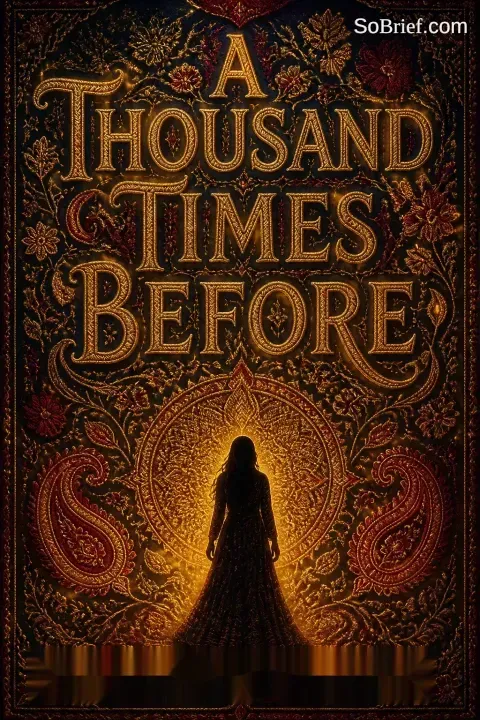
Over the years, Ayukta1 kept waiting for the right moment to share her ancestral secret: a lineage of women who pass down memories and a power to manifest through art, bound to a tapestry that carries their embroidered figures from mother to daughter.
After a dinner where Nadya2 told her own mother that children probably were not in their future, Ayukta1 realized her silence had cost Nadya2 the one future she had always envisioned. She booked a flight to her father's house, gathered her courage, and finally began telling Nadya2 the story of the women who came before.
Ayukta's confession operates on two tracks: the literal withholding of her family's magical inheritance and the deeper emotional withholding of her full self from her partner. Her paralysis on that third date reveals how ancestral burden translates into present-day intimacy dysfunction. She has been so afraid of Nadya's disbelief or rejection that she has allowed her wife to sacrifice a core desire without understanding why. The genius of this framing is that it transforms what could be a simple magical-realist family saga into an urgent plea: believe me, stay with me, understand why I am the way I am. The tapestry becomes not just a plot device but a metaphor for all the invisible histories we carry into relationships, the weight of what we cannot easily explain to those we love.
Kulfi on the Balcony
In 1946 Karachi, ten-year-old Amla3 spends her afternoons on the apartment balcony overlooking the bustling street, sucking pistachio kulfi while her father8 runs the family's three mithai shops downstairs.
Her mother Chandini,7 called Ba,7 asks Amla3 to help fold a heavy black tapestry embroidered with rows of women in profile, their colorful skirts melding into one another. The fabric disorients Amla,3 making her blood feel warmer. Ba7 tells her the stitched figures are the people who came before them, and that one day Amla3 will be on it too.
But before Amla3 can ask more, her mother7 packs the tapestry into a valise for a wedding trip to Delhi. As soon as it is folded away, the memory of the tapestry blurs in Amla3's mind like a forgotten dream.
The tapestry's first appearance establishes the central paradox of this inheritance: it is both overwhelmingly present and strangely forgettable, a family secret that resists being held in conscious memory. Amla's disorientation signals that this is no ordinary heirloom. The fact that Ba must actively show and explain it, that the child would never have noticed it otherwise, mirrors how ancestral knowledge works in this world: it must be deliberately transmitted. The balcony setting, with Amla straddling the safe interior and the chaotic street, prefigures the violent boundary-crossing that Partition will force upon her entire generation.
Sixteen Words of Grief
Ba7's valise returns to Karachi by courier. Inside, alongside unworn saris and mojari shoes, Amla3 finds the tapestry. This time she can see it clearly: the final embroidered figure is a girl holding her mother's hand, the stitching newer and brighter than the rest. Amla3 knows without being told that the girl is her, that her mother7 spent her dying days finishing this last segment.
When she asks her father Bapu8 if he remembers the tapestry hanging on their wall before Ba7 left, he looks at her with confusion and insists it must have been purchased during the trip. Amla3 learns then that Bapu8 cannot provide the answers she craves. She sleeps wrapped in the heavy cloth, pretending her mother7's arms still hold her.
The death of the mother is the primal rupture in this novel's universe, the wound that activates the inheritance. Amla's intuitive knowledge that she is the embroidered child, and Bapu's total inability to perceive the tapestry's significance, establishes a gendered pattern that will recur for generations: women see and remember what men cannot. The telegram itself cost one rupee for sixteen words. That brutal economy of language and grief, the reduction of a mother's entire life to a terse message, haunts the family line. Amla will carry this specific ache, this loss of the banality of love, into every future choice.
Trajva Before Departure
By January 1947, Bapu8 has secured steamboat tickets to Porbandar. Amla3 says goodbye to her best friend Fiza4 on their apartment rooftop. Fiza,4 the maulana's daughter who shared every game and secret with Amla,3 asks if Amla3 trusts her and then tattoos a trajva, the same diamond pattern Chandini7 wore at her throat, onto Amla3's wrist using ash, tannin, and a hand-poke needle.
Fiza4 already carries a matching mark on her ankle, given by Amla3 months earlier. They promise to find each other again someday. On the steamboat, Amla3 stews in silent fury at Bapu8 for uprooting her. She cannot know yet that their timing will prove tragically lucky: they are among the first to leave Karachi, six months before Partition erupts.
The trajva tattoos materialize the bond between Amla and Fiza as something literally embodied, a permanent mark that transcends the borders soon to be carved into the subcontinent. The matching geometry on wrist and ankle creates a secret language between two girls who love each other in ways they lack words for. Amla's silence on the steamboat is a child's only weapon against forces she cannot comprehend: the geopolitical catastrophe that will divide her from her best friend, her mother's death, her father's protective fear. That she carries Fiza's mark into an unknown future becomes the seed of a love story that will take decades to fully bloom.
The Gooseberry Bush Appears
Amla3 and Bapu8 settle on land outside Sodhana, Gujarat, in a house that belonged to Ba7's grandmother Kasturiben. Isolated and aching for her mother, Amla3 uses the watercolor set Ba7 gifted her. One afternoon, lost in a trance, she paints a gooseberry bush under a gibbous moon. She barely remembers the act of painting.
Days later, a gooseberry bush a plant that shares her name begins growing among the sitaphal trees, rapidly overtaking them. Only then does Amla3 connect the bush to her painting. She starts to understand: when she creates art while in that dreamlike, accompanied state, what she paints can become real. The realization terrifies and thrills her.
This first manifestation is deceptively gentle. A gooseberry bush is not a dead man or a resurrected father; it is a child's longing for her lost mother externalized as a living thing. But the bush's aggressive growth, starving the neighboring trees, hints at the dangerous imbalance that unchecked creation can bring. Amla stumbles into her power blind, without guidance or warning. Her mother's gift of the watercolor set was an act of love, but Chandini died before she could teach Amla the rules. This gap, this inheritance without instruction, becomes the wound that will echo through generations: what happens when power passes to children who must learn through catastrophe?
The Sahib's Grand Party
The village landlord Mahesh Shankar Sharma14 hosts a lavish party for British officials and local princes. Despite Bapu8 forbidding her to attend, Amla3 sneaks out wearing the salwar kameez she painstakingly sewed. Her older friend Bahaar11 performs harmonium onstage, radiant in orange and green.
After wandering into the house to wash her hands, Amla3 overhears a strange sound from upstairs. She finds Bahaar11 crumpled and bleeding in Sharma14's study, her neck bruised, her wrist broken. Amla3 helps her friend stumble home through the dark. Bapu,8 seeing the girls, understands immediately what the sahib14 has done. He tells Amla3 to say nothing. The estate's power is absolute.
This turning point transforms the novel's relationship to power from abstract political tension into visceral, gendered violence. Sharma's cultivated reputation as a patron of the arts and generous landowner masks predation. The party's glamour, the floating candles and kulfi and fine sherwanis, provides the perfect cover for assault. Bahaar's broken body becomes the thing that cannot be spoken, a secret the community will conspire to bury. Amla's disobedience in attending the party stems from loyalty to her friend, but the consequence teaches her a brutal lesson: promises to be good, to protect those you love, are powerless against men with wealth and impunity.
A Painting of the Dead
Amla3 pulls out her watercolors and, surrendering to the lineage's current, paints a portrait of Mahesh Shankar Sharma14 framed by funeral marigolds, a tradition reserved for the already-dead. Within days, Sharma14 is found dead. An investigator hired by Sharma14's son discovers the painting beneath Amla3's cot, dated weeks before the death.
Police arrest Bapu8 as the only adult who knew what the sahib14 had done to Bahaar.11 During the Partition violence that erupts in August 1947, the jail where Bapu8 is held is set on fire. Amla3 tries desperately to paint him alive again, but the magic does not answer. She learns the first unforgiving rule: some things cannot be undone.
This is the novel's moral crucible. Amla's impulsive act of justice for Bahaar produces an unbearable cascade: her father imprisoned, then murdered by communal violence. The painting worked exactly as intended but brought consequences Amla never anticipated. Her inability to paint Bapu back to life establishes the lineage's fundamental limit: creation is easier than restoration. The lineage offers power but not wisdom, efficacy without ethics. Amla will carry this guilt for the rest of her life, and it will shape how she approaches passing the gift to her own daughters. Her mother's absence here is devastating: Chandini might have warned her, might have taught her to act with care.
A Kiss at Heathrow
Meenafai9 sends a photograph of Fiza4 and her husband outside Sind Club in Karachi, reigniting a connection Amla3 had let fade. In 1961, Amla3 travels to London for Fiza4's wedding, a nursing baby Arni6 on her lap. At the ceremony, Fiza4 moves through crowds of strangers and Amla3 cannot reach her.
But at the airport afterward, their gates in the same terminal, Amla3 follows Fiza4 into the bathroom. She shows Fiza4 the trajva on her wrist, still matching the one on Fiza4's ankle. Fiza4 cups her face and kisses her. The moment passes in seconds, Fiza4 running to catch her flight to Karachi. But afterward, their letters begin flowing across borders.
The airport reunion is the novel's most concentrated expression of queer longing made possible, then impossible, then possible again. For decades, Amla had assumed the childhood painting of two women with valises in a gray tiled space was something sinister. Now she understands: it was a prophecy of reunion. The kiss is stolen, brief, surrounded by the sterile anonymity of an international terminal. It cannot be acted upon, not yet. But the letters that follow become Amla's secret lifeline through an unhappy marriage, through years of performing the role of dutiful Brahmin wife in Porbandar. Fiza becomes what she always was: the person who makes Amla feel real.
Sewing On the Favorite
In 1965, watching her children grow in Porbandar, Amla3 decides to pass the gift forward. She chooses Vibha,5 age ten, her calm and careful first daughter. Amla3 sews Vibha5's embroidered figure onto the tapestry beside her own.
She tells Vibha5 about the power and the danger, believing that Vibha5's hesitant, deliberate nature will prevent the kind of catastrophe Amla3 caused as a child. The ancestral memories leave Amla3 and take root in Vibha.5 For the first time since she was ten years old, Amla3's mind goes quiet. She feels relief, lightness, the transfer of a burden she has carried alone since Ba7's death.
Amla's choice of Vibha over her younger daughter Arni seems prudent: Vibha is cautious where Arni is impulsive, obedient where Arni questions. But this decision plants the seed of Arni's lifelong sense of rejection, her conviction that she was never enough for her mother. Amla is trying to be a good mother by protecting her children from herself, from the impulsive streak she recognizes in Arni because it mirrors her own. The tragic irony is that Vibha's very caution becomes her undoing: when she finally uses the gift, she does so with such care and selflessness that she erases herself entirely.
Three Paintings, One Omission
Vibha5 uses the gift only three times. First, during the 1969 riots, she paints an injured street dog whole and healthy; the dog recovers. Second, she paints herself kissing the boy from the apartment downstairs, a small wish that comes true one Navratri on the rooftop stairs.
Third, desperate to give her baby sister Arni6 a free future, Vibha5 paints Arni6 grown and laughing beside their mother.3 But in her fugue state, Vibha5 omits herself from the scene entirely. When she finishes, she cannot remember making the painting. Within months, Vibha5 falls ill with a lung infection. The painting has sealed her fate: a future without her.
Vibha's third painting is a devastating study in the unintended consequences of selflessness. She poured all her love for Arni, all her guilt over being the favored daughter, into a wish for her sister's liberation. But the lineage's magic is literal: painting a world without yourself means leaving the world. Vibha has internalized her mother's caution so completely that she cannot imagine using the gift for her own benefit. The dog painting and the kiss were small, almost permissible selfishnesses. The sister painting was the ultimate sacrifice, and it consumed her. Her story asks whether the lineage is a gift at all, or simply another way women are taught to erase themselves for others.
The Sister Left Behind
In October 1973, Vibha5 dies of her lung infection at home. Before her death, she tells Arni6 about the tapestry hidden in their closet, the power it holds, and the women who came before. Arni6 is shattered, not only by grief but by the revelation that her mother3 chose Vibha5 for this inheritance and never told Arni6 it existed.
When she confronts Amla,3 demanding to be sewn onto the tapestry so she can access Vibha5's memories, Amla3 refuses. She tells Arni6 she is not ready, that she is too impulsive, too angry. The rejection opens a wound between mother and daughter that will take months of conflict and political upheaval to begin healing.
Arni's grief is layered: she mourns Vibha while also mourning the version of her mother's love she believes was always reserved for her sister. The tapestry becomes the symbol of that withheld love, the proof that she was second choice. Amla's refusal to sew Arni on immediately is both protective and cruel: she wants to prevent another impulsive disaster, but she cannot see that her withholding is itself a form of harm. This is the novel's most painful mother-daughter rupture, precisely because both women are acting from love and fear in equal measure. Arni's question 'Why you?' haunts the rest of her teenage years.
Murals Against the Curfew
Inspired by her brother Anurag12's involvement and a group of college students who smoke on the rooftop, Arni6 joins the Navnirman Andolan, a student movement protesting corruption, inflation, and the black market in Gujarat. She sneaks out past curfew with borrowed paint cans and a dark shawl, painting political slogans on storefront metal curtains along the beach.
Her murals multiply: calls for the chief minister's resignation, demands for employment and education, crowds of protesters rendered in orange, white, and green. The movement swells. Arni6 discovers that her art, even without the tapestry's magic, can move people. The chief minister resigns in February 1974, and by March the entire Gujarat assembly is dissolved.
Before she ever receives the ancestral power, Arni proves that her art matters on its own terms. The murals are her answer to feeling powerless: she creates political change the hard way, through risk and solidarity and showing up. This interlude is crucial to the novel's argument about the tapestry. Power does not come only from magic; it comes from collective action, from painting in the dark with friends, from refusing to be silenced. Arni's political awakening also distinguishes her from both Vibha (who used the gift privately) and Amla (who used it in isolation). She is learning to be part of something larger than herself.
No More Observing
When Anurag12 returns home and argues politics with their father Suresh,10 Arni6 watches the household fracture. Suresh,10 a Congress loyalist, cannot tolerate his children's dissent. When Arni6 finally speaks up at dinner, telling her father10 he is a 'head sheep' who cannot see beyond his caste privilege, Suresh10 explodes.
He declares she will be married within the year, no college, no freedom. Then he turns on Amla.3 As Suresh10 beats his wife, Arni6 places her body between them, taking a slap herself before neighbors drag him away. In the aftermath, Amla3 takes the tapestry, a needle, and thread, and finally sews her second daughter's figure onto the black cloth. She tells Arni6 she was wrong to wait.
This domestic explosion is the novel's third-act climax for the mother-daughter relationship. Arni's physical courage, placing her body in the path of her father's violence, finally proves to Amla what she could not see before: that impulsivity and passion are not only liabilities, they are also the source of Arni's strength. Meenafai's earlier critique, that Arni is an observer at home while acting boldly outside, finds its resolution here. Arni stops observing and intervenes. The tapestry transfer in this moment of crisis transforms the inheritance from a reward for caution into an acknowledgment of courage. Amla finally sees her daughter clearly.
Two Queens in Queens
Arni6 moves to America for graduate school in 1981. She receives a letter from her cousin Rohini with an address: Fiza Qureshi4 has moved to New York to live with her brother. Arni6 tracks Fiza4 down in Queens, verifying she is real, then brings Amla3 to the apartment. The two childhood friends, now silver-haired women in their fifties, fall into each other's arms.
Amla3 and Fiza4 become 'roommates' in an apartment filled with plants and the smell of nicotine. Arni6 photographs them at Disney World, in San Francisco, in Sedona. They travel, they laugh, they build the palace they once pretended to rule as little girls on a Karachi rooftop. Amla3 spends her final years with the love of her life.
This reunion fulfills the prophecy of Amla's childhood painting of two women with valises. It also heals one of the novel's deepest wounds: the Partition that separated Amla from Fiza, from Karachi, from her mother. But it is Arni who makes it possible, the daughter who once felt invisible and unchosen. By finding Fiza, Arni gives her mother the gift her mother could not create with the tapestry (remember: Amla tried as a child to sew Fiza onto the cloth and failed). The decades of letters, the stolen airport kiss, the years of Amla painting a palace she did not believe would ever exist, all converge here. Queer love survives. It just takes forty years.
The Letter from Rohini
In 2001, at seventeen, Ayukta1 accepts the tapestry from her mother Arni6 after witnessing the Gujarat pogroms while doing volunteer work. She moves to Brooklyn, becomes a sculptor, marries Nadya.2 When Arni6 dies suddenly, Ayukta1 avoids returning to Minneapolis for a year. Finally she goes home to sort through her mother's boxes.
She finds a letter from Rohini Thakur, dated 1982, mentioning Fiza4's New York address. Puzzled, Ayukta1 asks her father, who pulls out old photo albums. She sees a woman she always assumed was a random auntie holding her toddler self. It is Fiza.4 Ayukta1 finally opens the door to her mother's memories and watches the reunion: Arni6 bringing Amla3 to Fiza4's door, the two old women weeping in each other's arms.
Ayukta's discovery of Fiza is the novel's most intimate payoff. She has carried her grandmother Amla's memories her whole life but never accessed her own mother's memories of the years after Ayukta's birth. The closed door was a boundary she set while Arni was alive, a respect for her mother's privacy. Opening it after Arni's death brings not only grief but profound gift: the knowledge that queer love exists in her lineage, that her grandmother chose a woman, that her mother made that choice possible. For Ayukta, who has feared Nadya's rejection and struggled to imagine her own future as a queer parent, this discovery is ancestral permission.
I Choose This Every Time
After hours of storytelling through the night and a long walk through Fort Greene Park at dawn, Ayukta1 finishes the history. She tells Nadya2 that the choice about children, about continuing the lineage, must be Nadya2 's: she cannot trust her own desires when the ancestors might be speaking through her. Nadya2 takes Ayukta1's hands.
She does not need Ayukta1 to be small, she says. Whether it is Ayukta1 alone or Ayukta1 accompanied, she chooses this every time. Later, in her studio, Ayukta1 begins a new sculpture series: the faces of Amla,3 Fiza,4 Chandini,7 all the mothers. She sculpts without the trance, without manifesting anything. She simply makes them present.
The novel's resolution is not an answer to the child question but a reframing of it. Nadya's acceptance of Ayukta 'accompanied', haunted by generations of memory, changes the terms of the decision. The fear that drove Ayukta's seven-year silence was not really about reproduction; it was about whether she could be fully known and fully loved. Nadya's choice is to love all of her, the calcium in her bones and the ghosts in her blood. The final image of Ayukta sculpting her ancestors without using the gift's manifesting power represents a hard-won maturity: art as memorial rather than manipulation, creation as homage rather than control.
Epilogue
At her Bushwick studio, Ayukta1 wedges clay in a steady rhythm, pushing and folding. She has taped sketches across her worktable: Amla3's cheekbone, Fiza4's collarbone, her mother Arni6's fingers curled around a Polaroid camera. She sculpts slowly, deliberately, without entering the trance state. She wants to make art that is true but changes nothing.
The evening sun casts shadows across the studio floor. Nadya2 appears in the doorway and asks about dinner. She leans over the sketches, tracing silhouettes in the air, and tells Ayukta1 she loves the new work. Outside, in the golden hour, Ayukta1 pulls on her mittens. Nadya2 says she is excited to meet them, these women who have accompanied Ayukta1 all her life. They turn the corner toward home.
The closing scene completes Ayukta's arc from someone paralyzed by ancestral weight to someone who carries it with intention. Sculpting without manifesting is her answer to the central question of the novel: how do you honor lineage without being consumed by it? The clay, an earthbound material requiring patient wedging and hollowing, is the opposite of Amla's feverish watercolors. Ayukta is not trying to change the future or resurrect the past; she is simply making her mothers visible. Nadya's response, that she is excited to meet them, transforms the ghosts from a secret burden into a shared family. The turning toward home together is earned: after generations of leaving and losing homes, Ayukta and Nadya build one where all the mothers are welcome.
Analysis
A Thousand Times Before is an investigation of what we inherit and what we choose. The tapestry literalizes the truism that we carry our ancestors in our bodies, but Thanki pushes further: what if that inheritance came with actual power to reshape the world, and what if that power were almost impossible to wield wisely? The novel's structure, moving backward through generations from a present-day queer narrator, mirrors its thematic argument that understanding ourselves requires understanding who came before. Each generation's mistakes cascade forward: Chandini7's early death leaves Amla3 without a guide, Amla3's childhood catastrophe makes her overcorrect with Vibha,5 Vibha5's self-erasure forces Arni6 to fight for recognition, and Arni6's experience of being denied shapes how she offers the choice to Ayukta.1 The pattern is not fate but consequence, a chain of trauma that also contains within it the possibility of repair. The novel's deepest insight may be that the gift's true value lies not in the power to manifest change, but in the memories themselves: the ability to sit beside a dead mother, to feel a grandmother's hands, to know that queer love existed in your bloodline before you ever spoke its name. Ayukta1's decision to sculpt her ancestors without using the manifesting power is the novel's ethical conclusion: art as witness rather than intervention, presence rather than control. The question of whether to have a child, left deliberately unresolved, becomes secondary to the larger question Nadya2 answers: whether to love someone fully accompanied by their ghosts. In a novel so saturated with Partition's ruptures, the ending's quiet domesticity, two women walking home together as the golden hour fades, constitutes a radical act of continuity.
Review Summary
A Thousand Times Before received mixed reviews, with praise for its exploration of generational trauma, family history, and women's stories. Many readers appreciated the unique premise of a magical tapestry connecting generations. Some found the writing beautiful and emotionally resonant, while others felt overwhelmed by the historical context and cultural references. Critics noted pacing issues and character development concerns. Overall, the book was lauded for its representation of South Asian and queer experiences, though opinions varied on its execution.
People Also Read








Characters
Ayukta
Contemporary narrator, inheritorA sculptor in Brooklyn, married to Nadya2. Ayukta received the tapestry from her mother Arni6 at age seventeen and has spent years learning to navigate the ancestral memories without being subsumed by them. Her central struggle is between the desire to be fully known by her wife and the fear that the truth of her lineage will drive Nadya2 away. She established firm boundaries: she would not access her mother's memories while Arni6 was alive, and she would not use the art's manifesting power. Her sculptures explore hands, faces, the physical traces of love. She is cautious, self-aware, and painfully conscious of how the generations before her made catastrophic mistakes with the power she now carries.
Nadya
Ayukta's wife, the listenerA lawyer who has always wanted children and envisioned her future with certainty. Nadya's patience with Ayukta1's evasiveness about motherhood has cost her: she has begun telling her own mother that children probably are not in the cards, quietly sacrificing a core dream without understanding why. Over the course of the night and day in which Ayukta1 tells the family history, Nadya moves from confusion to grief to acceptance. Her final declaration that she chooses Ayukta1 accompanied, with all the ancestral weight, reframes the child question as secondary to the commitment of their partnership.
Amla
The grandmother, first inheritorBorn in Karachi to Sindhi Hindu parents, Amla's childhood is shattered at age ten when her mother Chandini7 is killed in Partition riots and her father Anurag8 is murdered after she accidentally causes a man's death through her art. Haunted by guilt, she grows up under her aunt Meenafai9's care, marries the cold and status-obsessed Suresh Dave10, and raises three children in Porbandar. Her great love is Fiza4, her childhood best friend, with whom she reunites decades later. Amla's relationship to the tapestry's power is defined by the trauma of her catastrophic childhood mistake: she is terrified of impulsivity and desperate to protect her daughters from repeating her errors.
Fiza Qureshi
Amla's childhood friend and lifelong loveThe daughter of a maulana in Karachi, Fiza is Amla3's closest companion during their idyllic childhood. They share trajva tattoos, imagined palaces, and a bond neither fully understands until decades later. After Partition separates them, Fiza marries a man in Karachi and later moves to London, then New York. Her letters to Amla3 sustain a secret emotional lifeline across decades and continents. In her sixties, she finally reunites with Amla3 in New York, and they spend their remaining years together as 'roommates,' traveling America and building the castle they once pretended to rule. Fiza represents the love story that Partition tried to prevent but could not.
Vibha
Amla's first daughter, the careful oneThe eldest daughter, doted on by her mother and chosen at age ten to receive the tapestry. Vibha is everything Amla3 wanted in an heir: cautious, deliberate, hesitant. She excels at accessing ancestral memories and uses the gift sparingly. Her love for her younger sister Arni6, complicated by the family's obvious favoritism, drives her final act: painting a future where Arni6 is happy and free, but accidentally omitting herself from the scene. Vibha's story is the novel's sharpest critique of the inheritance itself: even the most careful wielder can be undone by the gift's literal magic.
Arni
Amla's second daughter, Ayukta's motherFiery, impulsive, and aching to be chosen, Arni grows up in Vibha5's shadow. She discovers the tapestry only when Vibha5 is dying and spends months fighting her mother3 for the inheritance she feels she was denied. Her political awakening during the 1974 student movement gives her an outlet for her rage and creativity: she paints murals on Porbandar's streets. After standing up to her abusive father10, she finally receives the tapestry. In America, she becomes the architect of her mother's happiness, reuniting Amla3 with Fiza4. As Ayukta1's mother, she offers the choice of the tapestry freely, having learned from her own experience of being denied.
Chandini
Amla's mother, the lost guideCalled Ba by Amla3. A Gujarati woman who eloped with a Sindhi merchant, Anurag8, and built a life in Karachi. Chandini inherited the tapestry and its power, using charcoal rather than paint. She tried to prepare Amla3 for the inheritance by teaching her to draw, gifting her watercolors, and showing her the tapestry, but was killed in the Delhi riots before she could explain the rules. Her absence is the foundational loss of the novel, the missing instruction that sets Amla's tragedy in motion.
Anurag (Bapu)
Amla's father, the gentle merchantA Sindhi Hindu who owns three mithai shops in Karachi. He marries Chandini7 against her family's wishes and adores her completely. After Chandini7's death, he becomes Amla3's sole parent, making the wrenching decision to leave Karachi before Partition erupts. He is imprisoned and killed when the jail is burned during communal violence, his death the direct consequence of Amla3's impulsive use of the tapestry's power. He never knew about the tapestry's magic, a secret Chandini7 kept from him.
Meenafai
Amla's aunt, the survivorBapu8's sister, wife of a pandit, mother of seven. Meenafai arrives in Gujarat from Karachi in August 1947 with her children, just before Partition violence consumes the city. She becomes the de facto mother to Amla3 after Bapu8's death, arranging her marriage, managing the household, and offering blunt wisdom. In her old age, she visits Amla3's family in Porbandar and mediates the conflict between Amla3 and Arni6. She is the novel's voice of pragmatic survival, the woman who has seen everything and kept going.
Suresh Dave
Amla's husband, the patriarchA Porbandar Brahmin government official who values caste, status, and the Congress Party above all. He married Amla3 for her Sthanakiya surname, never knowing her Sindhi history or the secrets she carries. He is emotionally absent, controlling, and eventually violent, beating Amla3 when his authority is challenged. His cruelty catalyzes the final rift that leads Amla3 to sew Arni6 onto the tapestry. He represents the patriarchal order that the lineage exists in tension with.
Bahaar
Amla's friend, assault survivorAn older village girl near Sodhana, bold and ambitious, who befriends Amla3 at the local girls' school. She performs harmonium at Mahesh Shankar Sharma14's party and is sexually assaulted by him afterward. Her broken body and her later admission that Sharma14's death fixed nothing are the catalyst for Amla3's understanding that revenge cannot undo trauma. She withdraws from Amla3 after the assault, their friendship irreparably fractured by the event and its consequences.
Anurag (son)
Amla's son, the talkerAmla3's firstborn child, named after her father8. He attends university in Ahmedabad and becomes involved in student politics during the 1974 movement, writing poetry and distributing pamphlets. He talks boldly about revolution but lacks follow-through, staying safely in Porbandar while others risk arrest. His dismissive treatment of Arni6, treating her as a sheltered child who cannot understand real struggle, fuels her determination to prove herself. He eventually withers into a man who only reminisces about his activist youth.
Padma
Amla's friend, the beautiful oneA gentle, soft-spoken village girl who befriends Amla3 alongside Bahaar11. She plays sitar at Sharma14's estate and endures his predatory gaze. Her mother works in Sharma14's kitchen. Padma provides comfort and practical friendship to Amla3 during the difficult early years in Gujarat.
Mahesh Shankar Sharma
Landlord and predatorThe wealthy local sahib who controls water access and employs most of the village. A self-styled connoisseur of music and art who hosts lavish parties, he uses his position to assault young female performers. His death, caused by Amla3's painted curse, sets off the chain of events that leads to Bapu8's arrest and murder.
Sakshi
Arni's best friendThe daughter of the apartment building manager, Sakshi attends school with Arni6 and becomes her closest confidante after Vibha5's death. She supports Arni6's mural painting and offers steady companionship through the upheavals of Arni6's teenage years.
Plot Devices
The Tapestry
Conduit for ancestral memory and powerA heavy black cloth embroidered with rows of women in profile, each figure representing a mother or daughter in the lineage. When a woman's image is sewn onto the tapestry, she gains access to the memories of all previous women and the power to manifest changes in reality through her art. The tapestry cannot include non-blood relatives: Amla3 tried to sew Fiza4 onto it as a child and failed. When an embroidered woman dies before passing on the gift, her memories flow back to the previous living carrier. The tapestry's bottom rows remain empty, waiting for future daughters.
Artistic Manifestation
Power to reshape reality through artWomen on the tapestry can enter a fugue state where their hands create art without conscious control, guided by the ancestral lineage. Whatever they paint, draw, or sculpt in this state becomes real, though the timeline is unpredictable and the results can be catastrophic if the artist is not specific. The power cannot undo death, cannot force love, and cannot be used to unmake what has already been made. Key manifestations in the story include Amla3's gooseberry bush, Amla3's painting that kills Sharma14, Vibha5's healing of the dog and her fatal self-erasure, and Amla3's unwitting painting of her airport reunion with Fiza4.
The Trajva Tattoos
Symbol of the bond between Amla and FizaMatching geometric diamond patterns tattooed on Amla3's right wrist and Fiza4's left ankle, copied from Chandini7's own trajva at her throat. The girls gave each other these tattoos using ash, tannin, and hand-poke needles on a Karachi rooftop before Partition separated them. Decades later, Amla3 uses her trajva to prove her identity to Fiza4 in the London airport bathroom. The tattoo becomes the physical proof of a bond that transcends borders, marriages, and decades of silence.
The Teakwood Box
Container of art supplies and secret lettersOriginally a gift from Chandini7 to Amla3, containing watercolor pigments, brushes, and sketch paper. After Amla3's marriage, she repurposed the box to hold Fiza4's letters, hiding them from her husband Suresh10. The box passes from Amla3 to Arni6's possession after Suresh10's rampage. It represents both the creative legacy and the hidden queer love story, the dual inheritances that define this family: one that can be spoken of and one that was kept secret for decades.
The Airport Painting
Prophecy of reunionAs a child, Amla3 painted a scene of two women with valises in a gray tiled space filled with blurred figures, a place she did not recognize. Decades later, she realizes she painted an airport terminal before she ever saw one. The painting prophesied her reunion with Fiza4 at Heathrow Airport in 1961, where they shared a stolen kiss in the bathroom. This manifestation proves that the lineage's art can foretell positive futures, not only tragedies, and gives Amla3 her first evidence that her gift is not solely a curse.
Download PDF
Download EPUB
.epub digital book format is ideal for reading ebooks on phones, tablets, and e-readers.








































